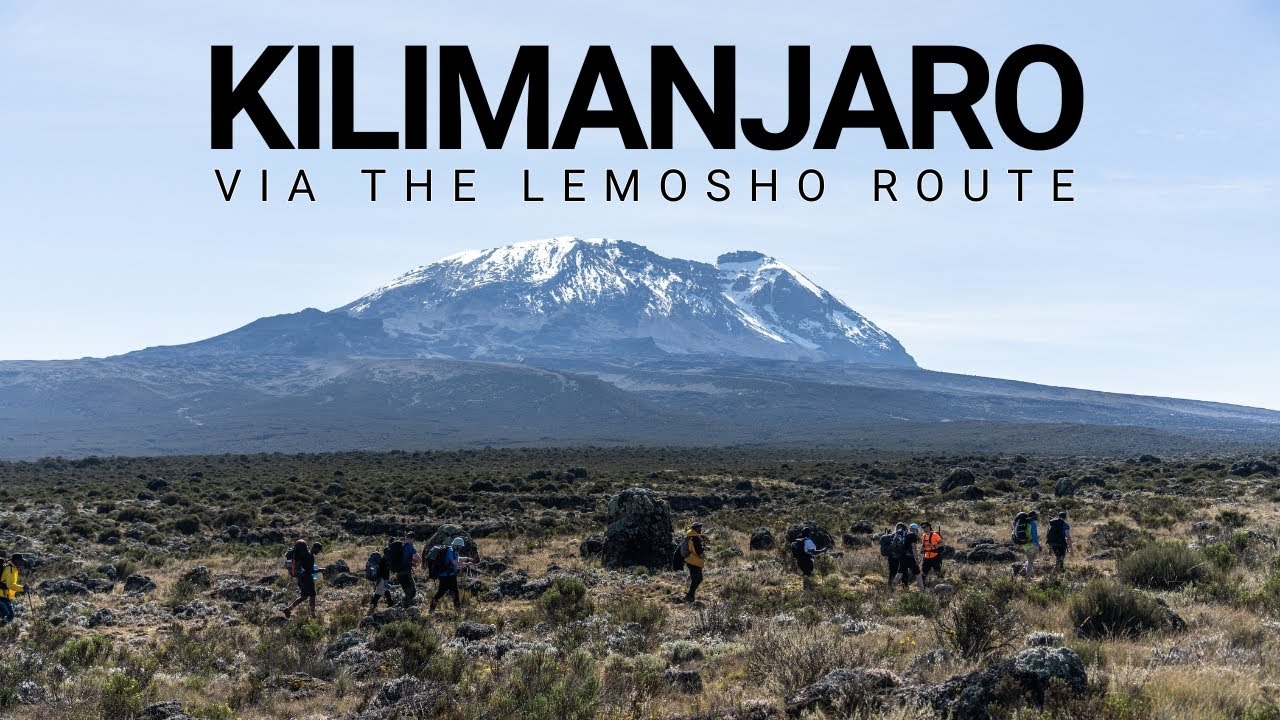
When planning a bucket-list trek, two legendary names almost always top the list: Mount Kilimanjaro and Mount Everest. But comparing them can be a bit tricky depending on whether you are talking about trekking to Everest Base Camp (EBC) or aiming for the actual summit of the world's highest peak.
If it is a battle between Kilimanjaro's peak and the trek to Everest Base Camp, Kilimanjaro often takes hikers by surprise. Even though the EBC trek covers double the total distance over a two-week journey, Kilimanjaro throws you into a rapid, steep ascent over just a few days, pushing you to a much higher final altitude of 5,895 meters. The brutal midnight summit push in freezing temperatures makes it a massive physical hurdle. However, if you are talking about standing on the actual summit of Mount Everest, the comparison ends. Scaling Everest is an extreme, highly technical mountaineering expedition that requires years of intense training, specialized ice-climbing skills, and a battle against the elements in the death zone.
Some of the popular Mountain Kilimanjaro hike tour packages
12-days-kilimanjaro-and-safari-in-northern-tanzania-safari-parks
10-days-best-kilimanjaro-hike-serengeti-safari-tour-and-ngorongoro-tour-combo
9-days-northern-circuit-kilimanjaro-climb-adventure
8-days-lemosho-route-kilimanjaro-climb
7-days-kilimanjaro-climb-and-hiking-safari-ascent-to-peak
6-days-best-kilimanjaro-climb-via-marangu-route
6-days-kilimanjaro-climb-via-umbwe-route
5-day-kilimanjaro-climb-marangu-route
Altitude and Acclimatization
When it comes to altitude, Mount Kilimanjaro poses a sharper, more immediate threat to trekkers than the journey to Everest Base Camp. The roof of Africa stands at a towering 5,895 meters (19,341 feet), outstripping the final elevation of EBC, which rests at 5,364 meters (17,600 feet). The real challenge, however, isn't just the final number—it is how fast you get there.
On Kilimanjaro, most routes force you to ascend from the gate to the summit in just 5 to 7 days. This rapid vertical climb gives your body very little time to adjust to the thinning air, significantly increasing the risk of acute mountain sickness (AMS). In contrast, the trek to Everest Base Camp is a masterclass in gradual acclimatization. Spanning 12 to 14 days, the Nepalese trail includes mandatory rest and acclimatization days in places like Namche Bazaar. This slow, steady approach allows your body to generate necessary red blood cells naturally. While EBC keeps you at a sustained high altitude for over a week, Kilimanjaro’s rapid ascent makes its extreme altitude much harder to handle for the average hiker.
Summit Night
The defining moment of a Kilimanjaro trek is its legendary, brutal summit night—an experience that has no equivalent on the trail to Everest Base Camp. The push for Uhuru Peak typically begins around midnight from a high camp like Barafu (4,673 meters). Hikers are woken up in the pitch black, handed a warm drink, and sent straight up a steep, crumbling scree slope in temperatures that routinely plummet between -5°C and -15°C.
For 6 to 8 hours, you move in a slow, hypnotic rhythm, relying entirely on your headlamp and sheer mental willpower to fight off extreme fatigue, freezing winds, and nausea. It is a grueling physical and psychological test designed to get you to the rim by sunrise. The Everest Base Camp trek offers a completely different rhythm. There is no traumatic midnight summit push. Your days start after a warm breakfast in a teahouse, and you hike during daylight hours. While the final stretch into EBC or the side hike up Kala Patthar is physically demanding, it lacks the extreme, sleep-deprived intensity of Kilimanjaro’s midnight battle against the elements.
Duration and Distance
Where Everest Base Camp lacks a dramatic summit night, it more than makes up for it in terms of sheer endurance and distance. The EBC trek is a marathon, covering a round-trip distance of roughly 130 kilometers (80 miles) over two weeks. Hikers must pack their bags and hit the trail day after day, averaging 10 to 18 kilometers of sustained uphill and downhill walking through the Khumbu Valley. The physical exhaustion is cumulative; by day ten, the simple acts of packing up and walking can feel monumental.
Kilimanjaro is a sprint by comparison. Depending on your chosen route, the total distance covered is much shorter, usually around 60 to 70 kilometers (37 to 43 miles) spread over 5 to 9 days. While Kilimanjaro requires steeper, more direct vertical climbing each day, the journey is over much quicker. On Kilimanjaro, you push hard and fast for a week and you are done. On the EBC trek, you need the mental and physical stamina to sustain an active, high-altitude hiking lifestyle for half a month, dealing with the daily wear and tear on your joints and muscles.
Technical Difficulty
From a technical standpoint, both Mount Kilimanjaro and the Everest Base Camp trek are highly accessible to regular adventure travelers because neither requires true mountaineering skills. You won't need to worry about packing ice axes, tying into safety ropes, navigating deep crevasses, or clipping into vertical rock walls with carabiners. Both are classified as "trekking peaks" or high-altitude hikes rather than technical climbs.
However, "non-technical" should never be confused with easy. The difficulty in both challenges lies entirely in your cardiovascular fitness, leg strength, and mental resilience. Both trails require you to hike for 6 to 8 hours a day across uneven, rocky, and often slippery terrain while your lungs starve for oxygen. On Kilimanjaro, you will scramble up the famous, hands-on Barranco Wall, which requires basic balance but no ropes. On the EBC trail, you will cross high suspension bridges and navigate loose glacial moraine. Success on either route doesn't depend on your knot-tying skills; it depends on a solid training regimen of cardio, stair-climbing, and the determination to keep moving forward when your body is begging you to stop.
How do the peak altitudes compare between the two?
When comparing the ultimate elevation milestones of these two iconic journeys, Mount Kilimanjaro takes the lead. Its highest point, Uhuru Peak on Mount Kibo, stands at an impressive 5,895 meters (19,341 feet) above sea level. This makes it the highest point on the entire African continent and the tallest free-standing mountain in the world.
In contrast, the final destination of the Nepalese trek, Everest Base Camp (EBC), sits at a lower altitude of 5,364 meters (17,600 feet). While many trekkers in the Himalayas choose to hike up the nearby landmark of Kala Patthar to get a better view of Everest's summit, even that peak only tops out at around 5,644 meters. This means that when you stand on the roof of Africa, you are physically nearly 530 meters (over 1,700 feet) higher in the atmosphere than you would be at Everest Base Camp. At almost 6,000 meters, Kilimanjaro introduces you to a significantly thinner atmosphere, where every breath yields roughly 50% less oxygen than at sea level, making the final steps to the Uhuru summit sign an incredibly profound physical challenge.
Which hike has a more gradual approach and better acclimatization?
The Everest Base Camp trek wins handily when it comes to a gradual approach and superior acclimatization. The classic EBC journey is a beautifully paced marathon that unfolds over 12 to 14 days. Because the trail slowly snakes its way up the Khumbu Valley, your daily elevation gains are kept relatively modest. More importantly, standard itineraries build in dedicated rest and acclimatization days at key altitudes like Namche Bazaar (3,440 meters) and Dingboche (4,410 meters). This deliberate pacing gives your respiratory and circulatory systems the critical time they need to naturally adapt to the dropping oxygen levels.
Kilimanjaro, on the other hand, features a notorious "up and out" timeline. Most standard routes force climbers from the park gates to the summit in just 5 to 7 days. This rapid, aggressive vertical ascent gives the human body very little time to trigger its natural acclimatization processes. Even though climbers try to follow the "walk high, sleep low" rule on certain days, the sheer speed of the ascent makes Kilimanjaro a much higher-risk environment for altitude-related headaches, nausea, and acute mountain sickness.
What makes Kilimanjaro’s summit day so notoriously difficult?
Kilimanjaro’s summit night is widely considered one of the most brutal single-day challenges in the trekking world. The ordeal kicks off around midnight from a high camp like Barafu or Kibo, completely disrupting your normal sleep cycle. Climbers step out into the pitch-black, freezing night air, where temperatures routinely drop between -5°C and -15°C (23°F to 5°F), accompanied by biting alpine winds that make it feel significantly colder.
From there, you face a relentless, steep 1,200-meter vertical climb up unstable, loose volcanic scree. For 6 to 8 hours, your world shrinks to the tiny beam of light from your headlamp and the heels of the boots in front of you. Navigating this steep incline while oxygen levels drop to their lowest point causes immense physical fatigue, mental fog, and intense nausea. You are fighting sleep deprivation, muscle burn, and the freezing cold all at the same time. By the time you finally reach the crater rim at Stella Point or Gilman's Point to catch the sunrise, you are completely drained, yet you still have another hour of trekking to reach Uhuru Peak.
How do the daily terrain differ between the two?
The terrain on Kilimanjaro is defined by its dramatic, vertical passage through five distinct ecological zones. In a matter of days, you walk through lush tropical rainforests, low-alpine moorlands, alpine deserts, and finally, an arctic wasteland of rock and ice. The trail is a direct, steady upward climb with very few flat sections. You are constantly moving into entirely different landscapes, meaning the underfoot terrain shifts rapidly from muddy jungle roots to loose desert dust and jagged volcanic rock.
The Everest Base Camp trek offers a classic Himalayan mountain valley experience characterized by an undulating "Nepali flat" terrain—which locals jokingly remind you means "a little bit up, a little bit down." The trail features sustained, rhythmic ups and downs as you descend into river gorges, cross high suspension bridges, and climb back up massive ridges. You spend days walking along well-established, stone-paved trails, dirt paths through pine forests, and eventually, loose glacial moraine and boulders as you approach the Khumbu Glacier. It is a longer, winding journey that follows the natural contours of the earth rather than a direct, vertical assault.
Which trek takes longer to complete?
When it comes to time commitment on the trail, the Everest Base Camp trek requires a much larger investment. A standard round-trip trek from the mountain airstrip at Lukla to EBC and back takes between 12 and 14 days of continuous walking. This extended timeframe is structurally necessary to ensure safety and allow for proper acclimatization, meaning you are living, eating, and sleeping on the trail for two full weeks.
Kilimanjaro is a highly compressed adventure by comparison. Depending on the route you select, the entire expedition can be completed in as few as 5 to 7 days. While shorter routes like Marangu or Machame are popular for travelers short on time, they come with a physical cost due to the rushed schedule. Higher-tier operators heavily recommend choosing longer 7 to 8-day variations—such as the Lemosho or Northern Circuit routes. These longer options add an extra day or two on the lower slopes to mirror the safer, gradual acclimatization profile of the Everest trek, but even then, the total time spent on Kilimanjaro is nearly half that of EBC.
Where do you sleep during these treks?
The accommodation styles on these two treks offer completely different wilderness experiences. On Kilimanjaro, your journey is rooted in classic expedition-style wilderness camping. Apart from the Marangu route, which features basic wooden A-frame huts, all other routes require you to sleep in mountain tents. A dedicated crew of porters races ahead of you each day to set up a village of canvas tents, including your sleeping tents, a communal dining tent with tables and chairs, and rustic dry-toilet tents.
The Everest Base Camp trail operates on an entirely different hospitality model centered around Nepal’s famous "teahouses." These are locally owned, permanent mountain lodges found in every village along the route. Instead of sleeping on the ground in a tent, you stay in private, twin-share wooden bedrooms with actual beds, mattresses, and pillows. Teahouses also feature large, stone-heated communal dining rooms where trekkers gather to eat hot meals, drink tea, and warm up by the fire. While the rooms are unheated and basic, having a solid roof over your head and a proper bed makes the EBC accommodation feel far less exposed to the elements.
Which hike requires a higher level of physical endurance versus cardio?
The two treks test your body in fundamentally different ways, splitting the challenge between long-term physical endurance and intense cardiovascular output. The Everest Base Camp trek is the ultimate test of sustained physical endurance. You need the stamina to wake up and hike for 6 to 8 hours every single day for two weeks straight. The physical wear and tear accumulates gradually, draining your energy reserves over time. It requires strong joints, excellent leg conditioning, and the mental resilience to handle a multi-week marathon where your body never fully recovers to sea-level conditions.
Kilimanjaro is an intense, compressed cardiovascular challenge. Because you are climbing vertically at a much faster rate, your heart and lungs are pushed to their absolute limits early in the trek. The daily climbs are steeper, demanding immediate, high-output aerobic effort. This culminates in the summit night, which is a pure, explosive cardio and mental test packed into an agonizing 12-to-14-hour round trip. If EBC is a test of how long your legs can keep moving over a fortnight, Kilimanjaro is a test of how well your lungs can extract oxygen under sudden, extreme vertical stress.
How do the trek success rates compare?
The success rates of these two iconic journeys clearly reflect how formatting an itinerary impacts human physiology. The Everest Base Camp trek boasts an impressive average success rate of 85% to 90%. This high number is directly tied to the trek's gradual, two-week schedule and built-in acclimatization days. Because climbers' bodies are given ample time to adjust to the altitude, the vast majority of healthy, prepared hikers successfully reach the base camp without being forced to turn back by severe altitude sickness.
Conversely, Kilimanjaro’s overall summit success rate sits at a much lower 65%. This drop is heavily driven by travelers booking short, rushed 5 or 6-day itineraries. On these accelerated timelines, the human body simply cannot adapt fast enough, leading to a high rate of evacuation due to acute mountain sickness. However, this statistic changes dramatically based on itinerary design: trekkers who choose optimized 7 or 8-day routes see their success rates climb up to 85% or 90%, proving that giving the mountain more time is the ultimate key to success.
Which is better for someone with knee or joint issues?
For hikers managing chronic knee, hip, or ankle issues, the Everest Base Camp trek is generally the much friendlier option. The Himalayan trail features a slow, undulating rhythm with gradual daily climbs and descents. While you will encounter steep steps—such as the infamous hill up to Namche Bazaar—they are broken up by long, rolling sections of trail that give your joints a break. The multi-week pace allows you to take short daily distances at a gentle, knee-friendly speed.
Kilimanjaro can be exceptionally punishing on the joints, particularly during the descent. After enduring the exhausting, steep climb to Uhuru Peak, you immediately face a brutal, joint-jarring descent. You must drop roughly 2,800 vertical meters (over 9,000 feet) in less than two days, walking down steep slopes of loose scree and hard rock. This continuous, steep downhill braking places immense, repetitive impact stress on your knees and quadriceps. Even with high-quality trekking poles, the intense, rapid descent from Kilimanjaro's summit can turn minor joint issues into severe pain, making EBC the safer choice for joint longevity.
Do I need any technical mountaineering skills for either trek?
The wonderful news for adventure enthusiasts is that neither Mount Kilimanjaro nor the Everest Base Camp trek requires an ounce of technical mountaineering skills. You do not need any prior experience with ice climbing, glacier travel, or high-angle rock scrambling. There is no need to worry about packing technical hardware like ice axes, climbing harnesses, helmets, or specialized mountaineering boots, nor will you ever find yourself tied into a team rope or clipping into a vertical cliffside.
Both challenges are classified strictly as high-altitude treks rather than technical climbs. The trails are entirely walkable from start to finish. On Kilimanjaro, the closest you get to climbing is using your hands for balance while scrambling up the non-technical Barranco Wall. On EBC, you are simply walking on established mountain footpaths. The true difficulty of these trips has nothing to do with technical rope skills; it is entirely a test of your baseline cardiovascular fitness, lower-body strength, mental grit, and how gracefully your body handles the natural challenges of high-altitude environments.
Booking Mountain Kilimanjaro hike with us Roads of Adventure safaris
Conquering the roof of Africa is a life-changing milestone, and booking your Mount Kilimanjaro trek with us at Roads of Adventure Safaris ensures a seamless, safe, and deeply rewarding expedition. Our dedicated specialists, Jesca and Eria, handle all the heavy lifting from our Kampala base. We tailor 5 to 9-day climbs across top routes like the highly successful Machame, scenic Lemosho, or classic Marangu. Your booking includes hassle-free airport transfers from JRO, park fees, top-tier safety gear, and an incredible crew of certified mountain guides, bush chefs, and porters. Let’s turn your summit dream into reality!
