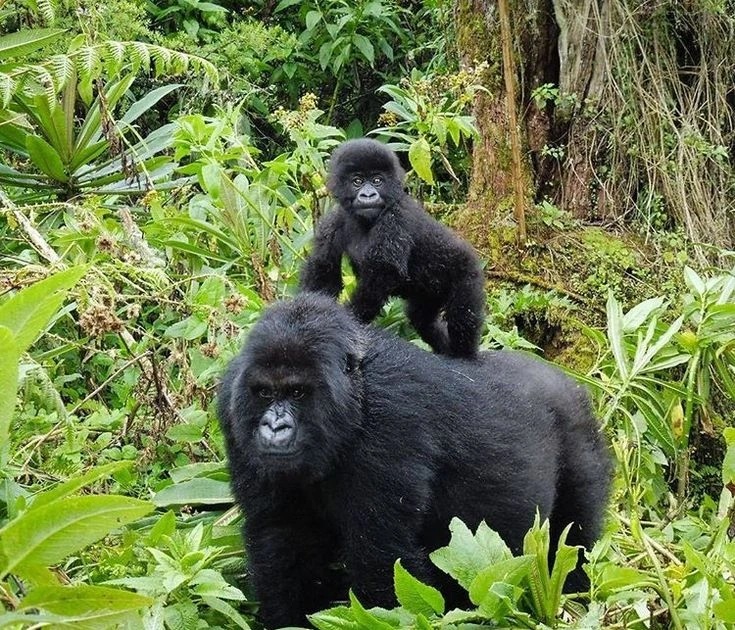
Planning an 11-day Uganda safari requires booking a $800 gorilla permit 3-12 months in advance and securing a local operator for a, itinerary covering Bwindi Impenetrable Forest, Queen Elizabeth, and Murchison Falls national parks. Key steps include arranging yellow fever vaccinations, choosing the dry seasons (June-Sept or Dec-Feb), and flying into Entebbe.
11-Days best Uganda safari tour packages
11-days-uganda-wildlife-safari-to-off-beaten-path-unique-tour-including-kidepo-valley
11-days-luxury-uganda-safari-and-double-gorilla-trekking-tour-package
11-days-best-gorilla-trekking-and-uganda-safari-tour-itinerary
11 days safari in Uganda and gorilla trekking adventure
This 11days safari in Uganda and gorilla trekking adventure is a masterfully curated expedition that showcases the raw, unfiltered beauty of the "Pearl of Africa." Designed for the intrepid traveler, this journey bridges the gap between the thundering waters of the northern Nile and the ancient, mist-enshrouded rainforests of the southwest. You will transition from the wide-open savannahs, where lions and elephants roam, to the dense, emerald canopies that house our closest biological relatives. The itinerary is a sensory journey through diverse ecosystems, offering the thrill of tracking mountain gorillas and chimpanzees alongside classic game drives and tranquil boat safaris. Beyond the wildlife, this adventure provides a window into the vibrant cultures and warm hospitality of the Ugandan people. It is more than just a tour; it is a profound immersion into one of the world’s last great wildernesses, leaving you with a deep appreciation for the delicate balance of our natural world.
Day 1: Arrival and Entebbe Warmth
Your 11 days safari in Uganda and gorilla trekking adventure begins on the lush Entebbe peninsula. Upon arrival at the airport, you are met by your guide and transferred to a quiet lodge near the shores of Lake Victoria. This day is dedicated to resting and acclimatizing to the tropical air. If time permits, you can explore the Entebbe Botanical Gardens, where you might spot your first primates, such as the black-and-white colobus monkeys, and a variety of colorful sunbirds. As the sun sets over Africa’s largest lake, you will enjoy a welcome dinner and a briefing on the incredible journey ahead. The peaceful atmosphere of Entebbe provides the perfect gentle start to your expedition, allowing you to recharge before heading into the wild heart of the country tomorrow.
Day 2: Ziwa Rhinos and Murchison Falls
Heading north, your 11 days safari in Uganda and gorilla trekking adventure makes a pivotal stop at the Ziwa Rhino Sanctuary. Here, you will experience the thrill of tracking Southern White Rhinos on foot with an expert ranger. This conservation success story allows you to stand just meters away from these prehistoric giants. Afterward, you continue to Murchison Falls National Park, arriving at the "Top of the Falls." You will witness the Nile River being funneled through a narrow seven-meter gorge, creating a deafening roar and a permanent rainbow in the mist. The sheer power of the water is a humbling sight, marking your entry into Uganda’s largest protected wilderness. You will then cross the river to your lodge, surrounded by the sights and sounds of the African savannah.
Day 3: Nile Game Drive and Delta Boat Cruise
Day three of your 11 days safari in Uganda and gorilla trekking adventure focuses on the diverse wildlife of the northern bank. An early morning game drive reveals lions, leopards, and massive herds of Rothschild’s giraffes and elephants. The open plains are a photographer's dream, teeming with Jackson’s hartebeest and Uganda kob. In the afternoon, you board a boat for a cruise downstream toward the Albert Delta. This area is a birdwatcher's paradise and offers the best chance to spot the elusive, prehistoric Shoebill stork among the papyrus. As you glide past schools of grunting hippos and enormous Nile crocodiles, the golden light of the setting sun bathes the landscape in a warm glow. This day perfectly captures the wild, aquatic essence of Murchison Falls, blending big game viewing with tranquil river exploration.
Day 4: Transfer to Kibale Forest
Leaving the northern plains, the 11 days safari in Uganda and gorilla trekking adventure heads southwest toward the foothills of the Rwenzori Mountains. This is a day of scenic transition, as you drive through vibrant rural villages and sprawling tea estates that paint the hillsides in shades of brilliant green. As you approach Fort Portal, the jagged peaks of the "Mountains of the Moon" provide a dramatic backdrop. You finally enter the lush environment of Kibale National Park, home to the highest density of primates in Africa. Your lodge is nestled within or on the edge of the rainforest, where the air is thick with the scent of tropical blooms and the calls of exotic birds. This shift from savannah to forest marks the beginning of your deep immersion into the world of great apes.
Day 5: Chimpanzee Tracking and Bigodi
Today is a highlight of your 11 days safari in Uganda and gorilla trekking adventure. You enter Kibale Forest to track habituated chimpanzees. Following their vocal "pant-hoots," you will spend an hour observing their human-like social structures, grooming rituals, and acrobatic displays in the canopy. The experience is an intimate look into the lives of our closest relatives. In the afternoon, you visit the Bigodi Wetland Sanctuary for a community-led nature walk. This swamp is a haven for eight different primate species, including the Red Colobus, and the spectacular Great Blue Turaco. This day emphasizes the incredible biodiversity of the Albertine Rift and the success of community-based conservation, leaving you with a profound respect for the forest's delicate ecosystem and the primates that thrive within its ancient, towering mahogany trees.
Day 6: Queen Elizabeth Park Game Drive
The 11 days safari in Uganda and gorilla trekking adventure continues south to Queen Elizabeth National Park. The drive takes you across the Equator, where you can stop for a unique photo opportunity. Upon entering the park, the landscape opens into vast savannahs punctuated by ancient volcanic craters. An afternoon game drive on the Kasenyi Plains offers chances to spot prides of lions and herds of Cape buffalo. The park is a mosaic of habitats, and the views of the Rwenzori Mountains in the distance are breathtaking. You will settle into a lodge overlooking the Kazinga Channel, where the evening air is filled with the sounds of the African bush. This day balances your primate focus with classic savannah wildlife, showcasing the staggering geographic and biological diversity that defines the Western Rift Valley.
Day 7: Kazinga Channel and Ishasha Lions
Morning on your 11 days safari in Uganda and gorilla trekking adventure features a boat safari on the Kazinga Channel. This waterway hosts one of the world's largest concentrations of hippos and a vibrant array of water birds. In the afternoon, you drive toward the southern Ishasha sector, famous for its unique tree-climbing lions. Spotting a massive lion lounging in the sturdy branches of a sycamore fig tree is a surreal and rare experience. The Ishasha sector is wild and secluded, offering a sense of isolation that is hard to find in more visited areas. As you navigate the golden grasslands, the sight of these arboreal predators provides a highlight that defines the unpredictable nature of the wild, marking a successful end to your time in Queen Elizabeth National Park.
Day 8: Transfer to Bwindi Impenetrable Forest
Leaving the savannah, the 11 days safari in Uganda and gorilla trekking adventure ascends into the Kigezi Highlands. This region, known as the "Switzerland of Africa," features steep, terraced hills and winding roads with panoramic views of the mist-covered valleys below. You eventually arrive at the boundary of Bwindi Impenetrable National Park, a UNESCO World Heritage site. The forest is a prehistoric, emerald-green wall of vegetation that houses nearly half of the world's remaining mountain gorillas. The air here is cool and crisp, providing a sharp contrast to the heat of the plains. You will settle into your lodge, feeling the palpable anticipation for tomorrow's encounter. Tonight, you prepare your gear for the trek, knowing you are on the doorstep of one of the most significant wildlife experiences on the planet.
Day 9: Gorilla Trekking in Bwindi
This is the heart of your 11 days safari in Uganda and gorilla trekking adventure. After an early briefing, you enter the thick forest to track a habituated family of mountain gorillas. The hike through steep ridges and tangled vines can be physically demanding, but the moment you find them, all effort is forgotten. You spend one quiet, transformative hour in the presence of a silverback and his family. Watching them interact, forage, and play just meters away is a profound privilege that creates an indelible emotional bond. The sheer size and gentle nature of the gorillas are awe-inspiring. You return from the forest with a certificate of completion and a heart full of memories, spending the evening in quiet reflection on what many consider the greatest wildlife encounter on Earth.
Day 10: Lake Bunyonyi Relaxation
After the physical intensity of the previous days, your 11 days safari in Uganda and gorilla trekking adventure heads to Lake Bunyonyi for rest and reflection. This "Place of Many Little Birds" is one of Africa’s deepest and most beautiful lakes, dotted with 29 emerald islands. You can spend the day canoeing in a traditional dugout, swimming in the bilharzia-free waters, or simply enjoying the stunning views from your lodge. The serenity of the lake, surrounded by terraced hillsides, provides a peaceful space to process the wildlife encounters of the past week. Whether you visit the local community or relax with a book, the tranquil atmosphere of Bunyonyi is a vital component of the itinerary, allowing you to decompress and recharge in one of Uganda's most picturesque landscapes.
Day 11: Equator and Departure
On the final day of your 11 days safari in Uganda and gorilla trekking adventure, you begin the scenic drive back to Entebbe. You will make a final stop at the Equator crossing for photographs and a chance to browse local craft markets for last-minute souvenirs. Following a farewell lunch, you continue to the airport for your departure flight. You leave with a camera full of photos and a deep connection to the "Pearl of Africa." The sights of the thundering Nile, the playful chimpanzees, and the steady gaze of the mountain gorilla will stay with you forever. As you board your flight, you carry the spirit of Uganda’s wilderness with you, marking the end of a truly transformative 11-day expedition through some of the world's most incredible natural habitats.
1. How far in advance should I book my 11-day Uganda gorilla safari?
For an 11-day comprehensive expedition, the "sweet spot" for booking is 6 to 12 months in advance. While a shorter lead time is occasionally possible, a multi-destination safari involving the "Big Three" (gorillas, chimpanzees, and savanna wildlife) requires a complex alignment of logistics and availability. The primary bottleneck is the gorilla permit. With only eight people allowed per gorilla family per day, permits for popular sectors like Buhoma or Rushaga sell out rapidly, particularly during the peak dry seasons of June through September and December through February.
Booking a year ahead is especially critical if you have specific lodge preferences. Uganda’s boutique luxury and mid-range lodges are small, often featuring only 8 to 12 rooms. In an 11-day itinerary, you are moving across five or six different regions; if even one lodge is fully booked, it can force a restructuring of your entire route. Furthermore, the specialized 4x4 safari vehicles and the most experienced driver-guides are in high demand. Securing these assets early ensures that you aren't settling for "back-up" options that might be further from the park gates.
If you are planning a trip for the low-season months (April, May, or November), you might get away with booking 3 to 4 months in advance. However, even then, the peace of mind that comes with having your permits secured cannot be overstated. Since the Uganda Wildlife Authority (UWA) requires full payment at the time of permit booking, early planning also allows you to spread out the financial investment of your safari, starting with the permit deposit and followed by the lodge and transport installments.
2. How do I obtain a mountain gorilla trekking permit for Bwindi National Park?
The most reliable and efficient way to obtain a gorilla permit is through a registered Ugandan tour operator who is a member of the Association of Uganda Tour Operators (AUTO). While it is technically possible for an individual to contact the Uganda Wildlife Authority (UWA) directly, the process is notoriously administrative and time-consuming. Operators have direct access to the UWA booking system and can check real-time availability across the four Bwindi sectors: Buhoma, Ruhija, Rushaga, and Nkuringo.
When you book through an operator, they handle the entire "legwork." You will need to provide a copy of your passport (to verify age and nationality) and the full permit fee. Once the permit is purchased, the operator will send you a scanned copy of the permit card or the booking confirmation. This service is typically included as part of a larger safari package, but even if you are an independent traveler, many agencies will process a permit for a small administrative fee.
A crucial advantage of using an operator is their ability to swap or relocate permits. If a particular road is washed out or if your accommodation changes, an experienced agent can often coordinate with UWA to move your permit to a different sector. Furthermore, they ensure that the permit you receive matches your physical fitness level; for example, they can request a "close" family if you have mobility concerns. Once you arrive in Uganda, your guide will hold the physical permit card and present it at the park headquarters on the morning of your trek, ensuring a seamless start to your adventure.
3. What is the cost of a gorilla permit in Uganda for 2026?
As of 2026, the cost for a gorilla trekking permit in Uganda is $800 USD for foreign non-residents. For foreign residents living in East Africa with valid work permits, the price is $700 USD, while East African Community (EAC) citizens pay 300,000 UGX. This price is standardized across Bwindi Impenetrable National Park and Mgahinga Gorilla National Park. It is important to note that this fee is non-refundable (except in rare medical cases with a 50% refund) and must be paid in full at the time of booking.
While $800 may seem steep for a single hour of wildlife viewing, the funds are the lifeblood of primate conservation. Approximately 20% of the permit revenue goes directly to the local communities surrounding the parks to fund schools, clinics, and infrastructure. This revenue-sharing model is the reason poaching has drastically decreased; the local people now view the gorillas as a vital economic asset rather than a threat to their crops. The remainder of the fee covers the salaries of the rangers, 24-hour monitoring of the gorilla families, and the anti-poaching patrols that keep the forest safe.
It is also worth noting that this price includes park entrance fees for the day of the trek and the services of the expert trackers and armed rangers. It does not, however, include the cost of a porter, tips, or transport to the park headquarters. When budgeting for your 11-day safari, the gorilla permit is usually the single largest line item after the safari package itself. Despite the cost, the experience is universally regarded as a "once-in-a-lifetime" investment that directly ensures the survival of one of our closest living relatives.
4. When is the best time to visit Uganda for wildlife and gorillas?
The absolute best times to visit Uganda are during the two dry seasons: June to August and December to February. These months offer the most favorable conditions for both gorilla trekking and savanna game drives. During the dry season, the trails in Bwindi and Kibale are less slippery, and the vegetation is slightly thinner, making it easier to navigate the forest and photograph the primates. Furthermore, the lack of rain means that savanna animals in Murchison Falls and Queen Elizabeth National Parks congregate around permanent water sources, providing spectacular and predictable wildlife viewing.
However, Uganda is an equatorial country, and "dry season" does not mean "no rain." In the rainforests, sudden tropical downpours can happen at any time. The shoulder seasons (September and March) are also excellent times to visit; the parks are less crowded, and the landscape is lush and green, which is a dream for landscape photographers. During these months, you can often enjoy a more intimate experience at the lodges and may even find more flexibility with permit dates.
The wet seasons (April, May, and October to November) are often overlooked but have their own charm. While the forest trails become "moderate to difficult" due to mud, this is the time when many trees are in fruit, meaning gorillas and chimps don't have to travel as far for food and are often found closer to the trailheads. Additionally, many luxury lodges offer "low season" rates, making a high-end safari much more accessible. Birdwatchers, in particular, prefer the wet seasons when migratory birds are present and the resident species are in their vibrant breeding plumage.
5. Which parks are included in an 11-day Uganda safari itinerary?
An 11-day "Grand Primate and Wildlife" itinerary is the perfect length to experience Uganda’s diverse ecological "circuit" without feeling rushed. A typical route begins at Murchison Falls National Park, where you witness the world’s most powerful waterfall and see "Big Five" favorites like lions, giraffes, and elephants. From there, the journey moves south to Kibale Forest National Park, the "Primate Capital of the World," which boasts the highest density of chimpanzees in Africa.
The next stop is usually Queen Elizabeth National Park, famous for its diverse habitats. Here, you’ll enjoy a boat cruise on the Kazinga Channel to see massive pods of hippos and the unique tree-climbing lions of the Ishasha sector. After the savanna, you head into the highlands to Bwindi Impenetrable National Park for the highlight of the trip: mountain gorilla trekking. The dense, ancient canopy of Bwindi offers a stark contrast to the open plains you visited earlier, showcasing the incredible range of Uganda’s geography.
Most 11-day itineraries conclude at Lake Mburo National Park, the smallest of the savanna parks. Lake Mburo is the only place in southern Uganda where you can see zebras and impalas, and it is a perfect spot for a walking safari or a night game drive to find elusive leopards. Some travelers choose to add a day at Lake Bunyonyi for relaxation after the strenuous gorilla trek. This "loop" ensures that you see the best of Uganda’s biodiversity—from the thundering Nile to the misty volcanic ridges—providing a holistic view of why this country is called the "Pearl of Africa."
6. Can I fly into Rwanda to trek gorillas in Uganda instead of Entebbe?
Yes, flying into Kigali, Rwanda is a highly popular and strategic "shortcut" for those whose primary goal is trekking gorillas in southern Uganda. While Entebbe is the traditional gateway, the drive from Entebbe to Bwindi is approximately 8 to 10 hours. In contrast, the drive from Kigali to the southern sectors of Bwindi (Rushaga or Nkuringo) is only 4 to 5 hours, including the border crossing at Cyanika or Katuna. This significantly reduces your time on the road and allows for a more relaxed start to your safari.
This "Kigali-to-Bwindi" route is particularly effective for 11-day itineraries that start or end with the gorillas. For example, you can fly into Kigali, trek the gorillas the next day, and then work your way north through Queen Elizabeth and Kibale, eventually flying out of Entebbe. This prevents you from having to drive the same long road twice. It also gives you a chance to see the beautifully terraced "Land of a Thousand Hills" in Rwanda before entering the "Switzerland of Africa" in Uganda.
However, there are two important logistical considerations. First, you will need an East African Tourist Visa ($100), which allows multiple-entry travel between Rwanda and Uganda. This is much cheaper and easier than buying separate visas. Second, you must ensure your gorilla permit is for the southern sectors (Rushaga, Nkuringo, or Ruhija). If your permit is for the northern Buhoma sector, the drive from Kigali increases to about 6 hours, which is still shorter than the drive from Entebbe but requires more careful planning. Overall, the Kigali gateway is a "pro-tip" for maximizing your time in the forest rather than in a vehicle.
7. Do I need a visa to enter Uganda for my safari trip?
Yes, most international travelers require a visa to enter Uganda. Since 2021, Uganda has moved entirely to an Electronic Visa (eVisa) system. You can no longer obtain a visa on arrival at Entebbe Airport or at land borders. You must apply in advance through the official Uganda Immigration portal. The process is straightforward: you upload a copy of your passport, a recent photo, and your Yellow Fever vaccination certificate, and pay the fee (usually $50 USD for a single-entry tourist visa) via credit card.
Once your application is processed (usually within 3 to 7 working days), you will receive an "Approval Letter" via email. You must print this letter and carry it with you; the airline will ask to see it before you board, and the immigration officer at the border will use it to print the physical visa sticker into your passport. If your 11-day itinerary involves flying into Kigali and then crossing into Uganda, you should instead apply for the East African Tourist Visa ($100). This joint visa covers Rwanda, Uganda, and Kenya, saving you time and money at the border.
Always ensure your passport has at least six months of validity remaining from your date of entry and at least two blank pages. It is also wise to apply at least three weeks before your departure to account for any administrative delays. Your tour operator will typically provide you with an "Invitation Letter" or a copy of your safari itinerary to upload with your application, which helps streamline the approval process.
8. What is the minimum age for gorilla trekking in Bwindi National Park?
The Uganda Wildlife Authority (UWA) strictly enforces a minimum age of 15 years for gorilla trekking. This rule is in place for several critical reasons involving both safety and conservation. First, children under 15 are more likely to carry "childhood diseases" like mumps, chickenpox, or whooping cough, to which gorillas have no immunity. Because we share 98% of our DNA with these primates, a simple human virus can be catastrophic for an entire gorilla family.
Second, the trek can be physically and mentally demanding. It involves hiking through dense, steep, and often "moderate to difficult" terrain for several hours. Children may struggle with the endurance required or, more importantly, may react unpredictably if a gorilla makes a sudden movement or a "mock charge." The 15-year age limit ensures that all participants have the maturity to follow the strict behavioral guidelines—such as staying still, keeping a low voice, and avoiding eye contact—which are essential for a safe encounter.
If you are traveling with children under 15, there are still ways to enjoy an 11-day safari. Many lodges offer "kid-friendly" nature walks or cultural visits while the adults are trekking. In some rare cases, a special waiver can be requested from UWA if a child is close to the age of 15 and is exceptionally fit, but this is granted solely at the discretion of the park warden and is not guaranteed. For most families, the age limit is a helpful benchmark for deciding when the "right time" is for this profound wildlife experience.
9. How many hours can I spend with the gorillas during my trek?
Once your team of trackers and rangers successfully locates the gorilla family, you are allowed exactly one hour (60 minutes) in their presence. This time limit is a non-negotiable conservation rule implemented across Uganda, Rwanda, and the DRC. The primary purpose is to minimize the "human footprint" on the gorillas' daily lives. Prolonged exposure can lead to behavioral changes, increased stress levels, and a higher risk of disease transmission. By limiting the time, the gorillas can return to their natural routines of foraging, grooming, and nesting without significant disruption.
During this hour, you are a silent observer in their world. You might see the Silverback (the dominant male) stoically guarding his troop, mothers cradling infants, or juveniles wrestling in the undergrowth. Because the gorillas are "habituated"—meaning they are accustomed to the presence of humans but still entirely wild—they will largely ignore you as long as you maintain the mandatory 7-meter distance. Your rangers will keep a strict watch on the time and will give you a "five-minute warning" before it’s time to head back.
If you feel that one hour is not enough, Uganda offers a unique alternative called the Gorilla Habituation Experience in the Rushaga sector. This specialized permit costs $1,500 USD and allows you to spend four hours with a gorilla family that is still in the process of being habituated. This is a more "scientific" trek where you accompany researchers and learn about the subtle nuances of gorilla behavior. For most first-time trekkers, however, the standard one-hour encounter is so intense and emotionally overwhelming that it feels much longer and provides plenty of time for both photography and silent observation.
10. How physically fit do I need to be for 11 days of safari?
An 11-day Uganda safari is an active adventure that requires a moderate level of physical fitness. While much of the time in savanna parks like Murchison Falls or Queen Elizabeth is spent in a vehicle, the primate treks in Bwindi and Kibale are a different story. Gorilla trekking in Bwindi is the most demanding activity; you will be hiking at altitudes between 1,100 and 2,600 meters on steep, often muddy ridges. The hike can last anywhere from two to six hours, and you must be comfortable walking on uneven ground with thick vegetation.
Chimpanzee tracking in Kibale is generally less strenuous as the terrain is flatter, but it often involves "speed walking" to keep up with the chimps as they move through the forest. Additionally, many 11-day itineraries include nature walks, a hike to the top of Murchison Falls, or a walking safari in Lake Mburo. You don't need to be a marathon runner, but you should be able to walk 5 to 10 kilometers on hilly terrain without significant distress.
If you have concerns about your fitness, there are several ways to manage the physical load. First, you can hire a porter ($20) to carry your daypack and provide a steadying hand on the steep sections. Second, you can request an "easy" or "medium" trek at the park headquarters; while not guaranteed, the rangers do their best to accommodate older or less fit travelers. Finally, using a walking stick (usually provided by the lodge or park) is essential for balance. As long as you are mobile and have a spirit of adventure, the "moderate to difficult" label of the trek should not deter you from the experience.
11. What should I pack for gorilla trekking in Uganda’s damp forests?
Packing for the Ugandan rainforest requires a focus on protection and layers. The environment is humid, thorny, and unpredictable. Your most important item is a pair of sturdy, waterproof hiking boots with good ankle support. The trails are often muddy and slippery, and a solid grip is essential for safety. Complement these with long, moisture-wicking socks; you will be instructed to tuck your trousers into your socks to prevent "safari ants" from crawling up your legs.
For clothing, think "full coverage." You must wear long-sleeved shirts and long trousers to protect your skin from stinging nettles, thorny branches, and biting flies. Lightweight, synthetic materials that dry quickly are much better than cotton, which stays heavy and cold when wet. A pair of sturdy garden gloves is a "pro-tip" for Bwindi; you will frequently need to grab onto saplings or vines for balance, many of which have small thorns or stinging hairs.
Don't forget a lightweight, breathable raincoat or poncho, even in the dry season. A "daypack" with a rain cover is also essential for carrying your water, packed lunch, and camera gear. Because you will be alternating between the hot savanna and the cool forest, packing layers (like a fleece or light jacket for early morning game drives) is key. Finally, bring a wide-brimmed hat and insect repellent with a high DEET concentration. This "utilitarian" approach to packing ensures that you can focus on the wildlife rather than physical discomfort.
12. Is it necessary to hire a porter for my gorilla tracking activity?
While not mandatory, hiring a porter is highly recommended for every trekker, regardless of age or fitness level. For a fee of approximately $20 USD (plus a tip), a local porter will carry your daypack and provide physical assistance throughout the trek. In the "Impenetrable Forest," where there are often no set paths, having someone who is "forest-born" to steady you on a slippery log or pull you up a muddy embankment is invaluable. It allows you to conserve your energy and keep your hands free for your camera and binoculars.
Beyond the physical help, hiring a porter is one of the most direct ways to support the local community. Most porters are residents of the villages bordering the park. For many, this is their primary source of income, which they use to pay school fees or invest in small-scale farming. By providing this employment, the Uganda Wildlife Authority (UWA) ensures that the community sees a tangible, daily benefit from the presence of the gorillas. This economic link is a cornerstone of the "community conservation" model that has made Uganda a leader in primate protection.
Many travelers initially feel "too fit" to need a porter, but they quickly realize that the Bwindi terrain is unlike any city park or standard hiking trail. The mud can be "boot-deep," and the slopes can be 45-degree angles. Having a porter also gives you a chance to chat with a local and learn about life in the Ugandan highlands. It is a small cost that significantly enhances your safety, comfort, and the positive impact of your safari.
13. Do I need to take malaria prophylaxis for a Uganda safari?
Yes, malaria prophylaxis is essential for anyone traveling to Uganda. The entire country, including the high-altitude regions of Bwindi and the savanna parks, is a malaria-endemic zone. You should consult with a travel clinic or your primary physician at least 4 to 6 weeks before your departure to discuss which medication is best for you (common options include Malarone, Doxycycline, or Lariam). It is vital to follow the prescription exactly, which often involves starting the pills before you arrive and continuing them for a period after you return home.
In addition to medication, you should practice "integrated mosquito management." Most mosquitoes that carry malaria (Anopheles) are most active between dusk and dawn. During these hours, wear long-sleeved clothing and apply insect repellent containing DEET to any exposed skin. Almost all safari lodges in Uganda provide mosquito nets over the beds and perform "turn-down" services where they spray the room in the evening.
While malaria is a serious disease, it is entirely preventable with the right precautions. Don't rely on "natural" repellents or homeopathic remedies, as they are often ineffective against tropical mosquito strains. By combining prophylaxis with physical barriers (nets and clothing), you can enjoy your 11-day safari with peace of mind. If you do happen to develop a fever or flu-like symptoms during or after your trip, inform your doctor immediately that you have been in a malaria-endemic region.
14. What safety measures are in place during my Uganda gorilla trekking tour?
Safety is the highest priority for the Uganda Wildlife Authority (UWA) and the tourism industry. During the gorilla trek, your group is accompanied by at least two armed park rangers—one in the front to clear the path and one in the rear. These rangers are not there because of "human threats," but as a precaution against potentially aggressive wild animals like forest elephants or buffaloes. In most cases, the rangers use their knowledge of the forest to avoid these animals entirely, but they are trained to "fire in the air" to scare off an animal if necessary.
The rangers and trackers are also highly skilled at reading gorilla behavior. They have spent years with these specific families and can tell the difference between a playful "chest-beat" and a serious "mock charge." They will provide constant instructions on how to move and where to stand to ensure the gorillas remain calm. Furthermore, the 7-meter distance rule is strictly enforced to protect both you and the primates.
Beyond the forest, Uganda is a safe country for tourists. Your professional driver-guide acts as your primary point of safety during the 11-day safari, handling all navigation and local logistics. Tourism is a major pillar of the Ugandan economy, and there is a dedicated "Tourism Police" force that monitors the national parks and major transit routes. As long as you follow the park rules and the advice of your guide, a Uganda safari is a secure and well-managed adventure.
15. Are vaccines required for entry into Uganda from my home country?
The most critical medical requirement for entering Uganda is a Yellow Fever vaccination certificate. This is mandatory for all travelers aged one year and older. You will be asked to present your "Yellow Book" (the International Certificate of Vaccination or Prophylaxis) at the immigration desk at Entebbe Airport or at any land border crossing. If you do not have this certificate, you may be denied entry or required to be vaccinated on-site at your own expense.
In addition to Yellow Fever, it is highly recommended (though not always mandatory) to be up-to-date on routine vaccinations, such as Tetanus, Typhoid, Polio, and Hepatitis A and B. Because you will be in close proximity to primates, some doctors also recommend a Rabies series, though the risk to tourists is extremely low. Given the shared biology between humans and gorillas, you should also ensure you are healthy before the trek; if you have a cold, flu, or upset stomach, you may be barred from the trek to protect the gorillas.
While COVID-19 restrictions have largely been lifted, it is wise to carry your vaccination card just in case. Always check the latest requirements on the Uganda Ministry of Health or the official eVisa portal before you fly, as health regulations can change. It is also a standard "best practice" to carry a digital copy of all your vaccination records on your phone for easy access during your travels.
Booking 11 days safari in Uganda with us Roads of Adventure safaris
Book an 11-day Uganda safari with Roads of Adventure Safaris for a comprehensive tour covering gorilla trekking in Bwindi, chimpanzee tracking in Kibale, and game drives in Murchison Falls and Queen Elizabeth National Parks. Packages include 4x4 transport, accommodation, and expert guides, with a 30% deposit securing the booking
