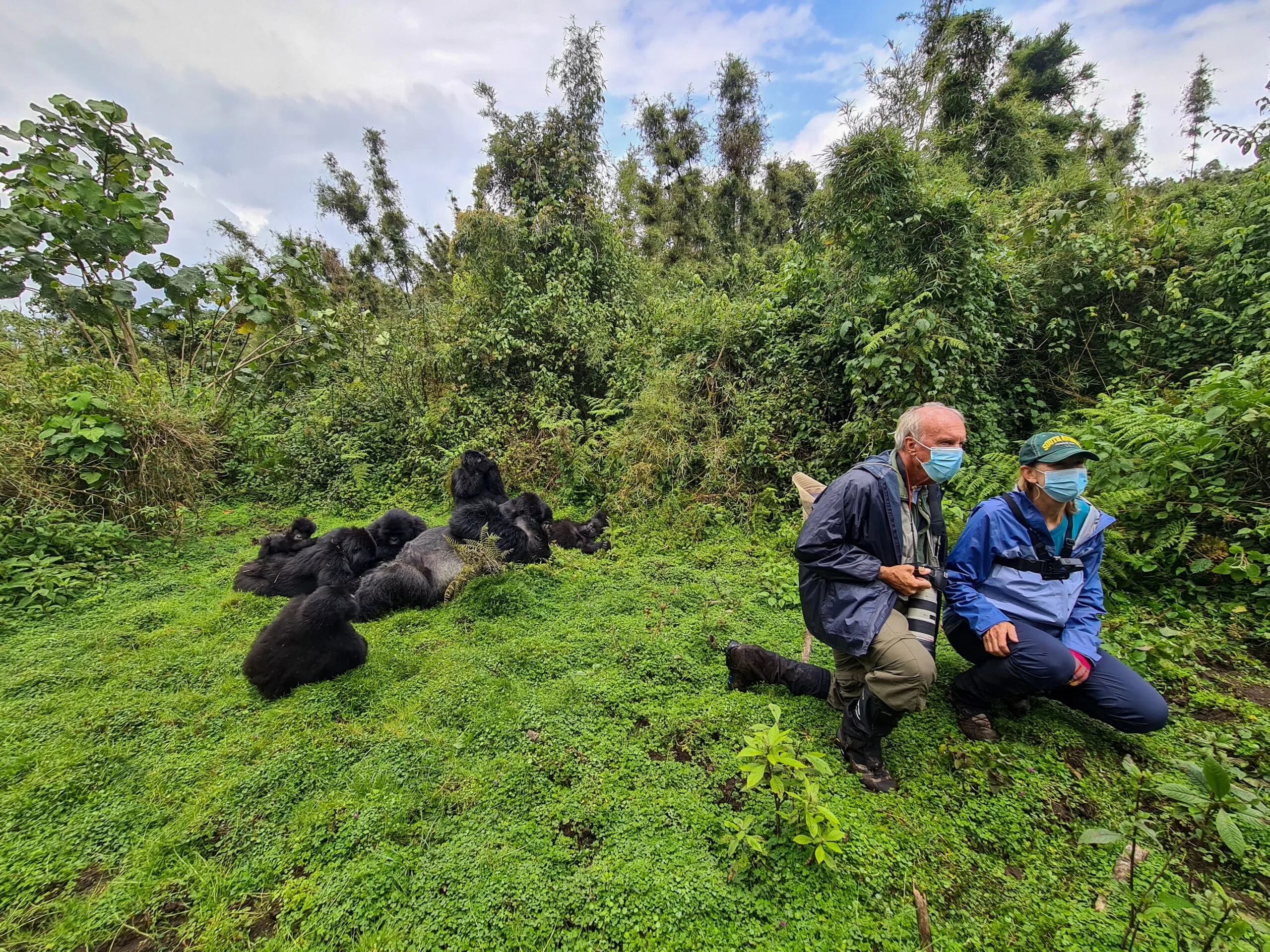
Combining gorilla trekking (typically in Rwanda's Volcanoes National Park or Uganda's Bwindi Impenetrable National Park) with a safari experience in Akagera National Park is one of the most popular and rewarding East African travel itineraries. Rwanda, in particular, makes this seamless due to its compact size, allowing travelers to experience both misty mountain rainforests and sweeping savannahs within just a few hours of travel.
2-days-best-gorilla-trekking-safari-tour-via-kigali-to-bwindi-impenetrable-forest-park
4-days-akagera-safari-and-chimpanzee-tracking-rwanda-safari
4-days-volcanoes-national-park-and-akagera-rwanda-wil
3-days-akagera-national-park-midrange-private-safari-holiday
7-days-all-inclusive-luxury-rwanda-primate-safari-holiday-and-wildlife
8-days-best-luxury-rwanda-gorilla-trekking-safari-and-wildlife
Where to Go for Gorilla Trekking
- Volcanoes National Park: Located in northwestern Rwanda, about a 2.5-hour drive from Kigali. It is the most popular choice to pair with Akagera National Park.
- Bwindi Impenetrable National Park or Mgahinga Gorilla National Park: Located across the border in Uganda, accessible via a scenic cross-border drive through border posts like Katuna or Cyanika.
Things to Do in Akagera National Park
- Game drives: Explore the rolling plains and lakes to spot the Big Five (lions, rhinos, elephants, leopards, and buffaloes) alongside giraffes and zebras.
- Boat safaris: Take a boat trip on Lake Ihema to see hippos, crocodiles, and waterbirds.
- Bird watching: Spot hundreds of unique bird species, including the rare shoebill stork.
Travel Logistics
- Route: From Kigali, the drive east to Akagera National Park takes roughly 2.5 hours on a smooth paved road.
- Duration: Most combined itineraries take at least 4 to 5 days to allow enough time for travel, game viewing, and your gorilla permit trek.
Can I realistically combine gorilla trekking with Akagera National Park in one trip?
Yes, absolutely! Rwanda is famous for offering this exact dual experience. Because Akagera National Park is located in the east of Rwanda and Volcanoes National Park is in the northwest, you can easily experience both a classic Big Five savannah safari and a primate trekking adventure in a single week. The drive between the capital city, Kigali, and either park is remarkably scenic and relatively short, making logistics smooth whether you are traveling independently or through a local tour operator.
How many days do I need for a combined trip to Volcanoes and Akagera?
While you can technically rush through both in 4 days, a 6 to 7-day itinerary is the sweet spot. This timeframe gives you enough breathing room to enjoy a full day of gorilla trekking, a relaxing afternoon at your lodge, a scenic transfer to Akagera, and at least two full days exploring the savannah, going on game drives, and experiencing boat safaris on Lake Ihema without feeling completely exhausted by constant driving.
Which gorilla trekking destination pairs best with Akagera?
Volcanoes National Park in Rwanda is the absolute best and most logical pairing with Akagera. Because both parks are situated within Rwanda and managed by the Rwanda Development Board, traveling between them takes only about 4.5 to 5 hours by road via Kigali. However, you can also pair Akagera with Uganda’s Mgahinga Gorilla National Park or Bwindi Impenetrable Forest if you are building a cross-border adventure through East Africa.
What is the typical flow of an itinerary combining both parks?
Most travelers prefer to start in Kigali, head northwest to Volcanoes National Park for the gorilla trek and cultural experiences, return through Kigali to rest or stock up, and then head east to Akagera National Park for safari game drives and boat cruises. This order works wonderfully because it gets the physically demanding hike out of the way first, allowing you to wind down with relaxing savannah sunsets and wildlife viewing afterward.
What kind of wildlife will I see in Akagera National Park?
Akagera is Rwanda's premier savannah destination and boasts an incredible variety of wildlife. Following successful reintroduction programs over the last decade, the park is now a Big Five destination—home to lions, rhinos (both black and white), elephants, leopards, and buffaloes. Additionally, you will encounter large herds of giraffes, zebras, impalas, topis, waterbucks, and hippos, alongside hundreds of bird species dwelling around its lakes and wetlands.
What should I expect during a gorilla trekking experience in Volcanoes National Park?
Gorilla trekking is an immersive, awe-inspiring trek through dense bamboo forests and volcanic slopes. You will join a small group of up to eight trekkers, accompanied by expert guides and trackers. Hikes can range from 1 to 4 hours each way depending on where the habituated gorilla family has nested. Once you find them, you are granted exactly one magical hour to observe, photograph, and quietly watch them forage, groom, and play just meters away.
How far in advance should I book my gorilla trekking permits?
You should book your gorilla permits at least 6 months to a year in advance, especially if you plan to travel during the dry seasons (June to September or December to February). Rwanda limits permits to a strict number per day to protect the endangered mountain gorillas and minimize human disturbance, meaning they sell out remarkably fast. Securing your permit should always be the very first step in planning your East African itinerary.
Is gorilla trekking physically demanding?
Yes, it can be physically challenging, though people of varying fitness levels complete it successfully every day. The terrain is often steep, muddy, and uneven, and you might navigate dense vegetation at high altitudes (ranging from 2,500 to 3,000 meters above sea level). However, guides walk at the pace of the slowest trekker, and you can hire local porters at the park headquarters to carry your backpack and give you a gentle helping hand on tricky slopes.
What is the best time of year to visit both Akagera and Volcanoes?
The dry seasons—from June to September and December to February—are generally considered the best times to visit. During these months, trails in Volcanoes National Park are less slippery and easier to hike, while Akagera's grass is shorter, making wildlife much easier to spot around water sources. That said, the parks are open year-round, and the rainy seasons offer lush green landscapes, fewer crowds, and fantastic photography opportunities.
What kind of clothing and gear do I need to pack for both experiences?
Packing for both requires a bit of versatility. For gorilla trekking, you need sturdy, waterproof hiking boots, thick woolen socks (to tuck your trousers into against safari ants), waterproof trousers, long-sleeved shirts, lightweight gardening gloves, and a rain jacket. For Akagera, bring neutral-colored clothing (khaki, brown, olive), comfortable walking shoes, a wide-brimmed hat, sunglasses, high-SPF sunscreen, and plenty of insect repellent.
Can I see chimpanzees as well on this combined trip?
Yes, you can! If you want to add chimpanzee trekking to your itinerary, you can easily visit Nyungwe National Park in the southwest of Rwanda in addition to Volcanoes and Akagera. A classic "Primate and Safari" circuit covers Nyungwe for chimpanzees and colobus monkeys, Volcanoes for gorillas and golden monkeys, and Akagera for the classic savannah safari, creating the ultimate Rwandan wildlife trifecta over 8 to 10 days.
How do I travel between Volcanoes National Park and Akagera National Park?
The most reliable and comfortable way to travel between the two parks is by private 4x4 safari vehicle with a professional driver-guide. The journey takes roughly 5 to 6 hours depending on traffic through Kigali. Because Rwanda’s roads are paved, smooth, and extraordinarily clean, the drive itself is very scenic, winding through rolling green hills, terraced farming slopes, and bustling rural villages that showcase everyday local life.
Are helicopter transfers available between the parks?
Yes! For luxury travelers looking to save time and enjoy breathtaking aerial views of the "Land of a Thousand Hills," Akagera Aviation offers helicopter charters connecting Kigali International Airport, Volcanoes National Park, and Akagera National Park. The flight takes a mere 15 to 30 minutes, turning a half-day road transfer into an unforgettable scenic flight overlooking volcanoes, lakes, and savannahs.
What are the top things to do in Akagera National Park besides standard game drives?
Beyond traditional morning and afternoon game drives, Akagera offers fantastic alternative activities. You can take a tranquil boat safari on Lake Ihema to spot massive Nile crocodiles, hippos, and waterbirds; embark on a thrilling night game drive with a spotlight to search for leopards, hyenas, and servals; or visit the community-run projects outside the park to learn about local conservation efforts and honey production.
What makes a boat safari on Lake Ihema special?
A boat trip on Lake Ihema is a peaceful, refreshing contrast to dusty vehicle game drives. Gliding across the calm water, you will come face-to-face with pods of grunting hippos and sunbathing crocodiles along the shorelines. It is also an absolute paradise for bird watchers, offering brilliant opportunities to spot the elusive shoebill stork, African fish eagles, malachite kingfishers, and colorful flocks of jacanas walking on floating lily pads.
What are night game drives like in Akagera?
Night game drives are conducted in specialized safari vehicles equipped with red-filtered spotlights, accompanied by an armed park ranger. Setting out after sunset reveals an entirely different ecosystem. You have a wonderful chance to spot nocturnal creatures such as bushbabies, side-striped jackals, genets, civets, spotted hyenas, leopards, and occasionally lions on the prowl or resting peacefully under the moonlight.
Can I do a self-drive safari in Akagera National Park?
Yes, Akagera is one of the few national parks in East Africa where self-drive safaris are permitted and popular. You can rent a reliable 4x4 vehicle in Kigali, pay your park entrance and vehicle fees at the southern gate (Ruzizi), and explore the well-signposted tracks at your own pace. However, hiring a knowledgeable local guide at the gate is strongly recommended, as they know animal behaviors and tracking hotspots that independent drivers often miss.
Where should I stay when visiting Volcanoes National Park?
Volcanoes offers a wide range of incredible accommodations suited to various budgets. High-end luxury lodges like Bisate Lodge, Singita Kwitonda, and One&Only Gorilla's Nest offer world-class architecture, stunning volcano views, and supreme comfort. Mid-range and budget options such as Five Volcanoes Boutique Hotel, Le Bambou Gorilla Lodge, and Da Vinci Gorilla Lodge provide cozy, clean rooms, warm hospitality, and convenient access to park headquarters.
Where should I stay when visiting Akagera National Park?
Akagera features exceptional accommodation options as well. Ruzizi Tented Lodge, run by African Parks on the edge of Lake Ihema, offers an intimate, eco-friendly luxury tented experience surrounded by hippos and birds. Magashi Camp, located in the private northern sector, delivers exclusive luxury and phenomenal game viewing. For mid-range travelers, Akagera Game Lodge sits on a ridge overlooking Lake Ihema with great amenities and a swimming pool.
What conservation success stories make Akagera unique?
Akagera's transformation is one of Africa's greatest conservation triumphs. Once heavily poached and grazed by cattle following the 1994 genocide, the park was saved when the government partnered with African Parks in 2010. They fenced the park, drastically reduced poaching, and successfully reintroduced lions (in 2015) and black rhinos (in 2017 and 2019), turning it into a thriving, fully functioning ecosystem with balanced predator and prey populations.
What conservation efforts protect the mountain gorillas in Volcanoes?
Mountain gorillas are protected through intensive, daily veterinary monitoring, anti-poaching patrols, and community conservation initiatives led by organizations like the Dian Fossey Gorilla Fund and African Wildlife Foundation. A significant portion of the high permit fees goes directly back into local community development projects—building schools, health clinics, and water infrastructure—ensuring that local people living near the park directly benefit from and champion gorilla conservation.
What currency is used in Rwanda, and can I use US dollars or credit cards?
The local currency is the Rwandan Franc (RWF). While major hotels, luxury lodges, and park headquarters accept credit cards (Visa and Mastercard), it is always wise to carry cash for tipping, local markets, and smaller expenses. US dollars are widely accepted, but note that USD bills must be printed from 2013 onwards and be in pristine condition; older or torn bills are routinely rejected across East Africa.
Do I need any special vaccinations or visas to visit Rwanda?
Visitors to Rwanda generally require a visa, which can be easily obtained online as an e-visa or upon arrival at Kigali International Airport. Additionally, you will need a valid Yellow Fever vaccination certificate to enter the country. It is also strongly recommended to consult your doctor about routine travel vaccines and proactive malaria prophylaxis, as both parks are located in malaria-endemic regions.
Can I combine golden monkey tracking with my gorilla trek in Volcanoes?
Yes, absolutely! Golden monkey tracking is another incredible primate experience offered in Volcanoes National Park. Unlike gorillas, golden monkeys live in the lower, bamboo-forested zones of the volcanoes, making the hike shorter and less strenuous. Watching these playful, bright-orange primates leap energetically through the canopy is delightful and makes for a fantastic morning activity paired with an afternoon relaxation or cultural tour.
What cultural experiences can I add to my itinerary?
Rwanda offers rich cultural encounters that blend seamlessly with wildlife tours. Near Volcanoes National Park, you can visit the Iby'Iwacu Cultural Village (officially known as Gorilla Guardians Village), where former poachers have transformed into cultural ambassadors sharing traditional dances, local medicine, and royal storytelling. Near Akagera, you can participate in community-led experiences like milking long-horned Inyambo cows or learning traditional banana beer brewing.
Is it safe to travel around Rwanda for safari and trekking?
Rwanda is widely recognized as one of the safest and most politically stable countries in Africa. Crime rates against tourists are remarkably low, roads are secure, and locals are exceptionally welcoming and helpful to visitors. Standard travel precautions apply—such as keeping an eye on personal belongings in crowded areas and following your guide’s safety instructions in the national parks—but overall, you will feel completely at ease.
What tips will help me capture the best photographs during my trip?
Wildlife and landscape photography in Rwanda requires a bit of preparation. For gorilla trekking, keep your camera on a fast shutter speed or high ISO, as the forest canopy is dark, and flash photography is strictly prohibited. For Akagera, bring a zoom lens (at least 70-300mm) for distant lions, leopards, and birds. Early morning and late afternoon ("golden hour") provide the most dramatic, beautiful lighting for both savannah landscapes and misty mountain slopes.
How does tipping work for guides, trackers, and lodge staff?
Tipping is a customary way to express appreciation for exceptional service in East Africa. For gorilla trekking, it is customary to tip your lead guide and the team of trackers (you can pool a tip to share among them at the end of the trek). In Akagera, tipping your private driver-guide per day is standard practice. Most safari lodges also feature a communal tip box at the reception desk to be shared fairly among all behind-the-scenes staff members.
Can I do this trip as a solo traveler, or is it better with a group?
You can easily travel either way! Solo travelers frequently book private tours or join small-group scheduled departures through reputable local operators. While group tours are more cost-effective, private tours offer complete flexibility over your daily schedule, pace, and lodge choices. Because gorilla trekking permits are strictly regulated regardless of group size, the core wildlife experience remains intimate and personal for everyone.
What makes combining Akagera and gorilla trekking an unforgettable journey?
Combining these two experiences gives you the ultimate, multi-faceted East African adventure. In just one week, you transition from the misty, mystical highlands of Volcanoes National Park—staring deep into the gentle, soulful eyes of a wild mountain gorilla—to the sun-drenched, acacia-studded savannahs of Akagera, watching elephants splash in lakes and lions roam across golden grasslands. It captures the absolute best of African biodiversity, conservation triumph, and natural beauty in one seamless escape.
Booking Rwanda safari and gorilla trekking with us Roads of Adventure safaris
Booking a Rwanda gorilla and wildlife safari with Roads of Adventure Safaris gives you custom 4x4 transport, expert guides, and early-secured permits. Rwanda permits cost $1,500 for foreign non-residents, and trips range from short 1-day excursions to 10-day primate packages.
