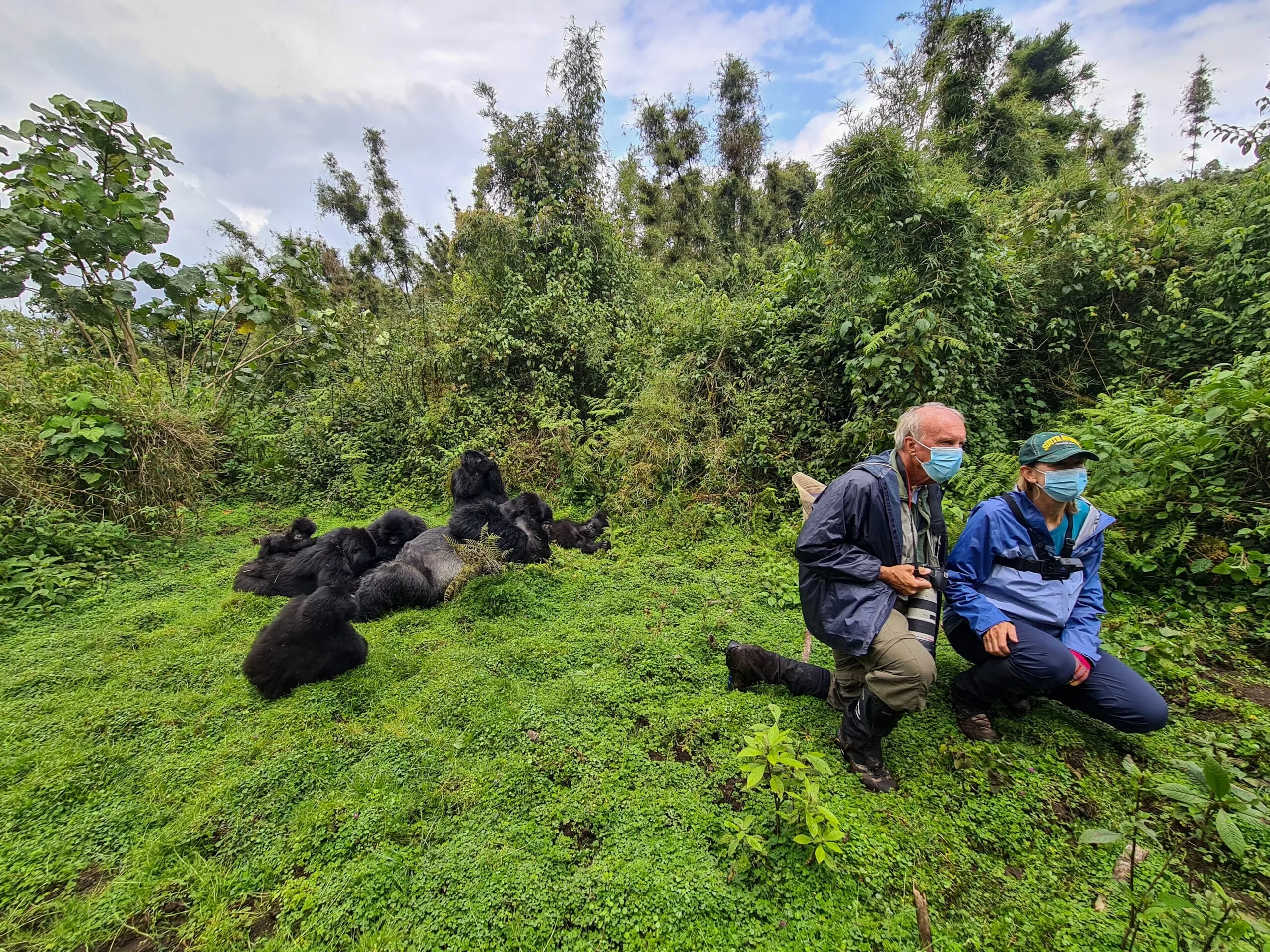
Yes, you can easily combine gorilla trekking with a traditional wildlife safari. Both Uganda and Rwanda offer seamless itineraries that pair mountain gorilla encounters in the rainforest with classic savanna game drives, boat cruises, and chimpanzee tracking.
10-days-best-uganda-big-five-safaris-and-primate-experience
10-days-uganda-rwanda-primate-safari-vacation-and-game-drive-safari
10-days-uganda-safari-all-big-five-gorilla-and-chimpanzee-tracking-adventure
7-days-safari-to-uganda-queen-elizabeth-park-gorillas-trekking-and-lake-mburo
7-days-perfect-uganda-primate-safari-itinerary
7-days-uganda-tour-to-murchison-falls-via-ziwa-kibale-and-queen-elizabeth-national-park
7-day-ultimate-uganda-primate-safari-chimpanzees-and-game-drives
6-days-safari-in-uganda-gorilla-trekking-and-chimpanzee-tracking
6-days-classic-uganda-rwanda-primate-and-wildlife-safari
6-days-uganda-primate-safari-and-wildlife-experience
6-days-budget-uganda-wildlife-safari-holiday-vacation
6-days-double-gorilla-trekking-uganda-and-rwanda-side
4-days-bwindi-impenetrable-gorilla-trekking-and-queen-elizabeth-park-tour
4-days-budget-gorilla-trekking-lake-bunyonyi-and-golden-monkey-tracking
Combining in Uganda
Uganda is exceptionally well-suited for a combined trip because its primate parks sit close to major savanna reserves.
- Gorilla Destinations: Bwindi Impenetrable National Park or Mgahinga Gorilla National Park in the southwest.
- Safari Parks: Queen Elizabeth National Park (famous for tree-climbing lions and boat safaris) and Murchison Falls National Park (known for dramatic waterfalls and large mammals).
- Permit Cost: Uganda gorilla permits cost $800 per person.
Combining in Rwanda
Rwanda offers luxury travel and short transit times, though traditional big-game savanna viewing is more centralized.
- Gorilla Destination:
- Safari Park: Akagera National Park (home to lions, rhinos, elephants, and giraffes).
- Permit Cost: Rwanda gorilla permits cost $1,500 per person
Is it easy to combine gorilla trekking with a savanna safari in East Africa?
Yes, it is exceptionally easy. Both Uganda and Rwanda feature well-connected travel corridors that link primate rainforests with vast savanna plains. In Uganda, Bwindi Impenetrable Forest is just a few hours' drive from Queen Elizabeth National Park. In Rwanda, excellent paved highways connect Volcanoes National Park to Akagera National Park via Kigali. A single combined itinerary allows you to trek mountain gorillas one day and track lions, elephants, and giraffes the next.
Which country is better for a combined gorilla and wildlife safari: Uganda or Rwanda?
Uganda is generally considered superior for combined safaris due to its high geographic density of diverse habitats. Within a compact circuit in western Uganda, you can trek gorillas in Bwindi, see tree-climbing lions in Queen Elizabeth, trek chimpanzees in Kibale, and view big game in Lake Mburo or Murchison Falls. Rwanda also offers great combinations, but its single savanna destination, Akagera National Park, sits on the opposite side of the country from the gorilla parks.
Can I see the "Big Five" alongside gorilla trekking in Uganda?
Yes! Uganda is home to all of the traditional Big Five—lion, leopard, elephant, buffalo, and rhinoceros. While rhinos are protected at the Ziwa Rhino Sanctuary in central Uganda, the remaining four roam freely across Queen Elizabeth, Murchison Falls, and Kidepo Valley National Parks. Combining Ziwa and the savanna parks with a Bwindi gorilla trek gives you a full Big Five plus gorilla experience in one trip.
Can I see the "Big Five" alongside gorilla trekking in Rwanda?
Yes. Thanks to major conservation restoration projects led by African Parks, Rwanda’s Akagera National Park is now home to all Big Five animals. You can track lions, leopards, black and white rhinos, elephants, and cape buffaloes in Akagera before or after heading northwest to Volcanoes National Park for mountain gorillas.
What are Uganda’s famous tree-climbing lions, and where can I see them?
Uganda’s famous tree-climbing lions reside in the Ishasha sector of southern Queen Elizabeth National Park. These big cats regularly scale massive sycamore fig trees to catch cool breezes and escape ground insects. Because Ishasha sits directly along the main travel route between Bwindi Forest and northern Queen Elizabeth, it is a convenient wildlife stop on a gorilla itinerary.
How many days do I need for a combined gorilla and wildlife safari in Uganda?
A classic combined safari in Uganda takes between 6 to 10 days. A 6-day itinerary typically covers Bwindi gorilla trekking and a game drive plus boat cruise in Queen Elizabeth National Park. An 8-to-10-day safari allows you to comfortably add chimpanzee trekking in Kibale Forest and a stop at Lake Mburo or Murchison Falls without feeling rushed.
How many days do I need for a combined gorilla and wildlife safari in Rwanda?
A combined Rwanda safari can be completed in 5 to 7 days. Because of short driving distances, a 5-day trip allows for 2 days in Akagera National Park for savanna game viewing and 2 days in Volcanoes National Park for gorilla trekking. A 7-day tour gives you extra time to explore Kigali's cultural sights or add chimpanzee tracking in Nyungwe Forest.
What savanna wildlife can I expect to see in Uganda’s Queen Elizabeth National Park?
Queen Elizabeth National Park boasts over 95 mammal species. During game drives and boat safaris, you can spot large herds of African elephants, cape buffaloes, Uganda kobs, waterbucks, giant forest hogs, leopards, hyenas, and lions. The park’s Kazinga Channel is famous for having one of the world's highest concentrations of hippos alongside Nile crocodiles.
What savanna wildlife can I expect to see in Rwanda’s Akagera National Park?
Akagera features open plains, woodland, and a series of lakes. You can expect to see lions, leopards, white and black rhinos, elephants, buffaloes, Masai giraffes, Burchell’s zebras, topis, impalas, elands, hippos, and large Nile crocodiles. It offers a classic, scenic landscape bounded by the Kagera River.
How do you travel between Bwindi and Queen Elizabeth National Park in Uganda?
The drive between Bwindi Impenetrable Forest and Queen Elizabeth National Park takes approximately 3 to 5 hours depending on which sector of Bwindi you start from. The route passes through scenic rural countryside and the Ishasha sector, making the road journey an enjoyable part of the safari experience.
How do you travel between Volcanoes National Park and Akagera National Park in Rwanda?
The transit between Volcanoes National Park in the northwest and Akagera National Park in the east takes about 5 hours by road. The journey goes through Kigali, making it easy to stop for lunch, visit the Kigali Genocide Memorial, or rest overnight before continuing on to the savanna.
Are domestic flights available to shorten transit times between parks in Uganda?
Yes. Domestic flight operators run daily scheduled flights connecting Entebbe International Airport to airstrips near Bwindi (Kihihi and Kisoro), Queen Elizabeth (Kasese and Mweya), and Murchison Falls (Pakuba, Chobe, and Bugungu). Flying between these destinations reduces 6-to-9-hour drives down to 45-to-75-minute scenic flights.
Can I fly between national parks in Rwanda?
Yes, domestic helicopter charters operate between Kigali International Airport, Musanze (near Volcanoes National Park), and Akagera National Park. A helicopter transfer cuts land transit times down to roughly 30 minutes per leg, offering aerial views of Rwanda's green hills and lakes.
What unique water-based wildlife experiences can I add to a gorilla safari in Uganda?
In Uganda, boat safaris are a core highlight. The launch trip along the Kazinga Channel in Queen Elizabeth National Park brings you within meters of bathing elephants, hippos, and water birds. In Murchison Falls National Park, a river cruise takes you to the base of the world’s most powerful waterfall, while Lake Mburo offers peaceful canoe excursions.
What water-based wildlife experiences are available in Rwanda’s Akagera National Park?
Akagera National Park features Lake Ihema, Rwanda's second-largest lake. Guided boat cruises on Lake Ihema provide great viewings of giant hippos, massive Nile crocodiles, and wetland bird species, including the rare shoebill stork along the papyrus fringes.
Can I trek chimpanzees and gorillas on the same safari in Uganda?
Yes! Uganda is famous for its "Primate Double." Kibale National Park is home to over 1,500 chimpanzees and boasts a high success rate for chimp tracking. Kibale is an easy 4-to-5-hour drive from Bwindi, making it simple to combine mountain gorillas and chimpanzees in one trip.
Can I trek chimpanzees and gorillas on the same safari in Rwanda?
Yes. In Rwanda, you can trek mountain gorillas in Volcanoes National Park and track wild chimpanzees in Nyungwe National Park. Nyungwe is an ancient high-altitude rainforest in southwestern Rwanda that also features a high canopy walkway suspended 70 meters above the forest floor.
What is the best time of year for a combined gorilla and game safari in East Africa?
The dry seasons—June through September and December through February—are ideal. Dry trail conditions make gorilla trekking less slippery, while sparse vegetation and receding water sources force savanna wildlife to gather around rivers and waterholes, making game drives in Queen Elizabeth or Akagera particularly rewarding.
Can I cross the border to do gorilla trekking in Uganda and a savanna safari in Rwanda?
Yes, cross-border safaris are very popular. You can fly into Kigali Airport (Rwanda), drive 4 hours across the land border into southern Uganda to trek gorillas in Bwindi or Mgahinga at Uganda’s $800 permit price, and then return to Rwanda for a game drive in Akagera or a flight home.
Can I do gorilla trekking in Rwanda and a savanna safari in Uganda?
Yes, this is also possible. You can trek mountain gorillas in Rwanda’s Volcanoes National Park and then cross the land border into western Uganda to explore Queen Elizabeth National Park's game tracks and boat channels.
What clothing should I pack for a combined primate and game safari?
You will need two distinct styles of clothing:
- For Gorilla Trekking: Heavy-duty waterproof hiking boots, long thick trousers, long-sleeved shirts, gaiters, and gardening gloves.
- For Savanna Safaris: Lightweight, breathable neutral-colored clothing (khaki, tan, green), sun hats, sunglasses, and open sandals for relaxing at the lodge. Avoid blue and black clothing on game drives, as these colors can attract tsetse flies.
What kind of safari vehicles are used for these combined itineraries?
Custom-built 4x4 Land Cruisers with pop-up roofs are the standard for combined safaris. They offer raised ground clearance to navigate rough terrain in Bwindi, along with unobstructed 360-degree views for photographing animals during game drives in Queen Elizabeth or Akagera.
Are combined gorilla and wildlife safaris suitable for families with children?
Yes, but age limits apply. The strict minimum age for gorilla trekking in both Uganda and Rwanda is 15 years old. However, classic savanna game drives, boat cruises, and birdwatching in Queen Elizabeth, Lake Mburo, or Akagera have no strict age restrictions, making those portions of the trip great for younger children.
What birdwatching opportunities exist on a combined gorilla and savanna safari?
Both countries are world-class birding destinations. Uganda boasts over 1,060 bird species, including Albertine Rift endemics in Bwindi and shoebill storks in Mabamba Swamp. Rwanda’s Akagera and Nyungwe parks host over 500 species. A combined trip covers both forest and wetland bird species.
Is Lake Mburo National Park a good addition to a Uganda gorilla trek?
Yes, Lake Mburo is the ideal stopover when driving between Entebbe/Kampala and Bwindi. It is the only national park in southern Uganda with wild impalas, zebra herds, and giraffes. You can enjoy walking safaris, horseback riding among wildlife, and boat trips without adding long driving detours.
How do lodge styles differ between gorilla rainforests and savanna parks?
Rainforest lodges around Bwindi and Volcanoes National Park are built as cozy mountain chalets or forest cabins featuring stone fireplaces and warm blankets for cool mountain nights. Savanna lodges in Queen Elizabeth or Akagera feature open-air canvas luxury tents, infinity pools overlooking riverbanks, and open dining decks designed for warmer climate viewing.
Can I experience night game drives on a combined safari?
Night game drives are permitted in select parks. In Rwanda, Akagera National Park offers night safaris led by park rangers using spotlights to search for nocturnal predators like leopards, hyenas, civets, and bushbabies. In Uganda, night game drives can be arranged in Lake Mburo, Queen Elizabeth, and Murchison Falls National Parks.
What local cultural visits can be integrated into a combined safari?
You can visit the Batwa cultural experience near Bwindi or Mgahinga to learn about the forest's original hunter-gatherer inhabitants. Near Volcanoes National Park, the Iby’Iwacu Cultural Village showcases traditional Rwandan drumming and dance. Near Akagera and Queen Elizabeth, you can tour local pastoralist communities to learn about traditional cattle herding.
How far in advance should I book a combined gorilla and wildlife safari?
It is best to book 6 to 12 months in advance. While game drives in Queen Elizabeth or Akagera can be booked with short lead times, gorilla trekking permits are strictly limited per day and sell out months ahead, especially during peak dry seasons (June–September and December–February).
How do I start planning a seamless combined safari itinerary?
Start by deciding on your total travel duration, budget, and preferred pace. Partnering with a specialized local tour operator like Roads of Adventure Safaris ensures that your gorilla permits, park entry fees, accommodation, domestic flights, and private 4x4 transportation are coordinated into one smooth, custom itinerary.
Booking gorilla trekking vacation with us Roads of Adventure safaris
To book a gorilla trekking vacation with Roads of Adventure Safaris, you can arrange tailor-made itineraries that include 4x4 transport, lodging, and $800 Uganda gorilla permits. It is best to plan and reserve your trek 3 to 6 months in advance to secure permit availability
