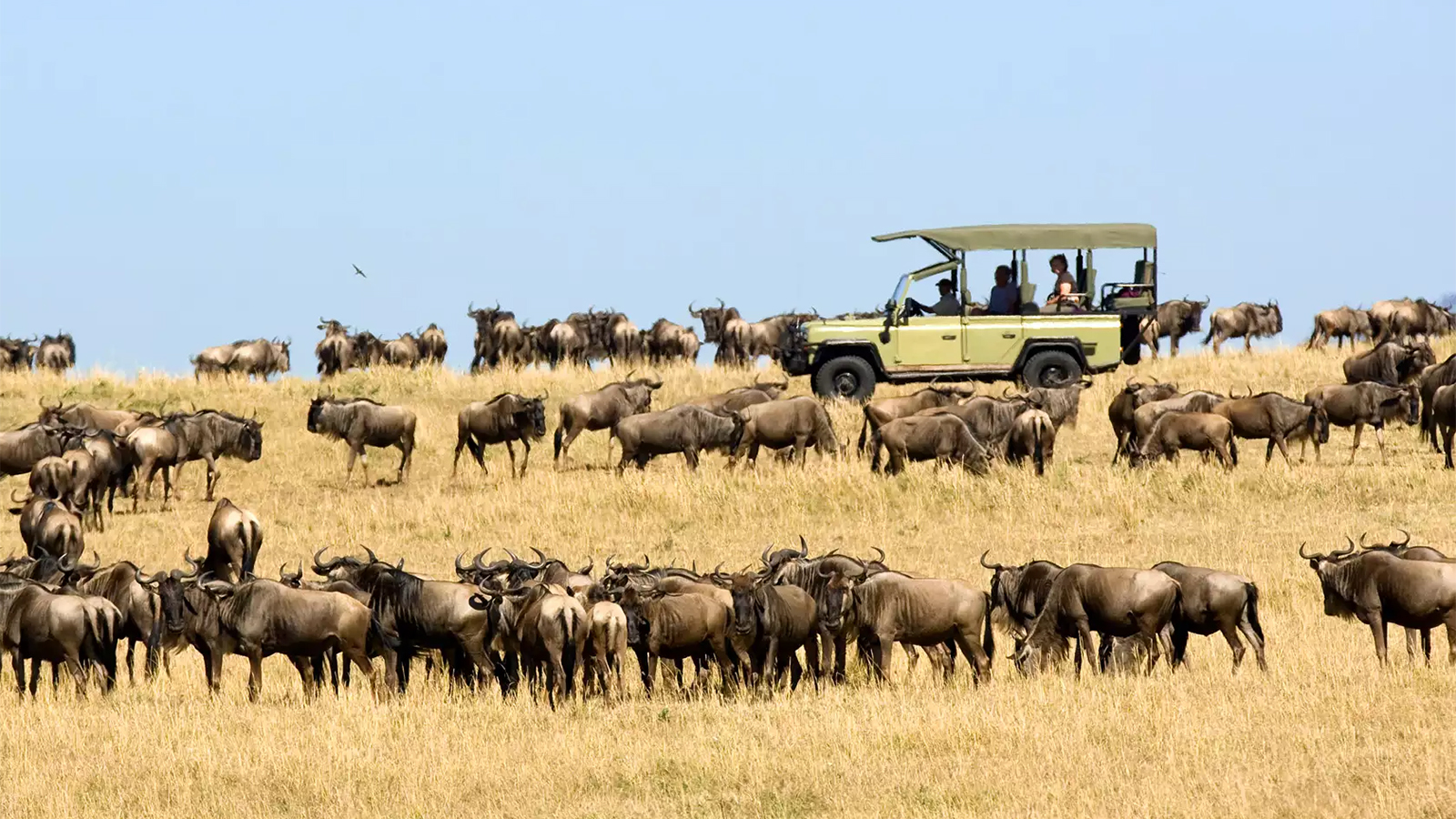
Embark on 7 Days Unforgettable Tanzania safari trip wildlife adventure. Traverse the vast, sun-drenched plains of the Serengeti, where millions of wildebeests roam alongside apex predators. Descend into the lush depths of the Ngorongoro Crater, a magnificent caldera teaming with the Big Five. Witness the iconic tree-climbing lions of Lake Manyara and the massive elephant herds of Tarangire National Park. This meticulously planned journey immerses you in raw, untamed nature. Each day brings thrilling game drives, revealing dramatic landscapes and close encounters with diverse species. Professional guides ensure every moment is extraordinary, taking you deep into the heart of the wild.
Tour highlights for 7 Days Unforgettable Tanzania safari trip wildlife adventure
Spot the Big Five
Massive elephant herds seen
Tree-climbing lions found here
Rare black rhinos protected
Volcanic crater floor tour
Endless golden savannah plains
Millions of migrating animals
Lush groundwater forest hikes
Beautiful African sunrises daily
Scenic wilderness flight included
Day 1: Arrival and Transfer to Tarangire National Park
Arrive in Tanzania and immediately begin your unforgettable seven-day wildlife trip. Your professional guide greets you, and you depart Arusha for Tarangire National Park. As you drive, the landscape shifts into rolling savannah dotted with ancient baobab trees. Tarangire is famous for its colossal elephant herds, which gather around the Tarangire River during the dry season. Your afternoon game drive allows you to spot these magnificent creatures, along with giraffes, zebras, and various antelopes. The striking red earth provides a beautiful contrast to the green vegetation. As the sun sets, head to your comfortable lodge for a restful night under the stars, preparing for the days ahead.
Day 2: Tarangire to Lake Manyara National Park
After a hearty breakfast, your trip continues toward Lake Manyara National Park, a scenic gem nestled beneath the Rift Valley escarpment. The park is renowned for its shallow, alkaline lake, which attracts thousands of flamingos and vibrant water birds. During your morning drive through the dense groundwater forest, look up into the acacia branches, where Lake Manyara is famous for spotting tree-climbing lions. You will also encounter troops of playful baboons, blue monkeys, and grazing herbivores. A picnic lunch by the hippo pool provides an excellent vantage point to watch these massive mammals wallow in the muddy waters. The afternoon offers more exploration before you retire to your scenic lodge for dinner.
Day 3: Lake Manyara to Central Serengeti
Today, your unforgettable wildlife adventure takes you to the iconic Serengeti National Park. Leaving the Rift Valley, the terrain opens into the seemingly endless, golden grasslands that define the Serengeti. This park boasts the highest concentration of large predators on earth, making every game drive thrilling. Lions, leopards, and cheetahs roam these plains, hunting the massive herds of grazers. As you travel toward the central region, your guide navigates through the kopjes, rocky outcrops where lions love to sunbathe. The sheer volume of wildlife here is unparalleled. Arrive at your tented camp in the evening, where you can listen to the calls of the wild under the African night sky.
Day 4: Central Serengeti Full-Day Exploration
Dedicate this entire day to traversing the vast plains of the Serengeti. Rise early to catch the predators active during the cool morning hours. You might witness a hunt or observe a leopard resting gracefully in a sausage tree. The landscape transitions from open grass to light woodland, supporting a staggering diversity of species. Thousands of wildebeest and zebras dot the horizon as far as the eye can see. Your expert guide will track the movements of the great migration, ensuring you are in the best position to witness these natural spectacles. Enjoy a picnic lunch in the middle of the savannah before continuing your afternoon exploration. Dinner awaits you at your camp.
Day 5: Serengeti to Ngorongoro Conservation Area
Your trip leaves the Serengeti behind this morning as you journey toward the Ngorongoro Conservation Area. Before exiting, enjoy a final morning game drive in the Serengeti plains. As you ascend into the cooler, forested highlands, the scenery transforms dramatically. Arrive at the crater rim, where breathtaking panoramic views of the collapsed volcano unfold before you. This massive caldera is home to an incredible enclosed ecosystem, supporting thousands of resident animals. You will spend the afternoon visiting a local Maasai village, gaining insight into their traditional way of life and rich culture. Dinner and overnight stay at a lodge perched on the crater rim.
Day 6: Ngorongoro Crater Exploration
Descend six hundred meters into the floor of the Ngorongoro Crater for a truly unforgettable wildlife experience. This natural amphitheater contains a high density of animals, offering a rare opportunity to spot the endangered black rhino foraging in the grasslands. The crater floor is a vibrant mix of swamps, forests, and open plains, attracting lions, hyenas, jackals, and massive herds of buffalo. You will enjoy a picnic lunch near a hippo pool, surrounded by the dramatic walls of the caldera. Every turn presents a new photography opportunity, from flamingos in the shallow lakes to massive bull elephants. Ascend the crater wall in the late afternoon.
On the final day of your Tanzania safari, enjoy a leisurely breakfast with sweeping views of the highlands. Begin your drive back to Arusha, reflecting on the unforgettable wildlife adventure you have experienced. You will pass through scenic landscapes and bustling local markets on your way out. Arriving in Arusha in the afternoon, you will have time for a quick lunch and souvenir shopping before your guide drops you off at the airport or your hotel. This marks the end of an incredible seven-day journey through Tanzania's most iconic national parks, leaving you with memories that will last a lifetime
Here is your comprehensive, expanded guide to planning your 7 days Tanzania safari, detailing exactly what to expect on this iconic African adventure.
1. What parks will I visit on a 7-day trip?
A standard, unforgettable 7 days Tanzania safari typically targets the crown jewels of Tanzania's "Northern Circuit." This region offers the highest concentration of diverse wildlife ecosystems in East Africa, minimizing travel time between destinations while maximizing your time in the bush.
- Tarangire National Park: Usually your first stop out of Arusha. Tarangire is defined by its ancient, colossal baobab trees and the Tarangire River. During dry periods, this river becomes a magnet for wildlife. It is legendary for hosting some of the largest elephant herds on the continent, sometimes numbering up to 300 individuals in a single gathering.
- Lake Manyara National Park: A scenic gem nestled against the sheer wall of the Great Rift Valley. This park features a shallow soda lake that attracts thousands of pink flamingos. Structurally, it transitions from a lush groundwater forest to open acacia woodlands. It is famously known for its unique tree-climbing lions and troops of olive baboons.
- Serengeti National Park: The centerpiece of your itinerary. You will spend multiple days exploring these endless grasslands. The Serengeti offers an unparalleled theater of apex predators (lions, leopards, and cheetahs) tracking massive resident and migratory herbivores across the plains.
- Ngorongoro Crater: Your final safari destination. This intact, unfilled volcanic caldera forms a pristine, self-contained ecosystem. The 600-meter-deep walls shelter over 25,000 large mammals, providing an incredibly high density of wildlife in a compact area.
2. Is 7 days enough for a Tanzania safari?
Yes, a week is widely considered the sweet spot for a first-time Northern Circuit experience. A 7 days Tanzania safari strikes an ideal balance between comprehensive wildlife viewing and manageable travel dynamics, making it one of the most popular itinerary lengths available.
Within a seven-day window, you can comfortably visit four distinct ecosystems without feeling like you are constantly rushing from one airstrip or lodge to the next. It allows for a multi-night stay in the Serengeti, which is critical. A single night in the Serengeti involves too much driving and too little tracking; a week-long timeframe gives you two to three nights to deep-dive into different sectors of the park, such as the Seronera Valley or the Western Corridor.
Furthermore, this duration mitigates the physical toll of safari travel. Game drives involve navigating bumpy, unpaved dirt tracks (often called a "free African massage"). Seven days allows you to experience the thrilling intensity of the bush while concluding the journey right as travel fatigue begins to set in, leaving you energized rather than exhausted.
3. What is the best time of year to go?
Timing your 7 days Tanzania safari depends entirely on what you want to witness, though the country offers excellent year-round resident game viewing.
[June - October] ----> Dry Season: Best for general wildlife & river crossings
[Jan - February] ----> Calving Season: Best for wildebeest births in Southern Serengeti
[March - May] ----> Long Rains: Best for low crowds & lush green landscapes
- The Dry Season (June to October): This is the peak safari window. Vegetation thins out, and natural water holes dry up, forcing animals to congregate predictably around permanent rivers and swamps. The weather is cooler, malaria risks are lower, and July/August presents your best chance to witness dramatic Great Migration river crossings at the Mara River.
- The Calving Season (January to February): Ideal if you want to see the migration herds packed into the southern Serengeti and Ngorongoro Conservation Area. During this brief window, roughly 8,000 wildebeest calves are born every single day, triggering intense predator action from nearby lion prides and hyena clans.
- The Green Season (November to May): While March to May brings heavy rains, it transforms the landscape into a vibrant emerald green, offers excellent birdwatching with migratory species, and features significantly lower tourist crowds and lower accommodation pricing.
4. What is the "Big Five"?
The term "Big Five" was originally coined by colonial big-game hunters to denote the five most dangerous African animals to track and hunt on foot. Today, the phrase has been proudly reclaimed by the photographic conservation tourism industry. Spotting all five is a major milestone on any 7 days Tanzania safari.
- Lion: The apex predator of the savannah. You will likely see them lounging in prides on kopjes (rock outcrops) or charting territory in the Serengeti.
- Leopard: The most elusive of the five. Leopards are solitary, masterfully camouflaged, and spend their days draped over limbs of sausage or acacia trees, often with a kill hauled up into the branches.
- Elephant: Highly intelligent and social. You will encounter them throughout the circuit, particularly in the dense herds of Tarangire.
- Cape Buffalo: Renowned for their unpredictable temperament and sheer power. Large, formidable herds are common sights across the plains.
- Rhinoceros: The rarest and most endangered member. Due to heavy poaching pressures, black rhinos are fiercely protected.
Your highest probability of checking off all five animals in a single day is inside the enclosed rim of the Ngorongoro Crater, where a small, resident population of endangered black rhinos lives under 24-hour ranger surveillance.
5. Will I see the Great Wildebeest Migration?
You have an exceptionally high chance of encountering the herds, provided your itinerary matches the seasonal location of the animals. The Great Migration is not a single, one-time event; it is a fluid, year-round cyclical movement of 1.5 million wildebeest, 250,000 zebras, and hundreds of thousands of gazelles churning through the Serengeti-Mara ecosystem.
Because a comprehensive 7 days Tanzania safari includes two to three nights dedicated solely to the Serengeti, your guide has the flexibility to position your vehicle within driving distance of the main herds.
Time of Year
Migration Location
Key Event
Jan - Mar
Southern Serengeti / Ndutu
Calving season on short-grass plains
Apr - May
Central & Western Serengeti
Herds move northwest; mating season begins
Jun - Jul
Northern Serengeti
Moving toward Kenya; crossing Grumeti River
Aug - Oct
Northern Serengeti / Maasai Mara
Dramatic Mara River crossings
Nov - Dec
Moving South through Eastern Serengeti
Returning to the southern plains for rain
An experienced driver-guide uses real-time ranger network updates to track these movements, ensuring that no matter the month, your week in Tanzania exposes you to the sheer scale of these massive, moving herds.
6. What is a typical day on safari like?
Days spent on a 7 days Tanzania safari are highly structured around animal behavior patterns, meaning your most intense activities occur when the African sun is at its lowest.
05:30 AM -- Wake up, quick coffee/tea
06:00 AM -- Sunrise morning game drive (predators active)
09:00 AM -- Bush breakfast or return to lodge
12:30 PM -- Hot lunch and midday rest during peak heat
04:00 PM -- Afternoon game drive as temperatures drop
06:30 PM -- Return to camp for sundowners, dinner, and campfire stories
An early wake-up call before dawn is standard. Predators like lions, leopards, and cheetahs hunt in the cool morning hours; by mid-day, they retreat into deep shade where they become difficult to spot.
After a morning of tracking, you return to your lodge or camp for a hearty lunch and a siesta during the oppressive heat of the day. As the afternoon cools down, you head out for a second game drive to catch the nocturnal fauna waking up. Your day concludes at twilight, returning to camp for hot showers, a multi-course dinner, and relaxing around a roaring campfire ("the bush television") listening to the distant roars of the Serengeti night.
7. How much does a 7-day safari cost?
The financial investment for a 7 days Tanzania safari typically falls between $2,400 and $4,500+ per person on a double-occupancy basis. This pricing varies significantly based on group size, seasonality, and chosen comfort tiers.
[$2,400 - $3,000] ----> Budget Camping Safari (Public sites, shared tents)
[$3,200 - $4,800] ----> Mid-Range Tented Safari (Comfortable beds, en-suite)
[$5,500 - $9,000+] ---> Luxury Bespoke Safari (Five-star lodges, private plunge pools)
A significant portion of your tour cost goes directly toward fixed expenses that cannot be discounted. For example, national park entry fees, conservation fees, and the hefty Ngorongoro Crater vehicle descent fees ($295 per vehicle per descent plus per-person fees) accumulate rapidly over seven days.
Additionally, operating custom-built, heavy-duty 4x4 safari vehicles over rugged terrain demands high fuel consumption and rigorous mechanical maintenance. Choosing a private tour over a shared group safari will increase the cost per person, but it guarantees window seats, specialized attention, and total control over your daily itinerary pacing.
8. What is included in the7 days Tanzania safari tour package?
When booking a reputable 7 days Tanzania safari, packages are designed to be highly inclusive so that travelers rarely need to open their wallets once out in the bush.
Standard Inclusions:
- All national park conservation entrance fees and vehicle crater fees.
- Full-board accommodations (three meals per day: breakfast, lunch, and dinner).
- Private, customized 4x4 Safari Land Cruiser with a pop-up photographic roof.
- Services of a certified, professional English-speaking driver-guide.
- Unlimited bottled drinking water stored in the vehicle's onboard cooler fridge.
- Airport transfers to and from Kilimanjaro International Airport (JRO).
It is crucial to clarify the exact exclusions before departure. Typically, packages do not cover international flights, travel insurance, Tanzanian tourist entry visas, premium alcoholic beverages at the lodges, or discretionary tips for your guiding crew and lodge staff. Confirming these details upfront prevents unexpected out-of-pocket expenses while tracking wildlife.
9. What should I pack for 7 days Tanzania safari?
Packing for a 7 days Tanzania safari requires balancing strict weight limits imposed by small bush planes (typically 15 kg / 33 lbs in soft-sided duffel bags) with the functional demands of the changing environment.
- Clothing: Prioritize lightweight, breathable, layers. Neutral earth tones—such as khaki, tan, olive green, and gray—are essential. Avoid dark blue and black clothing, as these colors actively attract biting tsetse flies. Avoid bright white, which quickly stains with red safari dust, and camouflage patterns, which are reserved strictly for military personnel.
- Protection: Bring a wide-brimmed sun hat, polarized sunglasses, high-SPF sunscreen, and a high-concentration DEET insect repellent.
- Footwear: Sturdy, closed-toe walking shoes or light trail runners are perfect; heavy hiking boots are unnecessary unless you are booking an extended walking safari.
- Gear: Pack a high-quality pair of binoculars ($8\times42$ is optimal) to spot distant leopards, a camera with a telephoto zoom lens (at least 300mm), a universal power adapter, and a headlamp for navigating dark tented camps at night.
10. Are children allowed on a 7-day safari?
Yes, children are welcome, and a 7 days Tanzania safari can be an incredibly educational family trip. However, careful consideration must be given to age-appropriate boundaries to ensure safety and enjoyment for everyone in the vehicle.
Most seasoned tour operators recommend a minimum age of 6 to 8 years old. Safari days entail long hours of sitting inside a moving vehicle over rough, corrugated washboard roads, often without immediate access to restroom facilities. Children must possess the discipline to remain quiet and seated during close-up wildlife encounters—a sudden loud scream or erratic movement can startle an elephant or cause a skittish leopard to flee.
Additionally, many mid-range and luxury tented camps are entirely unfenced, meaning wild animals can wander through the camp property freely at night. This setup requires strict parental supervision. For families traveling with younger children, booking a private safari vehicle is highly advantageous, as it permits tailored schedules, flexible bathroom breaks, and custom-tailored drive lengths.
11. What are the accommodation options?
Tanzania offers exceptional accommodation styles, allowing you to tailor your 7 days Tanzania safari to your preferred balance of adventure and indulgence.
- Budget Camping: The closest way to experience nature. You sleep on thin mattresses in durable canvas dome tents set up on public park campsites. Meals are prepared over open fires by a private safari chef traveling with you. Showers and bathrooms are basic, communal facilities shared with other campers.
- Mid-Range Tented Camps / Lodges: The quintessential African safari balance. Tented camps feature large, walk-in canvas tents built on raised wooden platforms. They offer proper beds, fine linens, private en-suite flush toilets, and hot bucket showers. Traditional brick-and-mortar lodges offer swimming pools and standard hotel amenities.
- Luxury Tented Camps and Lodges: Uncompromising, world-class indulgence. These five-star properties feature sprawling private villas, private plunge pools, outdoor showers, gourmet fine dining paired with premium wines, and stunning views overlooking wildlife corridors.
12. Do I need a visa to visit Tanzania?
Yes, the vast majority of international passport holders (including citizens of the United States, United Kingdom, Canada, Australia, and European Union member states) must possess a valid tourist entry visa to embark on a 7 days Tanzania safari.
The most streamlined and recommended approach is to apply for an electronic visa (e-Visa) via the official Tanzania Immigration Portal at least two to three weeks prior to your departure date. This online approval accelerates your processing time upon arrival. Alternatively, tourist visas can still be purchased on arrival at major entry ports, including Kilimanjaro International Airport (JRO) and Julius Nyerere International Airport (DAR).
A standard single-entry tourist visa costs $50 USD for most nationalities. However, due to reciprocal state agreements, United States citizens are required to purchase a multi-entry visa costing $100 USD. Ensure your passport remains valid for at least six months past your planned departure date and contains at least two consecutive blank visa pages.
13. Is it safe to go on a safari?
Yes, embarking on a regulated 7 days Tanzania safari is highly secure. Tanzanian national parks are strictly monitored by armed rangers, and the country remains one of the most politically stable and peaceful destinations within East Africa.
Your safety rests primarily on the expertise of your professional driver-guide. These guides undergo rigorous multi-year certifications covering animal behavior interpretation, defensive wilderness driving, and emergency first aid. When approaching large animals like elephants or lions, your guide reads subtle posture cues to maintain a safe distance.
[Basic Safari Rules]
1. Never stand up or wave hands outside the pop-up roof.
2. Keep all limbs inside the vehicle frame at all times.
3. Stay inside the vehicle except at designated picnic spots.
4. Always wait for an armed escort when walking around unfenced camps at night.
By respecting these simple boundaries and following your guide's instructions implicitly, you eliminate nearly all predictable risks, allowing you to enjoy the wildlife completely at ease.
14. What are the tipping guidelines?
Tipping is a deeply ingrained cultural custom within East Africa’s tourism economy. While always at your discretion, tips serve as a vital supplement to the base wages of the hard-working crews who make your 7 days Tanzania safari seamless.
- Your Driver-Guide: This individual is responsible for your safety, navigation, and spotting wildlife for 8 to 10 hours a day. The industry standard is to tip $30 to $50 USD per vehicle, per day. This pool is typically gathered from all passengers in the vehicle and presented to the guide in a single envelope at the end of the trip.
- Your Safari Chef (for budget camping tours): It is customary to tip $15 to $20 USD per day for their early morning and late night culinary work.
- Lodge and Tented Camp Staff: For behind-the-scenes staff (housekeepers, waiters, porters, and security watchmen), most camps feature a communal "Staff Tip Box" located at the main reception desk. Dropping $10 to $20 USD per room, per day into this box ensures equitable distribution among all support staff.
15. Are there any health requirements like vaccines?
When preparing health protocols for a 7 days Tanzania safari, scheduling a dedicated travel clinic consultation at least 4 to 6 weeks before departure is highly recommended to review up-to-date regional requirements.
- Yellow Fever Vaccination: This is a mandatory entry requirement only if you are arriving from, or have had a transit longer than 12 hours through, a country with a known risk of Yellow Fever transmission (such as Kenya, Uganda, or Ethiopia). If you fly directly from Europe or the US with standard connections, the certificate is generally not requested, though carrying it is safe practice.
- Malaria Prophylaxis: All premier northern safari parks sit within moderate-to-high malaria transmission zones. Your physician will likely prescribe an oral preventative regimen such as Atovaquone-Proguanil (Malarone) or Doxycycline.
- Routine Immunizations: Ensure your core vaccines are up to date, specifically Hepatitis A, Typhoid, Tetanus boosters, and Polio. Use personal prevention measures like high-DEET repellents and sleep beneath the mosquito netting provided by your lodges.
Booking 7 Days Tanzania safari with us Roads of Adventure safaris
Booking a 7-day Tanzania safari with Roads of Adventure Safaris is easily done by contacting their team via email or WhatsApp Roads of Adventure Safaris. They specialize in customized Northern Circuit itineraries taking you through the Serengeti, Ngorongoro Crater, and Tarangire National Park
