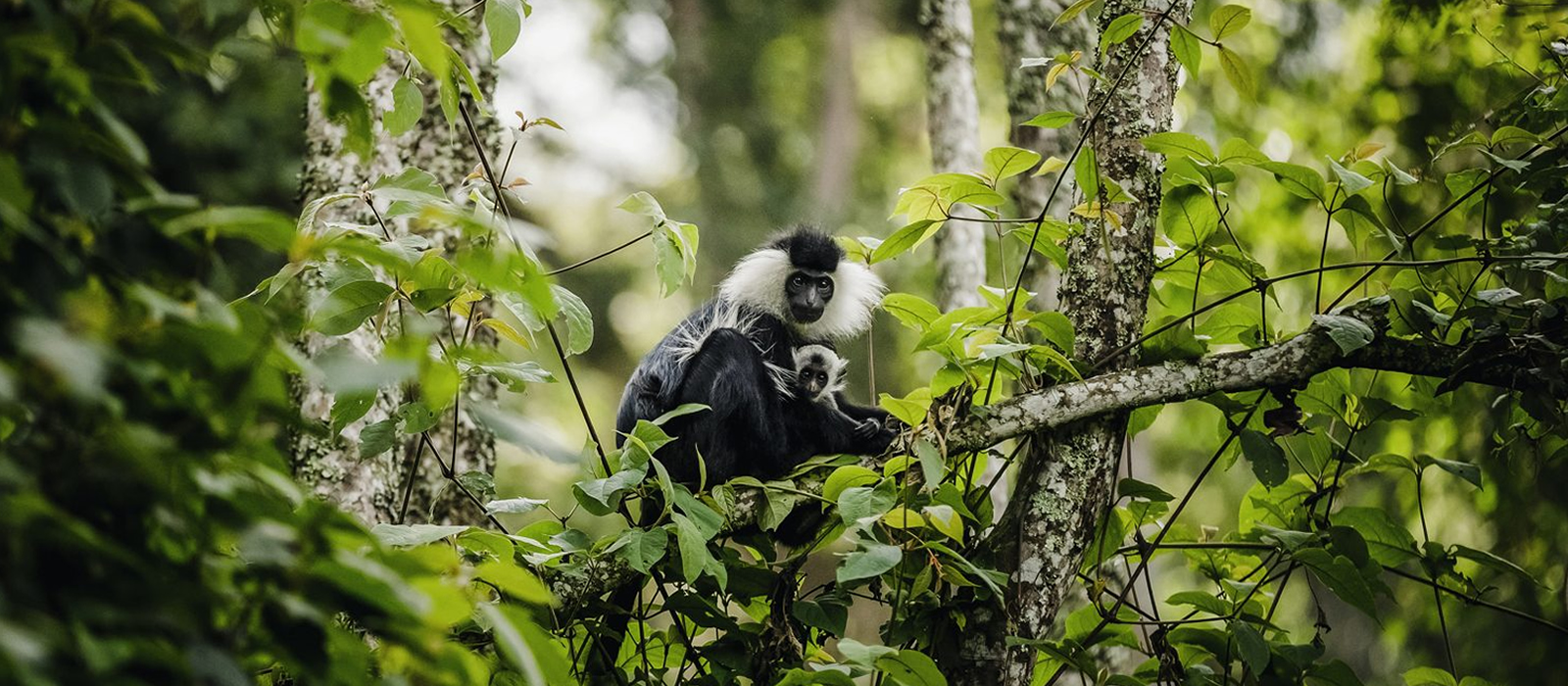
Chimpanzee tracking in Rwanda, primarily in Nyungwe National Park, offers a thrilling, high-altitude experience with our closest living relatives, who share 98% of our DNA. Trackers usually witness chimps navigating the canopy in large, noisy communities, often starting at dawn to spot them building new nests.
16-days-exclusive-rwanda-safari-tour-and-gorilla-trekking-tour-package
16-days-rwanda-birding-safari-primates-and-photography-safari
21-days-rwanda-primate-safari-culture-history-and-wildlife-holiday
20-days-complete-rwanda-uganda-safari-tour-combo
14-days-luxury-rwanda-primate-safari-and-uganda-safari-tour-combo
14-days-magical-rwanda-photography-safari
12-days-best-rwanda-wildlife-safari-and-rwanda-primate-safari-vacation
11-days-classic-uganda-rwanda-tour-combined-itinerary
10-days-9-nights-midrange-rwanda-gorilla-trekking-wildlife-and-culture
9-day-romantic-honeymoon-rwanda-wildlife-safari-itinerary
9-days-best-family-rwanda-safari-holiday-big-five-canopy-walk-and-chimpanzee
8-days-best-africa-big-five-rwanda-safari-and-gorilla-trekking
6-days-rwanda-gorilla-trekking-chimpanzee-tracking-and-birdwatching
Fun Facts About Chimpanzee Tracking in Rwanda
Almost Human: Chimpanzees share over 98% of their DNA with humans
Chimpanzees are our closest living relatives: genetic studies show humans and common chimpanzees share roughly 98–99% of their DNA sequence. That close relationship isn’t just trivia — it underpins many aspects of chimp behavior, cognition, and physiology that feel strikingly familiar to us. From facial expressions to social emotions, many chimpanzee behaviors mirror human ones because they evolved from a recent common ancestor. For researchers and conservationists, that genetic closeness makes chimpanzees invaluable for understanding human evolution, social cognition, disease susceptibility, and even aspects of language emergence. For travelers and trackers in Rwanda, the recognition that chimpanzees are so similar to us also brings ethical weight: their cognitive complexity and emotional lives argue strongly for careful, low-impact tourism and strict health protocols to prevent human-to-chimp disease transmission. That’s why habituation, restricted visitor numbers, minimum distances, and short viewing periods are enforced — to balance spectatorship with protection. The genetic similarity also explains why many visitors report powerful emotional reactions when watching chimps groom, grieve, play, or console each other — behavior that resonates because it taps into shared social instincts and evolutionary history.
Ancient Forest: Tracking occurs in Nyungwe Forest, one of Africa’s oldest montane forests
Nyungwe National Park, in southern Rwanda, is a remnant of an ancient montane forest that has persisted for millennia on the Albertine Rift. Its high elevation, stable climate pockets, and geological isolation have allowed an extraordinary range of species to evolve and survive there. For chimp tracking, Nyungwe is exceptional because it supports large, long-term chimpanzee populations that are partly habituated for tourism and research. The forest itself is biologically rich beyond chimps: it contains over a thousand plant species, many endemic birds, numerous primates, and a complex canopy structure that shapes chimp movement and behavior. For trackers, the ancient character of Nyungwe matters in several ways. Dense undergrowth, steep slopes, and emergent canopy trees create dynamic microhabitats that influence where chimps feed, nest, and socialize; trackers learn to read signs — broken branches, nests, vocalizations — shaped by that unique forest architecture. Conservation-wise, Nyungwe’s antiquity makes it irreplaceable: protecting the forest safeguards genetic lineages, endemic species, and ecosystem services (like water catchment) that local people and wildlife rely upon. Visiting Nyungwe for chimp tracking is therefore not just wildlife-watching; it’s an encounter with a living, ancient ecosystem that requires respectful, low-impact tourism to preserve it for future generations.
Vocal Communicators: They are highly vocal, using loud hoots, screams, and barks to communicate, making them easy to track by sound
Chimpanzees use a rich vocal repertoire — hoots, pant-hoots, screams, barks, grunts, and alarm calls — that serves multiple social and ecological purposes. Pant-hoots are perhaps the most famous: long, complex calls that can broadcast identity, location, mood, and social intent across long distances through the forest. A chimp’s vocalizations help maintain group cohesion when individuals spread through the canopy or rugged terrain, signal alarm to predators or rival groups, recruit allies during agonistic interactions, and even accompany food discoveries. For trackers in Rwanda, this vocality is an asset: experienced guides and researchers learn to distinguish call types and to triangulate a group’s position by sound, often locating chimps before visual contact is possible. The sound-based tracking is especially useful in dense montane forests like Nyungwe where sight lines are short. However, vocalizations also carry behavioral information — the tone and pattern can indicate whether the group is relaxed, feeding, distressed, or preparing to travel — so learning to interpret them enhances both safety and the quality of the encounter. Ethologically, chimp vocal communication offers fascinating parallels to early hominin signaling and the building blocks of language: calls combine context-specific signals with flexible use, and vocal sequences can change with social setting, revealing the chimps’ cognitive and social sophistication.
Habituation Process: The chimps you visit have gone through a years-long "habituation" process to get used to human presence
Habituation is the slow, careful process of accustoming wild animals to the presence of human observers without changing their natural behaviors or exposing them to risk. For chimpanzees, habituation can take many years and involves a series of incremental steps: researchers and trained teams make repeated, predictable approaches, maintain safe distances initially, reward calm behavior with non-invasive observation, and always avoid interactions that would make chimps dependent on humans. The primary goal is to allow close but non-disruptive observation so researchers can study natural behavior and tourism can support conservation. In practice, habituation requires dedicated field teams, careful record-keeping of individual animals, and consistent adherence to protocols: no feeding, no direct touch, strict illness screening for humans, and limits on group size and visit duration. The long timeframe matters — a successfully habituated chimp community represents continuity of trust across seasons and generations. But habituation also comes with responsibilities: habituated animals can become more vulnerable to poaching or disease if protection and veterinary surveillance decline. That’s why habituation programs are often paired with anti-poaching patrols, community conservation efforts, and tourism rules that limit disease risk and behavioral disruption. For visitors, meeting a habituated group is a rare privilege, but it is sustained only by long-term commitments to ethical monitoring and protection.
Knuckle Walkers: Chimpanzees travel on all fours, using their knuckles for support
Knuckle-walking is a distinctive form of terrestrial locomotion seen in chimpanzees and gorillas: rather than placing the full palm on the ground, these apes support their weight on the dorsal surfaces of the middle phalanges (the knuckles) while keeping the fingers curled. This adaptation is biomechanically efficient for large-bodied primates that also climb and brachiate (move through trees). Knuckle-walking allows chimps to move on the ground with stability while preserving wrist and hand flexibility for arboreal locomotion and manipulative tasks such as tool use. Anatomically, knuckle-walking is associated with specific skeletal features — robust wrist joints and particular orientations of the radius and ulna — that reduce stress during weight bearing. Observing chimps on the ground while tracking in Rwanda gives visitors a visceral sense of their morphological compromise: they are equally at home in trees and on the forest floor. Knuckle-walking also emphasizes that chimp locomotion is not a simple “primitive” stage toward bipedalism but a specialized solution to a mixed arboreal-terrestrial life. For comparative anatomists, the existence of knuckle-walking in apes informs debates about the evolutionary pathways that led to human bipedalism. Practically for trackers, seeing chimps move both knuckle-walking and quickly clambering up trees underscores how tracking techniques must account for rapid three-dimensional movement across canopy and ground.
Daily Nests: They build new nests out of tree branches and leaves every single day
Chimpanzees construct sleeping platforms, or nests, each night using branches, twigs, and foliage — a behavior found across great apes. Building a nest is not a trivial task: chimps select appropriate branches, interweave them to form a stable platform, and often add leafy material for comfort and insulation. Nest-building serves multiple functions: it provides protection from ground predators and parasites, thermoregulation (insulation at altitude or in cool nights), and sleeping comfort that supports cognitive and physical restoration. In tropical montane forests like Nyungwe, daily nesting also reflects the chimps’ shifting spatial use: nests are built near feeding sites or along travel routes, and their locations serve as reliable signs for trackers trying to reconstruct recent group movements. Because chimps make new nests virtually every night, the arrangement and height of nests can indicate social patterns: dominant adults may occupy sturdier or higher nests; mothers often nest near infants; and the distribution of nests across the canopy can reflect group cohesion or fragmentation. For researchers, examining nest architecture provides insights into material choice, cultural variation (nested styles can vary between groups), and responses to environmental pressures. For visitors, seeing discarded or abandoned nests during a morning walk is a tangible reminder of the chimps’ daily routines and their intimate connection to forest structure.
Tool Users: They are highly intelligent, using sticks to forage for insects or rocks to crack nuts
Chimpanzees are among the most skilled non-human tool users: across populations they fashion and use objects to gain access to otherwise unavailable food resources. Classic examples include termite fishing — shaping slender sticks or blades of grass to probe termite mounds and extract insects — and nut cracking with stone hammers and anvils, seen in some West African populations. In Rwanda and the Albertine Rift, chimps use probing sticks, leaf sponges (wadging leaves to soak up water), and other simple implements to obtain insects, honey, or liquids. Tool use demonstrates several cognitive capacities: problem solving, foresight (selecting and modifying objects before use), social learning (young chimps copying techniques from elders), and even cultural transmission, because tool techniques vary between communities and persist across generations. From a tracking perspective, evidence of tool use — discarded tool fragments, tool-handling traces, or characteristic foraging damage — provides both behavioral insights and cues about recent chimp activity. The presence of culture-like variation in tool use also argues for treating chimp populations as possessing unique behavioral traditions worth conserving. For visitors, observing a chimp use a tool or finding characteristic tool sites offers a memorable window into non-human intelligence and the evolutionary roots of human technology.
Early Risers: Tracking starts very early (around 4:30 AM to 5:00 AM) to find them waking up
Chimp tracking typically begins before dawn because chimps are most active in the early morning hours. At first light they leave their nests to travel, forage, and socialize — activities that produce vocalizations, broken vegetation, and visible movement that help trackers locate them. Starting a trek around 4:30–5:00 AM has practical advantages: cooler morning conditions reduce heat stress for trekkers, wind is often calmer so calls carry further, and chimps tend to be concentrated in predictable feeding areas after waking, increasing the likelihood of an early sighting. For habituated groups in places like Nyungwe, morning starts also align with park management and guide schedules and maximize the quality of the one-hour viewing window when the animals are most active and photogenic. However, early starts demand logistical preparation: participants must be ready for night or pre-dawn transfers, headlamp use while on trails, and quick but quiet briefings at park headquarters. There are ethical and welfare considerations too: teams ensure humans are screened for illness and briefed about minimal disturbance so that early-morning approaches don’t stress the animals. For many travelers, the predawn pilgrimage into a waking forest — following calls, watching shafts of light reveal chimps moving through trees — is among the most evocative moments of a wildlife tour.
500+ Individuals: Nyungwe Forest National Park is home to over 500 habituated chimpanzees
Nyungwe Forest is one of the strongest chimpanzee strongholds in East Africa. Hosting over 500 chimpanzees — many of them habituated for research and tourism — the park provides a rare opportunity to observe large, socially complex communities living within a montane forest ecosystem. The figure “500+” underscores both the park’s conservation value and the scale of management responsibilities: protecting such a population requires sustained anti-poaching patrols, veterinary surveillance, habitat protection, and community engagement to reduce human-wildlife conflict in the forest’s buffer zones. For researchers, a large and relatively intact population enables studies of social networks, long-term life-history, cultural variation, and demographic trends that smaller or fragmented populations cannot support. For tourism, Nyungwe’s chimp population means good opportunities for sightings across several tracking groups, with habituated troops available for responsible visitor encounters. Nonetheless, “500+” should not breed complacency: chimpanzee populations remain vulnerable to habitat loss, disease, and hunting, and continuous investment is needed to maintain habitat connectivity and local livelihoods that align with conservation. Park management and tour operators in Rwanda emphasize strict tracking rules (age limits, distance, group size, illness screening) to ensure that tourism benefits conservation without undermining chimp health or behavior.
Alpha Males: Chimp groups follow a strict, often violent, hierarchy led by an alpha male
Chimpanzee societies are organized in dominance hierarchies where power, access to mates, and influence over group movements and conflicts often cluster around high-ranking individuals. In many communities an alpha male holds top status and secures mating opportunities, but maintaining that position is not guaranteed: alpha males must constantly assert dominance through displays, coalition-building, aggression, and social alliances. Chimp hierarchies can be violent because rank changes frequently involve physical contests, intimidation, and strategic alliances among males. Female rank hierarchies also exist and profoundly shape access to resources and offspring survival. Observing these dynamics while tracking in Rwanda can be intense: dominant males may display chest-beating, loud pant-hoot choruses, and aggressive charges to intimidate rivals or defend territory. For ethologists, chimp social politics are fascinating because they combine brute force with sophisticated social cognition — Machiavellian tactics, deception, and long-term alliance management. For visitors, witnessing dominance displays or post-conflict reconciliation behaviors offers a vivid reminder that chimp societies are complex and emotionally rich. At the same time, such aggression underscores the need for strict viewing protocols and guide control during encounters, because unexpected intergroup tensions or alarmed reactions could escalate if visitors are too close or the group is stressed.
Nocturnal Nests: While they nest in trees, they occasionally prefer, or are forced to, nest on the ground if not comfortable
Although chimpanzees typically build arboreal nests each night, they sometimes sleep on the ground — a behavior influenced by ecological and social factors. Ground nesting may occur in areas with low predator pressure, when suitable nesting trees are scarce, or when groups need to remain near ground-based food sources. In some cases, disease or severe weather can push chimps to seek low, sheltered sleeping spots. Ground nesting can increase vulnerability to terrestrial predators and parasites, and it may correlate with human-disturbed habitats where canopy structure is degraded. For trackers in Rwanda, finding a ground nest is an important sign: it reveals recent group behavior, potential ecological pressures, or unusual circumstances affecting the troop. Researchers study ground nesting to understand environmental constraints, adaptation, and risk trade-offs in chimp life-history. Ground nest use can also carry conservation implications: increased ground nesting may indicate habitat degradation or changes in predator dynamics and so can trigger targeted conservation responses. For visitors, encountering ground nests provides a poignant, tangible trace of chimps’ daily choices and the environmental pressures that shape them.
Extremely Mobile: Chimps are far more mobile than mountain gorillas, often traveling fast through the high treetops
Chimpanzees are highly arboreal and agile: their locomotion includes rapid climbing, leaping between branches, and swift travel along canopy pathways. Compared to mountain gorillas — which are largely terrestrial and move more slowly through dense undergrowth — chimps can cover larger daily ranges and shift locations quickly, especially when following seasonal fruiting trees or avoiding rival groups. Their mobility makes tracking a dynamic challenge: chimps can travel across three-dimensional forest space at speed, moving from emergent trees to vine tangles in moments. For trackers in montane forests like Nyungwe, that mobility means one must rely on vocal cues, fresh nests, and informed local knowledge rather than fixed trail sighting points. Mobility also reflects ecological adaptability: chimps can exploit patchy, ephemeral food sources across a landscape, which helps maintain large populations in diverse habitats. From a tourism standpoint, the chimps’ speed can make sightings unpredictable and exhilarating — visitors may watch groups burst into view through the canopy or perform acrobatic displays — but it also requires experienced guides to ensure safety, maintain distance, and avoid interfering with rapid group movement. Mobility thus shapes both chimp ecology and the practical art of ethical wildlife observation.
Dietary Habits: They are omnivorous, eating fruits, leaves, insects, and sometimes small mammals
Chimpanzees have a flexible, omnivorous diet that reflects ecological opportunity and cultural variation. Fruit often makes up a large portion of their diet when available, but chimps supplement with leaves, flowers, seeds, pith, and a wide array of invertebrates. Importantly, chimps are also skilled hunters: coordinated group hunts for small mammals like monkeys are well documented, with individuals taking different roles — chasing, ambushing, or capturing prey. Hunting frequency varies among communities and seasons, and not all populations hunt equally; cultural traditions influence the presence and techniques of cooperative hunting. Tool use often complements dietary habits: twig or grass probes for termites, leaf sponges for water, and stones for cracking nuts expand accessible food niches. Nutritionally, the omnivorous diet provides protein and fat that support social and reproductive demands, and dietary breadth helps populations persist in variable environments. For trackers, feeding signs — chewed fruits, cracked nuts, termite-mound probing — are valuable cues to recent chimp activity and preferred feeding sites. From a conservation perspective, maintaining habitat heterogeneity is critical to support chimps’ diverse diet; loss of fruiting trees or prey species can reduce carrying capacity and alter social dynamics. For visitors, witnessing feeding, tool-assisted foraging, or even cooperative hunting (rare but dramatic) offers deep insight into chimp ecology and adaptability.
Age Restriction: Tracking is restricted to people aged 15 and older; 10-Meter Rule: You must maintain a minimum distance of 10 meters (32 feet) from them, say Rwenzori Expeditions
Responsible chimp-tracking guidelines limit participation by age and require minimum viewing distance to protect both humans and chimps. Many parks — including programs in Rwanda — enforce a lower age limit (commonly 15 years) because younger children may be unable to follow strict hygiene and behavioral rules, which increases disease risk and disturbance. The minimum-distance rule (10 meters or about 32 feet, as noted by Rwenzori Expeditions and similar operators) reduces the chance of respiratory disease transmission, accidental provocation, or interference with chimp behavior. These rules also align with short viewing periods and small group sizes to minimize cumulative impacts of tourism. For visitors, complying with age and distance limits preserves chimp health and sustains ethical tourism that funds conservation and local communities. Practically, guides enforce distance by briefing visitors, positioning themselves between chimps and guests if necessary, and using long lenses for photography rather than approaching. The combination of an age limit and a 10-meter rule is part of a broader conservation ethic: by limiting disruption and disease risk, tourism can be a force for protection rather than a pressure on chimp populations. Tour operators and park authorities emphasize these rules in booking conditions and pre-trek briefings to ensure the long-term welfare of both chimps and people.
10‑Meter Rule (minimum distance of 10 meters / 32 feet — as noted by Rwenzori Expeditions)
Maintaining a minimum distance of 10 meters (about 32 feet) between visitors and chimpanzees is a cornerstone of responsible tracking in Rwanda and elsewhere. That buffer reduces the risk of disease transmission — a major concern because chimpanzees share so much of our physiology and are susceptible to human respiratory illnesses — and it prevents behavioral disturbance that can alter feeding, mating, and social patterns. From a practical standpoint, the 10‑meter rule makes guided encounters safer for both parties: chimps are unpredictable and may react defensively if surprised or crowded, and the distance provides space for peaceful observation without provoking alarm displays. Guides enforce this rule during briefings and in the field, using long lenses for photography and instructing visitors to move slowly, avoid sudden gestures, and follow the guide’s positioning. A fixed minimum distance also helps standardize tourism practices across tour operators and parks, aligning conservation goals with visitor expectations. While maintaining 10 meters may sometimes make close visual detail harder to achieve, it encourages better optics and fosters a respectful attitude: the goal is not to own the moment but to witness it without harm. Observing chimps from a respectful distance supports long-term habituation, reduces stress on wild populations, and helps ensure that tourism revenues continue to fund protection rather than undermine it.
Gishwati‑Mukura Option (trek a smaller population of ~30 chimps in Gishwati‑Mukura National Park — per Volcanoes National Park Rwanda)
Gishwati‑Mukura National Park offers an alternative chimp-tracking experience to the larger, more famous sites such as Nyungwe. With a smaller population — commonly cited at around 30 chimpanzees — Gishwati‑Mukura provides a more intimate, less crowded encounter and an opportunity to visit a forest recovering from severe historical degradation. The park’s conservation story makes the trek doubly meaningful: decades of deforestation and land-use change were followed by reforestation efforts and community-based protection that restored habitat and helped chimp numbers rebound. Tracking here therefore exposes visitors not only to chimp behavior but to active restoration success, community livelihoods linked to conservation, and the pragmatic challenges of protecting small, fragmented primate populations. From a logistics perspective, Gishwati‑Mukura treks tend to be shorter and sometimes easier than some Nyungwe routes, although rainforest terrain can still be steep and muddy — good hiking boots and fitness help. Because the chimp population is smaller, sightings are less guaranteed than in larger parks, but when groups are found the experience can feel personal and reflective. Travelers who seek quieter encounters or who want to support emerging conservation sites will find the Gishwati‑Mukura option rewarding — and their fees directly assist ongoing habitat recovery and community programs.
White Tail Tufts (infant chimpanzees have a small white tuft of hair on their tail which disappears with age — per gorillatrekkingtoursandsafaris.com)
Observant trackers and guides sometimes point out a charming juvenile trait: many infant chimpanzees show pale or white-tipped tufts at the base or end of their tail region (more precisely the rump hair), a juvenile pelage characteristic that fades as individuals mature. Such temporary markings are common across mammals and can serve multiple subtle functions: they help mothers and group members visually identify and track dependent young in dense foliage, and they may signal age class during social interactions. For visitors, spotting a white-tufted infant is a delightful reminder of the chimps’ life stages and the family bonds that shape group dynamics. Guides familiar with local troops use these juvenile markers, alongside size and behavior, to estimate age and maternal relationships in the field. From a scientific standpoint, juvenile pelage patterns and their timing of loss can vary between populations; recording these traits contributes to natural history knowledge of local chimp communities. Ethically, the presence of infants underscores the importance of strict health and distance rules: young chimp immune systems are vulnerable to human-borne diseases, so tourism protocols (age limits for visitors, minimum distances, illness screening) are particularly important when infants are present. Spotting a white-tufted infant is thus both a joyful sighting and a reminder of the conservation responsibilities that come with close wildlife encounters.
Expressive Communication (chimps greet by kissing, patting, holding hands — per gorillatrekkingtoursandsafaris.com)
Chimpanzees engage in a rich repertoire of tactile and visual greetings that underscore their emotional and social complexity. Behaviors such as mouth-to-mouth contact (appearing as “kissing”), gentle patting, hand-holding, and embracing are common ways chimps maintain bonds, reconcile after conflicts, and reassure infants or anxious group members. These gestures serve multiple social functions: they reinforce alliances, calm tension, transfer reassurance, and facilitate cooperation during foraging or group travel. For trackers in Rwanda, witnessing these intimate interactions can be one of the most affecting parts of an encounter: the gestures look recognizably social and compassionate to human observers, highlighting deep evolutionary continuities in emotional expression. Researchers study such tactile communication to map social networks, track alliance formation, and understand conflict resolution strategies within groups. For tourism, these displays are evidence of why strict viewing rules exist: tactile social life is fragile and easily disrupted by stressors like loud noises or invasive proximity. Observing greeting behaviors from a respectful distance allows visitors to appreciate chimps’ social minds without interfering. In short, chimps’ expressive communication — from hand-holding to placating touches — offers a memorable window onto nonhuman sociality and the ethical imperative to protect it.
Shorter Tracking Time (you only spend about 1 hour)
Chimp-tracking encounters typically include a strict, limited viewing period — commonly about one hour — when a habituated group is located. That short time frame is not arbitrary: it balances visitor experience with animal welfare and disease mitigation. Spending only an hour with chimps reduces the cumulative stress that human presence causes, lowers the probability of pathogens passing between species, and minimizes disturbance to natural activities like feeding, mating, and resting. From a logistical perspective, limiting viewing time allows park managers to rotate multiple visitor groups through different habituated troops on the same day, distributing tourism benefits without overloading any single group. For visitors, one hour can feel brief, but experienced guides structure that time to maximize observational value: they position the group for safe viewing, point out individuals and behaviors, and interpret social interactions to ensure the hour is educational and emotionally resonant. The truncated duration also encourages mindful observation — visitors often report that the intensity of a concentrated hour, where every behavior is noticed, creates unforgettable memories rather than a long, distracted encounter. Ethically, short viewing periods are a best practice rooted in conservation science; they help ensure that tourism supports protection and research rather than harming the very animals guests have come to see.
What is the minimum age for chimpanzee tracking in Rwanda? The age limit for chimpanzee tracking is 15 years.
The minimum age requirement for chimpanzee tracking in Rwanda—commonly set at 15 years—reflects both practical and conservation considerations. Practically, tracking chimps requires discipline, patience, and the ability to follow instructions in challenging forest conditions: trails can be slippery, uneven, and sometimes steep; pre‑dawn starts demand alertness; and visitors must be able to remain calm and quiet when a group is encountered. Children under 15 are more likely to move unpredictably, make noise, or fail to comply with health and safety briefings—behaviors that can disturb chimpanzees or increase risks for both people and animals.
From a conservation and disease‑control perspective, the age limit is crucial. Chimpanzees are highly susceptible to human respiratory pathogens; young children may have higher rates of mild infections, and they may be less able to follow hygiene measures (e.g., covering coughs, not touching faces) that reduce disease transmission risk. Veterinary teams and park authorities therefore adopt conservative rules to protect vulnerable wild populations; limiting visitors to those who can reliably adhere to protocols helps minimize zoonotic risk.
Ethically, the age rule also reflects welfare concerns: habituated chimp groups are entire social communities with infants and elderly members whose health can be jeopardized by careless encounters. Tour operators and park managers enforce the age limit in booking conditions and at briefings; it’s generally non‑negotiable. Families with younger children are often advised to arrange alternative activities—forest walks, canopy tours, cultural visits, or community projects—so they can still experience Rwanda’s natural heritage without exposing chimps to undue risk. In summary, the 15‑year minimum balances visitor experience, personal safety, and, most importantly, long‑term chimp conservation.
Where is chimpanzee tracking done in Rwanda's Nyungwe National Park? Tracking is done in Nyungwe National Park, mainly Cyamudongo Forest.
Nyungwe National Park is Rwanda’s premier montane forest reserve and one of the region’s most important primate habitats. Within Nyungwe, Cyamudongo Forest is frequently used for chimpanzee tracking because it contains habituated chimpanzee communities accessible to researchers and tourists. Cyamudongo’s structure—dense canopy, varied fruiting trees, and a network of trails maintained for research and tourism—supports regular chimp activity while enabling guides to locate groups reliably using vocal cues, nests, and field observations.
Cyamudongo is not the only sector of Nyungwe, but it is notable for habituated troops and easier logistical access compared to some other forest areas. The park’s montane environment—cooler temperatures, high rainfall, steep slopes, and rich epiphytic vegetation—creates a three‑dimensional habitat where chimps move in both canopy and understory. Trackers and guides in Cyamudongo are skilled at reading signs (fresh nests, feeding remains, pant‑hoot calls) to triangulate chimp position; because canopy lines are short in montane forest, sound and recent nesting evidence are vital for locating groups.
Infrastructure and conservation management also play a role: habituation and tracking activities occur where monitoring teams, ranger posts, and anti‑poaching patrols can offer protection and health surveillance. Cyamudongo benefits from coordinated conservation programs and community engagement initiatives in adjacent buffer zones, making tourism there a support for local livelihoods and protection efforts. For visitors, tracking in Cyamudongo offers a blend of high encounter potential and an opportunity to learn about long‑term research and restoration work in Nyungwe. Dress for wet, cool conditions, be prepared for pre‑dawn starts, and follow guide instructions to ensure a safe, low‑impact visit.
How long does a chimpanzee trekking experience usually take? Trekking takes a few hours, with one hour with chimps.
A chimpanzee trekking experience typically involves several distinct phases—briefing, walking to locate the group, the viewing period, and the return—and the total time from park headquarters to completion commonly spans a few hours. Most visitors arrive at the park headquarters early in the morning for a safety and conduct briefing; tracking groups often set off around dawn because chimps tend to be most active then, increasing the likelihood of locating them quickly.
The trekking component—the walk through forest in search of the group—varies greatly depending on recent chimp movement, terrain, and weather. In some cases, the group may be nearby and trackers locate them within 30–60 minutes; in other instances, chimps may be active over a larger range that morning, and the search can take two to three hours or more. Guides rely on vocalizations, nest sites, and local knowledge of troop ranges to find the animals efficiently.
Once the group is located, the standard regulated viewing period is one hour. This one‑hour rule is a conservation measure: limiting contact time reduces disturbance and lowers the risk of disease transmission between humans and chimps. During that hour, experienced guides position the party for safe viewing, point out individuals and behaviors, and ensure compliance with distance, noise, and photography rules to protect chimp welfare.
After the viewing period, visitors typically walk back to the park headquarters; depending on where the group was located, the return journey can add another hour or so. Therefore, a full chimp‑tracking excursion is best planned as a half‑day (4–6 hours) commitment, though actual times vary. Visitors should come prepared with water, snacks, sturdy footwear, and suitable clothing for wet and cool conditions. The variable nature of tracking means flexibility and patience are rewarded: even when the search is long, the one concentrated hour of chimp observation is usually intensely memorable.
How much does a chimpanzee tracking permit cost in Rwanda? Chimpanzee permits in Rwanda cost approximately $250 per person.
Chimpanzee tracking permits in Rwanda have been priced at around US$250 per person in recent years, though fees can change and it’s important to verify current rates with the Rwanda Development Board (RDB) or your tour operator before booking. Permit fees serve multiple purposes: they regulate visitor numbers (reducing pressure on primate groups), generate revenue for conservation management (ranger patrols, habitat protection, veterinary care), and support local communities through tourism benefits.
The permit cost typically covers the right to join an escorted tracking session with trained guides and field teams, but it may not include additional services like park transfer fees, guide gratuities, transportation to the park, or accommodation. Different permit categories can exist (e.g., for researchers or students) and there may be separate charges for habituation experiences (which involve longer observation periods and intensive fieldwork) or for special programs. Purchases are often made in advance through official RDB channels or accredited tour operators to ensure availability, particularly in high season when permits sell out.
From a conservation perspective, permit revenue is a crucial incentive for protecting habitats and enforcing anti‑poaching measures. It supports field staff who track and monitor chimp health and enables community outreach programs that reduce human‑wildlife conflict and create local economic benefits. For travelers, the permit cost should be seen as an investment in both an unforgettable wildlife encounter and the long‑term protection of chimpanzees and their habitat.
Always check the latest official RDB guidance or your tour operator for the precise current rates, booking windows, cancellation policies, and what the fee includes.
Is it possible to see gorillas and chimps together? No, chimpanzees and gorillas do not stay in same forests.
Seeing chimpanzees and mountain gorillas together in the same encounter is effectively impossible in most of East Africa because the two species occupy different ecological niches, elevation ranges, and—often—different parks. Mountain gorillas (Gorilla beringei beringei) inhabit high‑altitude montane forests and bamboo zones within a narrow band of the Virunga Massif and Bwindi Impenetrable Forest. Chimpanzees (Pan troglodytes) are more generalist, occupying a variety of habitats including lowland and montane rainforests, but their distributions and group ranges generally do not overlap with the core ranges of habituated mountain gorilla groups.
The differences are driven by ecology and evolutionary history: mountain gorillas are adapted to cooler, higher‑elevation habitats and diets rich in foliage and bamboo shoot resources found at those altitudes; chimpanzees favor more mixed forest and canopy environments where fruiting trees and arboreal foraging opportunities are abundant. Even where national parks are geographically close—such as parts of the Virunga Massif shared between Rwanda, Uganda, and DR Congo—gorillas and chimpanzees tend to partition the landscape by altitude and vegetation type.
For tourists, this separation means you can see both species on an extended itinerary that covers multiple parks (for example, a combined trip to Nyungwe for chimps and Volcanoes or Bwindi for gorillas), but not in a single tracking session or forest patch. Combining both experiences is logistically feasible and popular: it provides contrasting insights into great ape behavior—gorillas’ largely terrestrial, cohesive family groups versus chimps’ more arboreal, socially fluid communities. If your goal is to see both, plan travel to the appropriate parks and allow sufficient time for permits, transfers, and the differing physical requirements of each trek.
What should I wear for chimpanzee trekking in the forest? Wear long-sleeved shirts, trousers, and sturdy hiking boots/shoes.
Appropriate clothing for chimpanzee trekking is both about comfort and protection. Long‑sleeved shirts and long trousers are recommended to protect against branches, nettles, leeches, insects, and sun exposure; they also reduce the risk of skin abrasions in dense undergrowth. Breathable, quick‑dry fabrics are useful in montane tropical forests where showers and sweat are common, while layering (a lightweight fleece or thermal layer) helps for cool mornings at higher elevation. A waterproof or breathable rain jacket is important because montane forests experience frequent and often sudden rainfall.
Sturdy hiking boots with good ankle support and a grippy sole are essential: trails can be muddy, slippery, and steep. In some zones, gaiters are useful to keep leeches and mud out of socks and boots. Gloves (gardening or lightweight trekking gloves) are helpful for holding vegetation aside while moving through the forest and to protect hands when climbing or using braided vines as handholds. A hat or cap shields from sun and rain; sunglasses may be useful on bright days but are less essential in dense canopy.
Practical extras include a small daypack for water and snacks, a headlamp for pre‑dawn starts, a waterproof cover for electronics, and insect repellent (applied carefully to clothing, not directly near the face). Avoid bright, flashy colors that could startle wildlife—earth tones are preferable. Finally, medical considerations matter: bring any personal medications and consider prophylactic measures against common issues (e.g., antihistamines for bites). Following guide advice on clothing and gear ensures safety and a more comfortable tracking experience.
What is the best time to visit chimps in Rwanda? June to October and December to February are best times.
The best times to visit chimps in Rwanda are generally the drier seasons—June to October and December to February—because drier trails, reduced undergrowth, and more predictable fruiting patterns improve tracking success and visitor comfort. During dry months, forest trails are less muddy and slippery, reducing the physical difficulty of walks and the likelihood of long, exhausting searches. Vocalizations and visual cues often travel more clearly in stable conditions, helping guides locate groups more efficiently.
Beyond logistics, primate activity patterns can be influenced by seasonal fruiting: in drier months certain fruit trees may be more concentrated in predictable areas, which can increase the chances of finding chimps feeding in known locations. Conversely, in rainy seasons chimps may spread out more and move more frequently, making encounters less predictable and treks longer.
That said, chimp tracking is possible year‑round and each season offers distinct benefits. The wet season brings lush forest scenery, abundant insect life, and often fewer tourists (lower permit demand), which some travelers prefer for solitude and photographic opportunities despite more challenging trails. Birding is also excellent in both wet and dry seasons. If flexibility is limited, plan for the dry windows to maximize the chance of comfortable and successful tracking, and book permits well in advance for peak months.
Always check local weather forecasts and park advisories before travel; pack appropriate waterproof gear for shoulder seasons because mountain weather can be changeable even during dry months.
How many people are allowed to track chimps per group? A maximum of 8 people can track in one group.
Limiting group size to a maximum of eight people per chimp encounter is a standard conservation and welfare practice used in many habituated chimp tracking programs. Small groups reduce cumulative disturbance to chimpanzee communities: fewer humans emit less noise, carry fewer pathogens, and are less likely to alter the animals’ normal behaviors. From a logistical standpoint, smaller groups are easier for guides to manage in dense forest, ensuring visitors can maintain minimum viewing distances, follow instructions, and avoid inadvertent interference with chimps or with each other.
Smaller group sizes also improve the quality of the visitor experience. In a group of eight, each person has a reasonable chance to observe and photograph individuals, and guides can provide more focused interpretation about behavior, social dynamics, and identification. Park policies that mandate small groups are typically accompanied by rules on viewing time (often one hour), minimum distances, and health protocols—measures designed to balance educational tourism with strict protection of wild populations.
For booking purposes, note that group size limits mean permits sell out quickly during high season; travelers should reserve well in advance. Also, tour operators sometimes run multiple groups in a day to distribute visitor load across different habituated troops, but each group remains capped at the specified limit to preserve welfare and research integrity. Always confirm the official group size policy with the park authority or your operator at booking.
Are chimpanzees in Nyungwe forest fully habituated to human presence? Yes, tracking involves fully habituated chimpanzees used to human presence.
Chimpanzees made available for tracking in Nyungwe are habituated groups—meaning they have undergone a careful, long‑term process to become tolerant of human observers. Habituation is carried out by trained field teams and researchers who repeatedly, predictably, and non‑threateningly approach the same group over months and years until the animals show reduced fear and continue their natural behaviors in the presence of observers. Habituated status is essential before opening a group to tourism because it increases safety, predictability, and the quality of observational data.
However, “fully habituated” does not imply chimps are indifferent to humans or that they can be approached without rules. Even habituated groups remain wild animals with instincts and social dynamics; they can react to perceived threats, loud noises, or sudden movements. Therefore, tracking activities are strictly regulated—viewing times are short, distances are enforced, and illness screening for visitors is mandated to protect chimp health.
Habituation also creates responsibilities: habituated chimps can become more vulnerable if protection lapses because their reduced fear of humans may expose them to poaching or other anthropogenic threats. That is why habituation programs are integrated with strong anti‑poaching patrols, veterinary monitoring, and community conservation outreach. So while Nyungwe offers opportunities to see habituated chimps, those encounters occur under careful ethical and protective frameworks to ensure long‑term welfare.
Do I need to carry a packed lunch while trekking? Yes, packed snacks and water are recommended for long treks.
Carrying a packed lunch, snacks, and sufficient water is advisable for chimpanzee trekking because the duration and exertion level can be unpredictable. Although the regulated viewing period with chimps is typically one hour, the search to locate a group may involve walking for one to several hours through variable terrain before and after the encounter. Bringing portable, high‑energy snacks (nuts, energy bars, dried fruit) helps maintain energy levels during these periods and can make the experience more comfortable, especially for morning starts when time between breakfast and tracking may be extended.
Practical tips: pack foods that don’t require refrigeration, are low in odor (to avoid attracting animals), and are easy to eat without generating trash or disturbing other visitors. Carry water in a reliable bottle; hydration is important even in cooler montane forests. Use reusable containers and take all waste back out of the forest—littering is strictly forbidden. Some operators or lodges provide packed lunches as part of the tour package; confirm arrangements in advance if you prefer not to carry your own.
Also bring small items like electrolyte sachets, basic first‑aid supplies, and any personal medication. Plan for weather changes by including a lightweight rain cover for your backpack and protective wraps for electronics. In short, packed snacks and water are recommended to ensure comfort and safety during what can be an extended, physically demanding half‑day in the forest.
Are cameras allowed during the chimpanzee trekking experience in Rwanda? Yes, but flash photography is forbidden when photographing the chimpanzees.
Cameras are generally allowed during chimp tracking in Rwanda, and many visitors bring DSLRs, mirrorless cameras, or good compact cameras with telephoto lenses to capture wildlife behavior. However, strict rules prohibit flash photography when chimps are present. Flash can startle animals, provoke defensive reactions, and contribute to stress; it can also interfere with researchers’ observations of natural behavior. Park guides and rangers will brief visitors on camera etiquette—turn off flash, use longer lenses to maintain safe viewing distances, and minimize movement while taking pictures.
Ethical photography also means avoiding baiting, calling, or attempting to attract chimps for a better shot. Respect litters of infants and do not attempt to touch or feed animals to arrange images. Photographers should move slowly, follow guide direction, and be prepared to lower cameras on request. Consider using lens hoods, image stabilization, higher ISO settings, or wider apertures instead of flash to capture images in dim forest light.
From a practical perspective, bring spare batteries and memory cards, a rain cover for camera gear (because montane forests are damp), and a camera strap to prevent accidental drops. If you use binoculars or phones, be mindful of glare and reflections that could disturb animals. Finally, remember that the experience itself—observing behavior, social interactions, and the forest—often matters more than the images; keeping that perspective helps you enjoy the viewing while respecting chimp welfare.
What is the chance of seeing chimps during the trek? Chances are high, especially during dry seasons when tracking primates.
The likelihood of seeing chimpanzees during a tracking outing is generally good, especially when visiting habituated troops in areas like Nyungwe and during the drier months (June–October and December–February). Habituated groups that are regularly monitored have known ranges and activity patterns, enabling guides to use vocal cues, recent nest data, and field knowledge to locate them efficiently. In dry conditions, trails are easier to traverse and chimps may concentrate around predictable food sources, increasing sighting probability.
That said, wild animals are inherently unpredictable. Even habituated groups can move widely, split into subgroups, or be temporarily inaccessible due to weather, fruiting patterns, or social dynamics. Rainy seasons can disperse chimps or make trails difficult, lowering sighting probability and increasing search time. Consequently, trackers advise flexibility: allow a half‑day window for the excursion and accept that the search can sometimes be lengthy.
Park management and tour operators often measure success by sighting rates; habituated programs usually boast high encounter probabilities but never guarantee sightings. The best way to maximize chance is to book with reputable guides, travel in the recommended seasons, and heed briefing advice. Even when direct visual contact is limited, trackers can often identify recent activity (nests, feeding signs, vocalizations), making the trek scientifically and experientially rewarding. Overall, while sightings are not guaranteed, the combination of habituated troops, experienced guides, and favorable season usually yields a high chance of encountering chimps.
Is it very strenuous to hike in Nyungwe National Park? It is less strenuous than gorilla trekking, with lower altitudes.
Hiking in Nyungwe National Park for chimp tracking is generally considered less strenuous than mountain gorilla trekking, but it can still be physically demanding depending on the route, weather, and the troop’s movement that day. Mountain gorilla treks often involve steep, muddy climbs to high altitudes and denser undergrowth, so gorilla treks tend to be longer and more physically challenging. Nyungwe’s hiking terrain is montane forest characterized by steep ridges, valleys, and a mosaic of trails; some routes are well‑maintained and moderate, while others can be steep, wet, and slippery.
Factors that influence strenuousness in Nyungwe include trail condition (muddy vs dry), elevation changes along the chosen route, rainfall, and the time spent walking prior to finding the group. Because chimps are more arboreal and mobile, tracking may require swift movement through forest paths, occasional scrambling over obstacles, and nimble footwork. For people with moderate fitness, the walks are usually manageable; good boots, gaiters, and trekking poles can make them much easier. Pre‑trip fitness training—regular cardio, leg strengthening, and balance work—helps.
For visitors with limited mobility, some parks and operators offer alternative experiences such as shorter forest walks, canopy walkways (where available), or wildlife viewing from easier trails. Always discuss fitness levels with your operator at booking so guides can match you to an appropriate track or provide porters where permitted.
What other primates can I see in Nyungwe National Park? You may see Rwenzori colobus, l'hoest's monkeys, and grey-cheeked mangabeys.
Nyungwe National Park is a primate hotspot with a remarkable diversity beyond chimpanzees. Visitors commonly encounter species such as the Rwenzori colobus (black-and-white colobus), L’Hoest’s monkey, and grey‑cheeked mangabey, among others. The Rwenzori colobus is particularly notable for large, noisy troops, striking black-and-white pelage, and acrobatic canopy behavior; they are often one of the most visible and charismatic species in the forest. L’Hoest’s monkeys are ground‑and‑understory specialists; they tend to favor steep slopes and rocky outcrops and have a distinctive social structure. Grey‑cheeked mangabeys inhabit mid‑ to upper canopy and are famous for their loud vocalizations and large social groups.
Nyungwe also supports several other primate species: Angola colobus, blue monkeys, olive baboons in certain zones, and various guenons. The park’s diverse microhabitats—ridges, valleys, swamp patches, and canopy strata—create niches for different primates, and seasonal fruiting patterns can concentrate multiple species in feeding hotspots. For wildlife enthusiasts, this diversity means that even when chimps are not seen, the forest offers excellent primate-watching opportunities.
Guides are adept at locating and interpreting primate behavior, so participating in guided walks or targeted primate tours increases the likelihood of sightings. Combining chimp tracking with other forest walks, canopy viewpoints, or birding excursions maximizes the chance to observe the full primate assemblage Nyungwe supports.
What is the difference between tracking and habituation for chimps? Tracking is 1 hour; habituation is a full day experience.
Tracking and habituation are distinct stages of human–chimp interaction, differing in purpose, duration, intensity, and who participates. Tracking refers to regulated tourist or short‑term research visits to a habituated chimp group. In a tracking session, visitors join small groups—commonly up to eight people—after a briefing, walk in search of a habituated troop, and, if the group is found, spend a strictly limited viewing period (usually one hour) observing behavior. The focus is on minimizing disturbance, enforcing health and distance rules, and providing an educational wildlife experience that supports conservation funding.
Habituation, by contrast, is the long‑term, scientific process through which wild chimpanzees become accustomed to human observers without changing their natural behavior. Habituation teams—researchers, field assistants, and rangers—work daily over months and years, systematically approaching the same group in a predictable, non‑threatening manner until individuals no longer flee at human presence. Habituation often involves full‑day follows during the training phase, intensive behavior recording, individual identification, and continuous health monitoring. The goal is to create conditions for in‑depth behavioral research, long‑term population monitoring, and eventual safe, low‑impact tourism access.
Crucially, habituation is a precondition for tracking: parks open only those groups to visitors that have been responsibly habituated and for which adequate protection and veterinary protocols exist. Habituation also carries risks—habituated animals may become more exposed to disease or poaching—so responsible programs combine careful habituation with strict tourism rules (age limits, distance, one‑hour viewing) and strong protection measures. In short, habituation is the slow scientific groundwork; tracking is the short, managed visitor encounter that follows from that groundwork.
Booking Rwanda Chimpanzee tracking with us Roads of Adventure safaris
Booking a Rwanda chimpanzee tracking safari with Roads of Adventure Safaris offers an intimate encounter with our closest wild relatives in Nyungwe Forest National Park. As a specialized operator, they focus on creating customized primate experiences, including chimpanzee trekking, canopy walks, and integrated wildlife safaris in Rwanda
