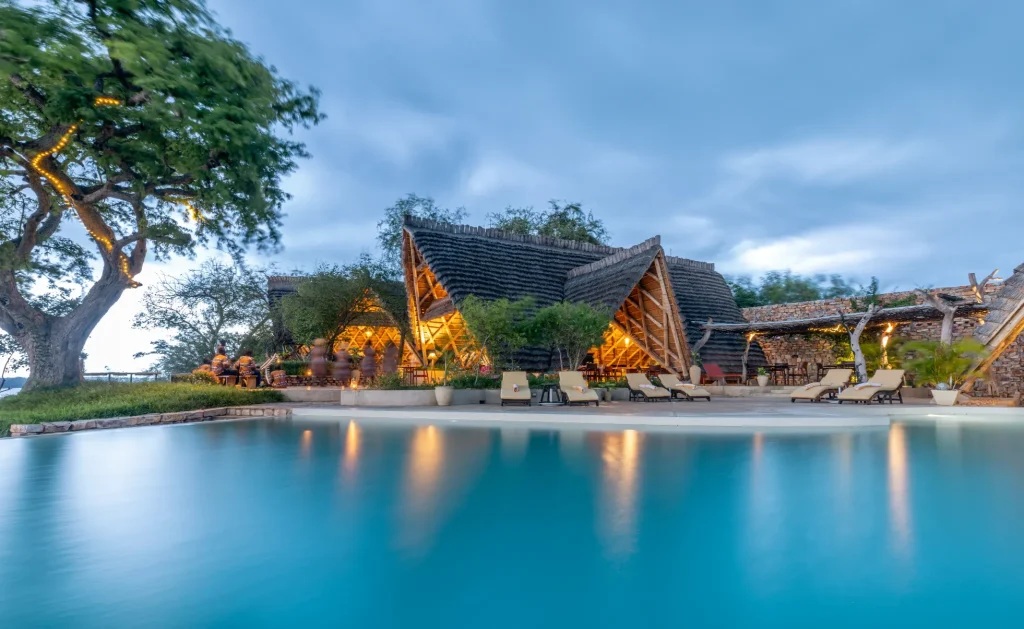
Uganda’s western safari circuit holds Africa’s most diverse ecosystems within a compact geographic footprint. Spanning 12 days, this ultra-luxury itinerary moves through five national parks, combining savannah megafauna with primate encounters across primeval rainforests and Albertine Rift lakes. Travel relies on private, custom-modified 4x4 Toyota Land Cruisers featuring executive leather seating and panoramic pop-up roofs, alongside private light aircraft charters to bypass lengthy ground transits. Premier accommodations—including Nile Safari Lodge, Kyaninga Lodge, Kyambura Gorge Lodge, Sanctuary Gorilla Forest Camp, and Mihingo Lodge—feature private plunge pools, silver-service dining, dedicated butler attention, and sweeping views of volcanic crater lakes and dense jungle. Track southern white rhinos, wild chimpanzees in Kibale Forest, tree-climbing lions in Ishasha, and endangered mountain gorillas in Bwindi under the expert care of elite private rangers and dedicated safari directors.
Day 1: Arrival & Entebbe VIP Transfer
Touch down at Entebbe International Airport (EBB), where a dedicated tarmac host meets your aircraft to manage private VIP immigration clearing and baggage handling. Step into a climate-controlled executive Toyota Land Cruiser for a smooth 45-minute journey along the 38-kilometer Entebbe-Kampala Expressway to your private sanctuary at Yellow Haven Lodge or Acacia Lodge. Unwind on a secluded teak veranda overlooking Lake Victoria, catered to by a private butler serving chilled vintage South African Cap Classique alongside artisanal canapés. Your personal safari director conducts an evening orientation detailing vehicle logistics, conservation protocols, and regional geography. Dine on a multi-course menu prepared by a dedicated chef, featuring wild Lake Victoria perch and organic estate-grown produce paired with estate wines, before retiring in preparation for your northern traverse toward Nakasongola District.
Day 2: Ziwa Rhino Sanctuary & Murchison Falls National Park
Depart at 06:30 for a 170-kilometer northbound drive through the Luweero Triangle to Ziwa Rhino Sanctuary in Nakasongola, taking roughly 3.5 hours. Join senior conservation rangers for an exclusive on-foot tracking session to observe 33 reintroduced southern white rhinos (Ceratotherium simum simum) across 70 square kilometers of private acacia woodland. Spend 60 quiet minutes observing these two-ton mammals from a mere 10 meters away. Following an artisanal lunch prepared on site, continue 140 kilometers (2.5 hours) northwest into Murchison Falls National Park via Kichumbanyobo Gate. Traverse the ancient Budongo Forest canopy before settling into Nile Safari Lodge on the southern bank of the Victoria Nile. Check into an ultra-exclusive wooden chalet equipped with a private plunge pool, copper soaking tub, and outdoor rain shower overlooking hippos gathering in the river below.
Day 3: Murchison Falls Game Drive & Private Nile Boat Cruise
Cross the Victoria Nile at 06:15 for a four-hour private game drive across the Buligi grassland tracks. Your personal guide maneuvers to locate Rothschild’s giraffes (Giraffa camelopardalis rothschildi), Jackson’s hartebeests, oribi, African bush elephants, and hunting lion prides across the savannah. Return to Nile Safari Lodge for a late-morning rest and a three-course lunch. At 14:30, board a private shaded launch vessel reserved exclusively for your party for a 17-kilometer upstream cruise to the base of Murchison Falls. Observe Nile crocodiles sunning on sandbanks, hippo pods, and rare Goliath herons along the banks. Reach the base where the entire Nile River compresses through a 7-meter rocky gorge, dropping 43 meters into the "Devil’s Cauldron." Enjoy private sundowners and canapés on board before returning to the lodge for a five-course dinner under the stars.
Day 4: Flight to Kibale Forest National Park
Board a private light aircraft charter at Pakuba Airstrip at 08:30, replacing nine hours of rough road transit with a swift 60-minute scenic flight over the Albertine Rift Valley toward Kasese Airstrip. Your waiting Land Cruiser provides a 45-minute private transfer into the historic Tooro Kingdom, arriving at Kyaninga Lodge. Perched high on the rim of an extinct volcanic crater lake, this architectural masterpiece was built entirely from hand-carved eucalyptus timbers. Spend the afternoon relaxing on private elevated decks situated 220 meters above Lake Kyaninga, taking in views that stretch westward to the snow-capped peaks of the Rwenzori Range—the historic "Mountains of the Moon." Join a resident botanist for an exclusive walk along the 220-meter-deep crater rim to identify indigenous flora and resident blue monkeys before enjoying fine dining in the central log superstructure.
Day 5: Chimpanzee Tracking in Kibale & Bigodi Wetland Walk
Drive 45 minutes to the Kanyanchu Information Centre in Kibale National Park for an 08:00 private ranger briefing. Enter the 795-square-kilometer tropical rainforest alongside lead researchers to track Eastern Chimpanzees (Pan troglodytes schweinfurthii). Navigate through dense ironwood canopy for 2 to 3 hours before encountering a habituated troop. Spend a full hour observing primates building arboreal nests, grooming, and vocalizing across the upper canopy. Return to Ndali Lodge for a lunch served on the terrace. At 15:00, enjoy a private guided walk through the Bigodi Wetland Sanctuary, a community-run conservation swamp managed by KAFRED. Walk elevated wooden boardwalks across the Magombe Swamp to observe eight distinct primate species, including red colobus, L’Hoest’s monkeys, and grey-cheeked mangabeys, alongside the vibrant Great Blue Turaco.
Day 6: Transfer to Queen Elizabeth National Park
Depart Fort Portal after a relaxed breakfast, driving 120 kilometers (3 hours) south along the jagged foot of the Rwenzori Mountains toward Queen Elizabeth National Park. Pause at the Kikorongo Equator Marker for photographs and a geographical overview of the Albertine Rift Valley floor. Arrive at Kyambura Gorge Lodge, an upcycled coffee store converted into a contemporary luxury retreat perched on the edge of a 100-meter-deep sunken rainforest canyon. Settle into a handcrafted stone and timber cottage featuring floor-to-ceiling windows with views of savannah plains reaching toward Lake George. Spend the afternoon taking an insider tour of the estate’s coffee plantation or relaxing by the saltwater pool overlooking the gorge. At dusk, take a private drive along the Kasenyi equator track to spot Uganda kob, waterbucks, and giant forest hogs.
Day 7: Kasenyi Game Drive & Kazinga Channel Boat Safari
Begin an early morning game drive across the Kasenyi Plains at 06:30, the primary breeding ground for thousands of Uganda kob. Track resident lion prides hunting among the herds, along with solitary leopards, spotted hyenas, and topis. Return to the lodge for a midday break and lunch. At 14:00, board a private boat reserved solely for your party for a two-hour cruise along the 32-kilometer Kazinga Channel, which connects Lake George to Lake Edward. Position your camera as you pass one of the world's highest concentrations of hippopotamuses, alongside Nile crocodiles, African forest elephants bathing in the shallows, and pink-backed pelicans. Return to Kyambura Gorge Lodge by sunset for a meal featuring locally sourced organic ingredients, paired with views stretching across the plains toward the Congolese border.
Day 8: Transfer to Ishasha Sector
Drive 95 kilometers (3 hours) south through Queen Elizabeth National Park to the secluded Ishasha Sector, situated along the Democratic Republic of Congo border. Arrive at Ishasha Wilderness Camp, set directly on the banks of the Ntungwe River. Your canvas suite features hot bucket showers, handmade furnishings, and a private veranda where black-and-white colobus monkeys and passage elephants can be seen across the water. In the afternoon, venture into the open savannah with your guide to track Ishasha’s famous tree-climbing lions. Search the sprawling limbs of umbrella acacias and giant fig trees (Ficus sycomorus), where lions lounge during the heat of the day to avoid biting insects and catch cool breezes. Return to camp at dusk for a private candlelit dinner set along the riverbank.
Day 9: Drive to Bwindi Impenetrable National Park
Conduct a final early-morning game drive through Ishasha to spot lions descending from the trees before driving south toward Bwindi Impenetrable National Park. Drive 62 kilometers (2.5 hours) as the flat savannah transitions into the terraced hillsides of the Kigezi Highlands. Arrive at Sanctuary Gorilla Forest Camp, the only luxury lodge situated directly inside the UNESCO World Heritage park boundaries at Buhoma. Check into your custom tent featuring deep freestanding bathtubs and private decks enveloped by ancient primeval rainforest. Spend the afternoon receiving a complimentary spa treatment or meeting local Batwa elders to learn about indigenous forest survival traditions. Dinner is served in the main dining tent, featuring multi-course meals prepared by executive chefs and paired with top-shelf spirits.
Day 10: Mountain Gorilla Trekking in Bwindi
Report to Buhoma Park Headquarters at 07:30 for an exclusive briefing by senior Uganda Wildlife Authority rangers. You are assigned to a habituated family of mountain gorillas (Gorilla beringei beringei). Accompanied by armed trackers and personal porters, hike into the thick jungle across steep ridges ranging from 1,160 to 2,600 meters in elevation. The trek lasts between 2 to 6 hours depending on family movements. Upon locating the troop, spend 60 minutes observing silverbacks, females, and juveniles feeding on bamboo shoots, playing, and interacting within meters of your group. Return to Sanctuary Gorilla Forest Camp by mid-afternoon for a complimentary boot-cleaning service, a hot bath, a gorilla tracking certificate presentation, and an exquisite six-course dinner.
Day 11: Transfer to Lake Mburo National Park
Depart Bwindi after breakfast for a 280-kilometer drive (6 hours) eastward through the rolling green hills of Mbarara to Lake Mburo National Park, passing traditional long-horned Ankole cattle ranches along the route. Arrive at Mihingo Lodge, constructed high atop a massive granite outcrop overlooking a vast valley and natural waterhole. Check into a luxury tent featuring wooden floors and stone-tiled bathrooms. At 16:00, take an afternoon game drive or private boat cruise across Lake Mburo to observe plains zebras (Equus quagga boehmi), impalas—which exist nowhere else in Uganda—bushbucks, and elands. Watch wildlife gather at the salt lick directly below Mihingo’s infinity pool as the sun sets over the surrounding acacia woodlands, followed by a three-course dinner on the terrace.
Day 12: Morning Walking Safari & Flight to Entebbe
Set out at 06:30 on a two-hour guided walking safari accompanied by an armed Wildlife Authority ranger. Walk quietly across the savannah pathways, getting within meters of grazing zebras, topis, and Rothschild’s giraffes without the barrier of a vehicle frame. Return to Mihingo Lodge for a full cooked breakfast on the terrace deck. At 10:30, take a brief 30-minute transfer to the local airstrip for a chartered 45-minute flight across Lake Victoria directly back to Entebbe International Airport. Connect smoothly to the international departure lounge or access a day suite at a nearby Entebbe hotel to freshen up before your flight home. Your private guide assists with luggage handling and customs check-in, concluding your 12-day safari circuit across Uganda.
How physical is gorilla trekking in Bwindi, and how should travelers prepare?
Gorilla trekking in Bwindi Impenetrable National Park demands moderate to high physical endurance. You will hike through dense, unformed jungle terrain with elevations ranging from 1,160 to 2,600 meters. Slopes can be steep, wet, and slippery, requiring you to navigate thick vines, muddy trails, and tangled roots. Depending on where the assigned gorilla family nested the night before, your trek can take anywhere from two to six hours.
To prepare, focus on cardiovascular training, leg strength, and balance exercises like incline treadmill walks, stair climbing, and squats in the weeks leading up to your trip. Sturdy, broken-in waterproof hiking boots with deep tread are non-negotiable. We strongly advise hiring a local porter at the park headquarters ($20 USD fee). Porters not only carry your heavy daypack and photographic gear, but they also provide physical stabilization on slippery inclines, pulling or supporting you through difficult terrain. This support allows you to conserve energy, focus on your surroundings, and fully absorb the experience once you reach the gorilla troop.
What makes this 12-day route an ultra-luxury safari compared to standard tours?
The distinction lies in seamless logistics, extreme privacy, and uncompromised comfort. Standard safaris involve lengthy 8- to 10-hour road drives over bumpy unpaved highways. This ultra-luxury itinerary eliminates transit exhaustion by integrating private light aircraft charters between Murchison Falls, Kibale, and Entebbe. Ground travel uses custom-modified Toyota Land Cruisers featuring executive leather seating, onboard Wi-Fi, climate control, charging ports, and a maximum of four guests per vehicle for guaranteed window seats.
Accommodations are handpicked to represent Africa’s finest boutique hospitality. Instead of generic safari camps, you stay in iconic properties like Nile Safari Lodge and Sanctuary Gorilla Forest Camp, where accommodations feature private plunge pools, freestanding deep-soaking tubs, and personal butler service. Dining is elevated to a culinary art with five-course organic menus paired with imported wines. Furthermore, activities like the Kazinga Channel and Victoria Nile boat cruises are booked as private charters, giving you exclusive access to wildlife without crowded decks or competing photographer angles.
How do private bush flights optimize travel time across Uganda's western circuit?
Uganda’s western circuit spans over 1,000 kilometers across mountain ranges, rift valleys, and dense forests. Driving ground routes between major parks like Murchison Falls and Kibale Forest can easily consume a full day on dust-filled roads, leaving travelers exhausted. Incorporating private light aircraft charters transforms those exhausting drive days into brief, 45- to 60-minute aerial journeys over the Albertine Rift Valley and crater lakes.
Flying allows you to leave Murchison Falls after breakfast, land at Kasese Airstrip, and settle into Kyaninga Lodge by early afternoon with zero physical fatigue. This saved time is reinvested directly into your safari experience—allowing for relaxed gourmet lunches, crater rim walks, or spa treatments rather than staring at asphalt. Additionally, light aircraft flights double as scenic aerial tours, giving you a bird's-eye view of the snow-capped Rwenzori Range, winding Nile tributaries, and volcanic crater landscapes below.
What packing gear and dress codes work best for rainforest treks versus savannah drives?
Packing for Uganda requires a dual strategy due to distinct microclimates. For rainforest tracking in Kibale and Bwindi, function overrides fashion. You need moisture-wicking long-sleeved shirts, lightweight quick-dry pants, tucked into long gaiters or thick wool socks to prevent safari ants from crawling up your legs. Wear broken-in waterproof boots with ankle support, and bring heavy-duty gardening gloves to grip thorny vegetation on steep slopes. A breathable, high-performance rain jacket is essential, as downpours happen suddenly regardless of the dry season.
For savannah drives in Murchison Falls and Queen Elizabeth, dress in lightweight, neutral-colored clothing like khaki, beige, and olive green. Avoid dark blue and black, which attract tsetse flies, and bright white, which startles game. Sun protection—including wide-brimmed hats, polarized sunglasses, and SPF 50 sunblock—is necessary for open-vehicle game drives. Evening dress code at luxury lodges remains elegant yet relaxed casual, with light fleece layers or cashmere wraps required as highland temperatures drop quickly after dark.
What health precautions, vaccinations, and medical support are required for Uganda?
Travelers must present a valid Yellow Fever Vaccination Certificate upon entry at Entebbe International Airport. Malaria is endemic across most regions of Uganda, making a course of prophylactic medication (such as Atovaquone/Proguanil or Doxycycline) essential. Consult a travel medicine physician at least four to six weeks prior to departure to review routine boosters for Tetanus, Hepatitis A, Hepatitis B, and Typhoid. Insect repellent containing 30% DEET or Picaridin should be applied during early morning and late afternoon game drives.
In terms of medical infrastructure, luxury safaris build safety directly into the itinerary. Your private Land Cruiser carries comprehensive trauma kits, emergency oxygen, and satellite communications. The tour includes coverage with Flying Doctors AMREF emergency evacuation service, which provides swift air ambulance extraction from remote airstrips to international-standard hospital facilities in Kampala or Nairobi. For primate treks, strictly adhere to park health regulations: if you exhibit symptoms of a cold, flu, or respiratory infection, you will be barred from gorilla tracking to protect the animals from human pathogens.
How does tracking wild chimpanzees in Kibale differ from gorilla trekking in Bwindi?
While both activities involve habituated primates in rainforest habitats, the physical dynamics differ significantly. Gorilla trekking in Bwindi involves tracking a stationary or slow-moving family unit that spends most of its time on the jungle floor eating foliage, resting, or grooming. Once located, mountain gorillas remain relatively calm and sedentary, allowing for close, deliberate photography at ground level.
In contrast, chimpanzee tracking in Kibale Forest is fast-paced and unpredictable. Chimpanzees (Pan troglodytes) move quickly through the upper forest canopy, swinging between branches at high speeds and vocalizing loudly across the forest. Trackers must often move rapidly through flat or gently rolling terrain to keep pace with the troop. You will spend a fair amount of time looking up into the dense branches to spot them feeding on wild figs or building tree nests. The atmosphere in Kibale is dynamic and high-energy, making it a thrilling contrast to the quiet, ground-level intensity of Bwindi's gorillas.
What makes the tree-climbing lions of Ishasha unique, and what are the chances of seeing them?
The Ishasha sector in southern Queen Elizabeth National Park is one of only two places in East Africa where lions regularly climb high into trees (the other being Lake Manyara in Tanzania). Unlike leopards, which naturally rest in branches, lions are heavy ground predators. In Ishasha, the lions have adapted to climb the wide, horizontal branches of umbrella acacia and giant fig trees (Ficus sycomorus). Researchers believe they do this to escape the intense ground heat, catch cool breezes, and avoid swarms of biting tsetse flies in the long grass.
Sighting chances are high—around 70% to 80%—when guided by experienced private rangers who track pride movements daily. The lions usually ascend the trees between 08:30 and 10:00 as temperatures rise, remaining perched aloft until late afternoon. Spotting a full pride—including mature silver-maned males—sprawled out along a thick fig branch against the backdrop of the savannah is one of the most distinctive photographic opportunities in African safari travel.
How does fine dining work at remote luxury lodges in the African bush?
Fine dining at Uganda’s elite lodges rivals top urban restaurants, operating through complex farm-to-table supply chains. Lodges like Kyaninga, Nile Safari Lodge, and Sanctuary Gorilla Forest Camp employ executive chefs trained internationally who design daily rotating multi-course menus. Organic vegetables, microgreens, tropical fruits, and herbs are grown in private on-site kitchen gardens, while fresh meats, cheeses, and Lake Victoria perch are flown in via private bush logistics.
Breakfasts offer cooked-to-order options alongside fresh tropical fruit juices and house-baked pastries. Midday lunches are three-course affairs served outdoors overlooking rivers or crater rim views. Dinners are formal, five-course candlelit meals featuring dishes like pan-seared Nile perch with lemongrass reduction, roasted tenderloin, and artisan desserts, all paired with cellared South African and European wines. Lodges cater effortlessly to complex dietary requirements, including vegan, gluten-free, kosher, and severe food allergies, provided preferences are submitted prior to arrival.
Is an ultra-luxury safari in Uganda suitable for families traveling with children or older adults?
Yes, provided the itinerary is tailored to age limits and mobility levels. For families with children, note that the Uganda Wildlife Authority enforces a strict minimum age limit of 15 years for both gorilla and chimpanzee tracking to protect primates and ensure human safety. For younger children, luxury lodges arrange private bush-craft activities, nature walks, and community visits under dedicated child-minders while parents trek.
For older adults or travelers with limited mobility, luxury safaris provide custom solutions. In Bwindi, guests who cannot navigate steep forest inclines can hire the "sedan chair service." This involves being carried into the rainforest on a comfortable, custom-built stretcher by a team of eight experienced local porters, ensuring everyone can participate in gorilla encounters regardless of physical limitations. Private vehicles, gentle boat cruises, and luxury bush flights eliminate long overland transit fatigue, making the entire circuit comfortable for multi-generational families.
What tipping practices and local currency etiquette are expected at five-star safari lodges?
While luxury itineraries cover all accommodation, meal, transport, and permit fees upfront, tipping remains a customary way to reward exceptional personal service. Payments at lodges can be made in US Dollars (notes must be clean, uncreased, and printed in 2013 or later) or Uganda Shillings (UGX). Most top-tier lodges accept Visa and Mastercard, though cash is preferred for gratuities due to rural connectivity limits.
For your primary private safari driver-guide, budget $20 to $30 USD per day from your group. For primate trackers and rangers in Kibale and Bwindi, tip $15 to $20 USD per tracker per session. Personal porters should receive $15 to $20 USD per trek in addition to their standard hiring fee. At luxury lodges, a communal tip box is available at reception for general staff (housekeeping, kitchen, security), where tipping $20 to $30 USD per room per night is standard practice.
How do high-end lodges handle sustainability, conservation, and community partnerships?
Top-tier lodges in Uganda operate on strict eco-tourism principles, balancing environmental preservation with local empowerment. Properties like Kyambura Gorge Lodge and Mihingo Lodge run off-grid solar energy systems, use rainwater harvesting, and eliminate single-use plastics through reverse-osmosis water purification systems. Architectural designs utilize local materials—such as eucalyptus logs, hand-dressed stone, and grass thatch—to integrate with the natural surroundings.
Crucially, high-end lodges drive local economic development. At Sanctuary Gorilla Forest Camp and Kyambura, over 80% of staff are recruited directly from neighboring villages, receiving professional hospitality training and fair living wages. Lodges direct a portion of night-stay tariffs into community infrastructure projects, funding local primary schools, medical clinics, and clean water wells. Furthermore, properties actively fund habitat restoration; for example, Kyambura Gorge Lodge maintains a community coffee project and a buffer-zone reforestation strip that reconnects isolated chimpanzee populations to the forest gorge.
What wildlife photographic equipment and camera setups should travelers bring?
A successful photographic safari in Uganda requires versatile camera gear capable of handling low-light forest canopy and fast savannah action. Bring two mirrorless or DSLR camera bodies to avoid changing lenses in dusty or wet field conditions. For savannah game drives in Murchison Falls and Queen Elizabeth, equip one body with a telephoto zoom lens (such as a 100-400mm or 200-600mm) to capture distant wildlife, predators, and bird species.
For primate tracking in Kibale and Bwindi, the forest canopy is dense and dark. You need a fast telephoto lens with a wide maximum aperture—a 70-200mm f/2.8 lens is ideal. This allows you to shoot at high shutter speeds without raising ISO to noisy levels. Flash photography is strictly forbidden near primates, making low-light lens capability critical. Bring plenty of high-speed memory cards, extra camera batteries (cold rainforest humidity drains battery life rapidly), a rain-proof camera cover, and a lens cleaning kit to wipe away condensation and dust.
How does weather vary across Murchison Falls, Kibale, Queen Elizabeth, and Bwindi?
Uganda’s equatorial geography creates distinct microclimates across its national parks. Murchison Falls in the north sits at a lower altitude (around 600 to 900 meters) and is warm and tropical, with daytime temperatures reaching 28°C to 32°C. Lightweight, breathable clothing and high hydration are essential during game drives here.
As you head south toward Kibale Forest and Queen Elizabeth National Park along the Albertine Rift Valley, elevations rise to 1,000–1,500 meters. Expect moderate temperatures averaging 24°C to 27°C during the day, accompanied by higher humidity near the wetlands. Bwindi Impenetrable Forest is a highland rainforest ranging from 1,160 to 2,600 meters above sea level. Here, mornings and nights are cold, with temperatures dropping to 10°C–14°C. Cloud cover, mist, and sudden rainfall can occur at any hour, requiring warm layers and waterproof outer shells regardless of the season.
What safety protocols are in place during walking safaris and close wildlife encounters?
Safety during walking safaris in Lake Mburo or rhino tracking at Ziwa is governed by strict Uganda Wildlife Authority protocols. You are accompanied by at least two professional, armed rangers trained in animal behavior and wilderness safety. Before setting out, rangers conduct a safety briefing detailing walking formation (single file behind the lead ranger), noise control, and defensive procedures.
When encountering large mammals like white rhinos, buffaloes, or hippos on foot, rangers maintain a safe buffer distance of 10 to 15 meters, utilizing downwind positioning so animals are not alarmed. During primate encounters in Bwindi and Kibale, visitors must maintain a 7-meter distance from gorillas and chimpanzees to prevent distress and disease transmission. Surgical masks are required during gorilla encounters to protect primates from human respiratory illnesses. Rangers carry satellite radios and firearm deterrents, ensuring immediate coordination and absolute guest safety throughout every wilderness excursion.
Why is a private boat charter on the Kazinga Channel superior to public boat tours?
The 32-kilometer Kazinga Channel in Queen Elizabeth National Park holds one of the world's highest concentrations of hippopotamuses, along with vast numbers of Nile crocodiles, elephants, and water birds. Standard scheduled boat tours operate on large, multi-deck vessels carrying 40 to 60 passengers. These larger boats are loud, operate on fixed time schedules, and constrain your photography to crowded decks where passengers compete for views.
Booking a private launch charter transforms the experience. You board a quiet, customized vessel reserved exclusively for your party, accompanied by a private skipper and expert naturalist guide. The vessel maneuvers slowly into shallow muddy bays and along riverbanks where public boats cannot go. Your skipper can cut the engine, allowing you to float silently meters away from bathing elephant herds or yawning hippos. You dictate the pace, stopping for as long as you wish to capture perfect lighting and photograph rare bird species without interruption.
What is the best time of year to undertake this 12-day western Uganda safari?
The prime time for this western circuit safari is during Uganda’s two dry seasons: June through September and December through February. During these months, rainfall is lower, making forest trails in Bwindi and Kibale less muddy and easier to navigate during primate treks. In savannah parks like Murchison Falls and Queen Elizabeth, dry conditions force wildlife to concentrate around permanent water sources like the Victoria Nile and Kazinga Channel, resulting in exceptional game viewing.
That said, Uganda is a year-round safari destination. The shoulder rainy seasons (March to May and October to November) offer distinct advantages for luxury travelers. Rain typically falls in short, heavy afternoon bursts rather than day-long drizzles, leaving the air clear and lush for photography. Furthermore, migratory bird species arrive in vast numbers, lush vegetation creates vivid backdrops, and luxury lodges offer quiet exclusivity across the parks.
Booking 12 Days luxury Uganda safari with us Roads of Adventure safaris
As Roads of Adventure Safaris, we can customize for you a premium 12-Day Luxury Uganda Safari, crafted to deliver unparalleled comfort, exclusive wildlife encounters, and seamless private transport. This high-end itinerary showcases Uganda’s ultimate highlights—including mountain gorillas, chimpanzees, tree-climbing lions, and scenic boat cruises—while hosting you in the region's finest five-star lodges.
