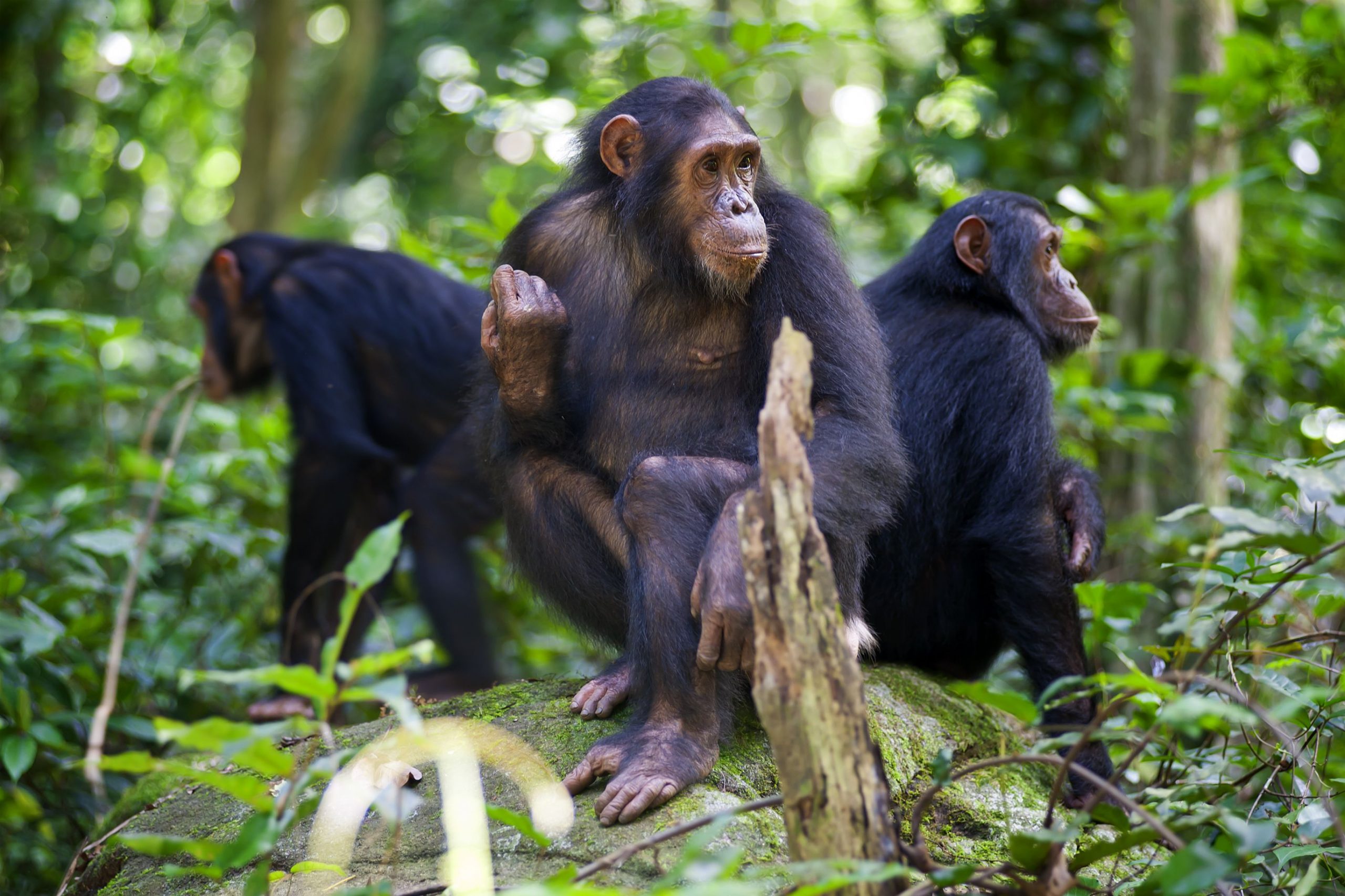
Located on the edge of the Albertine Rift Valley, Budongo Forest is a premier mahogany and chimpanzee sanctuary in northwestern Uganda. Lying adjacent to the southern sector of Murchison Falls National Park, it spans 825 square kilometers and is most famous for its thriving population of over 600 chimpanzees
For chimpanzee tracking in Budongo Forest (Murchison Falls National Park), pack sturdy hiking boots, a rain jacket, and breathable, long-sleeved clothing in neutral colors. Bring a waterproof backpack, 2 liters of water, insect repellent, garden gloves, and a camera with the flash turned off
4-days-murchison-falls-and-chimpanzee-tracking-in-budongo-forest
Chimpanzee Tracking and Habituation
Chimpanzee tracking stands out as the ultimate highlight for visitors exploring this ancient mahogany forest. Budongo Forest Reserve protects one of the largest communities of eastern chimpanzees in East Africa. This makes it an exceptional destination for primate encounters. The standard tracking excursion begins early in the morning with a briefing at the visitor center. From there, expert guides lead small groups deep into the dense undergrowth. Tracking success rates hover around 80% because multiple habituated communities live within the reserve boundaries. As you walk beneath the towering forest canopy, your guides point out knuckle prints, discarded fruit, and nests high in the branches. The quiet forest frequently erupts with the thrilling sounds of pants-hoots and tree-drumming. This signaling network tells you a community is nearby. Once you locate the primates, you spend one unforgettable hour observing them groom, play, squabble, and leap effortlessly through the treetops.
For a more immersive experience, the habituation option allows visitors to spend a full day with the primates alongside researchers. This process involves wild chimpanzees gradually getting used to human presence without altering their natural behaviors. Joining a habituation team means entering the forest before dawn to watch the chimpanzees wake up from their nests. You then follow them throughout their daily routines until they build new nests at dusk. It is a demanding trek that requires stamina. However, the reward is an unhurried, intimate look at their complex social hierarchies and tool-using habits. Both activities fund critical anti-poaching patrols and community conservation initiatives that safeguard this fragile habitat.
Bird Watching
Budongo Forest is widely celebrated as a premier birdwatching destination in East Africa. The reserve boasts a checklist of over 360 bird species. This incredible diversity thrives within the pristine blocks of ironwood and mahogany woodland. Birders flock here to explore specialized trails that cut through both the dense forest interior and the productive edge habitats. The undisputed highlight for avian enthusiasts is a famous track known as the "Royal Mile" located in the Busingiro sector. This wide forest road provides an optimal viewing corridor through the thick canopy. It offers some of the best forest birding on the continent. Expert local guides help visitors identify complex vocalizations and spot cryptic species that blend perfectly into the foliage.
The forest is home to highly sought-after regional specials that are difficult to find anywhere else. Among these prizes is the elusive Puvel's illadopsis. This small, brown bird is a holy grail for many birders because Budongo is one of the very few accessible places where it breeds. Another prized sighting is the yellow-footed flycatcher, which occupies the higher strata of the canopy. As you walk quietly through the reserve, you can also expect to encounter brilliant chocolate-backed kingfishers, Sabine's spinetails, white-thighed hornbills, and blue-breasted kingfishers. The rainy season brings an influx of migratory species, turning the forest into a cacophony of mating calls and vibrant displays. Whether you are a casual observer or a hardcore lister, the sheer volume of unique forest dwellers makes every outing a success.
Forest Walks
Embarking on a guided forest walk offers an authentic way to experience the immense scale and biodiversity of this ancient ecosystem. Nature trails meander through different sectors of the reserve. They allow visitors to step away from vehicles and connect directly with the sights and sounds of the wild. These excursions emphasize the botanical wonders of the forest, which features massive mahogany trees growing up to 80 meters tall. Walking alongside a knowledgeable ranger reveals the secret life of the forest floor, where intricate fungi thrive, medicinal plants grow, and columns of army ants march across the paths.
The canopy above stays alive with movement. While chimpanzee tracking gets the most attention, forest walks frequently yield spectacular views of other resident primates. It is common to spot troops of black-and-white colobus monkeys leaping across branches like acrobats, their long tails trailing behind them. Blue monkeys and red-tailed monkeys also populate the mid-level branches, often chattering loudly to warn others of your approach. Looking downward, you might catch the rustle of a forest duiker or a family of bushpigs moving through the thickets. The pace of these walks is relaxed, focusing on appreciation rather than distance. Rangers share fascinating insights into how the National Forestry Authority manages the reserve, balancing eco-tourism with strict habitat protection. It is a peaceful, educational journey that highlights the interconnectedness of every plant and animal under the canopy.
Where is Budongo Forest Located?
Budongo Forest Reserve is a magnificent expanse of pristine, semi-deciduous tropical rainforest located in the Western Region of Uganda. Geographically situated at the top of the Albertine Rift Valley escarpment, the forest lies northeast of Lake Albert and forms a crucial ecological catchment area for the rift valley basin. It covers a vast area of approximately 825 square kilometers, making it the largest remaining natural mahogany forest block anywhere in East Africa.
Administratively, this continuous canopy stretches across parts of the Masindi, Hoima, and Kikuube districts. The forest is contiguous with the southern boundary of the world-famous Murchison Falls Conservation Area, managed effectively by the National Forestry Authority. The terrain itself features a gently rolling landscape that slopes gradually from the southeast to the northwest, sitting at a medium altitude averaging around 1,100 meters above sea level. This unique positioning creates a perfect environment for four primary forest rivers—the Waisoke, Sonso, Kamirambwa, and Siba—which cut through the thick woodland to empty their waters into Lake Albert.
How to Get to Budongo Forest?
Reaching Budongo Forest Reserve is relatively straightforward, as the ecosystem sits approximately 244 kilometers northwest of Uganda's capital city, Kampala. The entire road journey by vehicle typically takes between 3 to 4 hours, primarily following the smooth, fully paved Kampala–Gulu highway. Travelers depart Kampala and head northward through the town centers of Luwero and Nakasongola, offering an excellent opportunity to stop over at the Ziwa Rhino Sanctuary along the way.
Upon reaching the Kafu River bridge intersection, drivers turn left onto the paved road leading directly to Masindi town, which serves as the primary urban gateway to the reserve. From Masindi, Budongo is situated just 25 to 30 kilometers away, requiring a drive of roughly one hour. The most popular visitor sector, Kaniyo Pabidi, is accessed via the main dirt road entering the southern Kichumbanyobo gate of Murchison Falls National Park. While the primary access routes are well-maintained, the internal tracks leading deeper into specialized sectors like the Busingiro birding area or the Royal Mile can become slippery and challenging during rainy spells, making a sturdy 4x4 safari vehicle highly recommended.
When is the Best Time for Chimpanzee Tracking in Budongo Forest?
The ideal period to embark on a chimpanzee tracking safari in Budongo Forest corresponds with the region’s distinct dry seasons, which occur from December to February and again from June to September. During these months, weather conditions are highly favorable for forest exploration. The forest floor receives significantly less rainfall, meaning the extensive network of hiking trails remains dry, firm, and easily passable. More importantly, the dry weather influences primate behavior to the tracking group's advantage; food resources like fruits and fresh leaves become scarce, forcing the wild chimpanzee communities to forage closer to the ground and remain in predictable, localized territories rather than scattering deep into the dense, inaccessible interior canopy. This vastly increases the tracking success rate, which averages a reliable 80% during these periods.
Conversely, the heavy wet seasons running from March to May and from October to November bring frequent tropical downpours that make the terrain muddy, humid, and physically demanding to navigate. While chimpanzee tracking is still technically permitted year-round, the abundant forest fruits during the rainy months mean the primates can easily feed high up in the canopy without moving much, making them harder to spot from the ground. However, the wet season remains the absolute peak window for dedicated birdwatchers, as the forest fills with migratory bird species and vibrant breeding plumage.
Where to Stay in Budongo Forest on Chimpanzee Tracking?
For travelers looking to submerge themselves completely in the natural rhythms of the rainforest, Budongo Eco Lodge stands as the premier on-site accommodation choice. Formerly utilized as a research base for the world-renowned Jane Goodall Institute, this mid-range eco-friendly facility is perfectly situated directly at the Kaniyo Pabidi ecotourism site, which serves as the central launching pad for all chimpanzee tracking excursions. The lodge features five secluded wooden eco-cabins tucked neatly beneath the shade of towering mahogany trees, ensuring absolute privacy and an immersive wild atmosphere. Each spacious cabin is constructed from local materials to maintain a low environmental footprint and comes equipped with private verandas, twin or double beds, mosquito nets, and en-suite bathrooms complete with solar-powered hot showers and water-saving composting eco-toilets.
For larger groups, researchers, or budget-conscious backpackers, the lodge also provides four clean dormitory rooms fitted with comfortable bunk beds and shared external bathroom amenities. Guests can unwind in the spacious central lounge, browse old fossils and poaching relics at the on-site visitor information center, or enjoy a meal at the terrace restaurant and bar, which serves an array of international and local dishes alongside freshly brewed Ugandan coffee. Should travelers prefer high-end luxury or alternative lodging styles, the close proximity to Masindi town (just 30 kilometers away) allows visitors to stay at historical establishments like the Masindi Hotel or local resorts, commuting easily to the forest entry gates early in the morning.
Booking Chimpanzee Tracking in Budongo Forest with us, Roads of Adventure Safaris
Planning your dream primate safari through Roads of Adventure Safaris guarantees a seamless, professionally managed, and unforgettable journey into the heart of Budongo Forest Reserve. As a highly reputable, legally registered ground tour operator based right here in Kampala, Uganda, we specialize in crafting personalized itineraries that blend thrilling chimpanzee tracking experiences with comprehensive wildlife viewing across East Africa. When you book your safari with us, our dedicated team takes complete control of the complex logistics behind the scenes, securing your official chimpanzee tracking permits from the National Forestry Authority well in advance, reserving prime eco-lodge accommodations, and mapping out every detail of your transport.
We pride ourselves on our exceptional fleet of customized 4x4 safari land cruisers and vans, designed specifically to tackle the changing terrain of the Albertine Rift while ensuring maximum passenger comfort and safety. Most importantly, your journey will be guided by our elite team of professional, highly knowledgeable local driver-guides, who possess deep expertise in Uganda's flora, fauna, and cultural heritage, transforming a simple drive into an educational adventure. Whether you are looking for a short 3-day excursion focusing solely on the primates and birding along the Royal Mile, or a massive multi-week expedition combining Budongo with the Big Five savanna game of Murchison Falls and gorilla trekking in Bwindi, Roads of Adventure Safaris tailors the package to your precise budget, pacing, and travel desires. Simply reach out to our travel experts to begin designing your custom quote, and let our passion for the Pearl of Africa turn your travel aspirations into reality.
