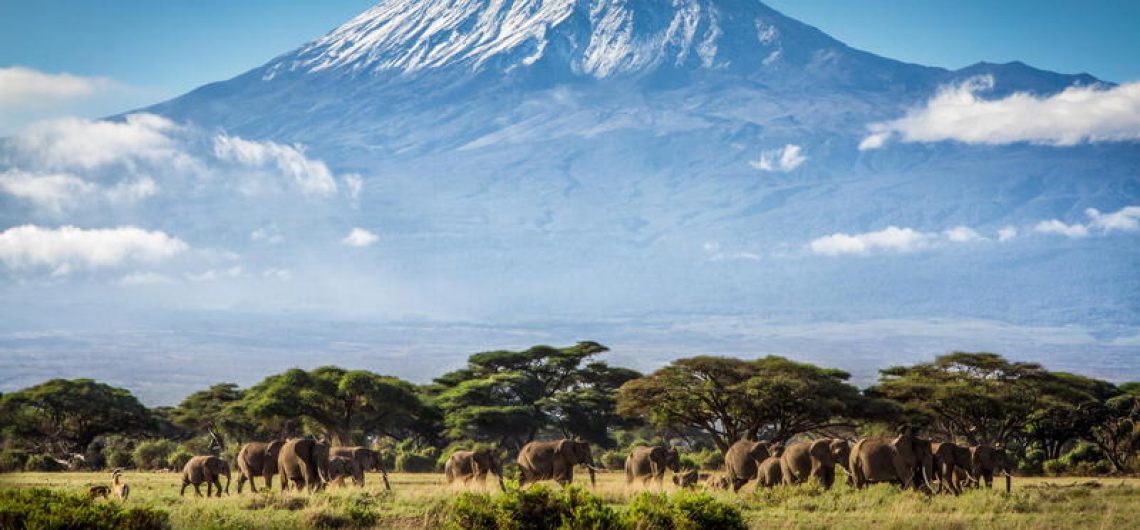
There is a profound magic in looking at the horizon and seeing a mountain that doesn't just cut into the sky, but completely commands it. Rising a breathtaking 5,895 meters (19,341 feet) above the sun-drenched East African plains, Mount Kilimanjaro is a natural masterpiece. Because it stands entirely independent of any mountain chain, it holds the title of the tallest freestanding mountain on Earth.
For adventurers, a Mountain Kilimanjaro hike is less of a standard climb and more of a breathtaking voyage across worlds. In a matter of days, you journey from the humid equator to an environment as raw and frozen as the Arctic, traversing five completely distinct ecosystems. It is a place where ancient glaciers meet dramatic volcanic peaks, demanding respect while offering unmatched rewards. Whether you are a seasoned trekker or someone chasing a lifelong dream, this iconic giant reminds us how beautiful it is to test our boundaries.
12-days-kilimanjaro-and-safari-in-northern-tanzania-safari-parks
10-days-best-kilimanjaro-hike-serengeti-safari-tour-and-ngorongoro-tour-combo
9-days-northern-circuit-kilimanjaro-climb-adventure
8-days-lemosho-route-kilimanjaro-climb
7-days-kilimanjaro-climb-and-hiking-safari-ascent-to-peak
6-days-best-kilimanjaro-climb-via-marangu-route
6-days-kilimanjaro-climb-via-umbwe-route
5-day-kilimanjaro-climb-marangu-route
10 Fascinating Facts About Mountain Kilimanjaro hike
1. It's a Sleeping Giant
When you gaze up at the massive silhouette of Kilimanjaro during a Mountain Kilimanjaro hike, you aren't looking at a traditional mountain carved by colliding tectonic plates. Instead, you are standing in the presence of a giant, complex stratovolcano. Kilimanjaro is uniquely formed by three distinct volcanic cones that developed over millions of years of shifting earth: Shira, Mawenzi, and Kibo. Together, they tell a dramatic geological story of birth, collapse, and fiery potential.
Geological data confirms that Shira is the oldest of the three cones, having collapsed into a deep plateau over 500,000 years ago. Mawenzi came next, fracturing into a jagged, rugged peak that today stands as a technical climber's playground. Kibo, however, is the apex of the mountain, housing the true summit. While Shira and Mawenzi are officially classified as extinct, volcanologists categorize Kibo as dormant, meaning it is merely resting rather than dead.
To back this up, scientists point to the inner Ash Pit of Kibo's crater. Trekkers who venture near the summit can smell the sulfurous gases still venting from the earth. Fumaroles regularly emit steam, indicating that molten rock stirs just a few hundred meters beneath the ice. While its last major eruption occurred between 150,000 and 360,000 years ago, Kibo's structural stability remains under close scientific observation. This looming volcanic nature adds a thrilling layer of awe to every step a hiker takes up its slopes.
2. The "Roof of Africa"
Standing proudly at 5,895 meters (19,341 feet) above sea level, Kilimanjaro is affectionately known around the world as the "Roof of Africa." It holds a legendary status as the absolute highest point on the African continent. This monumental height places it among the Seven Summits—the highest peaks on each of the seven continents—joining the ranks of Mount Everest in Asia and Aconcagua in South America.
What makes a Mountain Kilimanjaro hike uniquely breathtaking is its incredible geographic isolation. Unlike its massive peers in Asia or South America, Kilimanjaro is not part of a mountain range. It rises directly out of the flat, sun-baked East African savannah as a completely standalone peak. This independent stature officially makes it the tallest freestanding mountain on Earth. The sheer vertical drop from the summit to the surrounding plains covers over 5,000 meters of topographical prominence, a visual feat that few other places on the planet can match.
This immense height creates its own localized weather patterns, acting as a massive wall that intercepts moisture rolling in from the Indian Ocean. For decades, the peak has served as a beacon for global adventurers, humanitarians raising awareness, and scientists tracking atmospheric changes. To stand at the top is to stand above the clouds, looking out across the vast African continent with a perspective that feels entirely detached from the rest of the civilized world.
3. Five Ecosystems in One Climb
To pack for a Mountain Kilimanjaro hike is to prepare for every season on Earth simultaneously. Because of its massive vertical rise right near the equator, climbing the mountain is ecologically equivalent to walking from the equator to the North Pole in less than a week. The mountain features five entirely distinct climate zones, each defined by its own radical shift in temperature, rainfall, and biology.
The journey begins in the Cultivation Zone (800 to 1,800 meters), a fertile belt nourished by volcanic soil where local Chagga people grow coffee and bananas. Moving higher, hikers plunge into the Montane Rainforest (1,800 to 2,800 meters), a misty, high-humidity wonderland dripping with moss and filled with rare colobus monkeys. As the air thins, the trees vanish into the Heath and Moorland Zone (2,800 to 4,000 meters), characterized by low-lying shrubs, giant heather, and sweeping, dramatic vistas.
The fourth environment is the Alpine Desert (4,000 to 5,000 meters), a barren, wind-scoured landscape of rocks and extreme daily temperature fluctuations that swing from burning heat to freezing ice in minutes. Finally, climbers breach the Arctic Zone (above 5,000 meters). Here, the atmosphere holds barely half the oxygen found at sea level, and life gives way to a frozen world of towering blue glaciers, loose scree, and permanent snow. It is an unparalleled biological journey compressed into a single, life-changing foot expedition.
4. Disappearing Glaciers
The shimmering ice cap of Kilimanjaro has captivated explorers for centuries, but this iconic crown is vanishing right before our eyes. The mountain's glaciers are a unique geological feature, surviving for over 11,700 years near the heat of the equator. However, scientific evidence shows that these ancient ice formations are rapidly losing their battle against modern climate change.
According to precise historical and satellite data, Kilimanjaro has lost roughly 82% of its ice cap since it was first mapped in 1912. Between 2000 and 2011 alone, the total ice volume shrank by an estimated 29%. Climatologists tracking the mountain note that the ice is not just melting from rising temperatures; it is also sublimating. The air is becoming increasingly dry, causing the solid ice to transform directly into water vapor under the intense equatorial sun without melting into liquid first.
This rapid loss has profound real-world consequences. The glaciers act as an essential high-altitude water tower, gradually releasing water to feed the rivers that sustain the lush rainforests on the lower slopes. As the ice retreats, local agriculture and ecosystems face unpredictable water shortages. For anyone planning a Mountain Kilimanjaro hike, seeing these remnants of the Ice Age is a bittersweet privilege, serving as a striking, visual reminder of our planet's shifting climate.
5. No Special Gear Required
One of the most appealing aspects of a Mountain Kilimanjaro hike is its remarkable accessibility. Unlike formidable giants like K2 or Mount Everest, which demand years of training, specialized ice tools, and dangerous rope work, Kilimanjaro is classified as a "walk-up" mountain. This means that any person with a solid level of physical fitness, strong determination, and proper clothing can realistically reach the peak on foot.
Because the main paths are non-technical trekking trails, you do not need crampons, mountaineering axes, ropes, or harnesses to reach the summit rim. This lack of technical barrier has turned the mountain into a premier bucket-list destination for everyday adventure enthusiasts, charity fundraisers, and marathon runners alike. The challenge of Kilimanjaro lies not in rock-climbing prowess, but in pure endurance and cardiorespiratory stamina.
However, this lack of technicality can often trick people into letting their guard down. While you do not need to hang from a cliff face, you still have to hike for up to 6 to 8 hours a day up steep, unforgiving terrain. The final summit push is notoriously grueling, requiring a slow, steady march through freezing alpine desert conditions. It is a true test of human endurance that proves a mountain does not need vertical granite walls to push a human body to its absolute limits.
6. Uhuru Means Freedom
The crown jewel of any Mountain Kilimanjaro hike is reaching the highest point on the crater rim, famously marked by a wooden signpost. This spot is known as Uhuru Peak, a name that carries deep historical and political weight. In Swahili, the widely spoken lingua franca of East Africa, the word Uhuru translates directly to "freedom" or "independence."
The peak was formally given this name in December 1961 to mark a historic turning point for the nation. Before this time, during British colonial rule, the peak had been named Kaiser-Wilhelm-Spitze by German explorer Hans Meyer in 1889. When Tanganyika won its independence from British administration, the newly formed government renamed the highest point on the continent to celebrate their liberty. To cement this moment, a team of Tanzanian patriots climbed the dark mountain on independence night to raise the new national flag and light a torch of unity at the summit.
Today, taking a photo next to the iconic Uhuru Peak sign is a deeply emotional milestone for travelers. It represents not only a personal triumph over physical exhaustion but also honors the spirit of a sovereign nation. The name serves as a permanent reminder that the long, uphill battle of the climb mirrors the arduous path to freedom walked by the people of Tanzania.
7. Surprisingly Low Success Rate
Looking at Kilimanjaro's lack of technical climbing requirements, many people assume that reaching the summit is a guaranteed feat. However, historical park data reveals a stark, surprising reality: the overall success rate across all climbers sits at less than 50%. The primary culprit behind this low number is not a lack of physical fitness, but rather the rapid, invisible threat of high altitude.
As you move up the trail during a Mountain Kilimanjaro hike, the atmospheric pressure drops, meaning there are fewer oxygen molecules per breath. At Uhuru Peak, the effective oxygen level is roughly 49% of what it is at sea level. If a climber ascends too rapidly without allowing their body time to produce more oxygen-carrying red blood cells, they will inevitably succumb to Acute Mountain Sickness (AMS), which can escalate into life-threatening conditions like HAPE or HACE.
Statistical records from the Kilimanjaro National Park authorities show that route selection dramatically impacts these odds. Short, 5-day routes like the classic Marangu path see success rates plunge below 30% because they do not offer enough time for natural acclimatization. Conversely, longer routes stretching over 7 to 9 days—such as the Machame or Lemosho routes—allow hikers to follow the golden mountaineering rule of "climb high, sleep low." These longer paths boast success rates well over 85%, proving that patience is the ultimate key to conquering the mountain.
8. The Youngest and Oldest Climbers
The slopes of Kilimanjaro have witnessed some of the most inspiring displays of human determination, breaking barriers of both youth and age. While the Kilimanjaro National Park regulations generally set a minimum age requirement of 10 years old to climb, authorities regularly grant special permits to exceptional young hikers who train rigorously alongside experienced mentors.
The unverified world record for the youngest person to complete a Mountain Kilimanjaro hike belongs to an extraordinary five-year-old boy named Ognjen Živković from Serbia. In August 2023, he successfully navigated the demanding Machame route over six days alongside his father, a trained doctor. On the other end of the spectrum, age has proven to be nothing more than a number for senior adventurers. The official Guinness World Record for the oldest person to summit Kilimanjaro belongs to Anne Lorimor, an incredible great-grandmother from Paradise Valley, Arizona.
In July 2019, at the age of 89 years and 37 days, Lorimor conquered the rugged Rongai route to reclaim her title. She persevered through intense altitude challenges and a painful side injury sustained from a fall just prior to the trip. These record-breaking achievements highlight a profound truth about the mountain: while physical youth and pristine athletic health are valuable assets, it is ultimate mental resilience, careful pacing, and an unyielding spirit that truly carry a human being to the Roof of Africa.
9. Unique Endemic Flora
Because Kilimanjaro's isolated climate zones act like biological islands separated by vertical miles, the mountain has evolved an array of strange, beautiful plant life found nowhere else on the planet. For nature lovers, a Mountain Kilimanjaro hike feels like walking through a living prehistoric museum, filled with botanical wonders that have adapted to survive extreme environmental stress.
The most famous of these endemic plants is the Giant Groundsel (Dendrosenecio kilimanjari), which dominates the landscape of the Moorland and Alpine Desert zones. These alien-looking plants can grow up to 9 meters (30 feet) tall and have evolved a fascinating survival strategy: their thick, fleshy stems store water, and their dead leaves remain attached to the trunk to form a natural layer of insulation against the biting nighttime frost.
Lower down, in the rich, humid soil of the rainforest, grows the delicate Kilimanjaro Impatiens (Impatiens kilimanjari). This bright, vibrant flower features unique, trumpet-shaped petals of red and yellow that thrive exclusively in the moist, shaded undergrowth of this specific mountain. These plants cannot migrate or survive anywhere else in the world, making the preservation of Kilimanjaro’s delicate ecosystem a matter of global ecological importance.
10. A Mysterious Name
Despite its global fame, the true linguistic origin of the word "Kilimanjaro" remains shrouded in mystery, with historians, linguists, and local tribes offering various compelling theories. The name has been spoken for centuries, yet there is no definitive consensus on exactly what the ancient words originally meant.
The most popular and romanticized theory suggests that the name is a blend of two distinct local languages. It combines the Swahili word Kilima, which means "mountain" (or specifically "little mountain," used poetically), with the Chagga word Njaro, which translates to "whiteness" or "shining." Together, this creates the beautiful description: the "Mountain of Whiteness," a direct nod to the striking, snow-covered peak that visible from miles away on the dusty plains.
Another fascinating historical theory stems from the Chagga people who live on the foothills of the mountain. They suggest the name might come from Kilemanjaare, a phrase meaning "that which defeats the caravan," referencing how early coastal traders and travelers were broken by the immense, cold scale of the peak when attempting to cross the region. While we may never uncover the exact linguistic root, the mystery only deepens the allure of a Mountain Kilimanjaro hike, adding an ancient layer of myth to an already legendary geographical wonder.
When is the best time for Mountain Kilimanjaro hike
Choosing the right time for your trek is essential for a safe and comfortable summit push. Kilimanjaro experiences two primary dry seasons, which offer the most stable weather and clearest skies. The peak trekking window occurs from late June to October, bringing cooler temperatures and minimal rainfall. Another excellent window is from January to March, which features slightly warmer days and beautifully clear mornings, though afternoon clouds are common.
Conversely, the heavy rainy season blankets the mountain from April to late May, turning paths muddy and covering the summit in thick cloud cover and heavy snow. A shorter, unpredictable rainy period also occurs in November and December. While it is technically possible to hike year-round, timing your trek during the dry months maximizes visibility, keeps trail conditions stable, and significantly improves your overall safety and comfort on the high-altitude trails.
Where to stay on Mountain Kilimanjaro hike
Your overnight accommodations depend entirely on the specific route you select for your journey. If you choose the iconic Marangu Route, you will sleep in permanent, wooden A-frame huts equipped with solar-powered lighting and basic bunk beds. These communal structures offer solid protection from the high-altitude elements but require sharing space with fellow international trekkers.
For all other paths, including the highly recommended Machame and Lemosho routes, you will stay in durable, mountain-grade tents. A dedicated porter team handles the heavy lifting, arriving ahead of you each day to erect the camp and set up private dining tents. Before and after your expedition, hikers typically spend a night or two at a comfortable lodge in the nearby gateway towns of Moshi or Arusha. This pre-climb stay provides a reliable base for final gear checks, safety briefings, and critical rest before setting foot on the mountain.
How to get to Mountain Kilimanjaro hike
The most convenient way to reach the mountain is by booking an international flight to Kilimanjaro International Airport (JRO). Situated squarely between the major tourism hubs of Arusha and Moshi, this well-connected airport regularly services flights from global hubs via major airlines like Qatar Airways, KLM, and Ethiopian Airlines. Alternatively, you can fly into Julius Nyerere International Airport (DAR) in Dar es Salaam or Jomo Kenyatta International Airport (NBO) in Nairobi, Kenya, and catch a short domestic connection.
Upon landing at JRO, your tour operator greets you directly at the arrivals terminal to transfer you to your base hotel in Moshi or Arusha via a scenic 45-minute drive. On the morning your trek officially begins, you will board a private 4x4 vehicle for a ground transfer to your chosen route’s national park gate, where registration and security checks take place.
What to pack for Mountain Kilimanjaro hike
Packing for Kilimanjaro requires preparing for extreme fluctuations in temperature and weather. The most effective strategy is a versatile, moisture-wicking layering system. Your base layer should feature synthetic fabrics to manage sweat, followed by an insulating fleece mid-layer, and topped with a waterproof, wind-resistant Gore-Tex outer shell to repel snow and rain. For the sub-zero summit night, a heavy down jacket is absolutely mandatory.
For footwear, invest in broken-in, waterproof hiking boots that offer sturdy ankle support, paired with thick thermal socks. Essential accessories include a high-quality 4-season sleeping bag, a headlamp with extra batteries for the midnight push, polarized sunglasses, and trekking poles to ease the impact on your knees during steep descents. Finally, pack a reliable daypack to carry your daily water, camera gear, and extra clothing layers while porters transport your main duffel bag.
Booking Mountain Kilimanjaro hike with us Roads of Adventure safaris
Choosing Roads of Adventure Safaris ensures a seamless, expertly coordinated expedition to the Roof of Africa. We specialize in comprehensive, multi-day itineraries that blend the physical triumph of the mountain with unforgettable wildlife safaris across Tanzania. Our customized packages feature the mountain's best routes, such as the beautiful Lemosho and scenic Machame routes, which are strategically paced over 7 to 9 days to optimize your natural acclimatization and maximize your summit success rate.
When you book with us, we take care of every logistical detail. Your package includes mandatory National Park conservation fees, reliable ground transportation, mountain-grade camping gear, and fresh, energy-rich meals prepared daily by our mountain chefs. Above all, you will climb alongside our certified, English-speaking guides who monitor your health and oxygen levels every step of the way, ensuring your safety remains our absolute top priority.
