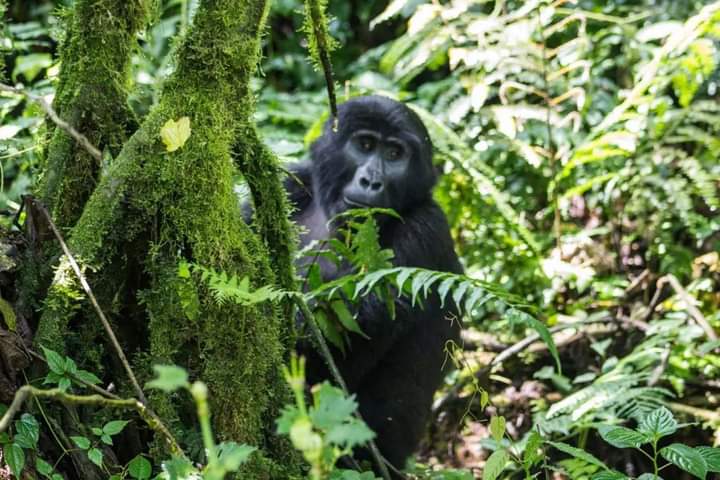
Kalinzu Forest is located in Bushenyi District in Southwestern Uganda, adjacent to Queen Elizabeth National Park and Maramagambo Forest. It is roughly 375 km from Kampala, making it a popular stopover for chimpanzee tracking. The forest is situated on the eastern edge of the Albertine Rift Valley.
14-days-uganda-and-rwanda-safari-tour-itinerary
14-days-luxury-uganda-primate-safari-holiday
14-days-uganda-primate-safari-and-jinja-white-water-rafting
14-days-classic-uganda-birding-safari-expedition
14-days-best-africa-big-five-safari-in-uganda-and-best-gorilla-trekking-adventure
20-days-uganda-birding-safari-wildlife-gorilla-and-chimpanzee-tracking
20-days-uganda-birding-safari-to-uganda-national-park
20-days-uganda-safari-holiday-tour-package-itinerary
19-days-best-photography-uganda-birding-safari-and-wildlife-adventure
19-days-incredible-uganda-safari-tour-big-five-chimpanzees-and-mountain-gorillas
18-days-best-of-uganda-safari-holiday-vacation-to-all-best-parks
17-days-uganda-honeymoon-safari-holiday-tour
17-days-uganda-birding-safari-itinerary
17-days-best-safari-in-uganda-ending-in-kigali-rwanda
16-days-ultimate-uganda-safari-to-rwanda-safari-tour-package-combo
16-days-best-of-uganda-birding-safari-holiday-extravaganza
7-day-ultimate-uganda-primate-safari-chimpanzees-and-game-drives
6-days-best-gorilla-trekking-and-safari-uganda-parks
1. Proximity to National Parks
One of the most compelling logistical advantages of Kalinzu Forest is its seamless integration with the broader "Western Uganda Safari Circuit." Specifically, the forest is located just a 45-minute to 1-hour drive from the Mweya Peninsula, the primary tourism hub of Queen Elizabeth National Park (QENP). This proximity is a "game-changer" for travelers who want to maximize their wildlife sightings while minimizing the grueling transit times often associated with African safaris. The drive itself is a scenic transition, taking you from the sprawling, sun-drenched savannahs of the rift valley floor up the winding Kichwamba Escarpment to the cool, misty edge of the rainforest.
Because the forest and the national park essentially share a boundary, they form a massive, continuous ecosystem. This allows for an incredibly efficient itinerary: you can wake up at a lodge in Queen Elizabeth for a sunrise game drive to see lions and leopards, and be at the Kalinzu visitor center in time for a mid-morning chimpanzee trek. Alternatively, many visitors choose to track chimps in the morning and return to the Mweya Peninsula for a 3:00 PM boat cruise along the Kazinga Channel. This geographical convenience turns a standard savannah safari into a multidimensional adventure, offering a "best of both worlds" experience where you can see the "Big Five" of the plains and the charismatic primates of the jungle within the same 12-hour window.
2. Access Point
Finding your way to the heart of the rainforest is remarkably straightforward, as the main forest reception center is conveniently located near the Butare trading center. This access point sits directly along the main Kasese-Mbarara highway, one of the most well-maintained and frequently traveled paved roads in Western Uganda. Unlike many other primate destinations that require hours of navigating bumpy, unpaved "back-roads" or 4x4-only tracks, Kalinzu is accessible by standard vehicles, making it a "user-friendly" stop for self-drive travelers and organized tours alike.
The reception center serves as the "nerve center" for all forest activities. Upon arrival at this gateway, you are greeted by the National Forestry Authority (NFA) staff, who manage the permits and briefings. The location near Butare is strategic; it allows visitors to pick up last-minute supplies, snacks, or water from the local shops before heading into the canopy. The proximity to the highway also means that the forest is a perfect "transit stop." If you are traveling between the gorilla forests of Bwindi and the northern reaches of Kibale or Murchison Falls, Kalinzu offers a high-impact, low-effort detour. You can simply pull off the highway, immerse yourself in a world of ancient hardwoods and chimpanzee vocalizations, and be back on your main route within a few hours.
3. Key Features
Kalinzu Forest Reserve is a 147-square-kilometer expanse of tropical rainforest that serves as a vital ecological anchor for the region. Unlike the neighboring national parks, which are managed by the Uganda Wildlife Authority (UWA), Kalinzu falls under the jurisdiction of the National Forestry Authority (NFA). This management style gives the forest a unique character; it is a "working" forest that balances conservation, research, and sustainable tourism. The reserve is characterized as a medium-altitude moist evergreen forest, which creates a distinct microclimate that is noticeably cooler and more humid than the surrounding agricultural lands and savannahs.
The forest is a biodiversity "hotspot," acting as a refuge for over 300 chimpanzees, six species of primates, and a staggering array of birds and butterflies. One of its key features is its incredible botanical density; it houses 414 species of trees, including ancient mahogany, towering figs, and prehistoric tree ferns. Because it sits on the edge of the Albertine Rift, the terrain is a fascinating mix of rolling hills and deep, fern-filled ravines. This topography not only provides a beautiful backdrop for trekking but also creates various "ecological niches" that support a wide range of specialized wildlife. For the visitor, the 147 sq km of Kalinzu represents a "pristine island" of wilderness, offering a raw and authentic jungle experience that feels significantly larger and deeper once you are under the shade of its massive, multi-layered canopy.
1. Where exactly is the Kalinzu Forest Reserve situated within the western region of Uganda?
Kalinzu Forest Reserve is a topographical jewel located on the edge of the Albertine Rift Escarpment in Western Uganda. It sits at an elevation that bridges the gap between the low-lying savannahs of the rift floor and the higher, mist-covered ridges of the western highlands. Geographically, it is positioned along the southwestern edge of the Kichwamba Escarpment, providing a dramatic vertical landscape that overlooks the vast plains below. This specific location makes it a transitional zone where different ecological worlds meet, resulting in a unique "medium-altitude" moist evergreen forest.
The reserve is part of a larger, interconnected ecosystem that includes the Maramagambo Forest. While it feels remote and primordial once you are beneath its canopy, it is remarkably well-situated for travelers. It lies in the heart of the "Western Uganda Safari Circuit," strategically placed between the primary big-game parks and the famous gorilla sanctuaries. Its location is not just a point on a map but a vital biological corridor that allows for the movement of species between the rainforest and the savannah, making it a critical anchor for biodiversity in the region.
2. How close is Kalinzu Forest to Queen Elizabeth National Park when planning a safari?
The proximity of Kalinzu Forest to Queen Elizabeth National Park (QENP) is one of its most attractive features for safari planning. The two protected areas are essentially neighbors, separated only by the steep incline of the Kichwamba Escarpment. From the forest reception center, it is a drive of approximately 45 minutes to one hour to reach the Mweya Peninsula, the central hub of QENP. This means you can realistically stand in a dense tropical rainforest at 9:00 AM and be watching hippos on a boat cruise along the Kazinga Channel by 2:00 PM.
This close relationship allows for a "seamless safari" experience. Most travelers choose to use Kalinzu as a primate-focused extension of their QENP itinerary. Because the transit time is so short, it eliminates the need for a full "travel day" between destinations. The forest acts as the perfect "green lung" for the park; while you spend your morning in the cool, shaded environment of the chimpanzees, you remain only a few kilometers away from the warm, open plains where lions and elephants roam. This logistical advantage is why Kalinzu is increasingly preferred by those who want to see the best of Uganda’s wildlife with minimal time spent in a vehicle.
3. Which district in southwestern Uganda is responsible for hosting the lush, green Kalinzu Forest?
Kalinzu Forest is hosted by the Bushenyi District in southwestern Uganda. Bushenyi is widely known for its rolling, emerald-green hills and its massive, manicured tea estates, which create a stunning visual border around the dark, wild canopy of the forest. The district is a hub for agriculture and conservation, and Kalinzu stands as its most significant natural treasure. The local government and communities in Bushenyi play a vital role in the forest's preservation, as the reserve provides essential watershed services for the surrounding farms.
Being located in Bushenyi also means the forest is near the town of the same name, which serves as a regional administrative and commercial center. This district context adds a cultural layer to the safari; as you drive through Bushenyi to reach the forest, you witness the vibrant local life, from the busy trading centers to the tea pickers working on the slopes. The management of the forest, however, falls under the national jurisdiction of the National Forestry Authority (NFA), which ensures that this Bushenyi-based gem is protected according to national conservation standards while remaining a source of pride and employment for the local district residents.
4. Is it convenient to visit Kalinzu Forest while staying at lodges in Mweya or Ishasha?
Visiting Kalinzu Forest from the Mweya Peninsula is exceptionally convenient. Given the short 45-to-60-minute drive, guests staying at Mweya-based lodges can easily treat Kalinzu as a half-day excursion. You can depart after an early breakfast, complete a morning chimpanzee trek, and return in time for lunch or an afternoon game drive. This makes Mweya an ideal base for those who want to combine luxury accommodation with a raw forest adventure.
Visiting from the Ishasha Sector (famous for tree-climbing lions) is also feasible, though it requires a slightly longer drive of about 1.5 to 2 hours. While Ishasha is further south, the road connectivity remains good. Many travelers choose to visit Kalinzu as they transition between the northern and southern sectors of Queen Elizabeth National Park. Whether you are coming from the luxury lodges of Mweya or the more remote camps of Ishasha, Kalinzu is perfectly positioned as a "midway" highlight. Its location ensures that you don’t have to change your "base of operations" just to enjoy a high-quality primate encounter, providing maximum flexibility for your safari schedule.
5. What is the best route to reach Kalinzu Forest from Kampala city by road transport?
The most efficient and popular route from Kampala to Kalinzu Forest follows the primary southwestern highway, a journey of approximately 380 kilometers. The route begins by heading west toward Masaka, a well-paved stretch that takes you through the Equator crossing at Kayabwe—a perfect spot for a quick break and a photograph. From Masaka, you continue southwest toward Mbarara, the largest city in the region and a common stop for a mid-journey lunch.
Once you reach Mbarara, the route takes the Kasese-Mbarara highway. As you leave the city and head toward Bushenyi, the landscape shifts from cattle-grazing plains to the iconic rolling hills and tea plantations. You will pass through Bushenyi town and continue toward the Kichwamba Escarpment. The forest reception center is located right along this main highway, near the Butare trading center. This route is entirely on tarmac and is considered one of the best-maintained roads in Uganda, making it accessible for all vehicle types. The journey is not just a transit but a scenic tour of Uganda’s diverse landscapes, moving from the bustling central region to the tranquil, green heart of the west.
6. How long does the drive to Kalinzu Forest take from Kampala on a typical day?
On a typical day, the drive from Kampala to Kalinzu Forest takes between 6 to 7 hours, depending on traffic leaving the city and the length of your stops along the way. The first leg to Mbarara usually takes about 4 hours. This part of the journey is relatively fast, though it is important to factor in potential delays in the busy markets and trading centers that line the highway. After Mbarara, the final stretch to the forest takes another 2 to 2.5 hours as the road begins to wind through the hills of Bushenyi.
While the drive is long, it is generally comfortable due to the high quality of the tarmac. Most travelers choose to break the journey with a stop at the Equator or a lunch break in Mbarara to stretch their legs. If you are traveling as part of a guided safari, the time often passes quickly as you observe the changing scenery and local life. To ensure you arrive in time for an afternoon trek (3:00 PM), a very early morning departure from Kampala is necessary. However, most visitors prefer to make the drive on one day and begin their forest activities the following morning, ensuring they are well-rested for the physical demands of trekking.
7. Does Kalinzu Forest lie close to the border of the Democratic Republic of Congo border?
While Kalinzu Forest is located in Western Uganda, it is not directly on the border with the Democratic Republic of Congo (DRC). It is situated about 50 to 60 kilometers east of the international boundary. The forest sits atop the escarpment, while the actual border lies further west, beyond the floor of the Rift Valley and the waters of Lake Edward. The vast expanse of Queen Elizabeth National Park and the Maramagambo Forest act as a significant "buffer zone" between Kalinzu and the DRC.
This distance provides a high degree of security and stability while still allowing the forest to benefit from the incredible biodiversity of the Albertine Rift, which is shared with the Congo. From certain high viewpoints within Kalinzu, such as Kishunja Hill, you can look across the valley toward the blue silhouettes of the mountains in the DRC on a clear day. This provides a sense of the massive scale of the African Great Lakes region without being in an immediate border area. For travelers, this means you get to experience the same primordial "Congo-style" rainforest environment while remaining firmly and safely within the well-established tourism infrastructure of Uganda.
8. Is the forest conveniently located near the Kampala-Mbarara-Kasese highway to ensure easy access?
Yes, the convenience of Kalinzu Forest’s location cannot be overstated. Unlike many of Uganda’s other primate destinations—which often require hours of travel on bumpy, unpaved "feeder" roads—Kalinzu’s visitor reception center is located directly along the main Kasese-Mbarara highway. This is a major paved arterial road that connects the southwestern highlands to the rift valley. You can literally see the entrance signs from the tarmac, making it one of the most accessible forests in the country.
This "highway-side" access makes it an ideal stop for a wide range of travelers. Whether you are in a high-clearance 4x4 safari vehicle or a standard saloon car, you can reach the forest without any logistical hurdles. It also makes Kalinzu a perfect "transit activity." Travelers moving between the parks of the north and south can simply pull off the highway, spend a few hours tracking chimpanzees or birding, and continue their journey without a significant detour. This ease of access is a major reason why Kalinzu is a favorite for self-drive tourists and those looking for a high-impact wildlife experience that doesn't involve grueling travel on rough terrain.
9. Is it possible to visit Kalinzu Forest while travelling to Bwindi Impenetrable National Park?
Absolutely. In fact, Kalinzu Forest is a "strategic stopover" for travelers moving between Queen Elizabeth National Park and Bwindi Impenetrable National Park. The forest sits almost exactly on the main route that connects these two iconic destinations. If you are heading south from Mweya to the Buhoma or Ruhija sectors of Bwindi, you will pass right by the Kalinzu entrance.
Including Kalinzu in this transit day adds a spectacular "double-primate" dimension to your safari. You can track chimpanzees in the morning in Kalinzu and then continue your drive to Bwindi in the afternoon, arriving at your gorilla-trekking lodge by nightfall. This transition is fascinating; you move from the medium-altitude forest of Kalinzu to the high-altitude, ancient montane forest of Bwindi. By stopping at Kalinzu, you make the most of your travel time, breaking up the drive with a world-class wildlife encounter and ensuring that your journey to see the gorillas is punctuated by the equally thrilling experience of seeing our closest relatives in the "green lung" of Bushenyi.
10. How far is the nearest town to Kalinzu Forest for securing accommodation or supplies?
The nearest significant town to Kalinzu Forest is Bushenyi, which is approximately 10 to 15 kilometers away. This distance translates to about a 15-to-20-minute drive. Bushenyi is a bustling regional center where travelers can find a variety of basic supplies, including fuel, pharmacies, local markets for fresh fruit, and small supermarkets. It is the best place to stock up if you are planning on camping at the forest station or if you need to top up your travel snacks.
For accommodation, there are several "mid-range" and "budget" hotels within Bushenyi town and along the highway leading to the forest. However, many visitors choose to stay in the more specialized safari lodges located on the Kichwamba Escarpment, which are even closer to the forest entrance (some within 5–10 minutes). These lodges often provide more of a "wildlife atmosphere" and offer stunning views over Queen Elizabeth National Park. Whether you need the urban amenities of Bushenyi or the tranquil setting of a forest-edge lodge, the proximity of the town ensures that you are never far from the essentials while still being at the doorstep of the wilderness.
11. Are there signs leading from the main road in Bushenyi to the forest entrance?
Yes, the route to Kalinzu Forest is well-signposted, particularly as you move along the Kasese-Mbarara highway leaving Bushenyi town. As you approach the Kichwamba Escarpment, you will see clear, official signs provided by the National Forestry Authority (NFA) indicating the entrance to the Kalinzu Forest Reserve. These signs are typically green and white and are placed at the major turn-offs and near the visitor reception center at the Butare trading center.
Because the forest entrance is located directly on a major highway, these signs are easy to spot even at higher speeds. They serve as a vital guide for self-drive travelers who might be unfamiliar with the area. Even without GPS, it is difficult to miss the entrance if you are keeping a watchful eye on the roadside. Local residents in the Butare area are also very familiar with the "Chimpanzee Forest" and are always willing to point visitors toward the reception building. The combination of clear signage and a highway-side location makes Kalinzu one of the most "findable" and stress-free wildlife destinations in the region.
12. Is the forest situated within the western rift valley and near the Maramagambo forest?
Kalinzu Forest is situated on the eastern escarpment of the Western Rift Valley (the Albertine Rift). While it is not on the flat floor of the valley itself, it sits directly on the ridge that overlooks it. This "edge" position is what gives the forest its spectacular viewpoints and its unique biodiversity. It is fundamentally part of the same massive block of tropical vegetation as the Maramagambo Forest, which lies just below it on the rift floor within the boundaries of Queen Elizabeth National Park.
In fact, the two forests are ecologically contiguous; the only real difference is their administrative boundary and their elevation. Chimpanzees and other wildlife move freely between Kalinzu and Maramagambo, following the natural corridors created by the ravines and river systems. When you stand on a ridge in Kalinzu, you are looking down into the Maramagambo canopy. This connection is vital for the health of the ecosystem, as it allows for a larger gene pool and more diverse foraging grounds for the resident primates. For the visitor, this means you are exploring a small, accessible part of a much larger, prehistoric wilderness that stretches deep into the rift valley.
13. Is the visitor center for Kalinzu Forest easily found along the main road for tourists?
The visitor center for Kalinzu Forest is exceptionally easy to find. It is located at the Butare trading center, which sits directly on the Mbarara-Kasese highway. Unlike many parks where the "center" is hidden kilometers deep into the woods, the Kalinzu reception is practically at the roadside. It is a modest but clearly marked building where you will find the National Forestry Authority (NFA) rangers, the briefing area, and the start of the primary trails.
For tourists, this "highway-side" presence is a significant advantage. There is no need for complex navigation or worrying about getting lost on unmarked forest tracks. You simply park your vehicle at the station, check in, and within minutes you are walking under the canopy. This accessibility makes it a popular spot for travelers to stop even just for a quick nature walk or a bathroom break during a long drive. The center also provides a small area for picnics and basic information about the forest's history and its habituated chimpanzee troops. Its visible and convenient location ensures that Kalinzu remains one of the most welcoming and "un-intimidating" forest experiences in Uganda.
14. How accessible is Kalinzu Forest from Kalinzu Forest during a safari focusing on wildlife species?
Kalinzu Forest is a central pillar of the Western Uganda wildlife circuit, making it incredibly accessible for any safari focused on biodiversity. Because it is located on the main artery between the savannah parks and the gorilla mountains, it acts as a "natural bridge" for travelers. Most safari itineraries that include Queen Elizabeth National Park will find Kalinzu to be their most convenient primate tracking option, as it requires no extra travel days and very little additional driving.
The forest’s accessibility is also enhanced by its dual-session tracking (morning and afternoon). If you are on a birding-focused safari or a primate-specific trip, this flexibility allows you to "double up" on activities. You can spend your morning focusing on the rare birds of the canopy and your afternoon tracking chimpanzees, all from the same accessible base. Because the forest is managed by the NFA, permits are often more readily available than in the larger national parks, making it a reliable and stress-free addition to any wildlife-focused journey. Its "all-in-one" location—close to towns, parks, and highways—ensures that Kalinzu is a highly efficient choice for maximizing species sightings within a standard safari timeframe.
15. Do local safari operators in Uganda know the exact location of the Kalinzu Forest rangers' station?
Yes, Kalinzu Forest is a "staple" destination for Ugandan safari operators. Any professional guide or tour company operating in Western Uganda is intimately familiar with the location of the Kalinzu Forest rangers' station at Butare. Because it is the primary alternative to Kibale for chimpanzee tracking, it is a regular stop on their "Western Circuit" tours. Operators value Kalinzu for its reliable sightings, its ease of access, and its excellent value for money.
When you book a safari that includes Kalinzu, your driver-guide will know exactly where to pull off the highway. They have established relationships with the NFA rangers and understand the timing required to reach the station for the 8:00 AM or 3:00 PM briefings. Furthermore, because it is located along the main Kasese-Mbarara road, even independent travelers will find that any local taxi driver (special hire) or boda-boda (motorcycle taxi) in the Bushenyi or Kichwamba area can take them directly to the "Chimpanzee Forest" station without hesitation. Its reputation as a top-tier primate site is well-established, ensuring that no traveler will have difficulty finding their way to the start of the adventure.
Booking chimpanzee tracking in Kalinzu with us Roads of Adventure safaris
Chimpanzee tracking in Kalinzu Forest with Roads of Adventure Safaris offers a 95% success rate to encounter habituated chimps, typically costing around $100-$130 USD per permit for foreign non-residents in 2026. Bookings, including transport and accommodation near Queen Elizabeth National Park, should be made 3-6 months in advance to secure slots.
