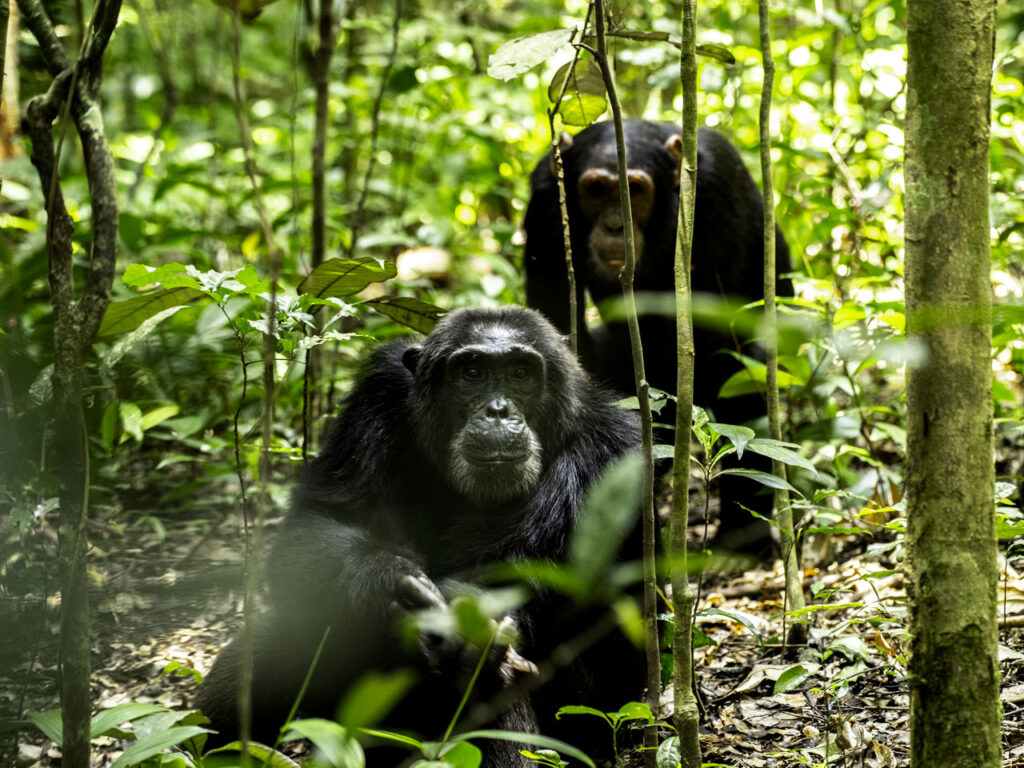
Budongo Forest is located in northwestern Uganda, sitting on the escarpment northeast of Lake Albert within the Masindi, Hoima, and Kikuube districts. Spanning 435 square kilometers, it forms the southern boundary of Murchison Falls National Park and is roughly a 3 to 4-hour drive northwest of Kampala
2-days-affordable-chimpanzee-tracking-in-budongo-forest-via-ziwa-rhinos
2-days-best-chimpanzee-tracking-in-kibale-forest-park-tour-package
3-days-trips-to-queen-elizabeth-national-park-for-chimpanzee-tracking-in-kyambura-gorge
3-days-chimpanzee-tracking-to-kibale-forest-national-park
4-days-queen-elizabeth-national-park-and-kyambura-gorge-chimpanzee-tracking
4-days-kibale-forest-chimpanzee-tracking-and-queen-elizabeth-national-park
4-days-chimpanzee-tracking-in-lake-mburo-national-park-and-lake-mburo-safari
4-days-kibale-forest-chimpanzee-tracking-and-queen-elizabeth-national-park
4-days-murchison-falls-and-chimpanzee-tracking-in-budongo-forest
5-days-uganda-big-five-safari-and-chimpanzee-tracking-in-kibale-forest-park
6-days-jinja-white-water-rafting-gorilla-trekking-and-chimpanzee-tracking-adventure
6-days-budget-uganda-safari-and-gorilla-trekking
7-days-perfect-uganda-primate-safari-itinerary
Where exactly is Budongo Forest located on a map of Uganda?
If you are looking at a map of Uganda, point your finger right toward the northwestern region. Budongo sits gracefully on the edge of the Albertine Rift, which is the western branch of the Great Rift Valley. It occupies the high escarpment just northeast of Lake Albert. Geographically, it bridges the gap between the flat, open savannahs further north and the rugged, mountainous terrains of western Uganda, making it a unique ecological transition zone.
Which specific districts in Uganda claim ownership of the forest?
Budongo does not belong to just one town; it is a massive natural treasure shared across three specific districts: Masindi, Hoima, and Kikuube. The largest portion of the forest, including the main eco-tourism site at Kaniyo Pabidi, falls directly within the boundaries of the Masindi district. Because it stretches across these administrative lines, conserving the forest requires a collaborative, regional effort by local governments and communities who live along its sprawling borders.
How close is Budongo Forest to Murchison Falls National Park?
They are practically next-door neighbors, sharing a seamless natural boundary. Budongo Forest forms the direct southern boundary of the Murchison Falls National Park conservation area. In fact, when you travel from Kampala to the park's spectacular waterfalls via the southern gate, your vehicle will cut right through the towering canopy of Budongo. This physical proximity allows wildlife, like elephants and various monkey species, to freely roam between the deep forest and the open savannah.
What is the driving distance and travel time from Kampala?
The journey from Uganda's capital city, Kampala, to the main gates of Budongo Forest is roughly 250 kilometers. In terms of time, you should plan for a three to four-hour drive, depending on traffic exiting Kampala and the condition of the roads. The route takes you northbound along the smooth, paved Kampala-Gulu highway before you branch off at Migyera or Bombo toward Masindi town, which serves as the final gateway.
How far is the forest from the shores of Lake Albert?
Budongo perches high on the rift valley escarpment, sitting just a short distance east of Lake Albert. As the crow flies, the lake shores are only about 20 to 30 kilometers away. However, because of the steep drop of the escarpment, driving down to the water takes a bit longer. On a clear day from certain high ridges near the forest edge, you can catch breathtaking, panoramic views of the shimmering blue lake in the distance.
Where is the main entry point for tourists who want to visit?
The central hub for all tourism, chimpanzee tracking, and guided nature walks is a specific site called Kaniyo Pabidi. This eco-tourism site is situated directly along the main secondary road that connects Masindi town to Murchison Falls National Park. It is remarkably easy to find because it features a clearly marked reception center, the Budongo Eco Lodge, and the primary trailhead where rangers gather to brief eager travelers before entering the jungle.
Is the forest located in an area with steep mountains or flat land?
Budongo sits on a unique topographical feature known as a rolling plateau. It is not situated on steep, exhausting alpine mountains like the Rwenzoris, nor is it completely flat like the savannah plains. The elevation ranges comfortably between 1,100 and 1,300 meters above sea level. This creates a gently undulating terrain where you will encounter mild ridges and shallow valleys, making the walking paths relatively easy on your knees and feet.
Where can I find the famous Royal Mile trail within the forest?
The legendary "Royal Mile" is located in a distinct section of the forest known as the Busingiro eco-tourism site, which lies in the southern part of the reserve. It is historically famous because the King of the local Bunyoro Kingdom used to frequent the area for leisure. Today, this perfectly straight, one-mile stretch of forestry road is globally renowned among birdwatchers as one of the single best spots in Africa to view rare forest birds.
How does Budongo's location affect its local climate and weather?
Because of its position on the rift valley escarpment and its proximity to both Lake Albert and Murchison Falls, Budongo enjoys a tropical rainforest climate. It receives a generous amount of rainfall—around 1,500 to 2,000 millimeters annually. The heavy rains are fueled by moisture rising from Lake Albert, which hits the cool forest canopy and condenses. This keeps the location humid, incredibly green, and relatively cool throughout the year.
What are the nearest major towns if I need modern amenities?
The closest major urban center is Masindi town, located about 30 kilometers south of the forest edges. Masindi acts as the primary supply hub where travelers can find fuel stations, banks, pharmacies, supermarkets, and a wider variety of local restaurants. If you venture further southwest, the thriving oil-boom city of Hoima is the next closest urban area, offering additional regional hospitals and transport links.
Is Budongo Forest located near any major rivers?
While the mighty River Nile flows just north of the forest through Murchison Falls, Budongo itself is crisscrossed by several smaller, vital river systems. Streams like the Waiga, Sonso, and Waisoke originate within or flow directly through the forest reserve. These water bodies are the lifeblood of the jungle, carving out small valleys, supplying fresh drinking water to the wildlife, and eventually emptying their waters westward into Lake Albert.
Where is the research station located compared to the tourist area?
The Budongo Conservation Field Station, which handles all the scientific research and chimpanzee monitoring, is located in the Sonso region of the forest. This area is purposely kept separate from Kaniyo Pabidi, the main tourist zone. By keeping the research hub tucked deep into a quieter, restricted sector of the reserve, scientists can study the wild chimpanzees in their natural habitat with minimal disruption from everyday tourist traffic.
Where do I actually buy a chimpanzee tracking permit?
You can secure your permit directly through the National Forestry Authority (NFA) or via the reservation desk at Budongo Eco Lodge, which manages the tourism activities in the Kaniyo Pabidi sector. If you are organizing your trip through a local Ugandan tour operator, they can easily purchase and hold the permit on your behalf as part of your safari package. It is best to avoid turning up at the forest gate hoping to buy one on the spot, as daily tracking slots are strictly limited.
How far in advance should I book my tracking slot?
To be completely safe, you should aim to secure your permit three to six months before your travel date, especially if you plan to visit during the busy dry seasons from June to August or December to February. Because Budongo limits the number of visitors to protect the chimpanzees from stress, spaces fill up rapidly. Booking early ensures you get your preferred date and time slot, saving you from the heartbreak of an empty schedule.
Are there different times of day available for tracking?
Yes, tracking is organized into two distinct daily shifts: a morning session and an afternoon session. The morning trek typically kicks off around 8:00 AM after a brief safety orientation, while the afternoon trek begins around 2:00 PM. Most travelers prefer the morning slot because the forest is cooler and the chimpanzees are highly active, vocal, and foraging for breakfast, though the afternoon trek offers a wonderfully peaceful, golden-hour atmosphere in the canopy.
What is the minimum age requirement to secure a permit?
To track chimpanzees in Budongo Forest, you must be at least 12 years old. This age restriction is strictly enforced by the National Forestry Authority for safety and conservation reasons. Young children may find the long walks through thick undergrowth too exhausting, or they might become frightened and react unpredictably if a wild chimpanzee charges or makes loud vocalizations. Additionally, older children are better at understanding and following crucial wilderness safety rules.
Can I get a refund if I get sick before my trek?
If you wake up with a communicable illness like a cold, flu, or stomach bug, you will not be allowed to track the chimpanzees, as they share about 98% of our DNA and are highly susceptible to human diseases. Fortunately, conservation bodies usually offer a flexible rescheduling policy or a partial refund if you officially report your illness before entering the forest. It is a heartbreaking rule, but it keeps our wild cousins safe.
Do I need to hire a private guide to secure my trek?
No, you do not need to bring your own guide, as a professional, armed ranger from the National Forestry Authority is automatically assigned to your tracking group and included in the price of your permit. These local rangers live and work in the forest, meaning they know the individual chimpanzee families by name, understand their current movements, and can effortlessly interpret the sounds of the jungle to lead you straight to the action safely.
Is there a limit on how many people can track at once?
To preserve the natural behavior of the chimpanzees and protect the delicate forest environment, tracking groups are strictly limited to a maximum of eight people per ranger. This intimate group size ensures that everyone gets a clear view and a fantastic photo opportunity without overwhelming or intimidating the primates. It also allows your guide to easily share fascinating details about the forest without having to shout over a massive crowd.
How long does the permit allow me to spend with the chimps?
Once your tracking group successfully locates the chimpanzee community, your permit grants you exactly one unforgettable hour in their presence. This time limit is a universal conservation standard designed to minimize human disturbance to their natural daily routines, such as feeding, grooming, and resting. The clock only starts ticking when you finally see them, giving you a full 60 minutes to quietly observe and photograph their incredible behavior.
What happens if we do not find any chimpanzees during the trek?
While wild animals are unpredictable and sightings can never be 100% guaranteed, Budongo boasts an exceptionally high success rate of over 90% due to the habituation of the Kaniyo Pabidi community. Before you even set off, advanced tracker teams head deep into the jungle at dawn to locate the nests the chimps slept in the night before. If you genuinely miss them, park authorities may offer a partial refund or a free second chance.
Can I book a full-day habituation experience instead?
Yes, for a deeper adventure, you can secure a Chimpanzee Habituation Experience (CHEX) permit, which allows you to spend an entire day accompanying researchers and habituators in the forest. You will head out before dawn to watch the chimps wake up from their nests and follow them until they build new nests at dusk. This option requires a much higher fitness level but offers an unparalleled look into the secret, raw lives of wild primates.
Booking chimpanzee tracking in Budongo forest with us Roads of Adventure safaris
Ready for an unforgettable primate adventure? Book your Budongo Forest chimpanzee tracking permit through Roads of Adventure Safaris. Permits cost $130 for foreign non-residents. We handle all UWA permit bookings, 4x4 transport, and expert guides for a seamless, magical encounter with our closest relatives in Uganda's stunning mahogany forest.
