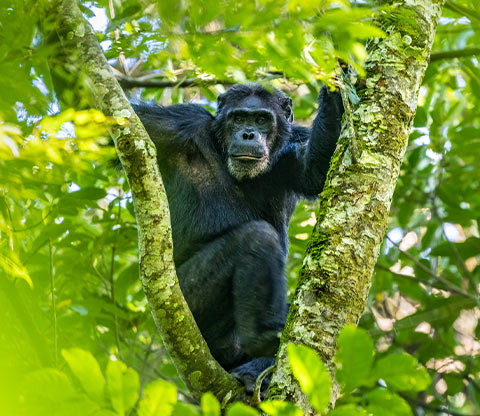
2 Days affordable chimpanzee tracking in Budongo forest via Ziwa Rhinos
Experience the ultimate primate adventure with our 2 Days affordable chimpanzee tracking in Budongo forest via Ziwa Rhinos itinerary. This action-packed short safari is perfectly designed for travelers seeking an immersive wildlife encounter without the time constraints of a longer expedition. Your journey begins with a visit to the Ziwa Rhino and Wildlife Ranch, the only place in Uganda where you can observe endangered white rhinos in their natural habitat. After this memorable encounter, you will traverse the scenic Ugandan landscape toward the majestic Budongo Forest. As part of the sprawling Murchison Falls Conservation Area, Budongo offers one of the highest concentrations of chimpanzees in East Africa. This budget-friendly package prioritizes value, ensuring you enjoy expert-led trekking sessions, comfortable accommodation, and seamless transportation. Whether you are a photography enthusiast or a nature lover, this tour delivers the perfect blend of savannah conservation and dense tropical rainforest exploration, creating unforgettable memories in just forty-eight hours.
Tour highlight
Track endangered white rhinos.
Explore ancient mahogany forest.
Expertly guided chimpanzee trekking.
Immersive forest wildlife encounters.
Scenic northern Uganda drive.
Observe wild primate behavior.
Budget friendly adventure travel.
Unforgettable nature photography opportunities.
Day 1: Journey to Ziwa Rhino Sanctuary and Transfer to Budongo
Your adventure kicks off early as you depart from your location, heading north toward the Ziwa Rhino and Wildlife Ranch. Upon arrival, you will embark on a guided bush walk to track the southern white rhinos. This rare opportunity to observe these magnificent giants on foot provides an exhilarating start to your trip. After enjoying a picnic lunch at the sanctuary, you will continue your scenic drive to the Budongo Forest. Nestled within the Murchison Falls Conservation Area, this forest is home to incredible biodiversity, including mahogany trees and various primate species. Check into your lodge, where you can unwind amidst the tranquil sounds of the forest canopy. The evening is yours to relax and prepare for the following day's trek, enjoying a delicious dinner that highlights local ingredients while soaking in the serene atmosphere of one of Uganda’s most significant ecological treasures.
Day 2: Chimpanzee Tracking and Departure
Wake up to the symphony of the forest and enjoy an early breakfast before heading to the Kaniyo Pabidi sector for your briefing. With expert guides, you will venture deep into the lush trails of Budongo Forest for your primary activity: 2 Days affordable chimpanzee tracking in Budongo forest via Ziwa Rhinos. As you navigate the dense undergrowth, keep your eyes peeled for the chimpanzee communities that reside here. Once you locate them, you will have the privilege of spending an hour observing their natural behaviors—from grooming and playing to foraging in the canopy—providing a rare glimpse into the lives of our closest wild relatives. After completing the trek and enjoying a hearty lunch, you will begin your journey back, concluding this intense and rewarding wildlife encounter. You will arrive back at your destination with lasting memories of Uganda’s premier primate tracking experiences.
What exactly is the 2 Days Budongo & Ziwa Rhino tour?
The 2-day Budongo and Ziwa tour is an immersive, condensed safari package that maximizes your time in Uganda’s northern circuit. On day one, you depart for the Ziwa Rhino and Wildlife Ranch, where you engage in a guided, on-foot rhino tracking experience. This provides a rare chance to see southern white rhinos in their natural environment. After a picnic lunch, you travel toward the Budongo Forest Reserve. Day two is entirely dedicated to the forest, where you join a guided trek to locate habituated chimpanzee communities. This tour is highly sought after for its efficiency, combining two distinct wildlife ecosystems—savannah and tropical rainforest—into a single, seamless, and budget-friendly journey that minimizes transit time while maximizing your wildlife viewing opportunities.
Why track both rhinos and chimpanzees on the same trip?
Tracking both species in one trip is a strategic choice for travelers looking for a diverse safari experience. Ziwa is the only place in Uganda where you can safely see rhinos in the wild, effectively "filling the gap" of the Big Five that you might miss elsewhere. By combining this with a visit to Budongo Forest, you observe two of our closest living relatives—the chimpanzee—and the majestic rhino, which are ecologically distinct. This route is not only logically efficient for those traveling toward Murchison Falls National Park, but it also provides a rich educational contrast between conservation efforts in the open savannah and those in the dense mahogany forest, all within a compact, cost-effective 48-hour timeframe.
Where is Budongo Forest located?
Budongo Forest is situated in the southwestern section of the Murchison Falls Conservation Area in northwestern Uganda. It sits within the Masindi District, serving as a critical ecological bridge between the more arid landscapes to the north and the tropical forests of western Uganda. Because it is located near the road connecting Masindi Town to the main gates of Murchison Falls National Park, it is remarkably accessible. The forest itself covers a significant area of protected mahogany, providing a crucial habitat not only for chimpanzees but for a vast array of bird species and other primates. Its location makes it the perfect stopover for travelers venturing deeper into the national park or returning to Kampala after a safari.
How long does the drive from Kampala to Budongo via Ziwa take?
The journey is a significant but scenic drive that requires approximately 5 to 6 hours of total driving time, excluding stopovers and activity time. The first leg, covering roughly 230 km from Kampala to the Ziwa Rhino and Wildlife Ranch, typically takes between 2.5 and 3 hours depending on traffic conditions leaving the capital. After your rhino tracking session and lunch, the final stretch from Ziwa to the Budongo Eco Lodge takes an additional 2 to 2.5 hours. While the drive is long, it is an essential part of the experience, as it allows you to transition through different Ugandan landscapes, from the busy peri-urban surroundings of Kampala to the rural farmlands and eventually into the lush, dense canopy of the Budongo Forest region.
How much does a Budongo chimpanzee tracking permit cost?
Permit pricing for Budongo Forest is structured to reflect your residency status, ensuring fair access for both international visitors and local citizens. As of current regulations, the chimpanzee trekking permit costs $130 USD for foreign non-residents and $120 USD for foreign residents. East African citizens can purchase permits for 85,000 UGX. Please be aware that these prices are subject to change by the authorities and can sometimes vary slightly depending on the season (high vs. low). Because these permits are strictly limited to manage the number of visitors per day, it is highly recommended to book well in advance through a reputable tour operator who can handle the transaction and ensure your spot is secured for your specific travel dates.
Are chimpanzee sightings guaranteed in Budongo?
While no wild animal encounter can be 100% guaranteed, Budongo Forest offers a exceptionally high success rate for sightings, often exceeding 90%. This is largely because the forest is home to an estimated population of over 600 chimpanzees, several communities of which have undergone a long-term habituation process. By becoming accustomed to human presence, these specific groups allow for closer observation without retreating into the deep forest. The skilled trackers and rangers work tirelessly each morning to locate the chimpanzees before your group sets out, using signs like fresh nesting sites and vocalizations. Because of this dedicated daily monitoring, the probability of enjoying a successful encounter is very high, making Budongo one of the most reliable places in East Africa for primate tracking.
How long does the actual chimpanzee tracking walk take?
The duration of your trek is entirely dependent on the movement of the chimpanzee community. On average, you can expect to spend anywhere from 2 to 4 hours walking through the forest. The rangers' ability to locate the group relies on their expertise in interpreting forest tracks, recent feeding remains, and sounds. During the dry season, when food is more concentrated, the groups may remain in a smaller area, leading to shorter treks. Conversely, if the group is traveling further in search of fruiting trees, the walk may take longer. Regardless of the distance, the trek itself is an incredible way to experience the forest’s hidden beauty, providing opportunities to spot birds, butterflies, and other smaller primates before you finally reach the chimpanzee community.
How much time do I spend with the chimpanzees?
Once your guide confirms that you have reached the chimpanzee community, your time with them is strictly limited to one hour. This 60-minute window is a crucial conservation standard applied across all primate trekking sites in Uganda. It is designed to ensure that the chimpanzees are not subjected to prolonged human presence, which could lead to stress or alterations in their natural behavior. During this hour, you are encouraged to observe quietly and maintain a respectful distance. This timeframe is considered the "golden hour" of the experience; it is long enough for you to witness their complex social interactions, such as grooming or feeding, but short enough to protect their well-being and maintain the integrity of their wild habitat.
What is the minimum age limit for tracking?
The minimum age requirement for chimpanzee tracking in Budongo Forest is 15 years. This policy is strictly enforced by the Uganda Wildlife Authority (UWA) across all major primate sites. The primary reason for this age limit is the protection of the chimpanzees, who share approximately 98% of our DNA and are highly susceptible to human respiratory and digestive pathogens. Younger children are often more likely to carry or transmit these illnesses. Furthermore, the 15-year age limit ensures that all participants possess the maturity required to follow the strict safety rules—such as maintaining silence and keeping a set distance—which are essential for both human safety and the conservation of the chimpanzee families.
What do chimpanzees eat?
Chimpanzees are primarily frugivores, meaning that ripe fruit forms the most significant part of their diet. As you track them through the forest, you are likely to see them high in the canopy or on the forest floor feeding on various wild fruits, figs, and berries. However, their diet is remarkably varied; they are opportunistic foragers and will also consume leaves, blossoms, buds, and occasionally bark. In some instances, they may even supplement their diet with insects or small vertebrates. Watching them forage is one of the most fascinating aspects of the trek, as it allows you to observe how they use their hands and tools to access food. Their movement through the forest is largely dictated by the availability of these food sources, which is why the trackers can often predict where to find them.
Can I feed or touch the chimpanzees?
It is strictly prohibited to feed or touch the chimpanzees under any circumstances. These rules are non-negotiable for two major reasons: health and safety. Because chimpanzees are so closely related to humans, they can easily catch our illnesses, and feeding them human food can introduce harmful substances or pathogens into their diet. Touching them also poses a severe risk of disease transmission in both directions. Furthermore, chimpanzees are strong, wild animals; attempting to interact with them can trigger defensive or aggressive behavior. You are required to maintain a buffer zone of at least 8 meters (about 25 feet) between yourself and the primates at all times. Adhering to these rules ensures that you remain a respectful, non-intrusive observer, protecting both your own safety and the long-term health of the chimpanzee population.
Are there any physical fitness requirements?
While you do not need to be a professional athlete, a moderate level of physical fitness is necessary to fully enjoy the experience. The terrain in Budongo Forest can be uneven, and you will be walking off-trail through dense, tropical vegetation. During the rainy season, paths may be slippery or muddy, and you should be prepared for varying degrees of humidity. The trackers will lead you at a pace that accommodates the group, but you should be able to walk for several hours at a time. If you have concerns about your mobility, it is always helpful to inform your tour operator or the lodge staff in advance, so they can ensure you have the support of porters or additional assistance to make your trek as comfortable as possible.
What should I pack for the trek?
Proper preparation is the secret to a successful trek. Your packing list should prioritize comfort and protection: wear long-sleeved shirts and long trousers to shield yourself from thorns and stinging nettles, and invest in a pair of high-quality, sturdy waterproof hiking boots. A lightweight, breathable rain jacket is essential, as tropical showers can appear with little warning. Carry a hat, high-SPF sunscreen, and a reliable insect repellent (containing DEET) to stay protected throughout the morning. Since you will be in the forest for a few hours, keep a waterproof bag for your camera and electronics, and bring a refillable water bottle to stay hydrated. Packing light and wearing neutral-colored clothing will ensure you remain comfortable and focused on the incredible wildlife around you.
What is the best time of year to go tracking?
While chimpanzee tracking is available throughout the year in Budongo, the dry seasons are widely considered the ideal time to visit. The two primary dry seasons in Uganda—December through February and June through September—offer the best conditions for trekking because the forest floor is significantly drier and less slippery, making the hike much easier to manage. During these periods, visibility in the forest can also be better as the canopy is slightly less dense, allowing for clearer views of the chimpanzees. However, if you prefer a quieter experience with fewer crowds and potentially lower accommodation rates, the wet seasons are a valid option, provided you are prepared for the more challenging, muddy terrain and the occasional downpour.
Where will I stay overnight?
The standard and most recommended accommodation for this tour is the Budongo Eco Lodge. Its primary appeal is its location—the lodge is nestled directly inside the forest reserve, allowing you to wake up to the sounds of the canopy and be just a short walk away from the trekking briefing point. The lodge offers comfortable, en-suite eco-cabins that provide a perfect blend of rusticity and comfort. Staying here is an integral part of the experience, as it allows you to fully immerse yourself in the forest environment. Whether you are enjoying a meal on the veranda or relaxing after your trek, the lodge serves as a peaceful, serene base that keeps you connected to nature throughout your entire 48-hour adventure.
Booking 2 Days chimpanzee tracking in Budongo forest with us Roads of Adventure safaris
Booking a 2-day Budongo Forest chimpanzee tracking safari with Roads of Adventure Safaris immerses you in one of Uganda's premier primate habitats. The experience typically costs $130 USD per permit for foreign non-residents and offers a profound encounter with wild chimpanzees
