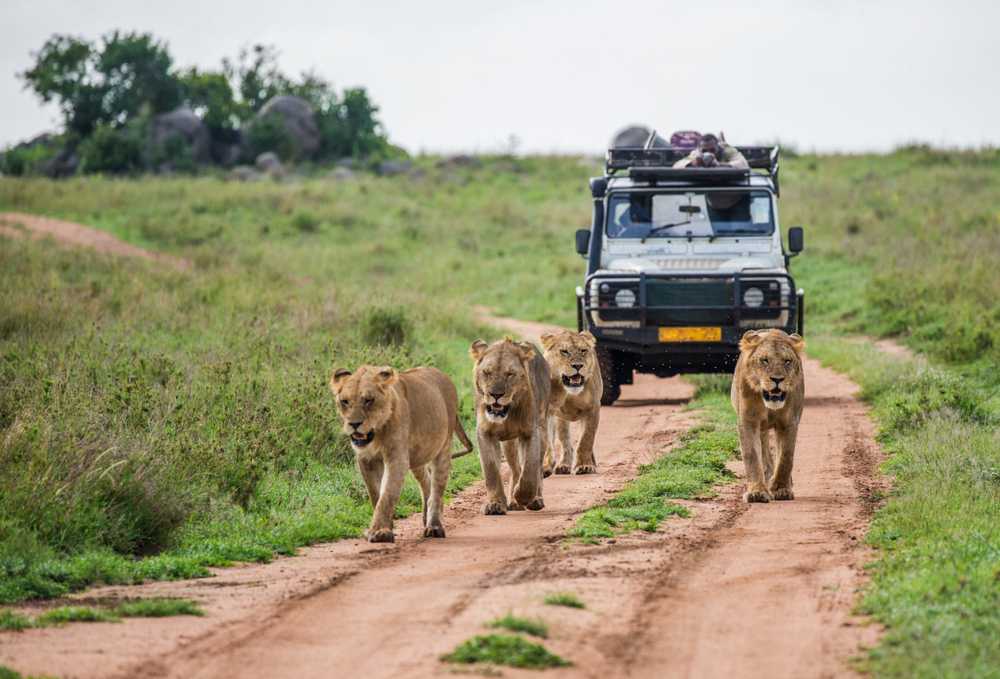
The only place to see the "Big Five" (lion, leopard, elephant, rhino, and buffalo) in Rwanda is Akagera National Park. Located in eastern Rwanda along the Tanzanian border, this 1,122 sq km park is managed by African Parks and offers savanna game drives and boat trips on Lake Ihema to spot these animals.
Rhinos: Black rhinos were reintroduced and can be found in the southern woodlands, while white rhinos are in the northern grasslands.
Lions: Reintroduced in 2015, the population has grown significantly.
Elephants & Buffalo: Frequently seen in the savannahs and near water sources.
Leopards: These are more elusive but present in the park.
4-days-akagera-safari-and-chimpanzee-tracking-rwanda-safari
4-days-volcanoes-national-park-and-akagera-rwanda-wildlife-safari
21-days-rwanda-primate-safari-culture-history-and-wildlife-holiday
20-days-complete-rwanda-uganda-safari-tour-combo
14-days-luxury-rwanda-primate-safari-and-uganda-safari-tour-combo
14-days-magical-rwanda-photography-safari
12-days-best-rwanda-wildlife-safari-and-rwanda-primate-safari-vacation
11-days-classic-uganda-rwanda-tour-combined-itinerary
10-days-9-nights-midrange-rwanda-gorilla-trekking-wildlife-and-culture
9-day-romantic-honeymoon-rwanda-wildlife-safari-itinerary
9-days-best-family-rwanda-safari-holiday-big-five-canopy-walk-and-chimpanzee
8-days-best-africa-big-five-rwanda-safari-and-gorilla-trekking
6-days-rwanda-gorilla-trekking-chimpanzee-tracking-and-birdwatching
Best Way to See the big five in Rwanda
- Game Drives: Safaris usually start from the south and move toward the northern Kilala plains.
- Boat Cruises: Lake Ihema boat trips provide views of buffaloes, elephants, and crocodiles, especially in the afternoon.
- Best Time: The dry season (June–September) is best for spotting animals as they congregate around waterholes.
1. Where can I see the Big Five animals in Rwanda on a wildlife safari?
If you are looking for the classic African "Big Five" experience, Akagera National Park is your sole destination in Rwanda. While Rwanda is world-famous for its mountain gorillas in the mist-covered Volcanoes National Park and its ancient chimpanzee-filled rainforests in Nyungwe, Akagera represents a completely different side of the country's geography. Located in the eastern part of Rwanda along the border with Tanzania, Akagera is a sprawling landscape of acacia woodlands, open grasslands, and a complex system of lakes and papyrus swamps.
The park is managed through a successful partnership between the Rwanda Development Board and African Parks, a non-profit conservation organization. This collaboration has transformed Akagera from a depleted landscape into a thriving ecosystem. Seeing the Big Five here is particularly special because it represents a triumph of conservation over tragedy. In the years following the 1994 Genocide, much of the park's wildlife was lost to poaching and human encroachment. Today, thanks to rigorous protection and reintroduction programs, travelers can experience a complete safari without leaving Rwanda’s borders.
The park's relatively compact size (about 1,122 square kilometers) compared to giant reserves like the Serengeti means that the density of wildlife can often make for very rewarding viewing. It is an intimate safari experience where you aren't fighting through dozens of other tourist vehicles to catch a glimpse of a lion or an elephant. Instead, you get a sense of raw, quiet wilderness where the "Land of a Thousand Hills" flattens out into the golden horizons of the African savanna.
2. What are the Big Five animals I can see in Akagera National Park?
The term "Big Five" was originally coined by big-game hunters to refer to the five most difficult and dangerous African animals to hunt on foot. Today, it has been reclaimed by the tourism industry as a "bucket list" of animals to see on safari. In Akagera, this prestigious group includes the Lion, Leopard, African Elephant, African Buffalo, and the Eastern Black Rhinoceros.
Each member of the Big Five plays a vital role in the Akagera ecosystem. The Lions, reintroduced in 2015, act as the top predators, keeping the populations of herbivores like zebras and impalas in check. The Leopards, though naturally shy and nocturnal, are the park's most versatile hunters. The African Elephants are the "architects" of the landscape, clearing bush and creating paths used by other animals. The African Buffaloes are perhaps the most common of the five in Akagera, often seen in massive, imposing herds near the water’s edge. Finally, the Eastern Black Rhinoceros is the rarest of the group. Reintroduced in 2017 and 2019, they are the park’s most guarded residents.
Beyond these five, Akagera is home to a staggering array of other wildlife, including Masai giraffes, hippos, crocodiles, and the rare shoebill stork. However, the Big Five remain the primary draw for international visitors. Spotting all five in a single trip is considered the "Grand Slam" of a Rwandan safari, requiring a mix of good timing, a sharp-eyed guide, and a little bit of luck.
3. Is Akagera National Park the only location for a Big Five safari in Rwanda?
Yes, Akagera National Park is the only location in Rwanda where you can perform a Big Five safari. This is due to the specific ecological requirements of these animals. Most of the Big Five, particularly the lion and the rhino, require the open savanna and woodland habitats found in the eastern part of the country. Rwanda’s other major national parks, Volcanoes and Nyungwe, are high-altitude rainforests and volcanic regions. While these are perfect for primates like gorillas and chimpanzees, they do not support the large-scale grazing and hunting grounds that the Big Five need to thrive.
As Rwanda’s only savanna park, Akagera offers a landscape that contrasts sharply with the rest of the country. While the west is defined by steep, emerald-green mountains and deep volcanic lakes, the east is characterized by low-lying plains and a network of wetlands. This unique "island" of savanna in a mountainous country makes Akagera a critical conservation area.
Because it is the only Big Five destination, the Rwandan government has invested heavily in Akagera to ensure it meets international safari standards. This has included the installation of a 120-kilometer electric fence to prevent human-wildlife conflict and the reintroduction of species that had gone extinct locally. For travelers, this means you can combine a world-class primate trek in the morning with a savanna safari in the afternoon, all within a few hours’ drive of each other—a diversity of experience that few other African countries can offer in such a small geographic area.
4. When is the best time to see the Big Five in Akagera National Park?
The best time to maximize your chances of seeing the Big Five is during the long dry season (June to September) and the short dry season (December to February). These months provide the ideal conditions for wildlife viewing for several reasons.
First, the lack of rain causes the vegetation to thin out. During the wet season, the grass can grow several feet high, providing perfect camouflage for lions and leopards. When the grass dries and withers, these predators become much easier to spot against the golden backdrop. Second, and most importantly, water becomes a scarce resource. Smaller seasonal pools dry up, forcing animals to congregate around the permanent water sources, such as Lake Ihema and the Akagera River. Positioning yourself near these water bodies during a dry-season game drive almost guarantees sightings of elephants and buffaloes, which in turn attracts the predators.
That said, the "wet season" (March to May and October to November) has its own charm. The park turns a vibrant, lush green, and this is the time when many animals give birth to their young. Birdwatching is also at its peak during these months as migratory species arrive. However, the roads can become muddy and challenging to navigate, and the wildlife tends to disperse into the thickets because water is available everywhere. If your primary goal is the Big Five, stick to the dry months. The weather is also more pleasant for humans, with clear blue skies and cooler mornings, making the long hours in a safari vehicle much more comfortable.
5. How long does it take to drive from Kigali to Akagera National Park for safari?
One of the greatest advantages of a safari in Rwanda is the accessibility. The drive from Kigali to the southern entrance of Akagera National Park takes approximately 2.5 hours. The journey is entirely on well-maintained, paved roads until you reach the park gate, making it one of the easiest safari transfers in Africa.
The drive itself is quite scenic, taking you through the rolling hills that give Rwanda its nickname. You will pass through small villages, vibrant markets, and terraced farms, offering a glimpse into rural Rwandan life before you reach the wilderness. Most tourists travel in 4x4 safari vehicles provided by tour operators, which are designed for the bumpy tracks once you get inside the park.
Because the drive is so short, it is technically possible to do a "day trip" to Akagera. You could leave Kigali at 5:00 AM, arrive by 7:30 AM for a full day of game driving, and be back in the city for dinner. However, because the park is a "one-way" system (you usually enter at the south and exit at the north), a single day is very rushed. The northern part of the park, where the most open plains and the highest concentration of wildlife are located, is a long drive from the southern gate. To truly experience the park and see the Big Five, most experts recommend at least one or two overnight stays. This allows you to be in the park during the "golden hours" of dawn and dusk when the animals are most active.
6. Are black rhinos present in Akagera National Park for tourists to see?
Yes, Eastern black rhinoceroses are present in Akagera National Park, though they are undoubtedly the most difficult of the Big Five to spot. Their presence is a result of one of the most ambitious rhino translocations in history. In 2017, 18 black rhinos were flown in from South Africa, returning the species to Rwanda after a 10-year absence. In 2019, this population was further bolstered by the arrival of five additional rhinos from European zoos.
These rhinos are primarily located in the southern part of the park, which is characterized by thicker acacia scrub—the preferred habitat for these "browsers" who eat leaves and bushes rather than grass. Because black rhinos are notoriously shy, solitary, and aggressive when startled, they often retreat into the thickets during the day. Seeing one requires patience and a good guide who understands their movement patterns.
To ensure their safety from poachers, the rhinos are monitored 24/7 by a dedicated Rhino Tracking Team and an anti-poaching canine unit. While tourists cannot "track" them on foot like they do gorillas, you may encounter them during a game drive. If you are lucky enough to see one, it is a momentous occasion; the Eastern black rhino is critically endangered, with only a few thousand left in the wild. Their successful reintroduction is a point of national pride for Rwanda and a symbol of Akagera’s return to its former glory as a complete ecosystem.
7. Can I see lions during a game drive in Akagera National Park?
Lions were once extinct in Akagera, having been wiped out in the mid-1990s. However, in 2015, seven lions were reintroduced from South Africa (two males and five females). Since then, the population has flourished. They have successfully bred every year, and the population has now grown to over 50 individuals, making sightings a very real possibility during a game drive.
The lions of Akagera have adapted well to the varied terrain. They are most frequently spotted in the northern plains, where large herds of zebra, topis, and kobs provide an ample food supply. Because the park is relatively small, the lions are habituated to vehicles, meaning they often ignore tourists and continue with their natural behaviors—whether that’s sleeping in the shade of an acacia tree or stalking prey through the tall grass.
For the best chance of seeing lions, a night game drive is highly recommended. These are led by park rangers using powerful spotlights. Lions are nocturnal hunters, and seeing a pride on the move under the cover of darkness is an exhilarating experience. During the day, they are often found near the "Lion Rocks" or lounging in the shade to escape the heat. While they are wild animals and sightings can never be 100% guaranteed, the current population density in Akagera makes it one of the better places in the region to see these majestic predators without the "safari traffic jams" often found in larger parks.
8. What activities can I do to find the Big Five in Akagera National Park?
Finding the Big Five requires a mix of different safari activities, as these animals inhabit different parts of the park’s diverse terrain. The most common and essential activity is the Game Drive. Typically done in the early morning or late afternoon, game drives allow you to cover large distances. The northern part of the park is best for lions and elephants, while the southern thickets are better for rhinos.
Another unique way to find the Big Five is through a Boat Safari on Lake Ihema. This is particularly effective for spotting African Buffaloes and Elephants. During the heat of the day, elephants often come down to the water to drink and bathe, providing incredible photographic opportunities from the safety of the boat. You’ll also see hundreds of hippos and some of the largest crocodiles in Africa, which, while not part of the Big Five, are equally impressive.
For the more elusive predators like leopards and lions, a Night Game Drive is your best bet. Predators are much more active at night, and the use of spotlights can reveal the reflective "eye-shine" of a leopard hiding in a tree or a pride of lions beginning their nightly hunt. Finally, for those staying at high-end lodges like Magashi, guided nature walks (within specific safe zones) can offer a different perspective on the smaller details of the ecosystem, though you won't be looking for lions or rhinos on foot for safety reasons.
9. Are there leopards in Akagera National Park, and are they easy to spot?
Leopards are indeed present in Akagera National Park, but they are famously the "ghosts" of the Big Five. While their population is stable and healthy, they are naturally solitary, camouflaged, and largely nocturnal, making them the most difficult of the five to find. Unlike lions, which are social and often stay in open areas, leopards prefer the cover of dense trees and rocky outcrops.
In Akagera, leopards are most frequently found in the forested hills and rocky ridges of the park's central and southern sectors. They are masters of ambush, often dragging their kills high into the branches of acacia trees to keep them away from lions and hyenas. Spotted during the day, they are usually found draped over a thick branch, nearly invisible against the dappled sunlight.
To increase your chances of a leopard sighting, you need a highly experienced guide. They look for subtle clues: the alarm calls of monkeys or baboons, the distinctive "sawing" sound a leopard makes, or fresh tracks on the road. Night game drives significantly increase your odds, as this is when leopards are on the move. Even if you don't see one, knowing they are watching from the shadows adds a layer of mystery and excitement to the Akagera experience. A leopard sighting is often the highlight of a safari, precisely because it is so rare and hard-earned.
10. Is a boat safari in Akagera useful for spotting the Big Five animals?
A boat safari on Lake Ihema (Rwanda’s second-largest lake) is an essential part of an Akagera itinerary, and yes, it is very useful for spotting certain members of the Big Five. While you won't see a rhino from a boat, and lion sightings are rare, it is one of the best ways to see Elephants and Buffaloes.
During the dry season, the lake becomes the focal point of the park. Huge herds of buffalo spend their days wallowing in the shallows to keep cool and protect themselves from flies. Elephants are also frequent visitors; watching a family of elephants swim or spray themselves with water just a few meters from your boat is a highlights of the trip. The perspective from the water is entirely different from a car; it is quieter, and the animals tend to be less bothered by a drifting boat than a rumbling engine.
Beyond the Big Five, the boat safari is a haven for birders. You are likely to see African fish eagles, kingfishers, and the prehistoric-looking Shoebill stork. You will also get incredibly close to pods of hippos and massive crocodiles sunning themselves on the banks. The boat trips usually run at scheduled times (morning, midday, and sunset), with the sunset cruise being the most popular. The light over the water is stunning, and as the heat of the day fades, more wildlife emerges from the woods to drink, providing a perfect end to a day of searching for the Big Five.
11. Where should I stay for a comfortable Big Five safari in Akagera National Park?
Akagera offers a range of accommodations that cater to different budgets, all of which provide a "comfortable" experience, but with varying levels of luxury.
For those seeking the ultimate luxury experience, Magashi Camp is the top choice. Located in its own private concession in the wildlife-rich northern sector, it features six spacious vented tents with stunning views over Lake Rwanyakazinga. It offers an exclusive feel, world-class dining, and some of the best guiding in the park.
For a mid-range to high-end "glamping" experience, Ruzizi Tented Camp is highly recommended. Tucked away in the riverine forest on the edge of Lake Ihema, this eco-lodge is built on raised boardwalks. It is intimate (only 9 tents) and offers a real sense of being "at one" with nature—you’ll often hear hippos grunting right outside your tent at night.
For a more traditional hotel experience, Akagera Game Lodge is the oldest and largest option. Recently renovated, it sits on a hill near the southern gate and offers great views, a swimming pool, and comfortable rooms. It is a great base for families. Finally, for the adventurous and budget-conscious, the park offers several fenced campsites (like Shakani and Mutumba). While you’ll need to bring your own gear or rent it, these sites offer a rugged, authentic safari experience under the stars, often with the sound of lions roaring in the distance.
12. Is it possible to see all Big Five in a one-day safari in Rwanda?
Technically, it is possible to see all Big Five in a single day, but it is extremely unlikely and not recommended. Because the rhinos and leopards are so elusive and inhabit different corners of the park, a one-day trip usually involves a lot of driving and very little "observing."
A standard one-day trip from Kigali usually involves entering at the southern gate and driving all the way through to the northern exit. This takes about 6 to 7 hours of pure driving time. While you are almost guaranteed to see buffalo and likely to see elephant and lion, finding a leopard or a rhino in that specific window requires incredible luck. You would essentially be "racing" through the park rather than enjoying the safari.
To increase your chances to a realistic level, you should spend at least two or three days in the park. This allows you to do a night game drive (essential for leopards), a boat safari (great for elephants/buffalo), and multiple game drives in the north (the best spot for lions). Staying overnight also means you are in the park during the early morning hours (6:00 AM – 8:00 AM), which is the absolute best time to find predators before they retreat into the shade for the day. A multi-day trip turns a "search" into an "experience," allowing you to appreciate the birds, the landscape, and the smaller animals that make Akagera so special.
13. Are buffaloes and elephants commonly seen during game drives in Akagera?
Yes, African Buffaloes and Elephants are the most frequently sighted members of the Big Five in Akagera National Park. You would have to be quite unlucky not to see both during a two-day visit.
The Buffaloes are everywhere. They are incredibly resilient and can be found in almost every habitat in the park, from the lakeside swamps to the high ridges. You will often see them in "bachelor herds" or massive breeding herds of several hundred. In Akagera, they are known for their habit of wallowing in mud, which gives them a distinctive grey, caked appearance that protects their skin from the sun and parasites.
Elephants are also very common, though they can be more mobile. The park’s elephant population has grown significantly since the original 26 were reintroduced from Bugesera in 1975. Today, they move in large family groups. During the dry season, they are almost always found near the lakes in the south or the swampy valleys in the north. Akagera's elephants are generally quite relaxed around vehicles, allowing for close-up sightings. One famous resident is "Mutware," an older bull who became a local legend for his cheeky (and sometimes destructive) interactions with humans, though most of the herd stays deep within the park's wilderness areas.
14. How do rangers track the Big Five in Akagera National Park for visitors?
Rangers in Akagera use a combination of traditional bushcraft and high-tech surveillance to monitor the Big Five, primarily for conservation and security, but this information also helps guides locate animals for visitors.
For the most endangered species, like the black rhino, many individuals are fitted with GPS transmitters or LoRa (Long Range) sensors in their horns. This allows the park's "Control Room" to track their movements in real-time on a digital map. Lions are also frequently fitted with satellite collars, which help researchers study their pride dynamics and ensure they aren't getting too close to the park boundaries.
On the ground, rangers and trackers are out daily. They use spoor tracking (looking at footprints and droppings) to determine where a leopard or pride of lions moved during the night. The park also uses a "Smart Park" system—a private telecommunications network that allows all rangers and guides to communicate instantly. While guides aren't allowed to "call out" every sighting over the radio (to avoid overcrowding a single spot), they do share information about general animal movements. This high-tech approach has been instrumental in making Akagera one of the most secure parks in Africa, virtually eliminating poaching and allowing the Big Five populations to grow to the point where they are easily found by tourists.
15. What is the history behind the reintroduction of the Big Five in Rwanda?
The history of the Big Five in Akagera is a story of extinction and resurrection. In the early 1970s, Akagera was a world-class park, home to over 300 lions and a massive rhino population. However, the 1994 Genocide against the Tutsi changed everything. In the chaotic years that followed, returning refugees settled on park land with their cattle. Conflict between humans and wildlife led to the total extermination of lions and rhinos by the late 1990s. The park was even downsized by more than half its original size to accommodate the human population.
The turning point came in 2010, when the Rwanda Development Board partnered with African Parks. They began a massive restoration project, starting with the basics: building a 120km electric fence and training a professional ranger force. Once the park was secure, the reintroductions began.
In 2015, lions were brought back from South Africa. Their success was immediate, and they began breeding within months. In 2017, the rhinos returned, followed by more in 2019. This was not just about tourism; it was about restoring the ecological integrity of the landscape. Every member of the Big Five plays a role in the "circle of life." By bringing them back, Rwanda sent a powerful message to the world about its recovery and its commitment to nature. Today, Akagera stands as a beacon of hope, proving that even the most damaged ecosystems can be brought back to life with enough political will and professional management.
16. Are guided game drives required to see the Big Five in Akagera National Park?
While self-driving is permitted in Akagera (meaning you can drive your own vehicle through the park), it is highly recommended to hire a professional park guide if your goal is to see the Big Five.
There are several reasons for this. First, the guides spend every day in the park. They know the "territories" of the different lion prides and the favorite hiding spots of the leopards. They are also in constant contact with the park’s trackers and know which areas have had recent sightings. A guide’s trained eyes can spot a leopard’s tail hanging from a tree or a rhino’s ear twitching in the bushes from hundreds of meters away—things a novice visitor would likely drive right past.
Second, a guide provides essential context and safety. They can explain the complex history of the park, identify the hundreds of bird species you’ll see, and ensure you are following park rules (like staying in your vehicle and keeping a safe distance from elephants). Guides can be hired at the park headquarters for a very reasonable fee (usually around $25-$40 for a half or full day). If you have booked through a tour operator, your driver-guide will perform this role. Even if you are an experienced traveler, having a local expert by your side transforms a "drive" into a "safari."
17. What is the cost of visiting Akagera National Park for a Big Five safari?
The cost of an Akagera safari is structured to support the park's conservation efforts and varies depending on your residency status. As of 2026, the entry fee for international tourists is approximately $100 per person per day (with discounts for children and longer stays). For Rwandan citizens and East African Community (EAC) residents, the fees are significantly lower, usually around $10-$15.
In addition to the entry fee, you must pay a vehicle fee (around $10-$15 for a small car). If you choose to hire a park guide, this is an additional cost. The activities are priced separately: a boat safari typically costs around $45 per person, and a night game drive is approximately $40 per person.
If you are booking a full package through a tour operator, these costs are usually bundled into the price of your trip, which will also include your 4x4 transport, fuel, and accommodation. Accommodations range from $25 for a campsite to $200 for a mid-range lodge, and up to $1,000+ for the ultra-luxury Magashi Camp. While it can add up, it’s important to remember that Akagera is a non-profit park. Every dollar spent goes directly into the salaries of the rangers, the protection of the rhinos, and the support of the local communities living around the park.
Booking Rwanda safari with Roads of Adventure
Booking a Rwanda safari with Roads of Adventure offers curated experiences, including specialized 6-day Uganda gorilla trekking packages that originate from Rwanda. These itineraries typically feature gorilla permits, 4WD transport, and guided tours. For broader adventures, consider exploring 12-day combined road trips or tailored adventures through regional specialists.
