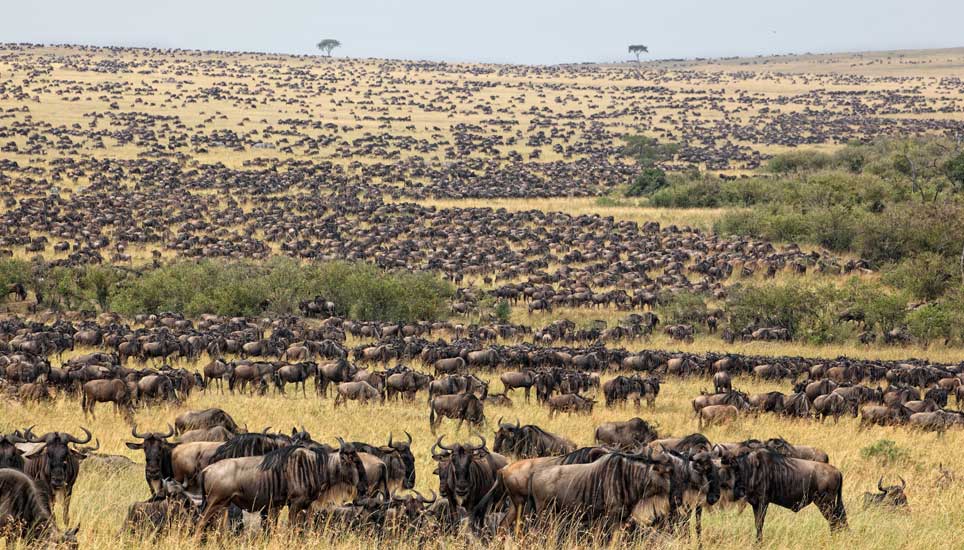
The Masai Mara supports a spectacular, year-round resident wildlife population. Beyond the migration, you can regularly spot the iconic "Big Five" (lion, leopard, elephant, Cape buffalo, and black rhino), massive concentrations of plains game, and a prolific birdlife
21-days-kenya-photography-safari-kenya-parks-diani-beach-and-malindi
20-days-uganda-kenya-tanzania-and-zanzibar-beach-holidays
18-days-exclusive-kenya-tanzania-safari-to-uganda-primate-safari
17-days-east-africa-safari-to-uganda-rwanda-kenya-tanzania-and-zanzibar-beach-holidays
16-day-classic-kenya-wildlife-safari-and-diani-beach-life-itinerary
15-days-luxury-kenya-safari-holiday-and-zanzibar-beach-holiday-combined-itinerary
14-days-best-of-kenya-safari-holiday-2-weeks-africa-kenya-safari-vacation
13-days-kenya-tanzania-safari-and-uganda-gorilla-trekking
12-days-kenya-tanzania-safari-and-zanzibar-beach-holiday-vacation
11-days-best-kenya-wildlife-safaris-and-kenya-beach-holiday-combo
10-days-kenya-safari-to-mombasa-beach-escape
10-days-samburu-amboseli-nakuru-naivasha-maasai-mara-safari-tour
10-days-kenya-wildlife-safari-and-kenya-beach-holiday-at-diani-beach
10-days-kenya-wildlife-safari-and-gorilla-safari-in-uganda
10-days-best-kenya-tanzania-honeymoon-safari-with-zanzibar-beach-holidays
9-days-luxury-africa-big-five-kenya-safari-itinerary
9-days-best-kenya-and-tanzania-safari-muti-country-combo
9-days-best-kenya-and-tanzania-safari-muti-country-combo
8-days-budget-kenya-tanzania-safari-with-serval-wildlife-and-zanzibar-beach-holiday
8-day-africa-safari-tour-to-masai-mara-safari-tour-serengeti-ngorongoro
7-days-ultimate-africa-big-cats-kenya-safari-holiday-best-parks
7-days-amboseli-kenya-and-serengeti-fly-in-tanzania-safari
7-days-incredible-africa-big-five-kenya-tanzania-combined-tour
5-days-masai-mara-safari-lake-nakuru-and-hells-gate-national-park-kenya-tour
4-days-masai-mara-and-lake-nakuru-kenya-safari-tour-package
3-days-masai-mara-national-reserve-kenya-safari-tour-package
The Big Five & Other Predators
Lions: The Social Sovereigns of the Plains
The Maasai Mara does not just host lions; it serves as the grand theater for one of the densest, most intensely studied large carnivore populations on Earth. Approximately 850 to 900 lions roam the reserve and its surrounding community conservancies. This creates a staggering density of nearly one lion for every two square kilometers in prime zones.
Masai Mara Holidays
For visitors, this translates into an unrivaled front-row seat to complex wildlife soap operas. The iconic Marsh Pride, which has ruled the Musiara Marsh for generations, operates like a royal family of about 30 individuals. They balance their days between strategic 20-hour catnaps and high-stakes politics. Nearby, the Paradise Pride guards the high-traffic Mara River crossing points. They have mastered the perilous art of ambushing migrating wildebeest right under the noses of massive Nile crocodiles.
Masai Mara Holidays+ 1
Living in a land where food is plentiful but territory is fiercely contested, Maasai Mara lions are profoundly social. Prides are built around a matriarchal core of related females who hunt cooperatively, communally nurse cubs, and fiercely defend their borders. Male coalitions form fragile brotherhoods to hold power, but their reigns are short and turbulent. Witnessing a pride waking up at dusk—mothers nuzzling their amber-eyed cubs while a dominant male lets out a low, bass-heavy roar that vibrates through the safari vehicle and echoes 8 kilometers away—is a striking reminder of why the Mara remains the true kingdom of the big cats.
Masai Mara National Reserve+ 2
Leopards: The Phantoms of the Riverine Woodlands
If the lion is the Mara’s loud, prideful monarch, the leopard is its silent, enigmatic phantom. Unlike their highly social feline cousins, leopards are strictly solitary and fiercely independent. They navigate a parallel world along the dense riverine forests of the Talek and Mara rivers.
Because they lack the backup of a pride, survival for a leopard is an intricate game of stealth and calculations. They rely on the mottled shade of massive yellow-barked acacia and sausage trees to blend seamlessly into the bark. A leopard’s strength is astonishing; a single individual weighing 60 kilograms can kill a young zebra or impala and drag the entire carcass vertically up a tree trunk. Hoisting their dinner into the high branches keeps it safely out of reach from scavenging hyenas and bullying lion prides.
Spotting a Mara leopard requires patience and an expert guide who knows how to read the landscape. You might scan the branches for hours, only to realize a well-known local female has been staring right back at you, her tail draped casually like a spotted vine. When they do descend to hunt at twilight, their movements are pure poetry. They move through the tall whistling grasses without making a single sound, utilizing explosive acceleration to ambush prey. Seeing a leopard protect her hidden cubs or quietly patrol her territory along the riverbanks offers a rare, intimate glimpse into the life of the savanna’s most elegant lone survivor.
Cheetahs: The High-Speed Specialists of the Savanna
The wide-open, short-grass plains of the Maasai Mara are tailor-made for the cheetah, the animal kingdom’s ultimate aerodynamic masterpiece. While lions and leopards rely on ambush and brute strength, the cheetah is built entirely for blistering, cinematic speed. Every anatomical detail, from their oversized nasal passages and enlarged lungs to their flexible spines and semi-retractable claws that act like running cleats, is optimized for acceleration.
In the Mara, cheetahs have adapted their lifestyles to avoid direct competition with larger, heavier predators. Because lions and hyenas easily steal their food and threaten their young, cheetahs are primarily diurnal, hunting under the heat of the daytime sun when other big cats are asleep. A typical hunt is a masterclass in tension. A cheetah will ascend a prominent termite mound, using the elevation as a scouting tower to scan the horizon for Thomson’s gazelles or impalas.
Once a target is locked, the cheetah stalks closer before launching into a breathtaking footrace, reaching speeds up to 110 kilometers per hour in mere seconds. These high-speed pursuits are exhausting, leaving the cat panting heavily and vulnerable. Tourists frequently witness the incredible resilience of Mara cheetah mothers, who face the monumental task of raising vulnerable cubs in a landscape teeming with danger. Watching a mother patiently teach her adolescents how to track prey across the golden plains reveals the fragile, beautiful reality of life on the edge.
Elephants & Buffalo: The Architects and Anchors of the Wild
Representing the heavy armor of the Big Five, African elephants and Cape buffalo shape the very physical landscape of the Maasai Mara. Elephants are the ultimate ecosystem architects. Multi-generational breeding herds, led by wise old matriarchs, map out seasonal routes across the savanna. A single adult elephant can consume up to 130 kilograms of grass, bark, and shrubs daily. By knocking over trees and clearing thick brush, they maintain the open grasslands that cheetahs and grazers rely on. Watching an elephant family cross a plain—where giant adults gently nudge fuzzy, playful calves forward—highlights their profound emotional intelligence and deep family bonds.
Masai Mara+ 1
Sharing the grassy floodplains are the Cape buffalo, the gruff, uncompromising anchors of the ecosystem. Typically found in massive, dust-kicking herds that often number well over 100 individuals, buffalo are never far from a permanent water source. They look like prehistoric cattle with fused, sweeping horn bases known as a "boss," but their demeanor is notoriously fierce.
Buffalo possess a fiercely protective communal culture. If a lion pride targets a vulnerable calf, the entire herd will form a defensive wall, lowering their horns and charging forward to repel the predators. This collective bravery makes them one of the few animals capable of turning the tables on a pride of lions. Together, the gentle intelligence of the elephant herds and the stubborn, united front of the buffalo represent the raw power and resilient spirit of the African wild.
Rhinos: The Ancient Guardians on a Long Road to Recovery
The eastern black rhino is the rarest, most ancient jewel in the Maasai Mara’s crown. Decades ago, rampant poaching devastated their numbers across East Africa. However, thanks to intensive, around-the-clock anti-poaching efforts, ranger patrols, and advanced satellite tracking technology, the Mara’s indigenous black rhino population has staged a steady comeback, currently stabilizing at an estimated 55 to 70 individuals. Because this specific population is entirely free-ranging and indigenous—meaning none of the individuals were translocated from other regions—they carry immense genetic importance for global conservation.
The Safari Collection
Unlike their white rhino cousins, black rhinos are solitary, fiercely territorial browsers that prefer dense thickets and scrubby woodlands where they feed on twigs and leaves. They are notorious for their nervous disposition and poor eyesight, often charging blindly at unfamiliar scents or sounds out of pure caution.
Ol Pejeta Conservancy
Finding a black rhino in the Mara is a true safari milestone. It requires scanning the distant, brush-heavy ridges early in the morning before the heat drives them into deep cover. Catching a glimpse of one emerging from the morning mist—with its distinctive hooked upper lip and prehistoric silhouette—feels like stepping back in time. The survival of these 70 rhinos is a powerful testament to the dedicated rangers who risk their lives daily, ensuring that this magnificent, armored relic of the past continues to have a secure future on the Kenyan plains.
Plains Game & Other Mammals
Giraffes: The Skyscraper Sentinels of the Acacia Canopy
Standing as the undisputed skyscrapers of the savanna, the Masai giraffe is a masterclass in evolutionary elegance. The Maasai Mara and its surrounding conservancies are home to an estimated 3,000 to 4,500 of these gentle giants. Distinct from other species, the Masai giraffe features jagged, leaf-like spots that mimic the dappled sunlight filtering through the trees. Their lives are defined by a specialized diet; using an 18-inch, prehensile, purplish-black tongue protected against sharp thorns, they delicately strip nutrient-rich leaves from the highest branches of whistling thorn acacias, a food source entirely out of reach for other herbivores.
Watching a tower of giraffes glide across the golden plains looks like slow-motion poetry. Because their towering height gives them an unmatched vantage point, they serve as the reserve’s natural early-warning system. Other plains game, like zebras and gazelles, closely watch giraffes; if a giraffe stops browsing and stares intently into the distance, it usually means a predator is approaching.
Despite their peaceful demeanor, giraffes live under constant pressure. Mothers form close-knit "crèche" groups to communally guard their vulnerable, six-foot-tall newborns from prowling lions and hyenas. Seeing a mother giraffe tenderly nuzzle her calf, or watching two young males gently intertwine their necks in a ritualized sparring match called "necking," brings a deeply humanizing warmth to the vast landscape, proving that true strength can be quiet, graceful, and remarkably tender.
Zebras: The Dazzling Architects of the Great Migration
The plains zebra is the vibrant, rhythmic heartbeat of the Maasai Mara. While roughly 200,000 zebras participate in the epic annual Great Migration from the Serengeti, the Mara also sustains a robust, permanent resident population of about 25,000 to 30,000 individuals. These resident zebras do not leave; they live out their lives in tightly knit family units called harems, which consist of a single dominant stallion, several mares, and their dependent offspring. The bonds within these families are intensely personal—members recognize each other through unique vocal whinnies, scent, and their distinctive stripe patterns, which are as individual as human fingerprints.
Zebras are pioneer grazers with a rugged digestive system that allows them to process coarse, tall grasses that other herbivores find unpalatable. By trampling and eating down the tough upper layers of vegetation, they prepare the grasslands for the more selective grazers that follow in their wake.
Life in a zebra harem is a constant exercise in collective vigilance. When the family rests, at least one zebra stays standing to keep watch for predators. If a lion attacks, the stallion will courageously put himself between the danger and his fleeing mares, kicking with enough force to shatter a predator’s jaw. Watching a newborn foal take its first wobbly steps, instantly shielded by its fiercely protective mother to ensure it memorizes her exact stripe pattern, reveals the profound family loyalty hidden beneath those dazzling, monochromatic coats.
Hippos & Crocodiles: The Ancient River Lords
The Mara and Talek rivers serve as the dramatic aquatic stages for two of Africa's most formidable water-dwelling titans. The Mara River alone supports a staggering density of hippopotamuses, with an estimated 3,000 to 4,000 individuals packed into dense, chaotic pods. By day, these two-ton giants submerge to keep their sensitive skin cool, creating a noisy chorus of deep, resonant honks and grunts that echo along the riverbanks. Hippos are intensely territorial aquatic politicians, with dominant bulls aggressively defending their stretches of water. At night, they transform into lawnmowers, leaving the water to consume up to 40 kilograms of grass, distributing vital nutrients back into the ecosystem.
Sharing these muddy channels are Nile crocodiles, including some true monsters that reach lengths of over 16 feet and weigh up to 1,000 pounds. These apex predators are the ultimate patient strategists, capable of slowing their heart rates to wait underwater for hours.
During the migration, they gather at famous crossing points, providing a brutal check on the passing herds. Yet, outside the hunting season, they can be seen peacefully basking on the muddy banks side-by-side with hippos, mouths gaped open to regulate their body temperature. The dynamic between them is a tense truce; a crocodile will rarely risk provoking a protective mother hippo. Seeing a baby hippo playfully resting its chin on the back of a sleeping adult, entirely unbothered by a massive crocodile sunning itself nearby, highlights the raw, ancient balance of power ruling the Mara's waters.
Other Herbivores & Hyenas: The Ecosystem's Engines and Engineers
Beyond the famous giants, the Maasai Mara thrives on a bustling supporting cast of diverse herbivores and apex scavengers. Hundreds of thousands of impalas, Thomson’s gazelles, and Grant’s gazelles blanket the plains. Impalas are the acrobats of the savanna, famous for executing spectacular, high-arching leaps up to 10 feet in the air to confuse pursuing predators. Alongside them, the striking, mask-faced topi—an antelope built for endurance—can often be seen standing motionless on termite mounds for hours, acting as lookouts. Near the permanent watercourses, the shaggy, water-dependent waterbuck grazes peacefully, while family groups of comical warthogs trot through the dirt with their tails raised straight up like radio antennas.
Crucial to the survival of all these species is the spotted hyena. Far from being mere cowardly scavengers, the Mara’s 2,000 to 3,000 hyenas are highly intelligent, skilled apex predators that hunt up to 70% of their own food.
They live in complex, female-dominated clans of up to 80 individuals, governed by rigid social hierarchies that rival those of primates. With jaws powerful enough to crush elephant bones, hyenas act as the essential clean-up crew of the savanna, recycling vital calcium back into the soil. Watching a hyena mother patiently nurse her jet-black cubs at the entrance of a communal den softens their fierce reputation, showing that every creature on the plains, from the bounding gazelle to the laughing predator, plays an irreplaceable role in this grand cycle of life.
Birdlife
Birdlife: The Vibrant Skies and Winged Wonders of the Mara
The Maasai Mara is widely celebrated for its mammalian spectacles, but look to the skies and grasslands, and you enter a world of staggering avian diversity. Officially designated as an Important Bird Area (IBA), the reserve boasts an incredible checklist of over 500 species. This rich birdlife thrives across a mosaic of habitats, from open, windswept savanna and whistling thorn acacia woodlands to the lush riverine forests tracking the Mara and Talek rivers. For birdwatchers and casual safari-goers alike, this avian abundance transforms the landscape into a living gallery of brilliant colors, bizarre evolutionary adaptations, and high-stakes aerial drama.
Among the grass blades, the unique secretary bird stalks the plains like an elegant, feathered dinosaur. Standing nearly 4.5 feet tall on elongated scales, these raptors are famous for their black crest of feathers that resemble 19th-century clerks with quill pens stuck behind their ears.
Unlike most birds of prey, secretary birds hunt entirely on foot, pacing up to 30 kilometers a day to flush out lizards, large insects, and deadly snakes. Their hunting technique is legendary: when they encounter a venomous cobra or puff adder, they execute a lightning-fast stamp, striking down with a force five times their own body weight to disable their prey in milliseconds.
At the other end of the size spectrum is the flightless common ostrich, the largest bird on Earth. Towering up to 9 feet tall and weighing up to 300 pounds, these giants roam the open flats in small, proud harems. Unable to fly, they rely on powerful, two-toed legs that can reach sprinting speeds of 70 kilometers per hour, easily outrunning most predators.
Adding an unforgettable splash of color to the golden landscape is the lilac-breasted roller, Kenya’s unofficial national bird. Sporting a breathtaking palette of pastel lilac, turquoise, and deep blue, these small birds perch conspicuously on dead branches or safari vehicle mirrors. They are fearless hunters of grasshoppers and scorpions, frequently diving directly into the smoke of small savanna bushfires to snatch fleeing insects.
High above it all, the undisputed king of the Mara canopy is the martial eagle. With a massive, 8-foot wingspan and a piercing gaze, this is Africa's largest and most powerful eagle. A martial eagle can spot an eagle-sized target from several kilometers away, dropping from the clouds in a terrifying, silent stoop to hunt young antelopes, storks, or monitor lizards. From the colorful rollers darting through the acacias to the majestic raptors patrolling the thermals, the Mara’s birdlife provides a continuous, dramatic soundtrack and a vibrant canopy to the great wild plains below.
Where can I spot the Mara's famous lion prides?
To find the iconic Marsh or Paradise prides, your best bet is exploring the Musiara Marsh and the high-traffic Mara River crossing zones. These areas provide the perfect blend of water, cover, and a steady stream of incoming prey. The Marsh Pride, a legendary dynasty of about 30 lions, treats the reeds and surrounding tall grasses like their personal kingdom, often seen lounging in giant, golden heaps during the heat of the day. Meanwhile, the Paradise Pride stakes out the riverbanks, waiting with lethal patience for the perfect moment to intercept river crossers.
Spotting them requires an eye for the unusual—a twitching black tail tip in the whistling grass or a sudden, tense posture from a nearby herd of antelopes. Safaris here offer an intimate look at their complex social lives. You might watch a line of lionesses waking up at dusk, stretching their powerful limbs and nudging each other in greeting before setting off on a cooperative night hunt. It is a real-life wildlife soap opera, where territory is fiercely defended and every member has a role to play.
What is the best way to find elusive leopards?
Finding a leopard requires scanning the dense branches of yellow-barked acacia and sausage trees along the Mara and Talek rivers. These solitary, enigmatic cats are the ultimate masters of disguise, using the mottled, shifting shade of the riverine leaves to blend perfectly into the bark. Because they lack the protection of a pride, they spend their days hidden aloft to avoid lions and hyenas. They treat the canopy as their private sanctuary, dining room, and nursery.
An expert guide knows to look for telltale clues: a stray spotted tail draped casually like a wild vine, a nervous alarm call from a troop of baboons, or a carcass wedged securely in a high fork. Leopards possess astonishing strength, capable of hoisting prey twice their own weight straight up a vertical trunk. Witnessing one descend from a tree at twilight is pure poetry. They move through the grass without making a single sound, every muscle flowing with effortless grace as they begin their nightly patrol.
Where do cheetahs scan the open savanna for prey?
Cheetahs are most frequently observed atop prominent termite mounds or fallen logs out on the wide-open, short-grass plains. Because they are the savanna’s high-speed specialists, they rely on these elevated scouting towers to spot Thomson's gazelles or impalas across the flat horizon. Unlike the larger big cats that hunt under the cover of darkness, cheetahs are primarily diurnal, active during the heat of the daytime sun when lions and hyenas are safely asleep.
Watching a cheetah on the hunt is a masterclass in tension and focus. Once a target is locked, the cat slips down from the mound and uses its low profile to stalk through the grass, getting as close as possible before launching an explosive pursuit. In a matter of seconds, they can reach blistering speeds of up to 110 kilometers per hour. Seeing a cheetah mother out on the flats, surrounded by her playful, fuzzy cubs while keeping a fiercely protective eye out for danger, reveals the beautiful but fragile reality of raising a family on the open plains.
Can you see large elephant herds in the reserve?
Yes, multi-generational breeding herds of elephants regularly roam the open savanna and the lush borders of the riverine forests. Led by wise, experienced old matriarchs who hold the mental map of seasonal water sources and feeding grounds, these families are a constant, comforting presence in the Mara. As ecosystem architects, they play a vital role by pushing over old trees and clearing thick brush, which keeps the grasslands open and healthy for the reserve's grazers.
Spending time with an elephant herd allows you to witness their deep emotional intelligence and strong family bonds. You will see giant adults gently guiding and shielding tiny, fuzzy calves with their trunks, or older siblings playfully wrestling in the mud. An adult elephant can consume up to 130 kilograms of vegetation every single day, so you will often hear the satisfying sound of branches snapping and grass being torn up long before you see them. Watching them move as a silent, majestic unit against a classic African sunset is an unforgettable highlight.
Where do massive buffalo herds usually gather to graze?
Massive herds of Cape buffalo, often numbering well over 100 individuals, are typically found grazing near permanent rivers and swampy floodplains. These heavy, uncompromising anchors of the ecosystem are entirely dependent on daily water, meaning they never stray too far from a reliable drink. With their distinctive, fused horn bases that resemble a weathered piece of armor, they present a gruff, prehistoric silhouette against the golden grass of the Mara.
While they might look like ordinary, placid cattle from a distance, buffalo possess a notoriously fierce temperament and a fiercely protective communal culture. If a lion pride attempts to isolate a vulnerable calf, the entire herd will instantly rally, forming a solid defensive wall of horns and charging forward to repel the predators. This collective bravery makes them one of the few animals capable of turning the tables on a pride of lions. Watching a huge herd kick up dust as they move toward the river at dusk gives you a true sense of the raw, untamed power ruling the wild.
How can I get a glimpse of rare rhinos?
To spot the critically endangered eastern black rhino, you must search the distant, brush-heavy ridges and dense thickets early in the morning. The Mara is home to a stable, indigenous population of about 55 to 70 individuals, making a sighting a true safari milestone. Unlike white rhinos, black rhinos are solitary, reclusive browsers that use their hooked upper lips to feed on twigs and thorny shrubs in areas with thick cover.
Because they have notoriously poor eyesight but an incredibly sharp sense of hearing and smell, they can be nervous and unpredictable, sometimes charging blindly at unfamiliar sounds out of pure caution. Tracking them requires patience, a quiet vehicle, and a good pair of binoculars. Catching a glimpse of a black rhino emerging from the early morning mist—looking exactly like an armored relic from a prehistoric era—is a profound reminder of the successful anti-poaching and ranger efforts keeping this ancient lineage alive on the Kenyan plains.
Where do giraffes feed on the savanna trees?
The towering Masai giraffe can be seen browsing on the high canopy of acacia trees spread right across the reserve. Standing as the undisputed skyscrapers of the plains, they are perfectly adapted to exploit a food source that no other herbivore can reach. Using their extraordinary 18-inch, prehensile tongues—which are a deep purplish-black to prevent sunburn—they deftly strip nutrient-rich leaves from between the sharpest whistling thorns without sustaining a scratch.
Watching a tower of giraffes move across the landscape looks like elegant, slow-motion poetry. Because their immense height grants them an unmatched vantage point, they serve as the reserve’s natural early-warning system; if a giraffe stops eating and stares intently at a thicket, nearby zebras and gazelles instantly take notice. Their social lives are gentle and fluid, often forming temporary groups where mothers create "crèche" systems to look after each other's calves. Seeing a mother giraffe tenderly nudge her six-foot-tall newborn shows the quiet, soft side of savanna life.
Are resident zebras visible outside the migration months?
Yes, large residential pods of plains zebras live in the Maasai Mara year-round, long after the migratory herds return south. These resident zebras do not participate in the long journey; instead, they establish permanent territories on the open grasslands. They live in tightly knit family groups called harems, consisting of a single protective stallion and several mares with their foals. The bonds within these families are deep, with members recognizing each other through unique vocal whinnies and individual stripe patterns.
Zebras act as pioneer grazers, using their strong digestive systems to clear away the tough, coarse upper layers of tall grass. This essential work opens up the shorter, sweeter shoots for more selective feeders like gazelles. Life in the harem is a masterclass in teamwork; when the family rests, at least one adult always stays standing to keep watch for lions. Watching a stallion bravely step between his fleeing family and a potential threat reveals the fierce loyalty hidden beneath their dazzling, monochromatic coats.
Where can I see hippos and crocodiles resting?
The muddy banks and deep pools of the Mara and Talek rivers house huge pods of hippos and massive Nile crocodiles year-round. By day, the rivers turn into lively aquatic neighborhoods. You will see hundreds of hippos submerged up to their nostrils to protect their sensitive skin from the tropical sun, creating a constant chorus of deep, resonant honks and grunts. They are fierce aquatic politicians, with dominant bulls aggressively splashing and yawning to defend their patch of water.
Right alongside them, massive Nile crocodiles—some stretching over 16 feet long—can be seen sunning themselves on the slippery banks with their mouths wide open to regulate their body temperature. Outside of the dramatic migration river crossings, a fascinating, tense truce exists between these two aquatic titans. Crocodiles rarely risk provoking the wrath of a two-ton hippo, especially a protective mother. Watching a tiny hippo calf playfully rest its chin on its mother's back, completely ignoring a giant crocodile sleeping just a few feet away, highlights the ancient balance of power.
What other unique mammals populate the grassy plains?
The open savanna supports a bustling supporting cast of diverse herbivores and highly successful predators like the spotted hyena. You will find hundreds of thousands of impalas executing spectacular, ten-foot leaps to confuse predators, alongside striking, mask-faced topis standing motionless on termite mounds to act as lookouts. Comical warthogs trot through the dust with their tails raised straight up like radio antennas, while elegant waterbucks graze peacefully near the reedbeds.
Crucial to the survival of this entire ecosystem is the spotted hyena. Far from being simple scavengers, the Mara’s 3,000 hyenas are highly intelligent apex predators that hunt the majority of their own meals. They live in complex, female-dominated clans with social structures that rival those of advanced primates. With jaws strong enough to crush elephant bones, they act as the essential clean-up crew of the plains, recycling vital nutrients back into the soil. Watching a hyena mother gently tend to her jet-black cubs at a den entrance completely changes your perspective, showing the vital role every creature plays.
Booking Masai mara safari in Kenya with us Roads of Adventure safaris
Planning your dream safari with Roads of Adventure Safaris is all about crafting a journey that feels uniquely yours. Whether you want a quick, action-packed 3-day getaway with private 4x4 game drives or an immersive 10-day luxury excursion, everything is fully customized. You can skip the 5-hour drive from Nairobi with a scenic 45-minute flight straight to the bush, upgrade to a magical hot air balloon ride at sunrise, or experience thrilling night game drives in private conservancies. Best of all, we can seamlessly connect your Kenyan savanna adventure with unforgettable gorilla trekking in Uganda and Rwanda.
