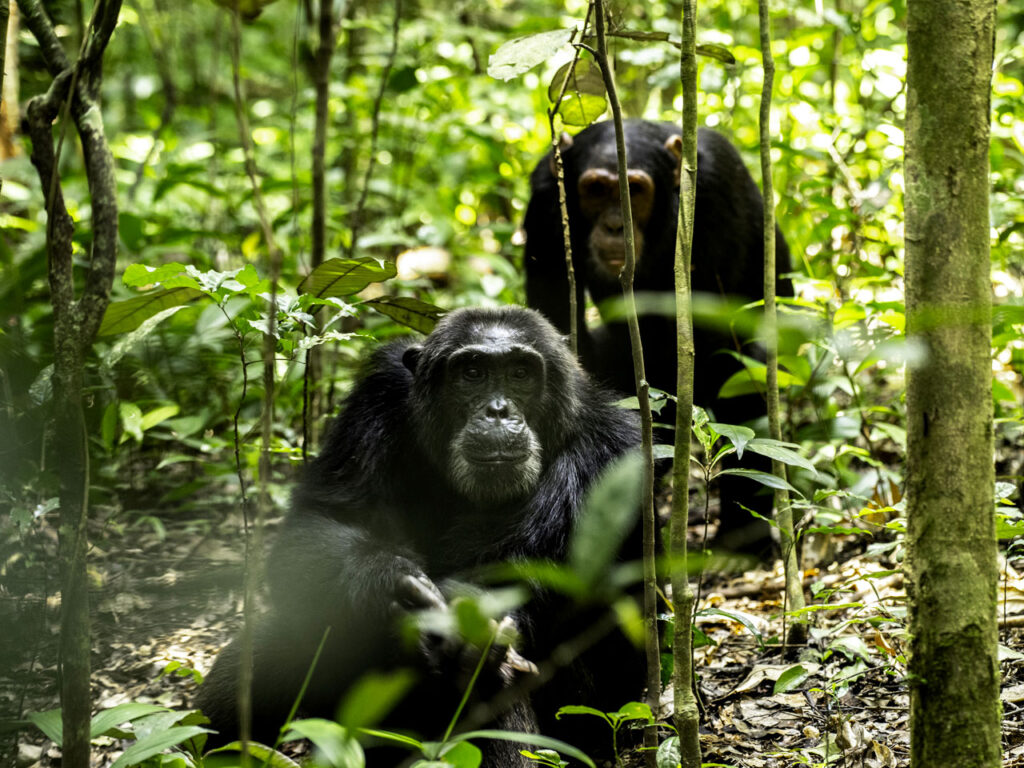
For chimpanzee tracking in Kalinzu Forest, pack essential gear for a humid rainforest, including sturdy waterproof hiking boots, long-sleeved shirts, and long trousers to protect against stinging nettles and insects. Key items include a rain jacket/poncho, insect repellent (DEET), a camera with extra batteries, and a water bottle.
14-days-uganda-and-rwanda-safari-tour-itinerary
14-days-luxury-uganda-primate-safari-holiday
14-days-uganda-primate-safari-and-jinja-white-water-rafting
14-days-classic-uganda-birding-safari-expedition
14-days-best-africa-big-five-safari-in-uganda-and-best-gorilla-trekking-adventure
20-days-uganda-birding-safari-wildlife-gorilla-and-chimpanzee-tracking
20-days-uganda-birding-safari-to-uganda-national-park
20-days-uganda-safari-holiday-tour-package-itinerary
19-days-best-photography-uganda-birding-safari-and-wildlife-adventure
19-days-incredible-uganda-safari-tour-big-five-chimpanzees-and-mountain-gorillas
18-days-best-of-uganda-safari-holiday-vacation-to-all-best-parks
17-days-uganda-honeymoon-safari-holiday-tour
17-days-uganda-birding-safari-itinerary
17-days-best-safari-in-uganda-ending-in-kigali-rwanda
16-days-ultimate-uganda-safari-to-rwanda-safari-tour-package-combo
16-days-best-of-uganda-birding-safari-holiday-extravaganza
7-day-ultimate-uganda-primate-safari-chimpanzees-and-game-drives
6-days-best-gorilla-trekking-and-safari-uganda-parks
1. Clothing Essentials
When venturing into the dense, primary rainforest of Kalinzu, your clothing serves as your primary defensive layer. The forest floor is a tangle of low-lying vines, stinging nettles, and thorny acacia branches that can easily scratch exposed skin. Therefore, long-sleeved shirts and long trousers are non-negotiable. While many travelers prefer technical trekking gear, jeans are frequently recommended by local rangers; their thick denim weave provides superior protection against thorns and the serrated edges of elephant grass compared to thin, synthetic hiking pants.
Equally important is the "tucking" technique. You must bring long socks and tuck your trousers into them. This creates a physical barrier against "safari ants" (red ants) that patrol the forest floor in long columns. If you accidentally step on a column, these ants will climb upward; a secure tuck prevents them from reaching your skin. Choosing moisture-wicking fabrics for your upper layers is also wise, as the humidity in Kalinzu can reach 80% to 90%. Neutral colors like khaki, olive, or brown are best, as bright colors can startle the chimpanzees, and dark blue or black can attract tsetse flies. This "armor" of clothing ensures that your focus remains on the primates above rather than the irritants on the ground.
2. Footwear: Sturdy Hiking Boots
The terrain in Kalinzu is notoriously unpredictable. Unlike the flat savanna, the forest is a vertical landscape of steep ridges and deep valleys. The ground is often covered in a thick layer of decomposing leaf litter that conceals slippery roots and loose rocks. Because Kalinzu is a rainforest, the trails are almost always slippery and muddy, even during the "dry" season. Consequently, sturdy, waterproof hiking boots with deep lugged soles (Vibram or similar) are the most critical piece of gear you will wear.
Ankle support is vital. One wrong step on a wet root can result in a sprain, which is a significant complication when you are several kilometers deep in the forest. Your boots should be broken in well before your trip to avoid blisters. The waterproof membrane (such as Gore-Tex) is essential not just for rain, but for the morning dew and the small streams you may need to cross. When tracking chimpanzees, they don't stick to the paths; they move through the thicket, and your boots must be able to withstand "off-roading" through mud and slush. Without proper footwear, you will spend more time looking at your feet and struggling for balance than observing the chimpanzees in the canopy.
3. Rain Gear: Lightweight Protection
In a tropical rainforest, rain is not a possibility—it is an inevitability. Kalinzu’s weather is governed by the moisture of the Albertine Rift, and sudden, unpredictable downpours can occur at any time, regardless of the forecast. A lightweight rain jacket or a sturdy poncho is an absolute necessity. The "lightweight" aspect is key; the forest is warm and humid, so a heavy, non-breathable raincoat will cause you to overheat and become soaked from sweat rather than rain.
A poncho is often favored by experienced trackers because it can fit over your daypack, keeping your camera and binoculars dry while allowing for better airflow. Ensure your rain gear is in a neutral color to avoid disturbing the wildlife. Beyond keeping you dry, a rain jacket acts as an extra windbreaker when you reach the higher, more exposed ridges of the forest where the temperature can drop. It is the one item you hope not to use but will be profoundly grateful for when the sky opens up. Being wet in the forest can lead to rapid cooling once you stop moving to observe the chimps, so staying dry is essential for your overall comfort and health during the trek.
4. Daypack: The Waterproof Anchor
Your daypack is the mobile command center for your trek. It needs to be small enough to be nimble as you duck under fallen trees, yet large enough to hold your water, snacks, rain gear, and camera equipment. Most importantly, it must be waterproof or come with a high-quality rain cover. Inside the bag, it is a "best practice" to double-bag your electronics in dry bags or Ziploc bags, as even the best backpacks can leak during a prolonged tropical deluge.
The fit of the daypack is also important; look for a bag with a chest strap and waist belt. These straps distribute the weight across your torso, preventing the bag from shifting and throwing you off balance when navigating steep slopes. A well-organized daypack allows you to access your binoculars or camera quickly when a chimpanzee suddenly appears in a clearing. Remember that you will be carrying this for three to five hours, so keep it light. If you have heavy camera gear, consider hiring a porter at the forest headquarters; not only does this make your trek easier, but it also provides a vital source of income for the local community surrounding the forest.
5. Camera Equipment & Extra Batteries
Photographing chimpanzees in a rainforest is one of the most challenging environments for a photographer. The canopy creates a high-contrast environment with bright patches of sky and deep, dark shadows. You will need a camera with a good telephoto lens (at least 200mm to 400mm) because chimpanzees spend a significant amount of time high in the trees. However, the most critical rule of forest photography is to ensure the flash is off. Flash photography is strictly prohibited as it can blind, startle, or provoke aggression in the primates.
Because the humidity and the effort of searching for focus in low-light conditions can drain power quickly, extra batteries are essential. Keep your spare batteries in a pocket close to your body, as the warmth helps maintain their charge. You should also bring a soft, microfiber cloth to frequently wipe moisture or condensation off your lens. Remember that while capturing the perfect shot is important, you should also take time to put the camera down. The social interactions of chimpanzees—the grooming, the playful wrestling, and the intense eye contact—are often best experienced through your own eyes rather than a viewfinder.
6. Binoculars: Eyes in the Canopy
While the goal is to find chimpanzees on the forest floor, they are often located 30 to 50 meters up in the canopy, feeding on figs or resting. Binoculars are essential for bridging this gap. Without them, a chimpanzee in the high branches is just a dark silhouette; with them, you can see the intricate details of their faces, the grey hairs of an elder, or the tiny fingers of a nursing infant.
For forest trekking, 8x42 binoculars are the industry standard. The "8x" magnification is powerful enough to see detail without being so sensitive that every hand tremor blurs the image, and the "42mm" objective lens allows enough light in to see clearly in the dim forest understory. Look for a pair that is "fog-proof" and "waterproof," as the internal lenses can easily fog up in the high humidity of Kalinzu. A comfortable neck strap or a harness is also recommended, as you will want your binoculars easily accessible at all times. They aren't just for primates; Kalinzu is home to spectacular birdlife, including the Great Blue Turaco, which are much easier to appreciate through high-quality glass.
7. Walking Stick & Garden Gloves
The walking stick is often the "unsung hero" of a successful forest trek. Usually provided for free or a small tip at the Kalinzu headquarters, a sturdy wooden staff provides a third point of contact with the ground. This is invaluable when descending slippery slopes or crossing muddy ravines. It saves your knees from the impact of the descent and provides stability when you are looking up at the trees rather than at where you are stepping.
Garden gloves are a "pro-tip" that many travelers overlook. During the trek, you will frequently need to grab onto saplings, vines, or branches to pull yourself up a steep embankment or steady yourself. Many of these plants have small thorns, stinging hairs, or are covered in "hairy" caterpillars that can cause skin irritation. A simple pair of sturdy gardening gloves allows you to grab onto the environment without fear of injury. They also provide a better grip on your walking stick if your hands become sweaty or wet from the rain. These two items combined significantly reduce the physical toll of the trek, making the experience much more enjoyable.
8. Hydration: 1–2 Liters of Water
Hydration is the most vital factor for your physical endurance in the forest. Even though you are under the shade of the canopy, the high humidity causes you to sweat profusely, leading to rapid fluid loss. You should carry at least 1 to 2 liters of drinking water. It is better to have slightly too much than to run out when you are an hour's hike away from the trailhead.
Avoid bringing single-use plastic bottles if possible; a refillable hydration bladder (like a CamelBak) is ideal because it allows you to sip water through a tube without stopping and reaching into your pack. This ensures you stay consistently hydrated rather than gulping large amounts of water sporadically. If you prefer bottles, ensure they are secured in your pack so they don't fall out when you are bending or climbing. Remember that there are no "restrooms" in the forest, so your guide will advise you on "bush toilet" etiquette. Staying hydrated keeps your energy levels stable and prevents the headaches and fatigue that can ruin a once-in-a-lifetime primate encounter.
9. Snacks: High-Energy Fuel
Chimpanzee tracking is unpredictable; it can take one hour or five hours. Because of this, you must bring high-energy snacks to maintain your blood sugar levels. You want foods that are lightweight, non-perishable, and provide a quick energy boost. Granola bars, nuts, dried fruit, and chocolate are the best options. These provide a mix of complex carbohydrates and fats that keep you going during the strenuous parts of the trek.
Avoid "smelly" foods or anything that creates excessive trash. Whatever you pack in, you must pack out. It is strictly forbidden to leave organic waste like banana peels or apple cores in the forest, as this can introduce diseases to the chimpanzees or alter their natural foraging behavior. Most guides will find a scenic spot for a "snack break" once the chimpanzees have been located and observed. Having a small reward like a piece of dark chocolate or a handful of trail mix after a long climb can be a significant morale booster, providing the "second wind" needed for the hike back to the headquarters.
10. Insect Repellent & Sun Protection
While the forest canopy provides shade, the tropical sun is still powerful, especially in clearings or at the forest edge. Sun protection, including a high-SPF sunscreen and a wide-brimmed hat, is necessary for the walk to and from the forest entry point. Even under the canopy, UV rays can penetrate the leaves, and the reflection off the green foliage can lead to unexpected sunburns.
More pressing in Kalinzu, however, are the insects. Insect repellent is essential for keeping mosquitoes and tsetse flies at bay. Tsetse flies are particularly hardy and are attracted to movement and dark colors; their bite is painful and can pierce thin clothing, which is another reason why thick denim is recommended. Look for a repellent with DEET for maximum effectiveness. You should apply it to your skin and your clothing, particularly around your ankles and neck. Bringing a small "travel-size" bottle in your daypack allows you to reapply after a rain shower or heavy sweating. Protecting yourself from bites not only ensures comfort but also guards against the various tropical diseases carried by forest insects, allowing you to enjoy the wilderness with peace of mind.
1. What are the best types of hiking boots for tracking chimps in Kalinzu?
When tracking chimpanzees in Kalinzu, your choice of footwear is the most critical decision for your physical safety and comfort. The forest floor is a complex environment consisting of steep ridges, deep ravines, and a thick layer of decomposing organic matter that masks slippery roots and loose rocks. The ideal boot for this terrain is a sturdy, mid-to-high-cut hiking boot with a deep, aggressive tread pattern (often referred to as "lugs"). The high-cut design is essential for providing ankle support, which protects you from sprains when navigating uneven ground or "off-roading" through thickets to follow the chimps.
Equally important is the material. You must choose waterproof boots—typically those with a Gore-Tex membrane. Kalinzu is a rainforest, meaning the ground is perpetually damp, and you will likely encounter muddy patches or small streams. A waterproof boot keeps your feet dry, preventing the friction and "pruning" that lead to painful blisters. Additionally, ensure your boots are made of a breathable material to manage the high internal humidity caused by the tropical heat.
Lastly, make sure your boots are well-broken-in before you arrive in Uganda. A forest trek is not the place to test a brand-new pair of stiff leather boots. Wear them on similar terrain at home for at least 20–30 kilometers to ensure there are no "hot spots" or pinching. When combined with moisture-wicking wool-blend socks, a high-quality pair of boots becomes your most reliable tool, allowing you to focus your attention on the canopy above rather than the treacherous footing below.
2. Why must I wear long-sleeved shirts and long trousers during the jungle walk?
In the Kalinzu Forest, your clothing acts as a vital protective "second skin." The jungle is not a manicured park; it is a dense, primary rainforest filled with thorny branches, serrated elephant grass, and stinging nettles. Long-sleeved shirts and long trousers provide a physical barrier against these botanical irritants. Stinging nettles, in particular, can cause a painful, itchy rash that can last for hours, and thick denim or heavy-duty synthetic trousers can significantly dull the impact of their microscopic "needles."
Beyond the flora, long clothing is your best defense against the forest’s insect population. One of the most common challenges is the "Safari Ant" (red ant). These ants march in long, disciplined columns; if you accidentally step on one, they will climb upward and bite anything in their path. By wearing long trousers and tucking them into your socks, you create a sealed environment that prevents ants from reaching your skin. Similarly, long sleeves protect your arms from tsetse flies, which have a painful bite and are attracted to movement and dark colors.
To maximize comfort, choose clothing in neutral colors like khaki, olive green, or tan. These colors help you blend into the environment, which is less intimidating for the chimpanzees and allows for a more natural encounter. Avoid bright colors like red or yellow, which can startle the primates, and dark blue or black, which are known to attract tsetse flies. This "full-coverage" approach ensures that you emerge from the forest without the scratches, stings, and bites that often plague unprepared trekkers.
3. Should I bring waterproof clothing or a raincoat for the tropical Kalinzu forest?
Kalinzu’s weather is governed by the moisture-rich air of the Albertine Rift, making rain an inevitable part of the experience. Even during the "dry" seasons, sudden and intense tropical downpours are common. Therefore, a lightweight, breathable raincoat or a sturdy poncho is an absolute necessity. The keyword here is "breathable." In the humid forest environment, a heavy, non-breathable plastic slicker will cause you to sweat profusely, leaving you just as wet from the inside as you would have been from the rain.
A poncho is often the preferred choice for many experienced forest trekkers. Its loose-fitting design allows for maximum airflow, preventing overheating during a strenuous climb. More importantly, a large poncho can be pulled over your daypack, providing an extra layer of protection for your expensive camera gear and binoculars. If you prefer a traditional rain jacket, look for one with "pit zips" (underarm vents) to help regulate your body temperature as you move.
Don't wait for it to start pouring to put your gear on. If you see the sky darkening or hear the characteristic "hiss" of rain hitting the canopy, stop and gear up immediately. Once your primary clothing gets soaked, the high humidity makes it nearly impossible for it to dry out while you are in the forest, which can lead to rapid cooling once the rain stops and you stand still to observe the chimps. Having reliable waterproof gear ensures that a 20-minute downpour doesn't turn into a miserable four-hour hike.
4. Are garden gloves necessary for protecting my hands from thorns and stinging nettles?
While they may seem like an unusual addition to a safari packing list, a pair of sturdy garden gloves is one of the best "pro-tips" for trekking in Kalinzu. During the trek, the terrain often becomes so steep that you must use your hands to pull yourself up embankments or steady yourself as you descend. In a rainforest, you will instinctively reach out to grab vines, saplings, or tree trunks for balance. Many of these plants are covered in small thorns, stinging hairs, or "hairy" caterpillars that can cause immediate skin irritation.
Garden gloves allow you to interact with the forest safely. They provide the grip you need to hold onto a wet branch or a muddy root without worrying about what might be hiding on the other side. They also protect your palms from the friction of using a wooden walking stick over several hours of hiking. If you encounter a patch of stinging nettles on a narrow trail, gloves allow you to move the foliage out of your way without suffering a painful sting.
Choose gloves that are lightweight but have a durable, rubberized palm. This provides the best "tack" for gripping wet surfaces. You don't need heavy-duty work gloves; a simple pair of flexible gardening gloves from a home improvement store will suffice. By protecting your hands, you maintain your agility and balance, making the physical demands of following chimpanzees through the dense thicket much more manageable and less painful.
5. Is a backpack required to hold my water, camera, and other personal items?
A small, ergonomic daypack (15 to 25 liters) is an essential piece of equipment for any forest trek. You will be away from your vehicle and the forest headquarters for anywhere from three to six hours, and you must be entirely self-sufficient during that time. A daypack allows you to carry your water, snacks, rain gear, and camera equipment hands-free, which is vital for maintaining your balance on the slippery forest trails.
When selecting a daypack for Kalinzu, prioritize comfort and weight distribution. Look for a bag with padded shoulder straps and, ideally, a chest or waist strap. These extra straps prevent the bag from swaying as you duck under fallen logs or scramble up ridges, keeping your center of gravity stable. It is also highly recommended that your daypack be water-resistant or come with a rain cover. Inside the bag, it is a smart move to keep your electronics in secondary dry bags or Ziploc bags for "double-layer" protection against the humidity and potential downpours.
If you have a heavy camera setup or back issues, you can often hire a porter at the forest headquarters. This is a highly recommended practice; not only does it make your trek significantly easier, but it also provides a direct income to the local community. A porter will carry your bag and offer a steadying hand on the steep sections, allowing you to enjoy the scenery and focus on the chimpanzees without the physical burden of a heavy pack.
6. Which insect repellent brand works best for avoiding biting flies and safari ants?
Insects are an integral part of the Kalinzu ecosystem, but they can be a major distraction for a trekker. The most effective repellent for the African bush is one with a high concentration of DEET (usually 30% to 50%). DEET is the gold standard for warding off mosquitoes and tsetse flies. Tsetse flies are particularly hardy; they are larger than houseflies and have a painful, piercing bite. They are attracted to dark colors and movement, so applying a strong repellent to both your skin and your clothing is essential.
For Safari Ants, chemical repellents are less effective than physical barriers. As mentioned, tucking your trousers into your socks is the best defense. However, some trekkers find that spraying a DEET-based repellent or even a bit of permethrin around the ankles and the "sock-line" can discourage ants from climbing further. If ants do get on you, do not panic; simply move away from the column and ask your guide or a fellow trekker to help brush them off.
When applying repellent, be careful to keep it away from your camera gear and binoculars, as DEET can melt certain plastics and damage lens coatings. It is best to apply your primary layer at the headquarters before you head out and carry a small "travel-size" bottle in your daypack for reapplication after a rain shower or heavy sweating. Brands like Sawyer, Ultrathon, or Rid are highly regarded by safari-goers for their long-lasting protection in tropical environments.
7. Do I need a walking stick, or will the rangers provide one for me?
The walking stick is the "unsung hero" of a successful chimpanzee trek. Kalinzu is not flat; you will be constantly ascending and descending steep, muddy slopes. A walking stick provides a third point of contact, effectively turning you into a tripod. This significantly increases your stability on slippery roots and provides much-needed support for your knees during steep descents. It is also useful for testing the depth of mud or gently clearing foliage from your path.
You do not need to bring your own high-tech trekking poles from home (though you certainly can if you prefer them). At the Kalinzu Forest headquarters, the rangers usually provide locally made wooden walking sticks for all guests. These are simple, sturdy, and perfectly suited to the environment. Often, these sticks are provided free of charge, though it is a nice gesture to leave a small tip for the staff who maintain them.
Using a walking stick also helps you maintain a steady rhythm during the hike. When you are tired and the "chimpanzee excitement" has worn off during the hike back, the stick provides that extra bit of leverage to get you up the final hill. If you are offered one at the start of the trek, take it, even if you consider yourself a fit hiker. You may not need it in the first twenty minutes, but an hour into the dense forest, you will be very glad to have it.
8. How much drinking water should I pack for the entire chimpanzee trekking session?
Hydration is the most critical factor for your physical endurance during a forest trek. The high humidity of Kalinzu means that even on a cool day, you will sweat profusely as you navigate the steep terrain. For a standard chimpanzee trekking session, which can last between three and six hours, you should pack at least 2 liters of drinking water. It is always better to have a small amount left over than to run out when you are deep in the jungle.
The best way to carry water is in a refillable hydration bladder (like a CamelBak) inside your daypack. This allows you to sip small amounts of water through a tube without having to stop and pull a bottle out of your bag. Consistent sipping is much more effective for hydration than "gulping" large amounts of water sporadically. If you prefer bottles, ensure they are durable and have a secure lid. Avoid bringing single-use plastic bottles, as Uganda is increasingly conscious of plastic waste in its protected areas.
Remember that there are no "restrooms" in the forest. Your guide will advise you on "bush toilet" etiquette, which usually involves finding a discreet spot away from the trail and any water sources. Staying well-hydrated keeps your energy levels high, prevents heat-related headaches, and ensures that you have the stamina to follow the chimpanzees if they decide to move quickly through the forest.
9. Should I bring snacks for energy during the moderate to difficult, long trek?
Chimpanzee tracking is an unpredictable activity. While the habituated groups are generally easy to find, you might spend anywhere from one to five hours on the move. Because the trek is classified as "moderate to difficult" due to the steep terrain and humidity, your body will burn through calories quickly. Packing high-energy, lightweight snacks is essential for maintaining your blood sugar levels and preventing "bonking" (sudden fatigue).
The best snacks for the forest are those that offer a mix of quick energy and sustained fuel. Granola bars, trail mix (nuts and dried fruit), and chocolate are perfect. They are compact, won't melt easily (if kept in the center of your pack), and provide a significant caloric boost. Many trekkers also find that "dextrose" or glucose tablets can provide a helpful burst of energy for the final uphill climb back to the headquarters.
It is strictly forbidden to litter in the forest. Whatever you pack in, you must pack out, including organic waste like banana peels or apple cores. These can introduce non-native pests or diseases to the forest ecosystem. Furthermore, you are not allowed to eat or drink when you are in the immediate presence of the chimpanzees, as this can lead to behavioral issues or the transmission of human germs. Your guide will designate a "safe" spot for a snack break away from the primates.
10. Are binoculars useful to pack for viewing chimpanzees high up in the trees?
While the ultimate goal of tracking is to find chimpanzees on the ground where they socialise and groom, they are frequently found high up in the canopy (30–50 meters). They often retreat to the high branches to feed on figs or to build day-nests for a nap. Without binoculars, a chimpanzee high in a tree is often just a dark, moving silhouette. With binoculars, you can see the intricate details of their faces, their expressive eyes, and the complex ways they use their hands to peel fruit.
For forest trekking, 8x42 binoculars are the industry standard. An 8x magnification provides a good balance between "zoom" and a stable image, while the 42mm objective lens allows enough light in to see clearly in the dim, shadowed environment of the forest understory. Look for a pair that is waterproof and fog-proof, as the high humidity can easily cause internal lenses to fog up if they aren't properly sealed.
Binoculars also open up the world of Kalinzu’s birdlife. The forest is home to spectacular species like the Great Blue Turaco, various hornbills, and the "Endemic" birds of the Albertine Rift. Having a pair of binoculars around your neck ensures that you can enjoy the entire ecosystem, not just the primates. Most guides carry a pair, but having your own means you don't have to wait your turn or miss a fleeting moment of action in the trees.
11. Do I need special camera gear, such as flashless, to photograph the chimps?
Capturing photos of chimpanzees in a rainforest is notoriously difficult. The environment is low-light, high-contrast, and the subjects are often moving behind thick foliage. For the best results, you need a camera with a good telephoto lens (at least 200mm to 400mm) and a fast aperture to handle the dim light. However, the most important rule of primate photography is that the use of flash is strictly prohibited. A sudden burst of artificial light can startle the chimps, cause them to flee, or in rare cases, provoke an aggressive response from a dominant male.
Before you enter the forest, double-check your settings to ensure your flash is "hard-disabled." Because you cannot use flash, you will likely need to increase your ISO to maintain a fast enough shutter speed to prevent motion blur. This might result in slightly "grainy" photos, but it is the only way to photograph the animals ethically.
Additionally, bring a soft, microfiber cloth. The high humidity of Kalinzu can cause your lens to "fog up" when you move from a cool vehicle or lodge into the warm forest air. Wiping your lens frequently ensures your shots remain sharp. Finally, consider a weather-sealed camera body or a simple rain cover (a plastic bag works in a pinch) to protect your gear from the inevitable forest drips and sudden rain showers.
12. Should I pack a hat or cap to protect myself from dripping canopy water?
A wide-brimmed hat or a baseball cap is a versatile and necessary addition to your trekking gear. While the forest canopy provides significant shade from the sun, it also acts as a giant sponge. After a rain shower, or even just from the morning mist, the trees will continue to drip water for hours. A hat keeps this "canopy rain" out of your eyes and off your glasses or camera viewfinder, allowing you to maintain a clear line of sight when searching for chimps.
Furthermore, a hat provides a layer of protection against falling debris and insects. As chimpanzees move through the trees, they often dislodge dry leaves, twigs, and fruit casings. A hat ensures these items don't end up in your hair. It also offers some protection against "hairy" caterpillars or spiders that might fall from the branches above.
In terms of sun protection, a hat is vital for the transit portions of the trek. Often, you will walk along forest edges or through tea plantations to reach the trailhead, where the equatorial sun can be intense. Choose a hat made of a breathable, quick-drying material. If it has a chin strap, even better—this prevents it from being knocked off by a low-hanging vine or lost during a steep scramble. It’s a simple piece of gear that significantly improves your comfort in a unpredictable environment.
13. Is it necessary to pack lightweight clothing that can dry fast, like synthetic materials?
Yes, moisture-wicking and quick-drying synthetic materials (like polyester or nylon blends) are generally superior to cotton in a rainforest. The humidity in Kalinzu is extremely high, and you will likely get wet from either sweat, rain, or dew-laden foliage. Cotton is a "hydrophilic" fiber, meaning it absorbs water and holds onto it. Once a cotton shirt is wet, it becomes heavy, chafes against your skin, and can take days to dry in a humid environment.
Synthetic "trekking" shirts and trousers are designed to pull moisture away from your skin and spread it across the surface of the fabric so it can evaporate quickly. This helps regulate your body temperature and keeps you much more comfortable during a long trek. Many of these fabrics are also treated with UV protection and insect repellent, providing an extra layer of defense against the elements.
However, as mentioned earlier, many rangers still recommend denim jeans for their superior protection against thorns. If you choose to wear jeans, be aware that if they get soaked, they will stay wet for the remainder of the day. A good compromise is high-quality, rip-stop nylon trekking pants that offer a balance of durability and quick-drying properties. Whichever you choose, ensure your clothing is loose enough to allow for a full range of movement but tight enough not to snag on every passing branch.
14. What should I wear on my feet after the trek for comfort, like sandals?
After spending several hours in heavy, muddy hiking boots, your feet will be craving air and freedom. Packing a pair of lightweight sandals, flip-flops, or "Crocs" to change into back at the vehicle or your lodge is one of the most underrated comforts of a safari. This allows your feet to dry out and breathe, which is essential for preventing fungal infections like athlete's foot, which thrive in the warm, damp conditions of a hiking boot.
Having a second pair of shoes also ensures that you don't track forest mud into your vehicle or accommodation. Many lodges have a "boots off" policy or provide a cleaning station where you can leave your muddy footwear to be scrubbed by the staff. Switching to sandals also gives you a chance to inspect your feet and ankles for any stray ants or minor scratches that might need cleaning.
Choose a pair of sandals with a decent sole, especially if you plan to walk around your camp or lodge in the evening. While the primary trekking is over, the ground around forest lodges can still be uneven or damp. This simple change of footwear marks the transition from the "work" of the trek to the relaxation of the evening, providing a significant boost to your overall sense of well-being.
15. How much cash should I bring for any local community purchases or tips?
Uganda is largely a cash-based economy, especially once you leave the major cities. For your day at Kalinzu, you should carry a reasonable amount of Uganda Shillings (UGX). While your trekking permit is likely pre-paid, you will need cash for tipping your guides and rangers. A standard tip is approximately $10–$20 (35,000–70,000 UGX) per trekker, which is usually shared among the guiding team. If you hire a porter, their fee is typically around $15 (55,000 UGX), plus a small tip if they were particularly helpful.
You should also bring extra cash for local community purchases. Near the forest headquarters and in nearby villages, you will often find artisans selling beautiful hand-woven baskets, wood carvings, or local honey. These purchases provide a vital direct economic benefit to the people living alongside the forest, encouraging them to support conservation efforts.
Smaller denominations are best, as change can be hard to find in rural areas. While some larger lodges accept credit cards, they often charge a 3–5% surcharge. Having a "stash" of local currency ensures that you can handle any small expenses, buy a cold drink after your trek, or reward the hardworking staff who make your chimpanzee encounter possible. It’s always better to have a bit too much cash than to find yourself unable to participate in a local cultural exchange or tip a guide who went above and beyond.
Booking Chimpanzee tracking with us Roads of Adventure safaris
Booking chimpanzee tracking with Roads of Adventure Safaris offers a seamless, tailored experience, focusing on prime locations like Kibale Forest National Park. Their packages include expert-guided 4x4 transport, permit securing, and accommodation. The tours often feature 6-day, 5-day, or extended itineraries that include other primates and wildlife adventures.
