For a 3-day safari in Murchison Falls National Park, pack lightweight, neutral-colored clothing (khaki, olive) for hot days and cool evenings, including long-sleeved shirts/trousers for insect protection. Essential items include a wide-brimmed hat, sturdy walking shoes, sunscreen, insect repellent, cameras, binoculars, and a light raincoat
3-days-flying-luxury-uganda-safari-to-murchison-falls-national-park
3-days-best-honeymoon-uganda-safari-escape-to-murchison-falls-national-park
3-days-murchison-falls-national-park-best-uganda-safari-road-trip
4-days-murchison-falls-uganda-family-safari-vacation-tour
4-days-luxury-murchison-falls-and-jinja-uganda-safari-vacation
5-days-murchison-falls-safari-and-gorilla-trekking-in-bwindi
5-days-murchison-falls-and-queen-elizabeth-safari-itinerary
5-days-kidepo-valley-uganda-safari-via-ziwa-rhino-sanctuary
Clothing Essentials
Your wardrobe should prioritize functionality and protection. Lightweight, breathable, and quick-dry fabrics are essential for the savanna’s humidity. You should pack long-sleeved shirts and long trousers; while it may seem counterintuitive in the heat, this is your primary defense against the sun and biting insects like the persistent tsetse flies found in wooded areas. Stick to neutral colors such as khaki, beige, or olive green. Avoid bright whites, which show dust instantly, and dark blues or blacks, which are known to attract tsetse flies.
The temperature in Murchison fluctuates significantly. A lightweight sweater or jacket is necessary for the 6:00 AM game drives when the air is surprisingly crisp, while a rain jacket or poncho is a non-negotiable item for sudden tropical downpours. For footwear, sturdy hiking boots or closed-toe shoes are vital for the rhino tracking and the hike to the top of the falls. Finally, don't forget a swimsuit, as many of the park's lodges offer beautiful pools that provide the perfect midday reprieve from the equator's sun.
Gear and Equipment
To capture the magnitude of the Nile and its inhabitants, the right gear is paramount. A camera with a telephoto or zoom lens is highly recommended; while elephants may be close, predators like lions or leopards are often viewed at a distance where a standard smartphone camera struggles. Complement this with binoculars, which are indispensable for birdwatching and scanning the thickets for elusive leopards. Since you will be away from power outlets for several hours, a high-capacity power bank and extra memory cards are essential safari additions.
A waterproof daypack is the best way to carry your daily essentials during the boat cruise and game drives, protecting your electronics from river spray and savanna dust. For those staying in tented camps or lodges with limited night lighting, a torch or headlamp is a critical safety item for navigating paths after dark. Lastly, bring a refillable water bottle. Most safari vehicles provide large water jugs, and using your own bottle helps reduce plastic waste in this sensitive ecosystem, keeping you hydrated throughout the dusty afternoon drives.
Toiletries and Health
Health and hygiene are vital for an uninterrupted adventure. Insect repellent with a high DEET concentration is your most important toiletry, especially for evening boat cruises and forest walks. This should be paired with high SPF sunscreen, a wide-brimmed sun hat, and polarized sunglasses to combat the intense equatorial UV rays. Because safari environments are notoriously dusty, wet wipes and hand sanitizer are lifesavers for cleaning up before a bush lunch or refreshing your face after a long game drive.
On the medical front, a basic first aid kit containing antiseptic wipes, bandages, pain relievers, and anti-diarrheal medication is a smart precaution for remote travel. Most importantly, consult your doctor regarding malaria prophylaxis before your trip, as Murchison Falls is a high-risk area. It is also wise to carry a small supply of rehydration salts to counteract the effects of the sun and any potential heat exhaustion during the more physical activities like rhino tracking or hiking the falls.
Documents and Cash
Seamless travel depends on having your paperwork in order. Your passport must be valid for at least six months beyond your stay, and your Ugandan e-Visa should be printed and ready for inspection. A Yellow Fever Certificate is a mandatory entry requirement for Uganda; you will likely be asked to present this upon arrival at Entebbe. Keeping digital copies of these documents on your phone or in a cloud drive is a highly recommended backup strategy in case the physical copies are misplaced.
Regarding finances, a mix of US Dollars and Uganda Shillings (UGX) is best. Ensure your USD bills are printed after 2006 and are in pristine condition, as many banks and businesses in East Africa will reject torn or older notes. While your safari package likely covers the big expenses, you will need cash for tipping your guide and lodge staff, which is a customary way to show appreciation for good service. Cash is also essential for purchasing hand-crafted souvenirs at the park gates or local Masindi markets, where credit card facilities are rarely available.
3 days Safari to Uganda Murchison falls park
The 3-Day Murchison Falls Safari is Uganda’s premier short-duration expedition, masterfully combining "Big Five" wildlife encounters with the raw geological power of the Victoria Nile. This itinerary centers on Murchison Falls National Park, where the world’s longest river is dramatically forced through a narrow seven-meter rock cleft, creating the most powerful surge of water on Earth. The journey begins with a strategic stop at the Ziwa Rhino Sanctuary, allowing you to track white rhinos on foot and complete the "Big Five" checklist before even entering the park gates. Over three days, you will transition from tactical bush walks to high-energy savanna game drives and a classic riverine launch cruise. Whether you are observing a pride of lions at sunrise or cruising past massive pods of hippos toward the thundering "Devil’s Cauldron," this odyssey provides a high-impact, soul-stirring narrative of the "Pearl of Africa" in a compact timeframe.
Day 1: Rhino Tracking and the Gateway North
Your adventure departs early, heading north through the lush landscapes of Nakasongola. The first highlight is the Ziwa Rhino Sanctuary, the only place in Uganda to see rhinos in the wild. You will join an expert ranger for a tactical track on foot, bringing you within meters of these prehistoric giants. This intimate encounter is essential for those seeking the full "Big Five" experience. After lunch, you continue the drive into Murchison Falls National Park. As you enter the gates, the vegetation shifts from thick woodland to open savanna, offering early glimpses of baboons and warthogs. You will arrive at your lodge by evening, settling into the heart of the wilderness. The night air, filled with the rhythmic sounds of the African bush, sets the stage for the wildlife drama awaiting you tomorrow morning.
Day 2: Savanna Game Drive and Nile Boat Cruise
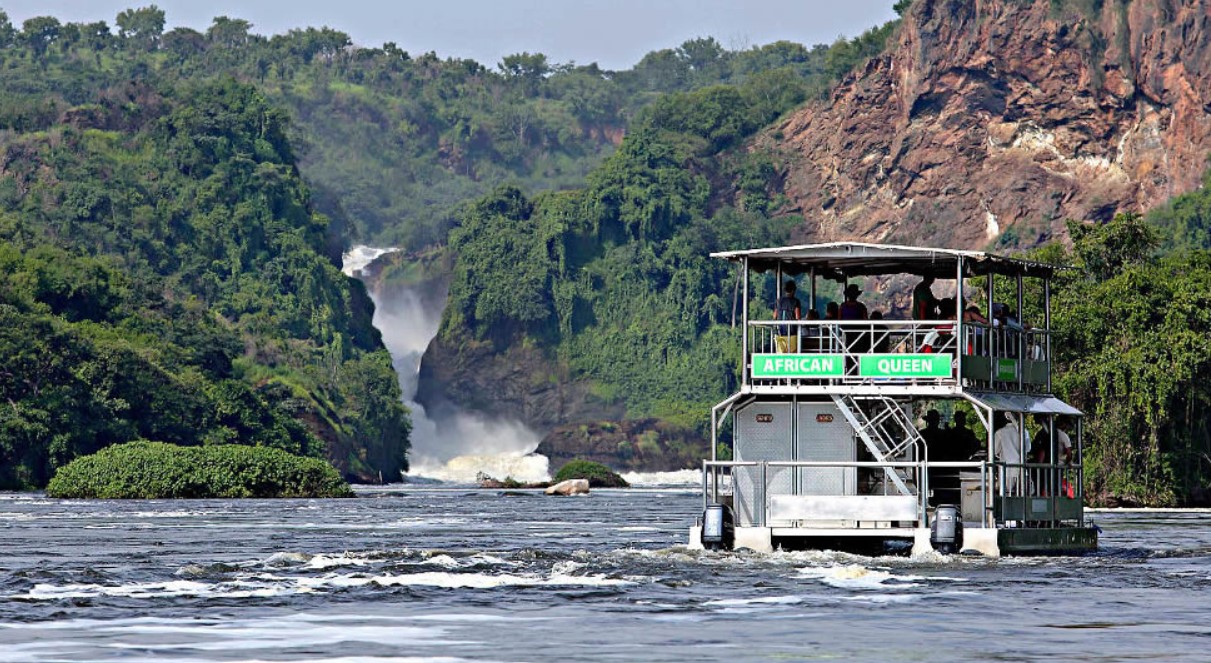
The second day starts at sunrise with a game drive across the Buligi Circuit on the northern bank. This is the prime window to spot predators like lions and leopards before the savanna heat intensifies. You will traverse a landscape dotted with Borassus palms, home to massive herds of Rothschild’s giraffes, elephants, and Cape buffaloes. In the afternoon, the perspective shifts as you board a launch cruise toward the base of the falls. This three-hour journey along the Nile serves as a liquid stage for dense populations of hippos, giant Nile crocodiles, and thirsty elephants lining the banks. The cruise culminates at the "Devil’s Cauldron," where you witness the incredible power of the river exploding through the gorge. It is a sensory-rich day that perfectly captures the raw, untamed spirit of the mighty River Nile.
Day 3: Top of the Falls and the Return Journey
On your final day, you visit the top of the falls to witness the river’s power from above. Standing at the edge, you will feel the ground tremble as the Victoria Nile squeezes through a tiny rock cleft, plunging 43 meters into the gorge below. The thundering roar and permanent rainbows created by the mist provide a spectacular photographic finale to your safari. After witnessing this geological marvel, you begin the return journey toward Kampala. The drive back offers a final opportunity to observe the changing Ugandan countryside and reflect on the diverse wildlife encounters of the past 48 hours. A stop for lunch in Masindi town allows for a brief cultural pause before you reach the city by late afternoon, concluding an epic three-day expedition that showcased the absolute best of Uganda’s natural heritage.
1. What clothing colors are best for Murchison Falls?
When packing for your 3 days Uganda safari to Murchison Falls, color choice is a matter of both stealth and safety. Neutral tones such as khaki, beige, tan, and olive green are the gold standard for several reasons. First, these colors allow you to blend into the savanna and woodland environments, making you less conspicuous to wildlife and increasing your chances of close-up sightings. More importantly, Murchison Falls is known for having tsetse flies in certain wooded areas. These biting insects are biologically attracted to dark, solid colors—specifically blue and black. By sticking to a neutral palette, you significantly reduce your "attractiveness" to these flies. Avoid bright whites, as they quickly become stained by the fine, reddish savanna dust, and steer clear of camouflage patterns, which are often reserved for military personnel in Uganda and can lead to unnecessary questioning at checkpoints.
2. Should I pack long-sleeved shirts?
Yes, long-sleeved shirts are indispensable for a 3 days Uganda safari to Murchison Falls. While the afternoon temperatures can be soaring, these shirts serve as a vital multi-purpose barrier. During the early morning game drives, which often begin at 6:00 AM, the air can be surprisingly crisp; a lightweight long-sleeved layer provides just enough warmth. As the sun rises, the fabric protects your skin from intense equatorial UV rays, which can cause severe burns even through the vehicle’s windows. Furthermore, long sleeves are your primary defense against the park's biting insects. When walking through the tall grass during rhino tracking or hiking the falls, sleeves protect your arms from stinging nettles and mosquitoes. Opt for shirts made of technical, moisture-wicking fabrics that offer ventilation "flaps" in the back to ensure you stay cool while remaining fully covered.
3. What type of footwear is necessary?
The varied terrain of a 3 days Uganda safari to Murchison Falls—ranging from the flat savanna of the northern bank to the steep, rocky trails at the Top of the Falls—demands sturdy, comfortable, and broken-in footwear. For game drives, a simple pair of sneakers is fine, but for the most iconic activities, you need more support. Hiking boots with ankle support are highly recommended for the Ziwa Rhino tracking and the hike to the summit of the falls. These paths can be uneven, slippery when wet, or covered in thick acacia thorns that can easily pierce a thin-soled shoe. Ensure your boots are "broken-in" before you arrive in Uganda; the last thing you want on Day 2 of your safari is a blister. Additionally, consider packing a pair of lightweight sandals or flip-flops to wear around your lodge or at the pool during the midday heat to give your feet a rest from heavy boots.
4. What sun protection should I bring?
Sun protection is a critical health consideration for your 3 days Uganda safari to Murchison Falls, given the park's proximity to the equator. A wide-brimmed hat is your most important accessory, as it shades not only your face but also your neck and ears—areas often missed by sunscreen. Complement this with high-SPF sunscreen (at least SPF 30) that is water-resistant, as you will likely sweat during the afternoon. Polarized sunglasses are a game-changer for wildlife viewing; they reduce the intense glare of the sun on the savanna and allow you to see more clearly into the water during your boat cruise, making it easier to spot submerged hippos or crocodiles. Do not forget lip balm with SPF, as the combination of wind from the moving safari vehicle and the dry savanna heat can lead to painfully chapped lips very quickly.
5. How should I pack for the heat?
Murchison Falls is generally warmer than Kampala or southwestern Uganda, so your packing strategy for a 3 days Uganda safari to Murchison Falls should focus on lightweight, breathable, and quick-drying fabrics. Cotton is a popular choice for its softness, but technical "wicking" fabrics are superior because they pull sweat away from your body and dry rapidly after a sudden tropical shower. Loose-fitting clothing is preferable as it allows for better air circulation and creates a buffer zone that prevents insects from biting through to your skin. Many travelers find that convertible zip-off pants are perfect for this environment; you can start the cool morning in trousers and switch to shorts as the temperature climbs toward 30°C (86°F) during the midday hours. Always pack more tops than bottoms, as you are likely to change shirts more frequently due to the heat and dust.
6. Do I need warm clothing?
It may seem counterintuitive for a tropical destination, but warm clothing is a "must-have" for your 3 days Uganda safari to Murchison Falls. The temperature can drop significantly during the night and in the pre-dawn hours. When you head out for a 6:00 AM game drive, the combination of the cool morning air and the wind-chill from the open-roof vehicle can feel quite biting. A lightweight fleece, a windbreaker, or a medium-weight sweater will keep you comfortable until the sun fully emerges around 9:00 AM. Additionally, some high-end lodges are situated on elevated ridges where evening breezes can be quite cool. Packing a versatile "layering" system allows you to adapt quickly as the day transitions from the chilly morning start to the intense afternoon heat. A pashmina or light scarf can also serve as both a warmth layer and a dust mask when driving on dry tracks.
7. What is essential for a 3-day boat cruise?
The boat cruise is a centerpiece of your 3 days Uganda safari to Murchison Falls, and having the right gear on hand is essential. First and foremost, you need binoculars; while the boat gets close to the banks, binoculars are necessary to see the intricate details of birdlife like the Malachite kingfisher or the prehistoric Shoebill stork. A camera with a good zoom lens is vital for capturing the "Devil's Cauldron" and the yawning hippos from the safety of the deck. Because you are on the water for three hours with no shade on some vessels, sun protection and a refillable water bottle are mandatory. Finally, consider a waterproof bag or sleeve for your electronics. Even if it doesn't rain, the spray from the powerful falls as you approach the base can be enough to dampen sensitive camera gear or smartphones.
8. Is insect repellent necessary?
Insect repellent is one of the most important health items for your 3 days Uganda safari to Murchison Falls. The park is home to mosquitoes (which can carry malaria) and tsetse flies (which can deliver a painful bite). You should use a high-strength repellent containing DEET (at least 20-30%). For the best protection, apply repellent to your skin and also consider treating your clothes with Permethrin before you travel. While most lodges provide mosquito nets over the beds and spray the rooms during the "turn-down" service, you are most vulnerable during the "crepuscular" hours—dawn and dusk—when many insects are most active. Carrying a small travel-sized spray in your daypack allows you to reapply throughout the day, especially after sweating or if you are tracking chimpanzees in the more humid Budongo Forest.
9. What should I pack for hiking in Murchison?
If your 3 days Uganda safari to Murchison Falls includes the hike to the Top of the Falls or rhino tracking, your packing list needs to become more "active." Sturdy, waterproof hiking boots with good ankle support and "deep lugs" (grip) are essential for navigating the often-slippery rocks near the spray of the falls. You should wear breathable, long pants to protect your legs from tall grass and thorns. A lightweight, ergonomic backpack is necessary to carry your water, camera, and a raincoat, leaving your hands free to stabilize yourself on the trail. Avoid wearing heavy denim, as it becomes incredibly heavy and uncomfortable if it gets wet from the falls' mist or a sudden downpour. Instead, opt for "trekking" trousers that offer stretch and quick-dry properties.
10. What camera gear should I pack?
Murchison Falls is a photographer's paradise, but the conditions can be challenging. For a 3 days Uganda safari to Murchison Falls, a quality camera with a versatile zoom lens (at least 200mm to 400mm) is ideal for capturing distant lions or the eyes of a crocodile. Because you will be taking hundreds of photos, extra memory cards and spare batteries are essential; the heat can sometimes drain battery life faster than expected. Dust is the greatest enemy of camera gear in the savanna, so bring a lens cleaning kit and a "dust cover" or a simple dry bag to protect your equipment between sightings. If you are a birding enthusiast, a fast shutter speed is necessary for the darting kingfishers, so ensure you are familiar with your camera’s "action" settings before you arrive.
11. What personal items should I pack?
In the remote environment of a 3 days Uganda safari to Murchison Falls, a well-stocked personal kit is vital. Your basic first aid kit should include painkillers, antihistamines (for insect bites), and anti-diarrhea medication. Because the savanna is naturally dusty, wet wipes and hand sanitizer are indispensable for cleaning your hands before an en-route snack or refreshing your face after a game drive. Many travelers also find eye drops helpful, as the dust can irritate contact lenses or dry eyes. Don't forget biodegradable toiletries if you are staying in eco-lodges, and a small packet of tissues. While lodges provide the basics, having your preferred brands of personal hygiene products ensures you stay comfortable throughout the trip.
12. What documents are required?
Proper documentation is the legal foundation of your 3 days Uganda safari to Murchison Falls. You must have a valid passport with at least six months of validity remaining. An e-Visa for Uganda is now the standard requirement and should be applied for and printed in advance. Crucially, a Yellow Fever vaccination certificate is a mandatory entry requirement for Uganda; you will likely be asked to show this at the airport or land border. It is also wise to carry a printed copy of your safari itinerary and travel insurance details. While digital copies are good, physical backups are essential in areas with poor internet connectivity. Keep these documents in a waterproof "document neck pouch" or a dedicated section of your daypack for quick access during transit.
13. Do I need a power bank?
A power bank is a "must-have" for your 3 days Uganda safari to Murchison Falls. While most luxury and mid-range lodges have 24-hour power or charging stations, some eco-lodges rely on solar power, which may be turned off at night. Furthermore, during the long Day 2, which involves an early game drive and an afternoon boat cruise, your phone and camera batteries will be working overtime. A high-capacity power bank (10,000mAh or more) allows you to charge your devices inside the safari vehicle or while on the boat. This ensures you never miss a photo of a rare leopard or the thundering falls because of a dead battery. Additionally, remember that Uganda uses Type G (British style) three-pin plugs, so bring a universal adapter if your devices use different pins.
14. What is the best luggage type?
For a 3 days Uganda safari to Murchison Falls, a soft-sided duffel bag is significantly better than a hard-shelled suitcase. Safari vehicles have limited and often awkwardly shaped luggage compartments; soft bags can be squished and stacked to fit alongside other passengers' gear. If you are taking a domestic flight to Pakuba Airstrip, many small aircraft have strict weight limits (usually 15kg) and strictly require soft-sided luggage because hard suitcases simply will not fit in the small cargo pods. A bag with multiple handles and a sturdy zipper will withstand the vibration and dust of the Ugandan roads. Inside, use packing cubes to keep your neutral-colored clothes organized and easy to find in the dim light of a safari lodge.
15. Is a mosquito net necessary?
While mosquitoes are present in the Murchison Falls region, you generally do not need to bring your own mosquito net. Virtually all reputable safari lodges and camps provide treated mosquito nets that are hung over the beds. The lodge staff will typically "drop" the nets and spray the room with insect repellent during the evening "turn-down" service while you are at dinner. However, your personal defense is still the most important factor. Using high-strength repellent on your skin and wearing long-sleeved clothing in the evenings will provide the necessary protection against malaria-carrying mosquitoes. If you are highly sensitive to bites, you might consider bringing a personal "permethrin spray" to treat your own clothes or gear before the trip starts.
16. What is the best way to carry my gear on a game drive?
The best way to manage your essentials during a 3 days Uganda safari to Murchison Falls is with a lightweight, comfortable daypack (approx. 15-20 liters). This bag should be large enough to hold your water bottle, camera, binoculars, sunscreen, and a spare layer of clothing, but small enough to sit at your feet or on the seat next to you without being cumbersome. Look for a pack with external mesh pockets for quick access to your water bottle and a rain cover in case of a sudden downpour. Keeping all your "daily" items in one bag prevents things from getting lost under the seats of the safari vehicle and makes it easy to transition from the vehicle to the boat cruise or the hike to the falls.
Booking 3 days Murchison falls with us Roads of Adventure safaris
Book a 3-day Murchison Falls safari with Roads of Adventure Safaris for an action-packed, tailored tour, including Ziwa Rhino tracking, boat cruises to the Nile's base, and game drives. This comprehensive package features 4WD transport, expert guides, and customized accommodation. Book directly via email or phone to secure your spot.
