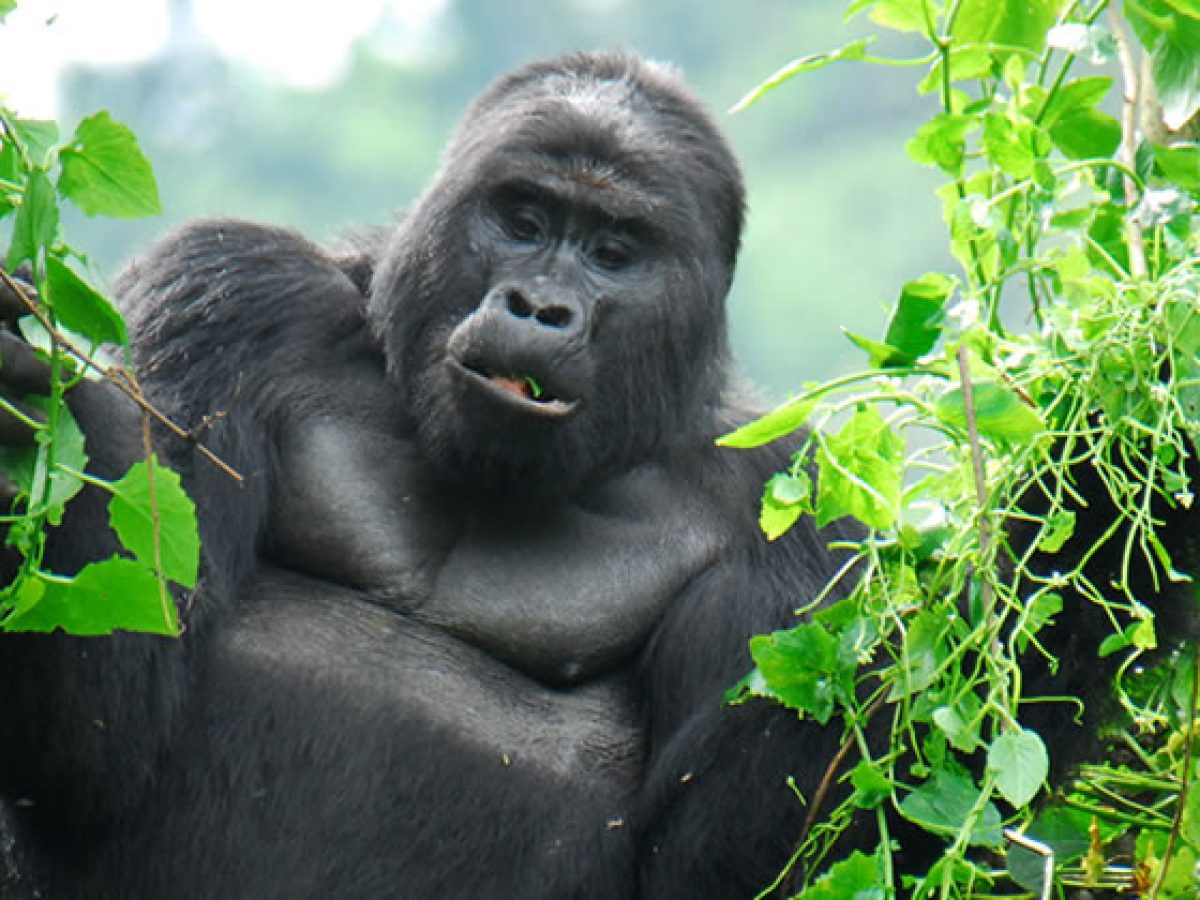
A 17-day Uganda, Rwanda, and Kenya safari offers a comprehensive East African adventure, featuring mountain gorilla trekking in Bwindi/Volcanoes, chimpanzee tracking in Kibale/Nyungwe, andBig Five game drives in Maasai Mara and Queen Elizabeth National Park. Expect to experience diverse landscapes, ranging from dense rainforests to open savannahs, plus cultural tours, boat cruises on the Nile, and potential treetop canopy walks.
16-days-ultimate-uganda-safari-to-rwanda-safari-tour-package-combo
18-days-exclusive-kenya-tanzania-safari-to-uganda-primate-safari
16-days-classic-uganda-photography-safari
16-days-kenya-tanzania-safari-and-rwanda-gorilla-trekking
13-days-kenya-tanzania-safari-and-uganda-gorilla-trekking
17-days-luxury-kenya-tanzania-safari-and-bwindi-gorilla-trekking-in-uganda
26-days-east-africa-safari-to-uganda-rwanda-and-kenya-tanzania-safari
25-days-east-africa-safari-to-uganda-rwanda-kenya-tanzania-safari-and-zanzibar-beach-holidays
10-days-luxury-gorilla-trekking-masai-mara-serengeti-and-ngorongoro-crater
1. Primate Tracking: Gorillas and Chimpanzees
Primate tracking is the soulful heart of an East African expedition, offering a profound connection with our closest biological relatives. In Rwanda’s Volcanoes National Park, the experience is defined by the dramatic backdrop of the Virunga Mountains. The trekking here tends to be slightly more open, allowing for incredible photography of gorilla families against bamboo forests and volcanic slopes. In contrast, Uganda’s Bwindi Impenetrable Forest offers a raw, ancient jungle experience. The canopy is denser, and the terrain is famously steep, making the "magic hour" spent with a silverback feel like a hard-earned reward.
Beyond the gorillas, the search for chimpanzees in Kibale National Park or Nyungwe Forest adds a different energy to the safari. While gorillas are peaceful and sedentary, chimpanzees are a whirlwind of activity. Tracking them involves following their echoing pant-hoots through the mahogany trees. In Kibale, the "Primate Capital of the World," the success rate for sightings is exceptionally high, and you may witness complex social behaviours, from grooming to territorial patrolling. In Rwanda's Nyungwe, the trek often includes the thrill of a canopy walk, providing a bird’s-eye view of the primate kingdom. These encounters are strictly regulated for conservation, ensuring that your presence supports the survival of these endangered species while providing you with a life-changing wildlife encounter.
2. Wildlife Viewing: Savanna Giants and Predators
The savanna sections of this journey provide the classic "Out of Africa" experience, spanning the legendary plains of Kenya and the diverse biomes of Uganda. Kenya’s Masai Mara is world-renowned for its predator density. Here, the "Big Five" (lion, leopard, elephant, buffalo, and rhino) are the stars, particularly during the Great Migration (July–October) when millions of wildebeest and zebras brave crocodile-infested rivers. The Mara’s wide-open horizons make it the premier destination for witnessing high-stakes hunts and vast herds. Nearby, Lake Nakuru offers a unique contrast, famous for its rhinoceros sanctuary and the seasonal pink hues of flamingos lining the alkaline shores.
Crossing into Uganda, the wildlife experience becomes more specialised. In Queen Elizabeth National Park, the Ishasha sector is one of the few places on earth to find tree-climbing lions, often seen draped over the limbs of ancient fig trees to escape the midday heat. Meanwhile, Murchison Falls National Park provides a rugged wilderness where the Victoria Nile bisects the savanna. This is the best place to see the endangered Rothschild’s giraffe and massive herds of elephants grazing along the riverbanks. The combination of Kenya’s sheer volume of wildlife and Uganda’s unique ecological niches ensures a comprehensive safari that covers every aspect of the African wilderness, from the smallest bird to the most formidable predator.
3. Unique Activities: Beyond the Game Drive
To truly appreciate the Rift Valley’s ecosystems, one must step out of the safari vehicle. Golden monkey trekking in Rwanda’s Volcanoes National Park offers a vibrant, fast-paced alternative to gorilla trekking. These striking primates, with their burnt-orange coats, are endemic to the Virunga high-altitude forests and are a delight to watch as they leap through bamboo thickets. For a shift in perspective, the boat cruises on Uganda’s Kazinga Channel and the base of Murchison Falls are essential. Drifting metres away from pods of hippos and massive Nile crocodiles allows for a tranquil yet thrilling observation of the water-dwelling giants that game drives often miss.
For those who enjoy being active, walking and hiking opportunities abound. In Lake Mburo National Park, you can embark on a guided bush walk—one of the few places in Uganda where it is safe to walk among zebras, impalas, and elands, providing a grounded, sensory connection to the bush. In Rwanda, the shores of Lake Kivu offer stunning hiking trails through terraced hills and fishing villages, providing a Mediterranean-like atmosphere in the heart of Africa. These activities break up the long drives and offer a slower pace, allowing you to appreciate the smaller details of the landscape, from medicinal plants to rare butterflies, that define the intricate beauty of the East African environment.
4. Cultural & Scenic Stops: History and Relaxation
A safari is as much about the people and history as it is about the wildlife. A visit to the Kigali Genocide Memorial in Rwanda is a sobering but vital experience. It provides deep insight into the country’s tragic past and its remarkable journey toward reconciliation and modern prosperity. A Kigali city tour reveals one of the cleanest and most vibrant capitals in Africa, showcasing local markets, art galleries, and the "Land of a Thousand Hills" from its many panoramic viewpoints. These urban interludes provide a crucial cultural context that enriches your understanding of the region's resilience and spirit.
After the physical demands of trekking, the scenic stops offer much-needed rejuvenation. Lake Bunyonyi, often called the "Place of Many Little Birds," is one of the deepest and most beautiful lakes in Africa. Its 29 islands and mist-covered terraced hills create a fairytale setting perfect for canoeing, swimming (it is bilharzia-free), or simply reflecting on your journey with a sundowner. Similarly, the shores of Lake Kivu provide a coastal-style retreat where you can watch the "singing fishermen" head out at dusk. These moments of stillness—balanced against the adrenaline of the safari—ensure you return home not just with photos of animals, but with a deep appreciation for the diverse cultures and breathtaking landscapes of East Africa.
17 Days Uganda Rwanda Kenya Safari: The Ultimate East African Odyssey
This 17 Days Uganda Rwanda Kenya safari is a masterfully crafted expedition designed for the traveller who seeks the complete African narrative. Spanning three diverse nations, this journey offers a seamless transition through the continent’s most iconic landscapes. You will begin in the "Land of a Thousand Hills," exploring Rwanda’s poignant history and its majestic volcanic peaks. The adventure then flows into the "Pearl of Africa," Uganda, where the dense, misty rainforests provide sanctuary to half the world’s mountain gorillas and a vibrant array of primates.
The final act of this odyssey unfolds across the legendary savanna plains of Kenya, home to the "Big Five" and the dramatic theatre of the Great Migration. From the thundering Murchison Falls to the serene shores of Lake Kivu and the predator-rich Masai Mara, this 17 Days Uganda Rwanda Kenya safari balances high-intensity wildlife encounters with moments of profound cultural immersion and scenic relaxation. It is, quite simply, the definitive East African experience.
Day 1: Arrival in Kigali & City Tour Your 17 Days Uganda Rwanda Kenya safari commences with your arrival at Kigali International Airport. After a warm welcome, you will embark on a guided tour of Rwanda's clean, vibrant capital. You will visit the Kigali Genocide Memorial, a deeply moving site that provides essential context to the country’s journey of resilience and rebirth. Afterward, explore local craft markets and enjoy panoramic views from the city’s many hills before retiring to your lodge for a briefing on the incredible journey ahead.
Day 2: Transfer to Volcanoes National Park After a relaxed breakfast, you will drive north through the terraced hillsides that give Rwanda its "Thousand Hills" moniker. The destination is Musanze, the gateway to Volcanoes National Park. This stunning region is dominated by five of the eight Virunga volcanoes, creating a dramatic backdrop for your first primate encounters. Arrive at your lodge in time for lunch, and spend the afternoon soaking in the mountain air or visiting the Dian Fossey Map Room to learn about gorilla conservation history.
Day 3: Golden Monkey Trekking & Lake Kivu Start the day in the bamboo forests of the Virungas to track the endangered Golden Monkeys. These playful, fast-moving primates are a joy to watch as they leap through the canopy. Following the trek, you will drive to the shores of Lake Kivu, one of Africa’s Great Lakes. The afternoon is yours to relax at a lakeside resort in Rubavu. You can take a boat cruise to see the "singing fishermen" or simply enjoy the Mediterranean-like atmosphere of the sandy beaches.
Day 4: Crossing to Uganda & Lake Bunyonyi Bid farewell to Rwanda as you cross the Cyanika border into Uganda. The scenery shifts as you enter the Kigezi highlands, often called the "Switzerland of Africa." Your destination is Lake Bunyonyi, a breathtakingly beautiful lake dotted with 29 islands. After a long morning drive, spend the afternoon in a dugout canoe or a motorised boat exploring the islands, learning about the local legends of "Punishment Island," and enjoying some of the best birdwatching opportunities in the region.
Day 5: Bwindi Impenetrable National Park Continue your journey into the ancient, mist-shrouded Bwindi Impenetrable National Park. This UNESCO World Heritage site is a biological treasure trove, housing roughly 450 mountain gorillas. The drive takes you through local villages and tea plantations, offering a glimpse into rural Ugandan life. Upon arrival at your lodge, located on the edge of the forest, you will have a briefing with the park rangers. The evening is spent by the fire, preparing for the life-changing trek scheduled for the following morning.
Day 6: The Gorilla Trekking Experience This is the pinnacle of your 17 Days Uganda Rwanda Kenya safari. After an early breakfast, you enter the dense jungle to track a habituated gorilla family. The trek through thick undergrowth and steep terrain can be challenging, but the moment you sit just metres away from a massive silverback, the effort is instantly forgotten. You will spend one hour observing their human-like social interactions, grooming, and play. It is an emotional and profound encounter that remains etched in your memory forever.
Day 7: Queen Elizabeth National Park (Ishasha) Drive north into the southern sector of Queen Elizabeth National Park, known as Ishasha. This remote area is world-famous for its tree-climbing lions, which are often found lounging in the sturdy limbs of ancient fig trees to escape the ground-level heat. As you traverse the savanna, keep your camera ready for Topi, buffalo, and elephants. The Ishasha sector offers a more secluded safari experience, allowing for intimate sightings of these unusual feline displays against the backdrop of the open plains.
Day 8: Kazinga Channel & Northern Queen Elizabeth Travel to the northern sector of the park for an afternoon boat cruise on the Kazinga Channel. This natural waterway connects Lake Edward and Lake George and boasts one of the world’s highest concentrations of hippos. From the safety of the boat, you will see massive Nile crocodiles, elephants bathing, and a spectacular array of water birds. It is a refreshing way to view wildlife without the dust of the road, providing incredible close-up photography opportunities of the animals at the water's edge.
Day 9: Chimpanzee Tracking in Kibale Forest Head to Kibale National Park, the "Primate Capital of the World." Today you will enter the moist evergreen rainforest to track our closest relatives, the chimpanzees. Following their loud pant-hoots through the canopy is an exhilarating experience. Once located, you will spend an hour watching them hunt, play, and communicate. In the afternoon, visit the Bigodi Wetland Sanctuary, a community-led project famous for its eight species of primates and rare birds like the Great Blue Turaco, showcasing successful local conservation efforts.
Day 10: Journey to Murchison Falls Today involves a long but scenic drive north toward Murchison Falls National Park. You will pass through the verdant Albertine Rift landscape, featuring traditional homesteads and sprawling tea estates. As you approach the park, the air becomes warmer and the vegetation shifts to dry savanna. This is Uganda’s largest protected area, where the Victoria Nile bisects the park. Arrive at your lodge in time to witness a stunning sunset over the river, listening to the distant call of the African Fish Eagle.
Day 11: The Nile & Thundering Falls Embark on a morning game drive on the northern bank, searching for lions, leopards, and the rare Rothschild’s giraffe. In the afternoon, take a boat safari upstream to the base of Murchison Falls. Here, the world's longest river is squeezed through a narrow seven-metre gap, creating a thunderous explosion of water. You can opt to hike to the "Top of the Falls" for a spectacular bird’s-eye view of the Nile’s power before returning to your lodge for a final Ugandan bush dinner.
Day 12: Flight to Kenya & Lake Nakuru Transition from the "Pearl of Africa" to the "Home of the Safari." You will fly or travel to Kenya, arriving in the Great Rift Valley to visit Lake Nakuru National Park. Famous for its rhinoceros sanctuary, this park offers some of the best opportunities in East Africa to see both Black and White Rhinos. The lake’s shores are often lined with a pink haze of flamingos. Enjoy an afternoon game drive through the acacia woodlands, searching for the elusive leopard and the rare Rothschild’s giraffe.
Day 13: Entry to the Masai Mara The next leg of your 17 Days Uganda Rwanda Kenya safari takes you to the world-renowned Masai Mara National Reserve. As you enter the gates, the vast, rolling grasslands stretch to the horizon, dotted with iconic flat-topped acacia trees. This is the traditional land of the Maasai people and home to the highest density of predators in Kenya. Embark on your first game drive in the Mara, where the sheer volume of zebras, wildebeest, and gazelles provides a constant source of action for hunting lions.
Day 14: Full Day in the Mara (Migration Search) Spend a full day exploring the Mara’s diverse ecosystems. Depending on the month, your guide will focus on the Mara River, where the Great Migration herds face the ultimate challenge of crossing crocodile-infested waters. Even outside the migration season, the resident wildlife is spectacular. You will track the "Big Five" and perhaps witness a cheetah chase on the open plains. A picnic lunch under an acacia tree allows you to maximise your time in the field, fully immersed in the rhythm of the wild.
Day 15: Balloon Safari & Maasai Culture Start the day with an optional hot air balloon safari at dawn, drifting silently over the savanna as the sun rises, followed by a champagne breakfast in the bush. Later, visit a traditional Maasai village. This cultural exchange offers a genuine look at their pastoral lifestyle, intricate beadwork, and iconic jumping dances. It is a humbling experience that highlights the relationship between the Maasai people and the wildlife they have lived alongside for centuries, adding a rich human layer to your safari.
Day 16: Final Game Drives & Mara Sunset Your final full day in the Mara is dedicated to finding any species that may have remained elusive. You might head to the more remote corners of the reserve or revisit a favourite leopard haunt. The Mara never ceases to surprise, whether it’s a pride of lions on a kill or a rare caracal sighting. As the sun sets on your last night in the bush, enjoy a "sundowner" drink overlooking the plains, reflecting on the incredible diversity of the three nations you have explored.
Day 17: Return to Nairobi & Departure A final early morning game drive offers a last chance to witness the predators active in the cool morning air. After a hearty breakfast, you will begin the journey to Nairobi. As you drive through the bustling Kenyan highlands and down the Rift Valley escarpment, you’ll have time to process the highlights of your 17 Days Uganda Rwanda Kenya safari. Arrive in the capital for a farewell lunch before being transferred to Jomo Kenyatta International Airport for your final departure or onward flight.
1. What is the best time for a 17-day East Africa safari?
Timing is the most critical factor for a successful 17 Days Uganda Rwanda Kenya safari. The primary dry seasons, running from June to September and again from December to February, are widely considered the optimal windows. During these months, the weather is stable, which is vital for the logistical challenges of crossing three borders. In the savanna parks like the Masai Mara and Queen Elizabeth, the lack of rain causes the golden grass to recede, significantly improving visibility. Wildlife congregates around permanent water sources, making it much easier to track predators like lions and leopards.
For those focused on primate trekking, the dry season is a mechanical necessity. While the rainforests of Bwindi and Volcanoes National Park are never truly "dry," the trails are considerably less muddy and slippery during these windows. This reduces the physical strain of the steep climbs and protects your camera gear from the heavy downpours typical of the wet months (March to May). Furthermore, if your goal is to witness the Great Migration in Kenya, the July to September window is peak "river crossing" season. However, the short dry season in January and February is equally spectacular for birdwatching and seeing newborn calves on the plains. Choosing these periods ensures that the long drives are more manageable and your wildlife encounters are consistently high-quality.
2. Do I need a single visa for all three countries?
Navigating the bureaucracy of three different nations is made significantly easier by the East Africa Tourist Visa. This is a joint visa initiative that allows travellers to enter the Republic of Kenya, the Republic of Rwanda, and the Republic of Uganda for tourism purposes. The visa costs $100 and is valid for 90 days. It is a multiple-entry visa within the three countries; however, it becomes invalid if you travel outside of these three nations (for example, if you cross into Tanzania or Ethiopia).
It is important to apply for this visa through the immigration website of the first country you will enter on your itinerary. If your 17 Days Uganda Rwanda Kenya safari begins in Kigali, you must apply via the Rwanda Directorate General of Immigration and Emigration. If you start in Entebbe or Nairobi, you apply through the respective Ugandan or Kenyan portals. Having this single document avoids the hassle of queuing for three separate visas at border crossings like Cyanika or Busia, saving you hours of travel time. Please ensure your passport is valid for at least six months from your date of entry and has at least two blank pages.
3. How strenuous is the mountain gorilla trekking experience?
Gorilla trekking is often described as "the ultimate physical challenge with the ultimate spiritual reward." It requires a moderate level of fitness. You should be prepared to hike for anywhere from two to six hours, depending on the movement of the gorilla family. The terrain in Bwindi and Volcanoes National Park is characterized by steep, tangled ridges, thick undergrowth, and altitudes reaching over 2,500 metres. The ground is often damp and covered in vines, making for a "scrambling" style of movement rather than a traditional walk.
To mitigate the strain, we highly recommend hiring a local porter at the park headquarters. Porters not only carry your heavy camera gear and water but also provide a steady hand during difficult sections of the climb. Their assistance is invaluable, and the fee goes directly into the local community. Additionally, the park rangers will pace the group according to the slowest hiker, ensuring no one is left behind. Using a walking stick—usually provided at the start of the trek—is essential for balance. While the hike can be demanding, the adrenaline of the search and the sight of a silverback in the clearing usually make the physical exertion feel secondary.
4. Are gorilla permits guaranteed if I book late?
In the world of high-end safaris, gorilla permits are the most sought-after "currency." They are not guaranteed for late bookings. Both Uganda and Rwanda have strict conservation caps on the number of people who can visit a gorilla family per day—typically eight people per group. In Rwanda’s Volcanoes National Park and Uganda’s Bwindi or Mgahinga, these permits often sell out 3 to 6 months in advance, particularly during the peak seasons of June to September and December.
Booking your 17 Days Uganda Rwanda Kenya safari early is the only way to secure your spot in the forest. If you attempt to book a month before arrival, you may find that permits are only available in remote sectors of the park that don't align with your itinerary, or they may be entirely exhausted. A permit is a legal requirement; without one, you cannot enter the forest. Once we receive your deposit, our first priority is to purchase these permits from the Uganda Wildlife Authority (UWA) or the Rwanda Development Board (RDB). This ensures that the anchor point of your entire East African journey is set in stone.
5. What should I pack for gorilla trekking in these countries?
Packing for the rainforest is very different from packing for the savanna. For your 17 Days Uganda Rwanda Kenya safari, you need a dedicated "trekking kit." The most important item is a pair of sturdy, waterproof hiking boots with excellent ankle support and "lug" soles for grip on muddy slopes. You should also pack long-sleeved shirts and long trousers (lightweight and quick-drying) to protect your skin from stinging nettles, sharp branches, and insects. Tucking your trousers into your socks is a common "pro-tip" to prevent safari ants from climbing up your legs.
Another essential item is a pair of gardening gloves. While it sounds unusual, you will often need to grab onto vines, branches, and roots for balance, and many of these can be thorny. A lightweight rain jacket or poncho is mandatory, as it can rain at any time in the tropical highlands. Don't forget a wide-brimmed hat, high-SPF sunscreen, and a waterproof cover for your camera bag. Because you will be at high altitudes where the sun is deceptively strong and the mornings are chilly, dressing in layers is the most effective way to stay comfortable throughout the day.
6. Will I see the Big Five during this safari trip?
Yes, a 17 Days Uganda Rwanda Kenya safari offers one of the best opportunities in Africa to tick off the "Big Five" (Lion, Leopard, Elephant, Buffalo, and Rhino). Kenya’s Masai Mara is the powerhouse for four of the five; it is arguably the best place in the world to see lions and leopards in their natural habitat. Elephants and buffaloes are ubiquitous across the Mara’s plains and Uganda’s Queen Elizabeth National Park.
The rhino is the most elusive of the five. In Uganda, we visit the Ziwa Rhino Sanctuary to track Southern White Rhinos on foot, which is a highlight of the northern route toward Murchison Falls. In Kenya, Lake Nakuru National Park serves as a vital sanctuary for both Black and White Rhinos, offering some of the most reliable sightings in East Africa. By combining the specialized conservation areas of Uganda with the massive, open ecosystems of Kenya, this 17-day circuit ensures that you aren't just looking for wildlife, but experiencing the full spectrum of Africa's most iconic megafauna in varied and stunning environments.
7. Is malaria medication required for this trip?
Health is a primary consideration for any traveller to East Africa. Malaria is endemic in many parts of Uganda, Rwanda, and Kenya, particularly in the lower-altitude savanna regions. Therefore, malaria prophylaxis is strongly recommended. You should consult with a travel doctor or a tropical medicine specialist at least six weeks before your 17 Days Uganda Rwanda Kenya safari to discuss which medication is best for you (common options include Atovaquone/Proguanil or Doxycycline).
In addition to medication, the best defence is preventing bites. Most lodges provide mosquito nets over the beds and "turn-down" service where they spray the rooms in the evening. We recommend wearing long sleeves and trousers after dusk and applying an insect repellent containing at least 30% DEET. It is also important to note that a Yellow Fever vaccination is mandatory for entry into these countries. You must carry your international certificate of vaccination (the "Yellow Book") as immigration officers will often ask to see it upon arrival at Entebbe, Kigali, or Nairobi.
8. How do I travel between Uganda, Rwanda, and Kenya?
The logistics of a 17 Days Uganda Rwanda Kenya safari involve significant distances. The primary mode of transport is by customized 4x4 Safari Land Cruisers. These vehicles are designed for the rugged terrain and offer pop-top roofs for wildlife viewing. While the drives are long—often 6 to 9 hours between major hubs—they are treated as part of the experience, offering views of the Rift Valley, local markets, and changing vegetation. Crossing the borders is done overland, which allows for a seamless transition between the Rwandan hills and the Ugandan highlands.
For those who wish to reduce travel time, internal flight options are available between major parks (such as a flight from Entebbe to the Masai Mara or from Bwindi to Entebbe). These "bush flights" provide spectacular aerial views and turn a full day of driving into a 60-minute hop. However, the overland route remains popular for those who want to see the "real" East Africa and enjoy the scenic stops at the Equator or Lake Bunyonyi. Regardless of the method, our team handles all vehicle permits, border clearances, and flight bookings to ensure your transit between countries is as smooth as possible.
9. What kind of accommodation should I expect on safari?
The accommodation on a 17 Days Uganda Rwanda Kenya safari is a highlight in itself, ranging from luxury forest lodges to authentic tented camps. In the primate regions of Bwindi and Volcanoes, lodges are often built from local stone and wood, nestled into the mountainside with sweeping views of the forest canopy. These rooms are "en-suite," meaning they have private bathrooms with hot water—a necessity after a long day of trekking.
In the savanna parks of Kenya and Uganda, you will often stay in "tented camps." Do not be misled by the word "tent"; these are permanent structures with canvas walls, wooden floors, comfortable beds, and full bathroom facilities. They offer a unique "bush" experience, allowing you to hear the sounds of hippos in the river or lions calling in the distance while remaining in total comfort. Most lodges feature communal dining areas, fire pits for evening "sundowners," and sometimes swimming pools. Whether you choose mid-range or luxury, the focus is always on high-quality service, excellent food, and a deep connection to the surrounding wilderness.
10. Is the tap water safe to drink in East Africa?
A simple but vital rule for your safari: do not drink the tap water. In Uganda, Rwanda, and Kenya, tap water is not treated to the standards required for safe consumption by visitors. Drinking it can lead to waterborne illnesses that could disrupt your 17-day journey. This includes using tap water for brushing your teeth; many travellers prefer to use bottled water even for this task.
We provide unlimited bottled or treated drinking water in our safari vehicles throughout the trip. Most lodges also provide complimentary bottled water in your room for drinking and dental hygiene. When dining, ensure that any ice in your drinks is made from purified water (most high-end lodges do this automatically). By staying hydrated with safe, bottled water, you ensure that your energy levels remain high for the early morning game drives and the demanding forest treks. It is a small precaution that goes a long way in ensuring a healthy and enjoyable African adventure.
11. Do I need to be worried about road conditions?
Road conditions are a defining characteristic of the East African experience. While the main arteries connecting major cities like Kigali, Kampala, and Nairobi are generally well-paved, the roads leading into and within the national parks are often rough, bumpy dirt tracks. These are known locally as "murram" roads. During the dry season, they can be quite dusty, and during the rains, they can become muddy and challenging to navigate.
This is precisely why we use 4x4 Safari Land Cruisers with heavy-duty suspension. These vehicles are built to handle these conditions, turning a bumpy ride into an "African massage." The long drives are mitigated by the fact that the scenery is constantly changing—from the terraced hills of Rwanda to the bustling villages of Uganda. We plan our itineraries with these conditions in mind, ensuring that the driving days are balanced with multiple-night stays at the lodges. While the roads require patience, they are the literal paths to the most remote and beautiful wilderness areas on the planet.
12. What is the maximum group size for gorilla tracking?
Conservation is at the heart of gorilla tourism. To minimize the stress on the animals and reduce the risk of human-to-wildlife disease transmission, the maximum group size for gorilla tracking is eight people per gorilla family. This rule is strictly enforced by the Uganda Wildlife Authority and the Rwanda Development Board. This small group size ensures a quiet, intimate experience, allowing everyone to have a clear view and plenty of opportunities for photography without crowding the gorillas.
When you arrive at the park headquarters for your briefing, you will be assigned to a specific gorilla family based on your fitness level and interests. If you are travelling as a larger private group, you will be split into smaller units of eight. This intimacy is what makes the encounter so powerful; you aren't part of a massive tourist crowd, but a small, privileged group of observers. This regulation also helps keep the forest trails manageable and ensures that the rangers can provide personalized information about the specific family you are visiting.
13. Are there any age restrictions for gorilla tracking?
Yes, there is a strict minimum age of 15 years for mountain gorilla trekking in both Uganda and Rwanda. This regulation is in place for several reasons. Primarily, it is for the safety of the child, as the trek can be physically demanding and involves navigating dense, steep jungle where one might encounter other wildlife. Secondly, it is for the protection of the gorillas. Children are more prone to common childhood illnesses (like coughs or colds) which can be fatal to gorillas, who share about 98% of our DNA. Furthermore, younger children may find it difficult to remain quiet and still for an hour in the presence of a 200kg silverback.
If you are planning a 17 Days Uganda Rwanda Kenya safari with younger children, we can often arrange alternative activities for them, such as nature walks or cultural visits near the lodge, while the adults are trekking. However, for the Masai Mara and savanna sections of the safari, there is generally no strict age limit, making those portions of the trip much more accessible for families with younger children.
14. What cultural experiences can I expect in 17 days?
A 17 Days Uganda Rwanda Kenya safari is a rich tapestry of human stories. Beyond the wildlife, you will experience the heart of East Africa through its people. In Rwanda, a Kigali city tour and a visit to the Genocide Memorial provide a deep look at the country's past and its modern transformation. In Uganda, we often stop at local tea and coffee plantations, where you can see the entire process from bean to cup and even participate in the harvest.
Cultural village tours are a highlight. In the northeast, you might visit a Karamojong Manyatta, learning about their traditional pastoralist lifestyle. Near Bwindi, the Batwa Pygmy community shares their ancient knowledge of forest survival. In Kenya, a visit to a Maasai village is iconic, offering a chance to see their traditional dwellings (manyattas), intricate beadwork, and famous jumping dances. These interactions are designed to be respectful and mutually beneficial, providing you with a broader perspective on how these communities live in harmony with the surrounding national parks.
15. Will I see chimpanzees during my Uganda safari?
Absolutely. Uganda is arguably the best place in the world for chimpanzee encounters, and it is a core component of our 17 Days Uganda Rwanda Kenya safari. The primary destination is Kibale National Park, which boasts the highest density of primates in Africa. With over 1,500 chimpanzees, the success rate for sightings is nearly 95%. Unlike the peaceful gorillas, chimpanzees are loud, fast, and highly social. Tracking them involves following their vocal "pant-hoots" through the mahogany trees.
In addition to the standard one-hour trek, Uganda also offers a Chimpanzee Habituation Experience (CHEX), where you can spend more time with a group that is still becoming accustomed to human presence. Beyond Kibale, chimpanzee tracking can also be done in the Kyambura Gorge (a "sunken forest" in Queen Elizabeth National Park) or the Budongo Forest near Murchison Falls. These encounters provide a fascinating contrast to the gorilla trek, showcasing the intelligence and complex social dynamics of our closest animal relatives in their natural habitat.
Booking Uganda Rwanda Kenya safari with us Roads of Adventure safaris
Book an unforgettable Uganda, Rwanda, and Kenya safari with Roads of Adventure Safaris, a highly reputable operator specializing in tailored, high-quality primate trekking and wildlife adventures. Enjoy seamless, secure itineraries featuring gorilla trekking in Bwindi or Volcanoes National Park, chimpanzee tracking, and Kenya’sbig game drives, managed by expert guides. We offer customized private transport, flexible planning, and knowledgeable, passionate staff dedicated to your safety and comfort. Contact Roads of Adventure Safaris today to secure your permits and experience an authentic, memorable East African adventure.
