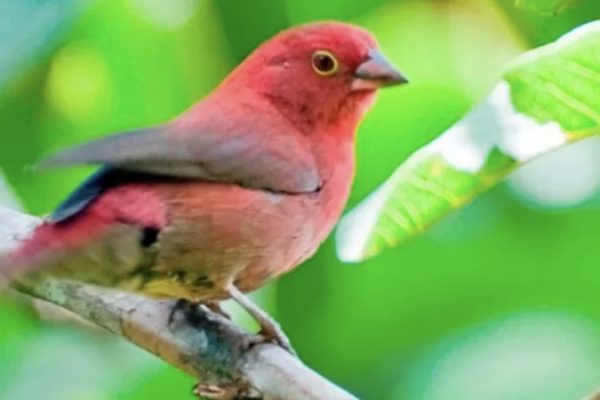
An 11-day Rwanda birding and wildlife safari offers an immersive journey through Albertine Rift endemic bird habitats, endangered primate trekking in Nyungwe and Volcanoes National Parks, and savannah game drives in Akagera. Expect to spot rare species like the Shoebill, Rwenzori Turaco, and multiple sunbirds, alongside mountain gorillas, chimpanzees, and the Big Five
28-days-perfect-uganda-rwanda-bird-watching-safari-and-wildlife-expedition
17-days-rwanda-birding-safari-and-uganda-birding-tour-combined-vacation
16-days-exclusive-rwanda-bird-watching-safari-extravaganza
12-days-perfect-rwanda-birding-safari-itinerary
9-days-best-rwanda-birding-safari-primates-and-wildlife
10-days-best-rwanda-birding-safari-combined-with-rwanda-gorilla-trekking-vacation
5-days-perfect-rwanda-birding-safari-and-wildlife-and-gorilla-trekking
7-days-rwanda-birding-safari-chimps-and-gorilla-trekking
Volcanoes National Park: Primate Encounters & Afro-Alpine Birding
Volcanoes National Park is the dramatic crown jewel of Rwanda’s conservation efforts, situated in the heart of the Virunga Massif. This high-altitude sanctuary consists of five dormant volcanoes, including the imposing Mount Bisoke and Mount Karisimbi. For birders, these slopes represent a specialized ecosystem where the vegetation transitions from bamboo forests to afro-alpine moorlands. Here, the primary objective is to spot the Albertine Rift endemics that have adapted to the thin, cool air. The Rwenzori Turaco, with its spectacular flash of crimson wings against the green canopy, is a frequent highlight. You will also scan the giant lobelias for the Strange Weaver and the elusive Dusky Crimson-wing, species that are rarely found outside this specific volcanic chain.
Beyond the avian treasures, the park is globally synonymous with the Mountain Gorilla. A 9-day safari typically reserves a morning for gorilla trekking, a profound experience that involves hiking through the "Hagenia" forests to spend an hour in the presence of a habituated family. The physical demand of these treks can be high, as the terrain is steep and often shrouded in mist, but the reward is an unmatched intimacy with one of the world's most endangered primates. While tracking, your binoculars should remain ready; the same forest is home to the Golden Monkey, another endemic primate that shares the bamboo thickets with rare woodland warblers.
The experience at Volcanoes National Park is one of scale and majesty. Whether you are standing at the crater lake of Bisoke or peering through the bamboo for a Regal Sunbird, the park offers a sense of prehistoric wonder. The mist often clings to the peaks well into the afternoon, creating an ethereal atmosphere that defines the Rwandan highlands. It is the emotional and biological peak of the itinerary, offering a comprehensive look at the rare, resilient species that call these volcanic peaks home.
Nyungwe Forest National Park: Ancient Canopies & Endemic Jewels
Nyungwe Forest National Park is one of the oldest and most well-preserved montane rainforests in Africa, serving as a critical water catchment for the entire region. This vast, emerald-green expanse is a "biodiversity hotspot" in the truest sense, hosting over 300 bird species, including 29 Albertine Rift endemics. The forest’s varied altitudinal range allows for a diverse checklist; you will be searching for the Black-billed Turaco and various Apalis species that flit through the moss-covered branches. Birding in Nyungwe is an exercise in patience and acoustic skill, as the dense primary forest requires you to listen for calls before scanning the giant mahogany trees and ferns for movement.
A major highlight of any visit to Nyungwe is the Chimpanzee tracking experience. Following these energetic and vocal primates through the undergrowth provides a thrilling perspective of forest life. The park is also famous for its Canopy Walk, a suspension bridge hanging 60 metres above the forest floor. This vantage point offers a rare "bird’s-eye view" of the treetops, allowing you to spot species that usually remain hidden from ground-level observers, such as the Great Blue Turaco. The cool, crisp air and the constant chorus of cicadas and forest birds create a multi-sensory environment that feels largely untouched by time.
The terrain in Nyungwe is rugged, involving steep hikes on well-maintained but often damp trails. However, the sheer density of endemic species makes every step worthwhile. You might encounter the Handsome Francolin emerging on the trails at dawn or the iridescent Blue-headed Sunbird feeding on wild orchids. Nyungwe represents the botanical heart of Rwanda, offering a profound sense of discovery for those looking to secure sightings of Africa’s rarest forest specialists within a breathtakingly beautiful primary rainforest setting.
Akagera National Park: Savannah Skies & Wetland Wonders
Akagera National Park offers a striking contrast to the mountainous west, featuring a sprawling mosaic of acacia woodlands, open savannahs, and a complex system of lakes and papyrus swamps. This is Rwanda's only "Big Five" destination, where birding is seamlessly integrated with classic game drives. As you navigate the open plains, the skies are often filled with the silhouettes of Lesser Kestrels, Bateleurs, and various snake eagles. The park is home to a high concentration of raptors, making it a premier location for those interested in birds of prey. In the drier grasslands, you will also look for the Southern Ground Hornbill and the Black-headed Gonolek.
The true "star" of Akagera, however, is found within its extensive wetlands. A boat trip on Lake Ihema is essential for any birder, as it provides the best opportunity to see the prehistoric-looking Shoebill Stork. This elusive waterbird is often found standing motionless among the reeds, a top prize for any African birding checklist. The wetlands also teem with kingfishers, herons, and the vibrant Papyrus Gonolek. The interaction between the water and the dry land creates a unique "edge effect," where you can spot a lion or an elephant on the shore while a Giant Kingfisher dives for a meal just a few metres away.
Following recent successful reintroductions, Akagera is once again home to lions and black rhinos, adding an element of classic safari excitement to your birding sessions. Your mornings typically begin at dawn, when the golden light hits the plains—the peak time for both avian and mammalian activity. The experience in Akagera is one of vast horizons and quiet patience, offering a comprehensive look at the wildlife of the East African savannah and the specialized species that thrive in the lush papyrus swamps of the Nile system.
Birding Diversity: A Specialized Pursuit of Rarities
The diversity of Rwanda’s birdlife is staggering, especially considering the country's relatively small size. A 9-day safari is specifically structured to maximize this diversity by targeting specialized "lifers" that enthusiasts travel across the globe to see. The focus is heavily weighted toward the Albertine Rift endemics, a group of birds found only in this specific mountain range spanning Rwanda, Uganda, and the DRC. Guides use their expert knowledge of calls and habitat preferences to locate species like the Red-collared Babbler or the Grauer’s Swamp Warbler, which occupy very narrow ecological niches.
Beyond the endemics, the tour highlights the incredible variety of Sunbirds and Kingfishers. Sunbirds, the African equivalent of hummingbirds, are particularly diverse in the flowering shrubs of the highland forests. You will be on the lookout for the Regal Sunbird and the Rwenzori Double-collared Sunbird, whose iridescent feathers shimmer brilliantly in the mountain light. In the lower wetlands and riverine forests, the focus shifts to kingfishers; you can expect to see the Malachite, Pied, and Woodland Kingfishers, each displaying unique hunting behaviours and striking plumage.
This specialized birding approach requires a high level of patience and the use of professional equipment. Guides often use "playbacks" of bird calls sparingly to encourage shy species to reveal themselves, and the pace of the tour is dictated by the birds themselves rather than a rigid schedule. Whether you are a seasoned ornithologist or a hobbyist photographer, the "Birding Diversity" aspect of the tour ensures that you leave with a well-documented checklist and a deep understanding of the complex relationships between these species and their varied Rwandan habitats.
Cultural Experience: Connecting with Rwanda’s Heritage
A 9-day Rwanda safari is more than just a wildlife expedition; it is an opportunity to connect with the rich cultural heritage and resilient spirit of the Rwandan people. A major highlight is the visit to the Iby’iwacu Cultural Village, located just outside Volcanoes National Park. This community-led initiative was established by former poachers who have transitioned into conservationists. Here, visitors can witness traditional drumming and dancing, learn about ancient medicinal practices using local plants, and even participate in a mock royal marriage ceremony. It is a powerful example of how community tourism directly supports the protection of the Mountain Gorillas.
Beyond the formal cultural village, the itinerary often includes walks through local markets and terraced farms. These interactions provide insight into the "Land of a Thousand Hills" from the perspective of the people who cultivate it. You will see firsthand how the local communities coexist with the national parks, often serving as porters, guides, or rangers. Learning about the traditional "Agaseke" basket weaving or the history of Rwandan coffee and tea production adds a layer of depth to the trip, transforming the journey from a simple nature tour into a holistic exploration of the country’s identity.
A visit to the Kigali Genocide Memorial is also an essential, albeit somber, part of the cultural experience. It provides the necessary context for Rwanda’s modern history and the incredible journey of reconciliation and development the country has undertaken since 1994. Understanding the past is vital for appreciating the peace and stability that now allows for world-class conservation and tourism. By the end of the nine days, travelers gain a profound respect for the warmth and hospitality of the Rwandan people, leaving with a sense of connection to both the wildlife and the human story of this remarkable nation.
Climate & Terrain: Preparing for the Tropical Highlands
Rwanda’s geography dictates a climate and terrain that require careful physical and logistical preparation. The climate is generally tropical and humid, but it varies significantly with altitude. In the eastern savannahs of Akagera, the weather is warmer and drier, while the western forests and northern volcanoes are much cooler and prone to sudden tropical downpours. Even during the "dry" seasons, the rainforests of Nyungwe and the Virunga peaks can be shrouded in mist and rain, making the environment feel fresh and vibrant but also potentially challenging for photography and hiking.
The terrain is a defining feature of the Rwandan experience. To find the rarest birds and primates, you must be prepared for dense, steep, and potentially muddy forest terrain. Hiking in Nyungwe and Volcanoes National Park involves navigating tangled roots, slippery slopes, and thick vegetation. This requires a good level of physical fitness and the right gear, including waterproof hiking boots with excellent ankle support. The "altitudinal" nature of the birding means you may be ascending and descending hundreds of metres in a single day, which can be physically taxing, especially in the thinner air of the high-altitude volcanic slopes.
To manage these conditions, the use of porters is highly recommended. Local porters can carry your heavy camera equipment and provide a steady hand on difficult sections of the trail, which not only makes your hike easier but also supports the local economy. Layered clothing is essential to adapt to the changing temperatures—starting the day in a fleece and rain jacket and stripping down to a light shirt as the sun warms the forest. Embracing the "wild" nature of the terrain is part of the adventure, offering a true sense of exploration in some of Africa’s most ruggedly beautiful landscapes.
Logistics: Expert Guiding & Comfortable Lodges
The success of a 9-day Rwanda safari relies heavily on meticulous logistics, specifically the combination of expert guiding and strategic accommodations. In a country where birding is highly technical, having a specialized birding guide is indispensable. These professionals are trained to identify hundreds of species by their calls alone and have an intimate knowledge of where rare endemics are likely to be found at any given time of year. They handle all the on-the-ground navigation in a 4x4 safari vehicle, ensuring you reach the best vantage points safely and comfortably, regardless of the road conditions.
Accommodations are another pillar of the logistical framework. Rwanda has invested heavily in high-quality tourism infrastructure, and the lodges used in these itineraries range from very comfortable mid-range options to world-class luxury eco-lodges. Many of these lodges, such as those perched on the edge of Nyungwe Forest or overlooking the Twin Lakes, are destinations in themselves. They offer essential amenities for the active traveler, including hot showers, en-suite bathrooms, and delicious meals that cater to international dietary requirements. After a long day of hiking in the mud, returning to a warm lodge with a fireplace is a vital part of the experience.
Furthermore, the lodges are often chosen for their proximity to the park gates, allowing for the early 4:30 AM starts required for peak birding activity. Most provide packed lunches for those spending the entire day in the field, ensuring you never have to break your focus on the wildlife. From the moment you arrive in Kigali to your final departure, the logistics are designed to be seamless, allowing you to focus entirely on the birds, the primates, and the breathtaking scenery. This professional "backbone" ensures that even in the most remote corners of the rainforest, your safari remains safe, comfortable, and highly productive.
11-Day Rwanda Birding & Wildlife Discovery
This premier 11-day safari offers an exhaustive exploration of Rwanda’s most iconic landscapes, from the sun-drenched savannahs of the east to the mist-shrouded rainforests and volcanic peaks of the west. Designed for the discerning naturalist, the itinerary balances technical birding with bucket-list primate encounters. You will traverse the papyrus swamps of Akagera in search of the prehistoric Shoebill, trek through the ancient canopies of Nyungwe for Albertine Rift endemics, and stand in the presence of Mountain Gorillas in the Virunga Mountains. Along the way, the journey is enriched by the scenic beauty of Lake Kivu and the deep cultural heritage of the Rwandan people. With expert guiding and stays in world-class eco-lodges, this expedition provides a seamless, high-impact wildlife experience. It is a definitive journey through the "Land of a Thousand Hills," showcasing the remarkable success of Rwanda’s conservation efforts and its status as a top-tier destination for avian and primate enthusiasts alike.
Day 1: Arrival in Kigali
Your Rwandan adventure begins at Kigali International Airport, where a professional guide from the Roads of Adventure team will warmly welcome you. After a brief orientation regarding the exciting journey ahead, you will be transferred to your comfortable hotel in the heart of the capital. Kigali is celebrated as Africa’s cleanest and safest city, offering a peaceful introduction to the "Land of a Thousand Hills." Use this afternoon to shake off any travel fatigue, perhaps enjoying a cup of world-renowned Rwandan coffee on a terrace overlooking the city's undulating landscape. As the sun sets, you will enjoy a welcome dinner, providing an opportunity to discuss the specific birding targets and wildlife expectations for the coming days. The cool night air and quiet surroundings ensure a restful start before your transition into the wilder regions tomorrow.
Day 2: Kigali City Tour & Transfer to Akagera
The morning begins with a poignant visit to the Kigali Genocide Memorial, an essential site for understanding the country’s history and its inspiring path toward reconciliation. Following this cultural immersion, you will depart for Akagera National Park in the east. The drive transitions from urban hills to open savannah plains. Upon arrival and check-in, you will head to Lake Ihema for a late afternoon boat safari. This is your first major birding opportunity; keep a keen eye out for the African Fish Eagle, various kingfishers, and the iconic Shoebill Stork lurking in the papyrus. On the water’s edge, you may also spot pods of hippos and basking crocodiles. This aquatic introduction sets a high standard for the biodiversity of Akagera, blending classic African scenery with specialized wetland birdwatching as the first day in the field concludes.
Day 3: Game Drive & Birding in Akagera
Today is dedicated to exploring the diverse habitats of Akagera, Rwanda’s only savannah park. An early start maximizes your chances of spotting "Big Five" members, including lions, leopards, and rhinos, alongside herds of elephants and giraffes. For birders, the focus is on the acacia woodlands and open grasslands, where you can spot the Black-headed Gonolek, Bennett’s Woodpecker, and the Southern Ground Hornbill. The park’s northern plains are excellent for raptors like the Bateleur and Martial Eagle. You will also revisit the wetland edges to search for the elusive Papyrus Gonolek, whose vibrant crimson plumage flashes against the green reeds. The day is a dynamic mix of high-speed safari excitement and patient, technical birding, offering a comprehensive look at how Rwanda’s eastern lowlands support a vast array of species not found in the mountainous west.
Day 4: Transfer to Nyungwe Forest National Park
Leaving the savannah behind, you embark on a scenic long-distance drive toward the southwest. This journey takes you through the heart of Rwanda’s agricultural landscape, characterized by steep, terraced hills and vibrant local markets. Birding opportunities are plentiful along the way; look for the Augur Buzzard soaring over the valleys and Long-crested Eagles perched on roadside trees. A stop at the National Museum in Huye provides a fascinating cultural interlude, showcasing Rwanda’s traditional crafts and history. As you approach Nyungwe Forest, the air becomes noticeably cooler and the vegetation transitions into a lush, ancient montane rainforest. Upon arrival at your lodge on the forest’s edge, the evening chorus of turacos and primates welcomes you to one of the oldest forests in Africa, setting the stage for three days of intensive forest exploration.
Day 5: Chimpanzee Tracking & Canopy Walk
Your day starts at dawn for an exhilarating chimpanzee tracking experience. Navigating the dense undergrowth with expert rangers, you will listen for the loud hoots and pant-grunts of our closest relatives. While the chimps are the main focus, keep your binoculars ready for forest specialists like the White-tailed Blue Flycatcher. In the afternoon, the adventure moves to the spectacular Canopy Walkway. Suspended 60 metres above the forest floor, this bridge offers a unique "bird’s-eye view" of the ancient treetops. It is an unparalleled vantage point for spotting the Great Blue Turaco and various hornbills that stay high in the canopy. The combination of intimate primate encounters and the sheer scale of the forest from above makes this one of the most physically and visually rewarding days of the entire 11-day safari circuit.
Day 6: Birding in Nyungwe Forest
Today is a deep dive into the botanical heart of Nyungwe, targeting the 29 Albertine Rift endemics found here. Guided by a specialist birding expert, you will hike the forest trails to find the stunning Rwenzori Turaco and the Regal Sunbird. The forest is home to many localized species, including the Mountain Masked Apalis, the Red-collared Babbler, and the Archer’s Robin-Chat. The terrain can be damp and steep, but the reward is a checklist of some of Africa’s rarest birds. Pay close attention to the mossy branches for the Strange Weaver and the Handsome Francolin. Whether it is the iridescent shimmer of a sunbird or the haunting call of the Blue-headed Coucal, Nyungwe provides a multi-sensory experience that highlights the incredible biological richness of this primary rainforest, making it a "must-visit" for any serious ornithologist or nature photographer.
Day 7: Transfer to Lake Kivu (Gisenyi)
After a final morning birding session in Nyungwe, you will travel north along the shores of Lake Kivu toward Gisenyi. This route follows the Congo-Nile Divide, offering some of the most breathtaking coastal views in Africa. The road winds through emerald-green hills, overlooking the deep blue waters of the lake. This day serves as a well-timed interlude for relaxation. Along the lakeshore, you can spot water-associated birds such as the Pied Kingfisher, Yellow-billed Stork, and various herons. Upon reaching Gisenyi, you can enjoy a sunset walk along the beach or a boat ride to explore the nearby islands. The tranquil atmosphere of the lake provides a perfect contrast to the dense forests, allowing you to review your birding logs and recharge before heading into the rugged volcanic terrain of the Virunga Mountains tomorrow.
Day 8: Transfer to Volcanoes National Park
Today involves a short but incredibly scenic drive from the shores of Lake Kivu to the base of the Virunga Mountains in Volcanoes National Park. As the altitude increases, the landscape changes to bamboo forests and afro-alpine moorlands. The silhouettes of the five dormant volcanoes dominate the horizon, creating a dramatic backdrop for the next phase of your safari. Upon arrival, you will check into a lodge near the park headquarters. The afternoon is dedicated to birding around the park’s fringes or visiting the Twin Lakes, Burera and Ruhondo. Here, you can find the African Marsh Harrier and the Grey-crowned Crane, Rwanda’s national bird. The cooler mountain air and the presence of the volcanic peaks signal your entry into the world-famous habitat of the Mountain Gorilla, adding a sense of anticipation to the evening’s preparations.
Day 9: Mountain Gorilla Trekking
This is often considered the emotional peak of the safari. After an early briefing at the park headquarters, you will head into the high-altitude "Hagenia" forests to track a habituated family of Mountain Gorillas. The hike can be physically demanding, involving steep climbs through thick vegetation, but the moment you encounter these gentle giants is life-changing. You will spend one hour observing the silverback, females, and playful juveniles in their natural habitat. Even during this primate-focused trek, the birding continues; look for the Rwenzori Double-collared Sunbird and the Mountain Yellow Warbler in the forest canopy. The intimacy of this encounter, combined with the raw beauty of the volcanic slopes, provides a profound connection to nature. Returning to the lodge in the afternoon, you will have time to reflect on this extraordinary wildlife milestone.
Day 10: Golden Monkey Tracking or Birding
For your final day in the mountains, you have the choice of two equally rewarding activities. You can opt to track the Golden Monkeys, a striking and playful primate endemic to the Virunga Massif. These monkeys are found in the bamboo zone, providing excellent photographic opportunities as they swing through the stalks. Alternatively, dedicated birders can spend the morning searching for high-altitude rarities like the Dusky Crimsonwing, Red-faced Woodland Warbler, and Archer’s Ground Robin. The bamboo forest offers a specialized habitat that differs significantly from the primary rainforest of Nyungwe. In the afternoon, you might explore the local community or simply enjoy the majestic views of the volcanoes from your lodge. Whether you choose fur or feathers, the day showcases the incredible resilience and variety of life that thrives in Rwanda’s unique afro-alpine ecosystems.
Day 11: Cultural Experience & Departure
On your final morning, you will visit the Iby’iwacu Cultural Village. This community-led initiative provides a fascinating look into traditional Rwandan life, featuring drumming, dancing, and demonstrations of ancient medicinal practices. It is a wonderful way to understand the human side of conservation, as many members are former poachers now dedicated to protecting the gorillas. Following this cultural exchange, you will begin the drive back to Kigali. Depending on your flight schedule, there may be time for last-minute souvenir shopping at the Kimironko Market or a final birding stop at the Nyabarongo Wetlands. Your guide will then transfer you to Kigali International Airport for your departure flight. You leave the "Land of a Thousand Hills" with a completed birding checklist, unforgettable primate memories, and a deep appreciation for Rwanda’s remarkable natural and cultural heritage.
What is the best time for birding in Rwanda?
Timing is the most critical factor for a successful birding expedition in Rwanda, and the "best" window depends on whether you value trekking comfort or species volume. For the most pleasant hiking conditions, the long dry season (June to September) is ideal. During these months, the trails in Nyungwe and Volcanoes National Park are significantly less muddy, making the steep climbs much more manageable. The skies are generally clearer, which provides the best light for photography and makes it easier to spot birds in the high canopy without constant rain interference.
However, for a dedicated ornithologist looking to maximize their checklist, the "short rains" (October to November) and the "long rains" (March to May) offer unique advantages. This period coincides with the arrival of Palearctic migratory birds from Europe and Asia, which significantly boosts the total species count. Furthermore, many resident species enter their breeding seasons during the rains, meaning they display more vibrant plumage and engage in frequent calling and singing to defend territories. This "vocal window" makes it much easier for guides to locate shy forest endemics that might otherwise remain silent and hidden during the dry months.
Regardless of the month, Rwanda’s equatorial position and varied topography mean that rain can occur at any time, especially in the high-altitude rainforests. If your itinerary includes Mountain Gorilla trekking, the dry seasons are often preferred to avoid the heaviest tropical downpours. Ultimately, a balanced 11-day tour in January or August provides a fantastic compromise: you miss the heaviest deluges while still enjoying a high density of resident species. If you can tolerate a bit of mud, the transition months of May and October offer the most rewarding sightings as the landscape turns a lush, photogenic green.
How many bird species can I see in 11 days?
In a country that boasts over 700 recorded species within a relatively small geographic area, an 11-day birding safari is remarkably productive. Depending on the skill of your guide and your own persistence, a traveler can realistically expect to spot between 200 and 300 unique species. The high count is made possible by the "circuit" nature of the itinerary, which moves through three vastly different biomes: the eastern savannahs, the central montane rainforests, and the northern volcanic chain. Each of these zones contributes a entirely different set of birds to your daily log.
The "weight" of your list will likely be centered in Nyungwe National Park, where you can spend three or four days checking off nearly 30 Albertine Rift endemics. Here, you will find specialized forest dwellers like the Rwenzori Turaco and the Red-collared Babbler. When you transition to Akagera National Park, the list expands into waterbirds and savannah raptors. In a single day in the wetlands, you might add 40–50 species, including the Shoebill, African Fish Eagle, and various lapwings and herons. The diversity is further bolstered by the "roadside birding" that occurs during transfers between parks, where you often spot species like the Augur Buzzard or the Long-crested Eagle.
To reach the higher end of the 300-species mark, many birders opt to include specialized sites like the Rugezi Marsh or the Nyabarongo Wetlands. These areas are crucial for finding localized swamp-dwelling warblers and cisticolas. Because Rwanda is so compact, you spend less time "traveling" and more time with your binoculars up, leading to one of the highest "species-per-mile" ratios in all of Africa. By the end of day 11, you will likely have a comprehensive representation of East African avian life, ranging from the tiniest sunbirds to the largest prehistoric storks.
Will I see gorillas on this birding safari?
Yes, a comprehensive 11-day Rwandan itinerary almost always reserves a specific day for Mountain Gorilla trekking in Volcanoes National Park. While the primary focus of the tour is ornithology, it is widely recognized that the opportunity to stand a few metres away from a silverback is a "once-in-a-lifetime" event that complements any wildlife-focused trip. The park is home to roughly half of the world's remaining mountain gorilla population, and the trekking experience is world-renowned for its organization and conservation success.
The gorilla trek is seamlessly integrated into the birding schedule. Typically, on Day 9, you will trade your long-range telephoto lens for a standard zoom as you hike into the Hagenia-Hypericum forests. Interestingly, the gorilla habitat is also prime territory for high-altitude birds. As you move through the bamboo and giant lobelias in search of the gorilla families, you are very likely to spot the Rwenzori Double-collared Sunbird or the Archer's Ground Robin. In this sense, the "gorilla day" is still a highly productive birding day, even if the primary target has fur instead of feathers.
It is important to note that gorilla permits are limited and must be booked well in advance. Your tour operator will handle the logistics, but the trek itself requires a moderate level of physical fitness, as it involves hiking on steep, untamed volcanic slopes. For birders, the presence of the gorillas adds a layer of "prestige" and emotional weight to the trip. Seeing these gentle giants in the same forest where you just spotted a rare Dusky Crimsonwing provides a holistic view of Rwanda’s ecosystem, proving that successful conservation protects the entire biological pyramid from the smallest bird to the largest primate.
What are the key birding hotspots on the itinerary?
An 11-day itinerary is strategically built around four primary hotspots, each representing a different "flavor" of African birding. The first is Akagera National Park in the east. This is the place for savannah birding and wetland specialists. The park's lake systems and papyrus swamps are the most reliable spots in Rwanda for the Shoebill, while the open acacia woodlands host raptors, bee-eaters, and barbets. It provides a "traditional" safari experience where birding is conducted from a vehicle or a boat, offering a relaxed but species-rich start to the journey.
The second, and perhaps most important, hotspot is Nyungwe National Park. This is a montane rainforest and the "Holy Grail" for those seeking Albertine Rift endemics. With over 300 species, it is a technical birding paradise. Highlights here include the Canopy Walk, which allows you to see treetop species at eye level, and the various forest trails where you search for the Great Blue Turaco and the Handsome Francolin. The third key site is Volcanoes National Park, which offers high-altitude birding in the bamboo and sub-alpine zones. Here, the focus is on rarities like the Rwenzori Turaco and specialized sunbirds that thrive in the cooler mountain air.
Finally, the Rugezi Marsh (often visited between Akagera and Volcanoes) is a critical stop for water-associated birds. It is a high-altitude peat bog and a RAMSAR site, essential for finding the Grauer’s Swamp Warbler and the White-winged Swamp Warbler. Additionally, the wetlands around Kigali and the shores of Lake Kivu provide "transitional" birding spots that ensure your list keeps growing even during travel days. By hitting these four distinct hotspots, the itinerary covers every major ecological niche in the country, ensuring no significant species group is overlooked.
What endemics can I see in Nyungwe?
Nyungwe National Park is arguably the most important site in Africa for seeing Albertine Rift endemics—species found only in the narrow strip of mountains flanking the Western Rift Valley. Out of the 29 endemics recorded in Rwanda, at least 27 are found in Nyungwe. The most iconic of these is the Rwenzori Turaco. Unlike many forest birds that are heard but not seen, this turaco is often quite active, showing off its brilliant blue, green, and red plumage as it glides between the giant ferns and mahogany trees.
Another highly sought-after endemic is the Regal Sunbird. This tiny bird is a masterpiece of iridescence, with a golden-yellow belly and a shimmering purple-and-green head that glows in the filtered forest light. For those willing to hike the deeper trails, the Red-faced Woodland Warbler and the Mountain Masked Apalis are frequent targets. These species require a guide with a keen ear, as they are often identified by their complex songs before they are spotted in the dense mid-canopy. You might also encounter the Strange Weaver, a bird that lives up to its name with its unique nesting habits and localized distribution.
The list of endemics also includes more elusive ground-dwellers like the Handsome Francolin and the Archer’s Robin-Chat. These birds are best spotted in the early morning as they emerge onto the forest trails before the heat of the day. Seeing these endemics is a major "prestige" event for birders, as they represent species with some of the smallest geographic ranges in the world. Nyungwe’s primary forest has remained stable for thousands of years, allowing these birds to evolve in isolation, and seeing them in their natural habitat is a powerful reminder of the park's global conservation importance.
Are the walking trails strenuous?
Birding in Rwanda is an active pursuit, and the walking trails in the western and northern regions are generally considered moderately strenuous. Unlike savannah safaris where you remain in a vehicle, the forest birding in Nyungwe and Volcanoes National Park requires you to go where the birds are—which is often deep in the rainforest or high on a volcanic slope. The trails in Nyungwe are well-maintained but characterized by constant elevation changes; you will be hiking up and down steep ridges, often at altitudes between 2,000 and 3,000 metres.
The terrain itself adds to the challenge. The forest floor can be slippery, covered in moss, leaf litter, and roots. During the rainy season, these paths become muddy, requiring good balance and sturdy footwear. However, the pace of a birding walk is "slow and steady." You aren't hiking for speed; you are pausing every few minutes to listen for a call or scan a branch. This makes the physical exertion manageable for most people with an average level of fitness. The most "intense" hike is typically the Mountain Gorilla trek, which can involve "bush-whacking" through thick vegetation if the family has moved deep into the forest.
To alleviate the physical burden, the use of porters is highly recommended and is a standard part of the Rwandan safari experience. For a small fee, a local porter will carry your heavy camera gear and daypack, and provide a steady hand on the more difficult sections of the trail. This allows you to keep your binoculars ready and your focus on the canopy rather than your footing. By using porters and taking the hikes at a "birding pace," even the more challenging trails become an enjoyable part of the adventure, allowing you to reach the remote spots where the rarest species reside.
Do I need a professional birding guide?
In Rwanda, a professional birding guide is not just a luxury; they are an absolute necessity for a successful trip. Forest birding, in particular, is an incredibly difficult skill. In the dense, multi-layered canopy of Nyungwe, birds are often heard long before they are seen. A specialized guide can identify hundreds of species by a single "chip" note or a distant song, allowing them to pinpoint exactly which tree or bush to focus your binoculars on. Without this expert "ear," most travelers would walk right past some of the rarest endemics on the continent.
Beyond identification, a professional guide understands habitat and phenology. They know which flowers are currently in bloom to attract specific sunbirds and which fruiting trees are being visited by turacos. They are also trained in the ethical use of "playbacks"—using recorded bird calls to encourage a shy species to reveal itself. This is a delicate art; overusing playbacks can stress the birds, so a professional knows exactly how much to use to get the sighting without disrupting the natural behavior of the animal. They also handle all the logistics, from navigating rural roads to coordinating with park rangers.
Furthermore, a guide acts as a bridge between you and the local culture. They can explain the conservation history of the areas you visit and help you interact with the community. Most Rwandan birding guides are incredibly passionate about their work and are constantly updating their own knowledge. They turn a "walk in the woods" into a masterclass in ecology. For an 11-day safari, having the same guide throughout provides continuity, as they will know exactly which birds you’ve already seen and which ones are still missing from your "must-see" list, tailoring each day to your personal goals.
What should I pack for birding in Rwanda?
Packing for an 11-day birding safari requires a balance of high-tech gear and functional, layered clothing. The most important tool is a pair of quality binoculars (8x42 is the gold standard for forest birding). Because many of Rwanda’s rarest birds live in the dark understory or high, backlit canopies, you need binoculars with excellent light-gathering capabilities. A camera with a long telephoto lens (at least 400mm-600mm) is also essential for capturing those high-canopy turacos. Don't forget extra memory cards and a spare battery, as you will likely take more photos than you anticipate.
Clothing must be geared toward "protection and layers." Even in the "dry" season, you should pack a lightweight, breathable rain jacket. For the forest trails, long-sleeved shirts and long trousers are mandatory; they protect you from stinging nettles, thorny branches, and biting insects. Choose moisture-wicking fabrics rather than heavy cotton, as you will be hiking in humid conditions. Waterproof hiking boots with good ankle support are the most critical piece of footwear, as the terrain in Nyungwe and Volcanoes is often steep and slippery. Many birders also find that a pair of lightweight gardening gloves is helpful for gripping branches and vines during steep climbs.
Other essentials include a wide-brimmed hat, high-SPF sunscreen, and a strong insect repellent (DEET-based). Since you will be spending long hours in the field, a comfortable waterproof daypack is needed to carry your water, snacks, and extra layers. A field guide (such as "Birds of East Africa") and a small notebook for your "life list" will help you track your sightings in real-time. Finally, consider bringing a portable power bank for your phone or camera, as some remote lodges may have limited charging hours. Packing "light but right" ensures you are prepared for everything from the hot savannah to the misty mountain peaks.
Can I see the shoebill stork?
Yes, seeing the Shoebill Stork is one of the major highlights of an 11-day Rwanda safari, and it is almost exclusively found in Akagera National Park. This prehistoric-looking bird, with its massive, bulbous bill and steady, golden-eyed gaze, is a "bucket list" species for birders worldwide. While the Shoebill is rare and localized across Africa, the extensive papyrus swamps and lake systems of Akagera (particularly Lake Ihema and the surrounding wetlands) provide one of the most reliable places to spot them in the region.
The best way to see the Shoebill is via a boat safari. This allows you to glide quietly along the edges of the papyrus reeds where the birds prefer to hunt for lungfish. Because they are "sit-and-wait" predators, they can remain motionless for hours, making them difficult to spot from a distance but spectacular once found. Your guide will work with local park rangers who monitor the birds' movements, significantly increasing your chances of a sighting. While not guaranteed (as they are wild animals), a dedicated morning or afternoon on the water in Akagera gives you a very high probability of success.
Seeing a Shoebill is an eerie and exhilarating experience; they look like a creature out of time. Beyond the Shoebill, the same boat trip will likely yield sightings of the African Fish Eagle, Squacco Heron, and the Giant Kingfisher. For many travelers, the Shoebill sighting is the "wetland equivalent" of seeing a Mountain Gorilla—a rare encounter with a unique evolutionary giant. It serves as the perfect centerpiece for the eastern leg of your journey, showcasing the incredible biodiversity found in Rwanda's low-lying swamp systems.
What wildlife besides birds will I see?
While the focus of the trip is birding, an 11-day circuit through Rwanda’s national parks ensures you will encounter a vast array of mammals and primates. In Akagera National Park, you are in "Big Five" territory. Following successful reintroduction programs, the park is home to lions, leopards, black rhinos, elephants, and buffalo. During your game drives, you will also see large numbers of plains zebras, topis, waterbucks, and the massive Eland. The lake systems are teeming with hippos and some of the largest Nile crocodiles in East Africa.
In the western forests of Nyungwe, the focus shifts to primates. Beyond the Chimpanzees, which are the main attraction, the forest is home to 12 other primate species. You are very likely to encounter the L’Hoest’s monkey, which is often seen on the roadside, and massive troops of Black-and-white Colobus monkeys—some groups numbering over 300 individuals. You might also spot the Grey-cheeked Mangabey and the Blue Monkey in the canopy. The forest is also home to more elusive mammals like the side-striped jackal and various small forest antelopes (duikers).
Finally, Volcanoes National Park provides the ultimate mammal encounter with the Mountain Gorillas. This is a rare opportunity to see a primate that shares 98% of our DNA. In the same park, you can track the Golden Monkeys, which are known for their striking orange coats and playful behavior. By the end of the 11 days, your wildlife list will be as impressive as your birding list, covering everything from the giants of the savannah to the rare primates of the rainforest. This "multi-taxa" approach is what makes Rwanda such a complete and satisfying destination for any nature lover.
How is the accommodation on this safari?
Accommodation in Rwanda has seen a massive transformation over the last decade, and a 11-day birding safari typically utilizes a range of comfortable to high-end luxury lodges. The hospitality industry here is built around the concept of "low volume, high impact," meaning lodges are often small, intimate, and deeply integrated into the natural landscape. In places like Nyungwe and Volcanoes National Park, you will find "eco-lodges" that feel like an extension of the forest, featuring natural wood, stone, and traditional Rwandan designs.
For the birding traveler, the most important feature of these lodges is their proximity to the park headquarters. Because birding starts at dawn, being just 5 or 10 minutes from the gate is a significant advantage. Most lodges offer "safari chic" amenities, including en-suite bathrooms with hot showers, comfortable beds with mosquito netting, and private balconies perfect for afternoon birding. In the mountains, many lodges provide fireplaces in the rooms to ward off the evening chill. The service is exceptionally warm, with a focus on personalized attention—staff will often clean your muddy hiking boots and provide a hot water bottle for your bed in the evening.
Dining is another highlight. Lodges typically offer full-board packages that include three-course dinners and hearty breakfasts. Since you will be in the field during the day, the chefs are experts at preparing "packed lunches" that are fresh and energy-dense. They are also very accommodating to dietary requirements, whether you are vegan, gluten-free, or have allergies. While there are budget options available, most 11-day itineraries prioritize lodges that offer a balance of comfort and "nature immersion," ensuring that your resting time is as restorative and scenic as your time on the trail.
Are there health risks like malaria?
Yes, malaria is a present health risk in Rwanda, and travelers must take it seriously. While the high-altitude regions like Volcanoes National Park (at 2,500m+) are generally too cool for the Anopheles mosquito to thrive, the lower elevations—specifically Kigali and Akagera National Park—are considered malaria-risk areas. Because birding often takes you into wetlands and swampy environments (the primary breeding grounds for mosquitoes) and involves being active at dawn and dusk, taking preventative measures is a standard part of safari preparation.
It is highly recommended that you consult a travel doctor at least 4–6 weeks before your trip to discuss anti-malarial prophylactics (such as Atovaquone/Proguanil or Doxycycline). In addition to medication, "physical" prevention is your best line of defense. This includes wearing long sleeves and trousers in the early morning and evening, and applying a high-quality insect repellent containing DEET. Most lodges in risk areas provide mosquito nets over the beds and will "turn down" the room in the evening by spraying for insects.
Beyond malaria, you should ensure your routine vaccinations (like Tetanus and Hepatitis A/B) are up to date. While Rwanda is a very clean country, you should only drink bottled or filtered water, which is provided by your guide and at all lodges. Be mindful of the high altitude, especially in the Virunga Mountains; it is important to stay hydrated and pace yourself during hikes to avoid altitude sickness. By taking these standard health precautions, you can focus entirely on the incredible wildlife and landscapes of Rwanda without the worry of illness disrupting your journey.
What is the vaccination requirement?
The most important health-related entry requirement for Rwanda is the Yellow Fever vaccination certificate. You are required to show proof of vaccination if you are traveling from (or have transited for more than 12 hours through) a country with a risk of Yellow Fever transmission. Even if you are coming from a non-endemic country, many travelers find it easier to get the vaccination once and carry the "Yellow Card" to avoid any logistical delays at the border. The vaccination is safe and provides lifelong protection.
Standard travel vaccinations are also highly recommended. These include Hepatitis A and B, Typhoid, and a Tetanus booster. Given that you will be trekking in rainforests and potentially coming into contact with various insects and plants, having a robust immune system is vital. Currently, there are no mandatory COVID-19 vaccination requirements for entry, but it is always wise to check the latest government travel advisories, as these can change. Some travelers also opt for a Rabies vaccination if they plan on spending extensive time in rural communities or remote forest areas, although the risk is relatively low on a guided safari.
It is also worth mentioning that Rwanda has strict rules regarding the protection of primates. If you are participating in Gorilla or Chimpanzee trekking, you may be required to show that you are in good health. If you have a contagious illness like a cold or flu, you may be prohibited from trekking to protect the primates from human diseases. Therefore, maintaining your health leading up to the trip is just as important as the vaccinations themselves. Carrying a small personal medical kit with basic first aid, rehydration salts, and any personal prescriptions is a smart final step in your preparation.
How long are the game drives in Akagera?
In Akagera National Park, game drives are the primary way to see both large mammals and savannah birds, and they are typically quite long to maximize your chances of seeing the park's diverse wildlife. A full-day game drive is common, starting at dawn (around 6:00 AM) and lasting until late afternoon (4:00 PM or 5:00 PM). This is because Akagera is a large park, and moving from the southern entry to the northern plains—where the highest concentration of grazers and predators is found—takes several hours of slow, observant driving.
For birders, these long drives are a dream. Unlike a "mammal-only" safari where you might speed past smaller subjects, a birding game drive is characterized by frequent stops. You might spend 20 minutes at a single acacia tree watching a Red-faced Barbet or a Long-tailed Cisticola. The vehicles are 4x4 Land Cruisers with pop-up roofs, providing 360-degree visibility. Because you are out for the whole day, your lodge will provide a packed lunch, which you usually eat at a designated picnic site overlooking one of the park’s scenic lakes, allowing you to "bird through lunch" while watching hippos and waterbirds.
If you prefer a more relaxed pace, you can opt for half-day drives (morning or afternoon), but the northern section of the park is often too far to reach in a half-day. Therefore, most 11-day itineraries prioritize at least one full day in the field. This long duration allows you to experience the park’s transition from morning activity to mid-day quietude (when raptors are often seen soaring on thermals) and back to the late-afternoon surge in wildlife movement. It is a comprehensive way to see the "Big Five" while simultaneously ticking off over 50 savannah bird species.
What is the climate like during the birding safari?
Rwanda’s climate is often described as "eternal spring," but it is highly variable depending on your altitude. Because the country sits on a high plateau, it is much cooler than one might expect for a nation located just south of the Equator. In Kigali and Akagera, temperatures are pleasant and warm, typically ranging from 20°C to 28°C (68°F to 82°F). The humidity in the east is lower, making it comfortable for full-day game drives. However, once you move into the mountains of the west and north, the climate shifts significantly.
In Nyungwe and Volcanoes National Park, the environment is a tropical montane climate. It is damp, humid, and significantly cooler. Daytime temperatures in the forest hover around 15°C to 20°C (59°F to 68°F), but they can drop sharply at night, sometimes reaching as low as 5°C to 10°C (41°F to 50°F) at the higher lodge elevations. This is why many lodges provide fireplaces and hot water bottles. Mist and fog are common in the mornings, giving the rainforest and the volcanoes their iconic, ethereal appearance.
Rain is a constant factor in Rwanda’s forests. Even during the "dry" seasons, short, intense tropical showers can occur at any time. This rain is what keeps the landscape so lush and the birdlife so diverse. For a birder, this means you must be prepared for everything in a single day: starting in a fleece and rain jacket in the misty morning, stripping down to a t-shirt in the humid afternoon, and bundling up again as the sun goes down. This climate is what creates the diverse "micro-habitats" that allow Rwanda to host such an incredible variety of birds in such a small area.
Booking Rwanda birding safari and wildlife holiday with us Roads of Adventure safaris
Book your unforgettable Rwanda birding and wildlife safari with Roads of Adventure Safaris. Experience the "Land of a Thousand Hills," exploring Akagera’s savanna for Big Five game and savannah birds, and Nyungwe Forest’s ancient canopy for Albertine Rift endemics like the Rwenzori Turaco and chimps. Our expert-guided tours offer private, flexible itineraries tailored for avid birders and nature lovers, including specialized photography tours and primate treks. We combine expert knowledge with comfortable logistics to ensure a seamless, rewarding experience in Rwanda’s top habitats. Contact Roads of Adventure Safaris to book your tailored journey today.
