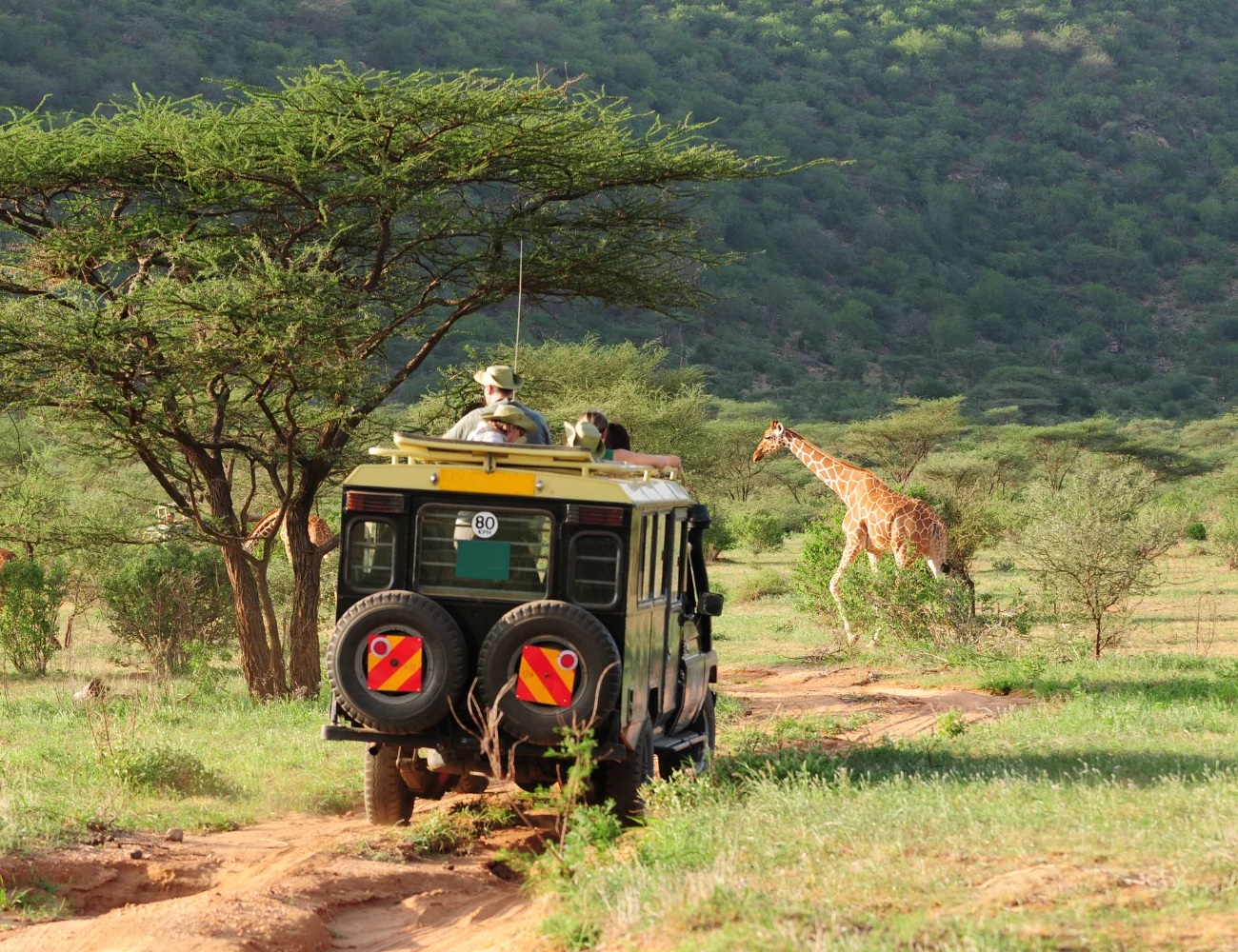
A safari in Samburu National Reserve, Kenya, offers an arid, rugged landscape with dramatic scenery, highlighting the unique "Samburu Special Five" (Reticulated giraffe, Grevy’s zebra, Beisa oryx, Somali ostrich, and gerenuk). Located along the Ewaso Ng’iro River, it provides high-density game viewing, including large elephant herds, leopards, and over 450 bird species, with peak, dry viewing from January-March and June-October.
3-days-compelling-samburu-national-park-kenya-wildlife-safari-tour-package
4-days-kenya-wildlife-safar-to-samburu-and-lake-naivasha
7-days-samburu-ol-pejeta-lake-nakuru-and-masai-mara-safari-tour
13-days-samburu-ol-pejeta-lake-nakuru-masai-mara-lake-naivasha-and-amboseli-kenya-safari
12-days-northern-wilderness-and-conservation-focus-kenya-wildlife-safari
Key Wildlife & Scenery
The "Special Five"
One of the most compelling reasons to head north to Samburu is the opportunity to see the "Special Five." These are rare, northern-adapted species that have evolved unique physical and behavioral traits to thrive in this arid environment—creatures you simply will not encounter in the more famous southern parks like the Maasai Mara or Amboseli. Seeing all five is considered the ultimate wildlife achievement in Northern Kenya.
The Reticulated Giraffe is perhaps the most striking, with its geometric, liver-colored patches separated by crisp white lines, looking like a perfectly tiled mosaic. Then there is the Grevy’s Zebra, which is larger than the common plains zebra and features much thinner stripes and large, rounded ears. The Beisa Oryx is an elegant antelope with long, straight horns and distinct facial markings, built to withstand extreme heat. The Somali Ostrich stands out because the males have a unique blue-grey neck and legs, rather than the pinkish hue of their southern cousins. Finally, the Gerenuk—or "giraffe-necked antelope"—is a marvel of evolution; it possesses a long, slender neck and has the unique ability to stand entirely on its hind legs to reach succulent acacia leaves that other grazers cannot touch.
For wildlife enthusiasts and photographers, these animals represent the incredible specialization required to survive in the desert-fringe ecosystem. Because they are range-restricted, Samburu offers one of the few places on Earth where you can see them all in a single afternoon. Their presence transforms a standard safari into a specialized discovery mission, highlighting the biological diversity that makes Kenya's Northern Frontier so distinct and biologically significant.
Predator Action
Samburu National Reserve is a powerhouse for predator sightings, offering some of the most intimate and raw big-cat encounters in East Africa. Because the reserve is semi-arid, life revolves around the Ewaso Ng'iro River. This creates a predictable "theatre of the wild" where predators wait for thirsty prey to come down for a drink, providing spectators with high-octane viewing opportunities.
The reserve is world-renowned for its leopard population. These elusive cats thrive in the dense riverine forests and the rocky outcrops (kopjes) that dot the landscape. It is not uncommon to see a leopard lounging on a branch of a doum palm or an acacia tree right beside the main track. Lions are also very successful here; Samburu’s prides are often smaller and more wide-ranging than those in the south, adapted to hunting in the scrubby bush. Watching a pride of lions traverse the red-earth landscape is a starkly beautiful sight.
Cheetahs favor the flatter, more open plains of the reserve and the neighboring Buffalo Springs, where they can use their incredible speed to chase down impala and gerenuk. Because Samburu sees fewer vehicles than the Mara, predator sightings here are often more personal. You might spend an hour watching a leopard hunt without another car in sight. Additionally, for those lucky enough, the nomadic and highly endangered African Wild Dog is occasionally spotted here. The concentration of prey along the river ensures that the predators are never far away, making Samburu a premier destination for those looking to witness the primal drama of the African bush.
Unique Landscape
The landscape of Samburu National Reserve is a dramatic departure from the classic "Out of Africa" green savannahs. It is a semi-arid wilderness defined by a palette of burnt oranges, deep reds, and dusty browns, creating a rugged beauty that feels ancient and untamed. This stark environment is characterized by volcanic hills, wide-open plains, and the iconic rocky kopjes—granite outcrops that serve as perfect lookout points for leopards.
The defining feature of this landscape is the Ewaso Ng'iro River, a brown ribbon of life that cuts through the parched earth. Along its banks, the scenery shifts abruptly into a lush oasis. Here, you will find the unique doum palms, which are the only palms in the world that branch, creating a prehistoric silhouette against the horizon. These trees, along with thickets of acacia and riverine forest, provide much-needed shade and food for the reserve's inhabitants.
Away from the water, the bush is dominated by commiphora and acacia woodlands, where the silence is only broken by the calls of birds or the rustle of a gerenuk. The lack of tall grass means that the views are often vast and unobstructed, allowing you to see the towering Mt. Ololokwe in the distance. This visual contrast—the life-giving green of the river versus the harsh beauty of the desert—creates a stunning backdrop for photography. For many travelers, the raw, unrefined aesthetic of Samburu is what makes it the most "authentic" feeling wilderness in all of Kenya.
High Elephant Density
If you are an elephant lover, Samburu is your sanctuary. The reserve is famous for its large, relaxed herds of elephants that move with a sense of calm confidence through the bush. Because Samburu has been the site of intensive long-term elephant research (most notably by Save the Elephants), the animals here are remarkably well-habituated to vehicles. This allows for incredibly close, peaceful encounters where you can observe their complex social interactions in detail.
The elephants are most frequently seen near the Ewaso Ng'iro River, especially during the dry season. Seeing a herd of fifty or more elephants emerge from the scrub to drink, bathe, and play in the water is a sight that never grows old. You can watch matriarchs guiding their calves, young bulls testing their strength, and the older "great tuskers" moving with quiet dignity. The sight of red-dusted elephants—having sprayed themselves with the local volcanic soil—is a classic Samburu image.
The relationship between the Samburu people and the elephants is also a key part of the story. Both have shared this landscape for generations, navigating the challenges of a desert environment together. The elephants here seem to embody the spirit of the north: resilient, wise, and deeply connected to the land. Because they are so comfortable with observers, you can often spend hours in their presence, listening to the rumbling of their stomachs and the snapping of branches, providing a meditative and deeply moving safari experience that is hard to match anywhere else in the world.
Activities and Experiences
Game Drives
The traditional game drive is the heartbeat of any Samburu safari, but in this northern reserve, it takes on a specialized focus centered around the Ewaso Ng’iro River. Because Samburu is a semi-arid environment, the river acts as a permanent life-support system for the entire ecosystem. Consequently, game drives are less about roaming aimlessly across vast plains and more about navigating the winding tracks that hug the riverbanks. This concentration of resources makes for incredibly high-density wildlife viewing, especially during the dry season when animals are tethered to the water.
During a morning or afternoon drive, the riverine forest—characterized by striking doum palms and acacia elatior—provides a theatrical backdrop. You are likely to witness massive herds of elephants crossing the brown waters or "red" elephants dusting themselves with the local volcanic soil on the banks. The proximity to water also makes these areas the primary hunting grounds for lions, leopards, and cheetahs. It is not uncommon to find a leopard draped over a branch of a tree overlooking a popular drinking spot, waiting for an impala or a "Special Five" species like the Gerenuk to arrive.
The open-sided 4x4 vehicles used in Samburu allow for an unobstructed, 360-degree view, which is essential for spotting the camouflaged species of the north. Guides here are exceptionally skilled at "reading" the river—knowing which bends are favored by crocodiles and which sandbars attract the Grevy’s zebras. Because the reserve is smaller and more intimate than the Maasai Mara, the game drives feel less like a frantic search and more like a slow, rewarding observation of a desert oasis. The lack of heavy vehicle traffic ensures that when you do find a pride of lions or a rare caracal, you often have the sighting to yourself, preserving the raw, untamed atmosphere of the Northern Frontier.
Cultural Tours
A cultural tour in Samburu is not merely a side activity; it is a profound opportunity to connect with the human heritage of the land. The Samburu people are semi-nomadic pastoralists who are closely related to the Maasai, yet they have maintained a distinct identity shaped by the harsh, beautiful landscape of Northern Kenya. A visit to a traditional Manyatta (village) offers a window into a lifestyle that has remained remarkably resilient against the pressures of the modern world.
Upon arrival, you are typically greeted by the vibrant songs and high-jumping dances of the Samburu warriors (Moran) and the women. The visual impact is immediate—the women are adorned in layers of intricate, colorful beadwork that signifies their social status and age, while the men often use red ochre to decorate their hair and bodies. These tours are designed to be educational and interactive; you might be invited into a traditional hut made of mud, sticks, and hides to learn how the family manages their space, or you might watch a demonstration of how fire is started using only two pieces of wood.
The conversation often revolves around their co-existence with wildlife. The Samburu view themselves as protectors of the land, and their livestock—cattle, goats, and camels—are the center of their universe. Learning about their age-set systems, their deep respect for elders, and their traditional medicinal uses for desert plants provides a necessary context to the wildlife you see on game drives. Most villages also have a small communal market where you can purchase authentic beadwork directly from the women who made it. This exchange ensures that the benefits of tourism flow directly into the community, supporting education and water projects, making your visit a vital part of the region's conservation economy.
Walking Safaris & Camels
For those looking to break the "metal barrier" of a safari vehicle, walking safaris and camel trekking offer a visceral and intimate way to experience the Samburu wilderness. These activities shift the focus from the "Big Five" to the "Little Five," allowing you to appreciate the intricate details of the desert ecology that are impossible to see from a moving car. Guided by Samburu warriors who have spent their lives in this bush, these experiences are as much about education as they are about adventure.
Walking safaris are a sensory awakening. On foot, you notice the crunch of the dry earth, the scent of wild herbs, and the alarm calls of birds that signal a nearby predator. Your guide will teach you how to track animals by their footprints and dung, explain the engineering of a termite mound, and point out the social weaver nests hanging from acacia branches. There is a primal thrill in walking through the same landscape as elephants and lions, guided by experts who understand the subtle nuances of animal behavior. It turns the wilderness from a picture-book experience into a tangible, living reality.
Camel trekking adds a unique cultural layer to the exploration. The camel is the "ship of the desert" and is central to northern Kenyan life. Riding a camel allows you to traverse the sandy luggas (dry riverbeds) and scrubby plains at a rhythmic, peaceful pace. Because camels are part of the natural landscape, other wildlife—like giraffes or ostriches—often allow you to get much closer on a camel than they would in a vehicle. Whether you are taking a short one-hour trek at sunset or a multi-day expedition with mobile camping, these "slow safaris" provide a meditative connection to the environment that defines the spirit of the North.
Sundowners
The sundowner is a quintessential safari tradition that reaches its peak of elegance in the rugged terrain of Samburu. As the intense heat of the day begins to dissipate and the sky transitions into a canvas of fiery oranges, purples, and deep reds, guests are led to a scenic viewpoint—often a high rocky kopje or a sandy bank overlooking the Ewaso Ng’iro River. It is a ritual designed to celebrate the transition from the day’s activities to the mystery of the African night.
The setup is usually simple yet sophisticated: a small bar is laid out with a variety of drinks, ranging from classic gin and tonics to local beers and fruit juices, accompanied by light snacks or "bitings." However, the real draw is the atmosphere. From an elevated vantage point, you can watch the shadows lengthen over the savannah and see the distant silhouette of Mt. Ololokwe standing like a sentinel on the horizon. This is often the time when elephants make their final trek to the water, and the sound of their trumpeting or the splash of a crocodile becomes the only soundtrack to your evening.
Beyond the luxury, the sundowner serves a deeper purpose—it is a moment of profound stillness and reflection. After a day of excitement on game drives, it allows you to pause and digest the sights you’ve seen. It is a time for sharing stories with fellow travelers and guides as the first stars begin to appear in one of the clearest night skies on the planet. As the light fades and the nocturnal chorus of crickets and nightjars takes over, the sundowner provides a perfect, atmospheric bridge to a bush dinner under the stars, leaving you with a sense of peace that only the African wilderness can provide.
Visitor Tips for those planning to visit Samburu on safari in Kenya
Best Time to Visit
The timing of your journey to Samburu National Reserve is the most critical factor in determining the quality of your wildlife encounters. While the park is technically open year-round, the dry seasons—stretching from January to March and June to October—are widely considered the gold standard for game viewing. During these windows, the Northern Frontier lives up to its reputation as a rugged, high-action wilderness. The lack of rainfall causes the smaller, seasonal water holes in the interior to vanish, leaving the Ewaso Ng'iro River as the sole lifeline for every living creature in the ecosystem.
This environmental pressure creates a natural "bottleneck" for wildlife. You don't have to search the vast scrubland for animals; they come to you. From the comfort of your vehicle, you can witness the "Special Five" and massive herds of elephants congregating along the riverbanks in a desperate search for hydration and grazing. Furthermore, the arid heat causes the dense vegetation to die back and thin out. This is a massive advantage for photographers and trackers alike, as it strips away the hiding spots for elusive predators. The golden-yellow grass makes the rosette-patterned coat of a leopard or the tawny mane of a lion stand out with startling clarity.
If you visit during the "green season" (April to May and November), you will be treated to a stunningly beautiful landscape of emerald green and blooming acacias, which is the prime time for birdwatching as migratory species arrive. However, wildlife tends to disperse deep into the bush, making sightings less frequent and the tracks significantly more challenging to navigate. For the quintessential Samburu experience—where the dust, the heat, and the sheer density of animals around the water create a primal atmosphere—the peak dry months are unbeatable.
Getting There
Reaching the remote beauty of Samburu is an adventure in itself, but modern logistics have made it remarkably accessible. While the drive from Nairobi is a scenic, six-hour journey that takes you through the central highlands and across the equator, most travelers prefer the efficiency and breathtaking views of a scheduled flight. Typically, this involves a one-hour light aircraft flight departing from Nairobi’s Wilson Airport. These "bush flights" are a highlight of the trip, offering a bird's-eye view of Mount Kenya’s jagged peaks before the landscape flattens into the dramatic, red-earthed plains of the north.
Depending on where you are staying, you will land at one of the regional airstrips such as Oryx, Buffalo Springs, or the Kalama airstrip. The transition from the bustling city of Nairobi to the silence of the northern desert in just sixty minutes is a thrilling sensory shift. Upon landing at the dusty airstrip, you are met by your lodge’s open-sided safari vehicle. In Samburu, your safari essentially begins the moment you step off the plane; the drive from the airstrip to your camp is often a "mini-game drive" where you might spot your first reticulated giraffe or Grevy’s zebra before you’ve even checked in.
For those who choose the road, the route is fully paved and offers a fascinating look at Kenyan life, passing through towns like Nanyuki and Isiolo. However, the flight is highly recommended for those with limited time or those who wish to avoid the bumps of the highway. Regardless of how you arrive, the descent into the Samburu ecosystem—where the doum palms begin to line the horizon and the heat of the desert becomes palpable—marks the start of a truly elite wilderness experience.
Accommodation
Accommodation in Samburu National Reserve is designed to complement the raw, untamed nature of the landscape while providing a sanctuary of comfort. The options are impressively diverse, ranging from ultra-luxury tented camps tucked away in private conservancies to expansive lodges that cater to families and groups. The defining characteristic of Samburu’s top-tier stays is their location; many are built directly on the banks of the Ewaso Ng'iro River, allowing you to watch elephants and crocodiles from your private veranda or even while dining.
Luxury tented camps offer a "glamping" experience that evokes the golden age of safari. These often feature canvas walls, mahogany furniture, and outdoor showers, providing a seamless blend of indoor comfort and outdoor immersion. After a dusty morning game drive, there is nothing quite like retreating to a rim-flow swimming pool that overlooks a watering hole, allowing you to stay cool while the wildlife does the same just yards away. These properties emphasize "slow safari"—where the goal is to soak in the atmosphere rather than rush from one sighting to the next.
For those seeking a more social or structured environment, the larger lodges offer excellent facilities, including multiple restaurants, bars, and cultural centers. Many of these lodges are eco-conscious, utilizing solar power and supporting local Samburu communities through employment and conservation partnerships. Whether you are sleeping in a high-end suite perched on a rocky kopje with 360-degree views of the plains or in a riverside tent where the sounds of the water lull you to sleep, the hospitality in Samburu is world-class. The combination of warm Kenyan service, gourmet "bush" cuisine, and the proximity to wild predators makes every night in the reserve feel like a privileged encounter with nature.
Weather & Packing
The weather in Samburu is a defining part of its character—it is hot, dry, and unapologetically sunny. Located north of the equator in a semi-desert region, the daytime temperatures frequently climb into the high 30s°C (90s°F). This heat is what drives the wildlife toward the river, but it also means that your packing strategy must prioritize sun protection and breathability. Lightweight, natural fabrics like cotton and linen in neutral tones (khaki, tan, or stone) are essential. Not only do these colors help you blend into the environment, but they are also less attractive to tsetse flies than dark blue or black clothing.
A typical day in Samburu begins before dawn. Despite the daytime heat, the mornings can be surprisingly cool, especially when you are moving in an open-sided vehicle. A light fleece, windbreaker, or a pashmina is a must for those early starts; you will likely find yourself peeling off layers as the sun rises higher. A wide-brimmed hat, high-SPF sunscreen, and polarized sunglasses are non-negotiable to protect against the intense equatorial glare.
Beyond clothing, your "safari kit" should include a pair of high-quality binoculars—essential for spotting a leopard hidden in a distant tree—and a camera with a good zoom lens. Because the air is dry and dusty, a scarf or "buff" can be helpful to protect your face during drives. Comfortable, closed-toe walking shoes are necessary if you plan on taking nature walks. Finally, remember to pack a swimsuit; after a day in the arid heat of the bush, there is no greater luxury than a dip in a cool pool. By packing for both the midday sun and the pre-dawn chill, you ensure that you remain comfortable enough to focus on the spectacular wildlife unfolding around you.
Accessibility & Combinations
One of the greatest strengths of Samburu is its accessibility to other unique conservation landmarks, making it easy to create a multi-layered itinerary. While the reserve itself is a powerhouse of wildlife, it is part of a much larger ecosystem that includes the Buffalo Springs and Shaba National Reserves. These three areas are often managed as a single unit, and a pass for one frequently allows you to explore the others. Buffalo Springs, in particular, is famous for its crystal-clear volcanic pools where you can see wildlife drinking against a backdrop of ancient lava flows.
For a deeply moving experience, many visitors combine Samburu with a trip to the nearby Reteti Elephant Sanctuary in the Namunyak Wildlife Conservancy. As the first community-owned elephant orphanage in Africa, Reteti provides a home for abandoned or orphaned calves with the goal of eventually reintroducing them to the wild. Watching the keepers bottle-feed the calves and seeing the bond between the Samburu people and the elephants is a powerful testament to the region's conservation successes. It adds a layer of emotional depth to your trip that goes beyond traditional game viewing.
Furthermore, Samburu’s location makes it a perfect "northern anchor" for a wider Kenyan circuit. It is often combined with Ol Pejeta Conservancy (home to the last northern white rhinos) or the lush highlands of Mount Kenya. Because of the excellent network of "bush flights," you can easily fly from the red deserts of Samburu to the green rolling hills of the Maasai Mara in under two hours. This "contrasts of Kenya" approach ensures that you experience the full spectrum of the country’s biodiversity—from the specialized "Special Five" of the arid north to the iconic "Big Five" of the southern savannahs.
1. What are the "Samburu Special Five"?
The "Samburu Special Five" is a unique collection of wildlife species that have specifically evolved to thrive in the arid, harsh conditions of Northern Kenya. Unlike the "Big Five," which can be found in many African parks, these five animals are northern-adapted specialists. You will not typically find them in the lush, grassy plains of southern parks like the Maasai Mara or Amboseli, making a visit to Samburu essential for any traveler looking to complete their Kenyan wildlife checklist.
The first is the Reticulated Giraffe, famous for its striking, geometric "net-like" pattern of deep reddish-brown polygons. Second is the Grevy’s Zebra, the largest and most endangered zebra species, distinguished by its thin stripes and large, rounded ears. The Somali Ostrich is the third member; the males possess a unique blue-grey neck and legs that turn a vivid blue during mating season. Fourth is the Beisa Oryx, a regal antelope with long, rapier-like horns and elegant facial markings. Finally, the Gerenuk—or "giraffe-necked antelope"—is a marvel of evolution. It has a long, slender neck and the unique ability to stand entirely on its hind legs to reach succulent acacia leaves that other grazers cannot touch. Spotting all five in one trip is a major milestone for wildlife enthusiasts, highlighting the incredible biological diversity of the Northern Frontier.
2. Can I see the "Big Five" on a safari in Kenya in Samburu?
Yes, it is entirely possible to see the "Big Five" in the Samburu ecosystem, though the experience feels more rugged and exclusive than in the southern parks. The "Big Five"—traditionally consisting of the lion, leopard, African elephant, Cape buffalo, and rhinoceros—are all present in this region, though the rhino requires a bit more effort to locate.
Samburu is famous for its elephants, which are frequently seen in large, relaxed herds along the Ewaso Ng'iro River. Lions are plentiful, often seen resting in the shade of acacia trees, while leopards thrive in the riverine forests and rocky outcrops. Buffalo are commonly found near the water sources. While rhinos were historically pushed out of the main reserve, they have been successfully reintroduced into the surrounding private conservancies, such as the Sera Community Conservancy, where you can even participate in rhino tracking on foot.
Adding to this impressive roster, Samburu is one of the few places in Kenya where you have a genuine chance of spotting the highly endangered African Wild Dog. These nomadic predators are often seen in the buffer zones between the reserve and the community lands. Because Samburu sees fewer tourists than the Maasai Mara, seeing the Big Five here feels like a true discovery—a raw, intimate encounter with nature where you aren't surrounded by dozens of other vehicles.
3. What is the scenery like?
The scenery in Samburu National Reserve is a dramatic departure from the classic "Out of Africa" green savannahs. It is a semi-arid, rugged, and hauntingly beautiful landscape that feels ancient and untamed. The ground is often a deep, burnt orange or rusty red, providing a stark contrast to the vivid blue of the African sky. This is a land of wide-open spaces, characterized by dry, thorny scrubland and vast plains that stretch toward the horizon.
The most striking visual feature is the Ewaso Ng'iro River, which acts as a lush, green ribbon of life cutting through the parched earth. Along the riverbanks, you will find thick riverine forests dominated by doum palms—the only palms in the world that branch—and towering acacia elatior trees. These palms create a prehistoric silhouette against the horizon, especially at sunset. Dotting the plains are massive rocky outcrops and kopjes, which serve as perfect lookout points for leopards and raptors. In the distance, the iconic, flat-topped Mt. Ololokwe stands like a giant sentinel, framing the entire reserve. The mix of harsh, volcanic terrain and the life-giving oasis of the river creates a visual drama that is a dream for landscape photographers and nature lovers.
4. What is the main water source for wildlife?
The Ewaso Ng'iro River is the undisputed lifeline of the Samburu National Reserve. In a region where rainfall is scarce and the sun is relentless, this permanent river is the only reason such a high density of wildlife can survive in the Northern Frontier. The river flows from the Aberdare Mountains and winds its way through the arid plains of Samburu, Shaba, and Buffalo Springs before eventually disappearing into the Lorian Swamp.
During the dry seasons, the river becomes a high-stakes "theatre of the wild." As smaller water holes in the interior dry up, thousands of animals are forced to congregate along the riverbanks to drink and bathe. This creates a spectacular concentration of wildlife; you can often park your vehicle on the bank and watch a parade of elephants, zebras, giraffes, and antelopes emerge from the bush throughout the day.
Because the water is so vital, the riverbanks are also the primary hunting grounds for the reserve's predators. Crocodiles bask on the sandbars, while lions and leopards use the thick riverine vegetation as cover for ambushes. The Ewaso Ng'iro does more than just provide water; it creates a microclimate that supports the doum palms and acacia forests, providing food and shade that are just as essential for survival as the water itself. For the visitor, the river is the focal point of almost every game drive, offering guaranteed action in a beautiful, palm-fringed setting.
5. When is the best time to visit Samburu?
To experience Samburu at its most vibrant, the timing of your visit is crucial. The dry seasons, which run from June to October and December to March, are widely considered the best times for wildlife viewing. During these months, the weather is hot and the skies are clear, but the lack of rain causes the vegetation to thin out significantly. This is a massive advantage for spotting camouflaged animals like leopards and cheetahs.
The defining characteristic of the dry season is the water scarcity. As the bush dries up, animals lose their alternative water sources and are forced to stay close to the Ewaso Ng'iro River. This makes game tracking incredibly predictable and rewarding; you don't have to search the vast landscape because the animals are all concentrated in a relatively small area along the water. This is also the best time for photography, as the light is consistent and the animal interactions are frequent.
While the "green season" (April to May and November) brings lush, beautiful scenery and is the peak time for birdwatching, it can make game viewing more challenging. The animals disperse into the interior of the reserve where water is more readily available, and the thick foliage provides ample hiding spots. Additionally, some of the dirt tracks can become muddy and difficult to navigate. If your primary goal is to see the "Special Five" and the big predators in high density, the peak dry months will provide the most successful safari experience.
6. What are the temperatures like?
Because Samburu is located in the northern part of Kenya and at a lower altitude than the central highlands or the Maasai Mara, it is significantly hotter and drier. Visitors should prepare for a climate that is semi-desert in nature. During the day, temperatures frequently climb into the low to mid-30s°C (90s°F), and the sun can feel quite intense under the clear equatorial sky.
The heat is most palpable during the midday hours, which is why most safari activities are scheduled for the early morning and late afternoon. During the heat of the day, both the animals and the tourists typically retreat to the shade or the swimming pool. However, the lack of humidity means the heat is "dry," which many people find more tolerable than the muggy conditions of the coast.
Interestingly, the desert environment brings a significant diurnal temperature range. While the days are scorching, the nights can be surprisingly cool, and the early mornings are often crisp and chilly. When you head out on a pre-dawn game drive in an open-sided vehicle, you will definitely want a warm fleece or a light jacket. As the sun rises, the temperature climbs rapidly, and you will find yourself peeling off layers by 9:00 AM. This "layering" approach is the secret to staying comfortable in Samburu, allowing you to handle the frosty start and the blazing midday sun with equal ease.
7. Can I do a night safari in Kenya in this area?
Yes, night game drives are a thrilling possibility in the Samburu region, though there is a specific rule to follow: night drives are generally prohibited inside the main National Reserve to protect the natural rhythms of the animals. However, the Samburu ecosystem is surrounded by several private and community-run conservancies (such as Kalama, West Gate, and Sera) that actively offer night safaris to guests staying in their lodges.
A night drive is a completely different sensory experience. Using powerful, red-filtered spotlights (which don't disturb the animals' vision), expert guides scan the bush for "eye-shine." This is the best time to see the nocturnal "second shift" of the African bush—animals you will almost never see during the day. This includes elusive predators like the leopard on the hunt, the striped hyena, and smaller carnivores like the serval, genet, and white-tailed mongoose.
The atmosphere of the night is electric. You might hear the distant, territorial roar of a lion or the eerie "whoop" of a hyena. You’ll also see fascinating smaller creatures like bushbabies leaping through the trees and owls perched silently on branches. Because the conservancies have fewer restrictions than the national reserve, you often have the freedom to go off-road to follow a sighting. A night safari adds a layer of mystery and excitement to your trip, revealing the hidden half of the Samburu wilderness that stays invisible to those who only venture out during the day.
8. Are the crowds bad?
One of the greatest appeals of Samburu is that it remains an "off-the-beaten-track" destination. Compared to the massive popularity of the Maasai Mara or Amboseli, Samburu receives significantly fewer visitors. This results in a much more intimate, quiet, and exclusive safari experience, which many veteran safari-goers prefer.
In the more famous parks, a high-profile sighting like a lion or a leopard can quickly attract a "traffic jam" of dozens of vehicles. In Samburu, it is common to spend an hour watching a leopard with no other cars in sight. This lack of crowds allows for a deeper connection with the environment; you can sit in silence and listen to the sounds of the bush without the hum of multiple engines. It also means that the animals are generally more relaxed and exhibit more natural behaviors.
The "exclusive" feel of Samburu is partly due to its remote northern location and the fact that it requires a bit more effort (or a flight) to reach. However, for those who value privacy and a sense of true wilderness, the extra travel is well worth it. Even during the peak dry season, the reserve maintains a sense of tranquility. You feel less like a tourist and more like an explorer in a vast, untamed landscape, making it the perfect choice for honeymooners, photographers, or anyone looking to escape the hustle and bustle of the more commercialized safari circuits.
9. Can I visit a local village?
Absolutely. A visit to a local village is one of the most enriching cultural experiences you can have in Kenya. The Samburu people are a Nilotic group, closely related to the Maasai, but they have their own distinct language, traditions, and vibrant style of dress. They are semi-nomadic pastoralists whose lives revolve entirely around their livestock—cattle, goats, and camels—which represent their wealth and status.
Most visits are arranged through your lodge and take place in a Manyatta (a traditional settlement). You will be welcomed with traditional singing and high-jumping dances, a spectacle of rhythm and color. The Samburu are famous for their intricate beadwork; both men and women wear elaborate necklaces, bracelets, and anklets that signify their age and social standing. Inside the village, you can enter their homes, which are traditionally made of mud, sticks, and hides, and learn about their daily routines, from milking livestock to the significance of the Moran (warrior) stage of life.
Unlike "staged" cultural performances, many of these visits offer a genuine window into a resilient way of life that has survived in the desert for centuries. It is an opportunity for a two-way exchange, where you can ask questions about their culture and share stories of your own. Purchasing beadwork directly from the village women is also a great way to support the local economy. It’s an experience that adds a profound human dimension to your wildlife safari.
10. What kind of birds can I see?
Samburu is a legitimate birding paradise, boasting a recorded list of over 450 species. The diversity is driven by the fact that the reserve sits in an ecological transition zone where the riverine forest meets the arid northern scrubland. This allows you to see both water-loving birds and arid-zone specialists that are not found in southern Kenya.
The most iconic bird of the region is the Vulturine Guineafowl, a stunningly beautiful bird with cobalt-blue feathers and a regal appearance that bears no resemblance to the common guineafowl. You will also see the Somali Ostrich, the blue-necked northern cousin of the common ostrich. Raptors are incredibly well-represented here; you can spot the massive Martial Eagle, the acrobatic Bateleur, and several species of vultures circling the thermals.
Along the Ewaso Ng'iro River, you’ll find vibrant kingfishers, storks, and the African Fish Eagle. In the drier bush, keep an eye out for the Golden-breasted Starling, which glitters like a jewel in the sun, and the Eastern Yellow-billed Hornbill. Whether you are a dedicated "lister" or just someone who appreciates a flash of color in the trees, the birdlife in Samburu is constant and captivating. The best time for birding is the early morning, when the "dawn chorus" brings the arid landscape to life with an incredible array of songs and calls.
11. Is walking allowed?
Yes, walking is not only allowed but is one of the most highly recommended ways to experience Samburu. While you cannot simply wander off on your own in a national reserve for safety reasons, most lodges and camps offer guided walking safaris and nature walks. These are typically led by armed rangers and local Samburu warriors who possess an intimate, ancestral knowledge of the land.
Walking in the bush is a "sensory safari." When you step out of the vehicle, the world becomes much larger. You begin to notice the "Little Five"—the tracks of a dung beetle, the architecture of a termite mound, or the medicinal properties of a specific desert shrub. Your guide will show you how to read the "newspaper of the bush"—interpreting tracks in the sand to tell you what animal passed by and how long ago.
These walks are generally not strenuous and focus more on ecology and tracking than on covering long distances. Walking along the banks of the Ewaso Ng'iro River or through the rocky foothills provides a visceral connection to the earth that you simply can't get from a car. It is a peaceful, meditative experience that allows you to appreciate the silence of the wilderness. Knowing that you are sharing the path with elephants and lions (even at a safe distance) provides a healthy dose of adrenaline and a profound respect for the natural world.
12. What should I pack for a safari in Kenya's Samburu?
Packing for Samburu requires a balance between the intense midday heat and the chilly early mornings. The goal is to be practical, protected, and comfortable.
- Clothing: Stick to lightweight, breathable fabrics like cotton or linen. Neutral colors like khaki, beige, tan, or olive are best; they blend into the bush and don't attract tsetse flies (which are attracted to dark blue and black). Long-sleeved shirts and trousers are great for sun protection and warding off evening mosquitoes.
- Layers: A warm fleece or light down jacket is essential for the pre-dawn game drives. You will be surprised by how cold the desert can be before the sun comes up.
- Sun Protection: The sun in northern Kenya is fierce. Bring a high-SPF sunscreen, a wide-brimmed hat that won't blow off in the wind, and polarized sunglasses to reduce the glare.
- Footwear: Comfortable, closed-toe walking shoes or light hiking boots are necessary for nature walks. Sandals are fine for relaxing at the lodge.
- Gear: A good pair of binoculars is arguably the most important item on your list. A camera with a 300mm+ zoom lens is ideal for wildlife. Also, bring a reusable water bottle to stay hydrated.
Remember, if you are flying in on a light aircraft, there is usually a strict weight limit (often 15kg/33lbs) for luggage, and it must be in a soft-sided "duffel" bag. Pack efficiently and focus on the essentials!
13. How do I get to Samburu National Reserve?
There are two primary ways to reach Samburu from Nairobi, depending on your budget and your sense of adventure.
- By Air: This is the most popular and time-efficient option. Several "bush" airlines (such as Safarilink and AirKenya) operate daily scheduled flights from Nairobi’s Wilson Airport directly to the Samburu airstrips (such as Oryx, Buffalo Springs, or Kalama). The flight takes about 80 to 90 minutes. Flying in offers a spectacular aerial view of Mount Kenya and the dramatic shift in terrain as you cross the equator. It’s the best way to maximize your time in the bush.
- By Road: For those who enjoy a road trip, the drive from Nairobi takes roughly 5 to 6 hours (approx. 350 km). The road is fully paved and takes you through the fertile central highlands, past pineapple and coffee plantations, and through the bustling town of Nanyuki. As you continue north past Isiolo, the landscape transforms into the arid plains of the North. While the drive is long, it offers a fascinating look at the changing Kenyan countryside.
Most high-end safaris use the "fly-in" model, where your lodge meets you at the airstrip in a safari vehicle. If you are on a budget or part of a larger group tour, the road option is more common. Either way, the journey to the North is part of the story, marking your transition into one of Kenya's most remote and beautiful frontiers.
14. Can I see lions in Samburu?
Yes, you have an excellent chance of seeing lions in Samburu. The reserve is home to a healthy and stable population of big cats, and lions are frequently spotted during game drives. Because the reserve is semi-arid and wildlife is concentrated around the river, the lions don't have to wander far to find a meal.
Samburu lions are known for being particularly resilient. They have adapted to the heat and the scrubby terrain, often hunting in the thick riverine vegetation where they can ambush prey. Watching a pride of lions resting in the shade of a doum palm or a desert date tree is a classic Samburu sight. Because the reserve is less crowded, you can often enjoy these sightings in peace, without the pressure of other vehicles.
In addition to lions, Samburu is arguably the best place in Kenya to see leopards. These elusive cats love the rocky kopjes and the large acacia trees along the river. Cheetahs are also present, favoring the flatter, more open plains where they can use their speed to hunt gazelles and gerenuks. The "predator action" in Samburu is world-class, and because the ecosystem is so well-balanced, you are likely to witness everything from playful cubs to intense hunting behavior. For anyone interested in the "Big Cats" of Africa, Samburu is a top-tier destination.
15. Is it safe to travel to Samburu?
Yes, traveling to Samburu National Reserve is generally very safe, provided you follow standard travel precautions and travel with a reputable operator. The reserve and its surrounding conservancies are well-managed and protected by professional rangers and local community guards who take pride in the safety of their guests.
Within the reserve, the primary safety concerns are related to wildlife. You are in a wild environment with large predators, so it is crucial to stay in your vehicle at all times unless you are with a guide in a designated walking area. Listen to your guide—they are experts in animal behavior and will ensure you maintain a safe distance from the animals.
In terms of regional security, Samburu is located in the Northern Frontier, which has historically been more remote. However, the main tourist circuit between Nairobi and the reserve is a well-traveled and secure route. Most visitors choose to fly directly into the reserve, which bypasses any concerns about road travel. If you are driving, it is best to stick to the main highways and travel during daylight hours. By booking with a registered tour operator and staying at established lodges, you can enjoy the rugged beauty of the North with complete peace of mind. Samburu is a welcoming destination where the local people are eager to share their incredible home with the world.
Booking Safari in Kenya Samburu with us Roads of Adventure safaris
Booking a safari to Kenya’s Samburu National Reserve with Roads of Adventure Safaris offers tailored wildlife experiences focused on the unique "Special Five" of the northern arid region. As a reputable tour operator (founded 2025, specializing in private, mid-range to luxury tours), they can customize itineraries to include the dramatic landscapes of Samburu, the Ewaso Ng’iro River, and cultural visits to local villages
