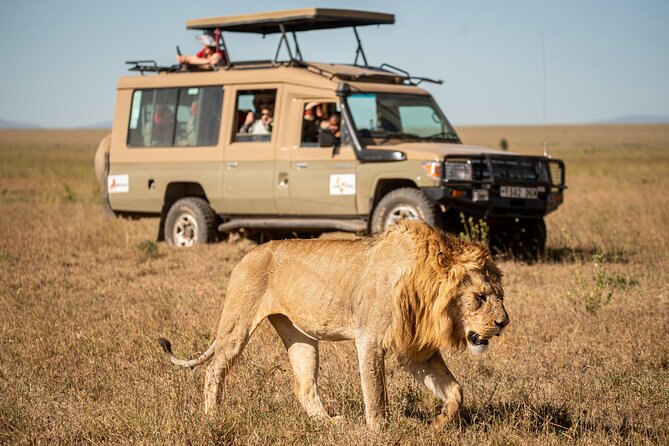
For a 10-day Kenya wildlife safari, pack lightweight, breathable clothing in neutral colors (khaki, tan, olive) to layer, including long-sleeved shirts and trousers for sun/mosquito protection. Key essentials include a warm fleece/jacket for chilly mornings, comfortable walking shoes, a sun hat, insect repellent (DEET), sunscreen, and binoculars. Use soft-sided bags, adhering to a 15kg-20kg limit for bush planes
10-days-samburu-amboseli-nakuru-naivasha-maasai-mara-safari-tour
10-days-luxury-kenya-safari-holiday-vacation
10-days-best-maasai-mara-lake-nakuru-and-amboseli-safari-and-diani-beach-holiday-escape
10-day-luxury-kenya-wildlife-safari-holiday
10-days-kenya-wildlife-safari-diani-beach-holiday-round-trip-to-all-best-parks-in-kenya
10-days-ultimate-budget-kenya-tanzania-wildlife-safari-holiday-tour-package
10-days-perfect-kenya-tanzania-photographic-safari-tour
10-days-best-kenya-tanzania-safari-itinerary-tour
10-days-best-kenya-tanzania-honeymoon-safari-with-zanzibar-beach-holidays
10-days-kenya-wildlife-safari-and-gorilla-safari-in-uganda
10-days-kenya-safari-to-mombasa-beach-escape
1. Clothing: The Science of Layering
Layering is essential because a safari day typically spans three different climates. At 6:00 a.m., temperatures on the savanna can be surprisingly cold, necessitating a warm jacket or fleece. By midday, the equatorial sun is intense, making breathable, moisture-wicking T-shirts and convertible pants a necessity. These "zip-off" trousers are particularly favored by safari-goers because they allow you to transition from a cool morning hike to a hot afternoon drive without a wardrobe change.
The choice of color is not just about style; it is functional. Neutral colors like khaki, beige, and olive green are recommended to blend into the landscape and avoid spooking wildlife. More importantly, dark blue and black should be avoided as they attract tsetse flies, which have a painful bite, while bright white tends to get dusty very quickly. For footwear, comfortable walking shoes or light boots are standard. While you spend most of your time in a vehicle, you will need grip and ankle support for uneven ground during bush walks or when boarding light aircraft. Finally, remember to pack a swimsuit, as most luxury lodges feature pools that offer a perfect respite during the heat of the day.
2. Essential Gear & Personal Items
While your guide provides the vehicle and expertise, your personal gear determines the quality of your sightings. A high-quality pair of binoculars is arguably the most important item; while the "Big Five" are often close, spotting a leopard in a distant tree or a rare bird requires magnification. For photographers, a telephoto zoom lens (at least 300mm) is crucial for capturing the fine details of wildlife without disturbing their natural behavior.
Protection from the environment is equally vital. The Kenyan sun is exceptionally strong, so SPF 30+ sunscreen, a wide-brimmed hat, and polarized sunglasses are non-negotiable. Because mosquitoes are most active at dawn and dusk—the same time you are on game drives—DEET-based insect repellent is your primary defense against malaria. Additionally, a flashlight or headlamp is essential because many luxury camps are eco-friendly and turn off their main power at night, or simply to help you navigate the winding paths between your tent and the dining area after dark.
3. Documents & Logistics
The logistical side of a safari requires careful attention to detail well before you reach the airport. Your passport must be valid for at least six months beyond your departure date and contain at least two blank pages. As of 2026, Kenya utilizes an Electronic Travel Authorization (eTA) system, which must be applied for online at least two weeks before travel. Depending on your flight path—specifically if you are arriving from or transiting through certain African or South American countries—a Yellow Fever Certificate is a mandatory entry requirement.
Financial logistics are also specific: while credit cards are accepted at major lodges, you must carry cash for tips and small purchases in remote areas. U.S. Dollars are widely accepted, but they must be "big-head" notes printed post-2009, as older currency is often rejected by local banks due to counterfeiting concerns. Finally, since Kenya uses UK-style (Type G) three-pin plugs, an adapter is necessary for your power bank and camera chargers. Carrying a high-capacity power bank is highly recommended, as some remote camps rely on solar power and may only offer charging stations in the main lounge rather than in individual tents.
10-day Kenya wildlife safari
A 10-day Kenya wildlife safari is an immersive journey through the "cradle of humanity," offering a profound connection to the raw, untamed spirit of Africa. This expansive circuit is meticulously designed to showcase the full spectrum of Kenya’s ecological diversity, moving from the urban sanctuaries of Nairobi to the monumental shadow of Mount Kilimanjaro and down to the legendary golden plains of the south. Throughout this odyssey, you will navigate the dramatic landscapes of the Great Rift Valley, witness the prehistoric scale of elephant herds in Amboseli, and explore the high-stakes predator territory of the Maasai Mara. It is a logistical masterpiece that prioritizes maximum wildlife exposure, ensuring that every sunrise brings a new opportunity to encounter the "Big Five." Whether you are a photographer, a birder, or a first-time explorer, this itinerary provides a life-altering experience, blending rugged adventure with the sophisticated charm of luxury bush camps and world-class conservation efforts.
Days 1–2: Nairobi and the Gateway to the Wild
Your safari begins in Nairobi, the "Green City in the Sun." After arrival, you will visit the Sheldrick Wildlife Trust to witness the rehabilitative care of orphaned elephants and the Giraffe Centre for an up-close encounter with endangered Rothschild’s giraffes. These urban sanctuaries provide essential context for the conservation efforts you will see throughout your journey. On day two, you depart the city for the arid northern frontiers of Samburu or the volcanic plains of Tsavo West. If heading north, the landscape shifts into a beautiful, sun-parched wilderness where the life-giving Ewaso Nyiro River attracts unique species like the reticulated giraffe and Grevy’s zebra. This initial leg introduces the dramatic geographical shifts that define Kenya, balancing educational city tours with the raw, high-energy exploration of the northern wild and its specialized desert-adapted wildlife.
Days 3–4: The Majesty of Amboseli National Park
The next phase takes you south to the iconic Amboseli National Park, situated at the base of Mount Kilimanjaro. This park is world-renowned for its "tusker" elephants, which roam in massive family herds against the backdrop of Africa's highest peak. As you traverse the open plains and emerald-green swamps, you will observe these prehistoric giants silhouetted against the snow-capped mountain—a quintessential image of the African savanna. Beyond elephants, Amboseli is a sanctuary for lions, cheetahs, and over 400 species of birds. The clarity of the air here makes it a photographer’s paradise, particularly during the early morning when the mountain often emerges from its cloud cover. These two days offer a serene yet high-impact wildlife experience, balancing the monumental presence of elephants with the grand, sweeping scale of the East African landscape.
Days 5–6: Great Rift Valley Lakes and Rhinos
Descending into the Great Rift Valley, your safari focuses on the shimmering lakes that define this tectonic wonder. First, you will explore Lake Nakuru National Park, a premier sanctuary for both black and white rhinoceroses. The park’s yellow-fever acacia forests provide a stunning contrast to the soda lake, where thousands of flamingos occasionally paint the shoreline pink. Next, you move to Lake Naivasha for a tranquil boat safari. Gliding past pods of yawning hippos and watching African fish eagles hunt offers a refreshing change of pace from traditional 4x4 game drives. You may even take a walking safari on Crescent Island, allowing you to walk among giraffes and zebras without the confines of a vehicle. This segment provides a crucial opportunity to see the rare rhino and appreciate the incredible aquatic biodiversity of the Rift Valley.
Days 7–9: The Legendary Maasai Mara
The crescendo of your journey is the world-famous Maasai Mara National Reserve. This is the stage for the Great Wildebeest Migration and boasts the highest predator density in East Africa. Over three intensive days, you will follow the movements of the "Big Three" cats—lions, leopards, and cheetahs—as they navigate the vast, rolling grasslands. Whether you are witnessing a dramatic river crossing (seasonal) or watching a pride of lions guarding a kill, the Mara delivers the raw intensity of nature in its most concentrated form. You will also have the chance to visit a Maasai village, gaining a deeper understanding of the cultural heritage and ancient traditions of the people who have coexisted with these predators for centuries. From the adrenaline of the hunt to the quiet beauty of a savanna sunrise, the Mara is the emotional heart of your journey.
Day 10: Final Savanna Sunrise and Departure
The final day begins with a sunrise game drive, offering one last chance to spot a leopard in the morning mist or a family of elephants beginning their trek across the plains. After a hearty "bush breakfast" in the middle of the savanna, you begin the scenic drive back to Nairobi, climbing out of the Great Rift Valley with stops at viewpoints overlooking the dramatic escarpment. Back in the capital, you can enjoy a farewell dinner at a local landmark, reflecting on the incredible biodiversity and landscapes you have encountered. This journey concludes where it began, but you leave with a transformed perspective on nature and a collection of memories that will last a lifetime. As you head to the airport for your departure, the spirits of the savanna remain with you as a testament to Kenya's magic.
1. What color clothes should I pack?
The color of your clothing on safari is a matter of both stealth and safety. You should prioritize neutral tones such as khaki, beige, olive green, tan, and brown. These shades help you blend into the savanna and bush environments, making you less conspicuous to wildlife and allowing for more natural behavioral observations. More importantly, neutral colors are less likely to attract insects.
It is vital to avoid dark blue and black, as these colors are known to attract tsetse flies, which have a painful bite and can carry sleeping sickness. Similarly, bright whites and neon colors should be left at home; white shows dust and dirt almost instantly, while bright "traffic-cone" colors can startle nervous animals. By sticking to a muted, earth-toned palette, you remain cool under the equatorial sun and functional within the wild landscape.
2. What is the dress code for dinners?
Safari lodges and tented camps generally maintain a casual or smart-casual dress code. There is no need for formal attire like suits or evening gowns. Most guests dine in the same comfortable clothing they wore on their afternoon game drive, perhaps freshened up with a clean shirt. The atmosphere is centered on relaxation and sharing stories of the day's sightings around a communal table or campfire.
However, the most important "style" tip for dinner is layering. Once the sun sets, temperatures on the plains drop rapidly. It is common to wear a light fleece or a pashmina over your casual wear during dinner. If you are staying in a luxury camp, you might opt for a fresh pair of trousers and a button-down shirt, but comfort remains the priority. The goal is to be warm enough to enjoy an outdoor "bush dinner" under the stars without feeling underdressed for the lodge's elegant surroundings.
3. Are there clothing restrictions regarding laundry?
Because of the weight limits on safari vehicles and light aircraft, you are encouraged to pack light—ideally enough clothing for 3 to 4 days. To facilitate this, almost all mid-range and luxury lodges offer daily laundry services. You can leave your clothes for washing in the morning, and they are typically returned to you, cleaned and pressed, by evening or the following morning.
There is one important cultural nuance to note: in many Kenyan and East African camps, laundry staff will not wash undergarments due to local traditions. Most lodges provide a small tub and detergent in your bathroom for hand-washing these items yourself. By utilizing the laundry service for your outer layers (trousers, shirts, and fleeces), you can significantly reduce the bulk of your luggage, making travel between parks much more seamless.
4. What kind of shoes are best?
Footwear on a 10-day safari should be split into two categories: "active" and "relaxing." For game drives and short bush walks, sturdy walking boots or high-quality running shoes with good traction are essential. The terrain can be uneven, dusty, or muddy, and you need a shoe that protects your feet from thorns and insects while providing ankle support.
Once you return to the lodge, you will want to swap your heavy boots for something breathable. Sandals or flip-flops are perfect for relaxing on your private deck or walking to the dining area. If your itinerary includes a more intensive walking safari or a hike in Hells Gate National Park, ensure your boots are "broken in" before you arrive in Kenya to avoid blisters. A two-shoe approach ensures you are prepared for the ruggedness of the bush and the comfort of the camp.
5. How should I pack for changing temperatures?
The Kenyan climate is a game of two halves. Pre-dawn and late-evening temperatures can be as low as 10°C (50°F), especially in open-sided vehicles where the wind chill is high. By midday, the equatorial sun can push temperatures to 30°C (86°F). To manage this, you must pack in layers.
Start with a base layer of moisture-wicking T-shirts. Add a long-sleeved shirt for sun and insect protection, followed by a warm fleece or light down jacket for the morning. A lightweight, waterproof windbreaker is also essential, even in the dry season, to protect against dust and occasional showers. As the day warms up, you can simply peel off layers and store them in the vehicle. This modular approach ensures you are never too cold during a sunrise lion sighting or too hot during a midday transfer.
6. Do I need specialized sun protection?
Yes, the sun at the equator is significantly stronger than in more temperate latitudes. Even on overcast days, the UV index remains high. You must pack high-SPF sunscreen (30+) and apply it liberally throughout the day. A wide-brimmed hat is non-negotiable; it should have a chin strap to prevent it from blowing off in an open-sided vehicle.
Polarized sunglasses are also critical. They do more than just shade your eyes; they reduce the glare from the savanna and water surfaces, making it much easier to spot animals hidden in the shade of a tree or hippos submerged in a river. Lip balm with SPF protection is another "must-have," as the dry, dusty air of the plains can quickly lead to chapped lips. Protecting yourself from the sun ensures you don't spend the latter half of your 10-day trip dealing with heat exhaustion or painful burns.
7. Is a specific type of luggage required?
If your 10-day Kenya wildlife safari involves internal flights on light aircraft (such as Safarilink or AirKenya), you must use soft-sided duffel bags. Hard-shell suitcases with wheels are often prohibited or may be left behind at the airstrip. This is because the luggage compartments on small planes (like the Cessna Caravan) are irregularly shaped, and bags must be "squeezed" in to maximize space and maintain the aircraft's balance.
A duffel bag without a rigid frame is the industry standard. Many high-end safari-goers use canvas or waterproof synthetic bags. These bags are also much easier to pack into the back of a 4x4 Land Cruiser. If you must use a bag with wheels, ensure it has a soft top and sides. Remember that "soft" doesn't mean "weak"; choose a durable material that can withstand being moved frequently between vehicles and airstrips.
8. What are the luggage weight restrictions?
Weight is a critical safety factor for bush flights. Most light aircraft operators enforce a strict limit of 15 kg (33 lbs) per person. This limit usually includes your hand luggage and camera gear. Because the planes are small and often fly at high altitudes where air density is lower, exceeding these limits can compromise the aircraft's performance.
If you are a photographer with heavy lenses, this can be a challenge. It is recommended to wear your heaviest items (like a jacket and hiking boots) during the flight and carry your camera body and primary lens in a small daypack. Some operators allow you to "buy" an extra luggage seat if you know you will be over the limit, but this must be arranged in advance. The 15 kg limit is one of the main reasons why utilizing the lodge's laundry service is so important for a 10-day itinerary.
9. What camera gear is necessary?
To capture the wildlife of Kenya effectively, a smartphone camera is rarely enough. You should ideally bring a DSLR or mirrorless camera equipped with a telephoto zoom lens. A lens with a focal length of at least 300mm to 400mm is the standard for safari photography. This allows you to fill the frame with a distant leopard or a bird without needing to drive off-road or disturb the animal.
In addition to the long lens, a wider lens (24-70mm) is useful for capturing the vast landscapes of the Mara and Amboseli. Don’t forget extra batteries and multiple high-speed memory cards; you will likely take far more photos than you anticipate. A "beanbag" (which you can fill with rice or beans at the lodge) is a great alternative to a tripod, providing a stable base for your camera on the edge of the vehicle's pop-up roof or window.
10. Do I need to bring binoculars?
Binoculars are often described as the "eye of the safari." While your guide will have a pair, having your own high-quality binoculars (ideally 8x42 or 10x42) is essential. They allow you to scan the horizon for a flick of a tail in the grass or to appreciate the intricate plumage of a Lilac-breasted Roller.
A good pair of binoculars turns a "distant brown speck" into a clear view of a cheetah cub or a nesting eagle. They also allow you to observe animal behavior—like the social grooming of baboons or the eye contact of an elephant—without needing to be physically close. For many travelers, the binoculars are used even more frequently than the camera, as they provide an immersive, real-time connection to the wilderness that a screen cannot replicate.
11. What items should be in my personal day bag?
Your day bag is your "survival kit" for the 4 to 6 hours you spend on a game drive. It should be a small, comfortable backpack that stays with you in the vehicle. Inside, you should have:
- Sun protection: Sunscreen, lip balm, and sunglasses.
- Health/Hygiene: Insect repellent, hand sanitizer, and a small pack of tissues (for "bush bathroom" stops).
- Tech: Your camera, spare batteries, memory cards, and a power bank for your phone.
- Clothing: A lightweight windbreaker or fleece for when the temperature shifts.
- Hydration: A reusable water bottle, which most lodges will fill for you with filtered water.
Having these items within arm's reach ensures you don't have to rummage through your main luggage in the back of the Land Cruiser every time you see a lion or feel the sun getting stronger.
12. What health items are critical?
Health preparation is paramount for a remote 10-day trip. Your first priority is malaria prophylaxis; consult your doctor to find the medication that suits you best. Beyond that, a small personal medical kit should include:
- Anti-diarrhea medication: To handle any "traveler's tummy" issues.
- Antihistamines: For unexpected insect bites or plant allergies.
- Pain relief: Ibuprofen or paracetamol for headaches caused by the sun or bumpy roads.
- Rehydration salts: Essential if you become dehydrated in the heat.
- Antiseptic cream and bandages: For small scrapes or blisters.
While reputable lodges have basic first-aid kits and access to "Flying Doctors" for emergencies, having these common items on hand saves time and prevents minor discomforts from escalating during your safari.
13. Are there power shortages or charging constraints?
In the Kenyan bush, power is a precious resource. Many luxury tented camps operate entirely on solar power or generators. This means that power may only be available during specific hours (usually when the generator is running in the morning and evening) and may be limited in the tents themselves.
You must bring a UK-style (Type G) plug adapter. To manage charging, a high-capacity power bank is vital for keeping your phone and tablet topped up. If your tent doesn't have a plug point, most lodges have a central "charging station" in the main lounge where you can safely leave your camera batteries to charge during dinner. Bringing spare camera batteries is non-negotiable, as cold morning temperatures and heavy use can drain batteries faster than expected.
14. Do I need to bring my own toiletries?
Most mid-range and luxury lodges provide basic high-quality toiletries like soap, shampoo, and conditioner, often made from local organic ingredients. However, it is best to bring your own specific items that you cannot live without. To save space and adhere to liquid restrictions on flights, consider solid forms of shampoo, conditioner, and sunblock.
One item you should definitely bring is your own insect repellent and high-SPF sunscreen, as these can be incredibly expensive or unavailable in remote bush shops. If you wear contact lenses, bring plenty of saline solution and a backup pair of glasses, as the dust on the savanna can make lens-wearing uncomfortable. Hand sanitizer and biodegradable wet wipes are also "essential" for keeping clean during long game drives.
15. What is the most important "hidden" item?
The most underestimated item for a safari is a high-quality headlamp or torch (flashlight). Safari camps are purposefully kept dark at night to minimize the impact on wildlife and to allow for incredible star-gazing. While guides will often escort you to your tent after dinner, having your own light source is essential for navigating your room, finding things in your bag, or spotting the "eyes" of animals near the camp perimeter.
A headlamp is particularly useful because it keeps your hands free for packing or brushing your teeth. Ensure it has a red-light mode, which is better for maintaining your night vision and is less likely to attract insects. This simple tool provides a great deal of independence and safety in the nocturnal environment of the Kenyan wild.
Booking 10 days Kenya safari with us Roads of Adventure safaris
To book a 10-day Kenya safari with Roads of Adventure Safaris, you can contact them directly through their official website or via their 24/7 service line at +256 701 041637
