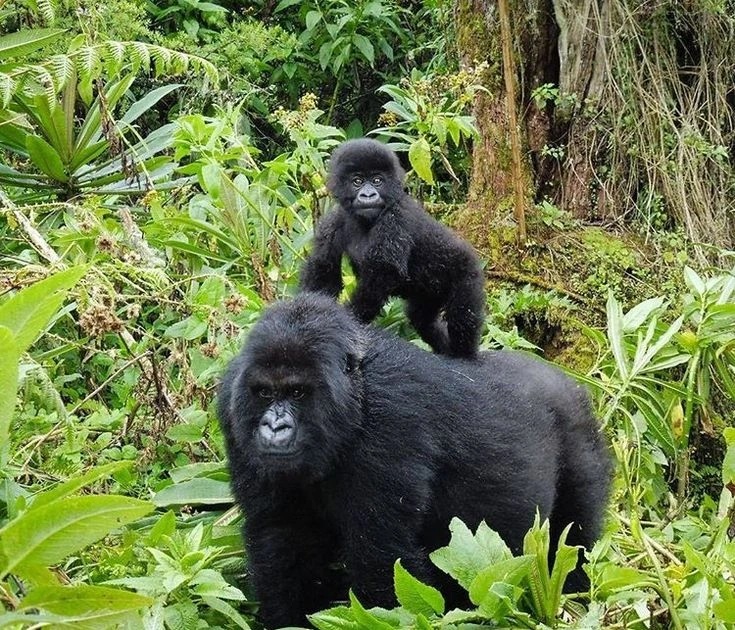
Volcanoes National Park is best known for providing accessible, high-end gorilla trekking experiences, featuring shorter hikes through bamboo forests. Its primary advantages include proximity to Kigali (2-3 hour drive), 13 habituated gorilla families, and stunning, manageable volcanic terrain that often makes sighting gorillas easier.
21-days-rwanda-primate-safari-culture-history-and-wildlife-holiday
20-days-complete-rwanda-uganda-safari-tour-combo
14-days-luxury-rwanda-primate-safari-and-uganda-safari-tour-combo
14-days-magical-rwanda-photography-safari
12-days-best-rwanda-wildlife-safari-and-rwanda-primate-safari-vacation
11-days-classic-uganda-rwanda-tour-combined-itinerary
10-days-9-nights-midrange-rwanda-gorilla-trekking-wildlife-and-culture
9-day-romantic-honeymoon-rwanda-wildlife-safari-itinerary
9-days-best-family-rwanda-safari-holiday-big-five-canopy-walk-and-chimpanzee
8-days-best-africa-big-five-rwanda-safari-and-gorilla-trekking
6-days-rwanda-gorilla-trekking-chimpanzee-tracking-and-birdwatching
Accessibility & Convenience
Volcanoes National Park stands out as the most accessible gorilla trekking destination in the world. Located just 80 kilometers from Kigali International Airport, the journey to the park takes approximately 2.5 to 3 hours via smooth, well-paved roads. This proximity is a game-changer for travelers with tight schedules; it is the only place where a one-day gorilla trek is realistically possible, though most visitors opt for two or three days to fully soak in the experience.
This ease of access has positioned Rwanda as a leader in luxury "fly-in" tourism. High-end travelers can land in Kigali, be whisked away by private transfer or helicopter, and be at their lodge in time for a gourmet dinner. This eliminates the grueling, full-day drives required to reach other habitats, making it the preferred choice for those who value efficiency without compromising on the wild, raw beauty of the Virunga Mountains.
Easier Trekking Environment
While gorilla trekking is never "easy"—you are, after all, hiking at altitudes between 2,500 and 4,000 meters—Volcanoes National Park offers a significantly more manageable terrain compared to the "impenetrable" thickets of Bwindi. The park is characterized largely by bamboo forests and open volcanic slopes. Bamboo grows straight and spaced apart, providing a much clearer path for trekkers and fewer "tangles" of undergrowth to navigate.
The ground underfoot is often less treacherous, and the habituated gorilla families frequently inhabit the lower slopes, meaning some treks can be completed in just a few hours. While a baseline level of fitness is still essential for the steep climbs, the ventilated canopy and organized trail systems make the physical exertion feel like a scenic hike rather than an arduous jungle struggle.
High-End Experience & Conservation
Rwanda has pioneered a "Low Volume, High Value" tourism model. With a permit price of $1,500 per person, it is the most expensive place to see mountain gorillas, but this premium price translates directly into world-class conservation and exclusivity. This revenue funds the salaries of hundreds of rangers and trackers, as well as the "Sabyinyo Community Livelihood Association," ensuring that local communities benefit directly from the gorillas' presence.
With 13 habituated gorilla families available for tourism, the park ensures that groups remain small (strictly eight people per family). This creates an intimate, quiet atmosphere that respects the animals' space. From the sleek briefing center at Kinigi to the expert guides who share deep biological insights, every touchpoint of the Rwandan experience is designed to be seamless, professional, and deeply impactful.
Prime Photo Opportunities
For wildlife photographers, Volcanoes National Park is often the top choice due to the vegetation and lighting. In denser rainforests, the "green blur" of thick leaves and the dark, shadowy canopy can make it difficult to get a clean shot or achieve a fast enough shutter speed. In contrast, the bamboo forests of Rwanda allow for much more filtered, natural light to reach the forest floor.
The open clearings and lighter foliage mean that the gorillas are more likely to be photographed against a clean background rather than obscured by vines. Whether they are foraging in the bamboo or lounging in the alpine meadows, the visibility is generally superior. Additionally, the stunning backdrop of the conical Virunga volcanoes provides a dramatic, cinematic scale to wide-angle shots that you simply cannot get elsewhere.
The Dian Fossey Legacy
Trekking here is not just a wildlife encounter; it is a pilgrimage through the history of primatology. This park is where Dian Fossey spent 18 years studying the mountain gorillas, effectively saving them from extinction. Her work, immortalized in Gorillas in the Mist, transformed these animals from feared "monsters" into symbols of global conservation.
Beyond the trek, visitors can hike to the Karisoke Research Center site, nestled between Mount Visoke and Mount Karisimbi. Here, you can visit Fossey’s grave, where she is buried alongside her beloved gorilla friend, Digit. Visiting the ruins of her original camp adds a profound emotional layer to the safari, allowing travelers to walk the same paths she did and see firsthand the enduring legacy of the woman who gave her life to ensure these "gentle giants" would still be here for us to see today.
What is the primary reason Volcanoes National Park is best for gorilla trekking in Rwanda?
Volcanoes National Park serves as the ultimate destination for gorilla trekking in Rwanda primarily because it is the sole sanctuary within the country's borders where the mountain gorilla ($Gorilla$ $beringei$ $beringei$) can be found. While Rwanda offers diverse wildlife in parks like Akagera or Nyungwe, the Virunga Massif—of which Volcanoes is a part—is one of only two places on Earth where these great apes survive. This exclusivity makes it the heartbeat of Rwanda's tourism industry.
The park’s reputation as the "best" is bolstered by an incredible 99% success rate in spotting the gorillas. This reliability is not accidental; it is the result of a highly disciplined and sophisticated tracking protocol. Every morning, long before tourists finish their breakfast, teams of professional trackers enter the forest to locate the gorilla families from the spot where they nested the previous evening. These trackers stay with the gorillas throughout the day, communicating their exact coordinates via radio to the guides leading the tourist groups.
Furthermore, the gorillas in Volcanoes National Park have undergone a rigorous habituation process, meaning they are accustomed to the presence of humans and do not view them as a threat. This allows for a peaceful, up-close encounter that feels both wild and safe. The combination of guaranteed sightings, professional management, and the sheer prestige of visiting the historic home of mountain gorilla conservation makes this park the premier choice for travelers seeking a life-changing wildlife experience.
How accessible is Volcanoes National Park from Kigali for a short gorilla trekking safari?
One of the most significant advantages of choosing Rwanda for a gorilla safari is the unmatched accessibility of Volcanoes National Park. Situated in the northwestern corner of the country, the park is only about 80 kilometers (50 miles) from Kigali International Airport. Because Rwanda has invested heavily in its infrastructure, the journey takes just 2 to 3 hours via smooth, well-paved roads that wind through the country's famously picturesque "thousand hills."
This logistical ease opens up possibilities that are simply not feasible in other gorilla-hosting nations. It is the only location where a one-day gorilla trekking safari is realistically possible. A traveler can land in Kigali, be driven to the park headquarters in Kinigi by 7:00 AM for the morning briefing, complete the trek, and return to the capital by evening. This is a game-changer for business travelers or those on a tight time budget.
Even for those who prefer a more relaxed pace, a two-day itinerary feels luxurious rather than rushed. The short transit time means less time spent in a vehicle and more time enjoying the high-end lodges or exploring the local culture. This efficiency has positioned Rwanda as a top-tier destination for "fly-in" tourism, where visitors can maximize their vacation time in the presence of the gorillas rather than on the road.
How many habituated gorilla families are available for trekking in Volcanoes National Park?
Volcanoes National Park is currently home to 12 to 13 habituated gorilla families that are open for public visitation. "Habituation" is a delicate, multi-year process involving researchers and rangers who spend daily time near a wild group until the gorillas accept human presence as a non-threatening part of their environment. The presence of over a dozen families allows the park to offer a diverse range of trekking experiences.
Each family has its own unique "personality" and social structure. For instance, the Susa A family is legendary for being the group Dian Fossey originally studied and is known for having rare twins. The Sabyinyo family is often favored for being easier to find on the lower slopes, while the Agashya family is known for its large number of members and the protective nature of its lead Silverback.
Because there are multiple groups, the park can accommodate approximately 100 visitors per day while still adhering to strict conservation limits of eight people per group. This variety also allows park rangers to strategically assign visitors to specific families based on their physical fitness levels. If a group is particularly fit, they may be assigned a family that has moved deeper into the higher altitudes, while older or less active trekkers are assigned families that stay closer to the park boundaries.
Why is Volcanoes National Park considered the best option for luxury gorilla trekkers?
Rwanda has pioneered a "Low Volume, High Value" tourism strategy, specifically designed to appeal to the luxury market. Volcanoes National Park is the centerpiece of this vision, surrounded by some of the most exclusive and architecturally stunning eco-lodges in the world. Properties like Bisate Lodge, Singita Kwitonda, and One&Only Gorilla’s Nest have redefined the African safari experience, offering a level of opulence that rivals any five-star resort globally.
For the luxury trekker, the experience is about more than just the gorillas; it is about seamless comfort. After a morning in the damp, cool forest, guests return to lodges featuring private heated plunge pools, floor-to-ceiling windows overlooking the volcanic peaks, and personalized butler service. The culinary experiences are equally refined, focusing on farm-to-table Rwandan flavors prepared by world-class chefs.
Beyond the accommodations, the park’s infrastructure is designed for a premium-focused adventure. The briefing center is modern and organized, the guides are highly educated in primatology and local history, and the service throughout the journey is characterized by Rwandan hospitality. This focus on high-end service ensures that every moment—from the landing at Kigali to the final farewell—is handled with professional care, making it the preferred choice for those who want to experience the raw wilderness of Africa without sacrificing modern comforts.
What is the minimum age required for participating in gorilla trekking in Rwanda?
To participate in gorilla trekking in Volcanoes National Park, visitors must be at least 15 years of age. This age limit is strictly enforced by the Rwanda Development Board (RDB) and is rooted in two primary concerns: the physical safety of the visitors and the biological safety of the gorillas.
The strenuous nature of the hike is the first consideration. Trekking occurs at high altitudes, ranging from 2,500 to 4,000 meters, where the air is thin and the terrain can be steep, slippery, and densely vegetated. Children under 15 may not have the physical stamina or the emotional discipline required to navigate these conditions for several hours. Furthermore, mountain gorillas are powerful wild animals. While they are generally gentle, a child’s unpredictable movements or high-pitched noises could inadvertently startle a gorilla or trigger a defensive reaction from a Silverback.
The second, and perhaps more critical, reason is biosecurity. Humans and gorillas share approximately 98% of their DNA, making them highly susceptible to human diseases. Children often carry common childhood illnesses, such as coughs, colds, or flu, to which gorillas have no natural immunity. An outbreak of a simple human respiratory infection could be catastrophic for an entire gorilla family. By setting the age limit at 15, authorities reduce the risk of disease transmission and ensure that all trekkers are physically and mentally prepared for the encounter.
What is the cost of a gorilla permit in Volcanoes National Park, and why?
A gorilla trekking permit in Rwanda currently costs $1,500 per person. While this is the highest price in the region, it is a deliberate part of Rwanda’s sustainable tourism model. The cost is high because it serves as the primary funding mechanism for one of the most successful conservation stories in history.
The revenue generated from these permits is used to pay the salaries of hundreds of rangers, trackers, and veterinary doctors who provide 24/7 protection for the gorillas. This constant presence has virtually eliminated poaching within the park. Furthermore, the high price tag naturally limits the number of visitors, ensuring that the gorillas’ habitat is not degraded by mass tourism.
A vital component of the permit cost is the Revenue Sharing Program. Rwanda allocates 10% of all tourism revenue directly to the communities living on the fringes of the park. This money has built schools, clinics, and clean water systems, and has provided local farmers with alternatives to poaching or forest encroachment. By ensuring that local people benefit financially from the gorillas' survival, the park has turned the community into a frontline defense for conservation. When you buy a $1,500 permit, you are not just buying an hour with the gorillas; you are directly investing in the survival of an endangered species and the upliftment of the Rwandan people.
How long can visitors spend with the gorillas after locating them?
Once a trekking group successfully locates a gorilla family, they are permitted to spend a maximum of one hour in their presence. This "Golden Hour" is a strictly enforced international standard across all mountain gorilla habitats. The primary reason for this limitation is to minimize behavioral disruption. Gorillas have complex daily routines consisting of foraging, grooming, playing, and resting. Prolonged human presence can stress the animals or alter their natural social interactions, which could have long-term effects on their health and reproduction.
The one-hour limit also serves a critical role in disease prevention. The risk of transmitting human pathogens—even those as minor as a common cold—increases the longer humans remain in close proximity to the primates. By keeping the encounter brief, the park reduces the chances of cross-species contamination.
While sixty minutes might sound short, it is an incredibly intense and focused experience. Without the distraction of a long stay, visitors tend to be more observant, noticing the intricate details of the gorillas’ expressive faces, the nimble way they peel bamboo shoots, and the subtle communications between the Silverback and the juveniles. Most travelers find that the one-hour window is more than enough to forge a profound emotional connection with these "gentle giants" while ensuring that their wild way of life remains undisturbed for the rest of the day.
When is the best time to visit Volcanoes National Park for a gorilla trekking safari?
While gorilla trekking in Rwanda is a year-round activity, the dry seasons are generally considered the best times to visit. These occur from June to September and from December to February. During these months, the park experiences less rainfall, which results in firmer trails and less mud. This makes the hiking experience significantly more comfortable and less physically demanding, as trekkers are less likely to slip on the steep volcanic slopes.
The dry season also offers clearer hiking conditions and better visibility within the forest. For photographers, the lighting is more consistent, and there is less risk of rain damaging expensive camera equipment. However, because these are the "peak" months, permits sell out very quickly, and the lodges are often at full capacity, requiring bookings many months in advance.
The rainy seasons (March to May and October to November) should not be entirely discounted. During the rains, the gorillas often descend to the lower slopes of the volcanoes because the fresh bamboo shoots—their favorite food—are more abundant there. This can result in much shorter treks, sometimes lasting only an hour or two. Additionally, the forest is at its most lush and vibrant, providing a stunning, moody backdrop for photography. For those who don't mind a bit of mud and want to avoid the crowds, the wet season can offer a more solitary and evocative experience.
What is special about the Kwita Izina ceremony related to gorilla trekking in Rwanda?
The Kwita Izina ceremony is perhaps the most unique and culturally significant event in the world of wildlife conservation. Inspired by the ancient Rwandan tradition of naming a newborn child in the presence of family and friends, this annual event is held to officially name the infant gorillas born in Volcanoes National Park over the preceding year. It is a massive celebration that draws together local communities, international celebrities, conservationists, and heads of state.
What makes Kwita Izina special is that it transforms conservation from a dry, scientific endeavor into a deeply personal and national pride. By giving each gorilla a name—such as Ibisigo (Legacy) or Indatwa (Exemplary)—the animals are given an identity and a place within Rwandan society. This fosters a powerful emotional bond between the people and the primates they protect.
For tourists, visiting during the Kwita Izina season (typically September) offers a chance to participate in a week of conservation-themed activities, including workshops, tours, and the main naming ceremony itself at the foothills of the volcanoes. It is a time when the entire country celebrates the increase in the gorilla population, which has risen steadily thanks to these conservation efforts. The ceremony serves as a global reminder that through community involvement and political will, it is possible to bring a species back from the brink of extinction.
How many people are allowed in a gorilla tracking group per day?
To protect the welfare of the animals and ensure a high-quality experience for visitors, the Rwanda Development Board (RDB) strictly limits the number of people in a tracking group to a maximum of 8 individuals per day. This means that for each of the 12 to 13 habituated gorilla families, only eight permits are issued. This regulation is one of the most critical aspects of Rwanda’s "Low Volume" tourism strategy.
There are several reasons for this limit. First and foremost is social impact. Mountain gorillas are highly social animals with a sensitive hierarchy. A large crowd of people would be intrusive, potentially causing the family to become stressed, aggressive, or to move into more inaccessible areas of the forest. Keeping the group small ensures that the gorillas remain calm and continue their natural behaviors, such as nursing or playing, while being observed.
Secondly, the limit ensures an intimate and regulated viewing experience. In a group of only eight, every person is guaranteed a clear view of the gorillas without having to jostle for space. It also allows the guide to maintain better control over the group, ensuring that everyone maintains the required 7-meter safety distance and follows the park’s rules. This intimacy is what makes the Rwandan experience feel so exclusive; you aren't just part of a crowd, you are one of a tiny handful of people invited into the gorillas' private world for that day.
Is it necessary to hire a porter during my gorilla trek in Volcanoes National Park?
While not strictly mandatory, hiring a porter is highly recommended for every trekker, regardless of their age or fitness level. For a standard fee (usually around $10–$20), a porter will carry your daypack, which typically contains heavy water bottles, snacks, and expensive camera gear. This allows you to focus entirely on the hike and the incredible scenery without being weighed down.
Porters are also invaluable for physical stability. The terrain in Volcanoes National Park can be treacherous—thick with stinging nettles, crisscrossed by slippery roots, and often muddy. Porters are locals who have grown up on these slopes; they are incredibly sure-footed and will literally lend a hand, pulling you up steep embankments or steadying you on a descent. Many trekkers find that the physical assistance of a porter is the difference between an exhausting struggle and an enjoyable adventure.
Beyond the personal benefits, hiring a porter is a vital form of community support. Many porters are former poachers or come from local families who previously struggled for income. By providing them with a job, the park ensures that the local community sees the gorillas as a source of sustainable livelihood rather than a nuisance. This direct economic benefit is a cornerstone of Rwanda's conservation success. Tips are also encouraged, as they go a long way in supporting local families and ensuring that the people living closest to the gorillas remain their strongest protectors.
Can I combine gorilla trekking with golden monkey tracking in the park?
Yes, one of the highlights of visiting Volcanoes National Park is the opportunity to combine a gorilla trek with golden monkey tracking. While the gorillas are the "stars of the show," the Endangered Golden Monkey ($Cercopithecus$ $kandti$) is an equally fascinating primate that is endemic to the high-altitude forests of the Albertine Rift. Volcanoes is the only park in Rwanda where you can track these vibrant, social creatures.
Golden monkeys are distinct for their beautiful orange-gold patches on their backs and flanks. Unlike the gorillas, which are often calm and stationary, golden monkeys are high-energy acrobats. They live in large troops of up to 100 members and spend much of their time leaping through the bamboo canopy. Tracking them is a different kind of thrill; it is fast-paced and requires a keen eye to follow them as they swing through the trees.
Because golden monkeys tend to inhabit the bamboo forests at the base of the volcanoes, the trek to find them is usually shorter and less physically demanding than the gorilla trek. This makes it an excellent "warm-up" activity for the day before your gorilla encounter, or a fantastic way to round out a multi-day safari. Combining the two allows you to experience the full spectrum of the park’s primate biodiversity, seeing both the grounded majesty of the great apes and the frantic, playful energy of the Old World monkeys.
Why is hiking to Dian Fossey's tomb a popular activity during a gorilla safari?
Hiking to the site of the Karisoke Research Center and Dian Fossey’s tomb is a popular activity because it provides the historical and emotional context for everything visitors see in the park today. Dian Fossey was the pioneer who brought the mountain gorilla to the world’s attention. Without her 18 years of tireless (and often dangerous) work, it is highly likely that the mountain gorilla would be extinct today.
The hike itself is incredibly beautiful, taking you through the "saddle" between Mount Visoke and Mount Karisimbi. It passes through hagenia forests and alpine meadows, offering a different ecological perspective of the park. At the site, you can see the ruins of the original camp where Fossey lived in isolation to conduct her research.
The emotional heart of the hike is the gorilla graveyard. Fossey is buried next to Digit, her most beloved gorilla friend who was killed by poachers while defending his family. Standing at this site allows visitors to pay their respects to a woman who sacrificed her life for conservation. It turns a wildlife safari into a pilgrimage, reminding travelers that the peaceful encounter they had with the gorillas was made possible by the bravery and obsession of one individual. It is a profound way to connect the modern luxury of Rwandan tourism with the raw, difficult history of the conservation movement.
How do I ensure a safe gorilla trek with the rangers in Volcanoes National Park?
Safety is the highest priority in Volcanoes National Park, and the park’s rangers have an impeccable record of ensuring the well-being of both tourists and animals. To ensure a safe trek, the first step is to listen intently to the pre-trek briefing. Rangers will explain the "rules of the forest," which include staying together in a tight group, keeping your voice low, and never using flash photography.
During the trek, you are guided by an armed escort and a lead guide. The weapons are not for use against the gorillas; they are a precaution against wild forest elephants or buffaloes, which can be unpredictable. The rangers use noise (such as firing into the air) to scare away these larger animals if they become a threat. Regarding the gorillas, the guides are experts in non-verbal communication. They use low-frequency "belch" vocalizations to signal to the Silverback that the human group is friendly and submissive.
The most important safety rule for visitors is to maintain the 7-meter distance. If a gorilla, particularly a curious juvenile, approaches you, the rule is to stay perfectly still, look down, and follow the guide's instructions to slowly back away. You should never run, as this could trigger a chase instinct. By following the rangers' lead, you can enjoy a close encounter that is entirely safe, as the gorillas have been habituated to see humans as a neutral, non-threatening presence in their forest home.
What is the best way to book a gorilla permit in Volcanoes National Park?
The most reliable way to book a gorilla permit is to do so through a trusted tour operator at least 3 to 6 months in advance. While it is technically possible to book directly through the Rwanda Development Board (RDB) website, the process can be complex, and permits for popular dates—especially during the dry seasons—sell out almost instantly.
A tour operator provides a layer of security and convenience that is well worth the service fee. They have direct relationships with the park authorities and can often secure permits that seem "unavailable" on public portals. More importantly, an operator coordinates the entire logistical chain. A gorilla permit is just one piece of the puzzle; you also need a 4x4 vehicle with a professional driver-guide to navigate the mountain roads and a confirmed booking at a lodge near the park gates.
Booking early is essential because there are only about 100 permits available per day for the entire world. If you wait until you arrive in Rwanda, you will likely be disappointed. Early booking also gives you the best chance of requesting a specific gorilla family if you have a particular interest (such as seeing twins or a shorter hike). By working with a professional operator months in advance, you ensure that your "once-in-a-lifetime" trip is seamless, from the moment you land in Kigali to the unforgettable hour you spend with the kings of the forest.
Booking Rwanda gorilla trekking with us Roads of Adventure safaris
Booking a Rwanda gorilla trekking safari with Roads of Adventures Safaris offers an intimate experience in Volcanoes National Park. It is strongly recommended to book permits 3 to 6 months in advance due to high demand and limited daily slots. Permits cost $1500 per person and require passport details for booking.
