Uganda’s wildlife circuit is built on a stunning balance of wide-open African savannahs and dense, ancient rainforests. While the country boasts ten national parks, a core quartet generates the overwhelming majority of safari travel, contributing significantly to the $1.5B+ annual tourism revenue that drives Uganda's economy. These protected areas showcase why the country remains an irreplaceable wildlife destination—from explosive waterfalls and tree-climbing lions to endangered mountain gorillas and wild chimpanzee troops. Whether navigating the Kazinga Channel or trekking through misty canopy forests, understanding what sets each park apart makes planning an unforgettable East African itinerary effortless.
14-days-uganda-and-rwanda-safari-tour-itinerary
14-days-luxury-uganda-primate-safari-holiday
14-days-uganda-primate-safari-and-jinja-white-water-rafting
14-days-classic-uganda-birding-safari-expedition
14-days-best-africa-big-five-safari-in-uganda-and-best-gorilla-trekking-adventure
20-days-uganda-birding-safari-wildlife-gorilla-and-chimpanzee-tracking
20-days-uganda-birding-safari-to-uganda-national-park
20-days-uganda-safari-holiday-tour-package-itinerary
19-days-best-photography-uganda-birding-safari-and-wildlife-adventure
19-days-incredible-uganda-safari-tour-big-five-chimpanzees-and-mountain-gorillas
18-days-best-of-uganda-safari-holiday-vacation-to-all-best-parks
17-days-uganda-honeymoon-safari-holiday-tour
17-days-uganda-birding-safari-itinerary
17-days-best-safari-in-uganda-ending-in-kigali-rwanda
16-days-ultimate-uganda-safari-to-rwanda-safari-tour-package-combo
16-days-best-of-uganda-birding-safari-holiday-extravaganza
7-day-ultimate-uganda-primate-safari-chimpanzees-and-game-drives
6-days-best-gorilla-trekking-and-safari-uganda-parks
1. Murchison Falls National Park
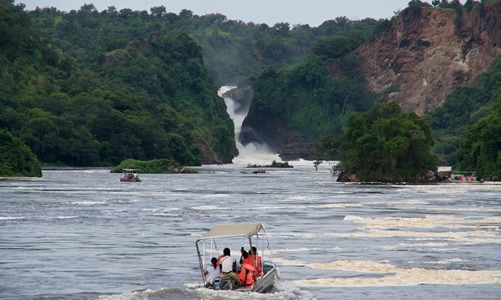
Spanning 3,840 square kilometers in northwestern Uganda, Murchison Falls is the country’s largest and most visited national park. It commands roughly 35% of all national park visitor traffic, welcoming upwards of 90,000 to 140,000 local and international travelers in peak years. The park is bisected by the Victoria Nile, which creates its iconic focal point: Murchison Falls. Here, the world’s longest river is squeezed through a rocky gorge just 7 meters wide before plunging 43 meters into the "Devil’s Cauldron" below, producing a mist-drenched spectacle where permanent rainbows hover over the water.
The park’s sprawling savannahs, riverine forests, and borassus palm groves host four of the famous "Big Five"—elephants, Cape buffaloes, lions, and leopards. Rhinos were extirpated from the wild during past decades of conflict, though visitors often stop at the nearby Ziwa Rhino Sanctuary en route to see white rhinos, completing the full set.
Murchison Falls is particularly famous for harbouring over 75% of the world’s remaining endangered Rothschild’s giraffes (Nubian giraffes). Game drives along the Buligi circuit reveal massive herds of Jackson’s hartebeests, Ugandan kob, Oribi, and heavy elephant herds roaming the plains. A boat safari along the river to the base of the falls offers intimate sightings of Nile crocodiles, thousands of hippos, and over 450 bird species, including the elusive shoebill stork around the Nile Delta where the river flows into Lake Albert.
2. Queen Elizabeth National Park
Covering 1,978 square kilometers in western Uganda, Queen Elizabeth National Park is widely celebrated as the nation’s most ecologically diverse savannah ecosystem. Nestled against the backdrop of the jagged Rwenzori Mountains, the park attracts 70,000 to 90,000 visitors annually. Its topography is a mosaic of sprawling open grasslands, acacia woodlands, sprawling wetlands, freshwater lakes, and over 70 volcanic crater lakes scattered across the northern landscape.
The park's defining geographic feature is the 32-kilometer Kazinga Channel, a natural waterway connecting Lake George and Lake Edward. A boat safari along this channel provides front-row views of one of Africa’s highest concentrations of hippos, alongside bathing elephant herds, buffaloes wallowing in the mud, and an extraordinary bird life exceeding 600 species—from pink-backed pelicans to African skimmers.
Wildlife enthusiasts flock to Queen Elizabeth for two renowned animal encounters. In the remote Ishasha sector in the south, lions have adapted a rare behavior: climbing high into the sprawling branches of sycamore fig trees to catch breeze currents and escape biting insects on the ground. Further north in the Kyambura Gorge—a sunken 100-meter-deep tropical forest slicing through savannah—visitors can trek to track habituated chimpanzees in a unique underground forest environment. Combined with giant forest hogs, topis, and waterbucks, the park delivers a classical safari experience with a distinct equatorial twist.
3. Bwindi Impenetrable National Park
Tucked into the rugged mist-covered hills of southwestern Uganda, Bwindi Impenetrable National Park spans 321 square kilometers of primeval, UNESCO World Heritage-listed montane rainforest. While annual visitor numbers are deliberately capped at around 40,000 due to strict conservation regulations, Bwindi is Uganda’s most lucrative tourism site. It is the premier global destination for mountain gorilla trekking, where permits currently cost $800 USD for foreign non-residents.
Bwindi protects approximately 459 mountain gorillas—roughly half of the entire global wild population (the remainder inhabit the nearby Virunga Massif shared across Rwanda, DRC, and Uganda’s Mgahinga). The park is divided into four distinct trekking sectors: Buhoma, Ruhija, Rushaga, and Nkuringo. Each sector supports several fully habituated gorilla family groups, ensuring tourist foot traffic is distributed evenly across the fragile mountain terrain.
Trekking through Bwindi requires scrambling up steep, vine-tangled ridges and pushing through dense foliage—an effort rewarded by a transformative hour spent sitting meters away from a massive silverback and his family. Beyond primates, Bwindi is an Albertine Rift biodiversity hotspot, harboring over 120 mammal species, 350 bird species (including 23 Albertine Rift endemics), and 200 species of colorful butterflies.
4. Kibale National Park
Spanning 795 square kilometers across the lush hills of western Uganda, Kibale National Park is internationally recognized as the "Primate Capital of Africa." Receiving roughly 15,000 to 20,000 visitors each year, it serves as a critical biological corridor connecting the northern evergreen forests with the southern dry savannahs of Queen Elizabeth National Park.
Kibale boasts the highest density and diversity of primates anywhere in East Africa, protecting 13 distinct primate species. The headline attraction is its thriving population of over 1,500 wild chimpanzees. Chimpanzee tracking excursions lead visitors through dense forest canopies to observe habituated troops feeding, grooming, and communicating through loud pant-hoots that echo across the valley. For a deeper experience, full-day Chimpanzee Habituation Experiences (CHEX) allow guests to accompany researchers as wild troops acclimate to human presence.
In addition to chimpanzees, lucky trekkers frequently spot red colobus monkeys, L’Hoest’s monkeys, black-and-white colobus, grey-cheeked mangabeys, and olive baboons. The forest floor is home to rare forest elephants, bush pigs, and over 370 recorded bird species, making the nearby Bigodi Wetland Sanctuary a world-class haven for birdwatchers looking to spot the vibrant Great Blue Turaco.
Uganda’s wildlife circuit is built on a breathtaking balance between vast equatorial savannahs and ancient, mist-covered rainforests. While the country manages ten national parks, a core quartet—Murchison Falls, Queen Elizabeth, Bwindi Impenetrable, and Kibale—drives the overwhelming majority of safari travel. Together, these protected areas generate a significant portion of Uganda’s $1.5 billion-plus annual tourism revenue, proving essential to both local economies and nationwide conservation efforts. From the thundering roar of the Victoria Nile squeezing through a narrow rock fissure to quiet encounters with endangered mountain gorillas, this circuit captures the true spirit of African safaris. Whether you are searching for tree-climbing lions, tracking habituated chimpanzee troops, or cruising past hippos along the Kazinga Channel, understanding these four key destinations makes planning an unforgettable East African journey simple and inspiring.
1. Murchison Falls National Park
Spanning 3,840 square kilometers across northwestern Uganda, Murchison Falls National Park stands as the country’s largest and most frequented protected area. It commands over 35% of all national park visits, drawing upwards of 140,000 local and international travelers in strong tourism years. The park’s defining feature is the Victoria Nile, which bisects the reserve before creating its central spectacle: Murchison Falls. Here, the world’s longest river squeezes violently through a rocky gap just seven meters wide, plunging 43 meters into the "Devil’s Cauldron" below. The sheer power produces a constant mist-drenched spray and permanent rainbows hovering above the churning gorge.
The surrounding terrain is a rich patchwork of open savannah, borassus palm groves, and riverine forest. These habitats harbor four of the legendary "Big Five"—elephants, Cape buffaloes, lions, and leopards. Although wild rhinos were extirpated during historical periods of conflict, travelers frequently stop at the nearby Ziwa Rhino Sanctuary while driving from Kampala, allowing them to track white rhinos and experience all five iconic species in a single trip.
Crucially, Murchison Falls is the global stronghold for the endangered Rothschild’s (Nubian) giraffe, protecting more than 75% of the world’s wild population. Morning game drives along the popular Buligi circuit regularly yield sightings of massive giraffe herds grazing alongside Jackson’s hartebeests, Ugandan kob, oribi, and steady lines of elephants moving toward the water. Down on the river, launching a boat trip to the base of the falls brings visitors face-to-face with sunbathing Nile crocodiles, dense pods of hippos, and over 450 bird species. Exploring further toward the Nile Delta at Lake Albert offers birdwatchers one of East Africa's best opportunities to spot the rare, elusive shoebill stork.
2. Queen Elizabeth National Park
Covering 1,978 square kilometers in western Uganda, Queen Elizabeth National Park is celebrated as the nation’s most ecologically diverse savannah ecosystem. Set against the dramatic backdrop of the snow-capped Rwenzori Mountains, it draws 70,000 to 90,000 visitors annually, making it Uganda's second most visited park. Its landscape transitions seamlessly between open grasslands, papyrus swamps, freshwater lakes, and over 70 extinct volcanic crater lakes scattered across the northern explosion craters.
The geographic heartbeat of the park is the Kazinga Channel, a 32-kilometer natural waterway linking Lake George to Lake Edward. A boat safari along these calm waters provides front-row seats to one of the world's highest concentrations of hippos, along with bathing elephant herds, mud-wallowing buffaloes, and over 600 recorded bird species—ranging from African fish eagles to pink-backed pelicans.
Wildlife enthusiasts head to Queen Elizabeth for two remarkable animal highlights. In the remote Ishasha sector to the south, resident lions have developed the unusual habit of climbing high into the broad branches of fig trees. This behavior helps them catch cool breezes and avoid annoying ground insects between morning hunts. Meanwhile, in the park's northeastern corner lies Kyambura Gorge—a 100-meter-deep tropical forest sunken directly into the surrounding savannah. Guided treks into this "Underground Forest" allow visitors to track habituated chimpanzee troops while surrounded by towering green canopies.
With additional sightings of giant forest hogs, topis, waterbucks, and elusive leopards on early morning game drives through the Kasenyi plains, Queen Elizabeth delivers a well-rounded safari experience that blends traditional savannah game viewing with rare primate encounters. Its accessible road network and varied lodge options make it a vital anchor for any western Ugandan safari circuit.
3. Bwindi Impenetrable National Park
Tucked into the rugged, mist-shrouded mountains of southwestern Uganda, Bwindi Impenetrable National Park spans 321 square kilometers of ancient montane rainforest. A UNESCO World Heritage Site, Bwindi receives around 40,000 to 45,000 visitors each year. Although total visitor numbers are lower than those of the sprawling savannah parks due to daily permit limits and challenging terrain, Bwindi generates the highest direct tourism revenue in the country. It stands as the premier global site for mountain gorilla trekking, with permits issued by the Uganda Wildlife Authority currently priced at $800 USD for foreign non-residents.
The park shelters approximately 459 mountain gorillas—roughly half of the remaining wild population on Earth. The rest live in the nearby Virunga Massif shared across Rwanda, the Democratic Republic of Congo, and Uganda's Mgahinga Gorilla National Park. To manage conservation impact, Bwindi is divided into four distinct administrative sectors: Buhoma, Ruhija, Rushaga, and Nkuringo. Each sector hosts several habituated gorilla families, spreading foot traffic evenly through the forest.
Trekking through Bwindi involves hiking up steep, vine-drenched ridges and navigating thick underbrush. The physical exertion is rewarded when trekkers come face-to-face with a gorilla family, spending an unforgettable hour watching a silverback, nursing mothers, and playful juveniles in their natural habitat.
Beyond primates, Bwindi is an Albertine Rift biodiversity hotspot. It protects 120 mammal species—including forest elephants and bush pigs—and 350 bird species, 23 of which are endemic to the Albertine Rift region. For travelers seeking profound, intimate wildlife encounters, Bwindi remains an unrivaled bucket-list destination that directly funds community development and critical mountain gorilla conservation across East Africa.
4. Kibale National Park
Spanning 795 square kilometers across the lush hills of western Uganda, Kibale National Park is widely recognized as the "Primate Capital of Africa". Welcoming roughly 15,000 to 20,000 visitors annually, Kibale functions as a critical wildlife corridor, connecting the northern tropical evergreen forests with the southern savannahs of Queen Elizabeth National Park.
Kibale boasts the highest density and diversity of primates in East Africa, protecting 13 distinct species. The ultimate highlight is its thriving population of over 1,500 wild chimpanzees. Guided tracking excursions take visitors deep into the dense canopy to observe habituated troops as they feed, groom, and call out to one another with pant-hoots that echo through the forest. For those seeking an immersive look at primatology, full-day Chimpanzee Habituation Experiences (CHEX) allow guests to accompany researchers following troops as they acclimate to human presence.
In addition to chimpanzees, trekkers frequently spot red colobus monkeys, L’Hoest’s monkeys, black-and-white colobus, grey-cheeked mangabeys, and olive baboons moving through the branches. The rich forest floor also supports forest elephants, bushpigs, and over 370 recorded bird species.
Directly adjacent to the park lies the Bigodi Wetland Sanctuary, a community-run sanctuary famous for its boardwalk trails, diverse monkey populations, and birding highlights like the vibrant Great Blue Turaco. By combining high-energy primate treks with community-led eco-tourism projects, Kibale offers an essential forest contrast to Uganda's open savannah destinations. Visiting Kibale not only completes the ultimate primate experience alongside Bwindi, but it also demonstrates how wildlife protection can directly empower nearby forest communities.
How many days are needed for a Uganda safari?
A well-rounded Uganda safari typically requires 7 to 10 days to comfortably cover the core wildlife highlights without feeling overly rushed. With a 7-day itinerary, you can easily combine chimpanzee tracking in Kibale National Park, classic game drives and a boat cruise in Queen Elizabeth National Park, and mountain gorilla trekking in Bwindi Impenetrable Forest. If you have 10 to 12 days, you can expand your journey north to include Murchison Falls National Park for its dramatic waterfall and abundant big game, or even head further east to remote Kidepo Valley.
When planning your timeline, keep in mind that travel between parks in Uganda often involves long drives on winding mountain or gravel roads. While scenic, a drive from Kampala to Bwindi can take up to 9 hours. Booking domestic flights between airstrips like Kihihi, Kasese, or Pakwach can significantly reduce transit times, allowing you to spend more time on game drives and forest walks. Allowing at least two nights at each park ensures a relaxed pace, adequate rest after strenuous treks, and better chances of catching rare wildlife behavior across different times of the day.
What is the best time of year for gorilla trekking?
The best time for gorilla trekking in Uganda is during the dry seasons, which run from June to September and December to February. During these months, forest trails in Bwindi Impenetrable and Mgahinga National Parks are significantly drier, less slippery, and easier to navigate on foot. Clear skies also make photography much easier under the dense jungle canopy. However, because Bwindi is a tropical rainforest, rain can fall unexpectedly at any time of the year, so waterproof gear remains essential regardless of the season.
Visiting during the wet seasons—March to May and October to November—also has its advantages. Rain showers are more frequent and heavier, making trails muddy and challenging, but the forest is lush, green, and vibrant. During these periods, gorillas often stay at lower altitudes where food like bamboo shoots is plentiful, which can shorten trekking times. Additionally, lodges and tour operators frequently offer lower seasonal rates, and gorilla permits are easier to secure on short notice compared to the busy dry months when permits sell out months ahead. If you don't mind a little mud, wet season trekking offers a quiet, highly rewarding wilderness experience.
How much does a mountain gorilla trekking permit cost?
As set by the Uganda Wildlife Authority, a mountain gorilla trekking permit costs $800 USD per person for foreign non-residents. Foreign residents living in East Africa pay $700 USD, while East African Community citizens pay 300,000 Ugandan Shillings. If you are looking for an extended experience, Uganda also offers a Gorilla Habituation Experience permit for $1,500 USD. This unique permit allows you to spend up to four hours with a gorilla group that is in the process of becoming accustomed to human presence, accompanied by expert researchers.
While the price of a standard permit might seem steep at first glance, it serves a critical conservation purpose. Revenue generated from permit sales funds round-the-clock ranger patrols, veterinary care, forest protection, and anti-poaching operations. Furthermore, 20% of all park gate fees and permit revenues are redistributed directly to local communities living around the parks. This funding builds schools, health clinics, and clean water infrastructure, incentivizing locals to protect the gorillas and their habitat. It is important to book your permit several months in advance through a registered tour operator, as daily permits are strictly limited to protect the gorillas from stress.
Is it safe to travel on safari in Uganda?
Yes, Uganda is widely considered a safe, welcoming, and rewarding destination for international travelers on safari. The national parks and key tourist corridors across western and northern Uganda are well-regulated and actively patrolled by Uganda Wildlife Authority rangers, armed tourism police, and local security forces. Ugandans are renowned across East Africa for their warm hospitality, making visitors feel comfortable and secure throughout their journey, whether exploring bustling towns or staying at secluded safari lodges.
As with travel anywhere in the world, practicing basic precautions ensures a smooth trip. In major cities like Kampala or Entebbe, keep personal belongings secure, avoid carrying large amounts of cash, and refrain from walking alone late at night. When out in the national parks, always follow the safety instructions given by your professional safari guide and park rangers, particularly during walking safaris, boat cruises, and gorilla or chimpanzee treks. Wild animals are untamed, so maintaining respectful distances is essential for your safety and theirs. Road travel can sometimes be bumpy due to varying road conditions, so hiring an experienced local driver-guide with a reliable 4x4 safari vehicle is the safest and most stress-free way to explore the country.
What animals can you see in Murchison Falls Park?
Murchison Falls National Park is home to an extraordinary collection of savannah and riverine wildlife, making it one of Uganda's premier game-viewing destinations. The park hosts four of the "Big Five"—large herds of African elephants, Cape buffaloes, lions, and leopards. While wild rhinos are absent from the park itself, stopping at the nearby Ziwa Rhino Sanctuary en route lets travelers complete the full set. Additionally, Murchison Falls protects over 75% of the world's remaining endangered Rothschild’s (Nubian) giraffes, which are regularly seen in large groups across the northern plains.
Beyond big game, game drives along the Buligi circuit reveal large numbers of Jackson’s hartebeests, Ugandan kob, waterbucks, oribi, and side-striped jackals. Down on the Victoria Nile, a boat safari toward the base of the waterfall or out toward the Nile Delta reveals enormous pods of hippos wedged into the riverbanks and sunbathing Nile crocodiles, some reaching massive sizes. For bird lovers, the park boasts over 450 species, including African fish eagles, goliath herons, carmine bee-eaters, and the rare shoebill stork, which stalks prey along the papyrus margins of Lake Albert.
How difficult is mountain gorilla trekking in Bwindi Forest?
Mountain gorilla trekking in Bwindi Impenetrable National Park can range from moderately challenging to physically demanding, depending on where the gorilla family happens to be moving that day. Treks take place at high altitudes between 1,160 and 2,600 meters above sea level across steep, rainforest-covered ridges. Hikers must navigate tangled vines, muddy slopes, and thick underbrush, often without established footpaths. Depending on the gorillas' location, a trek can take anywhere from 1 to 6 hours round trip, so a basic level of physical fitness is recommended.
Fortunately, the park authorities ensure that trekking is accessible to a wide range of fitness levels. Before heading out, park rangers group visitors based on age, fitness, and preference, assigning easier or closer gorilla families to those who need a less strenuous hike. Additionally, hiring a local porter at the trailhead is highly recommended. Porters carry your backpack, assist you over slippery rocks or steep inclines, and provide steady support throughout the trek. Not only does hiring a porter make your hike much easier, but it also directly supports local families and community livelihoods. Taking slow, steady steps makes the adventure enjoyable for almost anyone.
What is the difference between chimpanzee and gorilla trekking?
While both chimpanzee and gorilla trekking offer incredible primate encounters, the two experiences differ significantly in terrain, behavior, and overall energy. Gorilla trekking takes place in steep, mountainous rainforests like Bwindi or Mgahinga. Gorillas move at a relaxed, deliberate pace on the forest floor, spending much of their time feeding on plants, resting, and interacting gently as a cohesive family group led by a silverback. Once you reach them, the encounter feels intimate and quiet, as you observe them from a short distance for one hour.
Chimpanzee trekking, most popular in Kibale National Park, is generally faster-paced and more vocal. Chimpanzees are highly active, agile, and loud, frequently swinging through high forest canopies, calling to each other with loud pant-hoots, and moving rapidly across flatter forest terrain. Following a troop often involves quick walking or jogging through the woods to keep up as they hunt, forage, or socialise. Chimpanzee permit costs are also lower—currently $250 USD in Kibale compared to $800 USD for gorillas. Combining both treks on a single safari gives travelers a complete and fascinating look at Africa's great apes.
Where can you see tree climbing lions in Uganda?
You can see tree-climbing lions in the remote Ishasha sector, located in the southern part of Queen Elizabeth National Park. While lions across Africa typically spend their resting hours on the ground under shaded bushes, the resident prides in Ishasha have adapted the unusual habit of climbing high into the branches of large sycamore fig and acacia trees. Visitors driving through this sector can often spot full-grown lions sprawled out lazily across thick tree limbs high above the savannah.
Wildlife experts believe lions climb trees in Ishasha for two main reasons: to catch cool, refreshing breezes blowing off the plains during hot afternoon hours and to escape biting insects like tsetse flies swarming on the ground. Additionally, perched high in the branches, lions enjoy an elevated view of grazing prey herds, such as Ugandan kob and topi, moving across the grasslands. Aside from Ishasha, Lake Manyara National Park in Tanzania is one of the very few other places in Africa where tree-climbing behavior is regularly observed. A guided game drive through Ishasha offers photography enthusiasts a truly distinctive safari highlight.
What packing essentials are required for a Uganda safari?
Packing for a Uganda safari requires preparing for both warm savannah game drives and damp, cool rainforest treks. For gorilla and chimpanzee trekking in Bwindi or Kibale, sturdy, waterproof hiking boots with good ankle support are essential for navigating slippery mountain slopes. Long-sleeved shirts and lightweight, quick-dry trousers protect your skin from stinging nettles, insects, and thorny branches. Sturdy gardening gloves are also helpful for gripping vegetation on steep climbs, and long socks let you tuck in your pants to deter safari ants.
For classic savannah game drives in parks like Murchison Falls or Queen Elizabeth, pack neutral-colored, lightweight clothing—such as khaki, tan, or green—and avoid bright colors, blue, or black, which can attract tsetse flies. A wide-brimmed sun hat, high-SPF sunscreen, sunglasses, and effective insect repellent with DEET are daily must-haves. Weather can change quickly, so pack a lightweight, waterproof rain jacket and a warm fleece sweater for chilly mornings in the high-altitude parks. Finally, don't forget waterproof dry bags for your camera gear, a pair of compact binoculars for birdwatching, and rehydration salt packets to stay energized throughout your adventures.
Why is the Kazinga Channel famous on a safari?
The Kazinga Channel is famous because it is a 32-kilometer natural waterway that connects Lake George and Lake Edward in Queen Elizabeth National Park, serving as a vital lifeline for wildlife. It is internationally renowned for hosting one of the dense concentrations of hippos anywhere on the African continent. Taking a two-hour boat safari along the channel brings travelers within meters of massive hippo pods cooling off in the water, alongside Nile crocodiles sunning themselves on the sandy shores.
Beyond hippos and crocodiles, the channel acts as an essential watering hole for savannah wildlife, especially during the dry season. Visitors regularly see large herds of elephants coming down to drink and bathe, buffaloes wallowing in shallow mud banks, and various antelopes like waterbucks and Ugandan kob gathering near the water's edge. For bird lovers, Kazinga Channel is a world-class destination holding over 600 bird species. A single boat trip yields sightings of pink-backed pelicans, African fish eagles, martial eagles, yellow-billed storks, and pied kingfishers hovering above the water. The combination of easy water navigation and dense wildlife concentration makes it a central highlight of any Ugandan trip.
Booking Uganda safari with us Roads of Adventure safaris
To book a Uganda safari with Roads of Adventure Safaris, reach out via email at info@roadsofadventuresafaris.com or call +256 701041637. A 30% deposit is required to secure your booking, with the remaining balance due 60 days prior to your departure
