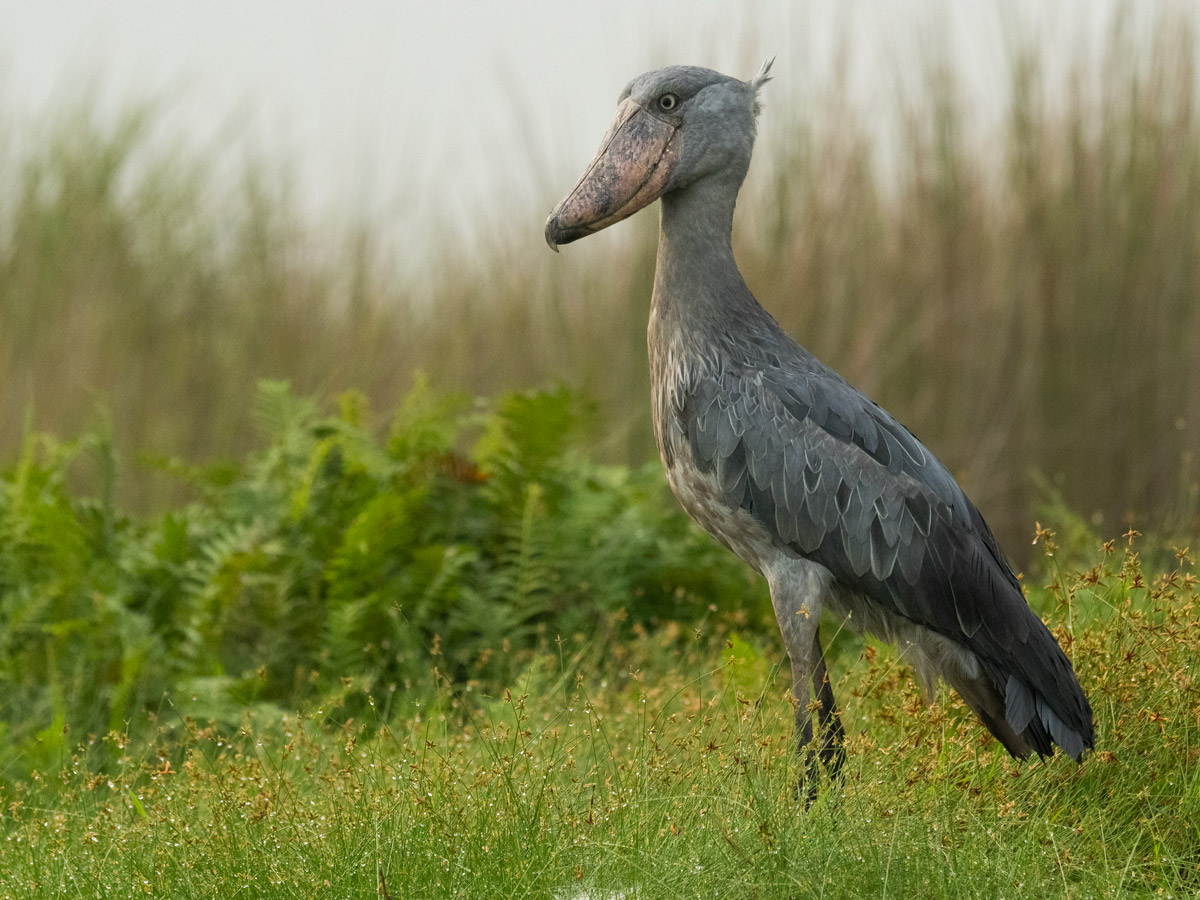
Late November to April takes the crown as the premier period for birdwatching in Uganda. During these months, resident species are joined by millions of migratory birds escaping the harsh northern winters in Europe and Asia. Food is abundant, forest fruits ripen, and many birds display brilliant breeding plumage while singing actively to defend territories. If forced to pick a single best month, December or January stands out. These drier months offer clear forest trails in Bwindi Impenetrable National Park and Semuliki, optimal water levels in Mabamba Swamp for spotting the iconic Shoebill, and high densities of both resident Albertine Rift endemics and Eurasian migrants across savannah reserves.
Why Choose January and February
- Migratory species: Palearctic migrants are fully present alongside resident birds, offering maximum species counts.
- Dry conditions: Trails in dense rainforests like Bwindi and Kibale are drier and much easier to hike.
- Clear visibility: Thinner seasonal vegetation makes spotting smaller forest birds simpler.
Why Choose June to August
- Great weather: This is the primary long dry season, ideal for combining game drives and forest walks.
- Active nesting: August sits right in the middle of major nesting and breeding activity for many local species.
- Easier transport: Unpaved Park roads remain firm and simple to navigate.
Alternative: The Wet Season (March to May / September to November)
- Breeding plumage: Birds are exceptionally colorful and vocal during their primary breeding phases.
- Fewer crowds: Parks and trails offer total solitude, though heavy rain can make forest tracking slippery.
The Best Month for a Uganda Birding Safari
While Uganda delivers incredible year-round birdwatching thanks to its position at the intersection of West African rainforests and East African savannahs, late November through April is widely considered the ultimate window. During this period, millions of Palearctic and intra-African migratory birds arrive, filling the wetlands, forests, and savannahs with vibrant colors and courtship calls. If you prefer drier forest trails for trekking, December to February offers the sweet spot—combining clear weather with peak migratory activity and vibrant breeding plumages.
Why are the months of November to April considered peak birding season in Uganda?
The November-to-April period brings a dramatic surge in avian diversity across Uganda's ecosystems. The influx of Palearctic migrants—ranging from waders and warblers to raptors—significantly boosts daily species counts. Additionally, the brief rains around November and late March trigger courtship behaviors, prompting resident birds to display full breeding plumage and sing enthusiastically, making them far easier to locate in dense foliage. Wetland habitats like Mabamba Bay and Kazinga Channel swell with life, providing rich foraging grounds. Photographers also benefit from softer light conditions, active nests, and dynamic behavioral displays throughout forests and savannahs during this lively seasonal window.
Is birdwatching in Uganda good during the dry season months of June to August?
Yes, June to August remains a fantastic time for birdwatching, particularly for travelers looking to combine birding with gorilla trekking and general wildlife safaris. Dry trails make hiking through steep, dense forests like Bwindi and Mgahinga much easier and safer. While migratory species from Europe are absent, Uganda’s core resident species—including the coveted Albertine Rift endemics—remain active year-round. Forest birding can require a bit more patience during these drier months, as canopy birds are quieter, but key targets like the African Green Broadbill, Green-breasted Pitta, and Great Blue Turaco are regularly encountered with an experienced guide.
How does the arrival of Palearctic migratory birds impact a birding itinerary?
The arrival of Palearctic migrants transforms a standard safari into an extraordinarily dense birding experience. From October through April, over 100 migratory species settle across Uganda's lakes, wetlands, and open plains. Waterways like the Kazinga Channel in Queen Elizabeth National Park and the banks of the Victoria Nile become bustling hubs filled with sandpipers, terns, storks, and plovers. Open savannahs fill with European Bee-eaters, Barn Swallows, and various raptors. For twitchers, these migrants boost daily checklists dramatically, allowing dedicated birders to log over 300 to 400 unique species on a typical two-week itinerary.
What is the best month to spot the rare Shoebill Stork in Uganda?
The pre-historic Shoebill Stork (Balaeniceps rex) can be spotted year-round in Uganda, but the dry periods of December to February and June to August offer the highest success rates. During drier months, water levels in swamp habitats like Mabamba Bay, Lugogo Swamp, and the Nile Delta in Murchison Falls retreat. Fish become concentrated in remaining shallow channels, forcing the solitary Shoebill to hunt in open areas where local fishermen and birding canoes can navigate easily. Navigating swamp channels during extreme wet seasons can sometimes push the birds deeper into inaccessible papyrus beds.
When is the best time to see Albertine Rift endemic species?
Uganda hosts 24 of the 27 Albertine Rift endemic bird species, primarily concentrated in high-altitude forests like Bwindi Impenetrable National Park, Mgahinga Gorilla National Park, and the Rwenzori Mountains. The optimal window to target these specialists is December to March. Trails are relatively manageable, and many mountain species feed actively along fruiting trees and flowering shrubs. Targets such as the Neumann's Warbler, Rwenzori Turaco, and African Green Broadbill respond well to call-outs and foraging mixed-species flocks during these months, yielding rewarding views in dense undergrowth.
How does heavy rain in April and May affect birdwatching conditions?
April and May represent Uganda’s heavy rainy season ("long rains"). While torrential downpours can make dirt roads slippery and forest trails muddy, these months offer unique rewards for passionate birders. The landscape turns lush and vibrant, insect activity peaks, and resident birds are in full song, actively breeding and nesting. Furthermore, tourist crowds drop significantly, providing peaceful birding encounters. However, birders must pack high-quality waterproof gear, wear sturdy waterproof boots, and prepare for flexible daily itineraries, as heavy morning showers may briefly pause field excursions until the sky clears.
What are the top birding hotspots to include in a Ugandan safari?
A premier Uganda birding circuit covers diverse ecosystems. Key locations include Mabamba Swamp for the Shoebill; Bwindi Impenetrable National Park (Ruhija and Buhoma sectors) for montane forest species and Albertine Rift endemics; Kibale National Park for the elusive Green-breasted Pitta; Semuliki National Park for West African Guinea-Congo biome species; Queen Elizabeth National Park for savannah raptors and waterbirds along the Kazinga Channel; and Murchison Falls National Park for northern savannah specialists and Nile riverbank waders. Adding Budongo Forest’s "Royal Mile" rounds out an incredible checklist.
Why is Mabamba Swamp a must-visit destination for bird enthusiasts?
Located on the edge of Lake Victoria near Entebbe, Mabamba Swamp is a Ramsar site famed as the most reliable place on Earth to view the magnificent Shoebill Stork in its natural habitat. Gliding through narrow papyrus channels in specialized wooden canoes offers intimate encounters with this iconic bird as it hunts lungfish. Beyond the Shoebill, Mabamba is home to over 300 species, including the Papyrus Gonolek, Blue-breasted Bee-eater, White-winged Warbler, African Pygmy Goose, and Malachite Kingfisher, making it an essential start or end point for any Ugandan itinerary.
What makes Bwindi Impenetrable National Park a world-class birding site?
Named Africa’s number one birding site by African Bird Club, Bwindi Impenetrable National Park protects an ancient montane rainforest harboring over 350 species. Its steep elevation gradients preserve 23 Albertine Rift endemics. Highlights include the critically endangered African Green Broadbill in the high-altitude Ruhija sector, the Grauer’s Rush Warbler, Shelley’s Crimsonwing, and the Rwenzori Batis. Birding along the forest edges and valley trails reveals hyper-active mixed foraging flocks, where dozens of species move through the canopy together in a captivating spectacle.
How many bird species can you expect to see on a 10-day Uganda safari?
On a well-planned 10-day birding itinerary guided by an experienced local professional, dedicated birders frequently log between 300 and 450 distinct species. Uganda's remarkable habitat density—transitioning quickly from papyrus swamps and lowland rainforests to acacia savannahs and mist-shrouded mountains—allows you to encounter vastly different bird communities within short driving distances. With over 1,080 recorded species nationwide (over half of Africa's total bird species), every day brings dozens of new additions to your master checklist.
What iconic bird species should be on every Uganda birding checklist?
Every top Uganda birding checklist features a mix of globally threatened, endemic, and visually striking species. Top highlights include the enigmatic Shoebill, the vibrant Green-breasted Pitta, the brilliant Great Blue Turaco, the elusive African Green Broadbill, and the striking Papyrus Gonolek. Other sought-after sightings include the Standard-winged Nightjar, Black-billed Turaco, Abyssinian Ground Hornbill, Ross’s Turaco, African Finfoot, and a vast array of colorful sunbirds, kingfishers, and forest weavers that inhabit Uganda's varied landscapes.
Is Semuliki National Park worth visiting for specialized birders?
Absolutely. Semuliki National Park, situated in the Albertine Rift valley floor, represents an eastern extension of the vast Ituri Rainforest of the Democratic Republic of Congo. It is the only site in East Africa that preserves the Guinea-Congo lowland rainforest biome. Over 400 species reside here, including 35 species found nowhere else in East Africa. Target highlights include the Spot-breasted Ibis, Long-tailed Hawk, Congo Serpent Eagle, Nkulengu Rail, and six species of hornbills (including the rare Black-dwarfed Hornbill). It is an essential stop for serious twitchers.
What unique species inhabit Queen Elizabeth National Park?
Queen Elizabeth National Park boasts one of the highest species counts of any reserve in Africa, with over 600 recorded bird species. Its blend of open savannah, crater lakes, papyrus swamps, and riverine forest supports an extraordinary diversity of birdlife. Key species include massive flocks of Lesser and Greater Flamingos on saline crater lakes, the African Skimmer nesting on sandbars along the Kazinga Channel, Martial Eagles, Ruppell’s Griffon Vultures, Verreaux’s Eagle-Owl, and coastal waders alongside mammals like tree-climbing lions.
How does birding in Murchison Falls National Park differ from forest birding?
Birding in Murchison Falls National Park focuses on expansive savannah, riverine woodlands, and wetland systems, providing stark contrast to dense forest birding. Visibility is wide open, making spotting large raptors, storks, and ground birds far easier. Key targets include the Abyssinian Ground Hornbill, Goliath Heron, Red-throated Bee-eater nesting in sandy cliffs along the Nile, Northern Carmine Bee-eater, Secretary Bird, and nocturnal species like the Pel’s Fishing Owl and Pennant-winged Nightjar during seasonal movements.
Why is a skilled local birding guide essential in Uganda?
Uganda’s dense rainforests and thick papyrus swamps mean that over 80% of forest birding is conducted by ear. A skilled local birding guide possesses deep knowledge of vocalizations, call-backs, micro-habitats, and seasonal movements. They can instantly distinguish subtle warbler songs or locate a silent pitta hidden in the forest understory. Furthermore, local guides maintain active networks with park rangers and site guides, ensuring up-to-the-minute knowledge of nest sites, Shoebill locations, and rare bird sightings across the country.
What camera gear and binoculars should you pack for a Uganda birding trip?
For optics, a high-quality pair of 8x42 or 10x42 waterproof binoculars with excellent light transmission is essential for low-light forest environments like Bwindi and Budongo. Photographers should bring a camera body with fast autofocus and a telephoto lens in the 400mm to 600mm range (or a 100-400mm zoom with a teleconverter). Fast aperture lenses (f/4 or f/2.8) are advantageous under dense jungle canopies. Pack extra batteries, fast memory cards, lens cleaning kits, and reliable dry bags to protect gear against rain and dust.
What clothing and footwear work best for tropical forest birding?
Dress in neutral, earth-toned clothing (khaki, green, tan) to blend seamlessly into forest and savannah environments; avoid bright colors, white, and dark blue (which attracts tsetse flies). Lightweight, moisture-wicking long-sleeved shirts and long pants protect against insects, nettles, and thorny brush. Sturdy, broken-in waterproof hiking boots with good ankle support are crucial for slippery forest slopes. Pair them with gaiters or tuck your trousers into long socks to guard against driver ants during long forest walks.
How physically demanding is a typical Ugandan forest birding excursion?
Physical demands range from easy, flat walks to strenuous mountain treks. Wetland boat trips at Mabamba and savannah drives in Murchison Falls involve minimal exertion. However, forest birding in Bwindi, Mgahinga, or the Rwenzori foothills involves steep terrain, high humidity, muddy paths, and thick vegetation at altitudes above 2,000 meters. A moderate level of physical fitness is recommended. Taking slow, steady steps and utilizing a walking stick or local porter makes forest excursions manageable and enjoyable for birders of most ages.
Can you combine gorilla trekking with a dedicated birding safari?
Combining gorilla trekking with a birding safari is one of Uganda’s greatest advantages. Bwindi Impenetrable National Park and Mgahinga Gorilla National Park offer world-class gorilla trekking right alongside prime high-altitude forest birding. You can track mountain gorillas in the morning and dedicate afternoons or full extra days to birding forest trails like the Ivy River trail or the Kashasha river trail. This seamless crossover allows you to check off bucket-list primates and rare Albertine Rift endemic birds on the exact same itinerary.
What is the best time of day to go birding in Ugandan national parks?
Bird activity peaks during the early morning hours from 6:00 AM to 10:30 AM, as temperature rises and birds actively sing, forage, and establish territories. Early morning boat cruises and forest walks yield the highest species encounters. Activity slows during the heat of midday when birds retreat to deep shade, making this an ideal time for travel between parks or relaxed lunches. A second wave of bird activity occurs in the late afternoon from 4:00 PM until sunset, providing great lighting for savannah photography.
Are night drives or nocturnal birding walks popular in Uganda?
Yes, night drives and nocturnal walks offer thrilling opportunities to spot elusive nocturnal species. Parks like Semuliki, Kibale forest edges, and private reserves around Lake Mburo and Murchison Falls allow guided night excursions with spotlights. Key targets include nocturnal raptors and nightjars such as the Verreaux’s Eagle-Owl, African Wood Owl, Barred Long-tailed Cuckoo, Pennant-winged Nightjar, Standard-winged Nightjar, Freckled Nightjar, and night-active mammals like potto, bushbabies, and genets.
What health precautions and vaccinations are needed for a birding trip?
Travelers to Uganda must show proof of a Yellow Fever vaccination upon entry. Antimalarial medication is strongly recommended, as birding often takes place near lakes, swamps, and humid rainforests where mosquitoes are active at dawn and dusk. Standard travel vaccines (Hepatitis A and B, Tetanus, Typhoid) are advised. Bring high-DEET insect repellent, wear long sleeves during evening hours, drink bottled or filtered water, and pack a basic personal medical kit with hydration salts, antihistamines, and antiseptic wipes.
How far in advance should you plan and book a Uganda birding safari?
It is best to plan and book your trip 6 to 12 months in advance. Peak birding months coincide with popular trekking seasons, meaning prime accommodations near key birding spots—such as Ruhija in Bwindi, Kibale, and Semuliki—fill up quickly. Furthermore, if you plan to integrate gorilla permits ($800) or chimpanzee trekking permits into your itinerary, early booking ensures availability. Booking early also secures expert specialized birding guides, who are highly sought after during peak birding windows.
What is the difference between open-savannah birding and dense forest birding?
Savannah birding (found in Murchison Falls, Queen Elizabeth, and Lake Mburo) relies primarily on visual spotting from custom 4x4 safari vehicles or open boats. Birds are exposed, brightly lit, and relatively easy to photograph at distance. In contrast, forest birding (in Bwindi, Budongo, and Kibale) requires slow on-foot trekking, active listening, and patience. Views are often brief as birds move quickly through high canopy foliage or thick understory brush. Forest birding relies heavily on call recognition and mixed-flock tracking.
How do swamp and wetland boat trips enhance your birding species count?
Wetland boat excursions unlock specialized habitats impossible to reach on foot. Cruising along the Kazinga Channel, Lake Mburo, or the Nile Delta allows close approaches to waterbirds without startling them. These boat trips offer exceptional close-up photographic opportunities for African Skimmers, Saddle-billed Storks, Malachite Kingfishers, African Fish Eagles, Pied Kingfishers, Goliath Herons, and Darters. Wetlands harbor high species concentrations, allowing you to add dozens of aquatic and papyrus specialists to your list in a single session.
What role do community-based site guides play in wetland birding?
Local community site guides are invaluable partners in Ugandan avian conservation and tourism. At sites like Mabamba Swamp, Bigodi Wetland Sanctuary, and Royal Mile, resident community guides live right next to the reserves. They possess intimate daily knowledge of territory boundaries, roosting trees, and nest locations of elusive species like the Shoebill and Green-breasted Pitta. Supporting these community-guided initiatives ensures that tourism revenues directly benefit local villages, incentivizing habitat preservation over agricultural encroachment.
Is Uganda suitable for beginner birdwatchers or only seasoned twitchers?
Uganda is exceptionally rewarding for birdwatchers of all skill levels. Beginners will fall in love with the sheer abundance, large size, and striking colors of common species like the Great Blue Turaco, Black-and-white-casqued Hornbill, Sunbirds, and Crowned Cranes. Safaris can easily mix casual birding with gorilla trekking, game drives, and cultural tours. For seasoned twitchers, Uganda presents complex taxonomic challenges, specialized lifers, Albertine Rift endemics, and high-density species lists that satisfy even the most rigorous global listing goals.
How do temperature and climate variations across regions affect birding?
Uganda’s varied topography creates distinct microclimates across birding zones. Lowland areas like Semuliki and Murchison Falls are hot and humid (25°C to 32°C / 77°F to 90°F), calling for breathable clothing and hydration during morning walks. Conversely, high-altitude montane sites like Bwindi Ruhija and Mgahinga can drop to chilly temperatures (10°C to 18°C / 50°F to 64°F) with morning mist and cold mountain rain. Layered clothing allows birders to adapt quickly as they move between warm open plains and cooler mountain rainforests.
How can birding tourism contribute to conservation efforts in Uganda?
Birding tourism provides vital financial support for the conservation of Uganda’s threatened ecosystems. Park entry fees and permit revenues directly fund Uganda Wildlife Authority (UWA) ranger patrols, anti-poaching operations, and habitat restoration. Furthermore, dedicated birding itineraries spend extended time in community-run sanctuaries like Bigodi Wetland and Mabamba Swamp, creating direct eco-tourism jobs for local boat captains, site guides, and lodge staff. This income demonstrates the direct economic value of standing forests and protected wetlands to surrounding communities.
Booking Uganda birding safari with us Roads of Adventure safaris
Book your custom Uganda birding safari with Roads of Adventure Safaris to explore over 1,065 bird species across prime locations like Mabamba Swamp, Bwindi Impenetrable Forest, and Murchison Falls. Packages range from 7 to 36 days, featuring specialized local bird guides, custom 4x4 transport, and eco-lodge stays
