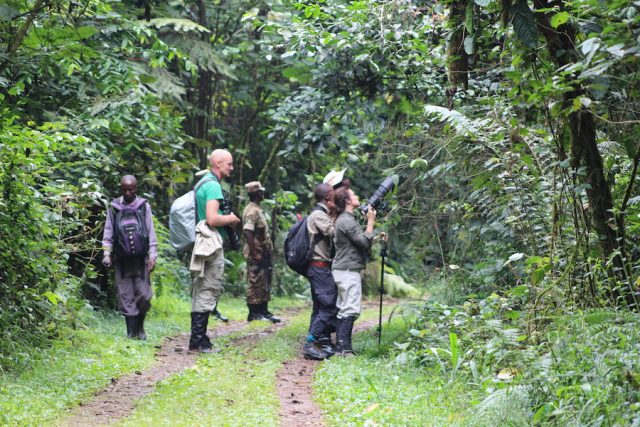
Yes, Bwindi Impenetrable National Park is considered one of the best birding destinations in Uganda and Africa, hosting over 350 bird species. It is a premier site for Albertine Rift endemics, holding 23 of the 24 species found in Uganda, including the rare African Green Broadbill and Shelley’s Crimsonwing
36-days-grand-uganda-bird-watching-safari
30-days-best-uganda-birding-safari-extravaganza-and-wildlife-safari
25-days-complete-uganda-birding-safari-extravaganza-with-wildlife-viewing
22-days-best-uganda-primate-and-birding-safari-adventure
20-days-uganda-birding-safari-to-uganda-national-park
14-days-classic-uganda-birding-safari-expedition
Why Bwindi is a Top Uganda Birding Safari Destination
Unique Biodiversity
Bwindi Impenetrable National Park is a biological masterpiece, a relic of the Pleistocene era that survived the last ice age when much of the surrounding continent dried up. This longevity has allowed for an extraordinary level of evolutionary specialization. Its unique biodiversity is largely defined by its dramatic altitudinal range, which spans from 1,160 to 2,607 meters above sea level. This verticality creates a layered cake of ecosystems, ranging from lowland evergreen forests to montane forests and bamboo thickets. For a birder, this means that a single day's trek can yield entirely different avian communities as you move through the mist-shrouded canopy layers.
The park is the crown jewel of the Albertine Rift, an area of immense conservation importance. Because Bwindi acted as a refugium during periods of climate instability, it hosts 90% of all Albertine Rift endemics. These are species that evolved in isolation within this specific geological trough and are found nowhere else on Earth. The forest structure itself—dense, tangled, and "impenetrable"—provides the perfect microclimates for specialized feeders. The high humidity and consistent rainfall support a lush understory of ferns and epiphytes, which in turn support a massive biomass of insects and fruits. This food security is what allows Bwindi to maintain such high population densities of rare birds. It isn't just about the number of species, but the complexity of the ecological niches they occupy; from the ground-dwelling forest floor specialists to the raptors patrolling the high ridges, Bwindi represents a prehistoric equilibrium that remains largely undisturbed, offering a glimpse into the natural world as it existed millennia ago.
High Endemic Count
The allure of Bwindi for serious "twitchers" lies in its incredible concentration of localized species. While the park is home to over 350 bird species, its true prestige comes from the 23 Albertine Rift endemics that reside within its borders. To put this into perspective, 14 of these species are found nowhere else in Uganda. This high endemic count makes Bwindi an essential destination for anyone attempting to complete an African life list. The evolutionary isolation of the rift valley has resulted in birds with highly specific habitat requirements, making Bwindi one of the few places where the environment meets their exact needs.
The endemic list is a "who’s who" of rare African ornithology. It includes the elusive African Green Broadbill, a bird so localized that Ruhija is considered the best place in the world to find it. Other "lifers" frequently sought after include the Regal Sunbird, Strange Weaver, and the Blue-headed Sunbird. The density of these endemics is a testament to the park's health. In many other African forests, habitat fragmentation has driven these specialists toward extinction, but Bwindi’s protected status ensures that these unique genetic lineages continue to thrive. For a birder, walking through Bwindi is like walking through a living museum; every flash of color or distinct call could represent a species that exists in only a handful of valleys on the entire planet. The sheer concentration of "exclusives" turns every birding excursion into a high-stakes scavenger hunt where the rewards are globally significant.
Top Birding Sites
Bwindi is divided into distinct sectors, each offering a different flavor of birding and specific target species. Ruhija, located in the high-altitude eastern part of the park, is widely considered the premier birding spot. Its cooler climate and mountainous terrain make it the primary site for Albertine Rift endemics. The highlight of Ruhija is the Mubwindi Swamp Trail. This 4-kilometer descent is a pilgrimage for birders, as the swampy valley at the bottom is the most reliable place to spot the African Green Broadbill. The trail passes through various forest stages, allowing birders to tick off high-altitude specialists like the Grauer's Rush Warbler and the Archer's Robin-Chat.
In contrast, the Buhoma sector in the northwest offers lower-altitude forest birding. The trails here, such as the Ivy River Trail and the Waterfall Trail, are excellent for spotting species like the Short-tailed Warbler and various species of Trogons and Bee-eaters. Buhoma’s trails are generally wider and offer slightly better visibility through the canopy than the steeper ridges of Ruhija. Furthermore, the Nkuringo sector offers breathtaking views of the Virunga Volcanoes and provides opportunities to see high-altitude raptors and sunbirds. Each sector is managed with specialized birding guides who are experts at "ear-birding"—identifying species by their calls in the dense foliage. By visiting multiple sectors, a birder can cover the full spectrum of Bwindi’s avian diversity, moving from the misty swamp bottoms to the sun-drenched canopy edges of the lower valleys.
Special Species to Spot
While the sheer volume of birds is impressive, Bwindi is defined by its "superstar" species. The African Green Broadbill is the most iconic; its tiny, bright green body and blue throat make it a masterpiece of nature, but its habit of sitting motionless in the canopy makes it a thrilling challenge to find. Another heavy hitter is the Rwenzori Turaco, a large, stunning bird with vibrant red, green, and blue plumage that looks like something out of a tropical dream. Its loud, gravelly call often gives away its position in the high branches, though seeing it fly—revealing its brilliant crimson wing feathers—is the true prize.
Ground-dwelling birds like the Handsome Francolin provide a different challenge. These shy, beautifully patterned birds are often heard rustling in the leaf litter long before they are seen. For those with a keen eye for color, the Black Bee-eater is a must-see; its sleek black plumage punctuated by a vivid red throat and blue streaks makes it one of the most handsome birds in the forest. Then there is Shelley's Crimsonwing, one of the world's rarest finches. Its presence in Bwindi is a major draw, though it remains one of the most difficult birds to photograph due to its shy nature and preference for dense bamboo thickets. Spotting even two or three of these "specialties" in a single trip is enough to make a birder’s year, as they represent some of the most sought-after avian sightings on the African continent.
Best Time to Visit
Birding in Bwindi is a year-round activity thanks to Uganda’s equatorial climate, but timing your visit can change the experience significantly. The period from November to April is widely regarded as the peak window for enthusiasts. This coincides with the arrival of migratory birds from Europe and Northern Africa. During these months, the resident "locals" are joined by a host of visitors, such as various species of Cuckoos, Swallows, and Raptors, temporarily boosting the park's species count and creating a bustling, multi-continental avian community.
The "main" rainy seasons (March–May and September–November) can make trekking more physically demanding due to slippery trails, but they offer distinct advantages. Rain often triggers breeding behavior, meaning birds are more vocal and active as they defend territories and seek mates. March and April are particularly good for seeing birds in their bright breeding plumage. If you prefer easier trekking conditions, the dry seasons (June–August and December–February) provide clearer skies and easier walking, though the birds can be slightly quieter. It is also important to note that the fruiting seasons of various forest trees will dictate where the birds are; a professional birding guide will know which trees are in fruit, as these become "hotspots" where dozens of species congregate to feed. Regardless of the month, the early morning hours (6:00 AM to 10:00 AM) are the "golden hours" in Bwindi, when the forest wakes up in a cacophony of sound and the mist begins to lift from the valleys.
1. Why is Bwindi Impenetrable National Park considered a great Uganda birding safari destination?
Bwindi Impenetrable National Park is widely regarded as one of the most significant biological entities on Earth, largely due to its survival through the last ice age when most other forests disappeared. For a Uganda birding safari, this ancient status means the park serves as a refuge for an incredible array of biodiversity that cannot be found elsewhere. It is a UNESCO World Heritage site specifically because of its unique flora and fauna. The park’s primary draw is its altitude range, spanning from 1,160m to 2,607m above sea level, which creates distinct micro-climates and vegetation zones. These zones, ranging from lowland forest to afromontane vegetation, allow for a high concentration of specialized species.
Furthermore, the park is home to 23 of the 24 Albertine Rift endemics available in the country, making it the most critical stop on any Uganda birding safari itinerary. Birdlife International has recognized it as an Important Bird Area (IBA). The "impenetrable" nature of the forest—characterized by thick undergrowth and steep ridges—creates a protected canopy where rare birds thrive undisturbed. Unlike more open savannah parks, Bwindi offers a "cloud forest" experience where the mist often clings to the trees, providing a mystical backdrop for spotting elusive forest-dwellers. The sheer density of species, combined with the presence of globally threatened birds, cements its reputation as Africa's number one birding site. When you embark on a Uganda birding safari here, you aren't just seeing birds; you are witnessing a prehistoric ecosystem that has remained largely unchanged for over 25,000 years.
2. How many bird species can I see during my Uganda birding safari in Bwindi?
During a Uganda birding safari in Bwindi, the sheer volume of avian life is staggering. The official record stands at approximately 350 to 360 species. While that number might seem smaller than some of the larger savannah parks, the value of Bwindi lies in the rarity and specialization of its residents. On a typical day, a keen birder with a professional guide can expect to check off between 70 and 100 species, depending on the weather and the specific trails explored.
The diversity is distributed across various families. You will encounter everything from large, striking birds like the Great Blue Turaco to tiny, vibrant sunbirds and elusive "little green bulbs" that challenge even the most experienced watchers. Because Bwindi is a forest environment, the birding is "active"—you aren't just looking at a flat landscape; you are peering into the mid-story, the high canopy, and the dense floor litter. This vertical diversity is what makes a Uganda birding safari in Bwindi so rewarding. You might see 10 different species in a single fruiting tree. The park also hosts 76 of the 144 Guinea-Congo Forest biome species and 68 of the 86 Afro-tropical highland biome species. This high "species-per-square-mile" ratio ensures that every hour spent on the trail is filled with new sightings. Whether you are a casual hobbyist or a professional lister seeking to complete a life list, the volume of birds in Bwindi ensures your Uganda birding safari will be a productive one.
3. What are the key Albertine Rift endemics for a Uganda birding safari in Bwindi?
The Albertine Rift is a geographic region stretching across the borders of Uganda, Rwanda, and the DRC, characterized by high mountains and deep lakes. For many travelers, the primary goal of a Uganda birding safari is to see "endemics"—birds that live nowhere else in the world. Bwindi is the ultimate stronghold for these. The most famous is the African Green Broadbill, a small, bright green bird with a blue throat that is notoriously difficult to find outside of the Ruhija sector.
Other high-priority endemics include the Shelley’s Crimsonwing, which is one of the world’s rarest finches, and the Grauer’s Swamp Warbler, typically found in the high-altitude marshes of Mubwindi. The Rwenzori Turaco, with its stunning red, green, and blue plumage, is a frequent highlight of a Uganda birding safari. You will also seek out the Handsome Francolin, often heard calling in the early morning, and the Regal Sunbird, whose iridescent feathers shimmer in the rare forest sunlight. Other key endemics include the Short-tailed Warbler, Blue-headed Sunbird, Strange Weaver, and the Red-faced Woodland Warbler. Spotting these birds requires patience and a good ear for calls, as many are small and blend into the foliage. Successfully ticking off these endemics is often the highlight of a professional Uganda birding safari, as many of these species face habitat loss elsewhere, making Bwindi their final, safe sanctuary.
4. Which is the best sector in Bwindi for a Uganda birding safari?
Bwindi is divided into four main sectors, each offering a slightly different experience for a Uganda birding safari. Ruhija is widely considered the "holy grail" for serious birders. Located in the eastern part of the park at a higher altitude, it provides access to the famous Mubwindi Swamp. This is the best place to find high-altitude endemics like the African Green Broadbill and Grauer's Swamp Warbler. The road through Ruhija also offers excellent "roadside birding," where you can see many species without even entering the deep forest.
The Buhoma sector, in the north, is the lowest in elevation and is excellent for those looking for a mix of forest and riverine species. The Waterfall Trail in Buhoma is legendary among those on a Uganda birding safari for sightings of the Short-tailed Warbler and many species of Flycatchers and Bee-eaters. Nkuringo and Rushaga in the south offer rugged terrain and spectacular views of the Virunga Volcanoes. While these areas are more famous for gorilla trekking, they host unique species like the Kivu Ground Thrush. For a truly comprehensive Uganda birding safari, it is best to visit at least two sectors—typically Ruhija for the high-altitude endemics and Buhoma for the lower-forest specialists. Each sector has its own set of professional guides who are intimately familiar with the local territories of specific birds, ensuring you don't miss the key targets of each zone.
5. What is the best time to visit Bwindi for a Uganda birding safari?
Timing is crucial when planning a Uganda birding safari. While Bwindi is a year-round destination, the weather patterns significantly affect bird activity and your comfort on the trails. The dry seasons—June to August and December to February—are generally preferred. During these months, the trails are less slippery, and the birds are often more active as they take advantage of the fruiting trees. June and July are particularly good because they fall between the two rainy seasons, offering clear skies and excellent lighting for photography.
However, the "short rains" in October and November can also be a fantastic time for a Uganda birding safari. This is when many forest birds are in their breeding plumage and are most vocal as they establish territories and attract mates. If your goal is to see migratory birds from Europe and Asia, you must plan your visit between November and April. During this window, the local resident population is bolstered by dozens of Palearctic migrant species, significantly increasing your total count. The heaviest rains usually fall in March, April, and May. While birding during this time can be physically demanding due to muddy conditions and dense mist, the forest is at its most lush and green. If you can handle a bit of rain, you’ll find the park much quieter, giving you a more intimate Uganda birding safari experience with fewer other tourists on the trails.
6. Can I combine gorilla trekking with a Uganda birding safari in Bwindi?
One of the greatest advantages of visiting Bwindi is the ability to combine two world-class wildlife experiences: a Uganda birding safari and mountain gorilla trekking. These two activities are perfectly complementary. Gorilla trekking takes you deep into the heart of the "impenetrable" forest, often off-trail and into areas you wouldn't otherwise visit. While the focus is on the primates, a birder can easily spot rare forest species during the trek. It is common to see Turacos, Hornbills, and Sunbirds while waiting for the gorillas to move into a visible position.
To make the most of this, many travelers book a "birding-focused" gorilla trek. This involves informing your park rangers that you are on a Uganda birding safari, so they can move a bit slower and point out avian life along the way. However, it is important to remember that once the gorillas are found, you have exactly one hour with them, and birding usually takes a backseat during that intense encounter. The ideal itinerary involves dedicated birding days followed by a gorilla trekking day. This ensures that you have the time to sit quietly and wait for a specific bird to appear, without the pressure of a group moving toward the gorillas. Combining these activities makes for a highly efficient and emotionally rewarding Uganda birding safari, as Bwindi is one of the few places on earth where you can see a Silverback and an African Green Broadbill on the same day.
7. What is the most sought-after bird on a Uganda birding safari in Bwindi?
Without question, the "Holy Grail" of any Uganda birding safari in Bwindi is the African Green Broadbill (Pseudocalyptomena graueri). This bird is incredibly localized and rare, found only in a few spots in the Albertine Rift. In Bwindi, it is almost exclusively found in the Ruhija sector, specifically around the Mubwindi Swamp. It is a small, plump bird with luminous green feathers and a distinctive blue throat and tail. Its camouflage is so effective that it can be nearly impossible to spot unless it moves or calls.
The challenge of finding the Broadbill adds to its allure. It often sits motionless in the mid-canopy, making it a test of skill for any guide on a Uganda birding safari. Seeing one usually requires a dedicated hike down to the swamp, which can be physically taxing. Another highly sought-after species is Shelley’s Crimsonwing, a bird so elusive that there are very few clear photographs of it in the wild. It is considered one of the world’s most "wanted" birds for serious enthusiasts. Finally, the Chapin’s Flycatcher and Oberländer’s Ground Thrush are also high on the list for those conducting a serious Uganda birding safari. These birds represent the pinnacle of forest birding; they are rare, live in difficult terrain, and require expert knowledge to locate. Successfully spotting these "Big Four" of Bwindi's avian world is considered a major achievement in the global birding community.
8. Are there any unique birds only found in Bwindi during a Uganda birding safari?
Bwindi’s isolation and ancient age have allowed for the evolution of several species that are extremely difficult to find anywhere else. While most Albertine Rift endemics can technically be found in other parks like Mgahinga or Nyungwe (Rwanda), Bwindi offers the most reliable sightings for a Uganda birding safari. There are 14 species in particular that are not recorded in any other national park in Uganda. This makes Bwindi an mandatory stop for anyone trying to maximize their national list.
These Bwindi-specific highlights often include specialized warblers and thrushes that depend on the specific primary forest found here. For instance, the Short-tailed Warbler is a Bwindi specialty often found on the Buhoma trails. While it may exist in the DRC, Bwindi is the safest and most accessible place in the world to see it. The presence of these unique birds is a testament to the park's role as a "Pleistocene refugium"—a place where species survived while the rest of the continent's forests changed. For a participant on a Uganda birding safari, this means Bwindi provides a "window into the past." The unique combination of altitude, moisture, and ancient trees creates a habitat that simply isn't replicated elsewhere. Protecting these birds is a major focus of local conservation efforts, and the revenue from your Uganda birding safari directly funds the park rangers and researchers who ensure these unique species continue to thrive in their only home.
9. What should I pack for a Uganda birding safari in Bwindi?
Packing correctly is the difference between a successful Uganda birding safari and a frustrating one. The terrain in Bwindi is notoriously difficult; the word "Impenetrable" is in the name for a reason. First and foremost, you need high-quality binoculars. A 8x42 or 10x42 pair is ideal for the low-light conditions under the thick forest canopy. Because it can rain at any moment, even in the dry season, you must bring a lightweight, breathable raincoat and a waterproof cover for your backpack and camera gear.
Footwear is another critical component. You need sturdy, waterproof hiking boots with excellent grip for the steep, often muddy slopes. Many birders also wear "gaiters" to keep mud and stinging nettles off their trousers. For clothing, choose neutral colors like green, tan, or gray to blend into the environment—avoid bright colors like red or white, which can startle the birds. Long-sleeved shirts and long trousers are essential to protect against insects and thorny plants. Don't forget a wide-brimmed hat and a good supply of insect repellent containing DEET. For photography enthusiasts on a Uganda birding safari, a lens with a fast aperture (like f/2.8 or f/4) is beneficial because the forest floor is often quite dark. Finally, carry a notebook or a birding app (like the Roberts Bird Guide or Merlin) to log your sightings in real-time. Bwindi's weather can be unpredictable, so packing in layers is the best way to stay comfortable from the chilly mornings to the humid afternoons.
10. Does Bwindi offer guided birding tours for a Uganda birding safari?
Yes, Bwindi is exceptionally well-equipped for guided tours, and taking a professional guide is highly recommended for any Uganda birding safari. The Uganda Wildlife Authority (UWA) employs rangers who are specifically trained in ornithology. Additionally, there are many private, local "site guides" who have spent decades in the forest. These experts don't just know what the birds look like; they know their calls, their nesting habits, and exactly which tree they prefer for breakfast.
On a Uganda birding safari, your guide will use "pishing" or occasional call-backs (within ethical limits) to draw out shy species. They are also vital for navigating the trail system, which can be confusing and physically demanding. Because many Bwindi birds are "skulkers"—meaning they stay hidden in thick undergrowth—having an expert who can identify a bird by a single "chip" note is invaluable. These guides are also knowledgeable about the other aspects of the forest, including the medicinal uses of plants and the behavior of the gorillas and elephants that share the space. Many specialized Uganda birding safari operators can arrange for top-tier guides who are members of the Uganda Bird Guides Club. These professionals often travel with you across the country, providing continuity and deep expertise as you move from Bwindi to other parks. Their ability to spot a tiny bird in a massive Mahogany tree from 50 yards away is often the most impressive part of the entire trip.
11. Can I see migratory birds during my Uganda birding safari in Bwindi?
Bwindi is a vital corridor for migratory birds, making it a dynamic place for a Uganda birding safari. While the park is famous for its residents, the population changes significantly during the northern hemisphere's winter. From November to April, Bwindi becomes a temporary home for Palearctic migrants fleeing the cold of Europe and Asia. This adds a whole new layer of diversity to your trip.
During this time, you can see various species of Warblers, Flycatchers, and Shrikes that have traveled thousands of miles to reach the Albertine Rift. Species like the Willow Warbler, Blackcap, and Spotted Flycatcher are common sights. There are also intra-African migrants that move within the continent based on rain and food availability, such as various species of Cuckoos and Kingfishers. For a birder, this means your total species count can jump significantly. The interplay between the local endemics and the international visitors is a fascinating aspect of a Uganda birding safari. The migrants often occupy different "niches" in the forest than the residents, leading to a high level of activity across all levels of the canopy. If your primary goal is to see as many species as possible, regardless of whether they are local endemics, scheduling your Uganda birding safari during the "migrant window" is a smart move.
12. Are there specific trails recommended for a Uganda birding safari in Bwindi?
Bwindi features several legendary trails that are must-visits during a Uganda birding safari. In the Ruhija sector, the Mubwindi Swamp Trail is the most famous. It is a 4–5-hour hike that takes you through various forest elevations down to a high-altitude swamp. This is the premier location for the African Green Broadbill and Grauer’s Swamp Warbler. The terrain can be tough, but the avian rewards are unmatched.
In the Buhoma sector, the Waterfall Trail is highly productive. It follows the Munyaga River and offers a chance to see the Short-tailed Warbler, African Black Duck, and Cassin’s Flycatcher. It is a relatively easy walk compared to others in the park. The Ivy River Trail, which connects Buhoma to Nkuringo, is a longer trek but offers incredible birding through secondary forest and local community land, where you can see many sunbirds and weavers. For those looking for high-altitude specialists, the Bamboo Zone in Ruhija is the place to find the Handsome Francolin and Red-faced Woodland Warbler. Each trail offers a different "subset" of Bwindi's birdlife. A well-planned Uganda birding safari will incorporate a mix of these: a swamp trail for specialists, a riverine trail for water-associated birds, and a high-canopy trail for the forest giants. Most trails require a park ranger, who ensures your safety and helps with identification along the way.
13. How long should I stay in Bwindi for a comprehensive Uganda birding safari?
To truly appreciate the avian wealth of Bwindi, a "fly-in, fly-out" visit is not enough. For a comprehensive Uganda birding safari, you should dedicate at least 3 to 4 full days to the park. This allows you to visit at least two different sectors—most commonly Buhoma and Ruhija—which is essential because their differing altitudes host different species.
A typical 4-day itinerary might look like this: Day 1 dedicated to the Waterfall Trail in Buhoma; Day 2 for gorilla trekking (with incidental birding); Day 3 for the long hike down to the Mubwindi Swamp in Ruhija; and Day 4 for roadside birding and the Bamboo Zone. This pace ensures that you aren't rushing and have time to wait out shy species like the Shelley's Crimsonwing. Bwindi is often subject to mist and rain, which can "shut down" bird activity for a few hours. By staying longer, you build in a "buffer" against the weather, ensuring that one rainy morning doesn't ruin your entire Uganda birding safari. Furthermore, the forest is vast, and many birds have large territories; a multi-day stay increases your chances of being in the right place at the right time. Most birders find that after three days, they have successfully seen most of the "targets" and can move on to other parks like Queen Elizabeth or Kibale to continue their Uganda birding safari with a well-rounded list.
14. Are there any risks or safety issues for a Uganda birding safari in Bwindi?
Safety is a common concern for travelers, but Bwindi is a very secure destination for a Uganda birding safari. The park is heavily monitored by the Uganda Wildlife Authority (UWA) and the tourism police. Whenever you enter the forest for a birding walk, you are accompanied by an armed ranger. This isn't because the park is dangerous from a human perspective, but rather as a standard precaution against wild animals like forest elephants or buffaloes, which can be unpredictable.
The primary "risks" on a Uganda birding safari are actually related to the terrain and environment. The forest floor can be incredibly slippery and the slopes are steep, leading to potential slips or falls. It is important to be in moderate physical condition and to use a walking stick (often provided at the start of the trail). There are also stinging nettles and insects, so wearing long sleeves and trousers is a safety must. While there are snakes in the forest, they are shy and rarely seen; your guide will always lead the way to ensure the path is clear. Malaria is present in the region, so taking prophylaxis and using insect repellent is a standard health precaution for any Uganda birding safari. As long as you follow your guide's instructions and come prepared with the right gear, Bwindi is a safe, welcoming, and life-changing destination for birders of all levels.
15. Are there other good birding spots near Bwindi to extend my Uganda birding safari?
Bwindi is often the "anchor" of a Uganda birding safari, but it is surrounded by other incredible sites that offer different species. Just a short drive away is Mgahinga Gorilla National Park. While smaller, it offers access to the higher-altitude volcanic peaks where you can find the Rwenzori Turaco and the beautiful Scarlet-tufted Malachite Sunbird, which are not as easily seen in Bwindi.
Another excellent extension is Lake Bunyonyi. Known as the "place of many little birds," it is perfect for seeing water-associated species, weavers, and kingfishers. It offers a relaxing change of pace from the dense forest. To the north, Queen Elizabeth National Park provides a total contrast. After the forest birding of Bwindi, Queen Elizabeth offers savannah, crater lakes, and the Kazinga Channel. Here, you can see over 600 species, including the prehistoric-looking Shoebill Stork and a variety of raptors and waterbirds. Combining Bwindi with Queen Elizabeth and Kibale National Park (famous for the Green-breasted Pitta) creates a "Western Uganda Circuit" that is widely considered one of the best birding routes in the world. By extending your Uganda birding safari to these nearby areas, you can easily push your total species count over 400 or 500 in a single 10–14-day trip.
Booking Uganda birding safari in Bwindi with us Roads of Adventure safaris
Book your birding safari in Bwindi Impenetrable National Park with Roads of Adventure Safaris for expert-led, customized tours aimed at spotting over 350 species, including 23 Albertine Rift endemics like the African Green Broadbill. They offer tailored, professional itineraries, frequently combined with gorilla tracking and Kibale chimpanzee trekking
