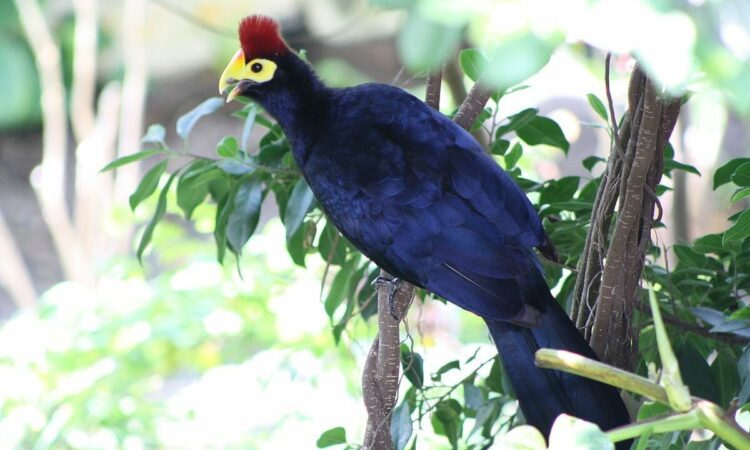
Mubwindi Swamp in Bwindi Impenetrable National Park (Ruhija sector) is a premier birding spot for Albertine Rift endemics. Key species to spot include the endangered Grauer’s swamp warbler, elusive African green broadbill, Shelley’s crimsonwing, Rwenzori turaco, and handsome francolin. The area offers high-altitude wetland and forest species
30-days-best-uganda-birding-safari-extravaganza-and-wildlife-safari
25-days-complete-uganda-birding-safari-extravaganza-with-wildlife-viewing
22-days-best-uganda-primate-and-birding-safari-adventure
21-days-uganda-birding-safari-extravaganza-to-best-uganda-safari-parks
20-days-uganda-birding-safari-to-uganda-national-park
20-days-uganda-birding-safari-wildlife-gorilla-and-chimpanzee-tracking
14-days-classic-uganda-birding-safari-expedition
12-days-uganda-birding-tour-looking-for-rift-valley-endemic-birds-west-circuit
10-days-best-uganda-birding-safari-and-wildlife-experience
Key Bird Species to See in Mubwindi Swamp on Uganda birding safari
- Albertine Rift Endemics/Specialties: African Green Broadbill, Grauer’s Swamp Warbler, Rwenzori Turaco, Rwenzori Batis, Regal Sunbird, Blue-headed Sunbird, Purple-breasted Sunbird, Strange Weaver, Archer’s Robin-Chat, Stripe-breasted Tit, Yellow-eyed Black Flycatcher, and Dusky Crimsonwing.
- Other Notable Species: Handsome Francolin, Doherty’s Bush-shrike, Fraser’s Eagle-Owl, Bar-tailed Trogon, Black Bee-eater, and White-starred Robin.
What is the most sought-after bird to see in a Mubwindi Swamp birding safari?
The African Green Broadbill is the marquee species in Mubwindi Swamp and the most sought‑after bird for visiting birders. This species (scientific name: Calyptomena spp. — note regional taxonomy varies) is a rare, jewel‑green, secretive canopy and subcanopy specialist of montane and submontane forest patches in the Albertine Rift. Its vivid emerald plumage, stout broad bill and uncommon status in East Africa make it an instant trip highlight and a conservation flagship for the swamp. Mubwindi provides one of the few accessible stakeout habitats in Uganda where the broadbill occurs regularly, thanks to the swamp’s intact, mossy canopy, mixed fruiting trees, and dense vine tangles that support its primary diet of fruit and large insects. Successful sightings typically result from careful canopy scanning from clearings or forested trails at dawn when birds move to upper fruiting branches. The African Green Broadbill is often heard before seen: listen for soft, plaintive calls or brief chattering, and watch for movement among broad, glossy leaves. Because it spends much time motionless and tucked in dappled light, patients, long views and good optics are crucial. If visiting with an experienced local guide they will often know recent fruiting trees and habitual territories, greatly increasing your chances. Ethical observation practices are essential: avoid repeated close playback or excessive disturbance near suspected nest sites. Photographers should be prepared with a long lens and be ready for backlit canopy conditions; diffused morning light gives the best shots. Beyond the thrill of a visual, seeing the African Green Broadbill in Mubwindi underscores the importance of conserving small, specialized montane swamp fragments that harbor Albertine Rift endemics and range‑restricted forest specialists.
What endemic warbler can I see in a Mubwindi Swamp birding tour?
Grauer’s Warbler (also called Grauer’s Rush Warbler in some accounts) is one of the Albertine Rift endemics that birders actively seek in Mubwindi Swamp. This species is tightly associated with dense, wet understorey vegetation, reedbeds and tangles that typify montane swamp habitats. Its localized distribution and often subtle plumage make it a special target for those completing Albertine Rift or East African endemic lists. In Mubwindi, Grauer’s Warbler occupies low, reedy sections and the swamp edge where sedges, short saplings and mossy hummocks concentrate insects and nesting sites. Field identification leans heavily on its characteristic vocalizations—short, repetitive, insect‑like trills and phrases—and furtive behaviour: the bird typically creeps through dense vegetation, rarely exposing itself for long. A typical observation approach is to move slowly along the swamp fringes during early morning when warbler activity peaks, using careful, soft playback only if permitted and ethically acceptable; often locating a calling bird and then waiting patiently will produce brief, but diagnostic, views. Grauer’s Warbler favors damp microhabitats and shows seasonal movements tied to rainfall and insect abundance, so persistence across multiple visits improves success. Guides familiar with Mubwindi’s microhabitats can pinpoint likely zones—shallow channels, broken ground with tall sedge clumps, and edges of sphagnum mats where the species forages. While not as visually flamboyant as some montane endemics, a confirmed sighting of Grauer’s Warbler is rewarding for its rarity and its role as an indicator of healthy swamp understorey. Observers should minimize trampling of sedges and avoid disturbing potential nesting sites; these fragile swamp microhabitats are easily damaged by heavy foot traffic.
What other warblers are commonly seen in a Mubwindi Swamp trek?
Mubwindi Swamp supports a productive assemblage of warblers and small insectivores that exploit layered understorey and scrubby edges. Three warblers commonly recorded on treks through Mubwindi are Neumann’s Warbler, Mountain Yellow Warbler, and Banded Prinia—each occupying slightly different microhabitats and offering contrasting behaviours that reward careful observation. Neumann’s Warbler (Uromycla/Obscure taxonomy depending on source) is an elusive understorey specialist often heard as a rapid, high‑pitched series of notes echoing through vine tangles; it skulks near damp ground and low vegetation and is best located by listening and then staking out a calling area early in the morning. Mountain Yellow Warbler prefers denser shrubs and lower mid‑storey in montane and submontane zones; its brighter plumage and distinctive song of melodious phrases make it easier to detect and often results in short flights between saplings where it gleans insects. Banded Prinia is more of a scrub and edge species that uses low, reedy margins and disturbed patches within the swamp; its behaviour—flitting among reed stems and perching openly on exposed stalks—makes it comparatively visible. On a Mubwindi trek, combine slow walking through the swamp’s boardwalks and sidetracks with patient stakeouts at damp pools and sedge beds. Early morning is peak activity; busier midday periods bring less vocal behaviour but may reward you with foraging flocks. Mixed‑species flocks often include these warblers, so watching flock movements and following small parties can produce multiple warbler species in quick succession. As always in swamp habitats, tread lightly to avoid trampling delicate vegetation, and work with an experienced guide who knows local territories and seasonal variations in warbler presence.
What turaco species is a highlight for a Mubwindi birding trip?
The Rwenzori Turaco (Gallirex johnstoni) is a signature sighting for visitors to Mubwindi Swamp and the surrounding Rwenzori–Albertine Rift forests. This striking, colorful turaco displays deep emerald and green plumage with red wing patches and a prominent crest—features that make it a favorite subject for birders and photographers. In Mubwindi, the Rwenzori Turaco frequents the canopy and mid‑storey of mature montane swamp and adjacent forest fragments where fruiting trees and fig species provide abundant food. Turacos are frugivorous and fairly vocal, producing a series of resonant, barking calls that can carry through the swamp, making auditory detection often easier than visual. The best way to see Rwenzori Turaco is to arrive at dawn, scan fruiting canopy and emergent trees from clearings or the swamp’s trail margins, and follow vocal birds as they move through the treetops. Rwenzori Turacos frequently move in small groups or pairs and can be surprisingly approachable when feeding quietly. Their role as seed dispersers is ecologically important—by moving large fleshy fruits they help perpetuate the forest’s fruiting species composition. For photographers, mid‑morning light often produces better color rendition in the canopy; patience and a long lens are essential because turacos may perch high in the canopy. Conservation‑wise, the presence of Rwenzori Turaco in Mubwindi underlines the swamp’s value as an intact montane forest remnant supporting Albertine Rift endemics and forest specialists. While the species is not as cryptic as some swamp understorey birds, heeding park guidelines—minimizing noise and avoiding off‑trail excursions—helps preserve the habitat that supports turaco populations.
What sunbirds can I look for in a Mubwindi Swamp birding experience?
Mubwindi Swamp and its environs support several attractive sunbird species, but two particularly notable highlights are the Blue‑headed Sunbird and the Regal Sunbird. These nectarivores frequent flowering shrubs, epiphytes and canopy blossoms found in montane and submontane forest edges, where they perform characteristic hovering or short‑sally feeding behaviours. Blue‑headed Sunbird (a small, iridescent species) tends to occupy lower to mid‑storey flowering plants and epiphyte‑rich branches; males show striking blue head tones that gleam in the right light, while females are more subdued but active and confiding. Regal Sunbird, larger and often richly colored, favors higher canopy flowers and tree‑tops, and its presence often coincides with mass flowering events of particular mist‑belt plants. On a Mubwindi birding walk, focus on forest edges, clearings with flowering shrubs, and tree crowns during the early morning when nectar resources are fresh and sunbird activity peaks. Watch for rapid flicking movements, short hovering bouts, and frequent visits to inflorescences; sunbirds will often be part of mixed foraging flocks, making scans of active shrubs highly productive. Photographing sunbirds in the swamp can be challenging due to dim understorey light, so seek out peripheral clearings and backlit blossoms for better exposures. These sunbirds also feed on small arthropods, especially during nesting season, so behavior can be variable and interesting to watch. Conservation of the swamp’s floral resources—epiphytes, flowering lianas and understory shrubs—is important for sustaining local sunbird populations, so minimizing disturbance and respecting trail boundaries helps maintain these attractive, nectar‑dependent species.
What special Apalis species can I see in a Mubwindi Swamp trail?
Mubwindi Swamp and adjacent montane forest patches are good places to target two Apalis species: Mountain Masked Apalis and Chestnut‑throated Apalis. Both occupy specific strata in the forest and show distinctive behaviours and vocalizations that aid detection. Mountain Masked Apalis is typically found in montane forest and forest edge, occupying mid‑storey tangles and dense undergrowth. It has a distinctive facial pattern (a dark mask set against paler facial tones) and energetic foraging style—gleaning insects from leaves and twigs and frequently flicking its tail. Chestnut‑throated Apalis prefers slightly lower elevations and dense shrub layers, with a warm chestnut throat and underpart tones that contrast with a paler belly; it often joins mixed‑species flocks and can be located by its sharp, thin calls. To find these apalises in Mubwindi, focus on transitions between swamp mat and taller forest, as both species exploit the structural diversity there. Early morning and late afternoon are peak times for foraging activity and vocal exchanges, while mixed flocks are especially useful because Apalises commonly travel together with other small insectivores. Guides with local knowledge can recognize subtle song differences and know habitual territories where these Apalises hold territories for breeding. Recording devices or gentle call playbacks are sometimes used selectively—only where permitted and when not likely to cause undue disturbance—to elicit responses, but the best results usually come from patient listening and careful stalking of flocks. As small, insectivorous specialists, Apalises also reflect habitat quality: their consistent presence in Mubwindi indicates a rich understorey insect fauna and intact shrub layers that deserve conservation attention.
What robin-chat is a target bird in a Mubwindi Swamp excursion?
Two robin‑chats are regular targets in Mubwindi Swamp excursions: the White‑starred Robin and Archer’s Robin‑Chat. Both are attractive, medium‑sized members of the Muscicapidae family and are sought for their songs, plumage and ground‑level behaviours in montane forest. The White‑starred Robin is typically found in dense understorey and mossy tangles; males have striking white spotting on the breast and a melodious, fluted song that carries through the swamp. It forages quietly along low branches and fallen logs, occasionally hopping on the ground in leaf litter while gleaning insects. Archer’s Robin‑Chat is similarly vocal and often more confiding, with a rich, varied song that includes mimicry and clear phrases; it favors slightly more open understorey and forest edges, where it will perch in low saplings and call repeatedly. To find these robin‑chats, concentrate on quiet early morning sessions near streamside tangles, log piles and understorey thickets where they forage and sing. Once a singing bird is located, remain still and allow it to approach or reveal itself; many visual records are obtained at short range when the bird moves between foraging perches. These species are important indicators of understorey health and insect prey availability; their presence in Mubwindi attests to the swamp’s intact microhabitat structure. Observe with minimal disturbance—avoid prolonged playback and do not chase birds into dense vegetation. Photographers should use low angles and be ready for low‑light conditions. Local guides are valuable for locating territories and reading recent activity patterns, increasing chances of satisfying views.
What nightjar can I see in a Mubwindi Swamp night birding session?
The Rwenzori Nightjar is a species you can encounter during night birding sessions near Mubwindi Swamp. This cryptic nocturnal species inhabits montane and submontane forest clearings, forest edge and open areas adjacent to swamp patches where it hunts flying insects. Rwenzori Nightjar is highly camouflaged against leaf litter and exposed ground, and daytime detection depends on locating its daytime roosts—often a well‑camouflaged bird lying motionless on an open stump or patch of bare soil. Night birding is the most reliable way to detect its calls and flight activity; the species gives distinctive churring or soft, repetitive calls and performs low, buoyant flight as it forages at dusk and through the night. When planning a night session in Mubwindi, use a torch with a red filter or low intensity to avoid blinding or stressing nocturnal birds; sweep likely open patches and listen for calls from roosting birds. Nightjars often incline to perch on the ground or low branches, and a slow approach can reveal their pale underparts or wing panels when light catches them in flight. Safety is paramount—stick with an experienced guide, wear appropriate footwear for wet ground, and be aware of wildlife. Ethical guidelines advise limiting use of playback at night and minimizing disturbance at roost sites. A confirmed sighting of Rwenzori Nightjar provides a vivid contrast to the swamp’s diurnal community and highlights Mubwindi’s role in supporting specialized nocturnal insectivores tied to intact montane habitats.
What tinkerbirds can I see in a Mubwindi Swamp birding trip?
Two tinkerbird species that are often encountered around Mubwindi Swamp are the Yellow‑rumped Tinkerbird and the Western Green Tinkerbird. These small barbets frequent the understorey and lower mid‑storey of montane forest and swamp edge, where they forage for fruit, berries and insects on small branches and in vine tangles. Yellow‑rumped Tinkerbird is notable for its rapid, repetitive “tink‑tink” call and the yellow rump patch visible in flight or when the bird flicks its tail; it is commonly found in denser shrubby zones and along forest margins. Western Green Tinkerbird is primarily a greenish, olive‑toned species that blends superbly into mossy foliage and is best located by its high‑pitched, repetitive call pattern. Both species often occur in pairs or small family parties and will visit fruiting shrubs and small figs within the swamp. On a Mubwindi walk, listen attentively for the characteristic short, rhythmic calls and scan the lower foliage and vine thickets; dense epiphyte‑covered branches are prime microhabitats. Tinkerbirds are small and fast, so a combination of patient listening and quick visual scanning is required. Because these birds take small fruits, they contribute to seed dispersal of understorey plant species and are important ecological components of the swamp. As with all small forest birds, minimize disturbance to fruiting trees and avoid prolonged playback; working with a guide familiar with local call variations will markedly improve detection rates.
What flycatchers are typical in a Mubwindi Swamp birding walk?
Mubwindi Swamp supports several flycatcher species, notably the Yellow‑eyed Black Flycatcher and the White‑tailed Blue Flycatcher, both emblematic of montane and submontane forest insectivore assemblages. The Yellow‑eyed Black Flycatcher is a skulking understorey specialist with a distinctive pale or yellowish eye that contrasts with dark plumage; it hunts by short sallies from low perches into shaded tangles, often returning repeatedly to the same perch. The White‑tailed Blue Flycatcher is slightly more conspicuous, favoring mid‑storey perches and open gaps where it performs fluttering sallying flights to capture airborne insects and glean prey from leaves. During a Mubwindi walk, focus on dawn and early morning periods when insect activity — and thus flycatcher foraging — is highest. Walk slowly along the swamp margins and adjacent forest trails, watching for short, fast flights and listening for soft calls. Mixed‑species flocks often include these flycatchers, so following small parties through tangles can yield multiple sightings. For both species, a combination of keen observation, steady scanning of likely perches, and local guide knowledge of recent flock movements improves chances. Photographing flycatchers in the dim swamp understorey can be challenging; patience and a fast camera are helpful. These species are sensitive to habitat degradation; maintaining intact understorey structure and canopy continuity is important for sustaining their prey base and breeding territories.
What bush-shrike can I see in a Mubwindi Swamp birding tour?
Doherty’s Bush‑shrike and the Many‑coloured Bush‑shrike are two bush‑shrik
e highlights in Mubwindi Swamp and surrounding montane forest. Doherty’s Bush‑shrike is a forest understorey specialist noted for its rich, melodious song and often striking combination of oranges, greys and blacks (depending on plumage stage and sex), making it a prized sighting. It favours dense tangles, vine‑clothed trunks and shady understory where it hunts insects and small arthropods, often gleaning and making short sallies. Many‑coloured Bush‑shrike, true to its name, flaunts a vivid palette of greens, yellows, and contrasting facial patterns; it typically occupies slightly higher strata and is often seen in pairs or family groups moving deliberately through the mid‑storey. On Mubwindi trails, these bush‑shrikes are most reliably found by first listening for their distinctive songs and calls, then moving quietly to the area to observe from a concealed position. They can be territorial during the breeding season and more vocal in early morning; stakeouts at fruiting patches or known perches can be productive. Avoid intrusion into dense bush‑shrike territories and refrain from using playback excessively; prolonged disturbance can stress breeding pairs. The presence of these bush‑shrikes signals a healthy, structurally complex forest and abundant insect prey—important conservation indicators for the swamp’s ecology.
What is a good time to see birds in a Mubwindi Swamp trail?
Early morning is by far the best time to see birds in Mubwindi Swamp. Dawn — roughly from the first light to about three hours after sunrise — concentrates vocal activity, foraging movements, and visibility across most species. Cooler temperatures encourage insect activity, drawing insectivores and nectarivores from roosts to active feeding perches; frugivores similarly visit fruiting trees early in the day. In Mubwindi’s montane swamp environment, light levels in the understorey can remain low even at midmorning, so early visits maximize both the variety of species encountered and the quality of light for observation. Many cryptic species—skulking warblers, ground thrushes, Apalises and pittas where present—are most likely to vocalize and move at dawn, making sound a primary detection mode. Late afternoon, the hour or two before dusk, is a secondary window when some species become active again, providing chances to see birds missed in the morning. Night birding after dusk can reveal nocturnal species such as nightjars and owls, but requires care and a good guide. Seasonal factors also matter: breeding seasons often increase vocal activity, while heavy rain reduces detectability and may suppress movement. Practical tips: arrive at least 30 minutes before first light to position yourself near promising stakeout spots (fruiting trees, swamp edges, stream crossings); dress quietly in muted colors; use a headlamp with a red filter pre‑dawn; and allow time to listen and wait rather than walking fast. Bringing a local guide who knows recent bird movements, territories and microhabitats will dramatically increase success during these prime windows.
What woodpeckers are found in a Mubwindi Swamp birding trip?
Elliot’s Woodpecker and Tullberg’s Woodpecker are two woodpecker species often encountered in Mubwindi Swamp and adjacent montane forest. Elliot’s Woodpecker tends to inhabit mature forest with large trees and a good supply of dead wood; it forages across trunks and larger branches, probing for beetle larvae and other wood‑boring insects. Its drumming and sharp calls can help locate individuals, and its patterned plumage is distinctive when seen on tree trunks. Tullberg’s Woodpecker prefers mossy, higher‑elevation forest and edges where it also searches for invertebrates under bark and in epiphyte mats; it may be slightly more secretive but is detectable by its rhythmic tapping and soft vocalizations. For both species, early morning scanning of prominent trunks, fallen logs and large branches increases your chances, as woodpeckers are often active soon after sunrise. Keep an eye on canopy gaps and emergent trees where woodpeckers may be more visible against the sky. Acoustic cues—drumming, contact calls and short rattles—are often the first sign; moving quietly toward the sound while watching for movement on trunks will usually reveal a bird. Because woodpeckers are associated with mature trees and standing deadwood, their occurrence in Mubwindi underscores the swamp’s structural complexity and the importance of protecting veteran trees. Minimize disturbance near nesting cavities, and avoid nesting season interference where possible.
What other rare birds can I see in a Mubwindi Swamp visit?
Beyond the headline specials, Mubwindi Swamp can produce additional rarities such as Dusky Crimsonwing and Shelley's Crimsonwing—small, secretive estrildid finches associated with dense montane understorey and edge habitats. These crimsonwings are prized for their vivid rufous plumage and shy ground‑foraging behaviour; they frequent dense tangles, bamboo patches, and grassy undergrowth where seeds and small insects are abundant. Observation typically requires locating a foraging flock early in the morning and then moving slowly to obtain views as the birds flit through low cover. The swamp’s mosaic of wet sedge beds, tussock grasses and adjacent forest edge creates microhabitats these species favor. Other potential rarities include localized Albertine Rift endemics or range‑edge species that are uncommon elsewhere in Uganda; Mubwindi's intact swamp and sheltered valleys can act as refugia for such birds. To find rarities, rely on experienced local guides who maintain up‑to‑date sighting records and know recent flock locations. Be prepared to spend extended periods at promising stakeout points and to follow mixed‑species flocks, which often reveal secretive species in quick succession. Ethical birding practice—no off‑trail trampling, no excessive playback, and careful photo approaches—helps preserve the fragile microhabitats that support these rarities.
What is the best area for a Mubwindi birding tour?
The best area for a Mubwindi birding tour is the Mubwindi Swamp sector reached from the Ruhija sector of Bwindi Impenetrable National Park. Ruhija provides the most accessible trailheads and local guide networks for exploring Mubwindi’s marshes, boardwalks and adjacent forest patches. Mubwindi is a long, elevated bog/sphagnum swamp interlaced with streams, stunted trees, giant lobelias and ericaceous shrubs; this unique habitat supports a concentrated suite of Albertine Rift endemics and range‑restricted species. Birding routes typically follow the swamp margins, short boardwalks and side trails that penetrate into denser forest or gently rise to watchpoints for canopy scanning. Early morning visits from Ruhija—when guides can position you at prime stakeouts for African Green Broadbill, Rwenzori Turaco and other specialists—are standard practice. Ruhija’s lodges also provide convenient staging, local knowledge and the option to combine Mubwindi birding with nearby trails that host additional montane species. Because the swamp is sensitive to trampling and erosion, guided walks on established tracks are essential; working with responsible tour operators and trained local guides protects the site while maximizing detections. In short, Ruhija’s access, combined with Mubwindi’s unique swamp‑forest habitat, makes this sector the best single area for focused Mubwindi birding tours.
Booking Uganda birding safari in Mubwindi swamp with us Roads of Adventure safaris
Book an unforgettable, expert-led birding safari to Mubwindi Swamp in Bwindi Impenetrable National Park with Roads of Adventure Safaris. Our specialized, tailored itineraries focus on finding elusive Albertine Rift endemics, including the African Green Broadbill, along the scenic, high-altitude Ruhija sector trails. Experience personalized, professional guiding with seamless, all-inclusive 4x4 logistics, offering a perfect, high-value blend of birding and potential gorilla trekking in one of Africa’s most biodiverse habitats. Contact us to secure your premier birding adventure into the heart of Bwindi.
