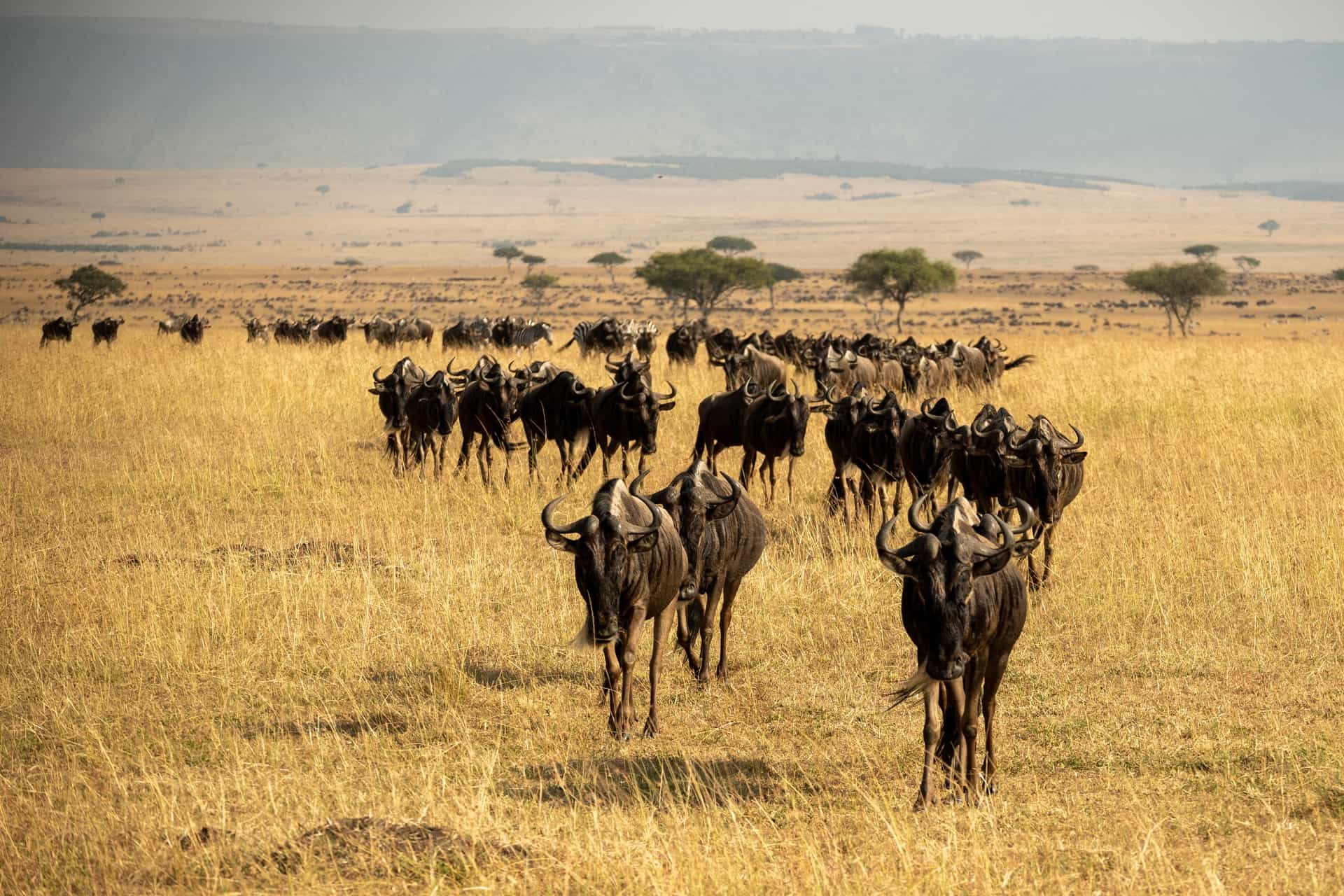
For first-time visitors, the best Tanzania national parks are located in the Northern Circuit, offering top-tier wildlife viewing, including the Serengeti National Park for the Great Migration, Ngorongoro Crater for dense "Big Five" sightings, and Tarangire National Park for massive elephant herds and baobab trees.
8-days-great-mara-river-crossing-hadzabe-tribe-and-optional-hot-air-balloon-tanzania-safari
7-days-best-great-wildebeest-migration-safari-in-tanzania
6-days-ndutu-migration-and-tanzania-safari-itinerary
5-days-ultimate-ndutu-migration-calving-season-safari-to-tanzania
4-days-central-serengeti-safari-tour-and-mara-river-crossing-in-northern-serengeti
3-days-southern-serengeti-safari-tour-and-ngorongoro-crater-calving-season-package
The Serengeti National Park
The Serengeti National Park is the crown jewel of Tanzania’s safari circuit and perhaps the most iconic wilderness area on the planet. Its name, derived from the Maasai word Siringet, literally translates to "the place where the land moves on forever." This vast ecosystem covers approximately 14,750 square kilometers of rolling grasslands, savanna, riverine forest, and woodlands. The sheer scale of the park is its most defining feature, providing a sense of prehistoric isolation that is rare in the modern world. It is a landscape defined by its horizons, punctuated only by the occasional granite "kopjes"—ancient rock outcroppings that serve as lookout points for the park’s formidable predator population.
The Serengeti is most famous for the Great Migration, the largest overland migration of mammals in the world. Each year, over 1.5 million wildebeest, joined by hundreds of thousands of zebra and gazelle, move in a clockwise circle through the Serengeti and Kenya’s Maasai Mara. This is not just a seasonal event but a constant, year-round cycle driven by the search for fresh grazing and water. Travelers typically flock to the Grumeti River (June/July) or the Mara River (August/September) to witness the dramatic river crossings, where herds must brave crocodile-infested waters and steep embankments. However, the "calving season" in the southern Serengeti (January–March) is equally spectacular, as thousands of calves are born daily, attracting an incredible density of predators.
Beyond the migration, the Serengeti is a premier destination for big cat sightings. It is home to one of the largest lion populations in Africa, alongside healthy numbers of leopards and cheetahs. The open plains make it particularly easy to spot cheetahs as they hunt in the daylight, while the acacia trees along the Seronera Valley are the best place to find leopards lounging on branches. The park’s biodiversity is staggering, supporting everything from tiny dung beetles to massive bull elephants. Whether you are soaring over the plains in a hot air balloon at dawn or navigating the dusty tracks in a 4x4, the Serengeti offers a raw, unfiltered look at the circle of life that remains etched in the memory of every traveler.
Ngorongoro Conservation Area
The Ngorongoro Conservation Area is often referred to as the "Eighth Wonder of the World," and for good reason. At its heart lies the Ngorongoro Crater, the world’s largest inactive, intact, and unfilled volcanic caldera. Formed approximately two to three million years ago when a giant volcano exploded and collapsed on itself, the crater is now a self-contained ecosystem 610 meters deep and covering roughly 260 square kilometers. The descent down the steep crater walls is a rite of passage for safari-goers, transitioning from the lush, misty forests of the rim to the golden grasslands and alkaline lakes of the crater floor.
The primary draw of Ngorongoro is the "Big Five" (lion, leopard, elephant, buffalo, and rhino). Because of the crater’s enclosed nature and permanent water sources, wildlife remains here year-round, resulting in an extraordinary density of animals. It is one of the few places in East Africa where you can reliably see the highly endangered black rhinoceros in the wild. The crater floor is a bustling theater of activity: pride of lions stalking buffalo near the marshes, hyenas competing for kills, and massive "tusker" elephants moving through the Lerai Forest. The alkaline Lake Magadi, located in the center, often shimmers pink with thousands of flamingos, adding a splash of vibrant color to the landscape.
What sets Ngorongoro apart from many other parks is its status as a Conservation Area rather than a National Park. This means that the land is multi-use, allowing the Maasai people to live within the boundaries and graze their cattle alongside wild animals. This unique coexistence between humans and wildlife provides a profound cultural dimension to the visit. Travelers can visit Maasai bomas (homesteads) to learn about their ancient traditions, attire, and relationship with the land. While the crater floor can become crowded with vehicles during peak season, the sheer concentration of wildlife ensures that a single day’s game drive is often as productive as three days in a larger, more dispersed park.
Tarangire National Park
Often overshadowed by its more famous neighbors, Tarangire National Park is a hidden gem that offers a distinct and ruggedly beautiful landscape. The park is characterized by two iconic features: its massive elephant herds and its "Ancient Giants"—the Baobab trees. Tarangire is home to one of the highest concentrations of elephants in Tanzania, and it is common to see families of 30 to 50 individuals moving through the scrubland. The Baobab trees, some of which are over a thousand years old, dominate the horizon with their thick, silver trunks and spindly branches, creating a prehistoric atmosphere that feels worlds away from the open plains of the Serengeti.
The lifeblood of the park is the Tarangire River. During the dry season (June to October), when the surrounding lands parch, the river becomes the only permanent water source for miles. This triggers a "mini-migration," as thousands of animals—including wildebeest, zebra, eland, and oryx—descend upon the riverbanks. This concentration of prey inevitably brings out the predators. Tarangire is particularly famous for its tree-climbing lions (a trait they share with Manyara) and its thriving leopard population. The park’s varying terrain, from granitic ridges to riverine swamps and deep-red earth, provides a diverse backdrop for photography that is quite different from the golden-yellow savannas elsewhere.
For bird enthusiasts, Tarangire is a paradise. The park boasts over 550 species of birds, the highest number in any Tanzanian park. The swamps in the southern part of the park are a haven for breeding species, including the Kori bustard (the world’s heaviest flying bird) and the vibrant yellow-collared lovebird, which is endemic to this region. Because Tarangire sees fewer visitors than the Serengeti or Ngorongoro, the experience often feels more private and intimate. It is a place for slow safaris, where one can sit quietly by a waterhole and watch the intricate social interactions of elephants or wait for a leopard to descend from a Baobab at dusk.
Lake Manyara National Park
Lake Manyara National Park may be one of Tanzania’s smaller parks, but it packs an incredible variety of ecosystems into a compact area. Hemingway described it as the "loveliest lake in Africa," and its beauty lies in its dramatic setting at the base of the 600-meter-high Great Rift Valley escarpment. The park is a narrow strip of land sandwiched between the lake and the cliffs, creating a lush, "groundwater forest" environment that stands in stark contrast to the dry savannas of Tarangire or the Serengeti. Upon entering, visitors are greeted by a dense canopy of mahogany and sausage trees, where troops of baboons—some of the largest in Africa—play in the road.
The park’s most famous residents are its tree-climbing lions. While there is much debate among scientists as to why they do this—some say to escape the heat of the ground, others suggest it is to avoid biting flies—seeing a pride of lions draped over the branches of an acacia tree is a highlight for any visitor. Beyond the lions, the park is dominated by its namesake, Lake Manyara, a shallow alkaline lake that covers two-thirds of the park's total area. Depending on the season, the lake's edge is a sea of pink, as tens of thousands of flamingos congregate to feed on the algae. The park also supports large pods of hippos, which can be observed at the "Hippo Pool" at the northern end of the lake.
Lake Manyara is the perfect destination for those looking for a diverse but manageable safari experience. Because of its size, a thorough game drive can be completed in half a day, making it an ideal stopover between Arusha and the Ngorongoro Crater. It also offers unique activities that are not always available in larger parks, such as night game drives (allowing you to see porcupines, genets, and civets) and treetop canopy walks. The boardwalk through the forest allows visitors to walk 15 meters above the ground, providing a unique perspective on the forest wildlife. From the giant elephants that emerge from the forest to the thousands of silvery-cheeked hornbills overhead, Lake Manyara is a vibrant, lush sanctuary that offers a refreshing change of pace on the Northern Safari Circuit.
Best national park for a first-time Tanzania wildlife safari (Serengeti?)
For a first-time Tanzania wildlife safari, Serengeti National Park is often the top recommendation because it delivers the most “classic” African safari experience in one place. Visitors come for the sheer scale of the ecosystem, where you can see enormous herds of grazing animals and, at the same time, some of the most dramatic predator action anywhere in East Africa. Serengeti is especially famous for the Great Migration, when vast numbers of wildebeest and zebra move across the plains in response to rainfall and grazing availability. Even if you don’t visit at peak Migration timing, the park still offers strong wildlife viewing year-round, with predators tracking prey across open grasslands. Another advantage for beginners is that Serengeti is well-developed for safari tourism, with many lodges and camps at the park edges and within the broader ecosystem, plus numerous experienced guiding options. You’ll generally spend your days on guided game drives (with some areas allowing walking safaris under specific conditions), and you’ll likely encounter a wide range of species beyond predators—such as cheetahs, hyenas, elephants in certain regions, giraffes, and diverse birdlife. In short, if your goal is to see “the best of Tanzania” quickly—big herds, predator drama, and iconic landscapes—Serengeti is the safest first pick. The one caveat is timing: for the most spectacular Migration moments, you’ll want to align your trip with the relevant movement patterns.
Which park is essential for seeing the “Big Five” on a Tanzania safari (Ngorongoro?)
If you want an “essential” park for the Big Five on a Tanzania wildlife safari, Ngorongoro Crater is commonly recommended—primarily because it’s a high-density viewing environment. The crater is a natural enclosed caldera with steep walls, which helps concentrate wildlife into a relatively small space compared to open savanna ecosystems. As a result, visitors often feel that their chances of seeing multiple Big Five species in a short window are higher. In addition to the wildlife concentration, the scenery is a major draw: game viewing happens from crater viewpoints into a dramatic bowl-shaped landscape, which makes the safari feel more like an event than just a drive. Lions and buffalos are frequently encountered at the crater floor and nearby areas, while elephants and rhinos can also be possible depending on conditions and season. Leopards are less predictable everywhere than lions and buffalo, but some itineraries and timing increase the odds. The key reason Ngorongoro stands out is that the logistics work well for Big Five travelers: you can often design a single day that includes multiple “target” sightings without driving long distances between wildlife hotspots. For first-timers, that reduces stress—especially if this is a bucket-list priority. If your exact Big Five target is absolute certainty, no safari can guarantee it, but Ngorongoro is often the most efficient place to pursue the Big Five within Tanzania’s northern circuit itinerary. Pairing Ngorongoro with Serengeti also improves your overall species variety because Serengeti expands your predator and prey options across open plains.
What makes Tarangire National Park a top Tanzania safari choice
Tarangire National Park is a standout choice in Tanzania because it offers a different “feel” from the Serengeti/Ngorongoro ecosystem while still delivering excellent wildlife viewing. One of Tarangire’s signature attractions is its reputation for exceptionally strong elephant presence, including large herds that gather around water sources—especially during drier months when animals concentrate. For many safari-goers, seeing multiple elephant groups in one day is the highlight, and Tarangire is often one of the best places in Tanzania to accomplish that. Tarangire is also famous for its landscape personality. The park’s scenery includes open grasslands, river corridors, and—most uniquely—baobab trees scattered across the terrain. Those iconic trees create memorable photo opportunities and help wildlife viewing feel visually rich rather than monotonous. Another reason Tarangire works for first-time visitors is that it’s frequently less crowded than the most famous parks, which can make game drives feel more relaxed. This doesn’t mean “less wildlife”—it can simply mean fewer vehicles, allowing animals to behave more naturally and giving you a calmer safari atmosphere. Tarangire can also be great for learning safari “basics,” because you may spot a lot of species in a compact area: elephants, giraffes, zebras, warthogs, baboons, various antelope species, and many bird species. In practice, Tarangire works extremely well as a complement: you can experience the migration drama in Serengeti, the concentrated high-density wildlife of Ngorongoro, and then add Tarangire’s elephants and baobab scenery for variety. That combination is a major reason Tarangire often appears on high-value Northern Circuit itineraries.
Best time to see the Great Migration (when is it best?)
The Great Migration in Tanzania is a year-round ecological story, but the best time to see the most iconic moments depends on what you mean by “best.” The Migration involves wildebeest and zebra moving in response to water and grazing conditions, and different regions of the Serengeti and the Mara area become more active at different times. A common and practical planning framework is:
June to October: this period is widely considered best for Mara River crossings, when large herds move to find water and graze, and the river crossing becomes a dramatic wildlife event.
January to February: this timeframe is often highlighted for calving in parts of the Southern Serengeti, when predators and scavengers are drawn to the concentrated births and vulnerable newborns.
Why does timing matter for first-timers? Because the Migration is not a single “location event.” The animals can be anywhere within the broader ecosystem depending on rainfall. If you go during a high-likelihood crossing or calving window, you can potentially witness the kind of breathtaking scenes people associate with the Migration: riverfront drama, lots of action, and predator activity. If you travel outside those windows, you may still see Migration herds, but the most famous “set pieces” may be less frequent or less intense on a given day. Planning also depends on your tolerance for uncertainty—some people prefer to travel precisely for a crossing window, while others prefer a flexible itinerary built around real-time sightings by guides. In short, for a first-time safari aiming for maximum “wow” moments, aligning your travel with June–October for river crossings or January–February for calving season is usually the best strategy.
Is Lake Manyara National Park worth visiting on a first Tanzania safari?
Yes—Lake Manyara National Park can be worth it, especially if you want variety from the open-plains drama of Serengeti and the concentrated crater experience of Ngorongoro. Lake Manyara is known for being a more scenic and often more relaxed safari environment, centered around the lake and the habitats that surround it. One of the biggest “why visit” factors is Lake Manyara’s wildlife diversity in a smaller region. You may encounter notable birdlife, including flamingos when conditions suit, and many other water and woodland species. Lake Manyara is also famous for its occasional tree-climbing lions, a behavior that becomes a memorable talking point even if you don’t see it every day. Beyond big cats, Lake Manyara is often praised for sightings of hippos near the water, baboons in the surrounding areas, and elephants that may roam near the forested or groundwater-influenced zones. For first-time visitors, the park can work well as a “break” in an itinerary—something that’s different in scenery and pacing. Instead of driving long distances across open migration plains, you may do shorter loops with more varied habitat types in view: lake edges, forested pockets, and grassland transitions. That variation can be helpful for travelers who want to experience multiple safari styles in one trip. Lake Manyara may also make sense if you’re interested in photography of birds and landscapes, or if your group includes people who prefer less predator-chase intensity and more wildlife variety. The only trade-off is that it may not deliver the same “maximum predator concentration” as the Serengeti, so it’s often best viewed as a complementary add-on rather than the sole park. Done right, though, Lake Manyara adds charm, habitat diversity, and a different kind of safari magic.
Can I visit multiple parks on a 5-day Tanzania safari?
Yes, visiting multiple parks on a 5-day Tanzania safari is very doable, and it’s often how travelers get the best value for first-time wildlife trips. A common and efficient pattern is the Northern Circuit, which typically combines Serengeti, Ngorongoro Crater, and Tarangire National Park. This route makes sense because it packs different wildlife experiences into a relatively short distance. Serengeti gives you the migration plains and broad safari action—predators tracking herds, large grazing populations, and iconic landscapes. Ngorongoro Crater provides high-density viewing in a dramatic setting, which is especially useful if you’re chasing the “Big Five” or want concentrated wildlife in one day. Tarangire then rounds out the itinerary with its signature elephants and baobab-filled scenery, offering a different habitat feel and memorable photo opportunities. With five days, you usually structure it so that you dedicate multiple game drives to Serengeti (often the biggest time block), schedule one full day for Ngorongoro (including the crater descent when applicable), and allocate at least one game-drive day to Tarangire. Transport logistics and the type of accommodation (lodge vs. camp) can affect the exact schedule, but the key concept is that you’re not trying to see every park in Tanzania—you’re choosing the most complementary ones. Another benefit of a multi-park itinerary is it reduces the risk of “missing your favorite moments.” For example, if Migration sightings are quiet on one day in Serengeti, you might still get great predator action, while Ngorongoro can offer concentrated wildlife even when conditions aren’t ideal. For a beginner, that balanced approach can feel safer and more rewarding than spending all five days in one location.
Is Arusha National Park good for beginners on a Tanzania safari?
Arusha National Park can be an excellent option for beginners, particularly if you want an easier intro to safari logistics, fewer crowds, and a park experience that includes both wildlife viewing and beautiful scenery. Arusha is often chosen because it’s relatively accessible compared with some far-flung safari regions, and it can provide a gentle “first safari” experience without the pressure of being in the most famous mega-parks. It’s also a great place to learn what to expect on safari: how game drives work, how animals behave, and how to spot species with your guide’s help. In addition, Arusha offers opportunities beyond standard drive viewing depending on local programming, such as walking safaris (with experienced armed rangers and strict guidance) and other activity formats in the area. The park’s landscapes often feel more intimate than the vast savannas of Serengeti, and the presence of Mount Meru in views adds a strong sense of place. That scenic backdrop can make the experience more memorable for first-timers who enjoy atmosphere and photography as much as they do wildlife. Arusha may be especially appealing if you’re starting your trip near Arusha town or if your itinerary includes a transition between Tanzania’s northern safari circuit and other activities. It’s also useful as a “buffer day” if your main safari days are longer drives—Arusha gives you a strong wildlife experience without burning your entire trip on travel. The main consideration is that if your goal is the highest likelihood of iconic Migration-style herd spectacles, you’ll likely get that better in Serengeti. But for beginners who want a welcoming introduction, Arusha can be a very smart, lower-stress choice.
Difference between a Serengeti safari and a Ngorongoro Crater visit
Serengeti and Ngorongoro Crater represent two different safari “styles,” so the difference matters for planning your expectations. Serengeti is a huge ecosystem—open plains, rolling grasslands, and varied habitats—where wildlife is spread out across a broad landscape. This means you’re typically looking for the big-picture experience: massive herds, wide-ranging animal movements, and dramatic predator-prey interactions that can happen across many kilometers. Serengeti is also where the Migration story is most famous, and it often delivers the best “safari cinematic” moments: countless grazers moving across the horizon, predators in motion, and endless plains. In contrast, Ngorongoro Crater is a high-density environment, a natural enclosed caldera that tends to concentrate wildlife into a smaller visible area. That makes Ngorongoro feel more like a wildlife amphitheater: you may see multiple species in a short time, and the chances of ticking off certain targets (like lions, buffalo, elephants, and sometimes rhinos) can feel higher in a single day because animals are not dispersed across enormous distances. Serengeti often requires more patience and driving to find action, while Ngorongoro can be more efficient for concentrated viewing. The experience also differs visually: Serengeti’s drama is in scale, while Ngorongoro’s drama is in a dramatic bowl landscape and ecosystem density. For first-timers, doing both is usually a winning strategy: Serengeti for breadth and migration spectacle, and Ngorongoro for concentrated viewing and iconic crater scenery. Many itineraries treat them as complementary rather than competitors.
Are Northern Circuit parks better than Southern for a first Tanzania safari?
For most first-time safari travelers, the Northern Circuit is commonly recommended because it combines the most famous landscapes with some of the highest wildlife visibility—especially if your goals include predators, major prey herds, and the Migration narrative. Northern Circuit typically centers around Serengeti and Ngorongoro, sometimes with additions like Tarangire and Lake Manyara. This area is well-known for delivering the classic Tanzania safari expectations: big cats, large grazing herds, and the iconic “endless plains” atmosphere of Serengeti, plus the unique enclosed viewing environment of Ngorongoro. Dense wildlife patterns and popular safari infrastructure also help first-timers. Guides and lodges are often experienced at helping visitors plan around animals, and you usually have a wide range of accommodation levels to choose from. Another practical reason the Northern Circuit is “easier” for beginners is routing efficiency: it’s a coherent loop where multiple standout parks are close enough to combine within a standard 4–7 day itinerary. That means less logistical complexity and more time actually spent on safari drives. Meanwhile, the Southern Serengeti and other southern areas can be excellent, particularly if you’re aiming for calving season timing or specific habitat-focused interests. But “better” depends on your timing and preferences. If you’re traveling when river crossings or the northern Migration phases are most likely, Northern Circuit can maximize your odds of seeing the headline Migration moments. If you’re timing a trip around January–February calving, parts of the southern ecosystem can be equally compelling. Still, for a first visit where the priority is overall familiarity, iconic scenes, and straightforward trip planning, Northern Circuit is often the best starting point.
What can I see in Lake Manyara besides lions?
Lake Manyara is often mentioned for its tree-climbing lions, but it’s far from a one-species park. One of its best qualities is that it mixes lake-edge wildlife with forest and savanna transitions, which supports a broad variety of animals and birds. The most famous non-lion sighting many visitors love is flamingos—Lake Manyara can attract large numbers of flamingos depending on seasonal conditions and lake levels, creating a striking pink-water scene. Birdlife overall can be very rewarding, and the park is often a better birding experience than people expect. In terms of mammals, you may see hippos in or near the lake, along with baboons that move through the surrounding areas, sometimes appearing closer to viewpoints and roads than in more remote parks. Elephants can also occur, particularly when they move near suitable habitats or water sources in the broader area. Because Lake Manyara has a mix of habitats in a relatively compact region, your game drive can feel varied—one moment you might be watching lake wildlife, the next you could be in forest-edge territory with different animals and different bird species. That variety can help beginners stay engaged throughout the day. Even if lions are absent on a given drive, the park still delivers strong “wildlife per hour” potential through birds, hippos, primates, and elephants. So if you’re considering Lake Manyara, think of it less as a substitute for Serengeti and more as a scenic, wildlife-diverse add-on that broadens what you’ll see: birds and waterlife in a beautiful setting, plus the possibility of cats if conditions line up.
Is it safe to do a walking safari during a Tanzania wildlife safari?
A walking safari in Tanzania can be safe, but safety depends heavily on the operator, the location, and the conditions. Walking safaris are usually conducted with experienced guides and, in many cases, armed rangers, because walking means you’re on foot and animals—especially large predators—may react differently when they see you at ground level. In parks where walking is allowed, guides are trained to manage risk: they understand how to interpret animal behavior, how to choose walking routes, and when to stop, retreat, or alter the plan. For beginners, walking safaris can also be an educational experience—learning how to track signs of wildlife, listen for animals, and understand how safe viewing distances are maintained. It’s also important to follow rules closely: stay with your guide, don’t wander off, keep quiet, and respect instructions about when to watch and when to move. Walking safaris are commonly offered in places like Arusha National Park (and sometimes other areas with the appropriate permits and safety frameworks) or in locations where wildlife is monitored and vehicle-based support exists. The “safe” part isn’t because animals are harmless—it’s because the safari is structured around a professional risk-management system. If you’re considering walking, choose a reputable operator, confirm that armed/authorized personnel are used where required, and ask about their specific safety procedures (especially regarding lion/leopard encounter protocols). In short, walking safaris can be safe for travelers when properly organized, but they are not a casual activity and should always be done under expert guidance.
How accessible are the top parks for a 1-day Tanzania safari?
For a 1-day safari, accessibility is the limiting factor more than wildlife quality, because you’re balancing time spent driving with time spent on game viewing. Parks near major travel hubs are usually the best choices. For example, if you’re in or near Dar es Salaam, Mikumi National Park is often considered a strong option for a one-day trip because it’s one of the more reachable parks from that side of the country. Mikumi can deliver rewarding sightings such as elephants, giraffes, and lions depending on conditions and timing. The downside is that it can be farther from Tanzania’s premier northern circuit parks like Serengeti and Ngorongoro, meaning you’d need multiple days to do them properly (given long drives and the need for crater or Serengeti positioning). For a one-day safari, the practical strategy is: pick a park you can reach early, do a full or near-full game drive window, and then return without exhausting your schedule. That’s also why many one-day safari travelers choose a park with relatively straightforward logistics—access roads, established safari routes, and available local guide support. While Mikumi is a common recommendation for the Dar es Salaam region, your best one-day choice may also depend on where you’re starting from (Arusha vs. Nairobi vs. other Tanzanian towns). If you tell me your starting city and where you’ll stay overnight, I can suggest the most realistic one-day park options and how to structure the timing.
What is unique about the Serengeti ecosystem?
What makes Serengeti ecosystem unique is its combination of immense scale, stable grassland habitats, and the famous wildlife movement that depends on rainfall patterns. Serengeti is often described as the “endless plains,” and it’s renowned because it supports massive numbers of grazing animals that migrate through a vast network of ecosystems. The uniqueness isn’t just that there are many animals—it’s how the system is organized so predators, herbivores, and ecosystems interact dynamically over time. Many travelers highlight the Serengeti as a place where you can experience the largest land mammal migration patterns in a way that feels continuous and powerful, rather than like a single “event.” The ecosystem’s broad savanna landscape makes it possible to see wildlife across long distances, giving a sense of scale and drama that’s hard to replicate in smaller parks. Another special feature is the ecosystem’s ability to support different wildlife densities and behaviors depending on the season. In one part of the year, you may see more grazing and herd movement; in another, you’ll notice more predator activity linked to births, river crossings, or seasonal grazing opportunities. This seasonal rhythm is a major reason Serengeti remains a first-choice destination for repeat visitors too—there’s always another “chapter” to the Migration story. For photographers and wildlife enthusiasts, Serengeti’s openness also means more varied sightlines and frequent “surprise” sightings—animals in motion on the horizon, herds clustered near water, and predators stalking in the grass. In short, the Serengeti ecosystem is special because it blends vast scale with a living seasonal system that produces some of the most dramatic wildlife interactions on earth.
Where can I see large herds of elephants on a Tanzania safari?
If your goal is to see large elephant herds, Tarangire National Park is one of the best-known answers. Tarangire’s elephant strength is strongly linked to water availability and seasonal habitat use. During the drier months, elephants are more likely to concentrate around reliable water sources and areas where the vegetation remains accessible. That concentration increases your chances of seeing multiple elephant groups in a shorter time window, and it’s common for visitors to feel that the park “delivers” on elephants more reliably than many other areas. Another reason Tarangire stands out is that its landscape makes elephant sightings feel spectacular. You often get big-tree scenery—especially the famous baobabs—combined with open plains and sometimes river corridors. That means elephant encounters can look and photograph beautifully, not just as a random group in the distance but as part of a recognizable environment. For first-time safari-goers, this is also a confidence builder: elephants are usually more straightforward to find than some more elusive big cats, and when herds are present, the experience can be intense—matriarch-led movements, babies, and sometimes multiple groups interacting at a distance. Many itineraries therefore include Tarangire as an “elephant anchor” alongside Serengeti and Ngorongoro. If you want the highest odds, aim for the dry season period when animals concentrate more clearly, and plan to spend real game-drive time in the park rather than treating it as a quick pass-through. This approach usually yields the best elephant numbers and best overall day quality.
Is a Tanzania wildlife safari and beach combo possible?
Yes, a safari-and-beach combination is extremely popular, and it can be one of the best ways to experience Tanzania without “all business” travel. A common format is to do a 4–5 day Northern Circuit safari (often including Serengeti and Ngorongoro, sometimes also Tarangire) and then finish with a beach stay on Zanzibar Island. This pairing works well because it balances wildlife intensity with relaxation. After days of game drives and early mornings, Zanzibar offers a completely different pace: ocean views, swimming or snorkeling, spice tours, and a variety of beach activities depending on your comfort level and travel style. Logistically, it’s usually straightforward: you can fly or travel onward from the safari region to Zanzibar, then spend several nights at a coastal resort or boutique property. From an experience perspective, it gives you two “Tanzania memories” instead of one—savanna wildlife drama followed by coastline scenery and cultural exploration. Another advantage is flexibility: you can customize the beach duration depending on your budget and flight times. If you prefer a shorter recharge, you can do 3–4 nights on the coast; if you want more downtime, a 5–7 night beach segment is also common. If you’re traveling as a couple or family, this combo can also satisfy different preferences—some people want big cats and herds, while others want comfort, warm weather, and slower activities. In short, safari + Zanzibar is one of the most proven “best of both worlds” itineraries, especially for first-time visitors.
What accommodation is available on a Tanzania wildlife safari?
Tanzania safari accommodation ranges widely, which is a major reason it suits many budgets and travel styles. At the top end, you’ll find luxury safari lodges and high-end tented camps, often located in or near key wildlife areas. These properties commonly offer features like spacious rooms or suites, private decks or plunge pools in some cases, excellent on-site dining, and high staff-to-guest service. Many luxury camps also provide prime viewing locations and strong guide relationships, which can enhance the quality of wildlife experiences. At the mid-range level, you can find comfortable lodges, standard tented camps, and well-run camps with good amenities, sometimes including hot showers, electricity in certain areas, and organized activities beyond just game drives. For travelers with a tighter budget, there are also public campsites or more basic camp setups that may involve simpler facilities and sometimes shared amenities. Some safari operators run fixed itineraries that include accommodation packages at varying standards, making it easier to compare options. Another major factor is whether you stay inside the park areas (where allowed) or at lodges at park entrances and nearby conservation areas. Lodging choice affects not just comfort but also schedule—staying nearer to gates or wildlife zones can reduce travel time and maximize time on game drives. When selecting accommodation, first decide your budget range, then consider location, meal quality, and whether the camp supports the style of safari you want (for example, Migration-focused timing or crater-based Big Five priority). For first-time travelers, it’s usually best to choose an operator and accommodation combination that ensures comfortable logistics—because on safari, “how you sleep” strongly affects how much you enjoy the next early morning drive.
Booking Tanzania wildlife safari with us Roads of Adventure safaris
Booking your Tanzania wildlife safari with Roads of Adventure Safaris offers a personalized experience across the country's most iconic national parks. Based in East Africa, they specialize in custom itineraries that range from short 3-day trips to extensive 36-day birding expeditions
