Top things to do in Samburu National Reserve include game drives to spot the "Samburu Special Five" (reticulated giraffe, Grevy's zebra, Somali ostrich, gerenuk, Beisa oryx), visiting the Ewaso Ng'iro River, exploring the Reteti Elephant Sanctuary, and engaging in cultural tours with the local Samburu people. This arid park offers unique, rewarding wildlife experiences in northern Kenya
3-days-compelling-samburu-national-park-kenya-wildlife-safari-tour-package
4-days-kenya-wildlife-safar-to-samburu-and-lake-naivasha
7-days-samburu-ol-pejeta-lake-nakuru-and-masai-mara-safari-tour
13-days-samburu-ol-pejeta-lake-nakuru-masai-mara-lake-naivasha-and-amboseli-kenya-safari
12-days-northern-wilderness-and-conservation-focus-kenya-wildlife-safari
Top Activities in Samburu National Reserve
Game Drives for "Special Five" and Big Cats
The hallmark of a Kenya wildlife safari in Samburu is the search for the "Special Five"—a unique collection of species found almost nowhere else in the country. Game drives here are a quest to spot the Reticulated giraffe with its liver-red polygonal patches, the Grevy’s zebra with its fine pinstripes, the Somali ostrich, the Beisa oryx, and the extraordinary gerenuk, which stands on its hind legs to reach acacia leaves. These drives typically take place in the cool of the early morning and late afternoon when the animals are most active.
Beyond these rarities, Samburu is a premier location for spotting Africa’s big cats. The arid terrain and sparse vegetation make it easier to track leopards, which are famously elusive but frequently seen lounging in the boughs of acacia trees here. Lions and cheetahs also roam the plains, often found near the rocky outcrops or shadowing the movements of prey near the river. The thrill of these drives lies in the diversity; one moment you are observing a rare northern endemic, and the next, you are witnessing a pride of lions navigating the dusty red earth.
Explore the Ewaso Ng'iro River
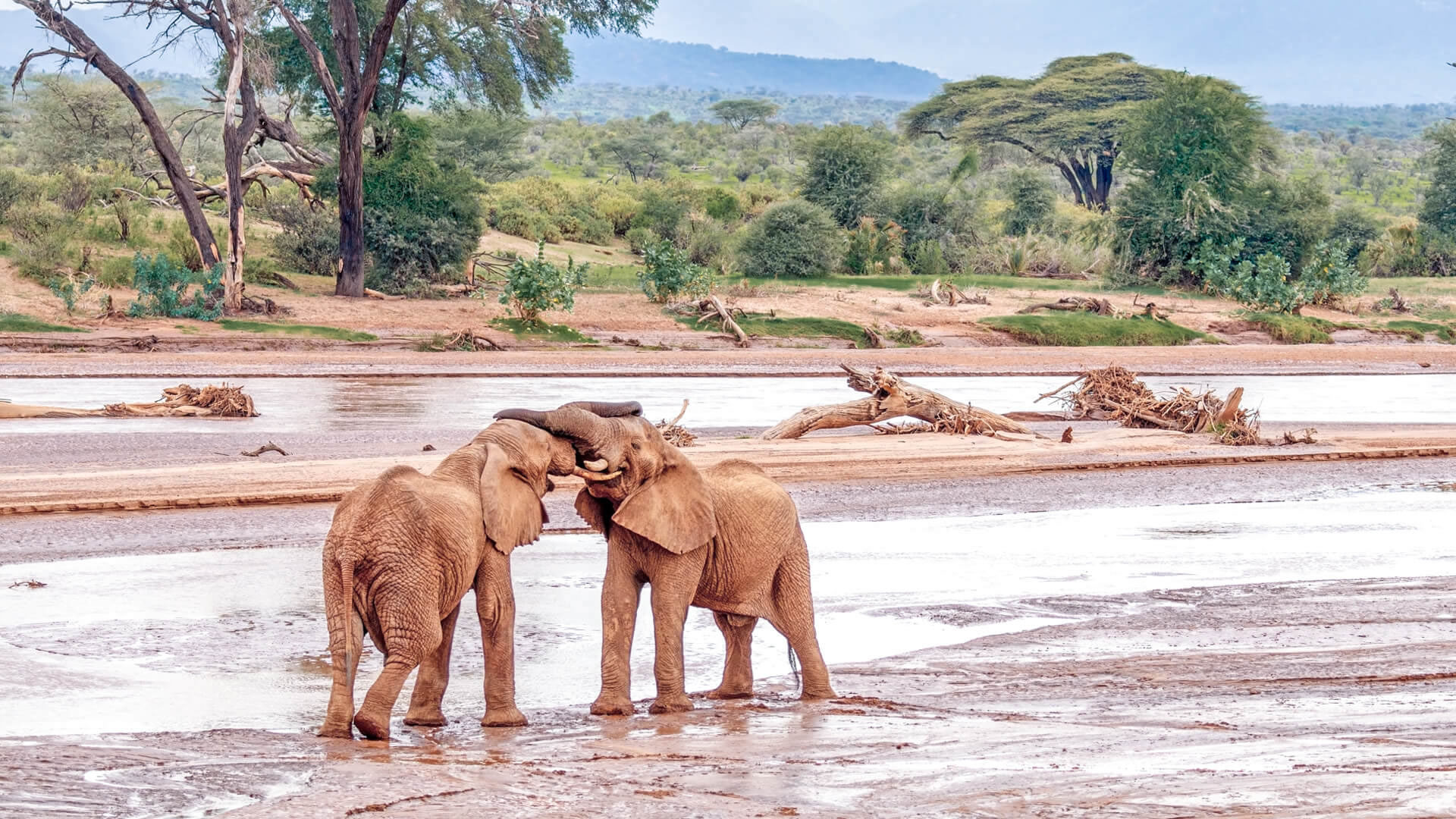
The Ewaso Ng'iro River is the undisputed heart of the reserve. Its brown, silt-laden waters provide a permanent life source in an otherwise parched landscape, creating a lush ribbon of green that slices through the desert. On a Kenya wildlife safari, the riverbanks act as a natural stage for some of the best wildlife viewing in the region. During the heat of the day, massive herds of elephants—some of the most relaxed and well-studied in Africa—frequent the water to drink and bathe, offering spectacular close-up photographic opportunities.
The river is also home to formidable Nile crocodiles and pods of hippos that grunt and splash in the shallows. Palm forests and towering fever trees line the banks, providing shade for leopards and a variety of monkeys. For travelers, spending time along the river is a peaceful counterpoint to the dusty plains; you can park your vehicle and simply watch the social dynamics of elephant families as they interact at the water’s edge, a quintessential experience that defines the magic of the northern frontier.
Visit Reteti Elephant Sanctuary
While technically located just outside the reserve in the Namunyak Wildlife Conservancy, a visit to Reteti is a profound addition to any Kenya wildlife safari. As the first community-owned and run elephant sanctuary in Africa, it represents a groundbreaking model for conservation. The sanctuary rescues orphaned and abandoned elephant calves from the northern rangelands, with the ultimate goal of rewilding them back into the Samburu and Laikipia ecosystems once they are strong enough to survive on their own.
Visitors are invited to observe the calves during their scheduled feeding times from a raised platform. Watching the young elephants rush toward their giant milk bottles with floppy trunks and ears is both heartwarming and educational. The keepers, often local Samburu people, share stories of the individual rescues and the complex care required to raise these social giants. It is a powerful reminder of the human-wildlife connection and provides a deeper understanding of the conservation challenges facing northern Kenya’s elephant populations.
Samburu Cultural Tours
The Samburu people are the traditional guardians of this land, and their culture is as vibrant as the landscape is harsh. A cultural tour to a local manyatta (village) offers a fascinating window into a lifestyle that has remained remarkably resilient against modern pressures. Closely related to the Maasai, the Samburu are semi-nomadic pastoralists whose lives revolve around their livestock. They are famous for their intricate beadwork and the vivid red shukas that contrast brilliantly against the ochre soil of northern Kenya.
During a visit, you can participate in traditional dances, learn about their unique social structures, and see how their homes are constructed using local materials. This is not just a tourist performance; it is an opportunity for authentic cultural exchange. Engaging with the Samburu elders and youth provides context to the Kenya wildlife safari experience, helping visitors understand how these communities have coexisted with predators and elephants for centuries. It adds a human dimension to the wilderness, emphasizing that conservation and culture are inextricably linked.
Bird Watching
For those who appreciate the finer details of the bush, Samburu is a world-class birding destination. With over 450 recorded species, the reserve’s varied habitats—from riverine forests to arid scrubland—support a staggering array of avian life. On a birding-focused Kenya wildlife safari, you are likely to see the striking vulturine guineafowl, which looks like a piece of living jewelry with its cobalt blue chest and long neck. The Somali ostrich, with its distinctive blue legs, is another common sight on the open plains.
The Ewaso Ng'iro River attracts numerous water-associated birds, including kingfishers, herons, and the elegant African fish eagle, whose haunting cry is the soundtrack of the African wilderness. Raptors are particularly well-represented here; you can spot tawny eagles, Bateleurs, and various vultures circling high above the thermal currents. Whether you are an expert "twitcher" or a casual observer, the sheer color and variety of the birds in Samburu add a layer of complexity and beauty to every game drive.
Guided Nature Walks & Camel Safaris
Stepping out of the safari vehicle allows you to experience the northern wilderness through a completely different lens. Guided nature walks, led by experienced Samburu trackers, focus on the "little things" that are often missed from a car—the intricate patterns of tracks in the sand, the medicinal properties of desert plants, and the fascinating world of insects and lizards. Walking through the bush heightens your senses; you become aware of every rustle in the grass and every change in the wind.
For a more traditional northern experience, camel safaris offer a quiet and rhythmic way to move through the landscape. Camels have been the primary mode of transport in this region for generations, and riding them allows you to get closer to some wildlife that views the camels as non-threatening. A camel-backed Kenya wildlife safari is slow travel at its finest, allowing you to absorb the vastness of the horizon and the silence of the desert in a way that no motorized vehicle can replicate.
Sundowners and Bush Meals
There is a specific kind of magic that occurs when the sun begins to dip below the jagged peaks of the Matthews Range. In Samburu, the "sundowner" is a cherished tradition. As the sky turns shades of bruised purple and fiery orange, your guide will set up a bar in a scenic spot—perhaps atop a rocky kopje or on a sandy bend of the river. Sipping a cold drink as the nocturnal sounds of the bush begin to rise is the perfect way to reflect on the day's sightings.
Similarly, bush meals offer a sensory delight that far exceeds any dining room experience. Imagine waking up at dawn for a game drive and rounding a corner to find a full breakfast spread—complete with fresh coffee and eggs cooked to order—set up in the middle of the savannah. Dining in the open air, with the vast northern sky above and the distant call of a hornbill in the background, turns a simple meal into a highlight of your Kenya wildlife safari. These moments of luxury in the wild provide a sense of place and peace that stays with you long after you return home.
What are the best things to do in Samburu National Reserve? Top activities include game drives, visiting Samburu villages, guided nature walks, camel trekking, birdwatching, and relaxing at sundowner spots along the Ewaso Ng'iro River.
What is the "Samburu Special Five"? These are rare species found in Northern Kenya: the Reticulated Giraffe, Grevy’s Zebra, Beisa Oryx, Somali Ostrich, and Gerenuk.
Are game drives the only activity? No, you can enjoy walking safaris, camel safaris, cultural tours, and bird watching, say Roads of Adventure Safaris and Encounter Africa Safaris.
When is the best time for game viewing in Samburu? The best wildlife viewing occurs during dry seasons from June to October and December to March, when animals congregate near the Ewaso Ng'iro River, according to Kaara Adventures and Frena Adventures.
Can I visit a Samburu village? Yes, local community tours allow visitors to experience the traditional culture, songs, and lifestyle of the Samburu people, notes Gorilla Trekking Tours.
Are there lions and leopards in Samburu? Yes, the reserve has a healthy population of predators, including lions, leopards, and cheetahs, which thrive in the acacia forests and along the riverbank.
Is camel trekking safe? Camel trekking is a popular, safe, and unique activity offered by many lodges and local guides to experience the arid landscape, say Kenya Safari Tours.
What bird species can I see? Over 450 bird species are found here, including the Somali ostrich, vultures, eagles, and the golden pipit, notes Acacia Safari.
Can I walk inside the reserve? Guided walking safaris are available, allowing you to explore the bush on foot, observe smaller details, and walk along the Ewaso Ng'iro riverbanks, says Africa Reveal Safaris.
Where is the best place to spot crocodiles? The banks of the Ewaso Ng'iro River are excellent for spotting large Nile crocodiles basking in the sun, notes Africa Reveal Safaris.
Are night game drives possible? Yes, some private conservancies and lodges surrounding the reserve offer night game drives to spot nocturnal animals, according to Encounter Africa Safaris.
How do I get to Samburu National Reserve? It is accessible by road (approx. 6-hour drive from Nairobi) or by light aircraft to airstrips such as Oryx or Buffalo Springs, says Frena Adventures.
Is birdwatching good in Samburu? Yes, the arid environment hosts many arid-endemic bird species and birding is excellent in the morning and late afternoon, says Roads of Adventure Safaris.
What should I pack for a Samburu safari? Pack light, breathable clothing, comfortable walking shoes, a hat, sun protection, binoculars, and a light jacket for cool mornings, advises Masaiafricasafaris.com.
Can I combine Samburu with other parks? Yes, it is often combined with Maasai Mara, Lake Nakuru, or Mt. Kenya for a complete Kenya safari experience, suggests,write on each and every question in 300 words, maintain origial questions
What is the "Samburu Special Five"?
The "Samburu Special Five" refers to a group of rare, northern-adapted wildlife species that are endemic to this region of Kenya. Seeing these animals is a major goal for many visitors, as they are not found in the more famous southern parks like the Maasai Mara or Amboseli. These species have evolved fascinating physical and behavioral traits to survive in the arid, scrubby environment of the north.
- Reticulated Giraffe: Distinct from the Masai giraffe, this subspecies features a striking, geometric "net-like" pattern of deep reddish-brown polygons separated by thin, crisp white lines.
- Grevy’s Zebra: Much larger than the common plains zebra, it possesses thinner, more elegant stripes, a white belly, and large, rounded ears that give it a regal appearance.
- Beisa Oryx: A magnificent antelope with long, straight, rapier-like horns and beautiful black-and-white facial markings. They are remarkably drought-resistant and can go long periods without water.
- Somali Ostrich: Unlike the common ostrich, the males of this species have distinctive blue-grey skin on their necks and thighs, which becomes a vivid, bright blue during the mating season.
- Gerenuk: Also known as the "giraffe-necked antelope," it is famous for its ability to stand entirely on its hind legs to reach the succulent leaves of acacia trees that other grazers cannot reach.
Together, the Special Five represent the incredible biodiversity of Kenya’s Northern Frontier. Spotting all five in a single trip is considered a "grand slam" for wildlife enthusiasts and photographers, providing a deep appreciation for the specialized evolution required to thrive in a desert-fringe ecosystem.
Are game drives the only activity?
While game drives are the traditional cornerstone of a Kenyan safari, Samburu National Reserve is celebrated for its diverse range of alternative activities. In fact, many travelers find that stepping away from the 4x4 vehicle is what makes their trip truly memorable. Because Samburu is less crowded than parks in the south, it offers a more intimate and flexible environment for exploration.
Walking safaris are a major highlight. Guided by experienced rangers or Samburu warriors, these walks allow you to engage your senses—hearing the snap of a twig, smelling the wild sage, and seeing the intricate patterns of insect life. It is an educational journey that focuses on the "small stuff" that vehicle-based safaris often overlook. Similarly, camel safaris offer a unique, slow-paced way to see the landscape. The height of the camel gives you an excellent vantage point, and because animals don't perceive the camel as a threat, you can often get surprisingly close to other wildlife.
Cultural tours provide a deep dive into the lives of the Samburu people. These are not mere "tours" but opportunities for genuine exchange, where you can learn about their age-set systems, livestock management, and the significance of their vibrant jewelry. For the avian enthusiast, bird watching is a dedicated pursuit, with specialists often spending hours identifying arid-zone rarities. Additionally, for those staying in private conservancies adjacent to the reserve, night game drives are an option, revealing the secret world of nocturnal animals like leopards, aardvarks, and owls. Whether you are an adrenaline seeker, a culture buff, or a nature lover, Samburu offers far more than just a seat in a car.
When is the best time for game viewing in Samburu?
The timing of your visit to Samburu significantly impacts the density and ease of wildlife sightings. The consensus among expert guides is that the dry seasons are the absolute best times for game viewing. These occur from June to October and again from December to March. During these months, the weather is hot and the sky is clear, but the lack of rain causes the vegetation to thin out and smaller water holes in the interior to dry up completely.
This environmental pressure creates a "magnet effect" around the Ewaso Ng'iro River. Because it is the only permanent water source in the region, wildlife is forced to congregate along its banks. This makes game viewing remarkably predictable and productive; you can often park near the river and watch a parade of elephants, zebras, and giraffes come down to drink throughout the day. Furthermore, the thinner bush makes it much easier to spot camouflaged predators like leopards, which are famous for lounging in the trees along the riverbank.
Conversely, the wet seasons (April to May and November) bring a different kind of beauty. The landscape turns a vibrant green, and this is the best time for birdwatching, as migratory species arrive in droves. However, wildlife tends to disperse away from the river as water becomes available in the bush, and the thick foliage can make animals harder to spot. Additionally, some tracks can become muddy and difficult to navigate. If your primary goal is to see the "Special Five" and big cats in abundance, the peak dry months are your best window for success.
Can I visit a Samburu village?
Yes, visiting a Samburu village (a Manyatta) is one of the most enriching experiences available in Northern Kenya. The Samburu are a Nilotic people, closely related to the Maasai but with their own distinct traditions, dialects, and social structures. Their lives are deeply intertwined with their livestock—cattle, goats, and camels—and they have maintained a traditional, semi-nomadic way of life despite the encroaching modern world.
A typical village visit is a sensory explosion. You are often greeted by the vibrant songs and high-jumping dances of the warriors and women, whose intricate beadwork jingles with every movement. These visits are usually organized through your lodge and are designed to be respectful and mutually beneficial. You will have the opportunity to enter a traditional dwelling, learn how fire is made without matches, and hear stories about their co-existence with the lions and elephants that roam their ancestral lands.
Beyond the aesthetics, these tours offer a chance to learn about Samburu social values, such as the importance of elders and the bravery of the Moran (warriors). It is also a vital economic opportunity for the community; many villages have a small market where you can buy authentic, handcrafted jewelry and carvings directly from the artisans. It is a rare chance to step out of the "tourist bubble" and connect with the human heart of the landscape, leaving you with a deeper understanding of what it means to live in harmony with the wild.
Are there lions and leopards in Samburu?
Samburu National Reserve is a powerhouse for predator sightings, and for many, it is the best place in Kenya to see leopards. The reserve’s unique geography—comprising dense riverine forests, rocky outcrops (kopjes), and scrubby plains—provides the perfect habitat for a variety of big cats. Because the reserve is smaller and more concentrated than the vast Serengeti or Mara, the density of predators per square mile is impressively high.
Leopards are the stars here. They love the cover provided by the large acacia and doum palms that line the Ewaso Ng'iro River. It is not uncommon to find a leopard draped over a branch, resting in the shade during the heat of the day. Lions are also very successful in Samburu, often seen in prides near the riverbanks where they wait for thirsty prey. These northern lions are known for being particularly resilient, often hunting in the thick scrub where stealth is paramount.
Cheetahs are frequently spotted in the more open areas of the reserve and the surrounding buffalo springs, where they use their incredible speed to hunt impala and gerenuk. While less common, striped hyenas and even the highly endangered African Wild Dogs are occasionally seen, though they are much more nomadic and elusive. The lack of heavy vehicle traffic in Samburu means that predator sightings are often more intimate and less crowded than in other parks, allowing for incredible photographic opportunities and a true sense of the "wild" in wildlife.
Is camel trekking safe?
Camel trekking is a popular, safe, and highly recommended activity in Samburu. While the idea of riding a large animal through a wilderness area might seem daunting at first, it is a very controlled and peaceful experience. The camels used for these treks are well-trained and have been habituated to human interaction over many years. Furthermore, they are perfectly adapted to the hot, sandy environment, making them the most stable and reliable "vehicles" for this terrain.
Safety is the top priority for the lodges and local guides who offer these treks. You are always accompanied by expert Samburu handlers who walk alongside the camels, ensuring that both the rider and the animal are comfortable. These guides possess an intimate knowledge of the land and animal behavior; they can read the signs of the bush to ensure the path is clear of any potential dangers. Additionally, for longer treks, an armed ranger often accompanies the group as an extra precaution.
The pace of a camel trek is slow and methodical, which is part of its charm. It isn't about speed; it's about the sensory experience. Because camels move quietly, they don't startle other wildlife, often allowing you to get closer to giraffes or zebras than you could in a car. Whether you are doing a short one-hour "sundowner" ride or a multi-day expedition with fly-camping, camel trekking is a safe and authentic way to connect with the heritage of the Northern Frontier.
What bird species can I see?
For birding enthusiasts, Samburu National Reserve is nothing short of a pilgrimage site. With a recorded list of over 450 species, the diversity is staggering, thanks to the intersection of the arid desert-fringe habitat and the lush riverine ecosystem of the Ewaso Ng'iro. The reserve is particularly famous for its arid-endemic species—birds that have evolved to thrive in dry conditions and are rarely seen in the southern parts of the country.
The most iconic bird is the Somali Ostrich, which you can recognize by its striking blue-grey skin. Another highlight is the Vulturine Guineafowl, arguably the most beautiful of its family with its stunning cobalt-blue feathers and regal appearance. You should also look for the Golden-breasted Starling, which glitters like a jewel in the scrub, and the Rosy-patched Bushshrike. Raptors are also abundant here; you can regularly spot the massive Martial Eagle, the acrobatic Bateleur, and various species of vultures soaring on the thermals.
If you spend time near the river, you’ll see Kingfishers, Storks, and the African Fish Eagle with its haunting, iconic call. In the dry bush, the Yellow-billed Hornbill (popularized as "Zazu") and the Golden Pipit are common sights. Whether you are a serious "lister" or just a casual observer, the sheer variety of colors and songs makes birdwatching in Samburu a constant delight. The best time for birding is the early morning, when the "dawn chorus" brings the arid landscape to life with an incredible array of sounds.
Can I walk inside the reserve?
While you cannot simply go for a solo stroll in a national reserve due to the presence of wild animals, guided walking safaris are a prominent and highly encouraged feature of the Samburu experience. These walks are strictly regulated and are led by professional guides and armed rangers who are experts in bushcraft and animal behavior. Walking in the reserve is not about hiking for distance, but about exploring the environment with a focus on detail.
Typically, these walks take place along the banks of the Ewaso Ng'iro River or in the surrounding conservancies where the terrain is varied. On foot, the world opens up in a way it never does from a vehicle. You can examine the intricate architecture of a termite mound, track the paw prints of a leopard from the previous night, and learn how to identify different types of animal dung. Your guide will share the traditional knowledge of the Samburu people, explaining which plants can be used for tea, medicine, or even as a natural toothbrush.
Walking safaris provide a healthy dose of adrenaline and a deep sense of connection to nature. There is a profound thrill in knowing you are sharing the path with elephants and lions, even if they are miles away. It forces you to slow down, listen to the wind, and appreciate the delicate balance of the ecosystem. For many, this "boots-on-the-ground" approach is the most authentic way to experience the true spirit of Samburu.
Where is the best place to spot crocodiles?
The undisputed best place to spot crocodiles in Samburu is along the banks of the Ewaso Ng'iro River. As the primary water source for the entire region, the river is the lifeblood of the reserve, and the Nile crocodiles are its apex aquatic predators. These are some of the largest crocodiles in Kenya, with some individuals reaching truly prehistoric proportions.
The best time to see them is during the heat of the day. Because crocodiles are cold-blooded, they need to regulate their body temperature by basking in the sun. You will often see them sprawled out on muddy banks or sandbars, their mouths agape to release excess heat. They are surprisingly well-camouflaged, often looking like fallen logs until they blink or slide silently into the water. Areas where the river slows down or creates deep pools are particularly good "croc-spotting" zones.
Many of the lodges in Samburu are built directly on the riverbank, and their elevated decks provide a safe and excellent vantage point for watching these reptiles. Some lodges even have specific viewing platforms where you can watch crocodiles during their active hours. Seeing a 15-foot crocodile basking just a few yards away is a stark reminder of the raw, ancient power that defines the Samburu wilderness. Whether they are sunning themselves or waiting patiently for a thirsty impala, the Nile crocodiles of the Ewaso Ng'iro are a constant and fascinating presence.
Are night game drives possible?
Night game drives offer a thrilling "second act" to the safari experience, allowing you to see the creatures that only emerge after the sun goes down. In Samburu, there is a distinction to be made: night drives are generally not allowed inside the main National Reserve to ensure the animals have a period of undisturbed rest. However, many of the private conservancies that border the reserve (such as Kalama or West Gate) offer this as a premier activity.
During a night drive, your guide uses a powerful, often red-filtered spotlight to scan the darkness for "eye-shine." The red filter is used to avoid startling or blinding the animals. This is the best way to see nocturnal specialists that are almost invisible during the day. You might spot the elusive leopard on the hunt, the striped hyena scavenging for leftovers, or smaller carnivores like the serval, genet, and white-tailed mongoose.
The atmosphere of the bush at night is entirely different. The air is cool, the stars are incredibly bright due to the lack of light pollution, and the soundscape changes to the chirping of crickets and the distant, territorial roars of lions. You might also see Aardvarks, Bushbabies leaping through the trees, and various species of owls. For the adventurous traveler, a night drive adds a layer of mystery and excitement to the safari, revealing a secret world that most visitors never get to see.
How do I get to Samburu National Reserve?
Getting to Samburu is part of the adventure, and there are two primary ways to reach this remote northern destination from Nairobi: by road or by air.
By Road: The drive from Nairobi is approximately 6 hours (about 350 km). It is a scenic journey that takes you through the heart of Kenya’s central highlands. You’ll pass through lush pineapple and coffee plantations, climb the shoulders of Mount Kenya, and cross the Equator at the town of Nanyuki. As you continue north, the landscape transforms dramatically from green hills into the vast, golden-brown arid plains of the North. The road is paved all the way to the reserve gates, making it a viable and budget-friendly option for those who enjoy a classic road trip.
By Air: For those who want to maximize their time in the wild, the most popular option is a light aircraft flight. Several "bush" airlines operate daily scheduled flights from Nairobi’s Wilson Airport directly to the Samburu airstrips (such as Oryx, Buffalo Springs, or Kalama). The flight takes about 80 to 90 minutes and offers spectacular aerial views of the Rift Valley and the winding Ewaso Ng'iro River. Upon landing, you are met by your lodge’s safari vehicle, and your game drive essentially begins the moment you touch down. This is the most convenient and time-efficient way to access the reserve, especially for travelers combining Samburu with other parks.
Is birdwatching good in Samburu?
Yes, birdwatching in Samburu is not just good—it is considered extraordinary. The reserve is a premier destination for "birders" because it sits in an ecological transition zone. It hosts a high number of arid-zone endemics, which are species specifically adapted to northern Kenya and Somalia that you simply won't see in the more famous southern parks like the Maasai Mara.
The environment is a birding "sweet spot" because of the Ewaso Ng'iro River. The water attracts a huge variety of species to a relatively small area, making them easy to find. You can expect to see the Vulturine Guineafowl, the Somali Ostrich, and the Golden-breasted Starling. The reserve is also a stronghold for birds of prey; you can see everything from the tiny Pygmy Falcon to the massive Lappet-faced Vulture.
The best birding occurs in the early morning and late afternoon, when the birds are most vocal and active. During the "green season" (November and April-May), the local population is joined by migratory birds from Europe and Northern Africa, bringing the total species count even higher. Whether you are looking for the rare Golden Pipit or just enjoy the flash of a Lilac-breasted Roller, the combination of unique species, high visibility, and expert local guides makes Samburu one of the finest birding locations in all of East Africa.
What should I pack for a Samburu safari?
Packing for Samburu requires a focus on comfort, protection from the elements, and practicality. Because the region is arid and hot, the primary goal is to stay cool during the day while being prepared for the temperature drop at night.
- Clothing: Pack light, breathable fabrics like cotton or linen. Stick to neutral colors—khaki, tan, or olive—which blend into the bush and don't attract tsetse flies (avoid dark blue and black). Long-sleeved shirts and trousers are great for sun protection and warding off evening mosquitoes.
- Footwear: Bring a pair of comfortable walking shoes or light hiking boots for nature walks, along with sandals for relaxing at the lodge.
- Sun Protection: The sun in northern Kenya is intense. A wide-brimmed hat, high-quality sunscreen, and polarized sunglasses are essential.
- Gear: Don't forget a good pair of binoculars—they are the most important tool for wildlife viewing. A camera with a decent zoom lens is a must for the "Special Five."
- Morning/Evening Wear: The desert can be surprisingly chilly in the early morning and late evening. Pack a light jacket or fleece for those pre-dawn game drives.
- Personal Items: A reusable water bottle, lip balm with SPF, and a small personal first-aid kit with insect repellent are also recommended.
Remember, if you are flying in on a light aircraft, there is usually a strict luggage limit (often 15kg/33lbs) in soft-sided bags, so pack efficiently!
Can I combine Samburu with other parks?
Absolutely! In fact, most travelers include Samburu as part of a larger "Kenyan Circuit." Because Samburu is so ecologically different from the rest of the country, it provides the perfect contrast to other famous parks, ensuring a well-rounded safari experience.
A very popular combination is Samburu and the Maasai Mara. This allows you to see the "Special Five" of the north and then fly south to see the "Big Five" and the Great Migration. Another common pairing is Samburu and Lake Nakuru or Lake Naivasha. This adds a Great Rift Valley experience, famous for its rhinos and incredible populations of flamingos and other water birds.
For those who enjoy diverse landscapes, combining Samburu with Mount Kenya or Ol Pejeta Conservancy is a great choice. Ol Pejeta is home to the world's last northern white rhinos and a chimpanzee sanctuary, and it is located "on the way" between Nairobi and Samburu. Because of the excellent network of "bush flights," it is easy to hop between these parks in under two hours. Combining these locations gives you a complete picture of Kenya’s natural beauty—from the snow-capped equator and lush highlands to the red-earth deserts of the north and the rolling savannahs of the south. It is the best way to ensure you don't miss any of the iconic wildlife that makes Kenya a world-class destination.
Booking Samburu activities with us Roads of Adventure safaris
Booking a Samburu National Reserve safari with Roads of Adventure Safaris offers tailored,mid-range to luxury itineraries, specializing in game drives to see unique species like the Reticulated Giraffe and Gravy Zebra. They arrange full logistics, including 4x4 transport from Nairobi, accommodation, and guided cultural visits, providing a seamless experience for,typically, 3-day or longer adventures.
