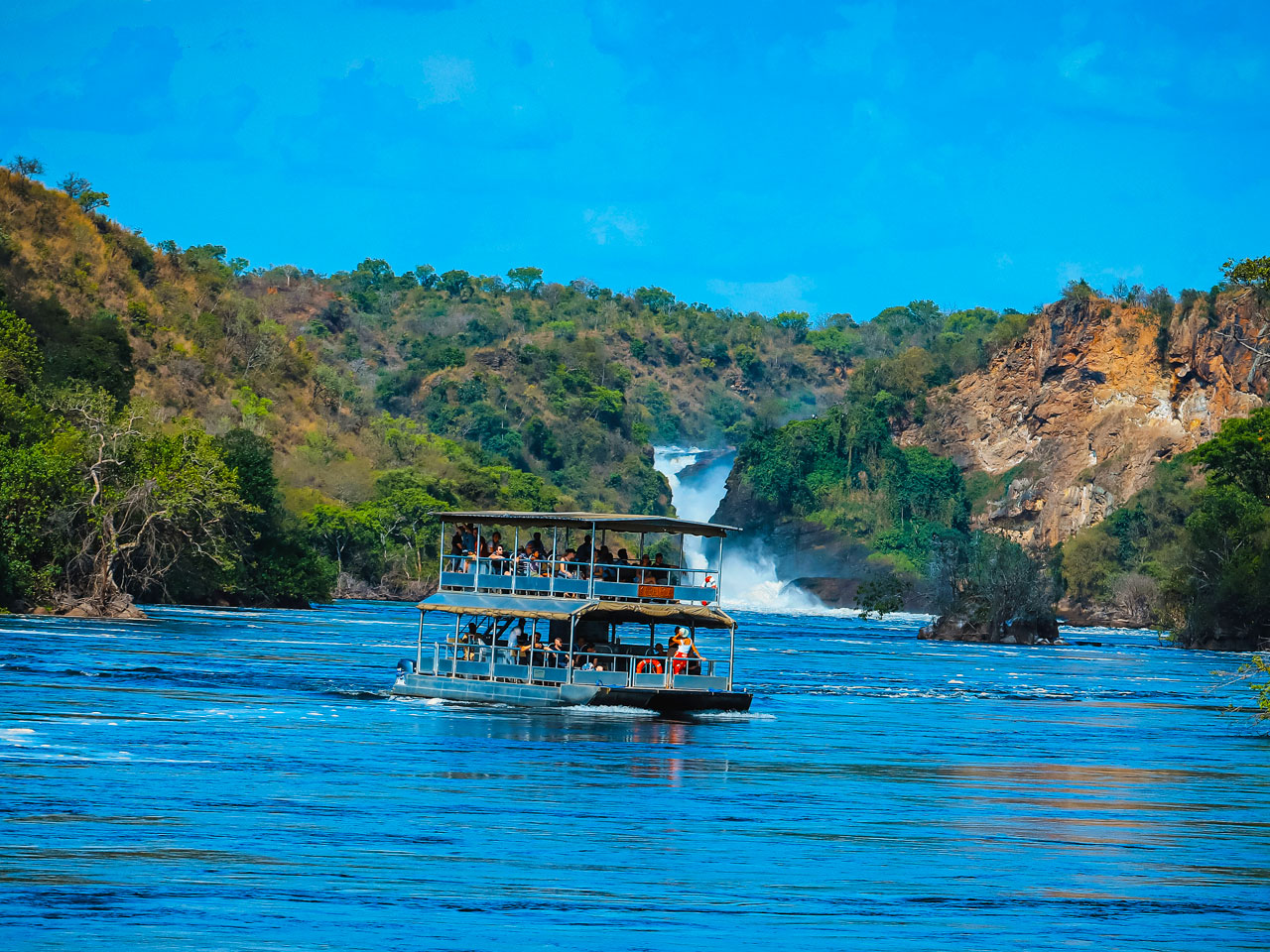
Uganda’s national parks offer an extraordinary mix of dramatic landscapes and world-class wildlife encounters that make East Africa so special. In the mist-shrouded rainforests of Bwindi Impenetrable and Mgahinga, trekking to lock eyes with endangered mountain gorillas is an unforgettable highlight, while Kibale delivers unmatched chimpanzee tracking. Beyond the jungles, classical savannah adventures await: Queen Elizabeth is famous for its tree-climbing lions and Kazinga Channel boat cruises, Murchison Falls showcases the Nile squeezing through a narrow gorge alongside massive elephant herds, and remote Kidepo Valley offers rugged, crowd-free wilderness. For active travelers, Lake Mburo provides intimate walking safaris among zebras, while the snow-capped Rwenzori Mountains challenge high-altitude mountaineers. Together, these diverse protected areas capture the wild heart of the Pearl of Africa.
14-days-uganda-and-rwanda-safari-tour-itinerary
14-days-luxury-uganda-primate-safari-holiday
14-days-uganda-primate-safari-and-jinja-white-water-rafting
14-days-classic-uganda-birding-safari-expedition
14-days-best-africa-big-five-safari-in-uganda-and-best-gorilla-trekking-adventure
20-days-uganda-birding-safari-wildlife-gorilla-and-chimpanzee-tracking
20-days-uganda-birding-safari-to-uganda-national-park
20-days-uganda-safari-holiday-tour-package-itinerary
19-days-best-photography-uganda-birding-safari-and-wildlife-adventure
19-days-incredible-uganda-safari-tour-big-five-chimpanzees-and-mountain-gorillas
18-days-best-of-uganda-safari-holiday-vacation-to-all-best-parks
17-days-uganda-honeymoon-safari-holiday-tour
17-days-uganda-birding-safari-itinerary
17-days-best-safari-in-uganda-ending-in-kigali-rwanda
16-days-ultimate-uganda-safari-to-rwanda-safari-tour-package-combo
16-days-best-of-uganda-birding-safari-holiday-extravaganza
7-day-ultimate-uganda-primate-safari-chimpanzees-and-game-drives
6-days-best-gorilla-trekking-and-safari-uganda-parks
1. Bwindi Impenetrable National Park
Tucked away in southwestern Uganda, this 321-square-kilometer UNESCO World Heritage site protects an ancient, mist-shrouded rainforest that survived the last ice age. Bwindi is world-famous for safeguarding nearly half of the world’s remaining mountain gorillas—roughly 459 individuals out of the global population of just over 1,060. The park is split into four trekking sectors: Buhoma, Ruhija, Rushaga, and Nkuringo. Hiking through the dense tangles of bamboo and mimulopsis trees with local Uganda Wildlife Authority (UWA) rangers to track a habituated gorilla family is often described as a deeply humbling experience. Beyond primates, Bwindi shelters over 350 bird species, including 23 Albertine Rift endemics.
2. Murchison Falls National Park
Spanning nearly 3,890 square kilometers, Murchison Falls is Uganda’s largest national park. The park is bisected by the Victoria Nile, which forces its way through a narrow 7-meter gap in the rocks before plunging 43 meters into the "Devil’s Cauldron." A boat cruise along the Nile toward the base of the falls reveals massive pods of hippos, huge Nile crocodiles, and elephant herds coming down to drink. On northern savannah game drives around the Buligi circuit, you can spot Jackson’s hartebeests, Rothschild’s giraffes, lions, and leopards roaming across open grasslands.
3. Queen Elizabeth National Park
Stretching across 1,978 square kilometers in the shadow of the Rwenzori Mountains, Queen Elizabeth is Uganda’s most popular savannah reserve. Its defining feature is the Kazinga Channel, a 32-kilometer natural waterway linking Lake George and Lake Edward, famous for having one of the world's highest concentrations of hippos. Down in the southern Ishasha sector, visitors flock to see the world-famous tree-climbing lions resting in the low branches of fig trees during the heat of the afternoon. Nearby, Kyambura Gorge—known as the "Valley of Apes"—offers chimp tracking in a sunken tropical forest.
4. Kibale National Park
Covering 795 square kilometers of lush rainforest near Fort Portal, Kibale is widely celebrated as the "Primate Capital of the World." The park is home to 13 distinct primate species, including over 1,500 chimpanzees. Guided primate treks give visitors a 90% chance of encountering a habituated chimp troop as they groom, feed, and swing through the canopy. You'll also encounter red colobus monkeys, L’Hoest’s monkeys, and grey-cheeked mangabeys. Nearby, the Bigodi Wetland Sanctuary offers fantastic boardwalk birding for the vibrant Great Blue Turaco.
5. Kidepo Valley National Park
Located in the far northeastern corner along the South Sudan border, Kidepo covers 1,442 square kilometers of rugged, untouched wilderness. Framed by the Mount Morungole range, it consists of two major river valleys: the Narus Valley, which retains water year-round and draws massive herds of up to 4,000 buffaloes, and the sandy Kidepo Valley. Because of its remote location, Kidepo feels blissfully crowd-free. It is the only park in Uganda where you can regularly see cheetahs, ostriches, and secretary birds hunting across open golden plains.
6. Lake Mburo National Park
At just 370 square kilometers, Lake Mburo is Uganda’s smallest savannah park, but its close proximity to Kampala (roughly a 4-hour drive) makes it a favorite weekend getaway. It is the only national park in southern Uganda with wild zebras and impalas, and it hosts a growing population of Rothschild's giraffes re-introduced from Murchison Falls. Because there are no elephants and few lions, UWA allows unique guided walking safaris, mountain biking, and horseback rides across the rolling acacia hills alongside grazing elands and topis.
7. Rwenzori Mountains National Park
Covering 996 square kilometers along the Democratic Republic of Congo border, this UNESCO World Heritage site protects the legendary "Mountains of the Moon." The range features Africa’s third-highest peak, Mount Stanley (Margherita Peak at 5,109 meters). Unlike volcanic peaks like Kilimanjaro, the Rwenzoris are block mountains formed by tectonic uplift. Trekkers on the 7-to-9-day Central Circuit pass through surreal, prehistoric giant lobelia forests and moss-draped bog zones before reaching snow-capped glaciers right near the equator.
8. Mgahinga Gorilla National Park
Spanning just 33.7 square kilometers, Mgahinga is Uganda's smallest national park, located in the extreme southwestern Virunga Massif. It operates under the local motto "Where Gold Meets Silver," referring to its two resident stars: endangered golden monkeys and mountain gorillas (including the habituated Nyakagezi gorilla family). Mgahinga encompasses three extinct volcanoes—Mount Muhavura, Mount Gahinga, and Mount Sabyinyo—offering strenuous day hikes where you can physically stand in three countries (Uganda, Rwanda, and DRC) at the summit of Sabyinyo.
9. Mount Elgon National Park
Located on the Kenyan border near Mbale, Mount Elgon covers 1,121 square kilometers centered around an extinct shield volcano that once towered higher than Kilimanjaro. Elgon features the world's largest intact volcanic caldera, measuring roughly 8 kilometers across. Popular activities include hiking to the breathtaking 100-meter Sipi Falls, exploring Kitum Cave where elephants historically dug for salt, and trekking through bamboo zones to reach Wagagai Peak at 4,321 meters.
10. Semuliki National Park
Nestled in the isolated Albertine Rift Valley floor across 220 square kilometers, Semuliki represents an easterly spillover of the vast Ituri Forest from the Congo Basin. The park is famous for the Sempaya Hot Springs—comprising the male spring (Kiteza) and the boiling female spring (Nyasimbi), where the water reaches temperatures over 100°C and locals boil eggs in minutes. Semuliki is an absolute haven for birdwatchers, harboring over 400 bird species, including Central African riverine species found nowhere else in East Africa.
Which national park is best for gorilla trekking in Uganda?
Bwindi Impenetrable National Park is widely considered the ultimate destination for gorilla trekking in Uganda. Protecting an ancient, mist-shrouded rainforest across 321 square kilometers, Bwindi shelters nearly half of the world's remaining mountain gorillas—roughly 459 individuals out of the global population of just over 1,060. The park is thoughtfully divided into four distinct trekking sectors: Buhoma, Ruhija, Rushaga, and Nkuringo. Each sector features several habituated gorilla families, providing visitors with high permit availability and diverse trekking terrain.
While neighboring Mgahinga Gorilla National Park also offers gorilla tracking on the slopes of the Virunga Volcanoes, Bwindi stands out because of its rich biodiversity and established community eco-lodges. Hiking alongside Uganda Wildlife Authority rangers through dense thickets of bamboo and mimulopsis trees requires reasonable fitness, but locking eyes with a massive silverback in his natural habitat makes every muddy step worth it. Beyond mountain gorillas, Bwindi harbors 120 mammal species, including forest elephants and chimpanzees, along with over 350 bird species, making it a birdwatcher's paradise. Choosing Bwindi ensures an authentic, deeply moving rainforest encounter while directly contributing to critical wildlife conservation and local community development initiatives in southwestern Uganda.
What is the best time to visit Uganda national parks?
The best time to visit Uganda's national parks is during the two dry seasons: December through February and June through September. During these drier months, trail conditions in tropical rainforests like Bwindi Impenetrable and Kibale National Park are far less muddy, making trekking for mountain gorillas and chimpanzees significantly easier. Clearer skies also mean less rainfall during your morning hikes, allowing for superior outdoor photography and overall trekking comfort.
For savannah parks like Murchison Falls, Queen Elizabeth, and Kidepo Valley, the dry season thins out tall grass and forces wildlife to gather around permanent water sources like rivers, natural channels, and waterholes. This concentration makes spotting big cats, massive elephant herds, and rare antelopes far simpler during morning game drives and boat safaris. However, traveling during the green wet seasons (March to May and October to November) has its own unique perks. Landscapes turn lush and vibrant, birdwatching peaks with the arrival of migratory species from Europe and northern Africa, lodges offer appealing discounted rates, and popular trekking routes feel blissfully uncrowded. Ultimately, Uganda remains an exceptional year-round safari destination thanks to its mild equatorial climate.
How much does a gorilla trekking permit cost in Uganda?
A mountain gorilla trekking permit in Uganda costs $800 per person for foreign non-residents, $700 for foreign residents living in East Africa, and 300,000 East African Shillings for citizens within the East African Community. Issued exclusively by the Uganda Wildlife Authority (UWA), this permit grants you entry into either Bwindi Impenetrable National Park or Mgahinga Gorilla National Park, including ranger protection, expert tracking services, and strictly one hour spent in the direct presence of a habituated gorilla family once located.
While the permit fee represents a significant portion of your travel budget, it directly funds vital conservation operations that have successfully brought mountain gorillas back from the brink of extinction. Revenue from permit sales pays for 24-hour ranger patrols, veterinary care from Gorilla Doctors, anti-poaching units, and habitat restoration. Furthermore, 20% of all park entry fees are shared directly with local communities living adjacent to the parks to fund schools, healthcare clinics, clean water projects, and road infrastructure. If you are looking for a more immersive experience, Uganda also offers a Gorilla Habituation Experience permit in southern Bwindi for $1,500, allowing guests to spend up to four full hours alongside researchers and wild gorillas.
Where can you see chimpanzees in Uganda national parks?
Kibale National Park is famous as the premier location for chimpanzee tracking in Uganda, rightly earning its reputation as the "Primate Capital of the World." Spanning 795 square kilometers of dense tropical rainforest, Kibale hosts over 1,500 chimpanzees alongside 12 other primate species, including red colobus monkeys and L’Hoest’s monkeys. Guided chimp treks starting from the Kanyanchu Visitor Center yield a remarkable success rate of over 90% for locating habituated troops as they call out, feed, groom, and leap through the high forest canopy.
Beyond Kibale, several other national parks and protected forest reserves offer rewarding chimpanzee encounters. Queen Elizabeth National Park features the dramatic Kyambura Gorge—a sunken underground rainforest known as the "Valley of Apes"—where a isolated family of habituated chimps resides. Nearby in the Kalinzu Forest Reserve and the Budongo Forest near Murchison Falls National Park, visitors can embark on guided forest walks to track wild chimps at a lower permit cost. For travelers seeking an extended encounter, Kibale offers a full-day Chimpanzee Habituation Experience (CHAE), allowing guests to accompany researchers from dawn until dusk as wild chimps wake up, forage, build night nests, and settle in for sleep.
What animals live in Queen Elizabeth National Park in Uganda?
Queen Elizabeth National Park boasts incredible biodiversity, sheltering 95 mammal species and over 600 bird species within its 1,978 square kilometers. The park's diverse ecosystems—ranging from open savannah grasslands and acacia woodlands to freshwater lakes, crater lakes, and dense swamp forests—create an ideal home for classic African wildlife. Visitors on savannah game drives regularly encounter large herds of African bush elephants, Cape buffaloes, Uganda kob, waterbucks, topis, and giant forest hogs roaming across the Kasenyi Plains.
Predators thrive in high numbers across the park. Lions, spotted hyenas, and elusive leopards actively hunt across the open plains. Down in the remote Ishasha sector in the park's southern end, visitors come to witness the world-famous tree-climbing lions resting high in the branches of giant fig trees during the hot afternoon hours. Meanwhile, a boat launch along the 32-kilometer Kazinga Channel offers close-up views of wallowing hippos, massive Nile crocodiles, and hundreds of waterbirds lining the muddy shores. In the eastern region, Kyambura Gorge protects chimpanzees and black-and-white colobus monkeys, making Queen Elizabeth one of East Africa's most ecologically varied wildlife destinations.
Is it safe to visit national parks in Uganda?
Yes, visiting national parks in Uganda is extremely safe, with thousands of international travelers enjoying peaceful safaris every single year. The Ugandan government prioritizes tourism security across all protected areas. The Uganda Wildlife Authority (UWA) deploys well-trained, armed park rangers who patrol the national parks day and night to ensure the safety of both visitors and wildlife. Additionally, the specialized Tourism Police Force works closely with local community leaders and military units to maintain strict security along border areas and main travel corridors.
When participating in wilderness activities like gorilla trekking in Bwindi, chimpanzee tracking in Kibale, or walking safaris in Lake Mburo, armed UWA rangers accompany every single tourist group. These experienced guides are deeply knowledgeable about animal behavior, bush safety, and emergency protocols. Roads connecting major parks are well-maintained, and luxury lodges maintain private security personnel on site. As with travel anywhere in the world, staying safe simply requires basic common sense: follow your ranger's instructions during wildlife encounters, avoid walking alone outside designated lodge boundaries after dark, store personal valuables securely, and stay informed about local travel advisories before setting off on your journey.
What makes Murchison Falls National Park unique and famous?
Murchison Falls National Park is famous for hosting one of the world's most powerful natural water spectacles alongside abundant big game safari adventures. Spanning 3,890 square kilometers, it is Uganda's largest protected wilderness, bisected east-to-west by the historic Victoria Nile. The park's crowning jewel is Murchison Falls itself, where the entire flow of the Nile River—nearly 300 cubic meters per second—forces its way through a tiny 7-meter gap in the rift valley escarpment before crashing down 43 meters into the "Devil’s Cauldron."
This dramatic surge creates a thunderous roar, a constant rainbow mist, and a vibrant riverine ecosystem below. Taking a boat cruise upstream toward the base of the falls brings travelers face-to-face with dense pods of hippos, massive Nile crocodiles, and elephant herds coming down to bathe along the banks. On the northern savannah side, open grasslands host Rothschild's giraffes, Jackson's hartebeests, lions, leopards, and kob. Visitors can also hike to the top of the falls for breathtaking panoramic views of the surging waters, combining sheer geological power with classic East African wildlife viewing in a single spectacular destination. How many national parks are there in Uganda total?
Uganda is home to 10 officially gazetted national parks, each managed by the government agency known as the Uganda Wildlife Authority (UWA). Spread across the country's diverse geographical zones, these protected areas range from dense tropical rainforests and volcanic mountain chains in the west to vast savannah plains and rugged semi-arid valleys in the north. Together, they safeguard an extraordinary array of ecosystems, wildlife, and natural landforms that make Uganda the "Pearl of Africa."
The ten national parks include Bwindi Impenetrable National Park, Mgahinga Gorilla National Park, Kibale National Park, Queen Elizabeth National Park, Murchison Falls National Park, Kidepo Valley National Park, Lake Mburo National Park, Rwenzori Mountains National Park, Mount Elgon National Park, and Semuliki National Park. Two of these—Bwindi Impenetrable and Rwenzori Mountains—are designated UNESCO World Heritage sites due to their exceptional ecological importance and natural beauty. From tracking endangered primates in mist-shrouded jungles to scaling equatorial glaciers or watching tree-climbing lions on open savannahs, Uganda's network of ten national parks offers an astonishing variety of wilderness experiences within a relatively compact country.
What unique wildlife can you see in Kidepo Valley?
Kidepo Valley National Park, located in the remote northeastern corner of Uganda along the South Sudan border, is home to several rare wildlife species found nowhere else in the country. Covering 1,442 square kilometers of rugged savannah framed by Mount Morungole, Kidepo's dry climate creates a specialized ecosystem that supports unique desert and dry-savannah species. It is the only national park in Uganda where visitors can spot wild cheetahs, ostriches, secretary birds, and caracals hunting across open plains.
Beyond these regional specialties, Kidepo hosts massive wildlife populations that thrive in its two main river valleys—the Narus and Kidepo Valleys. The Narus Valley retains water year-round, drawing vast herds of Cape buffaloes numbering up to 4,000 individuals, alongside huge herds of elephants, Rothschild's giraffes, zebras, Jackson's hartebeests, and elands. Predators thrive here in exceptional numbers; dense prides of lions regularly lounge on granite kopjes, while leopards and spotted hyenas roam the grasslands. Because Kidepo's isolated location keeps tourist numbers low, visiting this untouched national park feels like stepping back in time to experience Africa as it existed decades ago.
Can you do walking safaris in Lake Mburo Park?
Yes, Lake Mburo National Park is one of the very few national parks in Uganda where you can experience guided walking safaris right alongside wild animals. Spanning 370 square kilometers of rolling acacia woodland and wetlands, Lake Mburo is Uganda's smallest savannah park. Because there are no lions and very few dangerous predators residing within the park boundaries, the Uganda Wildlife Authority permits travelers to step out of their vehicles and explore the wilderness on foot under the supervision of an armed ranger.
Accompanied by an experienced guide who interprets animal tracks, droppings, and bird calls, walking safaris allow you to get remarkably close to grazing herds of zebras, impalas, topis, elands, and warthogs. You can trek to the top of Kazuma Hill for sweeping panoramic views of the park's 13 interconnected lakes, or walk quietly through acacia thickets to watch giraffes browsing on treetops. In addition to guided nature walks, Lake Mburo offers other active safari adventures rarely found in other Ugandan parks, including mountain biking trails, night game drives to search for leopards, and horseback riding safaris organized by local eco-lodges.
What activities can you enjoy in Semuliki National Park?
Semuliki National Park offers a fascinated blend of birdwatching, cultural encounters, and geothermal exploration within an isolated lowland tropical rainforest. Located on the floor of the Albertine Rift Valley in western Uganda, this 220-square-kilometer park represents an easterly extension of the vast Congo Basin forest. The park's most famous attraction is the Sempaya Hot Springs, featuring two distinct geothermal sites: the male spring (Kiteza) and the boiling female spring (Nyasimbi), where water surges up from deep underground at temperatures exceeding 100°C.
Visitors can walk along elevated wooden boardwalks through palm forests to view the steaming springs, where rangers demonstrate the water's intensity by boiling eggs and plantains in just a few minutes. Semuliki is also an absolute paradise for birdwatchers, harboring over 400 bird species, including 35 Central African riverine species found nowhere else in East Africa, such as the piping hornbill and Congo serpent eagle. Beyond nature walks, travelers can visit local Batwa community villages along the park border to learn about traditional forest survival skills, herbal medicine, and cultural dances from indigenous rainforest dwellers.
How difficult is hiking in the Rwenzori Mountains Park?
Hiking in Rwenzori Mountains National Park is widely regarded as one of the most physically demanding yet rewarding mountaineering experiences in Africa. Protecting the legendary "Mountains of the Moon," this 996-square-kilometer UNESCO World Heritage site features Mount Stanley, home to Margherita Peak—Africa's third-highest point at 5,109 meters above sea level. Unlike volcanic peaks like Mount Kilimanjaro, the Rwenzoris form a rugged, non-volcanic mountain range characterized by steep ridges, deep valleys, slippery mud, and high humidity.
Trekking routes like the 7-to-9-day Central Circuit or Kilembe Trail require high levels of physical fitness, mental endurance, and proper high-altitude trekking gear. Hikers traverse surreal landscapes, moving through bamboo forests, alpine bog zones filled with giant groundsels and lobelias, and steep rocky passes before reaching equatorial glaciers near the summit. The trail's famous mud, unpredictable weather, and rapid elevation gains make it tougher than standard high-altitude treks. However, for experienced hikers, the park's uncrowded trails, dramatic scenery, and glacial landscapes make the Rwenzori Mountains an unforgettable adventure for serious outdoor enthusiasts.
What should you pack for a Uganda safari trip?
Packing for a safari across Uganda's national parks requires preparing for both humid tropical rainforests and open sunny savannahs. Essential clothing includes lightweight, long-sleeved shirts and durable long trousers in neutral earth tones like khaki, olive, green, and tan. These keep you cool, protect against sharp thorns and biting insects, and blend into the environment. Avoid bright colors that startle wildlife, as well as dark blue or black fabrics, which attract tsetse flies in woodland zones.
For gorilla and chimpanzee trekking, pack sturdy, broken-in waterproof hiking boots with good ankle support, high socks to tuck your pants into, and durable garden gloves to grip stinging nettles along steep trails. A lightweight waterproof rain jacket is essential year-round, as tropical downpours can occur unexpectedly. Don't forget a wide-brimmed sun hat, polarized sunglasses, high-SPF sunscreen, and insect repellent containing DEET. Important gear includes compact binoculars for birding and wildlife viewing, a camera with a zoom lens, extra memory cards, and a power bank. Finally, bring any necessary prescription medications, personal toiletries, and a reusable water bottle to stay hydrated during daily excursions.
What birds can you spot in Mount Elgon Park?
Mount Elgon National Park is a premier destination for montane birdwatching, hosting over 300 bird species across its diverse elevation zones. Covering 1,121 square kilometers along the Kenyan border, this extinct shield volcano ranges from lower evergreen forests to bamboo thickets and high-altitude alpine moorlands surrounding its 8-kilometer-wide caldera. This varying terrain provides an exceptional sanctuary for rare forest and highland bird species that draw avid birdwatchers from around the globe.
Key species to look out for include the endangered Lammergeier (bearded vulture) soaring over high cliffs, Jackson's francolin, Moorland francolin, and the striking Tacazze sunbird feeding on giant lobelias. In the dense lower canopy around Sipi Falls and Kapkwai Forest Exploration Centre, birdwatchers can spot the Hartlaub's turaco, Ross's turaco, black-collared apalis, and African goshawk. The park is also home to various green bulbuls, alpine chats, and golden-winged sunbirds. Walking along quiet forest trails with local Uganda Wildlife Authority birding guides gives visitors an intimate chance to spot both resident endemics and migratory species while enjoying the park's tranquil mountain scenery.
Why are local ranger guides essential in Uganda parks?
Local ranger guides from the Uganda Wildlife Authority (UWA) are essential for ensuring your safety, maximizing wildlife sightings, and enriching your safari with deep local knowledge. Navigating dense rainforests like Bwindi or vast savannahs like Murchison Falls requires years of bush experience that only professional rangers possess. Rangers undergo rigorous physical and tactical training, enabling them to handle unexpected animal encounters, navigate rough terrain, and maintain complete security throughout your trek or game drive.
Beyond safety, ranger guides possess unmatched tracking skills. They can identify subtle environmental clues—such as broken twigs, fresh footprints, bent grass, or distant alarm calls—to locate elusive animals like leopards, lions, and mountain gorillas that tourists would easily miss. Furthermore, local rangers share fascinating insights into animal behavior, plant medicine, ecosystem history, and community culture, transforming a simple drive into an educational journey. By hiring local guides, you also directly support Ugandan employment and conservation livelihoods, ensuring that local communities continue to value and protect their natural heritage for generations to come.
Booking Uganda safari to national parks with us Roads of Adventure safaris
Book your adventure with Roads of Adventure Safaris by reaching out via email at info@roadsofadventuresafaris.com or WhatsApp at +256 701041637. A 30% deposit secures your customized itinerary, which includes 4x4 transport, lodge bookings, and expert guides for destinations like Bwindi, Queen Elizabeth, and Murchison Falls
