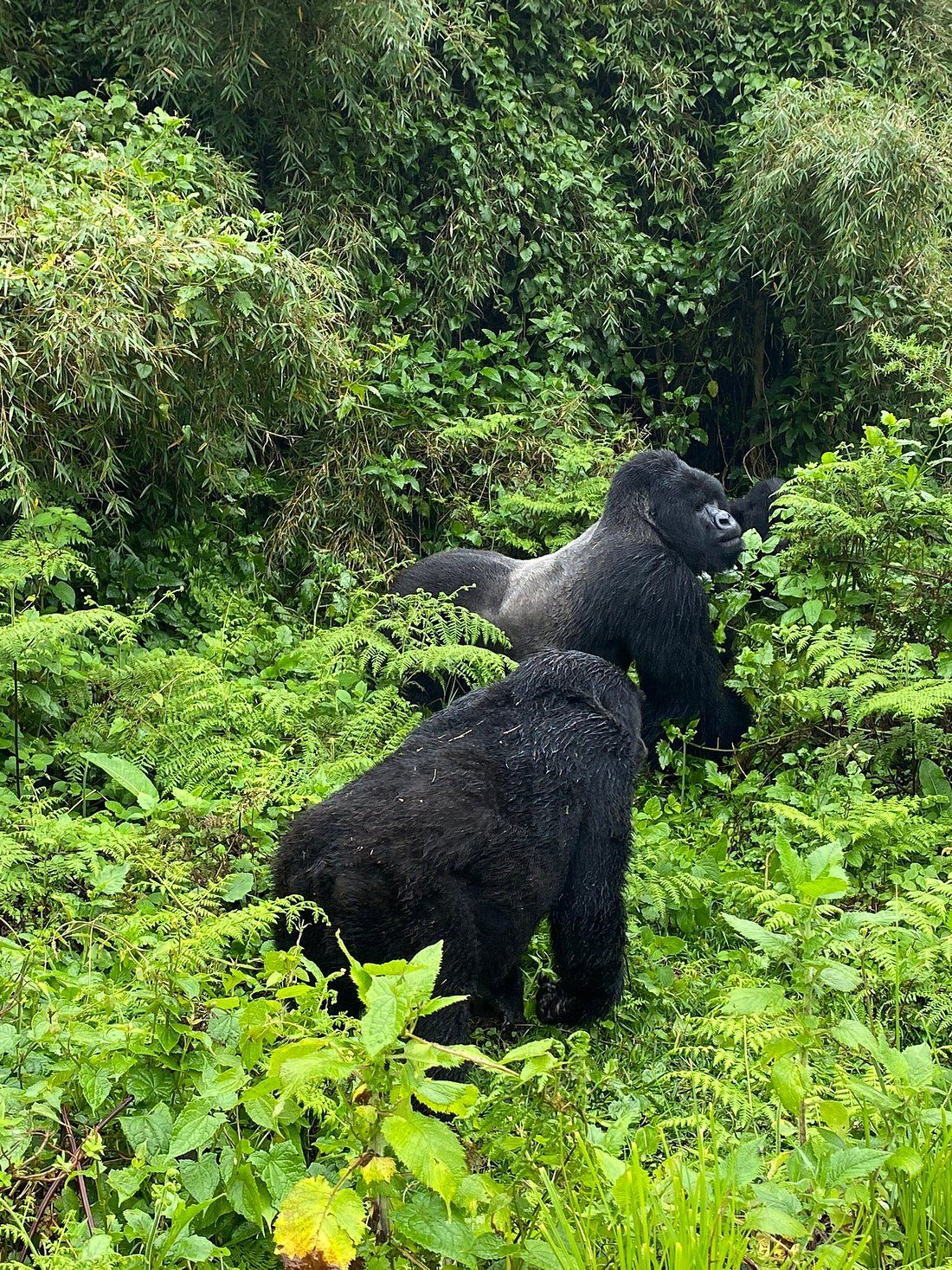
A Uganda safari holiday offers a diverse mix of primate trekking, big game viewing, and adventure, headlined by tracking mountain gorillas in Bwindi and chimpanzees in Kibale. Key experiences include boat safaris on the Kazinga Channel, visiting Murchison Falls, trekking rhinos at Ziwa, and exploring Queen Elizabeth National Park
14-days-uganda-and-rwanda-safari-tour-itinerary
14-days-luxury-uganda-primate-safari-holiday
14-days-uganda-primate-safari-and-jinja-white-water-rafting
14-days-classic-uganda-birding-safari-expedition
14-days-best-africa-big-five-safari-in-uganda-and-best-gorilla-trekking-adventure
20-days-uganda-birding-safari-wildlife-gorilla-and-chimpanzee-tracking
20-days-uganda-birding-safari-to-uganda-national-park
20-days-uganda-safari-holiday-tour-package-itinerary
19-days-best-photography-uganda-birding-safari-and-wildlife-adventure
19-days-incredible-uganda-safari-tour-big-five-chimpanzees-and-mountain-gorillas
18-days-best-of-uganda-safari-holiday-vacation-to-all-best-parks
17-days-uganda-honeymoon-safari-holiday-tour
17-days-uganda-birding-safari-itinerary
17-days-best-safari-in-uganda-ending-in-kigali-rwanda
16-days-ultimate-uganda-safari-to-rwanda-safari-tour-package-combo
16-days-best-of-uganda-birding-safari-holiday-extravaganza
7-day-ultimate-uganda-primate-safari-chimpanzees-and-game-drives
6-days-best-gorilla-trekking-and-safari-uganda-parks
Top 20 Must-Do Activities on a Uganda Safari
Mountain Gorilla Trekking
A Uganda safari is often defined by the profound experience of mountain gorilla trekking in Bwindi Impenetrable or Mgahinga Gorilla National Parks. This encounter is widely regarded as the ultimate wildlife experience on Earth, as it brings you face-to-face with a species that shares $98\%$ of our DNA. The journey begins with a morning briefing at the park headquarters, where trackers and rangers prepare you for the hike into the ancient, mist-shrouded rainforest. The trek can be physically demanding, involving navigation through dense undergrowth and up steep, vine-tangled ridges at high altitudes.
Once a gorilla family is located, all fatigue vanishes. You are granted exactly one hour to observe their social dynamics—mothers grooming infants, juveniles wrestling playfully, and the dominant silverback maintaining a watchful eye over his troop. The silence of the forest, broken only by the sound of breaking bamboo or a soft guttural grunt, creates a visceral connection to the natural world. This Uganda safari highlight is strictly regulated; only eight people per family are allowed daily to minimize stress and prevent disease transmission. It is a humbling, life-changing hour that supports the conservation of these endangered primates and their habitat.
Chimpanzee Tracking in Kibale Forest
Kibale National Park, known as the "Primate Capital of the World," is the premier destination for chimpanzee tracking on a Uganda safari. This lush tropical rainforest supports the highest density and diversity of primates in Africa, with 13 species recorded. Tracking our closest relatives involves following the echoing "pant-hoots" that resonate through the canopy. Unlike gorillas, chimpanzees are high-energy and highly vocal; you might witness a high-speed chase through the branches or a complex social dispute on the forest floor.
Spending an hour with a habituated troop allows you to witness their remarkable intelligence, from sophisticated tool use to intricate grooming rituals. For those seeking a deeper dive, the Chimpanzee Habituation Experience (CHEX) offers a full-day opportunity to follow the primates from their nests at dawn until they build new ones at dusk. This Uganda safari activity provides a front-row seat to the daily lives of these great apes, highlighting their distinct personalities and social politics. The experience is both thrilling and educational, emphasizing the critical importance of protecting Africa’s remaining rainforest corridors.
Boat Safari on the Kazinga Channel
A Uganda safari through Queen Elizabeth National Park is incomplete without a boat cruise along the Kazinga Channel. This 40-kilometer natural waterway connects Lake Edward and Lake George and boasts one of the world’s highest concentrations of hippos. As the boat glides along the banks, you are treated to a continuous parade of wildlife. Enormous pods of hippos grunt and spray water just meters away, while massive Nile crocodiles bask on the muddy shores with their mouths agape.
The channel is also a magnet for elephants and buffaloes, which frequently come down to the water’s edge to bathe and drink, especially during the heat of the afternoon. For bird enthusiasts, this is a masterclass in ornithology; the banks are lined with African fish eagles, kingfishers, pelicans, and the rare skimmer. The boat provides a stable, low-angle platform for photography, offering perspectives that are impossible to achieve from a vehicle. This relaxed yet high-density wildlife experience is a sensory highlight, showcasing the incredible abundance of the Western Rift Valley.
Murchison Falls Boat Cruise
The Murchison Falls boat cruise is a centerpiece of any northern Uganda safari. The journey takes you upstream toward the base of the world's most powerful waterfall, where the entire Victoria Nile is squeezed through a narrow seven-meter gap in the rocks. As you navigate the river, you are surrounded by diverse aquatic life, including hippos and crocodiles. The banks are often frequented by herds of elephants and the rare Rothschild’s giraffe, providing a unique water-based game-viewing experience.
The climax of the trip is reaching the "Devil’s Cauldron." From the boat, you witness the raw power of the river as it plunges 43 meters, creating a thunderous roar and a permanent mist adorned with rainbows. For the adventurous, the boat can drop you at the trailhead for a hike to the "Top of the Falls," offering a panoramic view of the Nile exploding through the gorge. This Uganda safari activity combines dramatic scenery with abundant wildlife, making it one of the most iconic river journeys in Africa.
Rhino Tracking at Ziwa Rhino Sanctuary
Rhino tracking at Ziwa Rhino Sanctuary provides a vital piece of the conservation puzzle on a Uganda safari. This 7,000-hectare sanctuary is the only place in the country where you can see wild Southern White Rhinos. Following the total extinction of rhinos in Uganda during the 1980s, Ziwa was established to reintroduce the species and eventually return them to the national parks. The experience is unique because it is conducted on foot, accompanied by highly trained, armed rangers.
Walking through the bush to find these three-ton giants is a visceral, ground-level adventure. Rangers share insights into the rhinos' behavior, their individual personalities, and the intensive security measures required to protect them from poaching. Standing just 15 to 30 meters away from a rhino mother and her calf is a profound reminder of the fragility of Africa’s wildlife. This Uganda safari stop is not just a wildlife viewing opportunity; it is a direct contribution to a successful rewilding project that aims to restore Uganda’s "Big Five" status in the coming years.
Game Drives in Queen Elizabeth National Park
Game drives across the Kasenyi Plains of Queen Elizabeth National Park are a cornerstone of the traditional Uganda safari. This mosaic of open savannah and volcanic craters is home to a staggering array of wildlife. As the sun rises over the Rwenzori Mountains, you set out to track prides of lions and the elusive leopard. The park is famous for its "Leopard Loop," where these solitary cats are frequently spotted resting in the thickets or on the branches of ancient candelabra trees.
The plains are also dotted with thousands of Uganda kob, the national antelope, whose breeding grounds attract predators. You will encounter large herds of Cape buffalo and African elephants moving across the landscape toward the crater lakes. The diverse topography, ranging from salt-mining lakes to grassy plains, ensures that every game drive offers a new perspective. This Uganda safari experience provides the classic "Big Game" thrill, balanced by the stunning backdrop of the Great Rift Valley, making it one of the most photographed regions in East Africa.
Tree-Climbing Lions of Ishasha
In the remote southern sector of Queen Elizabeth National Park lies Ishasha, a region famous for a rare biological phenomenon: tree-climbing lions. On this specialized Uganda safari track, you search the sprawling limbs of ancient sycamore fig and acacia trees for prides of lions lounging in the canopy. While lions elsewhere in Africa occasionally climb trees, the Ishasha prides do so habitually, likely to escape the heat of the ground and the irritation of tsetse flies.
Seeing a 400-pound apex predator draped over a branch like a domestic cat is one of the most surreal sights in the wild. The Ishasha sector is also known for its beautiful landscape of golden grasslands and its population of Topi antelopes, which are not found in the northern part of the park. Because this area is less visited, it offers a more secluded and wilder Uganda safari experience. Tracking these arboreal lions requires patience and a keen eye, but the reward is a unique photographic opportunity that defines the unpredictable nature of the African bush.
White-Water Rafting in Jinja
For those seeking an adrenaline surge on their Uganda safari, the town of Jinja offers world-class white-water rafting at the Source of the Nile. Known as the adventure capital of East Africa, Jinja provides the opportunity to tackle Grade 4 and Grade 5 rapids on the longest river in the world. The warm water and massive swells make this a thrilling "big volume" river experience, with iconic rapids like "The Bad Place" and "Itanda Falls" providing heart-pounding excitement.
Safety is paramount, with professional guides and safety kayakers accompanying every trip. Between the turbulent rapids, there are calm stretches where you can float in the Nile, watch the diverse birdlife along the forested banks, and wave to local fishermen in their dugout canoes. Whether you choose a full-day white-water odyssey or a more relaxed family float, this Uganda safari activity adds a high-octane dimension to your journey, proving that the "Pearl of Africa" is as much about adventure as it is about wildlife.
Chimpanzee Trekking in Kyambura Gorge
Trekking for chimpanzees in Kyambura Gorge is one of the most atmospheric experiences on a Uganda safari. Located within Queen Elizabeth National Park, this "Underground Forest" is a $100$-meter deep gash in the savannah floor, carved by the Kyambura River. Descending from the dry plains into the lush, humid riverine forest of the gorge feels like stepping into a "lost world." The gorge is home to a small, isolated community of habituated chimpanzees that have become the focus of intensive conservation efforts.
The trek is as much about the dramatic scenery as it is about the primates. As you follow the river, the echoes of chimpanzee vocalizations bounce off the steep walls of the gorge, creating a hauntingly beautiful acoustic environment. You might spot them swinging through the trees or foraging along the riverbanks. This Uganda safari activity offers a striking contrast to the open plains above, highlighting the diverse microclimates that exist within the Rift Valley and the resilience of the primates that call this hidden forest home.
Golden Monkey Tracking in Mgahinga
On the slopes of the Virunga Volcanoes, golden monkey tracking offers a vibrant addition to a Uganda safari. Mgahinga Gorilla National Park is the only place in the country where these rare, endangered primates are found. Endemic to the Albertine Rift, golden monkeys are known for their striking orange-gold coats and playful, energetic behavior. They live in large troops within the bamboo forests that ring the base of the volcanoes.
Tracking these monkeys is generally less strenuous than gorilla trekking, as they tend to stay in lower elevations. Once you find them, you are treated to a fast-paced display of acrobatics as they leap between bamboo stalks and forage for shoots. They are remarkably habituated and often move quite close to visitors, making for excellent photography. This Uganda safari experience completes the "Primate Triple Crown" (Gorillas, Chimps, and Golden Monkeys) and provides a stunning visual encounter against the backdrop of the towering Mount Sabinyo and Mount Gahinga.
Bird Watching in Mabamba Swamp
For birders, a Uganda safari is not complete without a pilgrimage to Mabamba Swamp on the edges of Lake Victoria. This vast papyrus wetland is the best place in the world to see the prehistoric-looking Shoebill Stork. Navigating the narrow channels in a traditional dugout canoe, you search for this solitary, lungfish-eating giant. The Shoebill’s massive, clog-shaped beak and intense yellow eyes give it an almost animatronic appearance as it stands motionless for hours in the reeds.
Beyond the Shoebill, Mabamba is a sanctuary for hundreds of other species, including the Lesser Jacana, Malachite Kingfisher, and the African Pygmy Goose. The tranquil environment of the swamp, with its lily-covered lagoons and whispering papyrus, offers a peaceful break from the more rugged parts of the safari. This specialized Uganda safari excursion is a must for any nature lover, offering a rare glimpse into a specialized ecosystem and the chance to check off one of Africa’s most elusive and iconic birds from your list.
Game Drives in Kidepo Valley National Park
Kidepo Valley National Park represents the "true wilderness" of a Uganda safari. Located in the remote northeast corner of the country, Kidepo is often ranked as one of the most scenic parks in all of Africa. Its vast, golden plains are ringed by jagged mountain ranges, and the landscape feels untouched by time. Game drives here offer a sense of isolation and discovery that is hard to find elsewhere. Kidepo is home to species that do not occur in other Ugandan parks, such as the cheetah and the ostrich.
The park’s rugged beauty is matched by its abundant wildlife; you will see massive herds of buffalo—sometimes numbering in the thousands—as well as lions, leopards, and elephants. The Narus Valley, which holds water year-round, becomes a focal point for animals during the dry season, providing exceptional viewing opportunities. This Uganda safari destination is for the traveler who wants to go off the beaten path and experience Africa as it was a century ago: raw, majestic, and teeming with life.
Hiking the Rwenzori Mountains
Known as the "Mountains of the Moon," the Rwenzori range offers the most challenging and rewarding hiking experience on a Uganda safari. This UNESCO World Heritage site features the highest mountain range in Africa, with Margherita Peak rising to $5,109$ meters ($16,762$ feet). Unlike the volcanic mountains found elsewhere in East Africa, the Rwenzoris are a block of tilted crustal rock, resulting in a landscape of jagged peaks, deep valleys, and unique alpine flora.
Trekking through the Rwenzoris takes you through five distinct vegetation zones, from tropical rainforest and bamboo thickets to the surreal landscapes of giant heathers and lobelias in the moorland zone. The higher reaches are home to permanent glaciers and snowfields, a startling sight so close to the Equator. Whether you choose a short three-day hike to the lower peaks or an intensive eight-day expedition to the summit, this Uganda safari adventure provides a world-class trekking experience characterized by dramatic scenery and profound solitude.
Relaxing at Lake Bunyonyi
After the physical intensity of trekking and game drives, relaxing at Lake Bunyonyi is a highlight of any Uganda safari. Located in the southwestern highlands, Bunyonyi is one of Africa’s deepest and most beautiful lakes. Its name means "Place of Many Little Birds," and the lake is dotted with 29 emerald islands, each with its own history and charm. The surrounding terraced hillsides, often shrouded in morning mist, give the area a landscape reminiscent of Switzerland.
Activities here are low-impact and focused on the scenery. You can take a traditional dugout canoe to visit "Punishment Island," swim in the safe, bilharzia-free waters, or hike to a viewpoint for a panoramic look at the lake’s intricate shape. Many travelers use Lake Bunyonyi as a place to decompress and process their gorilla trekking experience. This Uganda safari stop provides the perfect "slow travel" moment, offering peace, tranquility, and some of the most stunning sunsets in the "Pearl of Africa."
Sipi Falls Hiking
Located on the foothills of Mount Elgon in eastern Uganda, Sipi Falls is a series of three stunning waterfalls that offer a refreshing hiking experience on a Uganda safari. The falls drop over sheer basalt cliffs, surrounded by lush coffee plantations and vibrant local communities. The hike between the three levels of the falls takes you through winding trails, offering different perspectives of the water as it plunges into the valley below.
The area is also famous for its Bugisu Arabica coffee. Many Sipi Falls excursions include a "seed-to-cup" coffee tour, where you learn the entire process of picking, shelling, roasting, and grinding coffee with local farmers. The combination of spectacular scenery, physical activity, and cultural immersion makes this a well-rounded Uganda safari addition. For the truly adventurous, abseiling down the main 100-meter waterfall provides an unmatched rush against the backdrop of the roaring water and the vast Karamojong plains in the distance.
Equator Experience
The Equator experience is a classic "bucket list" stop on any Uganda safari route heading southwest from Kampala. At Kayabwe, you can stand with one foot in the Northern Hemisphere and the other in the Southern Hemisphere. The site is marked by iconic circular monuments that have become a mandatory photo opportunity for travelers. Local guides often perform the "Coriolis effect" water demonstration, showing how water drains in different directions on either side of the line.
Beyond the geographic significance, the Equator stop is a hub for local crafts and souvenirs. You can browse through vibrant markets for hand-woven baskets, wood carvings, and traditional Ugandan fabrics. There are also several cafes where you can enjoy a cup of Ugandan coffee while reflecting on your journey across the globe. While it is a brief stop, the Equator experience adds a sense of geographic scale to your Uganda safari, marking the midpoint of your transit between the central regions and the primate-rich highlands of the west.
Cultural Experience with the Batwa People
Engaging in a cultural experience with the Batwa people is a poignant and essential part of a Uganda safari. The Batwa, or "pygmies," are the indigenous inhabitants of the Bwindi and Mgahinga forests, having lived there as hunter-gatherers for thousands of years before the parks were gazetted. Today, they lead guided "forest trails" to share their ancient heritage and survival skills with visitors.
During the experience, the Batwa demonstrate how they used to hunt with bows and arrows, harvest wild honey, and identify medicinal plants in the thicket. They share stories of their ancestral caves and perform traditional songs and dances that reflect their deep spiritual connection to the forest. This Uganda safari activity provides a voice to a marginalized community and offers travelers a deeper understanding of the human history of the Albertine Rift. It is a powerful reminder that conservation is not just about wildlife, but also about the people who have coexisted with it for millennia.
Lake Mburo National Park Boat Trip
Lake Mburo National Park is a charming, often underrated gem on the Uganda safari circuit. A boat trip on Lake Mburo offers a tranquil way to view wildlife from the water. Unlike the larger, more turbulent channels of the north, Lake Mburo is calm and intimate. The shores are lined with thickets of acacia and wetlands, providing a habitat for hippos, crocodiles, and a variety of water birds like the African finfoot and the malachite kingfisher.
From the boat, you can often see zebras, impalas, and buffaloes coming down to the water’s edge to drink. One of the highlights is spotting the majestic African Fish Eagle perched in the lakeside trees, ready to dive for its next meal. The boat trip is relatively short—usually two hours—making it a perfect afternoon activity that doesn't require the physical exertion of a trek. This Uganda safari experience emphasizes the park’s peaceful atmosphere and offers a different perspective on the diverse ecosystems found in southern Uganda
Walking Safari in Lake Mburo
A walking safari in Lake Mburo National Park is a rare and exhilarating opportunity on a Uganda safari. Because the park has a limited number of large predators, it is one of the few places in Uganda where you can safely explore the bush on foot accompanied by an armed ranger. Walking at ground level changes your perspective entirely; you are no longer a passive observer in a vehicle, but a participant in the landscape.
You can walk alongside herds of zebras and impalas, often getting remarkably close before they trot away. The ranger will point out the smaller details that are often missed from a car—the intricate structure of a termite mound, the tracks of a leopard from the previous night, and the diverse species of dung beetles at work. This Uganda safari activity is tactile and educational, offering a deep sense of connection to the African wilderness. It is a quiet, profound experience that highlights the beauty of the smaller inhabitants and the intricate balance of the acacia woodland.
Visiting Uganda Wildlife Education Centre (UWEC)
For those beginning or ending their Uganda safari in Entebbe, a visit to the Uganda Wildlife Education Centre (UWEC) is highly recommended. Formerly known as the Entebbe Zoo, UWEC is a world-class facility dedicated to the rescue and rehabilitation of injured or orphaned wildlife. It provides a unique opportunity to see Uganda’s diverse species up close in large, naturalistic enclosures that mimic their native habitats.
You can see lions, leopards, chimpanzees, and rhinos, as well as the rare shoebill stork. The "Behind the Scenes" tour is particularly popular, allowing visitors to participate in feeding the animals and learning about their individual rescue stories. UWEC serves as an important educational hub for local Ugandans and international visitors alike, showcasing the country’s commitment to wildlife conservation. This Uganda safari stop is an excellent way to consolidate your knowledge of the animals you’ve seen in the wild and to support the vital work of wildlife rehabilitation in the "Pearl of Africa."
What to expect on Chimpanzee tracking adventure in Kalinzu forest
1. What is the best way to experience mountain gorillas?
The gold standard for experiencing mountain gorillas is trekking within Bwindi Impenetrable National Park. Bwindi is a UNESCO World Heritage site and home to roughly half of the world's remaining mountain gorilla population. This ancient, dense rainforest provides the most authentic backdrop for an encounter that many describe as a spiritual experience.
The journey begins early in the morning with a briefing at the park headquarters. You are assigned to a specific habituated family, and under the guidance of expert rangers, you plunge into the "impenetrable" forest. The hike can be physically demanding, involving steep ridges and thick undergrowth, but the moment the rangers signal to put your bags down, the fatigue vanishes. You are allowed exactly one hour to observe these gentle giants. Watching a silverback oversee his family or young infants playing in the vines is a masterclass in nature’s grace. Because Bwindi’s terrain is so varied, every trek is a unique story of discovery, making the effort profoundly rewarding.
2. Is gorilla habituation different from regular trekking?
Yes, Gorilla Habituation is a significantly more intensive and educational experience than standard trekking. While a regular trek offers one hour of observation with a fully habituated family, the habituation experience allows you to spend four hours with a group that is still in the process of becoming accustomed to human presence.
Currently exclusive to the Rushaga sector of southern Bwindi, this activity is limited to only four tourists per group. You accompany researchers and rangers as they perform the delicate work of "habituating" the gorillas. This involves following the group at a distance, mimicking their vocalizations, and learning to interpret their body language. It provides a deeper look into the science of conservation. You see the gorillas in a more "raw" state, often witnessing behaviors that are less common in fully habituated groups. It is an intimate, long-form interaction that appeals to those who want more than just a glimpse, offering a true "behind-the-scenes" look at how these great apes are protected.
3. Where can I find chimpanzees in Uganda?
Kibale National Park is the undisputed primate capital of the world and the premier destination for chimpanzee trekking. With a population of over 1,500 chimpanzees, the park offers a success rate for sightings that exceeds 90%. Walking through Kibale’s lush tropical forest is a multi-sensory experience; the air is thick with the scent of damp earth and the cacophony of 13 different primate species.
A chimpanzee trek is generally faster-paced than gorilla trekking. Chimps are highly arboreal and vocal, so you often track them by following the sound of their "pant-hoots" echoing through the canopy. Once you find a troop, you witness the high-energy social lives of our closest relatives. You’ll see them grooming, squabbling over territory, and skillfully swinging through the branches. Kibale's guides are fonts of knowledge, identifying not only the chimps but also the Red-tailed monkeys, Grey-cheeked mangabeys, and rare L’Hoest’s monkeys that share this diverse ecosystem.
4. Are tree-climbing lions easy to see in Uganda?
While lions are generally terrestrial, the famous tree-climbing lions of the Ishasha sector in Queen Elizabeth National Park are a spectacular exception. Seeing these massive predators draped over the sturdy branches of sycamore-fig and acacia trees is one of the most iconic sights in African wildlife photography.
These lions are best spotted during late morning game drives. It is believed they climb the trees to escape the heat of the ground and to avoid the irritating bites of Tsetse flies. Unlike leopards, which are solitary and secretive in trees, Ishasha’s lions often lounge in groups, with several individuals occupying a single large tree. The Ishasha sector itself is a remote, beautiful part of the park, characterized by riverine forests and open savannah. While sightings are never "guaranteed," the specialized behavior of this specific population makes Ishasha the most reliable place in the world to witness this rare feline phenomenon.
5. What makes Murchison Falls National Park unique?
Murchison Falls National Park is unique because it combines classic "Big Game" savannah with the raw power of the world’s longest river. The park is bisected by the Victoria Nile, which culminates in the eponymous falls—a point where the entire Nile squeezes through a tiny 7-meter gap in the rocks, plunging 43 meters into the "Devil's Cauldron."
This dramatic geography creates two distinct safari experiences. North of the river, the Borassus palm-dotted plains are teeming with Rothschild's giraffes, elephants, and lions. South of the river, the lush forests offer a different atmosphere. A boat trip to the base of the falls is a mandatory experience; as you move upstream, the water becomes increasingly turbulent, and you pass massive pods of hippos and crocodiles. The sheer force of the water creates a permanent mist and a roar that can be felt in your chest. It is a place where the landscape is just as much a star as the wildlife, representing the wild, untamed spirit of the Nile.
6. Where can I experience white-water rafting on the Nile?
Jinja, often called the "Adventure Capital of East Africa," is the world-class hub for white-water rafting. Located at the Source of the Nile, Jinja offers a variety of rapids ranging from Grade 1 to the heart-pounding Grade 5. The river here is warm and deep, making it one of the safest yet most exciting places to raft globally.
The experience is a full-day adrenaline rush. You tackle legendary rapids like "The Bad Place" and "Itanda Falls," interspersed with calm stretches where you can swim and watch the lush riverbanks drift by. For those who aren't quite ready for Grade 5, there are family-friendly "floats." Beyond rafting, Jinja offers bungee jumping over the Nile, kayaking, and quad biking through local villages. It provides a perfect, high-energy break from the slow-paced patience required for wildlife viewing, making it a favorite for travelers looking to balance their safari with pure physical excitement.
7. What is a boat safari in Queen Elizabeth National Park?
The boat safari along the Kazinga Channel is perhaps the most effortless way to see a massive volume of wildlife in Uganda. This 32-kilometer natural channel connects Lake Edward and Lake George and acts as a massive "watering hole" for the park’s residents.
As you cruise along the banks, you are treated to a front-row seat to one of the largest concentrations of hippos in Africa. The hippos are joined by massive Nile crocodiles and "red" forest buffaloes cooling off in the mud. For photographers, the boat is a stable platform to capture shots of elephant herds coming down to drink, often just meters away. Bird watchers will find the channel unparalleled; it is common to see hundreds of African Skimmers, Pelicans, and Kingfishers in a single outing. The leisurely pace of the boat allows for a relaxed, immersive experience that requires none of the dust or bumping of a traditional game drive.
8. What is the best place for bird watching in Uganda?
With over 1,000 recorded species, Uganda is a global birding powerhouse. The most iconic destination for birders is the Mabamba Swamp, a labyrinth of papyrus channels on the edge of Lake Victoria. This is the most reliable place to find the rare and prehistoric-looking Shoebill Stork.
Navigating the swamp in a wooden canoe, you search for this "living fossil" as it stands motionless, waiting for lungfish. Beyond Mabamba, the Albertine Rift forests provide a home to numerous endemics. Lake Bunyonyi is a haven for smaller, colorful species, while the "Royal Mile" in Budongo Forest is legendary for its canopy-dwelling birds. From the tiny iridescent sunbirds to the massive Lappet-faced Vultures, the diversity of habitats—ranging from semi-arid scrub to montane rainforest—ensures that even a casual observer will be mesmerized by the colors and songs of Uganda's avian residents.
9. What to expect during a game drive in Lake Mburo?
Lake Mburo National Park is Uganda’s smallest savannah park, but it offers a specialized experience that the larger parks cannot. Because it lacks lions (usually), it is one of the few places where you can enjoy walking safaris and horseback safaris. This allows you to stand on the ground at eye-level with the wildlife, creating a much more intimate connection to the land.
During a game drive here, you are almost guaranteed to see Impalas (Mburo is the only place in southern Uganda where they exist) and massive herds of Burchell’s Zebras. It is also the best place to spot the world's largest antelope, the Eland. The park’s landscape is a beautiful mix of open grasslands, acacia forests, and several lakes. Because it is conveniently located on the highway between Kampala and the gorilla parks, it serves as the perfect "introductory" safari, offering a peaceful, low-pressure environment to observe wildlife before heading into the more rugged mountains.
10. Is hiking Mount Rwenzori challenging?
Hiking the Rwenzori Mountains, also known as the "Mountains of the Moon," is one of the most physically and technically challenging treks in Africa. Unlike the volcanic Mount Kilimanjaro, the Rwenzori is a block of ancient crystalline rocks, featuring a permanent snow cap and the third-highest peak in Africa, Margherita Peak (5,109m).
The trek is a multi-day odyssey through surreal landscapes. You pass through distinct zones: from tropical rainforest and bamboo forests to the eerie Heather and Lobelia zones, where plants grow to giant proportions. The terrain is often boggy and steep, requiring good physical fitness and, for the final ascent, basic mountaineering skills like using crampons and ice axes. However, the reward is a view of one of the world's most unique alpine environments. The jagged, snow-capped peaks standing right on the Equator offer a dramatic, world-class trekking experience that feels like visiting another planet.
11. Where can I see the source of the Nile?
The Source of the Nile is located in Jinja, where the waters of Lake Victoria begin their 6,600-kilometer journey to the Mediterranean Sea. A boat trip to the exact point where the lake flows into the river is a moment of great historical and geographical significance.
You can see the water bubbling up as it leaves the lake, a spot marked by a small monument. The area is tranquil and scenic, surrounded by lush gardens and vibrant birdlife. It’s a peaceful experience that provides a sense of perspective on the sheer scale of the African continent. Visiting the source offers a pleasant, reflective contrast to the high-adrenaline rafting nearby. Standing at the beginning of the world's longest river is a "bucket-list" moment that connects the heart of Africa to the ancient civilizations of the north, making it an essential stop for any traveler in Uganda.
Booking Uganda safari holiday with us Roads of Adventure safaris
Book your unforgettable Uganda safari with Roads of Adventure Safaris, specialists in tailored mid-range to luxury primate tracking and wildlife adventures. Experience thrilling mountain gorilla trekking in Bwindi, chimpanzee tracking in Kibale, and scenic game drives in Queen Elizabeth National Park. Our expert team handles all logistics, including permits, comfortable accommodation, and 4x4 transport. As a reputable operator, we offer customized, safe, and memorable itineraries across the Pearl of Africa, ensuring a seamless, high-quality holiday. Contact us to create your dream adventure, ranging from 5-day tours to extensive 14-day wildlife adventures.
