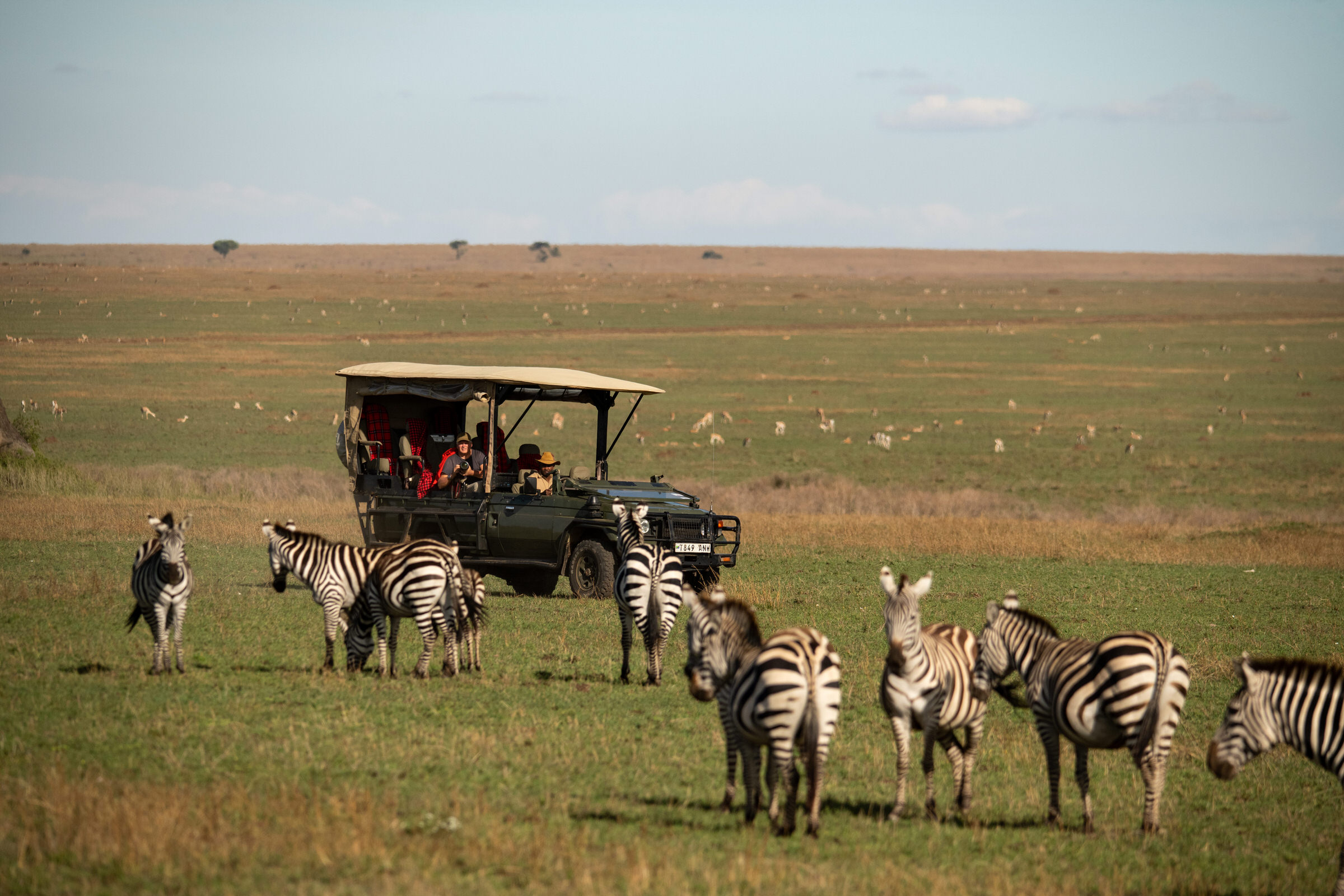
For a 12-day Kenya safari, maximize your experience by focusing on diverse ecosystems—like Maasai Mara, Amboseli, and Samburu—leveraging 4x4 vehicles, packing light layers in neutral colors, and using morning/evening game drives to avoid midday heat. Hire a private guide for flexibility and plan for a mix of luxury lodges and tented camps for a truly immersive experience.
12-days-lake-nakuru-masai-mara-central-serengeti-ngorongoro-crater-amboseli-kenya-tanzania-safari
12-days-kenya-tanzania-safari-and-zanzibar-beach-holiday-vacation
12-days-comprehensive-kenya-safari-circuit
12-days-northern-wilderness-and-conservation-focus-kenya-wildlife-safari
12-days-kenya-and-uganda-primate-and-savanna-circuit
Itinerary Mix: Balancing the Iconic and the Unique
A 12-day safari in Kenya offers the luxury of time, allowing you to move beyond the "greatest hits" and craft a narrative that spans diverse ecosystems. To achieve a truly balanced experience, you should combine the world-famous Maasai Mara with contrasting landscapes like Samburu and Amboseli. The Maasai Mara is the undisputed king of game viewing, offering high-density predator action and the vast, golden plains that most people envision when they think of Africa. However, spending 12 days only in the Mara would miss the nuance of Kenya’s broader biodiversity.
By adding Samburu National Reserve to the north, you introduce a rugged, arid beauty characterized by red volcanic soil and doum palms. Here, you encounter the "Samburu Special Five"—species found only in these northern latitudes, such as the reticulated giraffe and the Grevy’s zebra. This provides a fascinating evolutionary contrast to the wildlife in the south. Meanwhile, Amboseli National Park offers a different visual anchor: the towering, snow-capped peak of Mount Kilimanjaro. The park’s spring-fed swamps create a lush oasis where massive "tuskers" (elephants with enormous ivory) congregate, offering a completely different photographic palette than the Mara.
Finally, integrating a Rift Valley lake like Lake Nakuru or Naivasha provides a vital aquatic element. These areas are sanctuaries for rhinoceroses and over 400 species of birds. This "Itinerary Mix" ensures that your 12-day journey is not just a repetitive series of game drives, but a comprehensive exploration of the "Cradle of Mankind." You experience the transition from high-altitude highlands to semi-arid deserts and fertile savannahs, ensuring that every few days, the scenery, the temperature, and the animal inhabitants change entirely, keeping the sense of adventure and discovery alive throughout the expedition.
Opt for Fly-In Components: Saving Time and Gaining Perspective
In a country as vast as Kenya, the "cost" of a 12-day safari is often measured in hours spent on the road. While driving offers a glimpse into local villages and changing topographies, the "African massage"—the term for traversing bumpy, unpaved roads—can be physically taxing over a long period. For a 12-day safari in Kenya, integrating fly-in components is one of the most effective ways to maximize your time in the wilderness. Replacing a six-hour dusty drive from Nairobi to the Mara with a 45-minute flight in a light aircraft transforms your itinerary from a transit-heavy trip into a wildlife-intensive one.
Beyond the logistical efficiency, flying offers a breathtaking aerial perspective that you simply cannot get from a vehicle. Soaring over the Great Rift Valley, you see the sheer scale of the escarpments, the shimmering alkaline lakes, and the winding rivers that sustain the ecosystem. From the air, the animal trails carved into the earth look like a complex network of arteries, providing a profound understanding of how wildlife moves across the landscape. Most bush planes fly at a relatively low altitude, allowing you to spot elephant herds or pods of hippos from your window.
Choosing a "hybrid" model is often the best strategy. You might drive the first leg of your trip to experience the culture and landscapes of the central highlands, then fly for the longer transitions—such as moving from the northern frontier of Samburu down to the southern plains of the Mara. This approach allows you to arrive at your luxury camp refreshed and ready for an afternoon game drive, rather than arriving exhausted after a day on the road. It ensures that the "luxury" of your 12-day journey is defined by more time spent behind binoculars and less time behind a windshield.
Packing Essentials: The Science of Safari Gear
Packing for a 12-day safari in Kenya requires a balance of practicality, safety, and comfort. The most critical rule is to wear light, neutral colours such as khaki, tan, and olive. These tones help you blend into the environment, which is essential for not startling the wildlife during nature walks. More importantly, neutral colours are a safety measure; bright whites are highly visible to animals, and dark blue or black clothing is known to attract the Tsetse fly, which carries a painful bite. By sticking to a "safari palette," you ensure you are both inconspicuous and comfortable.
Layers are the secret to surviving the Kenyan climate. Because many parks are at high altitudes, temperatures can hover around 10°C (50°F) at dawn but soar to 30°C (86°F) by midday. A typical day starts with a fleece, a windbreaker, and perhaps a scarf. As the sun rises, you "peel" through these layers until you are in a light t-shirt. For a 12-day trip, your gear must also include a high-quality pair of binoculars. Even if your guide has a pair, having your own allows you to track a leopard's eye or a bird's plumage without waiting to share. A good camera with a telephoto lens (at least 300mm) is also essential for capturing the distant action without intruding on the animals' space.
Finally, do not overlook the importance of a sturdy day bag and "sun armor." High-SPF sunscreen, a wide-brimmed hat with a chin strap (to prevent it from blowing off in an open vehicle), and polarized sunglasses are non-negotiable. Because you will be in the sun for several hours a day, protecting your skin and eyes is vital for preventing "safari burnout." For a 12-day expedition, these essentials are the tools that allow you to focus on the lion's roar or the elephant's trumpet, rather than your own physical discomfort.
Accommodation Choice: Mixing Lodges and Tented Camps
A 12-day journey allows you the opportunity to experience the two distinct "souls" of Kenyan hospitality: the luxury lodge and the permanent tented camp. To get the most out of your stay, it is highly recommended to mix these styles. Luxury lodges are often built from stone and wood, offering a more traditional hotel feel with extensive amenities such as large swimming pools, spas, and multiple dining rooms. These are excellent for the "anchor" points of your trip—perhaps at the beginning in Nairobi or in the middle at Amboseli—providing a solid base where you can recharge with all the comforts of home.
In contrast, tented camps offer the quintessential "Out of Africa" experience. These are not basic camping tents; they are large, canvas structures on raised wooden platforms with en-suite bathrooms, hot running water, and proper beds. The true magic of a tented camp is its audio-visual immersion. Canvas walls are "thin" to the sounds of the night—you can hear the distant whoop of a hyena, the grunt of a hippo, or the wind through the acacia trees as if you were sleeping in the open air. This creates a deep, psychological connection to the wilderness that a solid-walled lodge cannot replicate.
For a 12-day circuit, consider starting in a lodge to ease into the environment, then moving to a boutique tented camp in the Maasai Mara or Samburu for a more intimate, "close-to-nature" encounter. This variety keeps the accommodation as exciting as the game drives themselves. You might spend one night dining in a grand hall overlooking a waterhole and the next night enjoying a private "bush dinner" under the stars by your tent. This contrast highlights the versatility of Kenyan tourism, ensuring that your 12-day expedition is a multi-sensory journey through both comfort and raw nature.
Respect the Rules: Ethics and Safety in the Wild
The success of a 12-day safari in Kenya—and the safety of the wildlife—depends on a strict adherence to park rules. The most fundamental rule is never to leave your vehicle unless you are in a designated "stretch point," a picnic area, or are on a guided walking safari with an armed ranger. While the animals may appear habituated to the vehicles, they are wild and unpredictable. To a lion, a vehicle is a single, non-threatening object; as soon as a human steps out, that "object" is broken, and you become either a threat or prey.
Equally important is the rule against feeding animals. It may be tempting to toss a piece of fruit to a cheeky baboon or a bird, but this creates "problem animals" that lose their fear of humans and eventually become aggressive, often leading to them being put down by rangers. Furthermore, it is vital to respect park rangers and your guide's instructions. If a ranger tells vehicles to back away from a cheetah mother and her cubs, it is to prevent stressing the animals, which could lead to them abandoning a hunt or leaving their young vulnerable.
Silence is also a form of respect. High-volume talking or shouting to get an animal’s attention disrupts the natural behaviour you have come to observe. During your 12-day expedition, you are a guest in their home. By maintaining a low profile, keeping a respectful distance, and following the "Leave No Trace" principles, you ensure that the parks remain pristine for the next traveller. This ethical approach is what allows Kenya’s conservation model to flourish, ensuring that the incredible sightings you enjoy today are preserved for future generations.
Tipping and Cash: Navigating the Safari Economy
While Kenya is increasingly digital—with M-Pesa (mobile money) and credit cards being widely accepted at major hotels and lodges—carrying cash remains a logistical necessity for a 12-day safari. Cash is essential for two primary reasons: tipping and curios. In the Kenyan safari industry, tipping is a deeply ingrained custom and a significant part of the income for guides and lodge staff. For your Safari Guide, who is your companion and teacher for 12 days, the standard tip is roughly $10 to $20 per person, per day. For lodge staff, a "General Tip Box" is usually available, where $5 to $10 per person, per day is appropriate.
When purchasing curios or souvenirs at local markets or Maasai villages, cash is king. While some upscale gift shops take cards, the beautiful hand-carved wood and intricate beadwork found at roadside stands require small denominations of Kenya Shillings (KES). It is a good idea to exchange some money at the airport upon arrival in Nairobi. While US Dollars are widely accepted, they must be crisp, clean, and printed after 2013; older or torn bills are often rejected by local banks and businesses.
For a 12-day trip, budgeting roughly $300 to $500 in cash per person is a safe bet to cover all tips, small purchases, and incidental drinks that might not be part of your package. Managing your cash effectively ensures that you can show your appreciation for the exceptional service provided by your "safari family"—the guides, chefs, and room stewards who work tirelessly behind the scenes—while also bringing home a tangible piece of Kenyan culture without any payment hurdles.
Activities: Enhancing the Safari Narrative
Game drives are the "bread and butter" of a 12-day safari in Kenya, but the true depth of the experience comes from the complementary activities you choose to include. One of the most iconic "bucket list" items is the hot air balloon ride over the Maasai Mara at sunrise. Drifting silently over the savannah as the sun crests the horizon offers a panoramic view of the migration herds and winding rivers that is utterly transformative. It is often followed by a "champagne bush breakfast," providing a moment of high-altitude luxury that serves as a highlight of any 12-day tour.
To ground your experience, consider a guided nature walk. Led by a Maasai or Samburu warrior, these walks focus on the "micro-safari"—the tracks, the insects, the medicinal plants, and the birds that you often miss from a vehicle. It is a sensory immersion that allows you to feel the crunch of the earth beneath your boots and learn the ancient "language" of the bush. Similarly, a community visit to a local village or school provides vital cultural context. Understanding the challenges and triumphs of the people who live alongside these animals offers a more holistic view of Kenya beyond just the wildlife.
Adding these activities breaks up the rhythm of the game drives and prevents "safari fatigue." Whether it is a night game drive in a private conservancy to see nocturnal hunters like leopards and aardvarks, or a boat safari on Lake Naivasha to see hippos at eye-level, these enhancements turn a standard tour into a personalized odyssey. They provide the "stories" you will tell for years to come, moving the experience from a passive viewing of nature to an active participation in the life of the savannah.
Health and Safety: Preparation for the Bush
A 12-day safari in Kenya is an adventure in remote environments, making health preparation a top priority. Before you depart, it is essential to check the latest vaccination requirements. While Yellow Fever is the most common requirement (especially if entering from other African countries), you should also ensure your routine vaccinations are up to date. Malaria medication is a standard precaution for almost all Kenyan safari destinations. Consult a travel clinic at least 6 to 8 weeks before your trip to find the prophylaxis that is right for you, as some can have side effects like sun sensitivity.
While on safari, your primary "health enemies" are the sun and dehydration. The Kenyan sun is intense, particularly at the equator. Use high-SPF sunscreen religiously, even on cloudy days, and wear a hat. Hydration is equally critical; most reputable lodges provide unlimited bottled or filtered water in the vehicle. Make it a habit to drink more than you think you need, as the dry air and heat can lead to "safari headaches" and fatigue.
Safety also extends to the food and water. While luxury lodges have extremely high hygiene standards, it is generally advised to stick to bottled or filtered water even for brushing your teeth. Avoid raw vegetables or unpeeled fruit when eating outside of your primary lodges. By taking these simple, proactive steps, you ensure that your 12-day journey is defined by the sightings of lions and rhinos, rather than a preventable illness, allowing you to remain fully present for every moment of the expedition.
Packing Strategy: The Power of the Soft-Sided Bag
One of the most frequent mistakes travellers make is bringing "hard-shell" suitcases. For a 12-day safari in Kenya, particularly if it includes fly-in components, a soft-sided duffel bag is mandatory. This is because the luggage compartments on small bush planes (like the Cessna Caravan) are awkwardly shaped and extremely tight. Hard suitcases simply won't fit, and pilots are authorized to leave them behind if they cannot be safely stowed. A soft-sided bag can be "squished" into the hold, ensuring all your gear makes it to the next camp.
The standard weight limit for these small planes is 15kg (33 lbs), including your carry-on. This might seem restrictive for a 12-day trip, but it is entirely manageable if you follow a "minimalist" strategy. Most luxury and mid-range camps offer laundry services (often for free or a small fee), meaning you only need to pack enough clothes for 3 or 4 days and rotate them. Focusing on high-quality, moisture-wicking fabrics that dry quickly is a smart move.
Your second bag should be a small day pack (roughly 20L). This is what you keep with you in the safari vehicle. It should hold your camera, binoculars, sunscreen, hat, and any personal medications. Keeping your "essentials" in a separate, accessible bag means you aren't digging through your main luggage in the middle of a lion sighting. This "Two-Bag Strategy"—one soft duffel for the plane and one day pack for the vehicle—is the professional way to pack for Africa, ensuring a hassle-free transition between every stop of your 12-day circuit.
Laundry: Planning for the "Bush Clean"
Because of the 15kg weight limit on bush planes, laundry is a service you will likely use several times during a 12-day safari. Most lodges and tented camps provide a laundry service, but it is important to understand the "logistics of the bush." In many remote camps, laundry is done by hand and dried in the sun. This means that a 24-hour turnaround time is the standard. If you are only staying at a camp for one night, it is usually not possible to get laundry done. You should plan your "laundry days" for locations where you are staying at least two or three nights.
A unique cultural note regarding laundry in Kenya: due to local customs, many camps will not wash ladies' undergarments (lingerie) or "small" items. Many lodges provide a small tub of detergent in the bathroom for guests to wash these items themselves. It is wise to pack a few "quick-dry" options for this reason. For all other items—trousers, shirts, and fleeces—the service is usually excellent, and your clothes will often come back smelling of woodsmoke and sunshine.
For your 12-day itinerary, aim to do a "major wash" every 4 days. This keeps your luggage light and ensures you always have a fresh set of "safari neutrals" ready for the next game drive. Note that while the service is generally very good, the "sun-drying" method means that delicate or high-tech fabrics should be treated with care. By planning your laundry around your multi-night stays, you can travel with a remarkably small bag, making the logistics of your 12-day safari in Kenya much smoother and more efficient.
12 Days Kenya safari holiday vacation
The 12 Days Kenya safari holiday vacation is a profound journey into the heart of the African wilderness, meticulously designed to showcase the staggering diversity of the "Cradle of Mankind." This expedition moves beyond the ordinary, offering a 360-degree view of Kenya’s most iconic landscapes—from the red-earthed northern frontier of Samburu to the thundering, predator-rich plains of the Maasai Mara. Along the way, you will witness the "Samburu Special Five," track rhinos in the shadows of Mount Kenya, and marvel at the massive elephant herds of Amboseli under the snowy gaze of Mount Kilimanjaro. This 12-day Kenya safari itinerary balances high-octane game drives with serene moments of cultural immersion and Rift Valley Lake explorations. Every day is a new chapter in a grand narrative of survival, conservation, and raw natural beauty. For the discerning traveller, this 12 Days Kenya safari holiday vacation represents the ultimate immersion into the soul of East Africa, ensuring memories that resonate for a lifetime.
Day 1: Arrival in Nairobi
Your 12 Days Kenya safari holiday vacation begins in the "Green City in the Sun." Upon arrival at Jomo Kenyatta International Airport, you will be met by our professional team and transferred to your boutique hotel. Nairobi is the only city in the world with a national park within its borders, serving as a unique conservation hub. Depending on your arrival time, you can visit the Giraffe Centre to feed endangered Rothschild’s giraffes or the Sheldrick Wildlife Trust to see orphaned elephants. These urban sanctuaries provide an immediate connection to Kenya’s wildlife legacy before you head into the true wilderness. In the evening, enjoy a welcome dinner where your guide will brief you on the upcoming adventure, ensuring you are prepared for the transition from the bustling capital to the quiet majesty of the savanna.
Day 2: Nairobi to Amboseli National Park
Departing the city early, your 12 Days Kenya safari holiday vacation heads south toward the Tanzania border. As the skyline fades, the majestic silhouette of Mount Kilimanjaro—Africa’s highest peak—begins to dominate the horizon. Amboseli is world-renowned for its "tuskers," massive herds of elephants that roam against the backdrop of the mountain. Upon arrival and lunch at your lodge, embark on an afternoon game drive. The park’s unique hydrology, fed by the mountain's melting snow, creates emerald-green swamps that attract buffaloes, hippos, and hundreds of bird species. Watching a family of elephants trek across the dusty pans with the snow-capped peak behind them is a quintessential highlight. The day concludes at an eco-lodge that emphasizes the harmony between the local Maasai community and the wildlife they protect.
Day 3: Full Day in Amboseli
Spend a full day exploring the diverse habitats of Amboseli. Early morning offers the best chance to see Mount Kilimanjaro clear of clouds, providing a dramatic setting for a sunrise game drive. Visit Observation Hill for a panoramic view of the entire park, including the vast marshes where wildlife congregates to drink and bathe. Between drives, you may choose to visit a local Maasai village to learn about their ancestral traditions and their modern role in conservation. In the afternoon, scan the plains for predators like lions and cheetahs, which often seek shade under the acacia thickets. As the sun sets, the sky turns vibrant shades of pink and gold over the mountain, concluding a spectacular immersion into one of Africa's most scenic wildlife sanctuaries before you head toward the Great Rift Valley.
Day 4: Amboseli to Lake Naivasha
The 12 Days Kenya safari holiday vacation shifts toward the dramatic scenery of the Great Rift Valley. After breakfast, drive through the highlands and descend the escarpment to the freshwater shores of Lake Naivasha. This highest lake in the Rift Valley is a haven for hippos and diverse birdlife. After checking into your lush lakefront lodge, enjoy a private boat safari to see enormous pods of hippos and African fish eagles hunting from the canopy. Later, take a guided nature walk on Crescent Island Game Sanctuary. Here, you can walk among giraffes, zebras, and wildebeests without the presence of predators, offering a rare "ground-level" perspective of the bush. The tranquility of the lake and the physical activity of the walk provide a refreshing change of pace from the vehicle-based tracking of previous days.
Day 5: Lake Naivasha to Lake Nakuru
A short, scenic drive brings you to Lake Nakuru National Park, a premier stronghold for rhino conservation. Spend the afternoon of your 12 Days Kenya safari holiday vacation tracking both black and white rhinoceroses in the yellow-fever acacia forests. This park offers one of the best chances in East Africa to see these prehistoric giants at close range, often seen grazing alongside the rare Rothschild’s giraffe. While flamingo populations fluctuate, the lake remains a spectacle of avian diversity with pelicans and storks. Visit "Baboon Cliff" for a stunning aerial view of the shimmering waters and the surrounding hills. The combination of rare mammals and spectacular scenery makes Lake Nakuru a vital pillar of your journey, ensuring you experience the unique biodiversity of the Rift Valley’s specialized alkaline lake ecosystems.
Day 6: Lake Nakuru to Maasai Mara
The journey reaches its grandest stage as your 12 Days Kenya safari holiday vacation enters the legendary Maasai Mara National Reserve. Traversing the Loita Plains, you will arrive at your luxury tented camp in time for lunch. The Mara is an extension of the Serengeti and hosts the highest concentration of big cats in Kenya. Your afternoon game drive introduces you to the vast, rolling grasslands that host the "Big Five." Keep your eyes peeled for prides of lions lounging in the sun or a cheetah scanning the plains from a termite mound. The Mara is a place of raw, unfiltered nature where the theater of the wild plays out in every direction. As the sun dips below the horizon, the golden light transforms the savannah, welcoming you to the world's most famous wildlife destination.
Day 7: Full Day in the Maasai Mara
Dedicate a full, uninterrupted day to the heart of the Mara. With a packed picnic lunch, your guide will head toward the Mara River, the site of the dramatic Great Migration crossings. Even outside migration season, the resident wildlife is staggering, with massive herds of buffaloes, elephants, and various antelopes roaming the plains. You may witness a lion hunt or a leopard guarding its kill in a secluded thicket. Enjoying a meal under a lone acacia tree surrounded by the sounds of the wild is the essence of the African safari experience. This day is designed for maximum wildlife immersion, allowing you to explore secluded corners of the reserve far from other vehicles, providing an intimate look at the complex social dynamics and survival strategies of the Mara’s diverse animal inhabitants.
Day 8: Balloon Safari & Culture
On this day of your 12 Days Kenya safari holiday vacation, you have the option to take a sunrise hot air balloon flight. Drifting silently over the Mara provides a bird’s-eye view of the winding rivers and animal trails that define the landscape. After a champagne bush breakfast, spend the rest of the day focused on specific animals you haven't seen yet, perhaps the elusive black rhino or the serval cat. In the afternoon, visit a traditional Maasai Boma to learn about the vibrant culture and beadwork of the people who have lived alongside these animals for centuries. This blend of aerial adventure, intensive game tracking, and cultural exchange ensures your final full day in the Mara is as diverse as the ecosystem itself, offering a deep connection to both the land and its people.
Day 9: Maasai Mara to Ol Pejeta Conservancy
The 12 Days Kenya safari holiday vacation moves to the Laikipia Plateau to visit the Ol Pejeta Conservancy. This private sanctuary is a global leader in conservation and is famously home to the world’s last two northern white rhinos. After checking into your tented camp, head out for a rhino tracking experience. Ol Pejeta is the largest black rhino sanctuary in East Africa, and seeing these prehistoric giants in such high numbers is a true highlight. You will also visit the Sweetwaters Chimpanzee Sanctuary, providing a home for rescued primates. The afternoon game drive offers a chance to see the "Big Five" against the backdrop of Mount Kenya. This stop highlights the critical role of private land management in species recovery, providing a hopeful and educational narrative that enriches your overall safari experience.
Day 10: Ol Pejeta to Samburu National Reserve
Departing the central highlands, your 12 Days Kenya safari holiday vacation heads north into the rugged Samburu National Reserve. This arid landscape of red volcanic soil is home to the "Samburu Special Five"—the Grevy’s zebra, Somali ostrich, reticulated giraffe, gerenuk, and beisa oryx. Upon arrival, embark on an afternoon game drive along the Ewaso Ng'iro River. This river is the lifeblood of the region, attracting large herds of elephants and predators to its shaded banks. Keep your eyes peeled for the rare Grevy’s zebra with its narrow stripes and large ears. The arid atmosphere and the vibrant culture of the local Samburu people create a sense of being in a completely different world, far removed from the lush greenery of the southern parks, marking a spectacular start to your northern exploration.
Day 11: Samburu Wilderness & Culture
Spend the day immersed in the unique biodiversity of Samburu. The morning is dedicated to tracking the elusive leopard and the "giraffe-necked" gerenuk, which stands on its hind legs to reach high branches. You will learn about local conservation projects that promote coexistence between predators and pastoralists. In the afternoon, visit a traditional Samburu village to see how their nomadic culture is evolving to include wildlife protection as a core value. The red earth and rugged mountains provide a dramatic backdrop for observing these specialized species in their natural habitat. Between drives, enjoy the tranquility of your lodge overlooking the river, reflecting on the incredible variety of species you have encountered. This deep dive into the northern wilderness reveals a complex social-ecological system where wildlife and people thrive together in a harsh environment.
Day 12: Return to Nairobi & Departure
Your 12 Days Kenya safari holiday vacation concludes today. After a final sunrise game drive and a hearty breakfast, you will begin the journey back to Nairobi, crossing the equator once more. Alternatively, a "fly-out" option can be arranged to save time and offer a final scenic view of the Rift Valley from the air. Upon arrival in Nairobi, you will have access to a day room to freshen up before your international departure flight. If time permits, stop for a final meal or some souvenir shopping at a local craft market. As you board your plane, the memories of elephants under Kilimanjaro and the thundering herds of the Mara will stay with you forever. You leave with a profound respect for the beauty of Kenya's diverse ecosystems, having completed a truly ultimate African odyssey.
When is the best time for a 12 days Kenya safari holiday vacation?
The absolute gold standard for a 12 days Kenya safari holiday vacation is the long dry season, stretching from late June to October. This period is highly coveted because it coincides with the Great Migration in the Maasai Mara. During these months, millions of wildebeest and zebras move into Kenya from the Serengeti, creating a predator-heavy environment that is unparalleled for wildlife drama. Because the grass is short and water sources are scarce, animals congregate around predictable rivers and waterholes, making them incredibly easy to spot. The weather is also at its most pleasant—cool, crisp mornings followed by bright, sunny days with almost zero chance of rain.
Alternatively, the short dry season from January to March offers another excellent window. This is the "calving season," where many herbivores give birth to their young. The scenery is slightly greener than in August, but the skies remain clear, and the temperatures are warmer, which is ideal for those planning to end their 12 days Kenya safari holiday vacation with a stay at the coastal beaches. While the "Green Season" (April to May) offers lower prices, the heavy rains can make some roads in remote parks impassable and the thick vegetation can hide the more elusive cats like leopards. Therefore, for a first-time visitor wanting a "guaranteed" iconic experience, the July–October window remains the unbeatable choice.
What should I pack for a 12 days Kenya safari holiday vacation?
Packing for a 12 days Kenya safari holiday vacation requires a strategy of "functional minimalism." The most important rule is to stick to neutral-colored clothing—think khaki, beige, sand, and olive green. These colors serve two purposes: they help you blend into the savanna environment so as not to startle the wildlife, and they are less attractive to the Tsetse fly, which is often drawn to dark blue and black. Avoid camouflage patterns, as these are often reserved for military personnel in East Africa and can be frowned upon.
Because of the dramatic temperature shifts, layers are essential. A typical day on a 12 days Kenya safari holiday vacation starts before dawn in an open-sided vehicle when it can be surprisingly cold (around 10°C or 50°F). You will want a warm fleece, a windbreaker, and even a scarf. By midday, as the equatorial sun takes over, you will want to be in a light t-shirt and shorts. Essential accessories include a wide-brimmed sunhat with a chin strap (to prevent it from blowing off in the wind), high-SPF sunscreen, and a high-quality insect repellent containing DEET. For footwear, comfortable, closed-toe walking shoes or light hiking boots are preferred over sandals to protect against thorns and insects when at camp or on guided walks.
What kind of vehicle is best for a 12 days Kenya safari holiday vacation?
The vehicle you choose can make or break the comfort and success of your 12 days Kenya safari holiday vacation. While many budget tours use safari minivans, a 4x4 Land Cruiser with a pop-up roof is the superior choice for several reasons. Firstly, Kenya’s "safari roads" are famously rugged, especially in remote areas like Samburu or the deep Mara. A 4x4 Land Cruiser offers the necessary clearance and suspension to navigate muddy tracks and rocky inclines that might stop a minivan in its tracks, ensuring you don't miss a sighting because of a stuck vehicle.
Secondly, the design of the Land Cruiser is optimized for photography. The pop-up roof allows for unobstructed 360-degree viewing, which is vital when a lioness is circling the vehicle or when you are trying to capture the scale of a migration crossing. Most professional Land Cruisers used for a 12 days Kenya safari holiday vacation are also fitted with power inverters for charging camera batteries and high-frequency radios to communicate with other guides about rare sightings. For a 12-day journey where you will spend many hours in transit, the extra legroom, safety features, and off-road capability of a Land Cruiser are well worth the investment.
Do I need special vaccinations for a 12 days Kenya safari holiday vacation?
Health preparation is a critical step in planning your 12 days Kenya safari holiday vacation. The most significant requirement is the Yellow Fever vaccination. While Kenya itself is considered a risk zone, the certificate is strictly mandatory if you are arriving from a country with a risk of Yellow Fever transmission (including layovers longer than 12 hours in countries like Ethiopia or Rwanda). Even if not legally required for your specific entry, many travelers opt for it to ensure a smooth transition through customs and for long-term protection.
Beyond vaccinations, malaria prophylaxis is highly recommended for almost all safari destinations in Kenya. Malaria is prevalent in the low-lying areas of the Maasai Mara and the coast. You should consult a travel clinic at least six weeks before your 12 days Kenya safari holiday vacation to discuss which medication is best for you (common options include Malarone or Doxycycline). Additionally, ensure your routine boosters for Tetanus, Typhoid, and Hepatitis A and B are up to date. Carrying a basic personal first-aid kit with antihistamines, anti-diarrheal medication, and antiseptic cream is also wise, as pharmacies can be hours away once you are deep in the national reserves.
What is the best itinerary for a 12 days Kenya safari holiday vacation?
A "Grand Circuit" is the most rewarding way to spend a 12 days Kenya safari holiday vacation. A classic, well-paced itinerary usually begins in Nairobi, moving north to the arid Samburu National Reserve. Samburu is essential because it hosts the "Samburu Special Five"—rare species like the reticulated giraffe and Grevy's zebra that you won't see in the southern parks. From the north, head to the Ol Pejeta Conservancy for a chance to see the world's last northern white rhinos and a chimpanzee sanctuary.
The middle leg of the 12 days Kenya safari holiday vacation should focus on the Rift Valley. A stop at Lake Nakuru offers world-class rhino sightings and a flamingo-filled shoreline, followed by Lake Naivasha for a boat safari and a guided walk on Crescent Island. The grand finale is almost always the Maasai Mara National Reserve, where you should spend at least three to four nights. This allows enough time to explore different sectors of the park, track the Big Five, and witness the migration. Finally, ending in Amboseli National Park provides the iconic "elephants under Kilimanjaro" photo opportunity, rounding off a diverse and comprehensive exploration of Kenya’s natural heritage.
Can I combine a 12 days Kenya safari holiday vacation with beach time?
Absolutely. Combining the dust of the savanna with the salt of the Indian Ocean is a popular way to structure a 12 days Kenya safari holiday vacation. A common "Bush and Beach" split involves spending 7 to 8 days on an intensive safari circuit—usually covering the Maasai Mara, Lake Nakuru, and Amboseli—and then spending the final 4 to 5 days relaxing on the coast. The white sands of Diani Beach or the historical charm of Watamu are the top choices for this relaxation phase.
This combination works exceptionally well logistically. Most travelers on a 12 days Kenya safari holiday vacation will take a short "bush flight" directly from the Maasai Mara airstrip to Ukunda (Diani) or Malindi. This saves a full day of driving back to Nairobi and allows you to go from a morning game drive to a sunset cocktail on the beach in just a few hours. The contrast between the high-adrenaline tracking of lions and the slow-paced luxury of a coastal resort provides a balanced holiday that leaves you feeling both exhilarated and rejuvenated.
What should I know about tipping on a 12 days Kenya safari holiday vacation?
Tipping is a standard and deeply appreciated practice in the Kenyan tourism industry. For your 12 days Kenya safari holiday vacation, you should budget for tips as a separate line item. The most important tip is for your driver/guide, who is your companion, teacher, and protector for the duration of the trip. The industry standard is roughly $10 to $15 USD per person, per day. If you are a group of four, a tip of $40–$60 per day for the guide is considered a fair and generous gesture, usually presented in a lump sum at the end of the trip.
For the camp and lodge staff, most properties have a "General Tip Box" located in the reception or dining area. This ensures that the behind-the-scenes staff—the chefs, cleaners, and guards—all receive a share. A contribution of $5 to $10 USD per day to this box is standard. While tipping is technically voluntary, it constitutes a significant part of the income for those working in the hospitality sector. It is best to tip in Kenya Shillings or US Dollars, but ensure any dollar bills are crisp, clean, and printed after 2013, as older or torn notes are often rejected by local banks.
What luggage should I bring for a 12 days Kenya safari holiday vacation?
The most important luggage advice for a 12 days Kenya safari holiday vacation is to avoid hard-shell suitcases. Instead, you must bring soft-sided duffel bags. There are two practical reasons for this: space and weight. If your 12-day itinerary includes any internal flights on light aircraft (like Cessna Caravans), the luggage compartments are extremely small and awkwardly shaped. Hard suitcases simply won't fit, and pilots are authorized to leave them behind. Soft bags can be "squished" into the hold, ensuring your gear stays with you.
Furthermore, most 4x4 safari vehicles have limited storage space when shared with other passengers. A soft bag is much easier for your guide to pack efficiently. Regarding weight, most internal bush flights have a strict limit of 15kg (33 lbs) per person, including carry-on. While this may seem tight for a 12-day safari in Kenya, almost all luxury and mid-range lodges offer laundry services, often with a 24-hour turnaround. This means you only need to pack enough for 3 or 4 days and rotate your clothing, allowing you to travel light and stay mobile throughout the expedition.
Are cameras and binoculars essential on a 12 days Kenya safari holiday vacation?
While modern smartphones have incredible cameras, they often fall short in the vast landscapes encountered during a 12 days Kenya safari holiday vacation. Wildlife is frequently viewed from a distance to respect the animals' space, making a camera with a dedicated zoom or telephoto lens (at least 300mm to 400mm) essential for capturing that perfect shot of a leopard in a tree or a distant bird of prey. For a 12-day journey, you will also want to bring multiple high-speed memory cards and extra batteries, as you will likely take far more photos than you anticipate.
Equally important, yet often overlooked, are binoculars. Even if your guide has a pair to share, having your own is a game-changer. Binoculars allow you to scan the horizon for a flick of a lion’s ear in the grass or to observe the intricate social behaviors of a baboon troop without waiting for your turn. For bird enthusiasts, they are non-negotiable. A pair with 8x42 or 10x42 magnification is the sweet spot for safari—offering enough power to see detail but a wide enough field of view to track moving animals. Investing in these two pieces of gear will significantly enhance the "viewing" quality of your 12 days Kenya safari holiday vacation.
Is it safe to visit Kenya during a 12 days Kenya safari holiday vacation?
Generally speaking, a 12 days Kenya safari holiday vacation is very safe. The national parks and reserves are well-managed and protected by the Kenya Wildlife Service (KWS) and dedicated park rangers. Tourism is a pillar of the Kenyan economy, and the government goes to great lengths to ensure the safety of international visitors. When you are inside the parks, your primary safety rule is to stay inside the vehicle unless your guide explicitly tells you it is safe to exit. The animals are habituated to the shape of the vehicle but will react unpredictably to a human silhouette on foot.
When in cities like Nairobi at the start or end of your 12 days Kenya safari holiday vacation, standard "urban common sense" applies. Avoid walking alone at night in unfamiliar areas, keep expensive jewelry out of sight, and use hotel safes for your passport and extra cash. Always follow the advice of your professional tour guide; they are experts in local conditions and will steer you away from any potential areas of concern. By sticking to reputable operators and exercising basic situational awareness, you can focus entirely on the majesty of the wildlife.
Do I need to carry cash during my 12 days Kenya safari holiday vacation?
While credit cards (Visa and Mastercard) are widely accepted in major hotels and upscale lodges, you must carry some cash during your 12 days Kenya safari holiday vacation. Cash is essential for tipping, purchasing small curios from local artisans, and buying drinks or snacks at roadside stops where card machines may not exist or may have poor connectivity. The most useful currency is US Dollars, but they must be in pristine condition and printed after 2013. Older "small head" bills or those with even tiny tears are often refused.
It is also highly beneficial to have some Kenya Shillings for smaller transactions. You can easily exchange money or use an ATM at Nairobi’s airport upon arrival. For a 12-day trip, having a mix of small dollar denominations ($1, $5, and $10) is perfect for tipping. Note that while M-Pesa (mobile money) is used by almost every Kenyan, it requires a local SIM card and setup, so for a short-term visitor on a 12 days Kenya safari holiday vacation, a combination of pristine USD and local Shillings is the most practical financial strategy.
Are there any restrictions on plastic bags during my 12 days Kenya safari holiday vacation?
Kenya has one of the world's strictest bans on single-use plastic bags, and this is something you must take seriously when packing for your 12 days Kenya safari holiday vacation. The ban includes the "carrier bags" with handles, as well as the thinner "flat" bags used for fruit or laundry. Bringing these into the country, even in your checked luggage, can result in heavy fines or even confiscation at the airport. The ban was implemented to protect the environment and wildlife, as plastic bags were a major source of pollution in both urban areas and national parks.
To stay compliant, replace any plastic bags with reusable fabric bags or zip-lock bags (which are generally tolerated if used for toiletries and not disposed of in Kenya). Most travelers use dry bags or small fabric organizers for their dirty laundry. Many luxury lodges on a 12 days Kenya safari holiday vacation also provide refillable water bottles and have eliminated plastic straws and containers, reflecting the country's broader commitment to sustainable tourism. By respecting this law, you are directly contributing to the preservation of the pristine landscapes you have come to see.
What is the difference between a National Park and a Conservancy on a 12 days Kenya safari holiday vacation?
Understanding the difference between these two can significantly impact the "feel" of your 12 days Kenya safari holiday vacation. National Parks (like the Maasai Mara National Reserve or Amboseli) are government-run and open to the general public. They are home to the most iconic landscapes and massive concentrations of wildlife. However, they can become crowded, especially during the migration, and have strict rules: you must stay on the marked roads, and you must be back in your lodge by 6:30 p.m.
Private Conservancies (like Mara North or Ol Pejeta) are lands owned by local communities but leased to safari operators. Because they have a "low-density" tourism model, you will see far fewer vehicles. The biggest advantage for your 12 days Kenya safari holiday vacation is the flexibility: conservancies allow for off-road driving (to get closer to a lion kill), night game drives (to see nocturnal species like leopards), and guided walking safaris. For a 12-day trip, the best strategy is often a "hybrid" approach—spending a few days in the National Parks for the grand scale, and a few days in a Conservancy for an intimate, exclusive wildlife encounter.
How early should I wake up for game drives on a 12 days Kenya safari holiday vacation?
If you are planning to sleep in, a 12 days Kenya safari holiday vacation might come as a surprise. The "golden rule" of safari is that the early bird catches the cat. Predators like lions, leopards, and hyenas are most active in the cool hours of the early morning. Once the equatorial sun hits its peak (around 11:00 a.m.), most cats will disappear into thickets or high grass to sleep, making them very difficult to find. Therefore, expect wake-up calls around 5:30 or 6:00 a.m.
A typical morning on your 12-day journey starts with a quick coffee and biscuit before heading out just as the sun begins to rise. This is when the light is best for photography and the air is filled with the sounds of the bush waking up. You will usually stay out for three to four hours before returning to the lodge for a late breakfast/brunch. The middle of the day is for resting by the pool or taking a nap, followed by another "sundowner" game drive starting around 4:00 p.m. While the early starts can be tiring over 12 days, the reward is witnessing the raw drama of the African wild at its most active.
Do I need travel insurance for my 12 days Kenya safari holiday vacation?
Comprehensive travel insurance is an absolute necessity for anyone embarking on a 12 days Kenya safari holiday vacation. While the trip is generally safe, you will be traveling in remote regions where medical facilities are limited. Your policy should specifically cover emergency medical evacuation (often referred to as "Flying Doctors" coverage). In the rare event of a serious illness or injury in a remote park like Samburu, a specialized medical aircraft may be needed to transport you to a high-quality hospital in Nairobi.
Additionally, because a 12 days Kenya safari holiday vacation is a significant financial investment, your insurance should cover trip cancellation or interruption. Safaris often involve multiple non-refundable bookings for lodges and internal flights. Having coverage for unforeseen events—like a family emergency or a flight delay that causes you to miss your safari start—provides vital peace of mind. Check your policy to ensure it also covers your expensive camera gear and binoculars against theft or damage. For a 12-day journey into the wild, being fully insured is the final, essential step in responsible travel planning.
Booking 12 Days Kenya safari holiday vacation with us Roads of Adventure safaris
Book a 12-day Kenya safari with Roads of Adventure Safaris for a comprehensive experience featuring Masai Mara, Amboseli, and Lake Nakuru, or a combined 12-day Kenya-Tanzania trip with Zanzibar beach relaxation. Packages include 4x4 transport, expert guides, and personalized itineraries spanning birding, Big Five, and cultural tours
