Top 25 activities you can do in Queen Elizabeth national park on Uganda wildlife safari tour, Top activities include: game drives, Kazinga Channel boat cruises, chimpanzee trekking, lion tracking, bird watching, nature walks, Ishasha tree-climbing lion tracking, mongoose tracking, hot air ballooning, Katwe salt mine tours, crater lake drives, Batwa cultural visits, camping, nocturnal safaris, photography, community visits, hiking, boat fishing, and wildlife research experiences, if exploring Queen Elizabeth National Park, every single day unfolds like a vivid story.
Most popular tour packages to Queen Elizabeth national park
3-days-trips-to-queen-elizabeth-national-park-for-chimpanzee-tracking-in-kyambura-gorge
3-days-uganda-safari-itinerary-to-queen-elizabeth-national-park
3-days-budget-queen-elizabeth-park-uganda-wildlife-safari-holiday
3-days-fly-luxury-uganda-safari-to-queen-elizabeth-national-park
2-days-affordable-budget-uganda-safari-to-queen-elizabeth-national-park
2-days-quick-escape-to-queen-elizabeth-park-safari-holiday
List of top 25 activities you can do in Queen Elizabeth national park on Uganda wildlife safari tour
🌅 The Golden Savannas
Explore the Kasenyi Plains
There is a distinct magic that takes over when you roll down the windows and drive into the Kasenyi Plains during a Uganda wildlife safari tour. The morning air feels crisp, carrying the earthy scent of dew-kissed grass as the sun begins to bleed a deep gold across the sweeping horizon. Before you, the landscape opens up into a living, breathing theater of wild Africa. You will find yourself pausing to admire vast herds of Uganda kobs, their coats glowing amber in the early light as the males lock horns in playful or territorial duels. Nearby, gentle giants move with surprising silence; an elephant family treading softly through the brush, snapping branches as they graze. But it is the tension in the air that truly keeps you on the edge of your seat. Kasenyi is prime lion territory, and if you look closely enough into the thickets, you might just catch the amber gaze of a lioness camouflaged perfectly in the grass, watching her kingdom. It is a raw, humbling reminder of nature’s balance, a place where life and survival dance openly across the plains, leaving an indelible mark on every traveler who passes through this golden corner of the world.
Embark on Night Game Drives
When the sun dips below the horizon, the savanna does not sleep—it simply changes players. Stepping into an open vehicle for a night game drive transforms your entire perspective of a Uganda wildlife safari tour. The familiar daytime landscapes fade into deep shadows, replaced by a cool breeze and a symphony of chirping crickets and distant, unidentifiable rustles. Guided by a powerful spotlight cutting through the darkness, your heart quickens with every sweep of the beam. The wild takes on a thrilling, mysterious edge under the stars. Suddenly, a pair of glowing eyes pierces the dark—it could be a solitary leopard, moving like a phantom through the acacia branches, or a small, beautifully patterned serval cat hunting for rodents in the high grass. You might hear the eerie, low chuckle of a spotted hyena moving through the bush, a sound that sends chills down your spine. It is a completely visceral experience that relies as much on your ears as your eyes. Navigating the plains in the dead of night makes you feel like an intruder in a secretive world, offering a rare glimpse into the nocturnal dramas and raw survival tactics that unfold only after the world goes dark.
Take a Hot Air Balloon Safari
If you think seeing the African wilderness from a safari vehicle is breathtaking, imagine floating completely silent above it all as the world awakens. A hot air balloon safari is arguably the most poetic experience you can have on a Uganda wildlife safari tour. Waking up in the dark, you arrive at the launch site to the dramatic sight and sound of giant burners lighting up the nylon canopy against the night sky. Once you lift off, the ground gently falls away, and an immense, peaceful silence wraps around you. As the sun begins to breach the horizon, it paints the sky in shades of bruised purple, pink, and brilliant orange, slowly illuminating the vast plains below. From this birds-eye vantage point, the geometric patterns of the savanna reveal themselves. You can watch huge herds of buffalo and elephants trekking toward water holes, looking like tiny dots moving across a massive canvas. Shadows stretch long across the golden grass, and the winding rivers glitter like silver ribbons. Snapping photos from the basket provides a completely unique perspective of the landscape, leaving you with a profound sense of peace and a breathtaking appreciation for the sheer scale of East Africa's natural beauty.
Go Lion Tracking
For those who crave a deeper, more active role in conservation, lion tracking offers an unparalleled peek behind the curtain of the natural world. This is not your standard game drive; it is an immersive research experience that connects you directly to the heartbeat of the savanna during your Uganda wildlife safari tour. Joining dedicated researchers, you set out in a specialized vehicle equipped with radio-collar telemetry antennas. Listening to the rhythmic, static bleeps of the receiver gets your adrenaline pumping as the signal grows stronger, turning the vast landscape into a high-stakes puzzle. As you follow the tracking bleeps off the beaten path, the researchers share fascinating stories about the individual personalities, complex family dynamics, and daily struggles of the resident prides. When you finally locate the lions, you are often just yards away, watching them interact in their natural habitat. Seeing a pride rest after a hunt or watching cubs tumble over each other, while knowing you helped find them through real science, bridges the gap between casual tourist and active protector, offering a rare and deeply humanizing understanding of what it takes to preserve these magnificent apex predators.
Track Banded Mongooses
While the apex predators often steal the spotlight, some of the most captivating encounters on a Uganda wildlife safari tour happen right at your feet. Spending a morning tracking banded mongooses on the Mweya Peninsula is a delightful reminder that nature’s best dramas come in small packages. Tagging along with local researchers who monitor these highly social mammals, you quickly leave the vehicle behind to explore their world on foot. It does not take long to find a pack—often dozens strong—bursting from their underground dens in a flurry of high-pitched chirps, squeaks, and energetic rustles. Watching them is like observing a finely tuned, chaotic family unit. They move together across the terrain, digging frantically for grubs, grooming one another, and constantly posting sentries on fallen logs to watch for birds of prey. Their bravery is legendary; these small, striped creatures are famous snake hunters, working as a team to confront threats that would terrify much larger animals. Walking alongside the scientists and watching these expressive, busy creatures live out their morning routines provides an intimate, incredibly fun look at wildlife behavior that will have you smiling long after you leave the peninsula.
Spot Giant Forest Hogs
Deep within the shadowed woodlands, far from the open plains, lives an animal that commands respect through sheer, rugged presence. Keeping your camera ready for the giant forest hog is a thrilling challenge for any enthusiast on a Uganda wildlife safari tour. As the continent's largest wild pig, this elusive creature can weigh over five hundred pounds, yet it possesses an incredible ability to vanish completely into thick vegetation. Searching for them feels like looking for a ghost in the shadows. When you do catch a glimpse, it is an unforgettable sight. They emerge from the dense brush like relics from a prehistoric era, covered in coarse, dark hair with massive, warts-and-all facial structures and formidable tusks. Seeing a family group wallowing in a muddy pool or quietly foraging through the forest floor provides a striking contrast to the elegant antelopes of the plains. They are powerful, resilient, and fiercely protective of their young. Observing these magnificent, bulky animals in their quiet forest home adds a layer of mystery and old-world wildness to your journey, proving that the thickets hold just as much wonder as the wide-open grasslands.
Marvel at the Equator Monument
There are certain geographical milestones that demand you stop, step out of your vehicle, and just appreciate where you are on the planet. Pausing exactly at the Equator Monument is a classic, joyful rite of passage during any Uganda wildlife safari tour. The monument itself, featuring large white circular structures marking latitude zero, stands as a simple but profound reminder of the earth's unseen boundaries. Stepping across the line means you are standing with one foot in the northern hemisphere and the other in the southern hemisphere—a mind-bending thought that never fails to spark a smile and a flurry of creative photos. Local guides often set up a classic water experiment right on the line, demonstrating how water drains clockwise on one side, counter-clockwise on the other, and straight down directly on the equator due to the Coriolis effect. Beyond the science and the photo opportunities, the stop serves as a wonderful place to stretch your legs, chat with friendly local craft vendors, and appreciate the incredible journey that has brought you to the literal center of the earth, surrounded by the beautiful landscapes of East Africa.
🌊 Waters & Birdlife
Cruise the Kazinga Channel
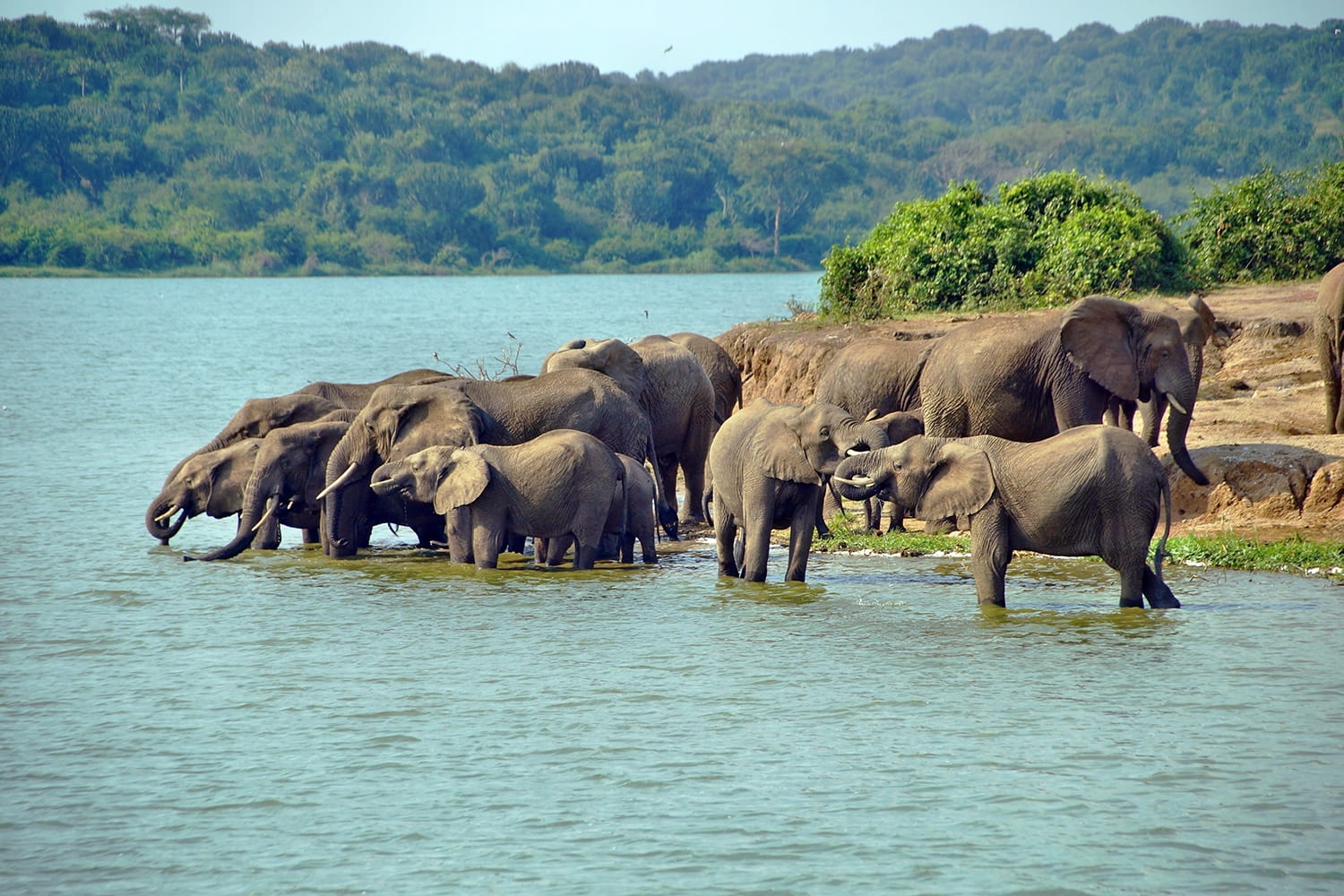
If you want to experience the true abundance of African aquatic life, nothing compares to an afternoon launch trip along the Kazinga Channel. This 40-kilometer natural waterway, connecting Lake Edward and Lake George, serves as an absolute oasis during a Uganda wildlife safari tour. As the boat gently glides through the calm water, the sheer volume of wildlife crowding the banks is staggering. You will find yourself sailing past massive pods of hippos, their heavy heads bobbing above the surface as they snort, grunt, and yawn to display immense tusks. Along the muddy shores, monstrous Nile crocodiles lie completely still with their jaws agape, sunbathing in the afternoon heat. The real magic happens when breeding herds of elephants wander down to the water's edge to drink, bathe, and play, completely unfazed by the boat's presence. Watching a baby elephant clumsily splash around under the watchful eye of its mother is a memory that sticks with you forever. Combined with thousands of nesting waterbirds—from elegant pelicans to colorful kingfishers—this boat cruise feels like navigating a real-life Eden, offering an effortless, close-up look at nature's grand watering hole.
Birdwatch at Lake Munyanyange
Tucked away near the salt-mining town of Katwe lies a seasonal paradise that looks like something out of a watercolor painting. Visiting Lake Munyanyange is a dream come true for bird lovers and a visually stunning detour on a Uganda wildlife safari tour. This shallow, saline crater lake becomes a temporary home to thousands of migratory birds, most famously the lesser and greater flamingos. Arriving at the lake's edge, you are greeted by an expansive sash of soft pink stretching across the water. Watching these elegant birds wade through the shallows, filter-feeding with their uniquely curved beaks, is deeply therapeutic. The gentle, collective honking of the flock creates a soothing, ambient soundtrack that fills the open air. Alongside the flamingos, the mudflats bustle with a variety of other shorebirds, including plovers, avocets, and gulls, all resting on their long journeys across continents. It is a peaceful, fragile ecosystem that highlights the global interconnectedness of nature, offering a quiet space to sit with binoculars in hand and marvel at the delicate, pink-hued beauty that thrives in the heart of Africa's volcanic landscape.
Discover the Katwe Explosion Craters
To fully understand the dramatic forces that shaped this region, you need to leave the flat savannas behind and head for the hills. Driving along the scenic ridge of the Katwe Explosion Craters is an awe-inspiring journey through the earth's violent geological past, adding immense scale to your Uganda wildlife safari tour. This winding, elevated road takes you along the rims of extinct volcanic craters that scar the landscape, created by massive volcanic explosions thousands of years ago. Today, those violent craters have transformed into breathtaking visual wonders. Some are filled with deep, emerald-green lakes, others are blanketed in thick, prehistoric forests, while some remain dry grass bowls where wildlife occasionally grazes. Standing at the highest viewpoints, the scenery is almost overwhelming; you can look down into multiple craters simultaneously while enjoying sweeping, panoramic views of the Rwenzori Mountains rising in the distance and the vast Rift Valley floors stretching out below. It is a stark, ruggedly beautiful landscape that makes you feel incredibly small, serving as a powerful visual reminder of the creative and destructive forces that continue to shape our planet.
Go Birding in Maramagambo Forest
Stepping beneath the dense canopy of the Maramagambo Forest offers a cool, shaded sanctuary away from the sun-drenched plains, providing a totally different rhythm to your Uganda wildlife safari tour. The forest is alive with sound, a complex layer of clicks, whistles, and deep calls echoing through the ancient trees. Walking along the damp, leaf-covered paths, your guide helps you untangle these sounds, pointing your binoculars toward the vibrant birdlife hidden in the foliage. The prize for many is spotting the striking Blue-breasted kingfisher, its electric blue feathers catching rare shafts of sunlight breaking through the canopy. You might also catch sight of the elusive Ross's turaco flashing crimson underwings as it leaps between branches, or hear the distinct, heavy flapping of a hornbill overhead. Birding here requires patience and sharp eyes, but the reward is a deep sense of intimacy with the forest. Every flash of color and rustle of leaves reveals a hidden world, turning a simple forest walk into a rich, rewarding treasure hunt amidst some of the most diverse avian habitats on the continent.
Hunt for the Shoebill
For dedicated birders and adventure seekers alike, there is one creature that represents the ultimate prize on a Uganda wildlife safari tour: the enigmatic shoebill stork. Embarking on a specialized boat ride into the swampy marshlands in pursuit of this bird feels less like a standard excursion and more like an expedition into a forgotten time. Navigating through narrow channels choked with papyrus reeds, the boat moves slowly, matching the quiet focus of your guide. The anticipation is palpable. When you finally spot a shoebill, the world seems to stand still. Standing up to five feet tall, with a massive, wood-colored, shoe-shaped beak and an unblinking, yellow gaze, the bird looks undeniably prehistoric. It can remain completely motionless for hours, frozen like a statue as it watches the water for lungfish, before striking with explosive speed. Seeing this rare, solitary giant in its wild, watery fortress is a profound, almost surreal experience, evoking a deep respect for a species that has survived unchanged for millions of years in the heart of Africa's wetlands.
🐒 Deep in the Jungle & History
Track Chimpanzees in Kyambura Gorge
Imagine driving through a flat, sun-baked savanna, only to suddenly come across a massive, deep gash in the earth lined with a dense, steaming tropical rainforest. This is the Kyambura Gorge, affectionately known as the "Valley of the Apes," and trekking down into its depths to find wild chimpanzees is an unforgettable highlight of a Uganda wildlife safari tour. The descent down the steep canyon walls feels like stepping into a hidden world, where the temperature drops and the air fills with the sound of rushing water and rustling leaves. As you walk along the riverbed, the silence is suddenly shattered by a chorus of deafening pant-hoots echoing off the stone walls—the unmistakable communication of a chimp community. Following the sounds through the thick undergrowth, you find them: swinging effortlessly through the high canopy, grooming one another on fallen logs, or looking down at you with intensely intelligent, expressive eyes. The sheer human-like quality of their movements, glances, and social interactions within this dramatic underground forest creates a deeply emotional connection, making you feel incredibly privileged to sit in their presence.
Explore Maramagambo’s Bat Caves
For a true sense of adventure that pushes you slightly out of your comfort zone, a hike deep into the tropical forest to view Maramagambo’s bat caves is unmatched. This trek adds an underground twist to your Uganda wildlife safari tour, taking you through ancient trees until you reach a viewing platform near the mouth of a dark, volcanic cave. Peering inside, the sight is nothing short of mesmerizing. Millions of Egyptian fruit bats cling to the rock walls, creating a shifting, undulating blanket of life that fills the air with a high-pitched chatter and the constant, soft whirring of thousands of wings. But the real drama lies in the shadows of the cave floor. Massive African rock pythons have made this cave their home, living in a bizarre, direct relationship with the bats. If you look closely, you can spot these giant snakes coiled among the rocks, waiting patiently to catch bats that fall or fly too close. Watching this raw, claustrophobic struggle for survival play out in the dark depths of the forest is a powerful testament to nature’s adaptability, leaving you with a lingering sense of awe.
Visit the Lake Katwe Salt Mines
To truly appreciate the human history interwoven with this wild landscape, a visit to the Lake Katwe Salt Mines is an absolute must during a Uganda wildlife safari tour. This hyper-saline crater lake has been the lifeblood of the local community for centuries, with salt extraction methods passed down virtually unchanged through generations. Walking down to the lake, you meet local artisans working under the hot sun, tending to a patchwork of wooden salt pans stretching across the water. The process is intensely physical and humanizing; workers stand in the briny water, navigating the harsh environment to harvest rock salt from the lake bed and skim crystalline table salt from the surface. Speaking with them reveals the incredible resilience and pride embedded in their craft, as they explain how they battle the corrosive water using simple, traditional remedies. It is an eye-opening cultural encounter that grounds your journey, connecting the geological wonders of the Rift Valley to the real lives, struggles, and enduring traditions of the people who have called this beautiful region home for hundreds of years.
Relax at Lake Nyamununka
Surrounded by the dramatic topography of the volcanic craters sits a quiet, sulfurous body of water wrapped in a fascinating coat of local folklore. Taking a moment to relax at Lake Nyamununka adds a peaceful, contemplative chapter to your Uganda wildlife safari tour. Known locally as the "hospital lake," this scenic spot holds a special place in the hearts of the surrounding communities. Because of its high mineral and sulfur content, old legends say that injured or sick wild animals—from limping buffaloes to wounded hyenas—traditionally wander down to the lake's edges to bathe in its waters and heal their wounds. Whether science or myth, standing on the rim and looking down at the stark, mineral-crusted shores and the glassy surface of the water evokes a undeniable sense of peace and natural mysticism. It is a wonderful place to pause, step away from the active tracking, and simply absorb the quiet energy of the landscape, reflecting on the deep, historic ways the human spirit has connected healing and sanctuary to the wild environments around them.
🦁 The Remote Ishasha Sector
Seek Tree-Climbing Lions
Deep in the remote southern country, the savanna transitions into a landscape dominated by massive, sprawling sycamore fig trees, hiding one of the most iconic sights of a Uganda wildlife safari tour. Seeking the famous tree-climbing lions of the Ishasha sector feels like a grand safari treasure hunt. While lions across the rest of Africa generally stay firmly on the ground, the prides here have developed the unique, fascinating habit of climbing high into the branches to escape the heat of the earth and the annoying bites of tsetse flies. Driving slowly through the sector, your eyes strain against the foliage until, suddenly, your guide points upward. There, draped lazily over thick, horizontal limbs like giant, golden house cats, are full-grown lions. Seeing a massive male with a thick mane sleeping peacefully fifteen feet in the air, his paws dangling comically off the sides of a branch, is an image that feels entirely surreal. Watching them wake up, stretch, and survey their hunting grounds from their leafy balconies offers a whimsical, breathtaking look at wildlife behavioral adaptation that you simply cannot experience anywhere else.
Track the Elusive Leopard
While Ishasha is famous for its arboreal lions, it is also a premier destination for those hoping to catch a glimpse of a far more secretive resident. Tracking the elusive leopard through the dense acacia woodlands of this southern sector adds an element of thrilling suspense to your Uganda wildlife safari tour. Leopards are the ultimate masters of stealth, choosing to spend their days resting perfectly camouflaged in the deep shade of horizontal tree branches, their spotted coats blending effortlessly with the dappled sunlight. Searching for them requires a slow pace, intense focus, and the sharp eyes of an experienced tracker. Every large branch and hidden thicket becomes a point of intense curiosity. When the effort pays off and you finally spot one, the reward is jaw-dropping. Whether you catch a glimpse of a long, spotted tail swinging gently from a branch, or find yourself locked in a gaze with those piercing, emerald-green eyes reflecting the African sun, the encounter feels deeply personal. It is a rare, fleeting glimpse of pure, predatory elegance that showcases the quiet, mysterious side of the African bush.
Marvel at Topi Herds
The open, sweeping plains of the southern sector offer a distinct visual rhythm compared to the rest of the park, characterized by the elegant movements of one of the continent's most striking antelopes. Marveling at the massive topi herds grazing across these grasslands is a highlight for anyone appreciating the diversity of a Uganda wildlife safari tour. Topis are easily recognizable by their unique, athletic build, featuring elongated faces, lyrically curved horns, and a coat that shimmers with a beautiful, iridescent mix of reddish-brown and dark purple patches that look almost like armor. They are among the fastest antelopes in Africa, built for long-distance running to evade predators. Watching a herd move together across the open plains, with sentries standing proudly atop ancient termite mounds to get a better view of potential threats, is a classic scene of wild harmony. Their presence gives Ishasha an expansive, untamed energy, providing endless opportunities for photographers to capture the beautiful shapes and rich, varied colors of East Africa's uniquely adapted plains game against a wide, dramatic horizon.
Watch Cape Buffalo
To truly feel the raw, untamed power of the African wilderness, you only need to look toward the massive herds of Cape Buffalo that rule the southern plains. Watching these formidable animals graze across the nutrient-rich grasses of the Ishasha sector is a humbling cornerstone of any Uganda wildlife safari tour. Buffaloes are built like tanks, covered in dark, coarse hair and crowned with heavy, fused horns known as bosses that resemble a protective helmet. They move in solid, protective blocks, sometimes numbering in the hundreds, creating a low, rumbling cloud of dust as they traverse the landscape. There is an undeniable intensity to being near them; when a herd stops grazing to look at your vehicle, dozens of pairs of unblinking eyes lock onto you with a gaze that feels completely unyielding and powerful. Yet, looking past their tough exterior, you can spot tender family moments—birds like oxpeckers riding on their backs to clean off ticks, and young calves nestled safely in the center of the herd. It is a beautiful display of strength, unity, and raw survival that defines the character of the African savanna.
🏘️ Culture & Community
Visit the Kikorongo Women’s Community
A true journey through Africa is never complete without connecting with the incredible spirits of the people who live alongside the wild. Visiting the Kikorongo Women’s Community offers a warm, joyful, and deeply humanizing chapter to your Uganda wildlife safari tour. Kikorongo, which translates to "Too Much Sunshine" in the local language, reflects the radiant energy of the women who welcome you with vibrant songs, traditional dances, and wide smiles. Sitting down with these local artisans, you get a hands-on lesson in the ancient art of traditional basket weaving. As your fingers clumsy up trying to mimic their fluid, expert movements with dyed raffia and banana fibers, the shared laughter easily breaks down any cultural barriers. Sitting in a circle, the women share moving stories about how this craft community has empowered them economically, allowing them to support their families and pay for school fees. Leaving with a beautiful, handmade basket that you saw come to life before your eyes provides a lasting piece of Uganda's communal heart, serving as a reminder of the beautiful human connections made along the way.
Explore the Leopard Village
In a world where wild spaces are increasingly touching human settlements, understanding how communities live alongside wildlife is critical. Exploring the Leopard Village is a deeply enlightening experience that adds profound meaning to your Uganda wildlife safari tour. This community-run socio-environmental initiative sits on the borders of the park, where the Basongara and Banyabindi people work hard to promote human-wildlife co-existence. Walking through the village, local guides share honest, eye-opening stories about the real challenges of rural life next to a park—such as lions preying on livestock or elephants raiding crops—and the creative, non-lethal solutions they use to protect both their livelihoods and the animals. You can visit traditional homesteads, view local school initiatives, and watch passionate cultural performances that preserve their rich heritage. Supporting this village means your tourism dollars go directly toward community compensation and conservation education. It is an inspiring, thought-provoking encounter that reveals the true human cost and dedication behind wildlife protection, proving that the future of Africa’s animals relies entirely on the wellbeing of its people.
Tour Nyanzibiri Cave
Stepping onto the historic trails of the Nyanzibiri community takes you on a fascinating trek through local history, ancient traditions, and natural wonders that standard game drives completely miss. Touring Nyanzibiri Cave, alongside passionate community guides, offers a raw and intimate look into the cultural identity of the region during your Uganda wildlife safari tour. The site, historically used as a place of refuge, spiritual worship, and cultural rituals, feels heavy with stories of the past. As you hike through the lush volcanic scenery toward the caves, your guide shares captivating local legends of ancient battles, ancestral spirits, and traditional medicine practices that have kept the community connected to this land for centuries. Exploring the dark, bat-filled volcanic lava tubes with a flashlight gets your heart racing, providing a thrilling contrast to the open plains. Finishing the tour with a sweeping view of a hidden crater lake while your guide explains how the community is actively working to restore the surrounding forest makes you feel deeply connected to the living history of Uganda.
Enjoy a Local Agro-Tour
For a beautifully sensory experience that connects you directly to the rich soil of East Africa, stepping onto a local farm is a wonderful detour. Enjoying a local agro-tour provides a peaceful, fascinating look at daily rural life, making it a delicious highlight of your Uganda wildlife safari tour. Walking alongside friendly local farmers through rows of lush crops, you get a firsthand look at how coffee and vanilla—two of Uganda's most valuable agricultural treasures—are grown, harvested, and processed by hand. The passion of the farmers is infectious as they show you the delicate process of hand-pollinating vanilla orchids or picking the perfect crimson coffee cherries. You can try your hand at mortar-and-pestle pounding to hull coffee beans, before roasting them over an open fire. The aroma filling the air is unforgettable. Sipping a freshly brewed cup of coffee right there on the farm, while chatting with the farmers about their agricultural traditions and daily lives, offers a beautiful, grounded connection to the land that sustains both the incredible wildlife and the vibrant local communities.
Taste Traditional Meals
There is perhaps no greater act of human connection than sitting down to share a meal, and capping off your journey by tasting traditional meals with the community is the ultimate way to close your Uganda wildlife safari tour. Gathering around a communal table, you are treated to a feast of authentic, locally sourced Ugandan dishes prepared with love and time-honored recipes. You will find yourself sampling matooke (steamed, mashed green bananas), rich peanut sauces, slow-simmered beans, fresh tilapia caught from the nearby lakes, and roasted sweet potatoes, all bursts of hearty, comforting flavors. Eating together creates a natural space for open conversation, storytelling, and deep laughter, as your hosts explain the cultural significance of different foods and hospitality customs. It is a profoundly humanizing experience that goes far beyond simple sightseeing; it nourishes your body and soul, leaving you with full stomach and a deep, genuine appreciation for the warmth, generosity, and vibrant culinary heritage of the Ugandan people who have welcomed you into their home.
1. What is the best way to see the park's diverse wildlife?
When it comes to absorbing the sheer scale and variety of East African wildlife, nothing quite matches the classic, timeless thrill of a morning or late-afternoon game drive. The savanna is a living, shifting canvas, and climbing into a sturdy, open-roof 4x4 safari vehicle gives you both the vantage point and the mobility needed to trace its rhythms. With the crisp wind hitting your face and the golden grass stretching out like an endless sea, every turn of the track holds the promise of a breathtaking encounter.
In Queen Elizabeth National Park, the ultimate theater for this experience is the famous Kasenyi Plains, located in the northern sector of the reserve. This area is a vast breeding ground for the elegant Uganda kob, meaning that wherever the kobs gather, Africa’s great predators are rarely far behind. Navigating these tracks alongside a professional, sharp-eyed guide completely transforms the journey. They don't just point out animals; they read the landscape like a book. A sudden, sharp alarm call from a kob tells them a predator is on the move. A deep, fresh footprint in the mud indicates an elephant herd passed through just minutes prior.
As you traverse the plains, you will find yourself pausing to watch massive Cape buffaloes staring back at you with unblinking intensity, or tracking a family of elephants as they gently bulldoze their way through the acacia thickets. With the iconic, snow-capped Rwenzori Mountains framing the horizon in the distance, a drive through Kasenyi isn't just about ticking animals off a checklist. It is about immersing yourself in a raw, perfectly balanced ecosystem where life, death, and survival play out naturally right before your eyes.
2. Where can I see the famous tree-climbing lions?
While seeing a lion on an African safari is always an unforgettable highlight, watching a full-grown apex predator effortlessly scale a tree trunk and take a nap on a branch is an entirely different level of spectacular. This unusual behavior defies typical feline stereotypes, turning a standard big cat encounter into something whimsical and deeply fascinating. Tracking these specialized prides requires slow, patient driving and a constant habit of scanning the sky rather than just the grass.
The remote southern Ishasha sector of Queen Elizabeth National Park is one of the only places on the entire continent where lions regularly climb trees as part of their daily routine. While lions in other regions stay firmly on the ground, the prides in Ishasha have adapted beautifully to their unique environment. As the midday sun begins to beat down intensely on the sweeping plains, these clever cats head straight for the massive, sprawling sycamore fig trees and acacia branches that dot the landscape.
Climbing high into the canopy serves two brilliant purposes: it lifts them into the path of cool, refreshing breezes and elevates them safely above the irritating, biting tsetse flies that swarm near the ground. Seeing a massive male lion with a thick mane draped lazily over a horizontal limb, his heavy paws dangling comically off the sides while he sleeps, feels completely surreal. From their elevated, leafy balconies, these lions also enjoy an uninterrupted, birds-eye view of the topi and buffalo herds grazing below. Exploring Ishasha offers a wild, untamed adventure where you get to witness nature’s incredible ability to adapt in the most unexpected ways.
3. What is the most popular water-based safari?
While standard game drives offer plenty of excitement, taking to the water provides an entirely fresh, peaceful, and visually overwhelming perspective on the African wilderness. A water-based safari slows down the pace, allowing you to glide smoothly alongside nature without the bumpy rattling of a dirt track. It is an experience defined by cool breezes, the soothing sound of lapping water, and an incredible concentration of animals that come directly to you.
The legendary boat cruise along the Kazinga Channel is widely considered the crown jewel of any visit to Queen Elizabeth National Park. This 32-kilometer-long natural waterway forms a vital life-ribbon for the park, connecting the glassy waters of Lake Edward and Lake George. Boarding a double-decker launch trip for a two-hour journey down the channel puts you right in the middle of one of the highest concentrations of hippopotamuses found anywhere on earth.
You will sail past massive, blubbery pods of hippos huffing, snorting, and yawning wide to show off their enormous tusks just yards from the boat. Along the muddy banks, monstrous Nile crocodiles lie perfectly still with their jaws wide open, looking like ancient stone statues sunbathing in the afternoon heat. The true magic of Kazinga, however, lies in its role as the park's ultimate watering hole. You will watch breeding herds of elephants wander down to the water's edge to drink and playfully spray each other, while buffaloes wallow happily in the rich mud. Combined with thousands of vibrant waterbirds, from elegant pelicans to diving kingfishers, this cruise feels like navigating a real-life Eden where animal life thrives in absolute abundance.
4. Can I see lions up close and personal?
For travelers who want to step far beyond the boundaries of a standard tourist safari, lion tracking offers an extraordinarily intimate, hands-on look at wildlife conservation. This is not a passive viewing drive; it is an active, educational research excursion that pulls back the curtain on the scientific efforts required to protect Africa's big cats. It gives you a rare sense of purpose, turning a morning on the savanna into a thrilling, real-time tracking mission.
Relating to the Park
In Queen Elizabeth National Park, you can actually join the park's dedicated carnivorous research team for an official Lion Tracking Experience. A select number of lions within the park have been fitted with sophisticated radio collars to monitor their health, movements, and territory. Accompanied by a professional researcher, you set out in a specialized vehicle equipped with telemetry antennas. Listening to the rhythmic, static bleeps of the receiver gets your heart racing as the signal grows stronger, turning the vast landscape into a high-stakes puzzle.
Because you are accompanying researchers, you are permitted to drive off the main tourist tracks, venturing deep into the bush where standard safari vehicles cannot go. When you finally locate the pride, you are often incredibly close, watching them interact in their natural habitat while the scientist explains their complex family dynamics, recent hunts, and individual histories. This humanizing encounter bridges the gap between casual sightseeing and active preservation, leaving you with a profound understanding of the delicate balance between expanding human populations and the survival of these magnificent apex predators.
5. Are there chimpanzees in Queen Elizabeth National Park?
When most people picture a savanna park, they imagine wide-open plains and grazing herds, completely separate from the dense, humid jungles associated with wild primates. However, the unique geography of East Africa creates incredible pockets of biodiversity where two entirely different worlds collide. Primates and plains game live just a short distance apart, allowing you to transition from standard big game viewing into an immersive, deep-jungle trek within a matter of minutes.
Relating to the Park
Yes, Queen Elizabeth National Park is home to an incredible community of wild chimpanzees, hidden away in one of the most dramatic geological features in East Africa: the Kyambura Gorge. Often affectionately called the "Valley of the Apes," this massive, deep gash in the earth spans 16 kilometers long and drops 100 meters below the surrounding flat savanna. Stepping over the rim and trekking down into its depths feels like entering a hidden, primeval world. The dry plains vanish, replaced by a dense, steaming tropical rainforest sustained by the rushing waters of the Kyambura River.
Guided by experienced Uganda Wildlife Authority rangers, you hack through the thick undergrowth, listening intently to the forest sounds. The silence is suddenly shattered by a deafening chorus of wild pant-hoots and screams echoing off the rock canyon walls—the unmistakable social chatter of a habituated chimp community. Watching these highly intelligent primates swing effortlessly through the high canopy, groom one another on fallen logs, or lock eyes with you with intense, recognizable emotion is a profoundly moving experience that adds a thrilling jungle chapter to your savanna safari.
6. Where can I experience nocturnal wildlife?
The African bush undergoes a total psychological transformation the moment the sun dips below the horizon. The bright, golden landscapes of the afternoon fade into deep shadows, and the daytime animals retreat to safety, making way for an entirely new cast of secretive, nocturnal characters. Embarking on a night safari sharpens your senses; the world narrows down to the cool night breeze, the ambient chatter of insects, and the single beam of a powerful spotlight cutting through the darkness.
Queen Elizabeth National Park is one of the few managed reserves in Uganda where you can officially experience the thrill of a guided night game drive. Operating under strict park regulations and accompanied by a specialized ranger, you set out after dark into the quiet plains. The savanna at night feels beautifully eerie and unpredictable. Your guide slowly sweeps a powerful spotlight across the thickets, searching for the telltale glint of light reflecting off predatory eyes.
This is prime time to hunt for the park’s most elusive big cat: the leopard. Seeing a solitary leopard moving like a spotted phantom through the high grass or lounging confidently in an acacia tree under the stars is a heart-stopping moment. Night drives also reveal smaller, fascinating hunters like the beautifully patterned serval cat, genets, and side-striped jackals on the prowl. You might even encounter hippos out of the water, looking surprisingly massive and agile as they forage for grass in the cool night air. It is a thrilling, sensory journey that reveals the secretive, high-stakes dramas that unfold only after the rest of the world goes to sleep.
7. Can I see smaller, highly localized wildlife on foot?
While tracking elephants and lions from a vehicle is an absolute must, it can sometimes cause you to look past the smaller, equally fascinating creatures that make up the backbone of the ecosystem. Stepping out of the vehicle and onto the dirt allows you to change your scale of perspective entirely. It is a reminder that nature's best family dramas and survival struggles don't always happen at the top of the food chain, but right at your feet.
On the Mweya Peninsula within Queen Elizabeth National Park, you have the unique opportunity to participate in an intimate Banded Mongoose Tracking project. This specialized activity takes you completely on foot into the world of a highly social, fascinatingly chaotic mammal. Alongside local researchers who monitor these habituated colonies daily, you walk quietly through the brush until you encounter a pack—which can often number up to forty energetic individuals.
Watching a mongoose colony live out their morning routine is pure entertainment. They burst from their underground dens in a flurry of high-pitched chirps, squeaks, and busy rustles, moving as a tightly coordinated family unit. You will watch them dig frantically for grubs, playfully tumble over one another, groom family members, and constantly post brave sentries on fallen logs to scan the sky for predatory hawks. These small, striped creatures are famously courageous, known to work as a team to fend off large snakes. Walking alongside the scientists and watching these incredibly expressive, busy animals provides a fun, deeply humanizing look at wildlife behavior that adds an unforgettable, intimate layer to your safari memories.
8. What makes the volcanic landscapes special?
The remarkable beauty of East Africa is deeply rooted in its violent, restless geological history. Millions of years of tectonic activity along the Great Rift Valley have torn, shaped, and molded the terrain, leaving behind a dramatic legacy of volcanic features. Exploring these landscapes is like walking through a geography textbook, where the sheer power of the earth is carved permanently into the hills, offering a stark, ruggedly beautiful contrast to the flat grasslands nearby.
Queen Elizabeth National Park is home to dozens of spectacular, extinct volcanic explosion craters that completely transform the northern horizon of the reserve. Unlike traditional peaked volcanoes, these explosion craters are massive, circular bowls blasted into the earth thousands of years ago during a period of intense volcanic activity. Today, taking a scenic drive or hike along the famous Katwe-Kikorongo route allows you to navigate the high ridges of these ancient formations.
The visual contrast is absolutely breathtaking. Some of these deep crater bowls are now filled with shimmering, emerald-green lakes; others are blanketed in thick, prehistoric forests that look untouched by time, while some remain dry grass bowls where lone buffaloes occasionally wander down to graze. Standing at the highest viewpoints along the crater drive, the scenery is almost overwhelming. You can look down into multiple craters simultaneously while enjoying sweeping, panoramic views of the entire park stretching out below, with the dramatic blue wall of the Rwenzori Mountains framing the background. It is a photographer's paradise and a profound visual reminder of the creative and destructive forces that shape our planet.
9. Is this park good for bird watching?
Activity: Birding Safaris
For those who appreciate the finer, flyaway details of nature, a birding safari is the ultimate treasure hunt. Bird watching forces you to slow down, look closely into the reeds, and listen to the complex, layered acoustics of the bush. It transforms a simple drive into an active exploration, where every flash of color in the canopy or unique call from a thicket reveals a different species, each with its own incredible migratory story and behavioral quirks.
Queen Elizabeth National Park is globally renowned as a premier birding destination, boasting an astonishing checklist of over 600 recorded bird species. To put that in perspective, that is more species than you can find in many entire countries, making it a dream come true for casual enthusiasts and hardcore twitchers alike. The park’s incredible variety of habitats—ranging from open savannas and dense tropical forests to freshwater lakes and saline craters—is the secret behind this avian abundance.
As you explore key birding hotspots like the swampy banks of the Kazinga Channel, the busy thickets of the Mweya Peninsula, and the deep shade of the Maramagambo Forest, your guide will help you spot an overwhelming array of species. You can marvel at the massive, ancient-looking martial eagle soaring overhead, watch colorful little bee-eaters darting from branches to catch insects, and spot elegant African skimmers slicing through the water’s surface. From prehistoric-looking storks to tiny, iridescent sunbirds, the sheer volume of feathers, songs, and colors on display ensures that no matter where you look, the park is absolutely buzzing with avian life.
10. Can I hike through tropical forests?
There is a unique sense of peace that comes from stepping beneath the interlocking canopy of an ancient, old-growth forest. The wide-open, sun-drenched views of the savanna give way to a cool, shaded world dominated by towering trees, damp mossy air, and the earthy scent of fallen leaves. Walking through a forest relies heavily on your senses—the crunch of twigs beneath your boots, the filtered shafts of green sunlight, and the mysterious rustles happening high above your head.
In the southern corner of Queen Elizabeth National Park, the open grasslands suddenly collide with the dense, dark greenery of the Maramagambo Forest. Taking a guided nature walk along the well-maintained trails of this sprawling tropical forest offers a beautiful, foot-based sanctuary away from the standard vehicle paths. The forest is alive with a subtle, fascinating energy. As you hike beneath the massive ironwood trees, your expert guide will help you scan the high branches for forest primates, including beautiful blue monkeys, playful red-tailed monkeys, and acrobatic black-and-white colobus monkeys leaping effortlessly through the canopy.
The highlight of many Maramagambo hikes is a visit to the historic bat caves. From a safely constructed viewing platform, you can peer into the dark mouth of a volcanic cave teeming with millions of Egyptian fruit bats, their wings creating a constant, soft whirring sound. If you look closely into the shadows of the cave floor, you might even spot the massive African rock pythons that live alongside them, waiting patiently to catch bats that fly too low. It is a raw, thrilling display of forest ecology that makes you appreciate the incredible diversity hidden within the park borders.
11. Can I learn about traditional, local industries?
A truly meaningful journey through Africa goes far beyond looking at wildlife; it involves connecting deeply with the human history and living cultures of the people who call the region home. Stepping into a local community allows you to ground your travels in reality, offering a humanizing look at how generations of families have adapted to, worked with, and sustained themselves from the unique landscapes that border the wild reserves.
Located in a spectacular crater lake just outside the northern boundaries of Queen Elizabeth National Park lies the historic town of Katwe, home to the ancient Lake Katwe Salt Works. Taking a guided tour of this hyper-saline lake allows you to witness a traditional, artisanal industry that has sustained local families for centuries, operating virtually unchanged since the 16th century. Walking down to the lake's edge, you are greeted by a striking patchwork of wooden salt pans stretching across the mineral-crusted water.
Here, you will meet local salt miners working under the intense equatorial sun, harvesting rock salt from the lake bed and carefully skimming crystalline table salt from the surface. Speaking with these resilient artisans is a deeply eye-opening experience. They will explain the intense physical labor involved, the traditional tools they craft from local timber, and how they protect their skin from the corrosive, salty water using simple, home-grown remedies. Supporting this community-run tour ensures your tourism dollars directly benefit local families, providing a wonderful, grounded cultural encounter that beautifully connects the geological history of the Rift Valley to the enduring human spirit of Uganda.
12. Are there opportunities to support local women?
Travel has the incredible power to act as a force for good, especially when it creates a direct, positive economic bridge between visiting tourists and rural communities. Seeking out experiences that are owned, managed, and operated by local women is one of the most rewarding ways to ensure your journey supports grassroots development. It allows you to share space, exchange smiles, and participate in traditions that celebrate the vibrant, resilient role of women in modern Africa.
Relating to the Park
Perched right along the equator just outside the gates of Queen Elizabeth National Park sits the inspiring Kikorongo Women’s Community. The word "Kikorongo" translates to "Too Much Sunshine" in the local language, a name that perfectly mirrors the radiant warmth, energy, and singing voices of the women who gather to welcome you to their center. Spending a morning here offers a delightful, hands-on cultural escape.
The women will happily sit you down in a circle to teach you the intricate, rhythmic art of traditional African basket weaving and paper bead making using colorful, recycled magazines. As your fingers clumsily attempt to mimic their fluid, lightning-fast weaving movements, the shared laughter easily breaks down any cultural or language barriers. While you work, the women share moving personal stories about how this collaborative craft initiative has provided them with economic independence, allowing them to pay for healthcare, buy school supplies, and empower their families. Capping off the visit with an energetic, drum-fueled cultural dance performance leaves you with a full heart and a beautiful piece of handmade art that carries the literal heartbeat of Uganda within its fibers.
13. What is the Leopard Village?
True conservation cannot happen in a vacuum; it requires a deep, active partnership with the local communities living on the frontlines of the wilderness. When agricultural villages border a national park, human-wildlife conflict naturally arises when hungry elephants step into crop fields or lions target livestock. Understanding these real-world challenges is essential for any modern traveler who wants to understand what it truly takes to protect the wild spaces of Africa.
The Leopard Village is a brilliant, community-run socio-environmental initiative located on the northern borders of Queen Elizabeth National Park, covering the ancestral lands of the Basongara and Banyabindi people. Spanning several acres near the park, this unique cultural village was created to promote human-wildlife co-existence through eco-tourism and community education. Taking a tour here gives you an honest, fascinatingly humanizing look at daily rural life next to a major game reserve.
Local guides will walk you through replica traditional homesteads, sharing moving stories about how their families navigate the daily stresses of wildlife encounters and the creative, non-lethal solutions they use to protect both their cattle and the roaming predators. The village features a vibrant community center where you can enjoy authentic traditional storytelling, purchase beautiful local crafts, and watch passionate musical performances by local school children. Because the project is entirely community-managed, every fee paid goes directly into a fund that helps compensate farmers for wildlife damage and finances local schools. It is an inspiring, thought-provoking stop that reveals the true human dedication required to keep Africa's savannas wild.
Are there opportunities to do multi-day, immersive treks?
There is a profound difference between looking at the African wilderness through the glass window of a safari truck and standing directly on the earth, completely unprotected, with nothing but the open air around you. Walking through the savanna shifts your psychology entirely. It forces you to slow down, quiet your voice, and tune your senses to the smallest details—the direction of the wind, the texture of the soil, and the subtle warnings written in the brush.
While Queen Elizabeth National Park is primarily explored by vehicle, it offers phenomenal opportunities for Guided Nature Walks that allow you to experience the park's diverse ecosystems completely on foot. Stepping out into the savanna alongside an armed, highly experienced Uganda Wildlife Authority ranger is an adrenaline-pumping experience that reveals a side of the park that vehicles completely fly past.
Often starting from the scenic Mweya Peninsula or the shores of the Kazinga Channel, these intimate walks transform the landscape into a living storybook. Your ranger will teach you how to track wildlife by reading footprints in the dirt, identifying the difference between a hyena’s pad and a leopard’s print, and examining crushed grass to see where an elephant rested the night before. You will learn about the fascinating medicinal properties of local plants, marvel at the complex engineering of giant termite mounds, and safely view grazing herds of kobs and waterbucks from an entirely new, grounded perspective. It is a deeply immersive, educational trek that reconnects you to the ancient, raw roots of foot-based African exploration.
How can I enjoy panoramic views of the park's savannah?
The true scale of East Africa’s dramatic landscape can be difficult to fully comprehend when you are driving along the flat valley floors. To truly absorb the poetry of the landscape, you need to gain height, climbing up to the elevated ridges where the horizon opens up completely. Standing on a high escarpment provides a profound sense of peace, allowing you to watch the shadows of clouds glide across a massive canvas of wild land stretching out as far as the eye can see.
Queen Elizabeth National Park occupies a spectacular position within the floor of the Western Rift Valley, a massive geographical trench that splits the continent. Because of this unique positioning, the park is bordered by dramatic, elevated ridges and escarpments that offer some of the most breathtaking panoramic views in East Africa. Perched confidently on a high ridge overlooking the water, the famous Mweya Peninsula serves as the ultimate natural viewing platform.
Standing along the edges of the peninsula, you can enjoy sweeping, uninterrupted views of the 32-kilometer Kazinga Channel twisting like a silver ribbon below, crowded with tiny dots of wallowing hippos and drinking elephants. Looking out past the water, the vast, sun-drenched savanna plains stretch out toward the horizon. On a clear day, the visual drama is capped off by the magnificent, jagged silhouette of the Rwenzori Mountains—the legendary "Mountains of the Moon"—rising sharply into the clouds in the background. Pausing at these elevated viewpoints at sunset, with a cool breeze rustling the grass around you as the sky turns shades of deep crimson and gold, provides a moment of pure, quiet magic that perfectly captures the untamed majesty of Uganda.
Booking Uganda wildlife safari tour with us Roads of Adventure safaris
Booking your Uganda wildlife safari with Roads of Adventure Safaris offers tailored itineraries across top parks like Bwindi, Murchison Falls, and Queen Elizabeth National Park. Their packages typically include 4WD transport, English-speaking guides, permits, and full-board lodges
