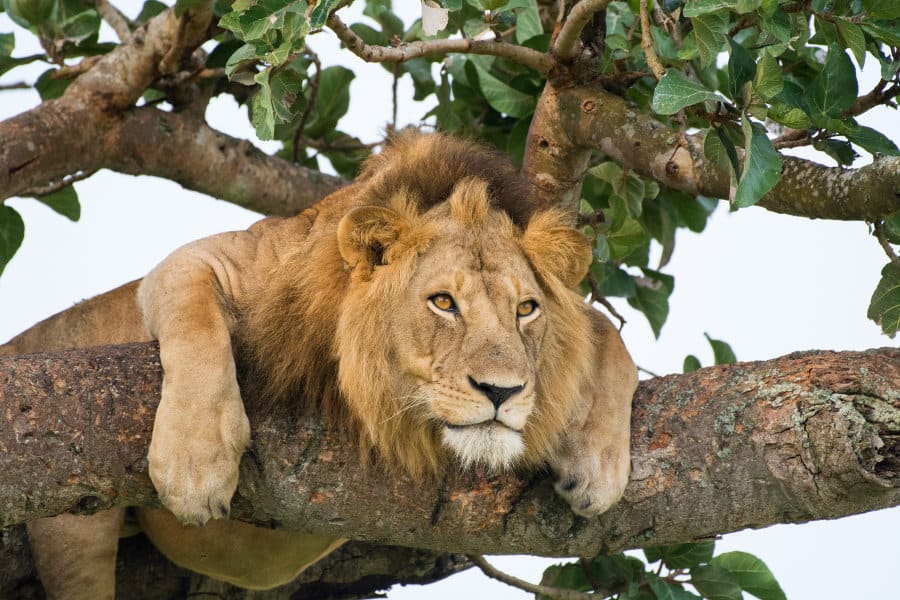
The Ishasha tree-climbing lions are famous lions in Uganda's Queen Elizabeth National Park known for their unique habit of lounging in sycamore fig and acacia trees to escape heat and insects, offering a rare wildlife spectacle on safari. This unusual behavior, often seen in the afternoon, is a major draw for tourists, providing stunning photo opportunities as they survey the plains from above. Ishasha is one of the few places globally where this behavior is common, making it a highlight for African wildlife enthusiasts.
2-days-affordable-budget-uganda-safari-to-queen-elizabeth-national-park
3-days-fly-luxury-uganda-safari-to-queen-elizabeth-national-park
4-days-queen-elizabeth-national-park-and-kyambura-gorge-chimpanzee-tracking
4-days-queen-elizabeth-park-semuliki-national-park-uganda-safari-tour
5-days-incredible-ishasha-tree-climbing-lions-and-gorilla-trekking-in-bwindi
7-days-safari-to-uganda-queen-elizabeth-park-gorillas-trekking-and-lake-mburo
14-days-uganda-primate-safari-and-jinja-white-water-rafting
What are Ishasha Tree Climbing Lions?
Ishasha tree climbing lions are a unique population of African lions (Panthera leo) found in the southern sector of Queen Elizabeth National Park in Uganda. This distinctive group of lions exhibits a rare behavioral trait: they habitually climb trees to rest and observe their surroundings. This behavior is not commonly seen in other lion populations across Africa, making the Ishasha lions a fascinating subject for wildlife enthusiasts and researchers alike.
The climbing habit is not merely a quirky trait; it serves practical purposes. By resting in trees, these lions can escape the arid heat of the savannah floor, seeking cooler spots while reducing their overall heat stress. This adaptation is crucial for their survival in a hot environment where temperature regulation is vital for active hunting and social interactions.
The Ishasha sector is characterized by acacia and fig trees, which provide ample branches for resting. The lions’ climbing ability enables them to avoid ground-level threats and pests like tsetse flies, further enhancing their comfort and well-being. These trees serve as lookout points from which they can survey their territory for potential prey, including Uganda Kobs and other antelopes. As a result, visitors to Queen Elizabeth National Park are often treated to remarkable encounters with these unique lions, making Ishasha a key highlight of any safari trip in Uganda.
Where Can I Find Ishasha Tree Climbing Lions in Uganda?
You can find Ishasha tree climbing lions in the remote southern sector of Queen Elizabeth National Park, which is located near Uganda's border with the Democratic Republic of Congo. This area, often referred to simply as “Ishasha,” is an integral part of the park, spanning over 220 square miles of rugged savannah, wetlands, and rich biodiversity.
Accessing Ishasha is relatively straightforward, especially for safari travelers. The sector is typically reached by road from either Kampala or the more proximate town of Fort Portal. The journey offers scenic views of Uganda's countryside, passing through fertile agricultural lands and quaint villages. Once you arrive in the Ishasha sector, you will find various lodges and campsites that offer both comfort and proximity to the lion population.
The Ishasha region's unique environment is characterized by vast open grasslands dotted with inselbergs, wetlands, and large fig trees, which are crucial habitats for these climbing lions. Wildlife enthusiasts often embark on organized game drives through this area, particularly during the cooler hours of the day or midday when the lions are most likely to be found resting in trees. Given its unique ecosystem and the chance to see tree-climbing lions, Ishasha is a must-visit destination for adventure seekers and wildlife lovers alike.
Why Do Ishasha Tree Climbing Lions Climb Trees?
Ishasha tree climbing lions have developed a unique behavior of climbing trees, which serves several important purposes for their survival in the wild. One of the primary reasons for this behavior is to escape the intense heat that can be prevalent on the ground during the day. Lions are predominantly nocturnal and are most active during cooler periods, but they still need to find resting spots during the sweltering afternoons. By climbing into the trees, they can cool off and seek shade, significantly reducing the heat stress that can occur on the open savannah.
Another significant reason is to avoid biting insects like tsetse flies, which are common in the grasslands. These pests can be quite troublesome and even harmful, and by seeking refuge in trees, the lions can evade these irritating insects. Additionally, climbing trees provides them with an elevated vantage point, allowing them to scout for potential prey more effectively. From this height, they can keep an eye on herds of Uganda Kobs and buffaloes, making it easier to plan their hunting strategies.
This combination of factors—heat relief, pest evasion, and enhanced hunting capabilities—makes tree climbing a beneficial adaptation. It highlights the Ishasha lions' incredible ability to adapt to their environment, showcasing a fascinating example of behavioral evolution in the animal kingdom.
Is it Rare to See Ishasha Tree Climbing Lions?
Yes, the phenomenon of Ishasha tree climbing lions is a rarity in the animal kingdom, making sightings of these fascinating creatures a highlight for many safari-goers in Uganda. While some lions do occasionally climb trees, the frequency and habitual nature exhibited by the Ishasha population are exceptional. The only other place in Africa where tree-climbing lions are commonly seen is Lake Manyara National Park in Tanzania, making Ishasha a unique destination for wildlife enthusiasts.
The unusual behavior of climbing trees is not merely a display of agility; it has practical benefits, which, combined with the small and isolated population of Ishasha tree climbing lions, contributes to their rarity. Monitoring and observing these lions in their natural habitat requires specific timing and good luck, but dedicated safari participants often share stories of remarkable encounters.
During the dry season, the likelihood of spotting these tree-dwelling lions is much higher, given that they prefer higher vantage points to rest and survey their surroundings as prey becomes more concentrated around water sources. While sightings are frequent—especially during the optimal viewing hours—there is no absolute guarantee due to the unpredictability of wildlife behavior. However, the opportunity to observe these majestic animals at rest in trees is a thrilling experience that elevates any Ugandan safari.
What is the Best Time of Day to See Ishasha Tree Climbing Lions?
If you're keen on spotting Ishasha tree climbing lions, the best time of day to look for them is during the heat of the afternoon, particularly between 11:00 AM and 5:00 PM. During these warmer hours, lions generally seek refuge from the intense sun, making trees a preferred resting spot. This behavior is particularly pronounced in the Ishasha sector, where the acacia and fig trees provide ample shade and comfortable branches for lounging.
The elevated vantage points offered by these trees also give lions a strategic advantage for observing their surroundings. From their perches, they can spot potential prey, such as Uganda Kobs and other antelope species, while remaining away from ground-level threats. Game drives during these hours increase the likelihood of witnessing these unique behaviors.
While early morning and late evening drives often offer better chances of spotting other wildlife, including elephants and buffaloes, afternoon excursions specifically tailored to search for tree-climbing lions can yield rewarding results. Photographers and wildlife enthusiasts alike benefit from the abundant light and improved visibility, enabling them to capture stunning images of these fascinating animals.
What is the Best Time of Year to Visit Ishasha Tree Climbing Lions?
The ideal time to visit the Ishasha sector for a chance to see tree climbing lions is during the dry seasons, which run from June to September and December to February. These months are noteworthy due to decreased rainfall, making the park's roads more accessible and easier to navigate. As the vegetation thins out, wildlife becomes more concentrated around water sources, enhancing the chances of spotting these elusive lions and other wildlife.
During the dry season, the lions are more likely to climb trees to escape the heat, providing safari-goers with higher sighting chances. The acacia and fig trees in Ishasha become popular resting spots during this time, allowing visitors to capture memorable wildlife photographs and enjoy remarkable encounters.
Visiting during the wet seasons (March to May and October to November) can also be rewarding, although road conditions may be less favorable, and wildlife visibility might be reduced. However, the lush greenery can offer a beautiful backdrop for photography, and fewer tourists can make for a more intimate encounter with nature. Nonetheless, if your primary aim is to see Ishasha tree climbing lions, timing your visit in the dry season is highly recommended to optimize your chances of making unforgettable memories.
Do Ishasha Tree Climbing Lions Hunt from Trees?
While Ishasha tree climbing lions primarily hunt on the ground, their ability to climb trees plays a strategic role in their hunting behavior. These lions use elevated positions to survey their surroundings, gaining a better perspective on the movements of prey like Uganda Kobs, buffaloes, and various antelope species. By resting in trees, they can plan their approach more effectively, ensuring a greater chance of a successful hunt.
Once they spot potential prey, the lions will descend from the trees and stalk their target, using both stealth and power to maximize their success rate. The unique vantage points provided by the trees can also enable them to identify any potential threats in their vicinity, making it easier to adapt their hunting strategies according to the surrounding dynamics.
This dual approach of climbing to observe while hunting on the ground demonstrates the adaptability and intelligence of these lions. Although they are not known to hunt directly from the trees, their behavior contributes to a richer understanding of how they survive in the diverse ecosystems of Queen Elizabeth National Park, ultimately showcasing their remarkable instincts in the wild.
What Trees Do Ishasha Tree Climbing Lions Prefer?
Ishasha tree climbing lions have a preference for specific tree species, which play a crucial role in their climbing behavior. The large fig trees, sycamore fig trees, and acacia trees prevalent in the Ishasha sector of Queen Elizabeth National Park provide the ideal structures for these lions.
Fig trees are particularly favored due to their broad, low-hanging branches, which can support the heavy weights of adult lions. These trees also have denser foliage, offering excellent shade and a strategic lookout for both rest and hunting. Acacia trees, on the other hand, feature thorny branches that provide protection from other predators, making them a secure resting area.
These trees not only offer comfort but also enhance the lions' ability to observe their territory. By resting in high branches, the lions can monitor movements of prey and potential threats while enjoying respite from ground-level perils. The choice of tree species is vital for the lions' survival in their habitat, demonstrating their remarkable adaptation and resourcefulness.
Are Ishasha Tree Climbing Lions a Different Species?
No, Ishasha tree climbing lions are not a distinct species or subspecies; they are part of the regular African lion population (Panthera leo). Their unique behavior of climbing trees is a rare adaptation observed mainly in this specific group. Such behaviors arise from environmental conditions and the need to adapt for survival, not from genetic differences.
The tree climbing trait is predominantly geographical, enabling the Ishasha population to thrive in their particular habitat within Queen Elizabeth National Park. This population exhibits a distinctive lifestyle, including climbing to avoid ground-level heat, escape pests like tsetse flies, and enhance their hunting tactics. While fascinating, this behavior does not classify them as a different species; it instead showcases how adaptable wildlife can be in varied environments.
As tourists flock to the Ishasha sector to witness these climbing lions, they are treated to a behavior that exemplifies the complexity and diversity of wildlife interactions. The fact that these lions belong to the same species as those found elsewhere in Africa highlights the marvelous adaptability of the African lion as a whole.
How Many Prides of Ishasha Tree Climbing Lions Are There?
In the Ishasha sector of Queen Elizabeth National Park, there are typically two to three main prides of tree climbing lions, totaling around 40 to 50 individuals. The population can fluctuate over time due to varying factors, such as environmental conditions and prey availability, but the numbers tend to remain stable within this range.
Each pride has its own unique dynamics, social structures, and territories that they defend, allowing them to thrive in the diverse ecosystem of the park. These prides are often composed of several related females, their cubs, and a few dominant males. Observing the interactions of the prides provides insights into lion social behavior, including cooperative hunting strategies and nurturing of the young.
Conservation efforts in and around Queen Elizabeth National Park play a significant role in protecting these lions and their habitat. By ensuring that the ecosystem remains balanced and predatory relationships are sustained, wildlife enthusiasts continue to have opportunities to enjoy the unique spectacle of Ishasha's tree climbing lions, enriching their safari experience in Uganda.
Do Male Ishasha Tree Climbing Lions Have Black Manes?
Yes, the male Ishasha tree climbing lions are known for their distinctive and strikingly dark, almost black manes. This unique trait sets them apart from other lion populations, where mane coloration can vary widely. The deep coloration of their manes is often displayed during social interactions within the pride and in territorial displays.
The darker manes are believed to be advantageous in several ways. They may provide better camouflage in the dense vegetation of the Ishasha sector, contributing to their hunting success. Additionally, a dark, impressive mane can signal strength and health, attracting females during mating season. The vivid contrast of their dark manes against the natural habitats enhances their visual appeal, making them a favorite subject for photographers and wildlife tourists.
Overall, the striking appearance of the male Ishasha lion not only serves a functional purpose but also adds to the unique allure of witnessing these magnificent creatures in their natural environment. Their presence contributes to the rich tapestry of wildlife encounters in Queen Elizabeth National Park, adding depth to any safari experience.
Is it Guaranteed to See Ishasha Tree Climbing Lions?
While sightings of Ishasha tree climbing lions are notably high, reaching up to 90% during the dry season, it cannot be guaranteed that you will see them. As wild animals, the behavior of these lions can be unpredictable. Various factors influence their visibility, including weather conditions, time of day, and prey movements.
A significant time to increase your chances is during the midday hours, particularly between 11:00 AM and 5:00 PM, when the lions are most likely to be resting in their preferred trees to escape the heat. Likewise, guided tours led by experienced rangers enhance the likelihood of successful sightings, as they know the lions' habits and favorite resting spots.
Despite the high probability, it’s essential to remember that wildlife encounters are never 100% guaranteed, as animals roam freely in their natural habitat. Being open to nature’s unpredictability can also lead to discovering other exciting wildlife, contributing to a rewarding safari experience. Therefore, while seeing Ishasha tree climbing lions is highly probable, it’s important for travelers to remain adaptable and enjoy the entirety of their Uganda safari adventure.
Do Ishasha Tree Climbing Lions Climb Trees When it Rains?
Ishasha tree climbing lions typically do not climb trees during or immediately after rain. The reason for this behavior is that the branches become slippery in wet conditions, significantly increasing the risk of falling. Climbing can be perilous even for these agile animals, and the added danger discourages them from accessing their usual vantage points. Instead, they tend to find shelter on the ground or under the trees, where they can stay dry and avoid injury. This behavior aligns with their natural instinct to prioritize safety in their environment.
When rain falls, these lions may also adjust their activities, becoming more active around dawn and dusk when the conditions are more favorable. Consequently, while the rains provide essential water and refresh the vegetation, they can disrupt the typical climbing habits of these unique lions. Wildlife enthusiasts should be aware of these weather patterns when planning their safaris, particularly during the rainy season. Being flexible with your itinerary can lead to rewarding wildlife encounters despite unfavorable weather conditions.
How High Do Ishasha Tree Climbing Lions Climb?
Ishasha tree climbing lions can often be found resting several meters off the ground, typically lounging in the lower to mid-branches of various tree species, such as fig and acacia trees. Their climbing abilities allow them to find comfortable and secure spots, optimizing their vantage points to scan the surrounding area for prey and potential threats.
The height to which these lions climb can vary based on several factors, including the availability of branches, individual preference, and the need for shade. While they are capable of ascending higher, they usually choose positions that balance comfort and safety. By resting in lower branches, they can quickly escape if necessary while still enjoying the cooler temperatures and secure vantage points.
This climbing behavior plays an essential role in their social structures and hunting strategies. By resting at elevated levels, these lions can observe their territory more effectively, which becomes an advantage when planning hunts or interacting with pride members. Observing these magnificent creatures up in the trees provides a thrilling experience for safari-goers, showcasing an extraordinary adaptation that distinguishes the Ishasha population from other lion prides.
Are Ishasha Tree Climbing Lions Endangered?
Ishasha tree climbing lions are classified as vulnerable, facing several significant threats that impact their populations. Habitat loss is a critical concern, as agricultural expansion and human encroachment reduce their natural living spaces. This pressure not only limits their range but also affects the availability of prey, which can lead to increased competition among the lions and other predators.
Human-wildlife conflict is another significant challenge facing these lions. As humans expand into lion territories, conflicts often arise when livestock are present, resulting in retaliatory killings of lions by local communities. Additionally, poaching remains a pressing issue, as illegal hunting poses a further threat to their population stability. This multifaceted risk means that conservation efforts are critical in safeguarding their future.
Various organizations are working to raise awareness and implement strategies to protect Ishasha tree climbing lions and their habitats. Community engagement and education play essential roles in alleviating human-wildlife conflict. Ensuring a sustainable coexistence is paramount for the future of this unique lion population. As a visitor, participating in responsible tourism helps support these conservation efforts, allowing you to enjoy the remarkable sight of these lions while contributing to their preservation.
Where Should I Stay to See Ishasha Tree Climbing Lions?
When visiting the Ishasha sector to see tree climbing lions, there are several popular lodges that offer comfortable accommodations and convenient access to the park's attractions. One highly recommended option is the Ishasha Wilderness Camp, which provides a luxurious tented experience amidst nature. The camp is strategically located near prime lion territory, enhancing your chances of spotting these unique animals as part of guided safari tours.
Topi Lodge is another fantastic choice, offering stunning views of the surrounding savannah and personalized service. The lodge's location ensures easy access to game drives where guests can search for climbing lions and other wildlife. With its vibrant gardens and proximity to nature, the lodge serves as an ideal base for exploration.
For those seeking a closer connection to nature, Ishasha Tree Climbing Lions View Lodge offers a rustic experience with spectacular views overlooking the park. This lodge allows you to wake up to the sights and sounds of the wildlife, making it a perfect setting to immerse yourself in the essence of the African bush.
All these accommodations not only provide comfort but also contribute to a memorable safari experience by ensuring proximity to the Ishasha tree climbing lions, enhancing your chances of witnessing these extraordinary animals in their natural habitat.
Can I Combine Gorilla Trekking with Ishasha Tree Climbing Lions?
Yes, you can easily combine gorilla trekking with a visit to see Ishasha tree climbing lions in your itinerary. The Ishasha sector is conveniently located between Bwindi Impenetrable National Park, where you can engage in gorilla trekking, and the northern sector of Queen Elizabeth National Park, home to the iconic tree-climbing lions. This geographical advantage allows travelers to maximize their experience during a single visit to Uganda.
Starting at Bwindi for gorilla trekking provides a breathtaking introduction to Uganda's wildlife. After the trek, you can drive to Ishasha, enjoying the scenic landscapes and rural communities along the way. This journey typically takes about 2-3 hours, making it a convenient stop to see the unique lions.
Combining these two activities not only diversifies your wildlife experiences but also enriches your understanding of Uganda's biodiversity. Witnessing mountain gorillas in their natural habitat followed by observing the rare tree climbing lions creates unforgettable memories for safari enthusiasts. Many tour operators, including Roads of Adventure Safaris, offer tailored packages that incorporate both gorilla trekking and wildlife safari experiences, ensuring a seamless adventure that covers the highlights of Uganda's exceptional wildlife.
How Do I Get to See Ishasha Tree Climbing Lions?
To see the Ishasha tree climbing lions, you can reach the sector by road from Kampala, which takes approximately 7 hours. The most common route involves traveling via the Mbarara road, providing glimpses of Uganda's charming countryside along the way. Along the journey, your guide can provide insights into local culture and wildlife, making the drive enjoyable and informative.
Alternatively, if you're short on time, you can fly into the Kihihi airstrip, which is closer to Ishasha. Several domestic flights operate from Entebbe International Airport, making the journey significantly quicker. Upon landing, it’s a short drive to the park's entrance, allowing you to start your safari experience promptly.
Once at Ishasha, guided game drives lead you through the sector's diverse habitats, enhancing your chances of spotting the renowned tree climbing lions. Professional guides familiar with the area will know the best locations and times to find the lions, optimizing your wildlife encounters. The combination of the scenic journey and expert guidance ensures you have a fantastic opportunity to witness these fascinating lions in their natural environment.
Do Ishasha Tree Climbing Lions Interact with Humans?
Ishasha tree climbing lions are primarily wild animals and typically prefer to avoid human interaction. However, they have become accustomed to the presence of safari vehicles, allowing for close yet safe viewing opportunities. This unique dynamic allows wildlife enthusiasts to observe the lions without causing significant stress to them.
While out on a safari, it’s essential to follow the guidance of your ranger or guide, who will ensure that you maintain a safe distance and adhere to wildlife viewing protocols. The goal is to observe these remarkable creatures in their natural habitat while minimizing disturbance. Rangers are trained to recognize signs of stress in wildlife and will adjust your activities accordingly.
It's important to remember that even though these lions are familiar with vehicles, they are still wild and unpredictable. Visitors should always prioritize safety by remaining inside their vehicles during sightings and avoiding loud noises or sudden movements. This respectful approach to wildlife viewing allows for enriching encounters with Ishasha's tree climbing lions while ensuring both human and animal safety, maintaining the integrity of the natural environment.
Is It Safe to Go on a Safari to See Ishasha Tree Climbing Lions?
Yes, guided safaris to see Ishasha tree climbing lions are generally safe, provided you adhere to the established safety protocols. Engaging in a safari experience with a reputable tour operator or experienced guide greatly enhances your safety and understanding of the wildlife. Outfitted safari vehicles offer a secure vantage point for observing these magnificent creatures without compromising your well-being.
During your safari, it's crucial to remain inside the vehicle and follow the guidance of your ranger or guide. This ensures your safety and minimizes stress for the lions. Rangers are trained to navigate the park and maintain a respectful distance from the animals, promoting unique wildlife encounters in an ethical manner.
Additionally, traveling in a group with a knowledgeable guide provides an added layer of security. The guide will be quick to address any safety concerns, ensuring that everyone remains informed and prepared for the wilderness environment. By prioritizing safety while embracing the adventure of witnessing Ishasha's tree climbing lions, you can enjoy a memorable and rewarding experience in Queen Elizabeth National Park.
Booking Ishasha tree climbing lions with us Roads of Adventure safaris
Booking an Ishasha tree-climbing lion safari with Roads of Adventure Safaris offers a prime chance to see lions lounging in fig trees in Queen Elizabeth National Park, a unique spectacle in Uganda's Ishasha sector. Expect expert guides, comfortable 4x4 transport, park fees, accommodation, and meals, with potential sightings of elephants, leopards, and kobs. Dry months (June-Sept, Dec-Feb) are best. Contact them for customized packages, ensuring an authentic, well-managed experience in this renowned wildlife area.
