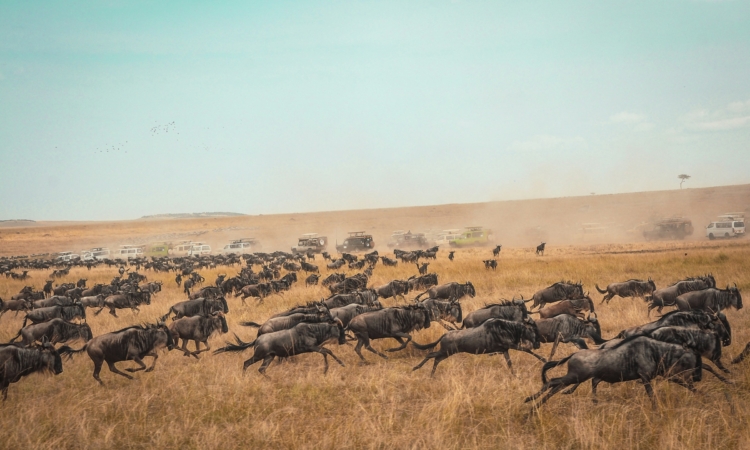
A 4-day Tanzania safari is a fast-paced, incredible experience. To make the most of it, focus on the highly acclaimed Northern Circuit (Tarangire, Ngorongoro Crater, and the Serengeti). Maximize your short time by flying directly to the parks or booking a well-vetted, private local guide
Popular 4 Days Tanzania safari itineraries
4-days-ndutu-and-serengeti-safari-in-tanzania
4-days-tarangire-ngorongoro-and-serengeti-safari-tour
4-days-best-tarangire-ngorongoro-and-serengeti-safari-itinerary
4-days-best-beach-to-bush-fly-in-and-fly-out-luxury-tanzania-safari-from-zanzibar
⏱️ Maximizing Your 4 Days
When you only have four days on safari, time is your most valuable commodity. Tanzania’s "Northern Circuit" holds some of the most famous wildlife destinations on earth, but trying to see all of them by road in 96 hours is a recipe for exhaustion. A standard driving itinerary forces you to spend up to 7 or 8 hours a day bumping along unpaved, dusty roads (affectionately known as the "African massage"). By the time you reach your lodge, you are too tired to enjoy it.
To maximize your time, focus on a concentrated route: Tarangire National Park, the Ngorongoro Crater, and the Serengeti. Tarangire is famous for its massive elephant herds and iconic baobab trees, making it a perfect, visually stunning first stop just a couple of hours from Arusha. From there, you can move to the Ngorongoro Crater, a volcanic caldera that acts as a natural enclosure for over 25,000 large mammals, offering your best chance to spot the endangered black rhino in a single afternoon.
The ultimate time-saving hack, however, is utilizing internal "bush flights." Instead of driving back and forth, you can catch a small aircraft from Arusha or Lake Manyara directly into an airstrip inside the Serengeti. Flying over the Great Rift Valley saves you nearly a full day of driving, effectively turning a travel day into a premier aerial and land game-viewing experience. You land right in the action, where a fresh safari vehicle and guide will be waiting for you at the dirt runway.
🧳 Packing & Gear
Packing for a safari requires a strict balance of minimalism and technical preparation. The most critical rule is swapping out hard-shell luggage for a soft-sided, durable duffel bag. Safari vehicles—and particularly the small bush planes mentioned above—have incredibly tight, uniquely shaped cargo compartments. Soft bags can be compressed and stacked like puzzle pieces, whereas a rigid suitcase might literally be left behind on the tarmac due to space constraints.
Your clothing strategy should revolve entirely around layers. It is a common misconception that East Africa is universally hot. Because locations like the Ngorongoro Crater rim sit at an elevation of over 7,500 feet, pre-dawn temperatures can hover near freezing ($5^\circ\text{C}$ to $10^\circ\text{C}$). You will start your sunrise game drive bundled in a fleece, a windbreaker, and maybe even a beanie. By noon, however, the equator sun will heat the savanna up to $30^\circ\text{C}$. Wear lightweight, breathable clothing underneath, and stick to neutral tones like khaki, olive, and tan. Avoid bright whites (which scare wildlife), dark blue or black (which attract biting tsetse flies), and camouflage (which is reserved for the local military).
Finally, don't skimp on optics. Wildlife is rarely right next to the window. A high-quality pair of 8x42 or 10x42 binoculars is non-negotiable for every traveler to spot a leopard hidden in a distant acacia branch. If you are bringing a camera, an absolute minimum focal length of $200\text{mm}$ (ideally up to $400\text{mm}$) is necessary to capture crisp images of animals without relying on digital cropping.
🦁 Wildlife & Park Etiquette
A Tanzanian safari is not a zoo experience; it is an immersive journey into a completely wild, unfenced ecosystem. The number one rule of safari etiquette—and personal safety—is to never leave your vehicle unless explicitly instructed by your guide at a designated picnic site or fenced viewpoint. Animals in these parks are habituated to the shape and sound of safari vehicles, viewing them as neutral, non-threatening objects. The moment you step outside that metal frame, you break that silhouette, and predators will instantly perceive you either as a threat or as prey.
To see the best action, you must align your schedule with the circadian rhythms of the wilderness. Predators like lions, leopards, and cheetahs hunt primarily during the cool hours of the early morning or late evening. By midday, the heat forces them to sleep deep in the shade, making them incredibly difficult to spot. Opt for sunrise game drives, leaving the lodge by 6:00 AM. Utilizing full-day game drives with packed lunch boxes allows you to travel deeper into remote corners of the parks, away from the midday crowds clustered near the main gates.
While observing wildlife, keeping your voice to a low whisper is paramount. Loud noises, sudden shouting, or banging on the side of the vehicle can startle animals, causing them to flee or, worse, become aggressive. Respecting their space ensures that they maintain their natural behaviors, allowing you to witness authentic interactions, like a lioness stalking its prey or an elephant matriarch guiding her calf.
🛂 Logistics & Health
Smooth logistics are the foundation of an enjoyable African adventure. Tanzania requires most international travelers to have a tourist visa. While "visa on arrival" is technically available at major airports like Kilimanjaro (JRO), the queues can easily take two to three exhausting hours after a long international flight. Applying for an electronic visa (E-Visa) online at least a few weeks in advance allows you to breeze through immigration and get on the road to your safari much faster.
Tanzania remains a largely cash-based economy, especially within the tourism sector. Tipping your driver-guide and lodge staff is deeply embedded in the local culture and serves as a significant portion of their income. Plan to tip your guide roughly $15 to $20 per day, per person, and about $10 per day for general lodge staff. Crucially, US Dollars brought into the country must be pristine, un-torn, and minted after the year 2006. Due to past counterfeiting issues, local banks and businesses simply will not accept older bills.
From a health perspective, prevention is your best line of defense. Consult a travel medicine clinic well before departure. Tanzania is a malaria-endemic region, so taking a prescription prophylactic (like Malarone or Doxycycline) is highly recommended. Combine this medication with behavioral prevention: apply a strong DEET-based insect repellent to exposed skin, wear long sleeves and pants during the evening hours when mosquitoes are most active, and always sleep under the mosquito nets provided by your lodges.
What is the single best 4-day geographic route to minimize travel fatigue?
The most efficient itinerary for a four-day tour is the Tarangire – Ngorongoro Crater – Serengeti loop. Starting in Arusha, you drive southwest to Tarangire National Park on Day 1, which takes roughly two hours. On Day 2, you move into the Ngorongoro Conservation Area, descend into the volcanic caldera, and explore its exceptionally dense predator populations. Days 3 and 4 are dedicated entirely to the central Serengeti (Seronera region). This specific progression keeps you moving forward along a logistical line without backtracking. Attempting to fit Lake Manyara or walking safaris into this specific window adds too many driving hours, diluting your actual animal-tracking time. By focusing strictly on these three heavy hitters, you hit a perfect balance of ancient baobab landscapes, enclosed caldera volcanic floors, and endless savannah plains.
Q2: Why is a fly-in, drive-out itinerary highly recommended for a 4-day tour?
A standard "drive-only" four-day itinerary forces you into a brutal, seven-hour return trek from the central Serengeti back to Arusha on your final day, turning 25% of your vacation into a bumpy, exhausting transit road-trip. A fly-in, drive-out structure flips this script completely. On Day 1, you board a small bush plane at Arusha Airstrip and fly directly into the Seronera Airstrip in the central Serengeti. This 50-minute flight doubles as a scenic aerial tour of the Great Rift Valley. Your driver-guide meets you at the dirt runway in a $4\times4$ land cruiser, and your game drive begins instantly. Over the next three days, you slowly work your way backward by land through Ngorongoro and Tarangire, concluding your tour back in Arusha without a single wasted travel day.
Q3: How do seasonal weather changes impact a short 4-day itinerary?
With only four days, you cannot afford to get bogged down by weather or blocked roads. During the dry season (June to October), wildlife concentrates heavily around permanent water sources like the Tarangire River and the Seronera River Valley, making tracking fast and predictable. During the "short rains" (November to December) and "long rains" (March to May), animals disperse across the plains because water is abundant everywhere. In the wet season, dirt tracks turn into deep, sticky mud. A four-day tour during the rains requires you to stay strictly on main park tracks and choose lodges located close to the park entry gates to prevent losing game-viewing hours to stuck vehicles or unpassable river crossings.
Q4: How should game drive hours be distributed across a 4-day tour?
Your schedule must maximize the coolest hours of the day: dawn and dusk. On a four-day trip, your days should follow a "full-day tracking" blueprint. Leave your lodge by 6:00 AM with a packed breakfast and lunch box. Predators are active, hunting, and moving before the sun heats the savanna floor. From 11:00 AM to 2:00 PM, when the sun is harsh and animals hide under thick brush, use this transit time to travel between different sectors of the park or head toward your next lodge. Resume intense tracking from 3:30 PM until the gates close at 6:00 PM. This continuous structure guarantees you utilize every single minute of your short ticket validity window.
Q5: What are the consequences of park permit timing on a 4-day itinerary?
Tanzania National Parks Authority (TANAPA) permits operate on a strict 24-hour clock system, not a calendar day. If you pass through the gates of Tarangire National Park at 10:00 AM on Day 1, your entry permit expires exactly at 10:00 AM on Day 2. If your vehicle exits at 10:30 AM, your tour operator is hit with a costly double-entry fee, or your itinerary faces delays at the gate. On a short four-day safari, your guide must sync transit movements perfectly with these 24-hour permit windows. Delays caused by oversleeping or running late on a morning drive will eat into your next park’s hours, shrinking your Serengeti or Ngorongoro timeframe.
🧳 Packing, Gear, & Photography
Q6: Why must you use a soft-sided duffel bag instead of a hard suitcase?
Safari vehicles and small regional aircraft have strict space configurations. The luggage compartments of safari land cruisers are tight, and bush planes (like Cessna Caravans) utilize small, narrow belly pods. Hard-shell suitcases with rigid frames and wheels cannot deform; they take up fixed space and cannot be compressed. If a safari group brings four hard suitcases, they simply will not fit into the vehicle's cargo area alongside emergency gear, tools, and lunch boxes. Soft-sided duffels made of canvas or nylon can bend, compress, and stack tightly into any odd-shaped space, ensuring all your gear travels with you without delaying your departures.
Q7: What are the weight and size limits for luggage on internal flights?
If you opt for a time-saving bush flight into the Serengeti, regional airlines (such as Auric Air, Coastal Aviation, or Regional Air) enforce a strict maximum luggage limit of 15 kilograms (33 pounds) per person. This weight limit includes your hand luggage and camera gear. Furthermore, the maximum dimensions for soft bags are typically $15\times12\times24$ inches. Exceeding these limits can result in your luggage being bumped to a later flight, or you may have to buy an extra freight seat, which disrupts a tight four-day timeline. Packing light forces you to prioritize essential technical layers and lightweight gear.
Q8: How should you layer clothing for a 4-day northern circuit tour?
The altitude transitions across Tanzania's Northern Circuit cause drastic temperature swings. The rim of the Ngorongoro Crater sits at an elevation of roughly 7,500 feet, where pre-dawn temperatures routinely drop to $5^\circ\text{C}$ ($41^\circ\text{F}$). When you open the pop-up roof of your land cruiser at 6:00 AM, the wind chill makes it feel freezing. By 1:00 PM on the Serengeti plains, the temperature climbs to $30^\circ\text{C}$ ($86^\circ\text{F}$). You need a three-layer system: a moisture-wicking base t-shirt, a heavy insulating fleece or down jacket, and a windproof/waterproof outer shell. As the savanna heats up, you shed layers, staying comfortable without needing to return to the lodge to change.
Q9: Which specific clothing colors should you avoid, and why?
Your safari wardrobe must exclude bright whites, dark blues, blacks, and military camouflage. Bright white acts as a visual flag across the savanna, alerting wild animals to your presence and causing them to retreat before your vehicle gets close. Conversely, solid black and dark blue are the primary visual attractants for tsetse flies, which are prevalent in parts of Tarangire and the Serengeti. Tsetse fly bites are painful and can transmit African sleeping sickness. Finally, military-style camouflage clothing is illegal for civilians in Tanzania and can cause serious delays or questioning at police checkpoints and park entry gates. Stick strictly to olive green, khaki, tan, and gray.
Q10: What optics setup is mandatory to maximize wildlife viewing?
On a rapid four-day tour, you cannot rely on animals walking right up to your vehicle window. A high-quality pair of binoculars is mandatory for every single traveler—sharing one pair between a couple will cause you to miss fast-moving hunting action. The optimal specification for a safari is 8x42 or 10x42. An 8x magnification provides a wide field of view and a steady image even when the vehicle engine is idling, while a 42mm objective lens allows maximum light entry during the dim, low-light dawn and dusk hours when predators are most active.
Q11: What camera gear is essential for a short, fast-paced safari?
To capture wildlife successfully without wasting time changing lenses in dusty conditions, bring a camera body equipped with a versatile telephoto zoom lens, ideally ranging from 100mm to 400mm or a minimum of $300\text{mm}$. A fixed 50mm lens or a standard smartphone lens will leave animals looking like tiny dots in a massive landscape. Because safari dust is fine and pervasive, opening your camera body to switch lenses inside the vehicle can coat your sensor in grit, ruining all subsequent photos. Additionally, bring at least two high-speed memory cards and a minimum of three batteries; the cold mornings on the Ngorongoro rim drain battery life rapidly, and charging infrastructure is unavailable during full-day game drives.
Why is staying inside the vehicle a non-negotiable rule?
Tanzanian safari parks are completely unfenced, wild ecosystems where apex predators roam freely without barriers. Wild animals are habituated to the shape, smell, and sound of safari vehicles; they view the entire land cruiser as a single, large, non-threatening object. The moment you step out of the vehicle, stand on the roof, or hang far out of the windows, you break that familiar silhouette. To a lion or leopard, you suddenly transform into a distinct, vulnerable target—either an immediate threat or an easy meal. Stepping out of the vehicle is strictly illegal except at explicitly marked, ranger-protected picnic areas, and violations result in immediate park expulsion.
How does keeping a low voice directly improve your wildlife sightings?
Loud noises, shouting, or sudden movements cause immediate stress to wild animals, triggers their flight response, and causes them to retreat deep into thick, unviewable brush. If your vehicle approaches a pride of lions or a maternal elephant herd, speaking in a low whisper allows the animals to remain calm and maintain their natural behaviors. This is especially critical on a four-day tour where every encounter counts. A quiet vehicle can sit alongside a hunting cheetah or a resting leopard for an hour, whereas a noisy group will cause the animal to abandon its position immediately, ruining the viewing opportunity for everyone.
What is the etiquette regarding off-road driving in Tanzania?
Off-road driving is strictly prohibited in Tarangire National Park and the Ngorongoro Crater to protect the fragile topsoil from erosion and prevent the destruction of endemic flora. In these parks, your vehicle must stay entirely on designated tracks. In specific sectors of the Serengeti, limited off-road tracking is allowed exclusively for viewing special cat sightings (like a leopard or cheetah on a kill), but vehicles must never drive over sensitive riverbanks or marshlands. Pressuring your guide to drive off-road to get closer to an animal puts their professional license at risk and compromises long-term habitat conservation.
How should you behave during an elephant encounter to ensure safety?
Elephants always have the right of way. If a herd or a bull elephant approaches the safari track, your guide will turn off the engine to show respect and reduce vibration. You must remain completely still, lower your camera lenses slowly, and avoid any sudden vertical movements inside the vehicle. Never wave your arms or make clicking noises to get the elephant's attention. An annoyed elephant will flash its ears, shake its head, or trumpeting; these are warning signs that the vehicle is encroaching on its comfort zone. Remaining calm and quiet allows the herd to pass safely within arm's reach of your land cruiser.
Why is feeding wild animals strictly forbidden?
Feeding any animal—from a tiny velvet monkey at a picnic site to a jackal along the road—disrupts the local ecosystem. Handouts cause animals to lose their natural fear of humans and become habituated to vehicles as food sources. This behavior quickly escalates into aggression. Baboons and monkeys at picnic sites frequently attack tourists to steal lunch boxes, which often forces park rangers to euthanize the habituated animals. On a short tour, a monkey bite or scratch requires immediate medical evacuation for rabies treatment, instantly ending your safari. Keep all food items sealed inside the vehicle.
Why should you secure a Tanzanian E-Visa weeks before departure?
Tanzania provides a visa-on-arrival service at Kilimanjaro International Airport (JRO), but the manual processing system is notoriously slow. When a large international flight lands, hundreds of passengers form long queues to pay, fingerprint, and process their entry paperwork. This process can take anywhere from two to three hours. When you only have four days for your tour, arriving at your first lodge exhausted and late sets a bad tone for the trip. Securing your E-Visa online through the official immigration portal at least three weeks in advance allows you to use the fast-track lane, clearing customs in minutes so your tour can begin promptly.
What are the strict rules regarding US Dollar bills in Tanzania?
Tanzania's financial system is highly sensitive to counterfeiting, which has led to rigid banking regulations across East Africa. Every business, lodge, and tour operator will reject any US Dollar bill that was minted before the year 2006. Furthermore, bills must be in pristine condition: no tears, no folds, no stamps, and no ink markings. A bill with a tiny 2mm rip along the edge will be flatly rejected by lodge reception desks and local banks. When preparing for your safari, visit your home bank and explicitly request crisp, clean, uncirculated bills dated 2006 or later.
What is the standard tipping etiquette for your driver-guide?
Tipping is a customary, foundational element of the East African safari industry, reflecting the long hours and deep expertise your guide provides. The industry standard tip is $15 to $20 USD per person, per day for your driver-guide. For a couple on a four-day tour, this equates to a total tip of $120 to $160 USD. This tip should be placed in an envelope and handed directly to your guide at the very end of your four-day journey. Tipping rewards excellent tracking skills, safe driving along difficult terrain, and professional coordination of your daily schedule.
How should you handle tipping for lodge and camp staff?
Most safari lodges and tented camps feature a communal "Tip Box" located at the main reception desk or dining area. Instead of tipping individual waiters, housekeepers, and porters, it is customary to drop a lump sum into the communal box at check-out. The standard rate is $10 to $15 USD per room, per day. This pool is divided equally among all back-of-house staff, including the kitchen crew, maintenance team, and security guards who keep the camp safe at night. Carrying plenty of small $1, $5, and $10 bills makes managing these daily tips seamless.
What are the primary malaria prevention steps for a 4-day safari?
The entirety of Tanzania’s Northern Circuit is a malaria-endemic zone, with mosquitoes most active during the warm, humid hours between dusk and dawn. Because a four-day trip leaves zero margin for illness, taking a prescription malaria prophylactic (such as Atovaquone/Proguanil or Doxycycline) is essential. You must consult a travel clinic at least a month prior to departure to secure the correct prescription. In addition to pills, apply a repellent containing 30% to 50% DEET or Picaridin every evening, wear long sleeves and pants after sunset, and ensure your tent or lodge room's mosquito netting is completely sealed before sleeping.
What is the difference between a safari lodge and a tented camp?
A safari lodge is a permanent, solid-walled structure built of stone, wood, or concrete, offering traditional hotel amenities, large swimming pools, and extensive public areas. A luxury tented camp features large canvas structures built on permanent wooden platforms, complete with proper beds, flushing toilets, and running hot water. Tented camps are typically unfenced and integrated directly into the surrounding wilderness. Choosing a tented camp for at least two nights of your four-day tour provides an immersive experience where you can hear lions roaring and hyenas calling throughout the night, connecting you directly to the African wild.
Why are national park entry gate locations critical for booking accommodations?
On a compressed four-day timeline, where you stay matters just as much as where you drive. Booking a lodge that sits an hour outside the main park gate means you waste two hours every single day simply commuting back and forth through traffic and gate checkpoints. This issue is magnified at the Ngorongoro Crater, where the descent road closes promptly at 6:00 PM. Booking accommodations located inside the park boundaries or directly on the crater rim eliminates transit delays, letting you stay out on game drives until the final rays of light before a short drive back to camp.
How does electricity and charging work at remote safari camps?
The majority of bush camps in the Serengeti and Tarangire operate entirely on independent solar power arrays backed up by generator systems. To conserve battery banks, many camps turn off their primary electrical grids between 11:00 PM and 5:00 AM. While overhead tent lights will function, wall outlets may lose power overnight. Most camps feature a centralized charging station in the main lounge or dining tent where high-voltage items can be charged during the day. Always bring a high-capacity portable power bank to keep your phone and camera batteries charged right inside your tent.
What are the safety protocols for walking around unfenced safari camps?
Because safari camps are completely open to the surrounding wilderness, wild animals routinely walk through the grounds between tents looking for water or shade. Walking alone around an unfenced camp after dark is strictly prohibited. After sunset, every camp provides a dedicated Maasai guard or trained staff member to escort you to and from the dining tent. If you hear an animal outside your tent canvas at night, stay completely inside; the canvas walls act as a visual barrier that animals respect. Never step outside your tent at night without an official escort.
Is tap water safe to drink, and how should you manage hydration?
Tap water in Tanzania is not safe to drink. It can contain pathogens that cause severe gastrointestinal distress, which can easily ruin a short, four-day vacation. Use bottled or purified water for everything, including brushing your teeth and rinsing your razor. Reliable safari operators provide an unlimited supply of clean, bottled drinking water stored in an insulated cooler box built right into your land cruiser. Stay well-hydrated throughout the day; the dry savanna wind and open vehicle rooftops evaporate sweat instantly, causing dehydration headaches before you even realize you are thirsty.
What should you expect regarding food options during a 4-day tour?
Safari lodges and camps provide exceptionally high culinary standards, serving three-course meals that blend international continental cuisine with traditional Tanzanian flavors. Breakfasts feature eggs made to order, fresh tropical fruits, and local coffee. Lunches on full-day game drives consist of packed meal boxes containing grilled chicken, sandwiches, hard-boiled eggs, fresh fruit, and juice. Dinners are served hot in the main dining area. Safari kitchens are highly adept at managing dietary restrictions such as vegetarian, vegan, gluten-free, or nut allergies, provided your tour operator alerts them a few weeks prior to arrival.
Booking 4 days Tanzania safari with us Roads of Adventure safaris
To book a 4-day Tanzania safari with Roads of Adventure Safaris, contact their East Africa operations team directly via WhatsApp or email to request a custom itinerary (such as a Tarangire-Serengeti-Ngorongoro Crater package
