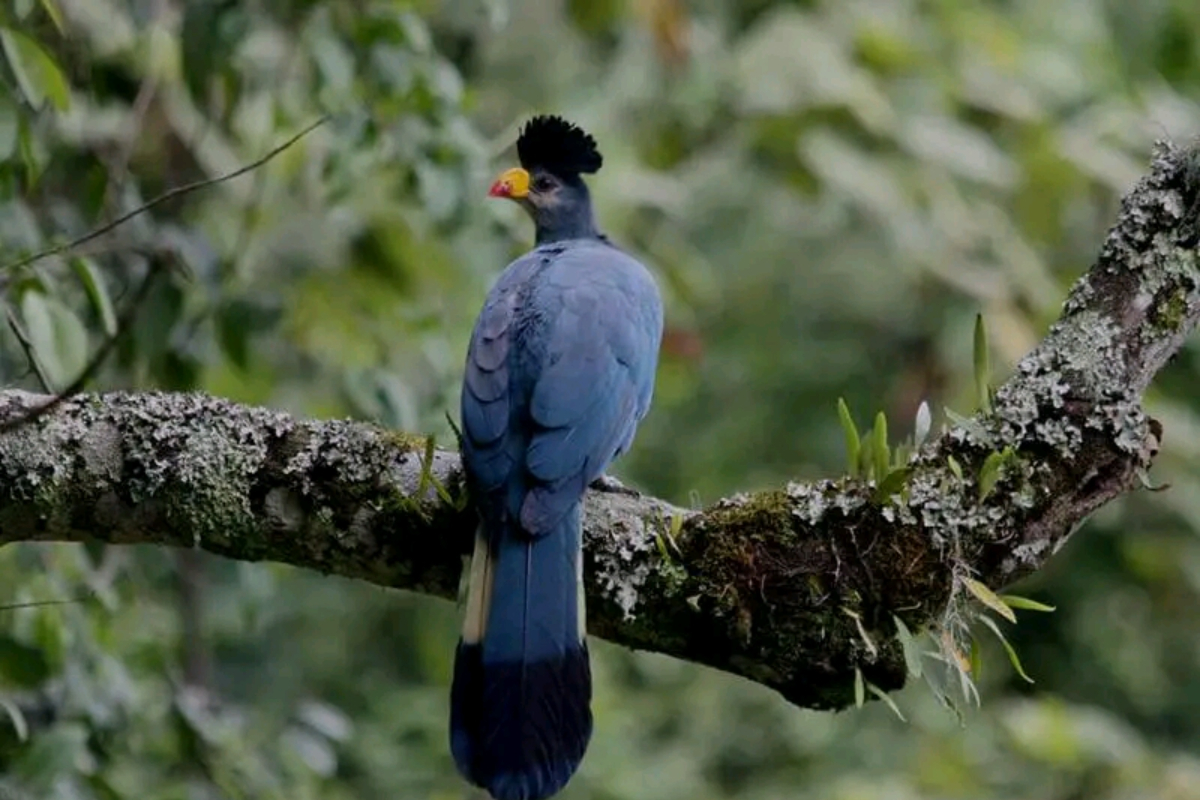
Nyungwe Forest National Park is Rwanda's premier birding destination, protecting over 300 species, including 29 Albertine Rift endemics like the Red-collared Mountain Babbler and Rwenzori Turaco. Located in southwestern Rwanda, this high-altitude rainforest offers incredible, specialized birding, alongside canopy walks and chimpanzee trekking, best visited from July to March
12-days-perfect-rwanda-birding-safari-itinerary
10-days-best-rwanda-birding-safari-combined-with-rwanda-gorilla-trekking-vacation
5-days-perfect-rwanda-birding-safari-and-wildlife-and-gorilla-trekking
14-days-rwanda-uganda-birding-safari-extravaganza-focused-on-the-albertine-endemics
18-days-rwanda-uganda-birding-safari-and-primate-experience
17-days-rwanda-birding-safari-and-uganda-birding-tour-combined-vacation
Albertine Rift Endemics
Albertine Rift Endemics (Rwenzori Turaco, Handsome Francolin, Mountain Black Boubou, Rwenzori Batis, Stripe-breasted Tit, Strange Weaver, Red-collared Mountain Babbler)
The Albertine Rift endemics in Bwindi represent some of the most range-restricted and sought-after birds in East Africa. Collectively, these species showcase the region’s unique montane forest assemblage and are central targets for any serious birder visiting Bwindi Impenetrable Park. The Rwenzori Turaco is an unmistakable presence where found: a large, flamboyantly crested forest bird with vivid green plumage and noisy, distinctive calls. It favors canopy and edge habitats in higher-elevation forest and is often encountered in mixed flocks around fruiting trees. The Handsome Francolin, a skulking ground-dweller of dense understorey, rewards careful listening and patient searching near trails and forest clearings; its precise identification requires attention to call and subtle plumage differences from other francolins. Mountain Black Boubou and Rwenzori Batis are vocal understorey specialists—the boubou often revealed by its duetting and the batis by its quick, flycatcher-like sallies and short, sharp calls. Stripe-breasted Tit is a small, alert canopy/upper-understorey species, often part of mixed-species flocks; its striped breast and active behavior make it easier to detect once sought. The Strange Weaver is a more unusual endemic that frequents forest edges and secondary growth, where its weaving nests and localized presence can be rewarding to observe. Perhaps the trickiest is the Red-collared Mountain Babbler, a skulking, low-density species of dense montane thickets; its furtive habits mean that sightings are often brief and best achieved with a guide who knows its typical territories and vocalizations. Locating these endemics often requires visiting multiple Bwindi sectors (especially higher-elevation Ruhija and parts of Nkuringo/Rushaga), getting up early, and spending time in bamboo and montane zones where these species concentrate. Because many are vocal but shy, experienced local guides are invaluable for interpreting calls, positioning observers, and minimizing disturbance while maximizing chances of clear views.
Specialty Species
Specialty Species (Grauer’s Warbler, Regal Sunbird, Blue-headed Sunbird, Purple-breasted Sunbird, Neumann’s Warbler, Kungwe Apalis)
Bwindi’s specialty species include several melodious, brightly colored and ecologically specialized birds that thrill visiting birders. Grauer’s Warbler, an Albertine Rift specialist, is an understorey insectivore with a plaintive song; it inhabits dense, mossy forest and bamboo zones where it skulks in low vegetation, often revealed by mixed-species flocks. Sunbirds are among the most photogenic specialties: the Regal Sunbird, with its brilliant metallic plumage, favors flowering shrubs and montane edges, offering spectacular views when nectar sources are in bloom. Blue-headed and Purple-breasted Sunbirds are similarly exquisite, each with iridescent head or breast coloration that flashes in good light—these species are associated with mid-elevation forest, forest edges and flower-rich clearings. Neumann’s Warbler is another prized sighting: a very skulking, low-understorey species with a distinctive, high-pitched song. Finding Neumann’s requires patience and careful listening, as it rarely ventures into the open but is persistent in its preferred dense, damp ravines. Kungwe Apalis (sometimes lumped or split taxonomically in different treatments) is a small, active understorey apalis that prefers bamboo and montane thickets; its vocalizations and subtle plumage differences make it a rewarding target for those tuned into local calls. These specialty species often occur in fragmented, habitat-specific pockets, so success depends on visiting the right microhabitats at the right times—dawn or early morning is usually best—and following the lead of experienced local guides. Photographing sunbirds benefits from patience around flowering trees and a telephoto lens; finding warblers and apalises rewards slow, silent movement and an ear trained to the region’s complex vocal repertoire. Overall, these specialties highlight Bwindi’s value for birders seeking colorful nectarivores and secretive understorey insectivores.
Top Locations
Top Locations (Uwinka Viewpoint, Kamiranzovu Swamp, main road through the forest)
Bwindi’s best birding often concentrates around a handful of top locations that combine accessibility with rich habitat mosaics. The Uwinka Viewpoint—situated along the main forest track and providing sweeping views over the forest canopy—is a classic stop for both canopy specialists and migrants. From the viewpoint you can scan emergent trees for turacos, broadbills and large frugivores, and the adjacent forest often hosts mixed-species flocks that spill into view. Early morning from Uwinka can be especially productive as birds sing and move between feeding trees. Kamiranzovu Swamp represents an important wetland microhabitat within the forest complex; swamps like Kamiranzovu concentrate water-dependent species and attract mixed flocks feeding on fruiting trees along the swamp margins. The swamp’s edge vegetation—along with its mosaic of marsh and forest—creates niches for both understorey skulkers and canopy dwellers. Muddy boardwalks and raised paths near swamps require good footwear but provide concentrated birding opportunities in relatively compact areas. The main road passing through the forest is surprisingly valuable for birding because it creates consistent edge habitat, easier walking, and access to multiple elevation bands without the need for strenuous trailwork. Roadside stops allow quick checks for species that use forest edges and clearings (e.g., sunbirds, some raptors, and peculiar weavers) and are convenient for scanning treetops and listening for understorey calls. Together, these locations function as hubs: Uwinka for canopy scanning and panoramic vantage, Kamiranzovu for swamp-edge specialization, and the main forest road for efficient coverage and access to multiple birding microhabitats. For the best results, visit these sites with a knowledgeable guide who understands recent movements, fruiting tree locations, and the times of day when particular species are most active.
Top Birding Activities & Tours
- Forest Trail Birding (130+ km of trails; Bigugu Trail for high-altitude species)
Bwindi’s extensive trail network—more than 130 km of paths weaving through montane forest, bamboo belts, ridgelines and swamp edges—makes it a superb place for trail-based birding. Forest trails let birders move slowly and methodically through different vegetation zones, increasing the chance of encountering understorey specialists, canopy dwellers and mixed-species flocks. Each trail has a character: lower-elevation tracks tend to feature denser low-canopy activity and riparian species, while higher-altitude routes enter bamboo and mossy forest where Albertine Rift endemics and montane specialists congregate. The Bigugu Trail is particularly noted for high-altitude species. Rising into cooler, mist-laden forest and bamboo stands, Bigugu passes through prime habitat for species such as the Regal Sunbird, Rwenzori Batis, and skulking babblers and warblers that favor dense montane understorey. Trekking Bigugu requires good footwear and a moderate level of fitness because steep sections and soggy patches are common, but the trail’s rewards include localized endemics and the thrill of seeing species that rarely appear on lower trails. Trail birding is most productive at dawn and early morning when birds are vocally active; carrying a guide who recognizes local calls is invaluable since many species reveal themselves by voice before showing. Mixed-species flocks—common on many Bwindi trails—offer concentrated viewing opportunities since they gather insectivores, flycatchers, and sunbirds in the same patch of forest. For efficient species coverage, combine short walks on several trails in a day or plan multi-day itineraries that let you sample both lowland forest and high-altitude bamboo zones. Remember to move quietly, minimize disturbance, and let your guide handle any necessary route choices to maximize sightings while protecting sensitive habitats.
- Canopy Walkway (120 m long, 70 m high suspension bridge)
A canopy walkway provides a rare vantage for viewing the forest from the emergent and canopy layers—zones typically out of reach from ground trails—and Bwindi’s suspension bridge (approximately 120 meters in length and rising to about 70 meters) offers birders a spectacular platform for canopy-focused observation. From this elevated perspective you can scan treetops for canopy specialists such as broadbills, turacos, and large frugivores that often remain concealed from ground-level observers. The walkway reduces the need to peer through dense midstorey and gives direct access to the strata where many Albertine Rift endemics feed and call. Because canopy birds can be highly localized, the opportunity to linger quietly on the bridge during peak activity times—early morning and late afternoon—greatly improves detection rates. Photographing from the walkway is also advantageous: fewer obstructions and a steadier platform for spotting scopes or long lenses increase the chance of sharp, well-framed images. Safety protocols are essential—limits on group size, supervised access, and weather-related closures ensure visitor and wildlife safety—so book access through your lodge or guide and follow all instructions. Keep movement slow and noise to a minimum to avoid startling birds and to facilitate prolonged views. The canopy walkway is also educational: guides can point out feeding behavior, flowering trees that attract nectarivores, and mixed-flock dynamics high in the crowns. Overall, the walkway is an efficient way to complement ground-based birding, adding canopy species to your checklist with comparatively little exertion while delivering unforgettable panoramic views of Bwindi’s forest.
- Nocturnal Birding (night walks for Rwenzori Nightjar and Albertine Owlet)
Nocturnal birding in Bwindi opens up a different avian world—one dominated by cryptic nightjars, owlets and other nocturnal specialists that are rarely seen during daytime excursions. Night walks, conducted with experienced, licensed guides who know night birds’ calls and preferred roosting areas, are the best way to encounter species such as the Rwenzori Nightjar and the Albertine Owlet. The Rwenzori Nightjar is detected by its distinctive flight and call as it hunts low over clearings and along forest edges, while the Albertine Owlet—an Albertine Rift endemic—sits concealed in cavities or dense branches and is often located by its soft, repetitive calls. Night birding involves careful pacing and strict adherence to safety guidelines: walk only on approved trails, use red-filtered or dimmed lights to reduce disturbance, and keep group sizes small to avoid stressing nocturnal wildlife. Beyond the two headline species, night walks may reveal other nocturnal animals (frogs, mammals) and sometimes lesser-known birds like nightjars or owls with limited ranges. Timing matters—late evening through the first few hours of night are often best—and guides will typically plan walks away from busy lodge areas to minimize artificial light. Because nocturnal surveys can disturb sensitive species if mishandled, always employ guides who practice ethical, low-impact methods. Night birding is a thrilling complement to daytime activities: it broadens your species list, deepens understanding of the forest’s temporal ecology, and offers rare encounters with some of Bwindi’s most secretive birds.
- Combined Tours (4–7-day itineraries with chimpanzee trekking and Colobus monkey tracking)
Combined multi-day tours that pair dedicated birding with primate encounters provide one of the most rewarding ways to experience Bwindi and its surrounding forests. Typical 4–7-day itineraries allow time to sample multiple birding sectors—Buhoma, Ruhija, Nkuringo or Rushaga—while also fitting in chimpanzee trekking in nearby Kibale (if included in a broader circuit) and targeted primate-focused walks such as Colobus monkey tracking within forest fragments or lodge grounds. These combined tours are efficient for travelers who want diverse wildlife experiences without doubling back across the country. A balanced itinerary might allocate 2–3 days to Bwindi birding—covering lowland trails, Mubwindi Swamp and higher bamboo zones—plus a day for gorilla or chimpanzee activities elsewhere (depending on your package). Colobus monkeys, with their striking black-and-white coats, are often found in forest edges, riverine corridors and lodge gardens; tracking them provides relaxed, viewable encounters that complement the often more strenuous birding treks. Combining activities requires careful logistical planning: permits for gorilla and chimpanzee trekking must be booked well in advance, accommodation should be positioned to minimize daily transfers, and travel time between parks considered (road transfers vs. domestic flights). Using a reputable operator or local guide ensures smooth sequencing of activities and maximizes time in the field during optimal birding hours. These integrated tours appeal to travelers seeking both charismatic megafauna and specialized avifauna, offering varied daily rhythms—early-morning birding walks, mid-morning primate treks, and afternoon rest periods—so you return with a broad, memorable wildlife checklist from Uganda.
Practical Information for Rwanda birding safari in Nyungwe forest park
- Best Time: July to March (drier season / migratory season)
Bwindi’s birding is rewarding year-round, but the period from July through March often offers the best balance of accessibility and species variety. The drier months—June to August and December to February—bring firmer, less muddy trails and clearer weather windows, making long, steep walks through montane forest and bamboo more comfortable and safer. Trailheads and boardwalks around Mubwindi Swamp and higher ridges are far easier to negotiate when heavy rains aren’t turning paths into slippery challenges, so those focused on physically demanding high-altitude targets tend to prefer the dry season. Another advantage is improved visibility: lower mist and cloud during dry spells helps you scan canopy emergents and photograph sunbirds or turacos more easily.
From a seasonal species perspective, November through April overlaps with peak movement of many Palearctic and intra-African migrants that augment Bwindi’s resident avifauna. This period can add warblers, flycatchers and cuckoos to your checklist, and some migrants concentrate along forest edges and riparian corridors that are accessible on road-side stops. The wet seasons (March–May and September–November) are not without merit—rainfall triggers fruiting and flowering cycles that can concentrate nectarivores and frugivores like sunbirds and broadbills—however, heavier rains can mean tougher trekking conditions and lower detection rates for species that reduce calling and movement during storms.
To choose the optimal window, weigh your priorities: ease of walking and clear skies (dry season) versus peak flowering/fruiting and some migrant arrivals (wet-to-transition months). Also factor in logistics such as lodge and guide availability—peak months attract more visitors—and gorilla-permit scheduling if combining activities. Regardless of timing, early mornings remain the most productive daily period for bird activity, so plan dawn starts to capitalize on bird song and movement.
- Guide Required: Hiring an experienced local bird guide
Hiring a licensed, experienced local bird guide is essential for successful birding in Bwindi’s dense and vertically complex forests. Uganda Wildlife Authority regulations require visitors to be accompanied by approved guides in the park; beyond compliance, the practical advantages are substantial. Bwindi’s avifauna includes many cryptic understorey insectivores, fence-line endemics and canopy specialists best detected by sound rather than sight. Local guides know the vocal signatures, habitual locations, and microhabitat preferences of Albertine Rift endemics and localized specialties—knowledge that transforms inexact vocal cues into reliable sightings. They can also anticipate mixed-species flock movements and position observers to maximize views without disturbing birds.
Guides provide essential safety and logistical support. They select appropriate trails for group fitness levels, navigate steep or muddy terrain, and manage group behavior to minimize disturbance to wildlife. In addition, guides handle permit checks, liaise with rangers when needed, and adjust plans in response to weather or recent sighting reports. Many experienced bird guides carry portable scopes, field guides, and species checklists and can help with identification both visually and aurally; some offer interpretive context about bird ecology and conservation status, enriching the experience.
For specialized birding tours, consider hiring a guide with ornithological experience or joining a birding-focused operator who supplies an expert guide and backup logistics. Book guides through reputable lodges or operators in advance—especially during peak season—as good guides are in high demand. If you have particular target species, communicate these beforehand so your guide can tailor routes and timing (early-morning starts, sector selection like Ruhija for endemics) to increase your chances. Using a local guide is not just recommended; it’s the most efficient, ethical, and rewarding way to experience Bwindi’s remarkable birdlife.
- Essentials: Waterproof hiking boots, binoculars, rain gear, long trousers
Packing the right essentials makes birding in Bwindi safer and far more productive. Sturdy, waterproof hiking boots with good ankle support are arguably the single most important item: trails are often steep, root-strewn and can become very muddy, especially after rain. Good boots reduce fatigue, improve footing on wet rocks and routes, and help prevent ankle injuries on uneven terrain. Complement boots with socks that wick moisture and reduce blistering.
High-quality binoculars (8x42 or 10x42) are indispensable—many Albertine Rift endemics are best seen in the canopy or fleetingly in the understorey, and crisp optics make the difference between a fleeting field mark and a confirmed ID. If you’re a serious photographer, a camera with a telephoto lens or access to a spotting scope enhances your chances of good images, particularly for canopy species. Protect optics with waterproof covers and cleaning cloths.
Rain gear is essential year-round: a lightweight, breathable waterproof jacket and a pack cover protect you and your equipment from sudden showers common in montane climates. Quick-dry clothing layers and a warm mid-layer are useful because mornings can be cool at higher elevations. Long trousers and long-sleeved shirts protect against insects, thorny undergrowth and sun exposure during breaks. Bring insect repellent (effective DEET-based formulations if recommended), and consider anti-malarial precautions after consulting a travel health professional.
Additional practical items include a wide-brim hat, sunscreen, a reusable water bottle, high-energy snacks, a small first-aid kit, a headlamp for early starts, and a field guide or offline birding app for Uganda. Trekking poles can ease steep ascents and descents, especially for those with knee issues. Finally, carry copies of permits and contact details for your guide or lodge—logistics matter as much as gear in remote settings like Bwindi. With these essentials, you’ll be well-prepared to enjoy productive, comfortable and low-impact birding.
How many bird species can I see on a Rwanda birding safari tour in Nyungwe Forest Park?
Nyungwe Forest Park is one of East Africa’s richest avian strongholds. With over 320 recorded bird species, the park offers tremendous variety across altitudinal zones, vegetation types, and microhabitats. On any given multi-day visit your species total will depend on time available, season, itinerary focus, and how intensively you search, but a well-planned 3–5 day birding itinerary often yields well over 150 species for motivated birders and can approach or exceed 200 species under ideal conditions and with early starts. The park’s recorded list includes a strong representation of Albertine Rift endemics (about 29 species), a suite of canopy dwellers (turacos, broadbills), a host of understorey insectivores (warblers, apalises), several marsh and swamp specialists, and both resident and migratory species that use the forest at different times of year.
Distribution and detectability vary: canopy species may be easier to locate from elevated vantage points or the canopy walk, while secretive understorey birds require patient listening and slow, quiet movement in trailside thickets and bamboo. Concentrated habitats such as marshes, riverside vegetation, and flowering trees can yield dense, diverse flocks in compact areas. Hiring an experienced birding guide significantly increases the number of species you record since many Nyungwe birds are best identified by voice. Also consider logistics—time of day and how many trail sectors you cover matters more than sheer hours in the field; dawn and early morning are most productive. For checklist-minded birders, combining canopy walk sessions, swamp-edge visits and high-altitude trails on successive days is the most effective approach to maximize species count.
When is the best time for a Rwanda birding safari tour in Nyungwe Forest Park?
Nyungwe’s birding year offers different advantages by season, and “best” depends on your priorities: trail conditions and visibility versus migrant arrivals and breeding behaviour. For generally easier trekking and clearer views, the dry seasons—June to September and December to February—are the preferred windows. Trails firm up, ridge-top cloud and persistent mist tend to reduce, and early mornings are typically clearer for scanning canopy emergents and photographing sunbirds and turacos. These months also coincide with popular travel periods in Rwanda, so guides and lodges may be in high demand—book well in advance.
If your primary objective is to see migrants and to observe breeding displays and dependent juveniles, the wetter months (especially March to May) can be spectacular. Rain brings flushes of fruiting and flowering, which in turn concentrate nectarivores (sunbirds) and frugivores (broadbills, turacos). Migratory passerines and Palearctic visitors may be more conspicuous in transition months. The rains, however, make trails muddier and some ridge-top sites foggier, so expect slower walking and plan for wet-weather gear.
Transitional months (October–November) can be mixed: occasional showers, localized fruiting events and fewer visitors, which can be an advantage for quieter birding. Regardless of season, the daily window that delivers the most sightings is dawn through midmorning; plan early starts and maximize those hours. In short: choose dry-season months for comfort and visibility, wet-season months for active breeding and flower/fruit-driven concentrations, and transitional windows if you want quieter trails with chance rewards.
How much does a permit cost for a Rwanda birding safari tour in Nyungwe Forest Park?
As of the current guidelines, a bird-watching permit for international visitors in Nyungwe Forest Park is typically priced at around $50 USD per person per day. This fee grants access to designated birding trails and supports park management, conservation efforts, and guide services at park reception points. Note that permit structures can differ for Rwandan residents and East African nationals, who often benefit from reduced rates; student and group discounts may occasionally be available through park authorities or approved operators.
Permit acquisition should be done in advance—either through the Rwanda Development Board (RDB) online portal, via an accredited tour operator, or directly at the park reception centers (Uwinka, Gisakura) where permits and guide pairings are arranged. During peak travel seasons and for specialized activities (canopy walk, night walks, or guided group activities), advance booking is strongly recommended because visitor numbers are limited and certain site slots (e.g., canopy-walk time slots) sell out quickly.
Be aware that permit prices and categories can change with policy updates, conservation fees, or special levies (e.g., research permits or filming fees). If you plan to combine activities—such as chimpanzee trekking elsewhere or canopy-walk sessions—confirm whether separate permits or additional fees are required. Always request a written permit confirmation and keep a copy with you during treks; guides and rangers may check documentation. To ensure you have the latest information, consult the Rwanda Development Board website or a reputable local operator when planning, and budget for the permit fee plus guide fees, transport to reception centers, and potential equipment hire.
Do I need a professional guide for my Rwanda birding safari tour in Nyungwe Forest Park?
Yes—engaging a professional, licensed birding guide is both a practical necessity and a huge advantage in Nyungwe. For regulatory reasons, park rules require visitors to be accompanied by authorised guides on many trails; beyond compliance, experienced guides dramatically improve detection rates and the quality of your birding experience. Nyungwe’s avifauna contains numerous cryptic, low-density species and many birds that are more reliably identified by voice than by sight. Local guides know species’ vocal repertoires, habitual microhabitats, recent sighting locations, and the behavior patterns of endemics and scarce specialists. Their knowledge turns fleeting calls into tangible views and helps prioritize trail sectors for your specific targets.
Guides also handle logistics and safety: selecting appropriate routes for fitness levels, advising on timing (best dawn starts), and navigating steep, wet or slippery terrain. They coordinate with park rangers, manage group movement to reduce disturbance, and can arrange specialized activities such as the canopy walk or nocturnal surveys for nightjars and owlets. For birders interested in photography or twitching rarities, guides can position observers at optimal vantage points while ensuring ethical viewing distances.
For specialist birding, hire a guide with demonstrated ornithological experience or join a birding-focused operator—these guides often carry scopes, checklists, and field guides and may know precise territories for localized endemics. Book guides in advance during high season; good guides are in demand. If you have specific species on your wish list (e.g., Albertine Rift endemics, Albertine Owlet), communicate these beforehand so the guide can tailor the itinerary. Ultimately, a professional guide is not only required in many cases but is the most efficient and ethical way to maximize sightings and enjoy Nyungwe’s complex avifauna.
How many days should I dedicate to a Rwanda birding safari tour in Nyungwe Forest Park?
A minimum of three full days in Nyungwe is the practical baseline for a satisfying bird-focused visit, allowing you to sample key habitats—montane rainforest, bamboo zones, swamp-edge and canopy—without feeling excessively rushed. Three days typically permit a dawn start on day one to explore a lower-elevation trail or reception-area loop, a full day centered on high-priority trail(s) such as Bigugu or Kamiranzovu for montane and swamp specialists, and another morning to visit the canopy walk or a different habitat patch before departure. This gives you decent coverage of habitat diversity and a fair chance at many Albertine Rift endemics plus common species.
For more comprehensive checklist-building—aiming to maximize endemics, rarities and migratory additions—4–6 days is preferable. This extended window allows repeated visits to productive microhabitats when birds are mobile, targeted nocturnal surveys, and more relaxed pacing (revisiting locations at different times of day). It’s also useful if you’re combining birding with other activities—chimpanzee treks, primate tracking, or visits to nearby parks—because that requires travel time and permit coordination.
If your focus is highly specialized (e.g., tracking very localized endemics or pursuing photographic opportunities for canopy species), tailor extra days around those priorities and consult guides to time visits with fruiting/flowering events or migration peaks. Factor in travel time from Kigali (about 4–6 hours by road for most lodges), potential weather delays, and the need to start early each morning—the best birding occurs at dawn. Ultimately, match days to objectives: 3 days for a solid introduction, 4–7 days for an in-depth, checklist-focused safari.
Bird Species & Highlights — What are the must-see birds in Nyungwe Forest Park?
Nyungwe’s list includes many must-see taxa that are both spectacular and regionally significant. Top-highlight species to target include the Rwenzori Turaco (a flashy canopy dweller with loud calls and striking coloration), the Red-collared Mountain Babbler (a skulking Albertine endemic best sought in dense montane thickets), Regal Sunbird (brilliantly iridescent and often found at flowering shrubs), and the rare Albertine Owlet (a secretive, range-restricted owl best located by its soft nocturnal call). These species represent a blend of canopy spectacle and understorey secretiveness, showcasing Nyungwe’s vertical complexity.
Other attention-worthy targets include Grauer’s Swamp Warbler and Handsome Francolin among the endemics, several colorful sunbirds and turacos, and localized apalises and warblers that require careful listening. If you prioritize photographic opportunities, focus time on the canopy walk during flowering seasons for sunbirds and on swamp margins for francolins and water-associated species. For skulking understorey species, dawn patrols with an experienced guide are essential.
Plan your days to include early starts, canopy walk sessions, swamp edge visits, and at least one guided walk into bamboo or mossy zones to encounter the distinctive suite of Albertine Rift endemics. Many birds are more easily heard than seen, so depend on your guide’s aural skills. Bringing a scope and good optics will make the difference for distant canopy targets. Nyungwe rewards patient, quiet birding and offers the chance to record both showy and elusive species within a relatively compact area—making it a top destination for serious birders in Eastern Africa.
Can I see Albertine Rift endemics in Nyungwe?
Yes—Nyungwe is one of the best places to find Albertine Rift endemics. The park’s montane and submontane forests, bamboo belts, and swamp areas support many species restricted to the Albertine Rift Mountains. Notable endemics and near-endemics found in Nyungwe include Grauer’s Swamp Warbler, Handsome Francolin, Red-collared Mountain Babbler and several specialized apalises and warblers. These species often occupy specific microhabitats, so success depends on visiting the right habitat types (e.g., swamp fringes, dense bamboo, mossy gullies) and on time-of-day—early morning is best.
Because some endemics are secretive or low-density, experienced local guides are invaluable: they know territories, seasonal movements and recent sighting locations. Combining visits to different altitudinal bands—lower montane tracks, high-altitude bamboo zones and swamp edges—on successive days is the most reliable strategy to encounter a broad complement of endemics. Nyungwe’s role in conserving these species is significant; many are restricted to a small range within the Albertine Rift, making sightings both special and conservation-important. If you have specific endemic targets, inform your guide in advance so they can prioritize appropriate trails and times.
Are there any globally threatened species to look for in Nyungwe?
Yes—Nyungwe hosts several species of conservation concern. Two examples often highlighted are Rockefeller’s Sunbird and Chapin’s Flycatcher, both of which are considered globally threatened or near-threatened depending on assessments and taxonomic treatments. These species are tied to specialized habitats and limited ranges, so detecting them can be challenging and often requires site-specific knowledge.
In addition to those two, other species within Nyungwe’s checklist may have varying threat statuses due to habitat loss, fragmentation, and climate pressures across the Albertine Rift. Because conservation status can change with new assessments, check the latest IUCN Red List entries and regional checklists when planning. Guided, low-impact searches for threatened species not only increase your chances of sightings but also support local conservation by bringing responsible ecotourism revenue to the region.
Can I combine a canopy walk with my Rwanda birding safari tour in Nyungwe?
Absolutely. The Nyungwe Canopy Walk is an excellent complement to ground-based birding and provides a 70-meter-high perspective that dramatically improves detection of canopy specialists. From the walkway you can scan emergent crowns for turacos, broadbills, hornbills and other high-strata species that are otherwise challenging to observe from below. The vantage point is particularly productive during early morning when canopy birds are most active, and the reduced understorey obstruction makes photography and scope work easier.
Access to the canopy walk operates on a slot-based system and may incur an additional fee; it’s wise to book in advance or coordinate with your lodge and guide. The canopy walk is also accessible to non-birding companions, making it a versatile option for mixed-interest groups. Observe all safety and visitor rules, keep noise levels low, and limit group size to enhance bird presence and minimize disturbance.
What are the best trails for Nyungwe birding?
Some of Nyungwe’s most productive trails for birders are the Bigugu Trail (higher altitude, excellent for montane and bamboo specialists), Karamba Trail (relatively easier walking and good for mixed-species flocks), and Kamiranzovu or swamp-associated trails for marsh and water-edge species. Bigugu rewards those seeking Albertine endemics that prefer mossy, high-elevation forest and bamboo sectors. Karamba is a useful option for less strenuous mornings and provides access to both mid-elevation forest and riverine habitats. Trails that reach swamp margins or riparian strips concentrate species such as francolins and swamp warblers.
A strategic approach is to combine a canopy-walk session with a morning on one of the higher-altitude trails and a mid-level trail on another day to sample a broad habitat spectrum. Confirm trail access with park authorities and guides—some routes require permits or ranger accompaniment.
What should I pack for my Rwanda birding safari tour in Nyungwe?
Pack flexible, layered clothing suitable for a montane rainforest. Essentials include a good pair of waterproof hiking boots with ankle support, quick-dry long trousers and long-sleeved shirts to protect against insects and undergrowth, a lightweight waterproof jacket, and a warm mid-layer for cool mornings. Binoculars (8x42 or 10x42) are indispensable; bring lens covers and a cleaning cloth. A compact spotting scope and camera with a telephoto lens are highly recommended for canopy species. Also bring insect repellent, sunscreen, a wide-brim hat, a headlamp, spare batteries or power bank, and reusable water bottle with purification options if needed. A small first-aid kit and copies of permits and emergency contacts round out practical items.
Is the terrain difficult for Nyungwe birding?
Yes—the terrain can be steep, rugged and muddy, particularly outside the dry season. Trails often descend into gullies and climb ridge lines; root systems and wet rocks make footing challenging. Wear appropriate boots, consider trekking poles for stability, and allow extra time for short distances. Hiring a porter or keeping daily walking distances conservative is advisable for longer treks or if you have mobility concerns. Guides will select tracks that match fitness levels and conditions.
What other wildlife might I see on a Nyungwe birding safari?
Nyungwe is extremely biodiverse beyond birds. You may encounter up to 13 primate species, including Angola Colobus and, with guided arrangements, chimpanzees on habituated treks. The forest supports a variety of mammals (duikers, civets), abundant butterflies, and a rich flora including rare orchids and epiphytes—particularly beautiful in mossy, high-altitude zones. Night walks may reveal nocturnal mammals and frogs in addition to owlets and nightjars.
Where can I stay during my Nyungwe birding safari?
Nyungwe offers a range of accommodation from luxury to budget. Top-end options like One&Only Nyungwe House provide exceptional comfort and concierge services for bespoke birding, while mid-range choices such as Nyungwe Top View Hill Lodge offer excellent access and creature comforts. Budget-friendly lodgings—Gisakura Guest House, local eco-lodges and campsite options—provide practical bases close to park reception centers. Choose lodging based on proximity to your chosen trailheads (Gisakura for southside, Uwinka for central access), level of comfort desired, and the logistical needs of early-morning starts.
How do I get to the starting point of a Nyungwe birding safari tour?
Most birding activities begin at the park reception centers—Uwinka (central) and Gisakura (southern). From Kigali, driving to Nyungwe generally takes about 4–6 hours depending on traffic and exact lodge location; the route passes scenic highland country and requires a steady mountain drive. Alternatively, domestic flights to Kamembe Airport (near Cyangugu/Karongi) shorten travel time, with onward road transfers to park lodges. Coordinate transfers with your lodge or tour operator so you arrive the evening before an early start; park staff and guides usually meet groups at reception centers for permit checks and briefings.
If you’d like, I can condense these into printable brochure text, prepare a 3–5-day sample birding itinerary for Nyungwe, or tailor recommendations to your travel dates and birding priorities. Which would you prefer?
Booking Rwanda birding safari with us Roads of Adventure safaris
Book your unforgettable Rwanda birding safari with Roads of Adventure Safaris to explore premier sites like Nyungwe Forest and Kigali's wetlands. Our expert-guided tours offer tailor-made itineraries focusing on Albertine Rift endemics and diverse avian species. Experience seamless, professional, and intimate, small-group adventures designed to maximize your sightings in the "Land of a Thousand Hills." Contact us today to customize your 12-day or shorter birding itinerary
