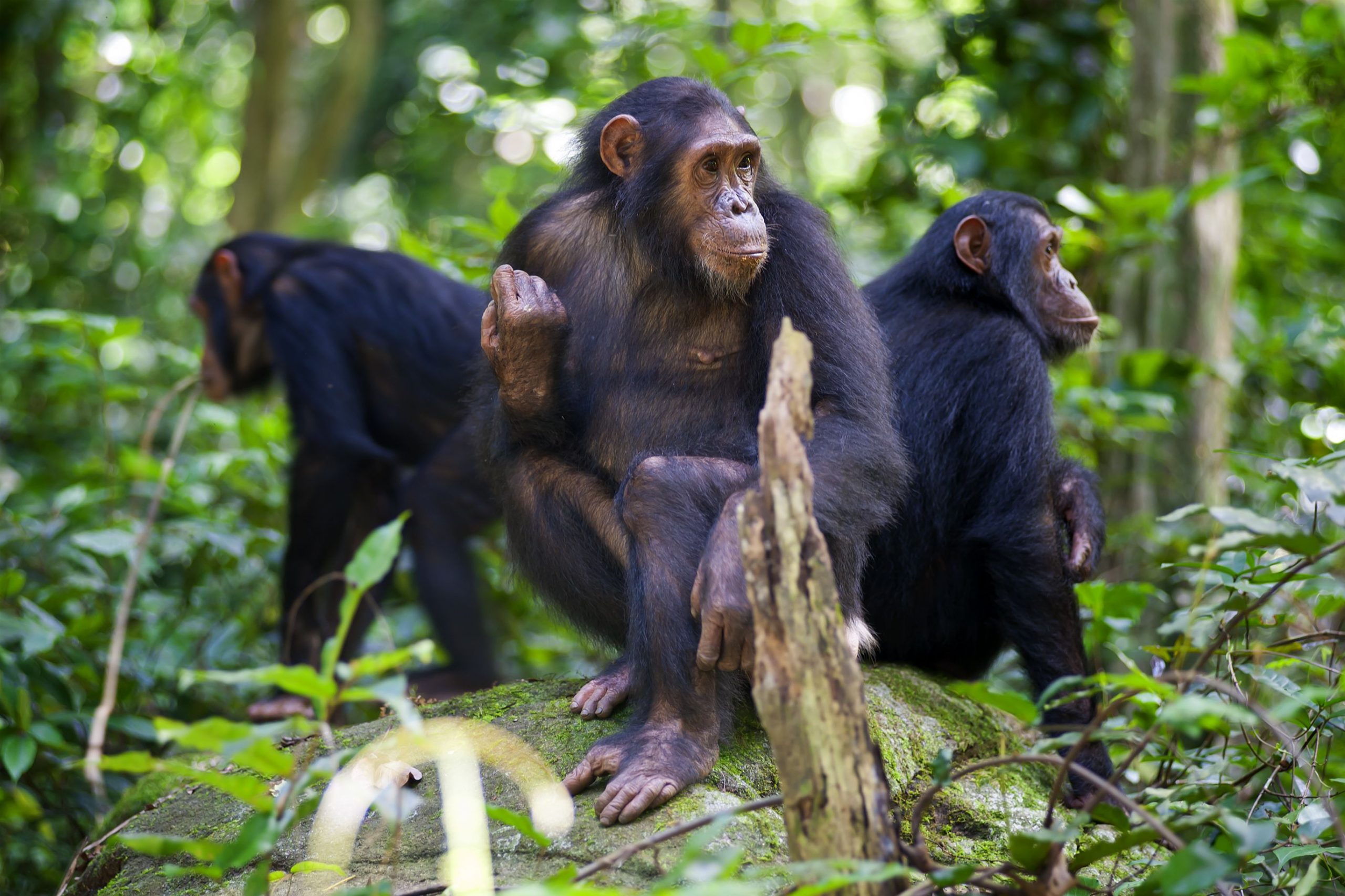
This ultimate 9-day Uganda safari perfectly combines primate tracking and savanna wildlife. You will track chimpanzees in Kibale Forest, search for tree-climbing lions and Big 5 wildlife in Queen Elizabeth National Park, and trek endangered mountain gorillas in Bwindi Impenetrable National Park, ending with relaxation at Lake Bunyonyi.
9 Days gorilla, chimpanzee and Uganda wildlife safari itinerary
The 9 Days gorilla, chimpanzee and Uganda wildlife safari is a top-tier choice for those who value authentic contact with the natural world. This trip is built to highlight the variety of life in Uganda, mixing close meetings with primates and peaceful days in the wild. You will start by heading into the deep, old forests of Kibale, known for having a high number of primates, before moving down to the open grasslands of Queen Elizabeth National Park. This plan creates a balance between adventure and rest; you will see the "Big Five" and the famous tree-climbing lions of the Ishasha sector, and you will also have the life-changing experience of tracking mountain gorillas in the thick, misty slopes of Bwindi Impenetrable Forest. By finishing with the clear, green waters of Lake Bunyonyi and the varied plains of Lake Mburo, this 9 Days gorilla, chimpanzee and Uganda wildlife safari ensures that every person leaves with a strong bond to the wild and memories that last a lifetime.
Highlights of the 9 Days gorilla, chimpanzee and Uganda wildlife safari
Tracking wild mountain gorillas
Exploring ancient rainforest canopies
Observing active chimpanzee communities
Searching for climbing lions
Kazinga Channel boat cruise
Viewing massive hippo pods
Game drives through savannah
Spotting elusive leopard predators
Bigodi wetland bird walks
Hiking near crater lakes
Relaxing at Lake Bunyonyi
Canoeing on calm waters
Guided Lake Mburo walks
Seeing herds of zebra
Crossing the Equator line
Learning local forest customs
Experiencing diverse wild habitats
Day by day 9 Days gorilla, chimpanzee and Uganda wildlife safari
Day 1: Journey to the Primate Capital
Your trip begins when you land at Entebbe International Airport, where your guide will meet you. You will drive for 6 to 7 hours toward Fort Portal, a town located near the Rwenzori Mountains. As you travel west, you will see the land change from busy streets to tea farms and green hills. This drive helps you see the different types of terrain found in Uganda. Once you reach the Kibale area, you will check into your lodge, which sits near the park entrance. Use this time to unpack, eat a good dinner, and listen to the forest sounds as night arrives. Getting plenty of sleep is important, as tomorrow you will participate in one of the most memorable parts of your trip: seeing our closest living relatives in their natural home.
Day 2: Chimpanzee Tracking & Wetland Walks
After breakfast, you will go to the Kibale Forest park office for a talk on how to track the animals. With the help of ranger guides, you will walk through the trees, looking for a habituated chimpanzee group. The experience of hearing their calls and then finding them eating or moving in the branches is special. Kibale has 13 types of primates, so look for red colobus, L'Hoest’s monkeys, and mangabeys. In the afternoon, you will go to the Bigodi Wetlands Sanctuary for a guided walk. This project is a great place to see birds; you might spot the Great Blue Turaco or even sitatunga antelopes. It is a good way to support local conservation and learn about the local uses of forest plants from your guide, who knows the area very well.
Day 3: Savannah Horizons & Wildlife Spots
Leaving the forest, you will drive for about 3 hours south toward the wide spaces of Queen Elizabeth National Park. The road offers views of the northern edge of the Rwenzori Mountains and several crater lakes. When you enter the park, you will start your first game drive, looking for herds of elephants, buffalo, and different antelope, such as the Uganda Kob. Queen Elizabeth is home to much wildlife, and the mountain backdrop makes it a nice place for photos. You will go to your lodge in the afternoon to rest. Whether you are staying in a bush camp or a lodge, the sounds of the African wilderness will be all around you. Tonight, you can sit by a campfire, talk about what you saw during the day, and get ready for more exploration the next morning.
Day 4: Aquatic Wildlife & Kasenyi Plains
Start your day with an early morning game drive in the Kasenyi plains. This is the best time to see hunters like lions and leopards before they find shade to hide from the sun. The open grasslands make it easier to see animals for photography. After a break at midday, you will go to the Mweya Peninsula for a boat ride along the Kazinga Channel, a waterway that joins Lake Edward and Lake George. This is a very popular water safari; you will see many hippos, sunning crocodiles, and various water birds, such as pelicans and African fish eagles. Being this close to the animals provides a clear view of how they live near the water. It is a very good experience that shows the spirit of the park.
Day 5: Searching for Tree-Climbing Lions
Today, you will drive south through the Ishasha part of Queen Elizabeth National Park. This area is known for its tree-climbing lions. Unlike lions in other places, these ones have a habit of resting in large fig trees, likely to get away from the heat and bugs on the ground. Spotting them sitting high in the branches is a main part of the trip. After a lunch in the wild, you will drive toward the Bwindi Impenetrable National Park. As you get closer to the south, the flat savannah changes to the steep, hilly ground that marks the edge of the old Bwindi forest. You will feel ready for the next day as you check into your lodge, which is located near the home of the mountain gorillas.
Day 6: The Encounter with Mountain Gorillas
Today is the main part of your 9 Days gorilla, chimpanzee and Uganda wildlife safari. You will arrive at the meeting point early, where you will be put into a group and assigned to a specific gorilla family. With the help of guides and rangers, you will walk into the thick forest. The ground can be steep, but the goal is worth the effort. Once you find the gorillas, you will have one hour to watch them in their habitat. Seeing a silverback lead his family, watching infants play, or observing the mothers care for their young is a moving experience. The quiet of the forest, with only the sounds of the gorillas, creates a calm mood. This is a rare chance to see these animals that shows why we must keep working to protect them.
Day 7: Rest at Lake Bunyonyi
After the walking you did for gorilla tracking, today is for resting. You will enjoy a drive of 2 to 3 hours to Lake Bunyonyi, a place with a mountainous backdrop. This deep, freshwater lake is known for being safe for swimming. Spend your afternoon as you like—perhaps taking a local dugout canoe ride to see some of the 29 islands, visiting local schools or villages, or just reading a book at the lodge. The air is cool, the views are wide, and the mood is very calm. It is the right place to think about the events of the last few days. Have a quiet dinner while looking at the hills and the water; it is a restorative day that helps you get your energy back for the final part of your trip.
Day 8: Journey to Lake Mburo
You will leave the hills of Bunyonyi and start a 4-to-5-hour drive toward Lake Mburo National Park. This park is smaller than the others but has a lot of variety. As you arrive, the land changes to acacia-woodland, which is the right home for zebras, impalas, and the large eland antelopes, all of which are common in this park in Uganda. You will go out for an afternoon game drive, exploring the trails that go through the park. Look for giraffes, which were recently brought back to this area, and many types of birds. The late afternoon light is good for photos, adding a warm color to the savannah. It is a more relaxed experience that lets you enjoy the quiet beauty of this park.
Day 9: Walking Safari & The Equator
On your last day, you will take part in a morning walking safari. Unlike other parks where you must stay in a car, Lake Mburo lets you walk in the bush with an armed ranger guide. It is a fun way to get near to nature, allowing you to notice tracks, droppings, and small details you would otherwise miss. After this, you will start the drive back to Entebbe. The road has nice views, and you will stop at the Uganda Equator sign in Kayabwe. This is the spot for photos and to buy local crafts and items to remember your trip. You will then continue to Entebbe for your flight, finishing a 9 Days gorilla, chimpanzee and Uganda wildlife safari that shows the very best of Uganda’s wilderness.
1. What is the best time of year to undertake this 9-day safari?
Uganda is blessed with a tropical climate, but the timing of your safari can significantly influence your experience. The country experiences two primary dry seasons: from December to February and from June to August. These periods are widely considered the best times for a 9 Days gorilla, chimpanzee and Uganda wildlife safari. During these months, the tracks in Bwindi and Kibale are drier and less slippery, making trekking much more manageable. Furthermore, during the dry season, wildlife in Queen Elizabeth and Lake Mburo national parks tends to congregate around permanent water sources, making them significantly easier to spot. However, the wet seasons—from March to May and September to November—offer their own rewards, such as lush, vibrant scenery and an influx of migratory birds. If you travel during the wetter months, you might find lower lodge rates and fewer crowds, providing a more intimate experience. Regardless of when you choose to go, Uganda’s equatorial climate ensures that temperatures remain pleasant, generally hovering between 20°C and 28°C. Your gear should always include high-quality rain protection, as even in the "dry" seasons, mountain forests can experience localized showers. Ultimately, the best time is whenever you are ready to immerse yourself in the wild, though the peak dry months offer the highest ease of movement and visibility.
2. How physically demanding is the gorilla trekking experience in Bwindi?
Gorilla tracking is arguably the most intense physical activity in this program. While the duration of the trek varies—ranging from as little as two hours to as many as eight depending on where the family has moved—the terrain in Bwindi Impenetrable National Park is consistently challenging. You will be navigating steep, untamed slopes covered in dense vegetation, often at high altitudes. It is not a standardized hike on a maintained trail; rather, you are moving through the forest undergrowth. Because of this, we emphasize that participants should have a reasonable level of physical fitness. That said, it is not an elite sport; you can request a slower pace from your guides, and you will have porters available to carry your daypack, which helps significantly with stability and energy conservation. The sense of achievement upon finding the gorillas far outweighs the physical fatigue. We recommend that you start a light cardiovascular exercise routine weeks before your departure to ensure your legs and lungs are prepared. If you have any specific concerns about mobility, please let us know in advance, as we can sometimes request a family group that is known to be closer to the starting point.
3. What specific clothing and gear should I pack for this trip?
Packing correctly for a 9 Days gorilla, chimpanzee and Uganda wildlife safari is essential for comfort across diverse ecosystems. Your gear needs to account for hot savannah afternoons and cold, misty forest mornings. For tracking, you need sturdy, waterproof hiking boots with good ankle support—this is non-negotiable for the muddy trails of Bwindi. Wear long-sleeved shirts and long trousers, ideally made of quick-dry, breathable material, to protect your skin from thorns, stinging nettles, and insects. A lightweight, waterproof jacket is mandatory, as is a warm fleece or sweater for the cooler evenings at higher altitudes like Bwindi and the outskirts of the mountains. You should also pack a wide-brimmed hat, high-quality sunglasses, and sunscreen. A small, comfortable daypack is vital for carrying your water, snacks, camera, and rain gear. For photography enthusiasts, a camera with a good zoom lens is essential, along with extra batteries and a waterproof bag to protect your electronics from sudden forest rain. Lastly, a headlamp is useful for early morning starts or power outages. By layering your clothing, you will be able to adapt to the shifting temperatures throughout the day.
4. Are there any health precautions or vaccinations I need?
Your health and safety are the absolute priorities during your safari. Before traveling to Uganda, you must consult with a travel clinic or your primary physician at least six weeks in advance. A Yellow Fever vaccination is a mandatory requirement for entry into Uganda, and you will need to present your "Yellow Card" at the border. Uganda is a malaria-endemic country, so taking prophylactic medication is strongly advised; consult your doctor on which option is best for your personal health profile. In addition to these, ensure your routine vaccinations—such as those for Hepatitis A, Typhoid, and Tetanus—are up to date. While on safari, drink only bottled or purified water, which will be provided to you daily. When tracking primates, you will be required to wear a face mask, as gorillas and chimpanzees share nearly 98% of our DNA and are highly susceptible to human respiratory illnesses. Your guides will brief you on these protocols upon arrival at the park headquarters. Taking these standard precautions ensures that you remain healthy and able to enjoy every moment of your nine-day adventure without unnecessary interruptions.
5. What can I expect regarding accommodation standards?
Uganda offers a fantastic range of lodges that harmonize with the environment while providing essential comforts. For this 9-day itinerary, you can expect a selection of mid-range to high-end lodges that prioritize location and service. In places like Kibale and Bwindi, many lodges are eco-friendly and designed to offer stunning views of the surrounding forests. Rooms typically feature comfortable beds with mosquito netting, private en-suite bathrooms with hot water, and common areas where you can relax with a drink while listening to the sounds of the wilderness. Dining at these properties is generally excellent, often featuring a blend of international dishes and local Ugandan staples like fresh fruits, matooke, and roasted meats. We carefully select properties that are known for their hospitality and reliability. If you have specific dietary requirements, such as vegetarian, vegan, or gluten-free options, please communicate these to us well in advance so we can ensure the lodges are fully prepared to cater to your needs. While these are not five-star luxury hotels in the urban sense, they provide a comfortable, authentic, and safe home base throughout your journey.
6. Is it safe to travel in Uganda?
Uganda is widely considered a safe and welcoming destination for international travelers. The tourism sector is well-established, and the government places a high priority on the safety of visitors. During your safari, you will be accompanied by a professional driver-guide who is highly experienced in navigating the regions we cover. They are not only experts at spotting wildlife but are also trained to handle logistics and keep you safe throughout the trip. In the national parks, you will always be in the company of specialized park rangers when you are on foot, particularly during primate tracking, which is a strictly managed activity. While common sense is always advised when in busy urban centers—such as keeping your valuables secure and not flashing large amounts of cash—the areas you will visit on this safari are geared specifically toward wildlife and nature enthusiasts. We also maintain constant communication with our local team on the ground to monitor conditions, ensuring that your journey remains smooth, secure, and stress-free from the moment you arrive until you depart.
7. How much interaction can I expect with local communities?
Community immersion is a vital and deeply rewarding aspect of a 9 Days gorilla, chimpanzee and Uganda wildlife safari. While the primary focus is on wildlife, we believe that understanding the culture is just as important. In the Bigodi Wetlands, you will be guided by local residents who will explain the traditional uses of forest plants and the importance of conservation to their way of life. When visiting the areas around Bwindi and Lake Bunyonyi, there are often opportunities to visit local village cooperatives, craft centers, or community-led school projects. These interactions are designed to be respectful and mutually beneficial, providing an insight into daily life in rural Uganda. We encourage you to engage with your guides, who are local experts eager to share their knowledge and stories. These moments often become the most memorable parts of the trip, as you move beyond being a visitor to becoming a participant in the local rhythm of life. Always ask for permission before taking photos of people, and your guide will be happy to facilitate these meaningful connections in a way that is polite and respectful to everyone involved.
8. What is the policy on photography during the safari?
Photography is a significant part of the experience, and you will have ample opportunities to capture images throughout this 9-day program. In the savannah parks, you will spend much of your time in your vehicle, which is the perfect "mobile hide" for wildlife shots. Please ensure you have a dust-proof cover for your gear, as the savannah tracks can be dry and dusty. When tracking primates in the forest, lighting can be challenging due to the thick canopy. A camera with good low-light performance is a massive advantage. Please note that flash photography is strictly prohibited during gorilla and chimpanzee tracking to avoid startling the animals. Your guides will help you position yourself for the best angles while maintaining a respectful distance. For the best results, bring a variety of lenses if you are a serious enthusiast: a long telephoto lens (at least 300mm) for distant wildlife and a wider-angle lens for landscapes. Remember to pack plenty of memory cards and spare batteries, as you will likely take more photos than you expect.
9. Will I have access to electricity and internet during the trip?
While you will be exploring remote wilderness areas, most of the lodges on this itinerary are equipped with modern amenities, including electricity and limited internet access. Many properties use solar power, which is both sustainable and reliable. You will generally have the ability to charge your cameras, phones, and laptops in your room or in the main lounge area. Please note that internet connectivity can be intermittent in deep forest locations like Bwindi or Kibale. While many lodges offer Wi-Fi in the main areas, it may not be fast enough for high-speed streaming or large file uploads. We recommend viewing this trip as a "digital detox" opportunity, allowing you to disconnect from the online world and fully engage with your surroundings. If you require consistent connectivity, we suggest purchasing a local Ugandan SIM card at the airport upon arrival, as mobile data coverage in Uganda is surprisingly good in many areas, even in the bush. Just be prepared for some periods of total peace and quiet away from the digital buzz.
10. What should I know about the food and water provided?
The food on your safari is designed to be nutritious, safe, and satisfying. Most lodges offer a mix of international and local cuisine. You can expect hearty breakfasts with eggs, toast, fruit, and coffee or tea to fuel your morning treks. Lunch is often a mix of hot meals or packed lunches if you are on a full-day activity, while dinners are typically three-course affairs featuring meats, vegetables, starches like rice or potatoes, and fresh soups. Uganda is famous for its fresh produce, so the fruits—especially pineapple, papaya, and mango—are world-class. Regarding water, only use the bottled or treated water provided by your lodge or in your vehicle. Do not drink tap water under any circumstances. We will always ensure you have a sufficient supply of bottled water in your vehicle as you travel between parks. If you have specific dietary restrictions, such as allergies or a need for gluten-free meals, inform us when you book so we can notify all the lodges in advance. You will be well-fed and well-hydrated throughout your journey.
11. How much tipping is appropriate for guides and staff?
Tipping is a common practice in Uganda and is a great way to show appreciation for the service you receive. While it is entirely voluntary, it is highly valued by the staff who work hard to make your trip special. For your main driver-guide, who stays with you for the entire 9 days, a tip of $10 to $20 per day is a standard guideline, depending on your satisfaction with their service. For local guides, rangers, and lodge staff, smaller tips are appropriate. Many lodges have a "tip box" at the reception for staff who work behind the scenes, such as kitchen and housekeeping teams, which is a fair way to distribute contributions. It is helpful to carry a supply of smaller denominations of US dollars or the local Ugandan Shilling for these purposes. Please do not feel pressured to tip if you do not feel the service warrants it, but when you receive excellent care, a tip is a very meaningful gesture that directly supports the livelihoods of those working in the tourism industry.
12. Are there weight limits for luggage on the safari?
For the purposes of this ground-based safari, we recommend keeping your luggage practical. While there is no strict "weight limit" in the way there would be for a bush flight, you will be traveling in a vehicle, and space can be limited, especially if there are multiple passengers. We strongly suggest using soft-sided duffel bags rather than rigid suitcases. Duffel bags are much easier to pack into the trunk of a safari vehicle and are generally more durable for the bumps and dust of rural roads. Aim for a main bag that weighs no more than 15–20 kg, plus a small, comfortable daypack for your essentials during the day. Remember that laundry services are available at most lodges for a small fee, so you can pack lighter than you think and have clothes cleaned mid-way through your trip. Keeping your luggage compact makes moving between lodges and vehicles much faster and more enjoyable for everyone involved.
13. What is the level of comfort in the safari vehicles?
Your comfort while traveling between destinations is very important. We use customized 4x4 safari vehicles, such as Toyota Land Cruisers, which are purpose-built for African roads. These vehicles are equipped with pop-up roofs, which are fantastic for game drives because they allow you to stand up and get a 360-degree view of the landscape while providing shade from the sun. The vehicles feature comfortable seating with seatbelts, and they are regularly serviced to ensure reliability on long drives. While the roads in Uganda can be bumpy or unpaved in some areas, the 4x4 capability of our vehicles ensures you can handle the terrain with confidence. There is plenty of space for your gear, and your guide will ensure the vehicle is clean and well-stocked with water. We also build in regular stops for photos, snacks, and restroom breaks so that the travel days themselves feel like an adventure rather than just a long commute. Your vehicle will be your reliable companion for the duration of your 9-day journey.
14. What are the common wildlife sightings I should anticipate?
This 9 Days gorilla, chimpanzee and Uganda wildlife safari is packed with diversity. In Kibale, you are almost guaranteed sightings of chimpanzees, along with several other monkey species like the red-tailed and blue monkeys. Queen Elizabeth National Park is famous for its large herds of elephants, buffalo, and a variety of antelopes like the Uganda Kob and waterbuck. Lions are frequently seen in the Kasenyi plains and the Ishasha sector. If you are lucky, you might spot leopards and spotted hyenas. In the Kazinga Channel, you will see enormous groups of hippos and crocodiles. Bwindi is the home of the mountain gorilla, and tracking them is an intimate, private encounter. Lake Mburo is the best place for zebras, elands, impalas, and giraffes. Birders will be in heaven, as Uganda has over 1,000 species of birds, from the shoebill stork to colorful kingfishers and raptors. While we cannot "guarantee" nature, our itinerary is built around locations with the highest density and visibility of these iconic animals, ensuring that you will return home with a massive list of wildlife sightings and beautiful memories.
15. What happens if there is an emergency during the safari?
We are fully prepared for the unexpected. Our company operates with a comprehensive safety protocol that includes 24/7 support for all our guests. Your driver-guide is highly trained in first aid and is in constant communication with our central office in Kampala. We have a network of contacts across all the parks we visit, including medical clinics and evacuation services if ever needed. Uganda has reliable AMREF Flying Doctors services that can provide rapid medical evacuation from remote areas to advanced medical facilities in Kampala or beyond if a serious emergency occurs. We strongly recommend that you have comprehensive travel insurance that includes medical coverage and emergency evacuation. Before your trip, we will also provide you with a detailed itinerary and contact list of all your lodges and our emergency support numbers. We take care of the logistics and safety management, so you can focus entirely on the wonders of the wild, knowing that you are in professional, capable hands throughout your entire 9-day journey.
Booking 9 Days gorilla, chimpanzee and Uganda wildlife safari with us Roads of Adventure safaris
Booking a 9-Day safari with Roads of Adventure Safaris allows you to experience gorilla trekking in Bwindi, chimpanzee tracking in Kibale, and wildlife viewing in Queen Elizabeth National Park. Their packages include 4x4 transport, expert guides, and tailored lodges. A 30% deposit is typically required to secure your adventure
