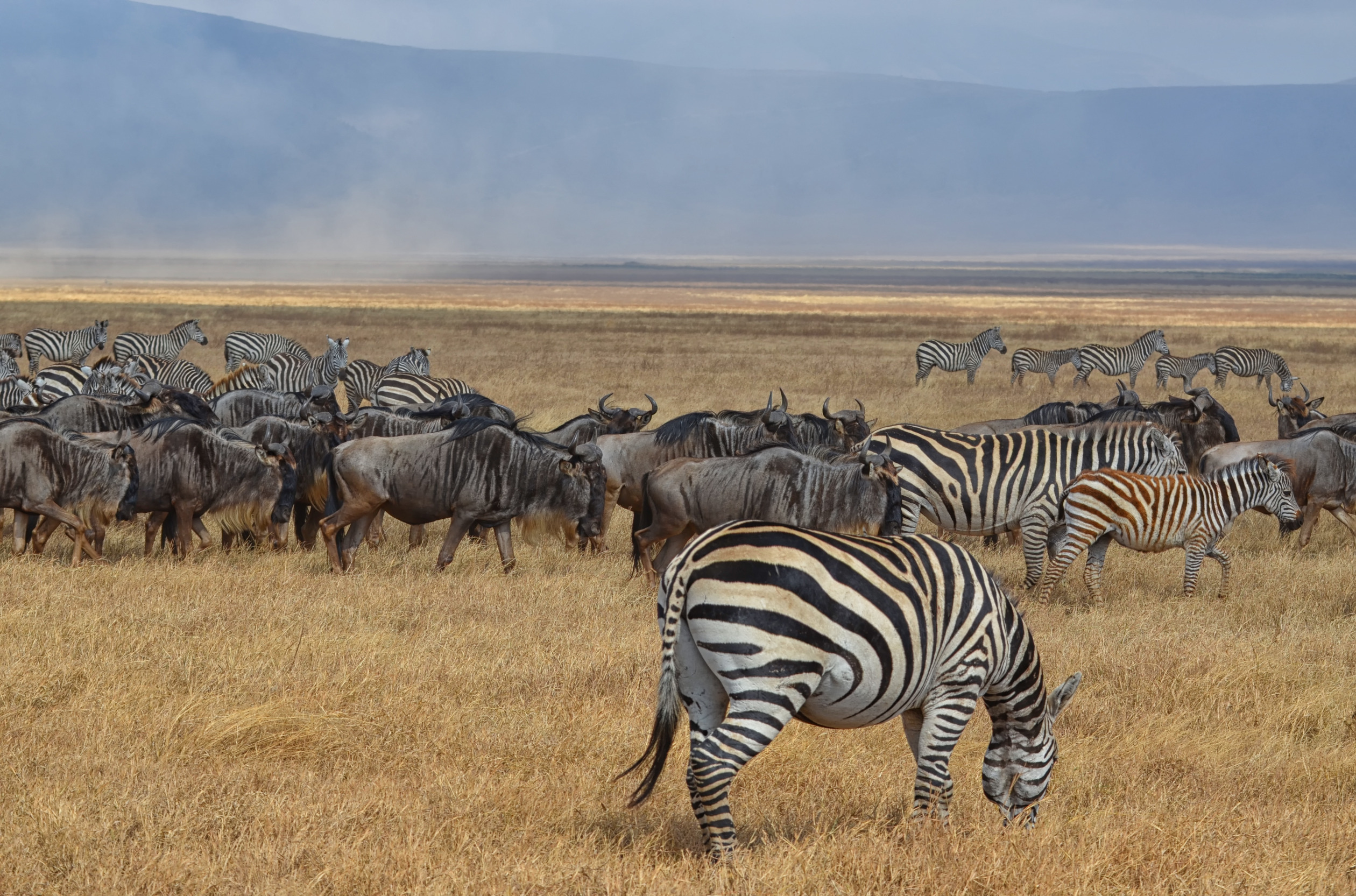
Tanzania offers Africa’s premier safari experience, defined by the vast herds of the Great Migration and the dense, accessible predator populations found within the Ngorongoro Crater. This Tanzania wildlife safari holiday guide helps plan an unforgettable, ethical journey by focusing on prime seasonal timing, expert-driven logistics, and balancing the bustling Northern Circuit with the remote, rugged wilderness of the Southern Circuit.
Best safari itineraries in Tanzania to see the big fives and wildebeest migration
3-days-serengeti-safari-fly-in-ngorongoro-big-five-safari-from-zanzibar-island
3-days-best-tarangire-national-park-tanzania-safari-tour-package
3-days-amazing-serengeti-safari-to-ngorongoro-crater-tanzania-tour
6-days-best-northern-circuit-tanzania-safari-to-best-tanzania-safari-parks
7-days-budget-tanzania-safari-affordable-africa-budget-safari
7-days-epic-africa-big-five-safari-in-tanzania-top-best-parks
7-days-best-great-wildebeest-migration-safari-in-tanzania
8-days-best-tanzania-wildlife-safari-to-zanzibar-beach-holiday-combined
10-days-best-tanzania-safari-tour-and-zanzibar-beach-holiday-itinerary
12-days-budget-tanzania-safari-itinerary-visiting-tanzania-on-budget
The Northern Circuit
Tanzania’s Northern Circuit is the undisputed crown jewel of East African safaris, delivering unparalleled wildlife density across distinct ecosystems, from the baobab-studded Tarangire to the crater floor. The adventure intensifies at the Ngorongoro Crater, a 260-square-kilometer volcanic caldera sheltering 25,000 large mammals, including endangered black rhinos. Finally, you reach the legendary Serengeti National Park, spanning 14,750 square kilometers of endless savannah plains. Navigating this circuit smoothly requires calculating current conservation fees, with Serengeti entry costing over $80 per adult per day, while entering the Ngorongoro Crater floor incurs a steep $295 vehicle fee per descent. To avoid heavy tourist crowds at Ngorongoro, instruct your guide to arrive at the gates exactly when they open at 06:00 AM. This guarantees pristine morning light and quiet wildlife viewing before midday groups arrive. Packing neutral khaki clothing and lightweight layers will ensure comfort against the dusty roads and changing temperatures.
The Southern Circuit
For safari purists seeking raw isolation away from tourist vehicles, Tanzania’s Southern Circuit offers an untamed, spectacular alternative. This region is dominated by Nyerere National Park—formerly the Selous Game Reserve—which stands as one of Africa’s largest protected areas, and the rugged Ruaha National Park. The landscape here shifts from the miombo woodlands of Ruaha to the intricate river networks of the Rufiji River in Nyerere. Wildlife tracking requires more patience here, but the rewards are immense. Ruaha protects 10% of the world’s remaining African lions, alongside massive cape buffalo herds, while Nyerere is a critical stronghold for endangered African wild dogs. What truly sets the Southern Circuit apart is its regulatory flexibility regarding activities. Unlike the strict vehicle-only rules of the north, southern parks allow expertly guided walking safaris and boat safaris along the Rufiji River. Logistics are best managed via light aircraft flights from Dar es Salaam using local carriers like Coastal Aviation or Auric Air.
Peak Wildlife Season
Timing your Tanzanian safari dictates exactly what you will see and how much your trip will cost. The peak wildlife viewing season spans from June to October during the long dry season. As rain vanishes, the landscape thins out, and animals are forced to gather around predictable, remaining water sources like the Tarangire and Seronera rivers, making tracking exceptionally reliable. Days are sunny and pleasant, averaging 26°C, but mornings on the Ngorongoro Crater rim drop to a chilly 10°C, requiring heavy layers. Conversely, the "green season" from March to May brings the long rains. While heavy afternoon downpours make dirt tracks muddy and challenging, this period transforms the savannah into a lush, emerald paradise. It is the best time for birdwatching, as migratory species arrive, and it offers incredible value for budget-conscious travelers, with luxury lodges slashing rates by up to 40%. January and February offer a beautiful, hot dry spell in the southern Serengeti, creating a perfect window to witness calving season without the peak winter crowds.
The Great Migration
The Great Wildebeest Migration is a continuous, year-round survival loop driven by seasonal rainfall across the Serengeti-Mara ecosystem. Over 1.5 million wildebeest, 200,000 zebras, and 300,000 gazelles move clockwise in search of fresh grazing pasture. From January to March, the herds settle on the nutrient-rich volcanic soils of the southern Serengeti and Ndutu conservation areas for calving season, where roughly 8,000 calves are born daily, triggering intense predator action. By May, the grass depletes, moving the herds northwest toward the Western Corridor. The most famous and high-stakes spectacle occurs from July to October, when the herds face the dramatic river crossings at the Grumeti and Mara Rivers. Here, animals must brave strong currents and massive Nile crocodiles to reach the northern plains. To witness this iconic event, travelers must avoid static hotels and book mobile tented camps that physically relocate throughout the year to track the herds. Due to extreme global demand, secure your river-front lodge bookings at least nine to twelve months in advance.
What is the Great Wildebeest Migration and when is the best time to see it?
The Great Wildebeest Migration is the largest synchronized movement of land mammals on Earth, involving over 1.5 million wildebeest, 200,000 zebras, and hundreds of thousands of gazelles. This continuous, circular journey spans the ecosystem of the Serengeti in Tanzania and the Masai Mara in Kenya. It is driven entirely by survival instincts, as the massive herds follow seasonal rainfall in search of fresh grazing pasture and water.
While the animals are always on the move, timing your visit is crucial to witness specific highlights. From January to March, the herds gather in the southern Serengeti plains around Ndutu for the calving season, where roughly 8,000 calves are born daily, attracting intense predator action from lions and cheetahs. The dry season from July to October is ideal for witnessing the dramatic, high-stakes river crossings. During these months, the herds brave the crocodile-infested waters of the Grumeti and Mara Rivers.
To witness this spectacle, you must choose a safari operator that utilizes mobile tented camps that shift locations throughout the year to stay close to the moving herds. Booking at least eight to twelve months in advance is highly recommended, as top-tier lodges near the river crossings fill up quickly.
How much does a high-quality Tanzania wildlife safari cost?
A high-quality Tanzania safari is a significant investment due to strict conservation fees, remote logistics, and exceptional service standards. Prices vary widely based on your desired comfort level, the exclusivity of the lodges, and whether you choose a private or group tour.
Mid-range road safaris typically cost between $400 and $600 per person, per day. These itineraries utilize robust 4x4 vehicles and comfortable tented camps or permanent lodges outside park boundaries. Luxury fly-in safaris range from $1,000 to over $2,500 per person, per day. This premium bracket includes light aircraft transfers between parks, highly experienced private guides, and exclusive stays at ultra-luxury lodges like Singita or Nomad Tanzania, where fine dining and premium drinks are fully included.
Park entry fees make up a massive portion of this cost. For example, Serengeti National Park charges $82.60 per adult per day, while entering the Ngorongoro Crater incurs a steep $295 vehicle fee per descent on top of individual conservation fees. When planning your budget, ensure your operator includes all park fees, concession fees, and government taxes in the upfront quote to avoid unexpected out-of-pocket expenses during your trip.
Why is the Ngorongoro Crater considered a unique safari destination?
The Ngorongoro Crater is the world’s largest intact, unfilled volcanic caldera, formed when a massive volcano exploded and collapsed on itself roughly three million years ago. Today, its enclosing walls form a natural amphitheater spanning 260 square kilometers, sheltering an incredibly dense and self-sustaining ecosystem of over 25,000 large mammals.
This geographical wonder provides some of the most reliable wildlife viewing on the continent. The volcanic soil fuels nutrient-rich grass, supporting massive populations of wildebeest, zebras, buffaloes, and elands. This abundance of prey sustains the highest density of large predators in Africa, including dynamic lion prides and spotted hyenas. Most notably, the crater floor is one of the best places in East Africa to spot the critically endangered black rhinoceros.
Because the wildlife remains inside the crater year-round, there is no bad time to visit. However, its global fame means the crater floor can experience heavy vehicle traffic. Reputable guides will recommend entering the gates at dawn, precisely at 6:00 AM, to enjoy the landscape before the midday crowds arrive.
What are the key differences between the Northern and Southern Safari Circuits?
Tanzania’s safari destinations are primarily divided into the iconic Northern Circuit and the wilder, more remote Southern Circuit. The Northern Circuit features world-famous parks like the Serengeti, Ngorongoro Crater, Tarangire, and Lake Manyara. This region is famous for its staggering wildlife density, classic savannah landscapes, and the Great Migration. Because of its fame, it features an excellent tourism infrastructure, making it perfect for first-time travelers, families, and those seeking premium luxury.
In contrast, the Southern Circuit, highlighted by Nyerere National Park (formerly Selous) and Ruaha National Park, offers a completely different, off-the-beaten-path experience. The landscape is dominated by miombo woodlands, baobabs, and the great Ruaha and Rufiji rivers. Wildlife viewing here requires a bit more patience, but it rewards visitors with rare sightings of African wild dogs and massive herds of cape buffalo.
The Southern Circuit stands out for its activities; while the north mostly restricts visitors to traditional game drives, southern parks allow guided walking safaris and boat safaris. The south is ideal for returning safari enthusiasts seeking solitude away from tourist crowds.
How many days should I allocate for a comprehensive Tanzania safari?
To truly experience Tanzania's diverse ecosystems without feeling rushed, a comprehensive safari should last between 7 and 10 days. This duration allows you to explore multiple parks, adjust to the local pace, and maximize your chances of seeing the Big Five.
A classic 7-day Northern Circuit itinerary typically begins in Arusha, followed by one night in Tarangire National Park, one night near Lake Manyara or Karatu, two nights in the central Serengeti, and one night on the rim of the Ngorongoro Crater. This rhythm provides a fantastic balance of varied landscapes, from elephant-rich woodlands to endless grasslands. Extending your journey to 10 days allows you to venture deeper into the northern or western corridors of the Serengeti, which is essential if you want to track the seasonal movements of the Great Migration.
Shorter safaris of 3 to 4 days are possible but restrict you to closer parks like Tarangire and Ngorongoro. These quick trips involve significant drive times, which can lead to travel fatigue. For the ultimate African vacation, many travelers pair a 7-day safari with a 4-day beach relaxation getaway in Zanzibar.
What wildlife can I expect to see in Tarangire National Park?
Tarangire National Park is affectionately known as the "Home of the Giants" due to its legendary populations of African bush elephants and iconic, ancient baobab trees. The park's lifeblood is the Tarangire River, which serves as the primary freshwater source for wildlife across the entire region during the dry season.
From July to October, Tarangire experiences a massive mini-migration. Thousands of elephants, zebras, wildebeest, and buffaloes converge on the riverbanks. It is common to see herds of up to 300 elephants digging in the dry riverbeds for underground water. This high concentration of prey naturally draws apex predators, making Tarangire an excellent place to spot lions, leopards, and spotted hyenas. The park is also a paradise for birdwatchers, boasting over 550 distinct bird species, including the colorful yellow-collared lovebird and the massive Kori bustard.
Tarangire features unique wildlife variations like the dry-country fringe-eared oryx and the long-necked gerenuk antelope. Its distinct landscape of rolling hills peppered with prehistoric baobabs provides a stark, beautiful contrast to the flat plains of the neighboring Serengeti.
Is Tanzania a safe country for international safari travelers?
Tanzania is widely recognized as one of the safest, most politically stable nations in Africa. The country has enjoyed decades of peaceful democratic governance, and its people are remarkably welcoming, guided by the warm cultural philosophy of "Karibu" (welcome) and "Hakuna Matata" (no worries).
The safari industry is highly regulated by the government and the Tanzania Association of Tour Operators (TATO). Tourism hubs like Arusha, Kilimanjaro, and the national parks have dedicated tourism police forces to ensure visitor safety. When you are out in the wilderness, the national parks are heavily patrolled by armed rangers from the Tanzania National Parks Authority (TANAPA). Your safari lodges and tented camps feature 24/7 security teams, often made up of local Maasai warriors who know the land and wildlife behavior intimately.
While the wilderness presents natural risks, following your professional guide’s instructions guarantees your safety. Simple rules like staying inside the vehicle during game drives and never walking unescorted around an unfenced camp at night completely mitigate these risks. Standard travel precautions apply in major cities like Dar es Salaam or Stone Town.
What are the best practices for packing for an African safari?
Packing for a safari requires a balance of practicality, comfort, and adhering to strict luggage weight limits. If your itinerary involves internal flights on light aircraft, you will be limited to 15 kilograms (33 pounds) of luggage, which must be packed in soft-sided duffel bags rather than hard suitcases.
Your wardrobe should focus on lightweight, breathable layers. Temperatures fluctuate wildly, featuring crisp mornings at 10°C (50°F) on the Ngorongoro crater rim and hot afternoons reaching 30°C (86°F) on the Serengeti plains. Choose neutral colors like khaki, olive green, tan, and brown to blend into the environment. Avoid bright whites, which attract dust, and dark blue or black, which actively attract biting tsetse flies. Camouflage clothing is illegal for civilians in Tanzania and should be left at home.
Essential gear includes a high-quality pair of binoculars (ideally 8x42 or 10x42), a camera with a telephoto zoom lens, a wide-brimmed sun hat, polarized sunglasses, and a headlamp. Do not forget a reliable insect repellent containing DEET and a basic medical kit with malaria prophylaxis, sunscreen, and anti-diarrhea medication.
What is a "tented camp" and what comfort level does it offer?
A luxury tented camp offers the ultimate, authentic safari experience, seamlessly blending classic bush romance with modern, high-end comforts. Unlike permanent concrete lodges, these camps are constructed on raised wooden platforms under large, heavy-duty canvas tents, minimizing their ecological footprint on the pristine wild environment.
Do not confuse these with basic camping; luxury tented camps feature amenities that rival premium boutique hotels. Inside, you will find king-sized beds with crisp linens, hand-woven rugs, writing desks, and private en-suite bathrooms equipped with flushing toilets and hot running water. Many camps use eco-friendly solar water heaters or classic "bucket showers," where staff fill an overhead reservoir with hot water at your requested time.
The true magic of a tented camp lies in its immersive atmosphere. Without solid walls blocking out nature, you fall asleep to the distant roars of lions, the laughs of hyenas, and the gentle rustle of the wind through the acacia trees. The camps are completely unfenced, allowing wildlife to wander freely through the grounds, always monitored by experienced Maasai watchmen who escort you to and from your tent after dark.
What health precautions and vaccinations are required for Tanzania?
Traveling to Tanzania requires proactive health planning to ensure a safe and smooth journey. The most critical medical consideration is malaria prevention. Most safari destinations sit in malaria-endemic zones, making it vital to consult a travel clinic for prescription prophylaxis, such as Atovaquone/Proguanil (Malarone) or Doxycycline, well before departure.
Regarding mandatory vaccinations, Tanzania requires proof of a Yellow Fever vaccination certificate only if you are arriving from, or have transited for more than 12 hours through, a country with a risk of yellow fever transmission (such as Kenya, Uganda, or Ethiopia). If you fly directly from Europe or the United States into Kilimanjaro International Airport, this certificate is generally not required, though carrying it is wise.
Routine vaccines should be brought up to date, including Hepatitis A, Hepatitis B, Typhoid, Tetanus, and Polio. To prevent gastrointestinal issues, never drink tap water; stick exclusively to filtered or bottled water provided by your safari guide and lodges. Use bug spray frequently, cover your skin at dusk, and use the mosquito netting provided over your bed.
Can I bring my children on a Tanzanian wildlife safari?
Yes, Tanzania can be an incredibly rewarding and educational destination for a family safari, provided it is well-planned and tailored to your children's ages. Most family-friendly lodges and operators recommend a minimum age of six to eight years old for standard wildlife viewings.
The primary challenge for young children is the long duration of game drives. Spending five to eight hours bumping along rough dirt roads requires patience and a steady attention span. To make a family safari successful, look for operators that offer private 4x4 vehicles. This gives you complete control over your schedule, allowing for frequent bathroom breaks and early returns to the lodge when the kids get tired. Choose lodges that feature swimming pools, family suites, and interactive "Junior Ranger" programs, where local guides teach children animal tracking and bush survival skills.
Safety is paramount; because many top camps are unfenced and open to wild animals, children must be supervised by an adult at all times. If you have very young children, focusing your trip on private villas or closed permanent lodges is often the most comfortable option.
What role do the Maasai people play in the safari ecosystem?
The Maasai are an internationally renowned, semi-nomadic pastoralist ethnic group inhabiting northern Tanzania and southern Kenya. They are vital partners in the modern safari ecosystem, acting as guardians of the land, cultural ambassadors, and expert wildlife trackers.
For centuries, the Maasai have coexisted harmoniously with wildlife, moving their livestock alongside migrating herds. Today, many luxury lodges partner directly with local Maasai communities, leasing communal land for conservation areas that protect wildlife corridors while generating direct income for the tribes. When you visit a tented camp, you will find Maasai individuals working as guides, trackers, and security wardens. Their deep ancestral knowledge of animal behavior, plant medicine, and the local landscape enhances the safari experience.
Many operators offer cultural visits to a traditional Maasai settlement, known as a "boma." During these visits, you can witness their vibrant jumping dances, admire their intricate beadwork, and learn about their traditional lifestyle. To ensure an ethical experience, only visit bomas that have structured financial agreements with reputable tour operators, ensuring the community benefits directly from your visit.
What is the tipping etiquette for guides and lodge staff on safari?
Tipping is a deeply ingrained custom in the East African safari industry. While it is entirely discretionary, tips form a significant part of the income for the hard-working guides, spotters, and lodge staff who work long hours to ensure your trip is seamless.
For your private safari guide, the industry standard is to tip between $20 and $30 per vehicle, per day. If your vehicle includes a dedicated wildlife spotter, a tip of $10 to $15 per day is customary. This money is best handed directly to the guide at the very end of your trip in a sealed envelope. For lodge and camp staff, most properties feature a communal "Staff Tip Box" located at the main reception desk. Tipping $10 to $20 per guest, per day into this box covers the behind-the-scenes heroes, including chefs, housekeepers, tent attendants, and security guards.
Tips are preferred in US Dollars (issued after 2013, clean and untorn) or the equivalent in Tanzanian Shillings (TZS). Budgeting for tips beforehand ensures you carry enough cash, as ATMs are completely non-existent once you enter the remote national parks.
What are the passport and visa requirements for entering Tanzania?
To enter Tanzania, international travelers must possess a passport that is valid for at least six months beyond their intended date of departure. Your passport must also have at least two blank, facing pages to accommodate entry and exit stamps from customs officials.
Most nationalities, including citizens of the United States, United Kingdom, Canada, Australia, and the European Union, require a tourist visa to enter the country. You can obtain a single-entry tourist visa upon arrival at major airports like Kilimanjaro (JRO) or Dar es Salaam (DAR) for $50 USD (or $100 USD for US citizens, due to a specific bilateral agreement). However, to avoid long queues after a exhausting international flight, it is highly recommended to apply for an electronic visa (e-Visa) via the official Tanzanian Immigration website at least two to three weeks before departure.
When applying online or filling out your arrival card, ensure you select the ordinary tourist visa. Keep a printed copy of your e-Visa confirmation page tucked safely inside your passport case, alongside your yellow fever vaccination card if applicable, to present at the immigration desk.
What are the rules for photographing wildlife and local people?
Safari photography requires a respectful blend of technical preparation and cultural sensitivity. When photographing wildlife, always prioritize animal welfare over getting the perfect shot. Your guide must keep the vehicle at a respectful distance; never encourage them to off-road or rev the engine to force an animal to move, wake up, or look at your camera.
When it comes to photographing local people, strict ethical rules apply. Tanzania is a country with diverse cultures, and taking photos of individuals without their explicit permission is deeply disrespectful. Always ask "Naomba kupiga picha?" (May I take a photo?) before clicking the shutter. In traditional communities like the Maasai or Hadzabe, photography is often viewed as a commercial interaction. It is best to arrange photos through your guide, who will negotiate a fair community fee or guide you through a culturally appropriate visit where photography is explicitly welcomed.
Finally, photographing military infrastructure, government buildings, border crossings, and police officers is strictly illegal in Tanzania and can result in the immediate confiscation of your camera equipment or detention by authorities.
Why should I include Tarangire National Park in my itinerary?
Tarangire National Park is often overshadowed by the Serengeti, but it stands as one of East Africa’s finest gems. It offers a stunningly distinct landscape and unparalleled elephant encounters. The park is characterized by iconic, ancient baobab trees that dominate the rolling savannah hills, creating a prehistoric, dramatic backdrop for photography.
The primary reason to include Tarangire is its spectacular wildlife density during the dry season from July to October. As the surrounding landscape dries up, the Tarangire River becomes the only reliable water source for miles. This triggers a massive wildlife convergence. Huge herds of up to 300 elephants gather along the riverbanks, alongside thousands of zebras, wildebeest, and buffaloes. This concentration of prey brings exceptional predator sightings, with lions and leopards frequently spotted resting in the limbs of sausage trees.
Furthermore, Tarangire is home to localized wildlife species rarely seen in the Serengeti, such as the elegant fringe-eared oryx and the long-necked gerenuk. Including Tarangire for one or two nights at the start of your northern safari circuit adds immense variety to your overall trip.
What is the weather like in Tanzania throughout the year?
Tanzania enjoys a tropical climate that varies significantly based on altitude and geography. The country does not experience traditional winter and summer; instead, the weather patterns are divided into distinct dry and rainy seasons.
The long dry season spans from June to October. During these months, days are clear, sunny, and warm, with afternoon temperatures hovering around 25°C to 28°C (77°F to 82°F). However, mornings and evenings can be quite chilly, dropping to 10°C (50°F), especially on the high-altitude rim of the Ngorongoro Crater. The "short rains" arrive in November and December, bringing brief, refreshing afternoon showers that rarely disrupt travel plans. January and February offer a dry, hot interlude before the "long rains" arrive from March to May.
During the long rainy season, downpours can be heavy and prolonged, turning dirt tracks into challenging mud. While some remote seasonal tented camps close during these wet months, it is a beautiful time for budget-conscious travelers to visit. The landscape turns a vibrant emerald green, dust disappears, and luxury lodges offer substantial low-season price discounts.
What are the best options for internal travel between parks?
Navigating between Tanzania’s vast national parks can be achieved via two main methods: traditional road safaris or convenient fly-in safaris. The best choice depends entirely on your budget, time constraints, and desired comfort level.
A road safari utilizes a sturdy, custom-built 4x4 safari jeep featuring a pop-up roof for wildlife viewing. Driving allows you to experience the changing countryside, pass through local villages, and enjoy a seamless journey with your dedicated private guide from start to finish. However, distances can be vast, and the roads connecting remote sectors can be rough and bumpy—a phenomenon affectionately known as the "African massage."
A fly-in safari utilizes light aircraft operated by reliable regional airlines like Regional Air, Coastal Aviation, or Auric Air. These flights connect bush airstrips directly, cutting down an eight-hour drive to a scenic 45-minute flight. Flying maximizes your time on the ground watching wildlife and minimizes travel fatigue. Many travelers opt for a hybrid approach: driving through the closer parks like Tarangire and Ngorongoro, then flying back to Arusha from the deep Serengeti to save time.
How can I ensure my safari is ethically and environmentally responsible?
Practicing sustainable tourism ensures that Tanzania’s magnificent wild spaces and vibrant communities are protected for generations to come. The most important step is choosing a tour operator registered with the Tanzania Association of Tour Operators (TATO), which ensures compliance with fair labor practices and ethical operational guidelines.
When choosing accommodations, look for eco-lodges and tented camps that operate entirely on solar power, practice strict waste management, and avoid single-use plastics. In fact, Tanzania has a strict nationwide ban on plastic carrier bags, so ensure you do not pack them in your luggage. When out on a game drive, respect the park rules: never allow your guide to drive off-road to get closer to animals, as this destroys fragile flora and disrupts wildlife habitats.
Support the local economy by purchasing authentic, handmade souvenirs directly from local artisans rather than imported trinkets at massive airport gift shops. Finally, ensure your operator pays fair wages to their guides and camp staff. A well-compensated guide is naturally invested in protecting the wildlife and providing you with an exceptional, respectful educational experience.
What are the key features of Lake Manyara National Park?
Lake Manyara National Park is a compact but incredibly diverse ecological gem nestled at the base of the dramatic Great Rift Valley escarpment. Despite its small size, the park packs a variety of distinct habitats, ranging from dense groundwater forests to open grasslands and a massive alkaline lake.
The park is internationally famous for its legendary tree-climbing lions. While lions across Africa typically stay firmly on the ground, Manyara’s prides have developed a unique habit of lounging high in the branches of acacia and mahogany trees to escape the heat and biting insects. Another major draw is the park's elephant population, which is among the densest in the country. The shallow waters of Lake Manyara itself cover two-thirds of the park's total area and host seasonal flocks of thousands of lesser flamingos, turning the shoreline a vibrant pink.
Manyara is an absolute paradise for bird enthusiasts, hosting more than 400 species, alongside large troops of olive baboons and pods of hippos at the famous Simba River hippo pool. It serves as an ideal, gentle half-day or full-day introduction to wildlife viewing on the Northern Circuit.
What should I know about the Hadzabe and Datoga tribes?
For travelers seeking a profound cultural connection, a visit to the Lake Eyasi region offers a rare opportunity to meet the ancient Hadzabe and Datoga tribes. These communities live outside modern society, maintaining ancestral traditions that date back thousands of years.
The Hadzabe are one of the last remaining hunter-gatherer tribes on Earth. They speak a unique click language entirely unrelated to any other tongue. They live off the land, hunting wild game with handmade bows and arrows and foraging for wild honey, berries, and tubers. A morning spent tracking wildlife through the bush with Hadzabe hunters is an exhilarating, eye-opening step back into human history.
Nearby, you will find the Datoga tribe, who are skilled pastoralists and master blacksmiths. The Datoga are easily recognized by the intricate, circular scarification patterns around their eyes. They utilize traditional methods to melt down scrap metal, transforming brass and copper into arrowheads, knives, and beautiful jewelry, which they often trade with the Hadzabe. Visiting these tribes must be done with an experienced local guide to ensure the interactions remain dignified, mutually respectful, and financially beneficial to the communities.
What are the best regions in Tanzania to spot leopards?
The leopard is the most elusive and secretive of Africa’s Big Five, celebrated for its masterfully camouflaged coat and solitary nature. Unlike lions, leopards are stealth hunters that spend much of their day resting silently high in the branches of large trees.
The absolute best place to spot leopards in Tanzania is the Central Serengeti, specifically around the Seronera River Valley. This area features a high concentration of leopards due to its dense populations of prey and an abundance of sausage trees and yellow-barked acacias, which provide perfect platforms for hunting and hiding. Leopards routinely drag heavy kills up into these branches to keep them away from ground scavengers like hyenas and lions.
Another phenomenal destination for leopard sightings is the Ngorongoro Crater, particularly along the forested tracks of the crater rim and the Lerai Forest floor. To spot a leopard, an experienced guide is indispensable; they know how to scan the tree canopies and interpret the frantic alarm calls of baboons and impalas, which often reveal a hidden predator nearby. Patience and a high-quality pair of binoculars are key to finding these beautiful cats.
What are the luggage restrictions for light aircraft flights?
When booking a fly-in safari that utilizes regional bush airlines to hop between various airstrips, you must adhere to strict luggage restrictions. These rules exist purely for flight safety, as the small turboprop aircraft (such as Cessna Caravans) have compact cargo holds with strict weight and balance limits.
The standard luggage allowance is strictly 15 kilograms (33 pounds) per person, and this weight limit includes your carry-on daypack and camera equipment. Most importantly, your luggage must be packed in soft-sided duffel bags made of canvas or nylon, without any rigid frames or wheels. Hard-sided suitcases are flatly rejected at the boarding gates because they cannot be compressed to fit into the uniquely shaped nose and under-belly cargo pods of these light aircraft.
If you are carrying heavy professional camera gear, you may need to purchase an additional seat or a freight allowance in advance to safely accommodate the extra weight. Most safari operators can arrange for your primary hard-shell suitcases to be stored securely at their headquarters in Arusha or Dar es Salaam, allowing you to travel light into the bush with just your safari essentials.
What is the currency in Tanzania and how should I handle money?
The official currency of Tanzania is the Tanzanian Shilling (TZS). However, the United States Dollar (USD) is widely accepted and preferred across the entire travel and hospitality industry, including luxury lodges, national park entry gates, and souvenir shops.
When bringing US Dollars into Tanzania, you must follow strict currency regulations. Due to historical counterfeiting issues in East Africa, banks and businesses in Tanzania will flatly reject any US Dollar bills that were printed before the year 2013. Additionally, your bills must be in pristine condition: clean, crisp, untorn, and free of any ink stamps or markings. Small bills ($1, $5, $10, and $20) are useful for tipping, while large bills ($50 and $100) receive better exchange rates if you convert them to shillings.
Credit cards, particularly Visa and Mastercard, are accepted at high-end safari lodges and major hotels, though they often incur a processing surcharge ranging from 3% to 5%. ATMs are readily available in major urban centers like Arusha, Dar es Salaam, and Stone Town, but they disappear entirely once you venture into the national parks.
What can I expect from a typical day on an African safari?
A day on safari follows a classic, rewarding rhythm designed around optimal wildlife behavior. Your day begins early, with a gentle wake-up call before dawn around 5:30 AM. Animals are most active during the cool morning hours, making this the absolute best time to witness predators on the hunt. After a quick cup of coffee and biscuits, you set off on your morning game drive just as the sun breaks over the horizon.
Around mid-morning, your guide will find a scenic, safe spot to unpack a bush breakfast, allowing you to dine surrounded by nature. You then continue wildlife viewing until mid-day when the sun grows hot and animals retreat into the deep shade. You return to the lodge for a relaxed lunch followed by an afternoon siesta or a dip in the pool.
At around 4:00 PM, as temperatures cool and wildlife stirs again, you depart for your afternoon game drive. This drive culminates in the iconic safari tradition of "sundowners"—stopping at a beautiful viewpoint to watch the African sunset with a refreshing drink. You return to camp for a multi-course dinner and gather around the campfire to share stories.
Why is Ruaha National Park a highly recommended destination?
Ruaha National Park is Tanzania’s largest national park, yet it remains wonderfully wild and uncrowded, making it a dream destination for veteran safari travelers. Located in the Southern Circuit, Ruaha is a rugged, beautiful wilderness defined by massive sand rivers, dramatic rocky escarpments, and thousands of giant baobab trees.
The park is famous for its exceptional predator populations. Ruaha shelters roughly 10% of the world's remaining African lions, including massive prides that frequently hunt cape buffaloes along the riverbanks. It is also an excellent stronghold for endangered African wild dogs, cheetahs, and elusive leopards. Due to its unique geographical location where southern and eastern African eco-zones overlap, you can see an incredible variety of antelopes, including both Greater and Lesser Kudu, as well as sable and roan antelopes.
The Great Ruaha River is the park's absolute lifeblood. During the dry season, it becomes an intense focal point for wildlife, drawing thousands of elephants and buffaloes while massive pods of hippos battle for space in the remaining deep pools. Ruaha offers a sense of vast, untouched isolation that is hard to find elsewhere.
What are the opportunities for a walking safari in Tanzania?
A guided walking safari is an exhilarating way to experience the African bush, shifting your perspective from the seat of a vehicle to the dirt under your boots. On foot, the focus shifts from chasing large predators to appreciating the finer, hidden details of the ecosystem: identifying animal tracks, reading alarm signals, examining medicinal plants, and understanding insect behavior.
For safety reasons, walking safaris are strictly regulated. You are always accompanied by an expert, highly trained walking guide and an armed national park ranger. Walking safaris are primarily offered in specific areas, such as the Southern Circuit parks (Ruaha and Nyerere), private concessions bordering the Serengeti, and Tarangire National Park. Participants must follow strict safety protocols: walking in a single file line, remaining quiet, and wearing neutral-colored clothing and sturdy, closed-toe hiking shoes.
While you may encounter large animals like elephants or giraffes from a safe distance, the goal is not to approach dangerous wildlife, but rather to experience the wild with all five senses, smelling the earth and listening to the calls of the bush without an engine hum.
What should I know about visiting the Hadzabe tribe ethically?
Visiting the Hadzabe tribe near Lake Eyasi offers a profound insight into humanity's ancient past, but it must be approached with deep cultural sensitivity and respect. The Hadzabe are one of the world's last hunter-gatherer communities, and it is vital that tourism supports rather than disrupts their traditional lifestyle.
To ensure an ethical interaction, always book your visit through a reputable operator that employs a local guide from the Lake Eyasi region who speaks the Hadzabe click language fluently. This guide acts as a cultural bridge, explaining traditions and ensuring boundaries are respected. Your visit should be active and non-intrusive; rather than treating the community like an exhibit, participate respectfully by joining them on an early morning hunt, learning how to track wildlife, or trying your hand at traditional archery.
Financial transparency is critical. Ensure your tour operator pays a direct community conservation fee that goes toward medical funds, food security, and protecting their ancestral lands from agricultural encroachment. Always ask for permission before taking photographs, and avoid giving candy, plastic trinkets, or cash directly to individual children, as this encourages begging and disrupts tribal dynamics.
What is the significance of the Oluvai Gorge?
Olduvai Gorge, located within the Ngorongoro Conservation Area, is one of the most important paleoanthropological sites in the world, often referred to as the "Cradle of Mankind." This steep-sided ravine stretches roughly 48 kilometers long and has provided secrets regarding early human evolution.
The site became internationally famous due to the pioneering excavations of Dr. Louis and Mary Leakey in the mid-20th century. In 1959, Mary Leakey discovered the fossilized skull of Zinjanthropus boisei (now known as Paranthropus boisei), an early hominin that walked the earth approximately 1.75 million years ago. Soon after, they uncovered remains of Homo habilis, the "handy man," establishing that human evolution originated deep within the African continent. The gorge's unique geology, with layers of volcanic ash preserving fossils across millions of years, has allowed scientists to map out ancestral lineages and prehistoric environments.
Today, travelers can visit a modern, excellent museum built on the edge of the gorge. It houses fascinating fossil replicas, ancient stone tools, and educational exhibits. A stop at Olduvai Gorge adds profound historical depth to a Tanzanian safari itinerary.
How can I combine a wildlife safari with a beach vacation in Zanzibar?
Combining a thrilling wildlife safari with a relaxing tropical beach vacation in Zanzibar is the ultimate Tanzanian holiday itinerary, providing a seamless balance of adventure and relaxation. This popular "Bush to Beach" combination is incredibly easy to execute thanks to excellent regional flight connections.
After completing your Northern Circuit safari, you can catch a direct domestic flight from the Seronera or airstrips in the Serengeti, or from Arusha Airport (ARK), straight to Zanzibar’s Abeid Amani Karume International Airport (ZNZ). The flight takes less than two hours, allowing you to watch lions in the morning and sip fresh coconut water on a white-sand beach by the afternoon.
Spend your first two nights exploring Stone Town, a UNESCO World Heritage site celebrated for its labyrinthine alleys, historic spice markets, and beautifully carved wooden doors. Afterward, head to the island’s northern or eastern shores—such as Nungwi, Kendwa, or Matemwe—to indulge in luxury beachfront resorts, world-class scuba diving, snorkeling along coral reefs, and sunset dhow cruises. Allocating seven days for a wildlife safari followed by four to five days in Zanzibar creates an unforgettable vacation.
Booking Tanzania wildlife safari holiday with us Roads of Adventure safaris
Booking a Tanzania wildlife safari with Roads of Adventure Safaris provides a tailor-made, immersive journey through East Africa's premier wildlife destinations. While based in Kampala, the operator curates flexible private tours spanning Tanzania's famous Northern Circuit and beach getaways.
