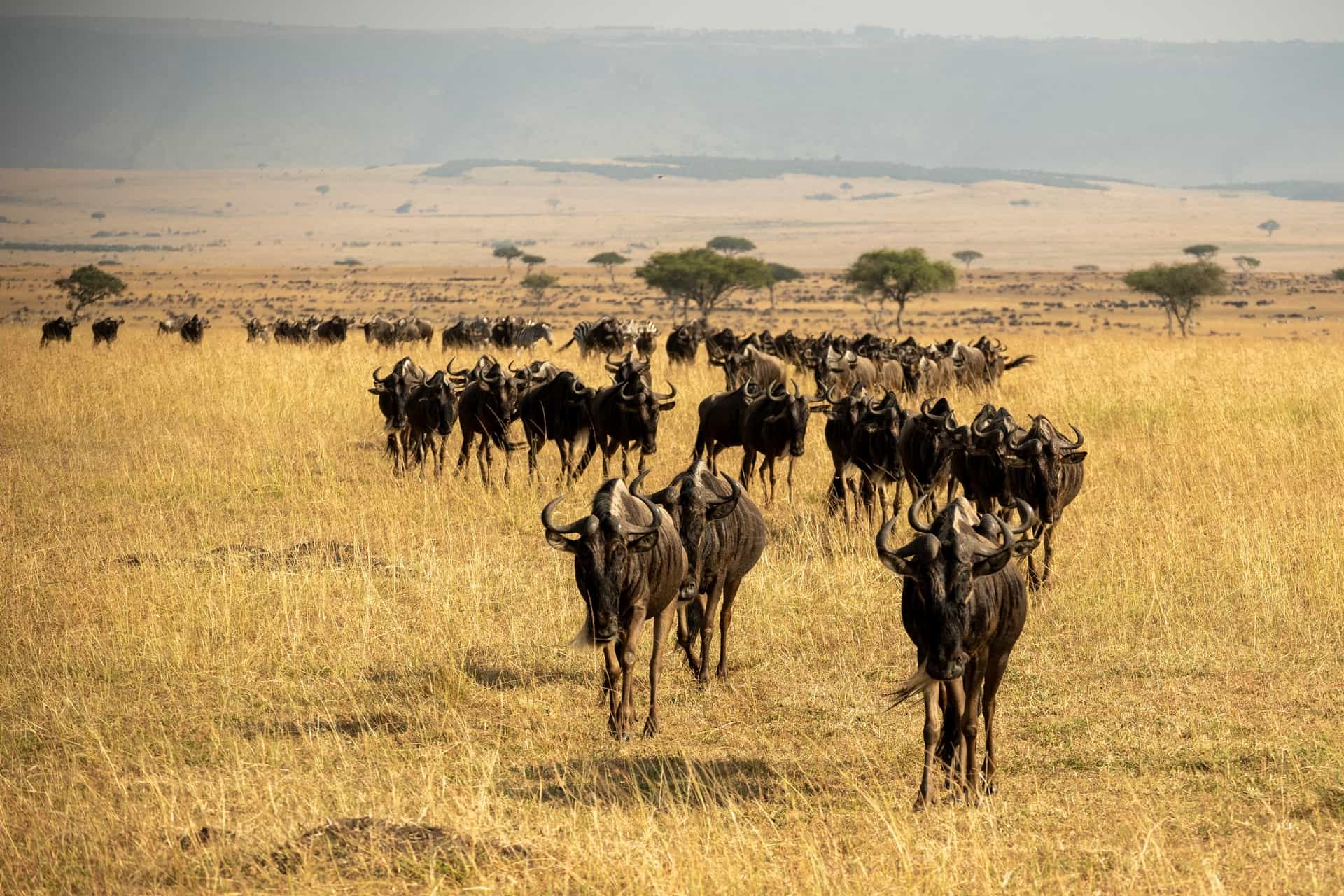
No, seeing the Great Migration is not guaranteed on a Serengeti safari, even if visiting during typical migration months, as it is a natural phenomenon subject to unpredictable weather and animal movement. While herds are present in the Serengeti year-round, specific spectacles like river crossings are not guaranteed
8-days-great-mara-river-crossing-hadzabe-tribe-and-optional-hot-air-balloon-tanzania-safari
7-days-best-great-wildebeest-migration-safari-in-tanzania
6-days-ndutu-migration-and-tanzania-safari-itinerary
5-days-ultimate-ndutu-migration-calving-season-safari-to-tanzania
4-days-central-serengeti-safari-tour-and-mara-river-crossing-in-northern-serengeti
3-days-southern-serengeti-safari-tour-and-ngorongoro-crater-calving-season-package
Key Considerations for Viewing the Migration
1. Not a Fixed Location: The Migration Cycle
The Great Wildebeest Migration is often misunderstood as a single "event," but it is actually a relentless, circular 365-day odyssey. Spanning nearly 1,800 miles across the Serengeti-Mara ecosystem, the herds are in a state of perpetual motion, driven by an ancient biological clock and the pursuit of mineral-rich grazing lands. The journey has no true beginning or end, but the calving season in the southern Serengeti (specifically the Ndutu area) during February and March serves as a vital anchor. During this short window, roughly 500,000 calves are born—often up to 8,000 a day—creating a "nursery" of staggering proportions on the short-grass plains.
This southern stage is essential because the volcanic ash in the soil provides the high levels of calcium and magnesium required by lactating mothers. For travelers, this means the migration is accessible in different ways depending on the month. From April to June, the herds transition through the Western Corridor, while the late months (November and December) see them trekking back south from Kenya to start the cycle anew. Because the herds are spread out across vast distances, "seeing the migration" can mean witnessing a massive, stationary concentration of animals in the south or a thin, 40-kilometer-long column of wildebeest marching through the central woodlands. Understanding this rhythm is the first step in planning: you don't go to "where the migration is"; you go to where the herds are expected to be based on the current stage of their life cycle.
2. River Crossings: The Dramatic Peak
The Mara River crossings are the most coveted sight in all of African safari travel. Occurring primarily between July and September, this phase represents the "life or death" climax of the journey. As the herds push north into the Maasai Mara, they are funneled toward the steep, treacherous banks of the Mara River. What makes this sight so iconic is the sheer chaos: thousands of wildebeest hesitate on the ridges, their nerves jangling, until a single animal takes the "leap of faith." This triggers a frenzied deluge of bodies plunging into the brown, swirling waters, where massive Nile crocodiles and strong currents lie in wait.
However, for the honeymooner or photographer, patience is the primary requirement. River crossings are not scheduled performances. A herd may gather at a crossing point for days, staring at the water and then retreating, only to suddenly stampede across in a matter of minutes when the pressure of the crowd behind them becomes too great. Because of this unpredictability, specialized "migration camps" are often mobile, moving with the herds to ensure guests are positioned near the most active crossing points. While August is the statistical peak for these sightings, a crossing is never guaranteed. Witnessing one requires a mix of expert guiding, early morning "stakeouts," and a healthy dose of luck. When it does happen, the dust, the noise, and the raw power of nature create a sensory overload that is widely considered the greatest wildlife show on Earth.
3. Seasonal Movement: Serengeti to Maasai Mara
The migration is a trans-boundary phenomenon, existing in a delicate balance between Tanzania’s Serengeti and Kenya’s Maasai Mara. While the animals spend about 80–90% of their year in the vast plains of Tanzania, the August and September period is when they typically spill over the border into Kenya. This movement is a strategic survival tactic; as the Serengeti dries out, the Maasai Mara remains greener for longer due to different rainfall patterns and the permanent water of the Mara and Talek rivers.
For visitors, this seasonal shift dictates which country provides the better viewing experience. In July and August, the northern Serengeti (Kogatende region) and the southern Maasai Mara become the epicenter of activity. The transition isn't a clean, one-way move; herds often crisscross the border multiple times, grazing on whichever side has seen recent localized showers. By October, the herds usually begin to sense the "short rains" returning to the south and start their rapid dispersal back through the eastern Serengeti. This "return migration" is often less concentrated and more of a steady, southward drift. Choosing between Kenya and Tanzania often depends on the specific month: Tanzania offers the scale of the calving and the initial river hurdles, while Kenya offers the lush, high-density grazing scenes and iconic Mara-side views that have defined safari lore for decades.
4. Flexibility is Key: The Rain and the Food
The single most important factor to understand about the Great Migration is that the wildebeest do not follow a calendar; they follow the rain. Their survival depends on finding fresh, green grass, which in turn depends on unpredictable weather patterns. If the rains arrive early in the south, the herds will move south earlier than usual. If a drought persists in the north, they may stay in the central Serengeti longer. This inherent unpredictability means that "fixed" itineraries must be approached with a degree of flexibility.
To maximize your chances of a front-row seat, it is often wise to book mobile camps that are designed to move two or three times a year to stay within range of the herds. Additionally, working with a guide who has access to "migration trackers" and radio networks is invaluable. Travelers should also be prepared for the reality that the migration is a massive, multi-faceted event; even if you miss a specific "crossing," you are still likely to be surrounded by hundreds of thousands of animals across the plains. The environmental cues—the smell of rain on the horizon, the shifting winds, and the quality of the grass—are the true directors of this play. Embracing this uncertainty is part of the adventure. It reminds us that we are guests in a wild, untamed system that answers only to the clouds and the soil, making a successful sighting feel all the more like a rare and privileged gift
How to Maximize Your Chances
The Great Migration is not a single event but a year-round circular journey. To see the most dramatic moments, you must be in the right place at the right time. From January to March, the herds congregate on the short-grass plains of the Southern Serengeti and Ndutu. This is Calving Season, a three-week window where roughly 8,000 to 10,000 calves are born every single day. The "baby boom" creates a predator-prey magnet, as lions, cheetahs, and hyenas take advantage of the vulnerable newborns. It is a period of high-intensity action and golden photographic light.
Conversely, if you seek the legendary River Crossings, you must target the North and Western Corridors between June and October. In June and July, the herds face the Grumeti River, but the "main event" occurs from July to October at the Mara River. Here, thousands of wildebeest gather on the banks, sometimes for days, before a single animal takes the plunge. The resulting chaos—as they battle steep banks, powerful currents, and massive Nile crocodiles—is the quintessential migration "money shot." By aligning your 2026 safari with these specific windows, you move from "hoping" to see the herds to virtually guaranteeing a front-row seat to the drama.
Hire Experienced Guides: The Human Edge
While the herds are massive, the Serengeti is equally vast, spanning nearly 15,000 square kilometers. An experienced guide is the difference between driving for hours in empty savannah and being perfectly positioned as a crossing begins. Expert guides do not just look for animals; they understand animal behavior and topography. They can read subtle cues—a cloud of dust on the horizon, the nervous pacing of a lead wildebeest, or the specific "honking" sound of the herd—to predict when and where a crossing might occur.
Furthermore, professional guides are part of an intricate radio network. They share real-time reports with other drivers, allowing your vehicle to pivot quickly if a "mega-herd" is spotted moving toward a specific crossing point like Kogatende. In areas like Ndutu, experienced guides are also skilled in off-road navigation (where permitted), ensuring you can follow a hunt without getting stuck or disturbing the natural flow of the animals. Their knowledge of the landscape's "secret spots"—smaller, less-crowded river loops or hidden kopjes—allows for a more intimate viewing experience away from the "safari traffic" often found during peak migration months.
Stay Longer: Increasing the Probability of Success
The most common mistake travelers make is scheduling a "drive-through" safari of only 2 or 3 days. The Great Migration is dictated by rain and instinct, not a timetable. A wildebeest herd may stand at the river’s edge for three days, staring at the water, only to turn around and walk away because the "vibe" isn't right. By extending your stay to 7–10 days, you build in a critical "patience buffer." Staying 3 to 4 nights in a single hotspot, such as the Mara River area, significantly increases your odds of witnessing a crossing.
A longer stay also allows for flexibility. If the herds haven't reached the North yet due to late rains, a longer itinerary gives your guide the freedom to adjust and drive further south to intercept them. Moreover, the migration is physically and mentally exhausting to track; longer safaris allow for "slow days" where you can enjoy the resident "Big Five" wildlife without the pressure of chasing the herd. In the world of wildlife photography and observation, time is the most valuable currency. The more sunrises you spend on the plains, the higher the likelihood that you will catch that one lightning-fast moment—a leopard's pounce or a river plunge—that makes the entire journey unforgettable.
1. Is it guaranteed to see the Great Migration?
No, seeing the Great Migration is never 100% guaranteed because it is a natural, wildlife-driven phenomenon. Unlike a scheduled event, the migration is dictated by the instincts of over two million animals responding to environmental cues. While the herds follow a general ancient route, their exact location on any given day depends on rainfall and grass quality. If the rains are late in one area, the herds will linger elsewhere. However, "not guaranteed" does not mean "unlikely." If you stay in the correct region for that specific month, your probability of seeing massive herds is incredibly high—often above 90%. The scale is so vast that even if the "head" of the column has moved on, the "tail" can stretch back for dozens of miles. To maximize your chances, flexibility is key. Choosing a mobile camp that follows the grass ensures you are always in the heart of the action. While you cannot control nature, you can stack the deck in your favor by planning logistics around historical movement patterns.
2. Is there a "best" time to see the migration?
The migration is a year-round circular event, meaning there is no single "best" time, but rather "best locations" for specific months. To see the Calving Season, you must visit between January and March in the Southern Serengeti. This is a time of abundance, where half a million calves are born. If you are looking for the high-drama River Crossings, you should target July to October in the Northern Serengeti. During this window, the herds are forced to cross the Mara River, facing crocodiles and steep banks. Between these peaks, the herds are in transit: moving through the Western Corridor in May and June or returning south through the eastern limits in November and December. Your "best time" depends on whether you prefer the vulnerability and predator action of the birthing season or the chaotic, life-or-death energy of the river crossings.
3. Can I miss the migration even if I go at the "right" time?
Yes, it is possible to miss the main herds even during peak months. The primary reason for this is the unpredictability of weather. Unexpected "short rains" in an area where the animals weren't expected can cause the entire herd to shift course overnight in search of fresh green shoots. Conversely, a prolonged drought might cause the animals to move much faster than usual toward permanent water sources, leaving a region empty weeks before historical averages suggest they should. Additionally, the Serengeti is massive—nearly 15,000 square kilometers. If you book a permanent lodge in the central region but the herds have already pushed north due to early rains, you may only see "resident" wildlife rather than the migratory masses. This is why many seasoned travelers split their time between different regions or choose accommodations that specialize in tracking the migration's current location.
4. Are river crossings guaranteed?
Absolutely not. River crossings are arguably the most elusive events in the natural world. A herd of ten thousand wildebeest might congregate on a riverbank, staring at the water for hours, only to be spooked by a single alarm call from a zebra or the sight of a crocodile's snout. They may wait for days, pacing back and forth, and then suddenly decide to cross at a different point five miles away while you are having lunch. Witnessing a crossing requires extreme patience; you might spend an entire day sitting in a vehicle in the hot sun with nothing happening, only for the "push" to begin just as you are losing hope. While guides do their best to predict where a crossing might occur based on animal behavior, the final decision belongs entirely to the lead wildebeest.
5. How long should I stay to increase my chances?
To move from "hopeful" to "highly likely," staying at least 3 to 4 nights in the specific area where the herds are currently located is recommended. A single-day safari or a quick "fly-in" visit often relies too much on luck. By staying multiple nights, you allow for the natural ebb and flow of animal movement. On your first day, you might find the herds are ten miles away; on your second, they might be moving toward a riverbank; and by the third, you may witness the actual crossing or calving event. This timeframe also allows your guide to learn the patterns of the local herds and communicate with other scouts. The more time you spend in the bush, the more you harmonize with the rhythm of the migration, increasing the odds that you will be in the right place at the right time.
6. Do I need a specific type of guide?
A specialized migration guide is highly recommended and often makes the difference between a good safari and a life-changing one. Experienced guides do not just drive; they are master trackers who understand the subtle signs of animal behavior—like the specific "grunting" of a wildebeest herd that indicates they are about to move, or the way vultures circling in the distance signal a lion kill. Furthermore, these guides utilize a sophisticated radio network, sharing real-time information with other drivers across the park. This collaboration is vital for locating the "head" of the migration or finding a river crossing in progress. A guide who specializes in the Serengeti will also know the "off-the-beaten-path" tracks that get you away from the crowds while still keeping you close to the wildlife action.
7. Is the Serengeti worth visiting if I miss the migration?
Yes, the Serengeti is a world-class destination regardless of the migration's location. It boasts one of the highest predator densities in Africa, including "The Big Five." Even if the two million migratory animals are in a different sector, the Serengeti has a massive "resident" population of lions, leopards, cheetahs, and elephants that do not migrate. These animals are territorial and stay in the same general areas year-round. In fact, visiting outside the peak migration window can be a more serene experience, with fewer vehicles at sightings and lower accommodation prices. The vast, golden plains, iconic acacia trees, and dramatic rock kopjes provide a stunning backdrop for photography and wildlife viewing 365 days a year. You are almost certain to see incredible wildlife action no matter when you go.
8. Where do I go in February?
In February, your focus should be entirely on the Southern Serengeti and the Ndutu plains (which overlap into the Ngorongoro Conservation Area). This is the heart of the calving season. The volcanic soil here is rich in phosphorus and other minerals that are essential for nursing mothers and growing calves. During this month, the plains are literally carpeted with wildebeest as far as the eye can see. Because the grass is short, visibility is excellent, making it one of the best times for photography. It is a period of intense activity; you will see thousands of calves being born daily, but you will also see heavy predator presence as lions and cheetahs take advantage of the vulnerable newborns. It is a raw, powerful display of the circle of life.
9. Where do I go in August?
In August, the action shifts to the Northern Serengeti, specifically the Kogatende and Lamai regions near the Mara River. This is the peak of the river crossing season. While some herds may have already crossed into Kenya, a significant portion often remains on the Tanzanian side, crossing back and forth in search of rain-fed grass. The terrain here is more rugged and hilly than the south, offering beautiful vistas. Most visitors focus on the riverbanks, hoping to see the chaotic "plunge" where thousands of animals leap into the water. Because this is the most sought-after experience, the northern sector is at its busiest in August. Booking a lodge or camp directly on the river can save you hours of driving time each day, keeping you at the front of the line for any emerging action.
10. What role does rain play?
Rain is the ultimate conductor of the Great Migration. The wildebeest are not following a calendar; they are following the scent of rain and the promise of new grass. Their sensitive noses can detect rainfall from many miles away, and a sudden downpour can cause a massive herd to change direction instantly. If the "long rains" (typically April-May) start late, the herds will stay in the south longer. If they end early, the migration will push north sooner. This reliance on rain is what makes the timing so unpredictable for travelers. It also dictates the "quality" of the migration; in a very wet year, the herds might be more dispersed across the plains, whereas in a dry year, they will be tightly packed around the few remaining water sources and permanent rivers.
11. Is it crowded during the migration?
Yes, peak migration periods—especially the river crossings from July to September—can be very crowded. Because the Mara River has a limited number of "crossing points" where the banks are low enough for animals to enter, dozens of safari vehicles often congregate in the same spot. To manage this, there are strict park rules about not blocking the animals' path, but the sheer volume of tourists can still feel overwhelming for those seeking a "wilderness" experience. If you want to avoid the heaviest crowds, consider visiting during the calving season in the south (February), which is less congested than the north, or look into staying in private concessions on the edge of the park where vehicle numbers are strictly limited.
12. How far in advance should I book?
For the peak crossing season (July–September) and the calving season (February), you should ideally book 8 to 12 months in advance. The best lodges and mobile camps—especially those located directly on the Mara River or in the heart of the Ndutu plains—are small, often with only 10 to 15 tents. These prime spots sell out quickly to luxury tour operators and repeat visitors. Booking early not only ensures you get the best location but also allows you to secure the most experienced guides before they are fully booked. If you are planning a last-minute trip, you can still find availability, but you may have to stay further away from the main herds, resulting in much longer drive times each morning and evening.
13. Are mobile camps better?
In many ways, yes. "Mobile" camps are semi-permanent luxury tented camps that move two or three times a year to follow the migration's seasonal path. For example, a camp might be in the South from December to March and then move to the North from July to October. By choosing a mobile camp, you ensure that you are staying as close as possible to the animals' current location. This minimizes the time you spend commuting and maximizes the time you spend watching wildlife. While they are "tented," these camps are often incredibly luxurious, featuring en-suite bathrooms, gourmet food, and high-end service. They provide an immersive "out of Africa" feel where you can hear the grunting of the wildebeest outside your tent at night.
14. What other animals will I see?
While the wildebeest and zebra are the stars, you will see an incredible variety of other wildlife. The Serengeti is famous for the "Big Five": lions (often in large prides), leopards (frequently seen in acacia trees), elephants, buffalo, and the rarer black rhino. You will also see cheetahs scanning the plains for prey, spotted hyenas, and various antelope species like eland, topi, and impala. The birdlife is equally spectacular, with over 500 species ranging from massive ostriches to tiny, colorful sunbirds. The river areas are home to huge pods of hippos and enormous Nile crocodiles. Essentially, the migration acts as a massive "moving buffet" that supports an entire ecosystem of predators and scavengers, ensuring that every game drive is packed with diversity.
15. Can I see the migration from a hot air balloon?
Yes, a hot air balloon safari is one of the most iconic ways to experience the scale of the migration. Floating silently over the plains at dawn allows you to see the true "columns" of animals stretching toward the horizon—a perspective you simply cannot get from a vehicle. It is particularly effective during the calving season or when the herds are moving through the central Serengeti. Most balloon safaris end with a "champagne breakfast" in the bush, making it a popular choice for honeymooners or special occasions. However, balloons are entirely weather-dependent; if the winds are too high or there is a storm, the flight will be canceled for safety. It is also an additional cost (usually around $500–$600 USD per person) and should be booked in advance.
Booking Serengeti safari tour with us Roads of Adventure safaris
To book a Serengeti safari tour with Roads of Adventure Safaris, you can choose from various tailored packages that include wildlife viewing, the Great Migration, and optional cultural visits. They are a reputable operator with a 4.8-star rating on TripAdvisor
