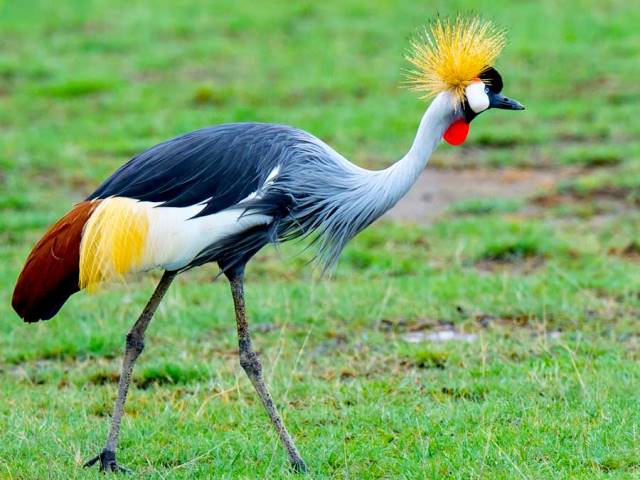
Is bird watching popular among things to do in Queen Elizabeth National Park? Bird watching is not merely an optional side activity in Queen Elizabeth National Park—it is widely celebrated as one of its defining attractions. Recognized globally as a premier birding sanctuary, this iconic Ugandan national park boasts an extraordinary record of over 600 bird species, representing one of the highest avian counts on the African continent. The park's incredible ecological diversity—spanning open savannah plains, papyrus swamps, crater lakes, and dense tropical rainforests—creates a thriving habitat for resident birds, Palearctic migrants, and abundant water-associated wildlife. Whether you are gliding along the Kazinga Channel on a boat safari or tracking forest species in Maramagambo, Queen Elizabeth National Park delivers an unforgettable, world-class birding experience for casual travelers and expert ornithologists
Top Birding Locations
- Kazinga Channel: Ideal for water birds like the African fish eagle and pelicans.
- Maramagambo Forest: Great for forest dwellers like the African finfoot.
- Kasenyi Plains: Known for savannah species and raptors.
- Lake Munyanyange: Famous for lesser flamingos.
Key Species to Spot
- Shoebill stork
- African fish eagle
- Lesser and greater flamingos
- Rwenzori turaco
- Martial eagle
Is bird watching genuinely popular among the overall activities available in Queen Elizabeth National Park?
Bird watching is not merely an optional side activity in Queen Elizabeth National Park; it is universally recognized as one of its defining attractions. While classic savannah game drives and boat cruises draw general safari enthusiasts seeking lions or hippos, birding commands equal priority due to the park’s immense ecological diversity. Queen Elizabeth National Park features a remarkable range of habitats, including open savannahs, moist tropical rainforests, papyrus swamps, crater lakes, and freshwater channels.
This habitat mosaic supports an extraordinary species count exceeding 600 recorded bird species, making the park one of the richest avian sanctuaries in all of Africa. Birding enthusiasts, ornithologists, and casual nature lovers travel globally to explore key hotspots like the Kazinga Channel, Maramagambo Forest, and the Ishasha Sector. The sheer density of avian life means that even travelers focused primarily on big mammals end up captivated by the vivid kingfishers, massive storks, and regal eagles that populate every turn of the trail.
How many total bird species can birdwatchers realistically expect to spot in Queen Elizabeth National Park?
Queen Elizabeth National Park boasts a documented species tally of over 600 distinct bird species, placing it among the top birding destinations on the African continent. This species count exceeds the avian diversity found in many entire countries. The park's geographical positioning along the Albertine Rift Valley creates a unique ecological transition zone where West African jungle species overlap with East African savannah and wetland birds.
During an active three-day birding safari guided by an experienced local ranger, a dedicated birder can realistically record anywhere between 150 and 250 species across different sectors. Key sightings regularly include iconic species such as the endangered Shoebill, African Finfoot, Great Blue Turaco, Black-bee-eater, and Martial Eagle. The high species density ensures that whether you are cruising along water margins or hiking through dense jungle understory, your birding checklist fills up rapidly.
What makes the Kazinga Channel the premier birdwatching spot within the park?
The Kazinga Channel—a natural 32-kilometer waterway connecting Lake Edward and Lake George—is widely considered the absolute jewel of Queen Elizabeth National Park’s birdwatching circuit. The channel’s mudflats, papyrus fringes, and gentle shorelines attract millions of resident and migratory waterbirds, providing an endless supply of fish and resting habitat.
Taking a scheduled or private boat safari along the channel allows birdwatchers to glide quietly within meters of mixed avian colonies without causing disturbance. From the comfort of the boat deck, visitors can observe, photograph, and identify dozens of species simultaneously. Common sightings along the banks include massive flocks of Great White Pelicans, African Skimmers skimming the water surface, Pied and Malachite Kingfishers diving for small fish, Pink-backed Pelicans, Saddle-billed Storks, African Fish Eagles perched in riverside trees, and yellow-billed Storks wading through shallow waters.
Can birdwatchers spot the legendary Shoebill stork in Queen Elizabeth National Park?
Yes, the rare and prehistoric-looking Shoebill (Balaeniceps rex) can be spotted within Queen Elizabeth National Park, though sightings require patience and targeted excursions into its preferred wetland habitats. The park’s primary Shoebill hotspot is the marshy, papyrus-lined shorelines surrounding Lake George and the adjacent Kasenyi plains swamp channels, particularly within the Ramsar-designated wetland sites on the park’s eastern edge.
Because Shoebills are solitary, slow-moving stalkers that hunt lungfish in dense swamp vegetation, spotting one often involves taking specialized small-boat or canoe trips through shallow channels early in the morning. While sightings are not as guaranteed as in Uganda's Mabamba Swamp, recording a Shoebill in Queen Elizabeth National Park is considered a holy grail highlight for international birders due to the bird’s impressive size, shoe-shaped bill, and ancient evolutionary lineage.
Why is Maramagambo Forest a crucial destination for forest bird specialists visiting the park?
While the open savannahs of Queen Elizabeth National Park dominate the landscape, Maramagambo Forest offers a dense, tropical moist evergreen forest environment home to specialized woodland and forest canopy bird species. Located in the southern sector of the park, Maramagambo provides shaded forest trails where birders can escape the hot savannah sun and track elusive species that never venture into open grasslands.
Expert local guides lead walking safaris along forest paths leading toward the famous Bat Cave and blue crater lakes. Key forest species recorded here include the vibrant Great Blue Turaco, Ross's Turaco, Black-and-white-casqued Hornbill, African Emerald Cuckoo, Red-chested Cuckoo, Forest Robin, Yellow-bellied Wattle-eye, and various illadopsises and greenbuls. The multi-layered canopy provides continuous bird activity from the forest floor up to the high treetops.
What role do the crater lakes play in attracting specialized waterbird species?
Queen Elizabeth National Park is home to dozens of dramatic volcanic explosion craters, including the Katwe Crater field and the scenic Ndali-Kasenda area. These crater lakes—some of which are highly saline or alkaline while others contain fresh water—create micro-ecosystems that support specialized avian life.
Alkaline lakes, such as Lake Katwe and Lake Munyanyange located just outside the main park boundaries, serve as crucial seasonal feeding grounds for migratory lesser flamingos and migratory waders. During peak migratory months, Lake Munyanyange turns pink as thousands of flamingos gather to feed on algae in the shallow, mineral-rich waters. Nearby freshwater crater lakes attract white-backed ducks, African darter, African jacanas, and various species of grebes, adding essential wetland species to a visitor's overall trip checklist.
How do changing seasonal weather patterns affect birdwatching conditions throughout the year?
Birdwatching in Queen Elizabeth National Park is exceptional year-round, but changing seasons alter bird behavior, species composition, and viewing conditions. The dry seasons—running from December to February and June to August—offer easy trekking along forest trails in Maramagambo and clear photography conditions along the Kazinga Channel, as birds gather predictably around remaining water sources.
Conversely, the wet seasons—spanning March to May and October to November—represent the absolute peak period for migratory bird watching. During these months, intra-African and Palearctic migratory birds arrive in vast numbers from Europe and Northern Africa to feed and breed. Additionally, resident birds display colorful breeding plumage and vocalize frequently to establish territories, making identification much easier despite occasional rain showers.
Are specialized birding guides available for hire in Queen Elizabeth National Park?
Yes, hiring a specialized local birding guide is standard practice and highly recommended for anyone looking to maximize their species tally in Queen Elizabeth National Park. The Uganda Wildlife Authority (UWA) maintains a pool of station rangers at key locations like Katunguru, Mweya, and Kabatoro who are trained in avian identification, call imitation, and habitat tracking.
Additionally, professional birding guides certified by the Uganda Bird Guides Club (UBGC) or local tour operators possess extraordinary field skills. These expert guides can instantly identify cryptic species by call alone, locate roosting nocturnal species like the Verreaux’s Eagle-Owl or Swamp Nightjar, and navigate subtle habitat transitions across Kasenyi, Ishasha, and Maramagambo to ensure guests spot target species efficiently.
What raptor species can birdwatchers observe soaring over the park’s open savannahs?
The open savannah plains of the Kasenyi sector and the Ishasha sector provide ideal hunting grounds for an impressive diversity of birds of prey and vultures. Thermal air currents rising off the sun-warmed plains allow heavy raptors to soar effortlessly while scanning the ground for prey or lion-kill carcasses.
Birdwatchers frequently record powerful predators such as the Martial Eagle—Africa’s largest eagle—alongside the Crowned Eagle, African Fish Eagle, Tawny Eagle, Long-crested Eagle, and Bateleur. The park is also home to specialized scavengers like the Lappet-faced Vulture, White-backed Vulture, Rüppell's Griffon Vulture, and Hooded Vulture. Small raptors like the Lizard Buzzard, African Harrier-Hawk, and Black-shouldered Kite are regularly spotted perched on dead acacia branches monitoring the tall grass.
How does birdwatching in the Ishasha Sector differ from the northern Mweya peninsula?
The southern Ishasha Sector of Queen Elizabeth National Park is famous for its tree-climbing lions, but its birding profile offers a distinct experience compared to the northern Mweya Peninsula. Ishasha features riverine forests along the Ishasha River, broad savannah woodlands, and marshy lowlands bordering the Democratic Republic of Congo.
This southern habitat produces sightings of specialized riverine and acacia woodland birds, such as the Black-bee-eater, Broad-billed Roller, African Cuckoo, Double-toothed Barbet, and Yellow-throated Longclaw. In contrast, the northern Mweya sector centers heavily on aquatic birdlife along the Kazinga Channel and Lake Edward shores, featuring pelicans, skimmers, and storks. Visiting both sectors gives birdwatchers a balanced exposure to both aquatic waders and southern woodland specialists.
What nocturnal bird species can be spotted during night game drives or evening walks?
Nightfall in Queen Elizabeth National Park reveals an entirely different lineup of avian species that remain hidden during daylight hours. While night game drives inside core savannah tracks are regulated by UWA, guided evening drives or night walks on private conservancy lands bordering the park offer excellent chances to spot nocturnal birds.
Key targets include various owl species, such as the massive Verreaux’s Eagle-Owl, African Wood Owl, Pearl-spotted Owlet, and Barn Owl. Nightjars are also abundant along dirt roads, where they rest on warm gravel paths and hawk insects under moonlight; species commonly recorded include the Swamp Nightjar, Pennant-winged Nightjar (famous for the male's elongated wing feathers during breeding season), Square-tailed Nightjar, and Freckled Nightjar.
Why is the Kasenyi Plain considered a top location for grassland bird specialists?
The Kasenyi Plains, situated in the northeastern sector of the park, consist of short-grass savannahs punctuated by euphorbia trees and salt pans. While globally famous for kob breeding grounds and lion tracking, Kasenyi is equally a haven for grassland bird species that thrive in open country.
Birdwatchers traversing Kasenyi tracks frequently spot ground-dwelling birds like the Black-headed Lapwing, Senegal Lapwing, African Wattled Lapwing, Temminck's Courser, and Bronze-winged Courser. The open grasslands also harbor high densities of rufous-naped larks, Flappet Larks, Yellow-throated Longclaws, Crimson-rumped Waxbills, and various cisticolas. Watching these small grassland specialists display against the backdrop of grazing game herds provides an authentic, classic East African birding experience.
How does the presence of Palearctic migratory birds enhance birding between November and April?
Every year between November and April, millions of Palearctic migratory birds travel along the Great Rift Valley flyway from breeding grounds in Europe and Northern Asia to winter in the tropical habitats of East Africa. Queen Elizabeth National Park serves as an essential refueling stop and wintering sanctuary due to its abundant food resources and protected wetland ecosystems.
During these months, the park’s resident bird population swells with visiting species. Birdwatchers can spot Eurasian Swallows, Yellow Wagtails, Common Sandpipers, Wood Sandpipers, Little Stints, Gull-billed Terns, Northern Wheatears, and European Bee-eaters mixed in alongside native African species. This seasonal influx adds an exciting dynamic for international birders tracking intercontinental migration patterns.
What equipment is essential for a successful birdwatching excursion in Queen Elizabeth National Park?
To fully enjoy and record the birdlife in Queen Elizabeth National Park, bringing the right gear is essential. First and foremost, a high-quality pair of 8x42 or 10x42 binoculars is non-negotiable for scanning distant canopy leaves, waterbanks, or soaring raptors. Photographers should carry a camera equipped with a telephoto lens (at least 300mm to 600mm) to capture crisp images of fast-moving forest birds or skittish waders.
A comprehensive field guide, such as Birds of East Africa by Stevenson and Fanshawe, allows for immediate identification and field note checks. Additional essentials include a lightweight, breathable rain jacket, sturdy closed-toe hiking shoes for Maramagambo forest trails, a wide-brimmed sun hat, insect repellent, and a refillable water bottle for long field outings.
Can casual safari tourists easily combine birdwatching with traditional big game drives?
One of the great advantages of Queen Elizabeth National Park is how effortlessly birdwatching integrates into traditional big game safaris. Travelers do not need to book an exclusive, hardcore birding tour to enjoy the park's avian life. During standard morning game drives searching for lions, leopards, or elephants, park guides continuously point out colorful bird species perched along tracksides.
Similarly, the mandatory 2-hour Kazinga Channel boat cruise—a core highlight for seeing hippos and bathing elephants—doubles as one of the finest waterbird safaris on the continent. Casual tourists regularly find that tracking mammals naturally exposes them to kingfishers, eagles, and storks, sparking a new appreciation for birdwatching without diverting from their broader wildlife itinerary.
What kingfisher species can be photographed along the park’s waterways?
Queen Elizabeth National Park is a paradise for kingfisher enthusiasts, supporting multiple colorful species that thrive along the fish-rich waters of the Kazinga Channel, Lake George, and forest streams. The most commonly sighted species is the Pied Kingfisher, famous for its black-and-white plumage and dramatic hunting style of hovering high above the water before plummeting headfirst to catch small fish.
Equally striking is the tiny, jewel-like Malachite Kingfisher, often seen perched on low reeds just inches above the water surface. Other kingfisher species recorded in the park include the Giant Kingfisher (Africa's largest), the Woodland Kingfisher with its electric-blue wings, the Striped Kingfisher in savannah woodlands, and the elusive Shining-blue Kingfisher along shaded forest streams in Maramagambo.
How do local community conservation efforts support bird habitat preservation around the park?
Local communities bordering Queen Elizabeth National Park play a vital role in protecting bird habitats through community-based eco-tourism initiatives and wetland management groups. Because wetlands like Lake George and Lake Munyanyange extend beyond formal park boundaries, community cooperation is critical to preventing habitat destruction caused by overgrazing, agricultural runoff, or illegal wood harvesting.
Organisations such as the Katwe Tourism Information Centre (KATIC) run guided community walks where local guides lead visitors around salt pans and crater lakes, generating direct tourism income for local families. Community-managed conservancies and eco-lodges also plant native trees, restore papyrus buffers, and educate school groups about bird conservation, ensuring that local residents benefit directly from preserving avian biodiversity.
What makes the Great Blue Turaco one of the most sought-after forest birds in the park?
The Great Blue Turaco (Corythaeola cristata) is widely considered one of the most spectacular forest bird sightings in East Africa, and Queen Elizabeth National Park’s Maramagambo Forest is an ideal place to spot them. Measuring up to 75 centimeters in length, this magnificent bird features vibrant turquoise-blue plumage, a broad yellow and red bill, a raised black crest, and a long tail bordered with yellow and black bands.
Despite their large size, Great Blue Turacos can be surprisingly stealthy as they leap through the high forest canopy in small family groups. Birdwatchers usually locate them by listening for their deep, resonant guttural calls that echo through the forest during early morning hours, leading to incredible views as they glide between fruiting trees.
Are there specific eco-lodges in Queen Elizabeth National Park that cater to birdwatchers?
Yes, numerous eco-lodges situated in and around Queen Elizabeth National Park are designed specifically with birdwatchers in mind. Lodges such as Mweya Safari Lodge, Katara Lodge, Kasenyi Safari Camp, Bush Lodge, and Ishasha Wilderness Camp feature extensive natural grounds, native gardens, and riverine borders that attract dozens of bird species right onto guest verandas.
Many of these lodges employ resident naturalists who conduct early morning bird walks around lodge perimeters before formal game drives begin. Features like elevated viewing decks overlooking the Kazinga Channel or Kasenyi plains allow guests to comfortably spot sunbirds, weavers, barbets, and soaring raptors with their morning coffee, making the safari accommodation experience an extension of field birding.
What sunbird species add vivid color to the park’s flowering trees and gardens?
Sunbirds are Africa's ecological equivalent of hummingbirds—small, highly active birds with slender, decurved bills designed for feeding on flower nectar. Queen Elizabeth National Park hosts a diverse array of sunbird species whose iridescent, metallic plumage glimmers in the sunlight as they flit between flowering acacia trees, aloe plants, and lodge gardens.
Frequently recorded species include the Red-chested Sunbird, Marico Sunbird, Bronze Sunbird, Green-headed Sunbird, and Scarlet-chested Sunbird. The male Scarlet-chested Sunbird is particularly striking with its velvety jet-black body and brilliant crimson breast patch. Observing these energetic birds hover and feed around flowering bushes provides endless entertainment for photographers and birders resting between safari game drives.
How does the Kyambura Gorge offer a unique "underground" birdwatching experience?
Kyambura Gorge—often called the "Valley of Apes"—is a dramatic 100-meter-deep tectonic chasm located on the eastern boundary of Queen Elizabeth National Park. Carved by the Kyambura River, this sunken valley holds a dense tropical rainforest surrounded by dry savannah grasslands above, creating a unique microclimate and ecosystem.
Trekking down into the gorge for chimpanzee tracking doubles as a extraordinary birdwatching experience. The high forest canopy and flowing river within the canyon walls support bird species that are absent from the surrounding open plains. Birdwatchers descending into the gorge can spot the Black-bee-eater, Red-throated Wryneck, Blue-headed Bee-eater, African Finfoot swimming along river edges, and various forest flycatchers and weaver birds calling from the lush gorge walls.
What bee-eater species can birdwatchers photograph in the park?
Bee-eaters are among the most colorful and photogenic bird families found in Queen Elizabeth National Park, recognized by their slender bodies, long curved bills, elongated central tail feathers, and acrobatic aerial hunting displays. As their name suggests, they catch bees, wasps, and dragonflies mid-air before returning to exposed perches to beat off stingers before swallowing.
Key species found in the park include the Little Bee-eater—often seen perching low on tall grasses in Kasenyi—the Cinnamon-chested Bee-eater, White-throated Bee-eater, and the stunning Blue-headed Bee-eater in forested zones. During seasonal migration periods, flocks of European Bee-eaters and Madagascar Bee-eaters fill the skies, perching together in bright, colorful rows on overhead wires and dry branches.
Why are the park’s papyrus swamps so ecologically important for endemic bird species?
The extensive papyrus swamps fringing Lake George, Lake Edward, and the Kazinga Channel are among the most critical wetland habitats in East Africa, recognized globally under the Ramsar Convention on Wetlands. Papyrus dense thickets create specialized micro-habitats that support highly secretive swamp-endemic bird species that cannot survive in any other environment.
Beyond the famous Shoebill, these papyrus marshes harbor rare species like the Papyrus Gonolek—a striking bird with a yellow crown, jet-black back, and crimson underparts—alongside the Papyrus Yellow Warbler, White-winged Swamp Warbler, Greater Swamp Warbler, and Northern Brown-throated Weaver. Protecting these fragile papyrus ecosystems is essential for ensuring the long-term survival of East Africa’s wetland avian specialists.
What are the best times of day to schedule birdwatching walks and game drives in the park?
To maximize bird sightings and active behavior, birdwatching in Queen Elizabeth National Park should be scheduled during the prime activity windows: early morning and late afternoon. The morning golden hours—between 6:30 AM and 10:00 AM—are the absolute best time for field birding. As the sun rises, birds actively forage, sing to mark territories, and move through canopy levels before temperatures climb.
Similarly, the late afternoon period from 4:00 PM until sunset at 6:30 PM sees a surge in bird feeding activity as species prepare for roosting. Middle-of-the-day hours (11:00 AM to 3:00 PM) are best reserved for boat safaris on the Kazinga Channel or resting at your lodge, as intense savannah heat causes ground and forest birds to seek shade and remain quiet.
How do weaver bird colonies create captivating behavioral sights along safari tracks?
Weaver birds are renowned for their incredible architectural skills, constructing intricate woven nests from grass strands, strip leaves, and palm fibers. In Queen Elizabeth National Park, weaver colonies are ubiquitous along safari tracks, riverbanks, and lodge grounds, providing fascinating behavioral viewing for birdwatchers.
During the breeding season, male weavers—adorned in bright yellow, black, or orange plumage—busy themselves weaving elaborate helmet-shaped or tube-entry nests hanging from acacia thorns or papyrus stalks. Once constructed, males hang upside down beneath their nests, vigorously flapping their wings and calling to attract passing females. Species commonly observed building colonies include the Black-headed Weaver, Holub's Golden Weaver, Spectacled Weaver, Lesser Masked Weaver, and Grosbeak Weaver.
What stork species can visitors see wading along the mudflats of the park?
Storks represent some of the largest and most conspicuous waders found in Queen Elizabeth National Park, playing a major ecological role along riverbanks and marshlands. The Kazinga Channel and Lake George mudflats offer dependable sightings of multiple stork species hunting for fish, frogs, and aquatic insects.
The most magnificent of these is the Saddle-billed Stork, easily identified by its massive size, black-and-white plumage, red-and-black bill, and bright yellow frontal saddle plate. Other frequently recorded species include the Marabou Stork—often seen scavenging near fishing villages—the Yellow-billed Stork with its bright pink-and-yellow facial skin, the African Openbill with its specialized gaped beak for cracking freshwater snails, and the elegant Woolly-necked Stork.
How does a birdwatching experience in Queen Elizabeth compare to Murchison Falls National Park?
Both Queen Elizabeth National Park and Murchison Falls National Park rank as Uganda’s top two savannah birding reserves, each boasting species tallies exceeding 450 to 600 species. However, their birdwatching experiences feature subtle differences. Queen Elizabeth National Park holds a slightly higher total species count (600+) due to its proximity to the Albertine Rift and diverse habitats like Maramagambo Forest and crater lakes.
Murchison Falls National Park, situated further north, is bisected by the Victoria Nile and offers higher guaranteed chances for Shoebill sightings along the Nile Delta cruise, alongside northern savannah specialties like the Abyssinian Ground Hornbill and Red-throated Bee-eater. Visiting both parks on a combined Ugandan safari provides a comprehensive cross-section of East Africa’s savannah, wetland, and riverine birdlife.
What hornbill species inhabit the savannahs and woodlands of the park?
Hornbills are iconic African birds instantly recognized by their large curved bills, prominent casque structures, and heavy, loud wingbeats. Queen Elizabeth National Park is home to several hornbill species that span both open savannah woodlands and dense rainforest canopy environments.
In the open savannahs of Kasenyi and Ishasha, visitors frequently spot the African Grey Hornbill and the Crowned Hornbill perching on acacia branches or feeding on small lizards and fruit. In contrast, entering Maramagambo Forest exposes birdwatchers to much larger forest specialists, such as the impressive Black-and-white-casqued Hornbill and the Piping Hornbill. Their loud, casqued calls echo through the forest trees, making them easy to locate and photograph during guided nature walks.
Can birdwatchers participate in citizen science bird counts or banding activities in the park?
Yes, avid birdwatchers visiting Queen Elizabeth National Park can contribute directly to ongoing avian research and citizen science databases. Initiatives led by nature organizations, such as NatureUganda and the Uganda Wildlife Authority, regularly conduct seasonal waterfowl censuses and landbird monitoring across the park’s key wetland and savannah sectors.
Travelers using global mobile apps like eBird or iNaturalist can upload their daily field checklists, photographs, and GPS location points gathered during game drives and boat cruises. These individual contributions help ornithologists track population trends, migratory arrival dates, and habitat range shifts. Participating in these digital logging efforts turns an enjoyable safari holiday into meaningful scientific data supporting long-term African bird conservation.
Why is Queen Elizabeth National Park considered a world-class photography destination for bird lovers?
Queen Elizabeth National Park stands out as an exceptional photography hub for bird lovers due to its combination of open landscapes, approachable wildlife, and diverse lighting conditions. Unlike dense rain forests where high canopy cover makes photography challenging, the park’s open Kazinga Channel allows boat safaris to get within short telephoto range of waterbirds resting on sunlit sandbars.
Waterbirds like pelicans, skimmers, and fish eagles are accustomed to passing boat traffic, allowing photographers to capture flight shots, feeding displays, and crisp close-ups without stressing the animals. Combined with golden savannah lighting over the Rwenzori Mountain backdrop, the park provides endless artistic opportunities for professional and amateur wildlife photographers
Booking Queen Elizabeth national park activities with us Roads of Adventure safaris
Book your Queen Elizabeth National Park activities through Roads of Adventure Safaris. Enjoy customized packages featuring 4x4 transport, Kasenyi game drives, Kazinga Channel boat cruises, and Kyambura Gorge chimpanzee trekking. Contact them directly to coordinate park permits and lodging
