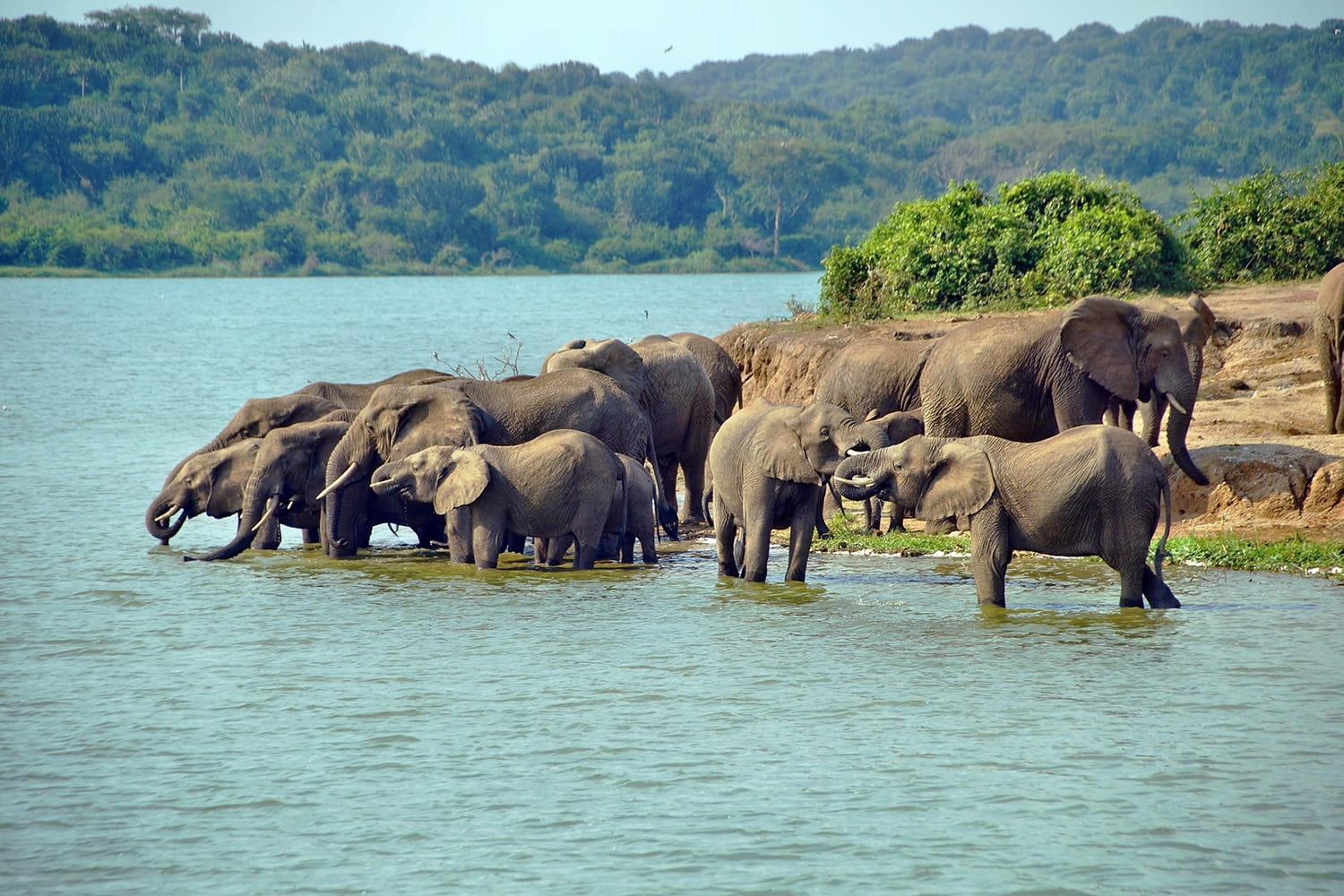
A 4-day safari to Queen Elizabeth National Park in Uganda typically features game drives in the Kasenyi plains, a boat cruise on the Kazinga Channel, and chimpanzee tracking in Kyambura Gorge or Kalinzu Forest. Best itineraries include stops at the Equator and offer options for tree-climbing lions in Ishasha
4-days-queen-elizabeth-national-park-and-kyambura-gorge-chimpanzee-tracking
4-days-kibale-forest-chimpanzee-tracking-and-queen-elizabeth-national-park
4-days-bwindi-impenetrable-gorilla-trekking-and-queen-elizabeth-park-tour
4-days-best-gorilla-trekking-and-safari-in-uganda-lake-mburo-national-park
4-days-queen-elizabeth-park-semuliki-national-park-uganda-safari-tour
4-days-gorilla-trekking-lake-bunyonyi-and-kalinzu-forest-chimpanzee-tracking
4-days-budget-queen-elizabeth-park-and-chimpanzee-tracking-in-kalinzu-forest
4-days-luxury-gorilla-trekking-safari-in-bwindi-fly-in-all-inclusive-tour
4-days-queen-elizabeth-park-and-lake-mburo-uganda-safari-tour
4 Days 1. Classic Wildlife & Boat Safari (Kasenyi & Kazinga)
Discover the breathtaking biodiversity of Uganda’s most diverse conservation area with our 4-Day Classic Wildlife & Boat Safari. This itinerary is meticulously designed to showcase the legendary Kasenyi Plains, a vast savannah known for its high concentration of lions and the "Kobs' Mating Grounds." You will journey through a landscape where volcanic craters meet sweeping plains, all while centered around the life-giving Kazinga Channel. Beyond the traditional Big Four sightings, this expedition ventures into the "Valley of Apes"—the stunning Kyambura Gorge—for an intimate encounter with habituated chimpanzees. Whether you are gliding past hundreds of hippos on a boat or tracking predators in the golden morning light, this safari offers a comprehensive immersion into the heart of the Albertine Rift. Perfect for wildlife enthusiasts and photographers alike, this journey captures the raw, untamed spirit of Queen Elizabeth National Park in every sunrise and river bend.
Day 1: The Equator and the Rift Valley
Your adventure begins with a scenic drive westward from Kampala, crossing the rolling hills of central Uganda. A mandatory stop at the Equator allows for a unique photo opportunity and a chance to witness water flow experiments on both hemispheres. As you descend the escarpment of the Albertine Rift Valley, the shimmering lakes and savannahs of Queen Elizabeth National Park come into view. After checking into your lodge, you will head out for an evening game drive. As the temperature drops, the park’s residents begin their nocturnal shift. Keep your eyes peeled for elephants moving toward the thickets and the occasional leopard beginning its hunt. The day concludes with a majestic African sunset over the Rwenzori Mountains, setting a tranquil tone for the wild encounters that await you in the coming days.
Day 2: Kasenyi Predators and the Kazinga Cruise
Rise with the sun for a morning game drive in the Kasenyi Plains, the park's premier destination for predator sightings. Guided by the alarm calls of the Uganda kob, you will search for lions and hyenas on the prowl. The open plains provide a stunning backdrop for viewing massive herds of Cape buffalo and elephants. In the afternoon, the perspective shifts to the water with a boat cruise on the Kazinga Channel. This 32-kilometer waterway boasts one of the world's highest concentrations of hippos and a prehistoric array of Nile crocodiles. As you glide along the banks, you’ll see elephants and buffaloes coming down to drink alongside an incredible variety of waterbirds, from the African Fish Eagle to vibrant kingfishers. It is a sensory-rich afternoon that brings you remarkably close to the park's most iconic inhabitants.
Day 3: Into the Valley of the Apes
Today, you leave the savannah behind to explore the hidden world of the Kyambura Gorge, also known as the "Valley of Apes." This dramatic 100-meter-deep chasm is home to a lush tropical rainforest that stands in stark contrast to the surrounding grasslands. Accompanied by expert rangers, you will descend into the gorge for chimpanzee trekking, listening for the echoing pant-hoots of our closest wild relatives. The trek also offers glimpses of black-and-white colobus monkeys and diverse birdlife. After the thrill of the forest, the afternoon is reserved for relaxation or a visit to the Crater Lakes. Exploring these ancient volcanic calderas offers breathtaking panoramic views and a chance to see local salt-mining traditions at Lake Katwe, providing a deep cultural and geological connection to this ancient, ever-evolving landscape.
Day 4: Final Tracks and the Journey Home
On your final morning, enjoy a short early morning game drive for one last chance to spot any elusive species you may have missed. The soft morning light is perfect for capturing final photographs of the park’s majestic landscapes and its inhabitants. After a hearty breakfast at the lodge, you will begin your transfer back to Kampala. The return journey offers a different perspective on the Ugandan countryside, passing through vibrant trading centers and lush tea plantations. You will stop for a local lunch en route, arriving back in the city or at Entebbe International Airport by late afternoon. Though the safari concludes, you carry with you the echoes of the chimpanzees’ cries and the memory of the sun setting over the Kazinga Channel—a true testament to the wild beauty of the "Pearl of Africa."
4-Day Chimpanzee & Tree-Climbing Lion Focus
Our 4-Day Chimpanzee & Tree-Climbing Lion Focus is a masterfully balanced safari that bridges the gap between the lush mahogany canopies and the vast, golden savannah. This journey is specifically tailored for the wildlife enthusiast who craves diversity, offering the high-energy excitement of tracking primates in the forest alongside the serene, almost surreal sight of lions lounging in the massive fig trees of the Ishasha sector. By including the Kalinzu Forest, known for its exceptionally high chimpanzee tracking success rates, and the rare arboreal behavior of the southern lions, this itinerary ensures you witness the most unique behavioral traits of Uganda's wildlife. You will traverse the park from North to South, moving from the predator-rich Kasenyi Plains to the remote wilderness near the Congolese border. It is a four-day deep dive into the extraordinary, where the "King of the Jungle" takes to the trees and the "Apes of the Valley" rule the heights.
Day 1: Crossing the Equator to the Rift Valley
Your expedition departs from Kampala, heading southwest toward the dramatic landscapes of the Albertine Rift. The journey is punctuated by a classic stop at the Equator crossing in Kayabwe, where you can stand in two hemispheres at once. As you continue, the terrain shifts into the rolling "Little Switzerland" hills of Ankole, known for its long-horned cattle. By mid-afternoon, you will descend the rift valley escarpment, where the shimmering expanse of Queen Elizabeth National Park unfolds before you. After checking into your lodge, enjoy a late afternoon introduction to the park's atmosphere. The evening air is often filled with the distant calls of savanna birds as you prepare for the high-intensity wildlife encounters scheduled for the following days. It is a day of scenic transitions, moving from the bustle of the city to the quiet, ancient pulse of the African wild.
Day 2: The Kazinga Lifeline and Kasenyi Plains
Begin your day with a morning boat cruise on the Kazinga Channel, a 32km natural waterway that acts as the park's central artery. From the safety of the boat, you will have a front-row seat to one of the world's highest concentrations of hippos, as well as massive Nile crocodiles and elephants bathing at the water's edge. In the afternoon, the focus shifts to land with a game drive in the Kasenyi Plains. This area is the park's primary "predator playground," where lions and leopards are frequently spotted hunting the resident Uganda kobs. The open landscape, dotted with acacia trees and salt-lake craters, provides exceptional visibility for photography. Witnessing a pride of lions strategically positioned near a kob mating ground offers a raw, unfiltered look at the survival of the fittest in one of Africa's most vibrant ecosystems.
Day 3: Primate Echoes in Kalinzu Forest
Today, you venture into the dense, emerald world of the Kalinzu Forest Reserve. Unlike the open savannah, this ancient rainforest is a sensory experience of rustling leaves and echoing calls. You will embark on a chimpanzee tracking adventure, led by expert rangers who know the individual personalities of the habituated communities. Kalinzu is celebrated for its high success rate, often rewarding trekkers with sights of chimps grooming, playing, and swinging through the canopy. Beyond the chimps, keep an eye out for black-and-white colobus monkeys and blue monkeys. Following this exhilarating primate encounter, you will begin the transfer to the Ishasha sector in the southern part of the park. The drive itself is a mini-game drive, transitioning from forest edges to the wilder, more remote southern plains where the pace of life feels even more untouched and ancient.
Day 4: The Arboreal Kings of Ishasha
The final morning is dedicated to the legendary tree-climbing lions of Ishasha. Unlike lions elsewhere, the prides here have developed the unique habit of spending their days perched high in the branches of ancient sycamore fig and acacia trees. Your morning game drive focuses on scanning these massive trees; seeing a 400-pound lion balanced perfectly on a branch is a sight that defies standard wildlife expectations. This behavior is thought to be a way to escape the heat of the ground and the nuisance of biting insects. After a final sweep of this remote sector—which also hosts large herds of buffalo and the rare topi antelope—you will begin the return journey to Kampala. As you leave the park behind, the image of a lion silhouetted against the sky in a fig tree serves as the perfect final memory of your Ugandan adventure.
4 Days Ultimate Primate & Game Adventure
This "Ultimate Primate & Game Adventure" is a breathtaking four-day odyssey through Uganda’s most iconic landscapes. By combining the lush, tropical rainforests of Kibale National Park with the sprawling golden savannas of Queen Elizabeth National Park, this itinerary offers an unparalleled window into East Africa’s diverse ecosystems. You will transition from the "Primate Capital of the World," where the vocal calls of chimpanzees echo through ancient trees, to the classic African plains where lions, elephants, and leopards roam. The journey is perfectly balanced between high-energy trekking and relaxing wildlife viewing, featuring the famous Kazinga Channel boat cruise and multiple game drives. Whether you are watching a family of chimps swing through the canopy or spotting hippos from the water, this safari delivers the very best of Uganda’s natural heritage in a compact, action-packed timeframe. It is the definitive choice for travelers seeking both intimate primate encounters and a traditional "Big Game" safari experience.
Day 1: Transfer to Kibale National Park
Your adventure begins with a scenic drive from the bustling streets of Kampala toward the lush foothills of the Rwenzori Mountains. As you head west, the landscape transforms into a vibrant tapestry of rolling green hills and endless tea plantations. Upon arriving in the Fort Portal area, the gateway to Kibale National Park, you will feel the air cool as you approach the dense evergreen rainforest. This day is dedicated to your transition into the wild and preparation for the primate encounter ahead. After checking into your lodge, your guide will provide a detailed briefing on chimpanzee tracking etiquette—essential for ensuring a respectful and safe experience for both you and the primates. Spend your evening relaxing to the sounds of the jungle, perhaps taking a short nature walk or visiting the beautiful "Top of the World" craters to witness a stunning Ugandan sunset.
Day 2: Chimpanzee Tracking and Transfer to Queen Elizabeth
Rise early for an unforgettable encounter in Kibale, home to the highest density of primates in Africa. After a morning briefing at the ranger station, you will head into the forest to track our closest living relatives: the chimpanzees. Hearing their "pant-hoots" echoing through the canopy before you see them is a spine-tingling experience. Once found, you’ll spend a captivating hour observing their complex social dynamics, grooming habits, and acrobatic displays. After the trek, enjoy lunch before embarking on a three-hour drive to Queen Elizabeth National Park. This route offers spectacular views of the Rift Valley escarpment. As you enter the park, keep your eyes peeled for initial wildlife sightings—elephants and buffalo often loiter near the road. You’ll settle into your new lodge, transitioning from the deep forest environment to the open, sun-drenched savanna, ready for the big game adventures that follow.
Day 3: Game Drive and Kazinga Channel Boat Cruise
Day three is a double-feature of world-class wildlife viewing. You’ll start with a sunrise game drive across the Kasenyi Plains, the park’s primary breeding ground for Uganda Kob. This is the best time to spot predators like lions and the elusive leopard as they finish their nightly hunts. The savanna comes alive in the morning light, offering fantastic photography opportunities of elephants, warthogs, and giant forest hogs. In the afternoon, the perspective shifts to the water with a boat cruise along the Kazinga Channel. This natural waterway connecting Lakes Edward and George is a magnet for wildlife. You will float mere meters away from massive pods of hippos, basked crocodiles, and thirsty elephant herds cooling off at the water’s edge. The birdlife here is equally staggering, with hundreds of species, including kingfishers and fish eagles, making it a highlight for any nature lover.
Day 4: Morning Game Drive and Return to Kampala
On your final morning, you’ll head back into the park for one last game drive, exploring different tracks to find any species that may have remained elusive. It’s a final chance to breathe in the fresh savanna air and witness the quiet majesty of the African wilderness. Following the drive, you will begin the journey back to Kampala or Entebbe. The return trip includes a stop for lunch in Mbarara and a visit to the Uganda Equator line at Kayabwe. Here, you can stand in both the Northern and Southern Hemispheres simultaneously—a classic photo opportunity to mark the end of your journey. As you pull back into the city in the late afternoon, you’ll carry with you the incredible memories of swinging primates, roaring lions, and the warm hospitality of the "Pearl of Africa," concluding your ultimate four-day safari adventure.
4 Days Cultural & Adventure Itinerary
This cultural and adventure itinerary offers a deep dive into the heritage of the Ankole people combined with classic savanna wildlife experiences. You will journey from the cultural heart of Mbarara to the volcanic landscapes and vast plains of Queen Elizabeth National Park.
Day 1: Transfer and Igongo Cultural Center
Your journey begins with a drive south-west to Mbarara, stopping at the Igongo Cultural Center. This is one of the premier cultural destinations in Uganda, featuring the Eriijukiro Museum, which showcases the history of the Ankole kingdom through royal regalia and traditional tools. You can explore the Itaramiro Cultural Village, a replica of a traditional homestead, and learn about the ancient practices of both cattle keepers and crop farmers. For those wanting a stretch, a short hike to the Biharwe Eclipse Monument on the hill commemorates a historic solar eclipse from 1520 AD. After a traditional lunch featuring local dishes like eshabwe (ghee sauce), you will continue your transfer to Queen Elizabeth National Park, entering through the scenic rift valley landscape.
Day 2: Kasenyi Game Drive & Katwe Salt Lake
Start your morning with a game drive across the Kasenyi Plains, an area famous for its large populations of Uganda Kob and the lions that hunt them. You are also likely to spot elephants, cape buffaloes, and warthogs in the golden morning light. In the late afternoon, you will head to Lake Katwe for a community-led tour of the ancient salt works. Here, you will see how local communities have manually harvested salt for centuries, using traditional pans and techniques passed down through generations. This tour offers a raw, firsthand look at the resilience and traditional livelihoods of the Katwe villagers.
Day 3: Kazinga Boat Cruise & Crater Lakes Hike
The third day focuses on the park’s dramatic water and volcanic features. The afternoon is dedicated to a boat cruise on the Kazinga Channel, a 32km natural waterway that connects Lake Edward and Lake George. It boasts one of the world's highest concentrations of hippos and offers incredible views of elephants and crocodiles at the water's edge. Later, you will explore the Explosion Crater Lakes region on foot. A guided hike here takes you through some of the park's most spectacular scenery, with sweeping views of the deep craters, the rift valley, and the distant Mountains of the Moon (Rwenzori).
Day 4: Nature Walk & Return to Kampala
On your final morning, enjoy a guided nature walk, which provides a more intimate perspective on the park's smaller inhabitants. Walking through areas like the Maramagambo Forest or the park's savanna fringes allows you to track birds, primates, and interesting plant species that are often missed from a vehicle. This quiet immersion into the wild serves as a peaceful conclusion to your safari. After the walk, you will begin your return journey to Kampala, with a final stop at the Equator crossing in Kayabwe for a photo opportunity and to browse local craft markets for souvenirs before arriving back in the city.
Mid-Range Game & Photo Safari
This "Mid-Range Game & Photo Safari" is a meticulously crafted four-day expedition designed for photographers and wildlife enthusiasts who want to capture the raw beauty of the Pearl of Africa. Navigating through Queen Elizabeth National Park, this itinerary prioritizes the "golden hours" of lighting, ensuring your lens catches the savanna at its most dramatic. From the wide-angle landscapes of the Explosion Craters to the intimate, high-action shots of lion tracking and the riverside drama of the Kazinga Channel, every moment is curated for visual storytelling. Staying in mid-range lodges offers the perfect balance of comfort and proximity to the wild, allowing you to remain immersed in the environment. Whether you are an amateur with a smartphone or a professional with a telephoto lens, this safari provides the time and vantage points needed to document Uganda’s diverse fauna and stunning rift valley scenery in breathtaking detail, creating a digital portfolio of a lifetime.
Day 1: Kampala to Queen Elizabeth via the Equator
Your photographic journey begins with an early departure from Kampala to beat the city traffic and catch the soft morning light. The first major stop is the Equator crossing at Kayabwe, where the iconic circular monuments provide a classic "geographic" photo opportunity. As you continue southwest, the urban sprawl gives way to the rolling "Little Switzerland" hills of Ankole. You’ll arrive at Queen Elizabeth National Park in time for an evening game drive as the sun begins its descent. This "golden hour" is magic for photography, casting a warm, honey-colored glow over the savanna and the distant Rwenzori Mountains. Keep your camera ready for silhouetted elephants and buffaloes moving against the darkening horizon. You’ll check into your mid-range lodge, located near the park boundaries, where the sights and sounds of the African night provide a perfect backdrop for reviewing your first day’s shots.
Day 2: Lion Tracking and Kazinga Boat Safari
Today focuses on high-impact wildlife photography. You’ll start with an optional but highly recommended lion tracking experience. Accompanied by researchers using radio telemetry, you’ll head off-road to find the park's apex predators. This provides a rare, close-up vantage point to photograph lions in their natural habitat without the crowds. In the afternoon, you’ll board a boat for a safari along the Kazinga Channel. This is widely considered the best wildlife photography spot in Uganda. From the water, you can capture eye-level shots of massive hippos, basking Nile crocodiles, and vibrant birdlife like the Malachite Kingfisher. The boat offers a stable platform for tracking movement, and the reflection of the afternoon sun on the water adds a professional shimmer to your frames. As the boat glides past thirsty elephant herds, you’ll have the chance to capture intimate family interactions at the water’s edge.
Day 3: Crater Lakes and Full-Day Exploration
Day three is dedicated to the park’s dramatic topography and diverse ecosystems. You’ll spend the morning exploring the Explosion Crater Lakes drive. This winding route offers breathtaking panoramic views of deep, water-filled calderas and sweeping vistas of the Great Rift Valley—perfect for landscape photography and wide-angle lenses. The contrast between the blue water and the lush green vegetation creates a striking color palette. The afternoon is spent on a leisurely game drive through different sectors of the park, perhaps visiting the Leopard Loop or the swampy edges where rare birds hide. This slower pace allows you to wait for the "perfect shot"—be it a leopard perched in a cactus tree or a martial eagle taking flight. By focusing on behavior rather than just sightings, you’ll capture the character of the wilderness. The day concludes with a final sunset session overlooking the vast plains.
Day 4: Morning Session and Return to Kampala
On your final morning, you’ll head out for one last sunrise photography session. This is the time to look for the smaller details: dew-covered spiderwebs in the grass, the vibrant colors of a Lilac-breasted Roller, or the misty atmosphere as the savanna wakes up. This final "clean-up" drive ensures you haven’t missed any key species on your checklist. After a late breakfast at the lodge, you’ll begin the drive back to Kampala. The return journey offers a different perspective on the landscape, with a stop in Mbarara for lunch. You’ll have time to exchange tips with your guide and scroll through your memory cards, reflecting on the thousands of moments captured. You’ll arrive back in the capital by late evening, your cameras full of stunning imagery and your mind full of the indelible sights of the Ugandan wild.
1. What is the best time for a 4-day safari in Uganda to Queen Elizabeth National Park?
Choosing the right season is crucial for a successful safari in Uganda. The park is most accessible during the two dry seasons: June to September and December to February. During these months, the tropical sun dries out the plains, causing the dense elephant grass to recede. This is a massive advantage for visitors because wildlife becomes much easier to spot against the thinned-out vegetation. Furthermore, the lack of rain forces animals to congregate around permanent water sources like the Kazinga Channel and the various crater lakes. Seeing a herd of sixty elephants coming down to drink is a common sight during a dry-season safari in Uganda.
The roads within the park, particularly the tracks leading to the remote Ishasha sector, can become muddy and challenging during the rainy seasons (March to May and October to November). However, the "green season" has its own charm. The landscape is incredibly lush, providing a stunning backdrop for photography. It is also the best time for a birding-focused safari in Uganda, as migratory species from Europe and northern Africa arrive in the park. While you might encounter a heavy downpour, they are often followed by clear, bright skies. For those on a budget, some lodges offer discounted rates during these months, making a safari in Uganda more affordable. Regardless of when you visit, the park’s location on the equator ensures warm temperatures year-round, though early morning game drives can be surprisingly chilly, necessitating a light jacket.
2. Can I see the tree-climbing lions on a 4-day safari in Uganda?
The tree-climbing lions are arguably the most sought-after sight on a safari in Uganda. While most lions across Africa stay on the ground, the populations in the Ishasha sector of Queen Elizabeth National Park and Lake Manyara in Tanzania have developed the unique habit of scaling large fig trees. A 4-day safari in Uganda provides the perfect window to visit this southern sector. Typically, your itinerary will dedicate day three or four to Ishasha. The sight of a full-grown male lion with a thick mane lounging precariously on a limb of an ancient sycamore-fig tree is an image that defines the magic of a safari in Uganda.
Experts believe these lions climb trees to escape the biting tsetse flies that live in the lower grass and to catch the cool breezes that circulate higher up. From their elevated vantage point, they can also survey the plains for their favorite prey, the Uganda Kob. Spotting them requires a bit of luck and the expertise of a seasoned guide, as they can be well-hidden by the dense canopy. A 4-day safari in Uganda gives you the flexibility to spend a full morning or afternoon specifically searching the "lion trees." This sector is also much quieter than the northern part of the park, offering a more "exclusive" feel to your safari in Uganda. Even if the lions prove elusive, the Ishasha sector is home to Topi antelopes and massive buffalo herds, ensuring your drive is filled with wildlife encounters.
3. What activities are included in a 4-day safari in Uganda at Queen Elizabeth?
A well-planned 4-day safari in Uganda is designed to showcase the park’s incredible biodiversity through various modes of exploration. The foundation of the trip consists of multiple game drives. Usually, these take place in the Kasenyi Plains, a vast savannah that serves as the breeding ground for the Uganda Kob and is consequently a prime hunting territory for lions and leopards. These early morning drives are the highlight of any safari in Uganda, as the light is perfect for photography and the predators are most active before the heat of the midday sun sets in.
In addition to traditional drives, a 4-day safari in Uganda includes the iconic boat cruise on the Kazinga Channel. This 32-kilometer-long natural waterway connects Lake Edward and Lake George and boasts one of the highest concentrations of hippos in the world. From the safety of the boat, you can watch elephants bathing and crocodiles basking on the banks. The itinerary also incorporates a primate element, usually chimpanzee tracking in the "underground forest" of Kyambura Gorge. This provides a stark contrast to the savannah, as you descend into a deep rift valley shielded by a thick tropical canopy. Finally, many tours include a visit to the Katwe Salt Lake, where you can learn about traditional salt mining, adding a rich cultural layer to your safari in Uganda. This combination of water, savannah, forest, and culture makes the 4-day trip the most balanced way to experience the region.
4. What is the accommodation like on a 4-day safari in Uganda?
The hospitality industry in Queen Elizabeth National Park is highly developed, ensuring that every traveler on a safari in Uganda finds a comfortable place to rest. Accommodations are generally categorized into budget, mid-range, and luxury. Luxury lodges, such as the famous Mweya Safari Lodge or Elephant Plains, offer high-end amenities like swimming pools, gourmet dining, and private balconies overlooking the Kazinga Channel or the park’s craters. Staying at these locations adds a touch of "safari chic" to your safari in Uganda, allowing you to watch wildlife from your room.
Mid-range options, like Enganzi Game Lodge or Parkview Safari Lodge, provide excellent value. They typically offer comfortable en-suite cottages with great views and hearty meals, making them the most popular choice for a standard safari in Uganda. For the more adventurous or budget-conscious, there are "bandas" (traditional huts) and well-maintained campsites. Many of these budget spots are located just outside the park boundaries or in community-run areas, providing an authentic connection to the local landscape. No matter the price point, most lodges on a safari in Uganda prioritize eco-friendly practices, using solar power and sourcing food from local farmers. The sounds of the African night—the distant roar of a lion or the grunt of a hippo—are included for free at every accommodation, ensuring that even when you are sleeping, your safari in Uganda continues to be an immersive experience.
5. How long is the drive from Kampala to Queen Elizabeth for a safari in Uganda?
The journey from Uganda's capital, Kampala, to Queen Elizabeth National Park is a significant but rewarding part of your safari in Uganda. The drive typically takes between 6 to 7 hours, covering approximately 400 kilometers. While this may seem long, the route is paved and takes you through some of the most beautiful parts of the country. Your safari in Uganda essentially begins the moment you leave the city, as the urban sprawl gives way to rolling green hills, tea plantations, and bustling roadside markets where you can see the local way of life.
A mandatory stop on this drive is at the Equator crossing in Kayabwe. Here, you can stand in both the Northern and Southern Hemispheres at once, take photos, and watch water drainage demonstrations that illustrate the Coriolis effect. This stop is a classic "rite of passage" for anyone on a safari in Uganda. As you continue westward, you pass through the town of Mbarara, the heart of the "land of milk," where you can spot the famous long-horned Ankole cattle. The final stretch of the drive takes you through the Queen Elizabeth park gates, often greeting you with sightings of baboons or elephants before you even reach your lodge. For those who find long drives tiring, there is the option to fly from Entebbe to the Kasese or Mweya airstrips. This reduces the travel time to just over an hour, though it adds a significant cost to your safari in Uganda.
6. Is chimpanzee tracking included in a 4-day safari in Uganda?
Chimpanzee tracking is a major highlight that sets a 4-day safari in Uganda apart from shorter tours. While Queen Elizabeth is primarily known for its savannah animals, it also hosts a unique population of "underground" chimpanzees in the Kyambura Gorge. This gorge is a 100-meter-deep scar in the earth filled with a dense riverine forest. Tracking here is a physical adventure, as you hike down the steep slopes into a hidden world. The echoes of chimp hoots bouncing off the gorge walls create a primeval atmosphere that is a standout memory of any safari in Uganda.
Alternatively, many operators include tracking in the nearby Kalinzu Forest Reserve, located just outside the park. Kalinzu is often preferred for its higher success rate of sightings, as it hosts a large community of habituated chimpanzees. During the trek, your ranger guide will point out other primates like Black-and-white Colobus monkeys and Blue monkeys, as well as various forest birds. Tracking these primates during your safari in Uganda requires a permit, which is usually organized by your tour operator. The experience of standing just meters away from a family of chimps as they groom, play, and swing through the trees is a deeply moving experience. It provides a perfect balance to the vehicle-based game viewing that dominates the rest of your safari in Uganda, allowing you to get your boots on the ground and connect with the forest ecosystem.
7. What is the Kazinga Channel boat safari in Uganda known for?
The Kazinga Channel is the biological heart of Queen Elizabeth National Park and a centerpiece of every safari in Uganda. This 2-hour boat excursion is world-famous for providing some of the highest-density wildlife viewing in Africa. As the boat glides slowly along the banks, you are presented with a non-stop parade of animals. It is most famous for its hippos; the channel is home to thousands of them, and you will see them yawning, fighting for space, and bobbing in the water just a few feet from the boat. For many, this is the most relaxing and productive part of their safari in Uganda.
In addition to the hippos, the channel is a vital watering hole for the park’s larger mammals. It is common to see herds of elephants wading into the water to cool off, while buffaloes wallow in the mud nearby. The birdlife is equally spectacular. Even those who aren't avid birders will be impressed by the sheer number of African Fish Eagles, Pelicans, Kingfishers, and Cormorants that line the shore. If you are lucky, you might even spot the elusive Shoebill stork during your safari in Uganda boat trip. The boat cruise offers a different perspective than a game drive; it allows for close-range photography without the bumps of a dusty road. As the sun begins to set over the water, casting a golden glow on the animals, you’ll realize why the Kazinga Channel is considered a "must-do" on any safari in Uganda.
8. What should I pack for a 4-day safari in Uganda?
Packing correctly is essential for staying comfortable during your safari in Uganda. The key is "layers." Because the park is near the equator, it can be very hot during the day, but early morning game drives and late-night dinners can be chilly. Start with lightweight, breathable cotton or linen clothing in neutral colors like khaki, olive, or tan. Bright colors can distract the animals, and dark blue or black can attract tsetse flies. Long-sleeved shirts and trousers are a must for your safari in Uganda, especially for the chimpanzee tracking, as they protect against stinging nettles and insects.
Sturdy, closed-toe walking shoes or light hiking boots are necessary for the forest walks, while comfortable sandals are fine for the boat cruise and lodge. Don't forget a wide-brimmed hat, high-SPF sunscreen, and quality sunglasses to protect yourself from the intense African sun. A good pair of binoculars is a game-changer on a safari in Uganda, allowing you to see the details of a leopard’s spots or a bird’s plumage from a distance. For photography, bring a camera with a decent zoom lens (at least 200mm-300mm) and extra memory cards. Lastly, carry a personal first-aid kit with malaria prophylaxis, insect repellent (containing DEET), and any personal medications. Many lodges provide filtered water, but having a reusable water bottle is a great way to stay hydrated and eco-friendly during your safari in Uganda.
9. What is the cost of a 4-day safari in Uganda?
The cost of a 4-day safari in Uganda is influenced by several factors, primarily the level of accommodation and the number of people in your group. On average, a mid-range safari costs between $900 and $1,300 per person when traveling in a pair. This price is usually all-inclusive, covering your 4x4 safari vehicle, fuel, a professional English-speaking driver/guide, park entrance fees, chimpanzee tracking permits (which cost about $50-$100), the Kazinga Channel boat fee, and all meals and accommodation. For those looking for a luxury safari in Uganda, prices can easily exceed $2,000 per person, especially if stay at high-end lodges or opt for domestic flights instead of driving.
Budget travelers can bring the cost down to around $700-$850 by staying in basic campsites or community guesthouses and joining a group tour to share vehicle costs. It is important to note that tips for guides and lodge staff are generally not included in the upfront cost of a safari in Uganda, and it is customary to budget about $10-$20 per day for this. Also, remember that a portion of your safari cost goes directly to the Uganda Wildlife Authority (UWA) for conservation and anti-poaching efforts. This means that your safari in Uganda is not just a vacation, but a direct contribution to the protection of the lions, elephants, and chimps you have come to see. Always ask for a detailed breakdown of what is included to avoid "hidden costs" like bottled water or certain activity fees.
10. Can I do a 4-day safari in Uganda for birding?
While most people think of big mammals, Queen Elizabeth National Park is actually one of the premier birding destinations in the world, making it perfect for a specialized safari in Uganda. The park boasts a checklist of over 600 species, which is more than many entire countries. This incredible diversity is due to the variety of habitats, including savannah, wetlands, lowland forest, and volcanic lakes. A 4-day birding-focused safari in Uganda can yield sightings of the Great Blue Turaco, the African Finfoot, and the iconic African Fish Eagle.
The boat trip on the Kazinga Channel is a birdwatcher's paradise. You can get within meters of Pied Kingfishers, Yellow-billed Storks, and various species of Plovers. For those targeting specific "lifers," the swampy areas of the park are one of the best places in East Africa to find the prehistoric-looking Shoebill stork. A birding safari in Uganda often involves spending time in the Maramagambo Forest, where you can find forest specialists like the Black-bee-eater and various Sunbirds. Even the craters in the northern part of the park attract thousands of Lesser Flamingos during certain times of the year. Because the park is so diverse, a birding safari in Uganda is rewarding regardless of the season, though the wet months are particularly good for seeing species in breeding plumage and migratory birds. Guides in Uganda are exceptionally well-trained in ornithology, ensuring you can identify even the most "confusing" brown birds.
11. Is a 4-day safari in Uganda safe?
Safety is a top priority for the Ugandan government and the Uganda Wildlife Authority (UWA). A 4-day safari in Uganda is considered very safe for international tourists. Queen Elizabeth National Park is patrolled by armed park rangers who are dedicated to both conservation and tourist security. During game drives, you are in a sturdy 4x4 vehicle, and during walks or chimpanzee tracking, you are always accompanied by professional rangers who understand animal behavior and know how to keep a safe distance. This structure ensures that your safari in Uganda is adventurous but secure.
The biggest "dangers" on a safari in Uganda are usually environmental rather than security-related. For example, it is vital to stay in your vehicle unless your guide tells you it is safe to exit, as wild animals are unpredictable. Malaria is present in the region, so taking prophylaxis and using insect repellent is a standard safety measure for any safari in Uganda. Roads can be bumpy, but safari drivers are highly experienced in navigating African terrain. Politically, the southwestern region of Uganda where the park is located is stable and welcoming to visitors. The local communities are very friendly and see tourism as a vital part of their economy. By following the "park rules" and listening to your guide, your safari in Uganda will be a smooth and worry-free experience, allowing you to focus entirely on the breathtaking nature around you.
12. What other animals can I see on a 4-day safari in Uganda?
While the lions and chimps get the most fame, a 4-day safari in Uganda introduces you to a "supporting cast" of wildlife that is equally fascinating. The park is home to nearly 100 species of mammals. The Uganda Kob, a handsome antelope that appears on the country’s coat of arms, is everywhere. You’ll see them in large herds, with males often seen defending their "leks" (mating territories). Watching the social dynamics of the Kob is a highlight of a slow-paced safari in Uganda. You will also encounter the Defassa Waterbuck, identified by its shaggy coat, and the elusive Bushbuck.
The park’s giants are also a constant presence. With over 2,500 elephants and thousands of Cape Buffalo, you are almost guaranteed to see these members of the "Big Five" on your safari in Uganda. Look closely in the thickets for the Giant Forest Hog—Africa’s largest pig—which is uncommonly easy to see here compared to other parks. Spotted Hyenas are often heard at night and seen early in the morning, while Leopards, though secretive, are frequently spotted draped over the limbs of acacia trees in the Kasenyi area. For those interested in smaller creatures, a safari in Uganda will reveal Mongoose colonies, Monitor Lizards, and a dazzling array of butterflies. The sheer density of life means that every turn of the safari track offers something new to discover.
13. What are the Katwe explosion craters on a 4-day safari in Uganda?
The landscape of Queen Elizabeth National Park was shaped by violent volcanic activity, and the Katwe explosion craters are a testament to this history. Visiting these craters is a scenic highlight of a 4-day safari in Uganda. The "Crater Drive" is a 27-kilometer route that winds through the highest points of the park. From here, you have panoramic views of the Rwenzori Mountains (the "Mountains of the Moon"), the Great Rift Valley escarpment, and Lakes Edward and George. It is one of the most photogenic spots on any safari in Uganda.
One of the most interesting stops is Lake Katwe itself. Unlike the other craters which are filled with fresh water or forest, Katwe is a hyper-saline lake. For centuries, local people have mined salt here using traditional methods that have changed very little since the 14th century. A visit to the salt works during your safari in Uganda provides a fascinating look at the local economy and the grueling work of the salt miners. You’ll see how they use mud-walled pans to evaporate the water and harvest the salt crystals. Another nearby crater, Lake Munyanyange, is a seasonal home to thousands of Lesser Flamingos, turning the water a shimmering pink. Including the craters in your safari in Uganda adds a geological and cultural dimension to the trip that complements the wildlife viewing perfectly.
14. What is the difference between a 3-day and 4-day safari in Uganda here?
When planning a safari in Uganda, many travelers wonder if they should choose a 3-day or 4-day itinerary. A 3-day trip is essentially a "highlights" tour. It involves a long drive from Kampala on day one, a game drive and boat cruise on day two, and a drive back on day three. While it covers the basics, it can feel rushed. A 4-day safari in Uganda, however, adds a critical 24 hours that transforms the experience. That extra day allows you to head south to the Ishasha sector to search for the tree-climbing lions—something that is almost impossible to do on a 3-day trip due to the driving distances involved.
The 4-day safari in Uganda also allows for a more relaxed pace. Instead of squeezing chimpanzee tracking and a boat cruise into the same day, you can dedicate proper time to each. This is important because wildlife isn't on a schedule; having more time in the park increases your chances of seeing rare events, like a lion hunt or a leopard sighting. Furthermore, the extra night at a safari lodge allows you to truly soak in the atmosphere—sitting by a campfire, watching the stars, and listening to the sounds of the African bush. If you have the time, the 4-day option is the superior way to experience a safari in Uganda, ensuring you leave the park feeling like you’ve truly explored it rather than just "passing through."
15. Do I need to book my 4-day safari in Uganda in advance?
Advanced booking is highly recommended for a 4-day safari in Uganda, particularly if you plan to visit during the peak seasons of June–August or December–February. The most important reason to book ahead is to secure chimpanzee tracking permits. The Uganda Wildlife Authority limits the number of people who can visit the chimps each day to ensure the animals' well-being. During the high season, these permits can sell out months in advance. Ensuring your permits are secured is the first step in planning a successful safari in Uganda.
Additionally, the most popular lodges—especially those with the best views of the Kazinga Channel—fill up quickly. By booking your safari in Uganda early, you have a better choice of accommodation that fits your budget and style. Booking in advance also gives your tour operator time to secure the best 4x4 vehicles and the most experienced guides. While it is possible to organize a last-minute safari in Uganda in the "low season" (April, May, November), you might find your options for lodging and activities limited. Most travelers start planning their trip 4 to 6 months out. This lead time allows you to handle visa requirements (like the East African Tourist Visa) and health preparations, such as your Yellow Fever vaccination, ensuring that when you finally arrive for your safari in Uganda, everything is perfectly in place for the adventure of a lifetime.
Booking 4 Days Uganda safari in Queen Elizabth Park with us Roads of Adventure safaris
Book a 4-day Uganda safari to Queen Elizabeth National Park with Roads of Adventure Safaris for an immersive experience, featuring game drives in Kasenyi Plains, a boat cruise on the Kazinaga Channel, and chimpanzee trekking in Kyambura Gorge. Packages typically include 4x4 transport, park fees, and accommodation, ensuring a seamless, high-value wildlife viewing experience.
