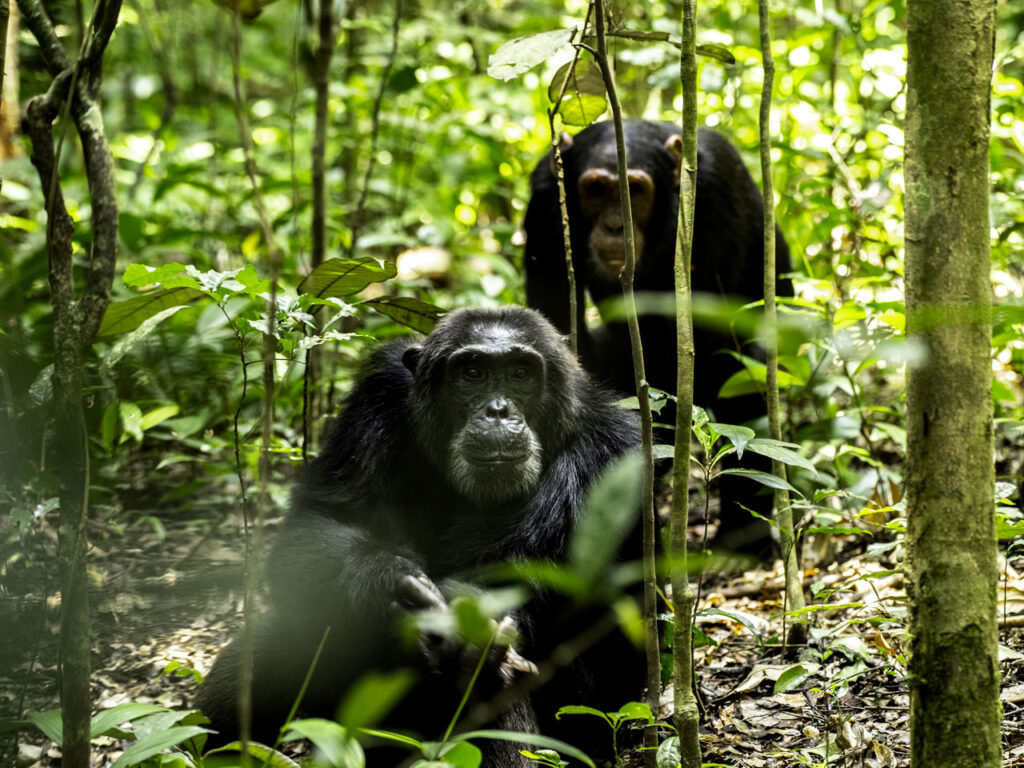
Yes, a 3-day chimpanzee tracking trip to Kibale Forest National Park is highly recommended and worth it, offering a 90% or higher chance of spotting chimpanzees, which are 98.7% genetically identical to humans. The 3-day itinerary provides enough time to travel from Kampala/Entebbe, engage in the 2–5-hour trek, enjoy the forest's immense biodiversity, and return without rushing
3-days-chimpanzee-tracking-to-kibale-forest-national-park
3-days-chimpanzee-habituation-in-kibale-forest-park
3-days-chimpanzee-tracking-in-kibale-forest-park-from-kigali
Why 3 Days in Kibale is Worth It
1. Highest Success Rate
Kibale National Park has earned its title as the "Primate Capital of the World" primarily because it offers the most reliable chimpanzee tracking experience on the planet. With a population exceeding 1,500 chimpanzees within its 795-square-kilometer boundary, the density of these great apes is unparalleled. This high concentration, combined with decades of professional habituation by the Uganda Wildlife Authority (UWA), results in a success rate of over 95%. For travelers, this means that a sighting is virtually guaranteed, a rarity when dealing with wild animals in a dense, unfenced rainforest.
The reliability of the experience is underpinned by the sophisticated tracking system employed by the park rangers. Every morning, trackers head into the forest at dawn to locate the "nests" where the chimpanzees slept the previous night. Because chimpanzees are vocal and social, their loud "pant-hoots" can be heard from kilometers away, allowing rangers to pinpoint their location and guide tourists directly to the troop. This efficiency ensures that even if you only have one day for tracking, you are almost certain to encounter our closest living relatives.
Furthermore, the park manages multiple habituated communities, such as the Kanyantchu group. By having several different families accustomed to human presence, the park can distribute tourist groups across different areas, preventing overcrowding and ensuring that if one group is moving through difficult terrain, another might be more accessible. For anyone traveling to East Africa specifically for primates, Kibale is the gold standard because it eliminates the uncertainty often found in other, less densely populated forests. It is the ultimate destination for those who want to turn a "dream sighting" into a reality.
2. 1 Hour with Chimps
The core of the Kibale experience is the "Golden Hour"—the 60 minutes of uninterrupted time you are permitted to spend in the presence of a habituated chimpanzee community. While the trek to find them may take anywhere from thirty minutes to several hours, the moment you locate the troop, the clock starts. This duration is a carefully balanced conservation regulation; it is long enough to witness the full spectrum of their fascinating social dynamics but short enough to ensure the animals do not become stressed or overly dependent on human presence.
During this hour, you are a silent observer of a world that is eerily similar to our own. You will see high-ranking males patrolling their territory with impressive displays of strength, such as drumming on the massive buttress roots of ancient mahogany trees. You’ll witness mothers tenderly nursing or grooming their infants, and juveniles engaging in boisterous play. If you are lucky, you might even see a hunting party in action, as Kibale’s chimps are known to hunt smaller primates. The level of activity is high; unlike gorillas, who tend to be sedentary, chimpanzees are constantly on the move, communicating with a complex array of gestures and vocalizations.
This hour is also a prime opportunity for photography and videography. Because the chimps are habituated, they often continue their natural behaviors just a few meters away from you, seemingly indifferent to your presence. The intensity of looking into a chimpanzee’s eyes and seeing a spark of recognition and intelligence is a transformative experience. By the time your hour concludes, you will have gained a profound understanding of their social hierarchy and individual personalities, making it the most impactful sixty minutes of your entire safari.
3. More Than Just Chimps
While the chimpanzees are the primary draw, Kibale National Park is a biodiversity hotspot that supports a staggering 13 different primate species, the highest number found in any single park in East Africa. This makes every trek a multi-species adventure. As you move through the "green cathedral" of the forest, the canopy above is often alive with the movement of various monkeys that coexist with the chimpanzees. It is not uncommon to see several different species in a single morning, each occupying a different level of the forest strata.
Among the most charismatic residents is the Black-and-white Colobus, easily identified by its flowing white mantle and long, bushy tail. You are also likely to encounter the Red-tailed monkey, with its distinct white heart-shaped nose spot, and the Grey-cheeked mangabey, a primate endemic to this region. For many, seeing the rare L’Hoest’s monkey—which often stays on the forest floor—is a highlight. The park is also one of the last strongholds for the Uganda Red Colobus, a species that is unfortunately a frequent prey for the very chimpanzees you have come to track.
The variety extends into the night for those who take part in guided nocturnal walks. Under the cover of darkness, the forest reveals its hidden inhabitants, such as the Pottos and several species of Galagos (bushbabies), whose large, reflective eyes can be seen peering from the branches. This incredible diversity means that Kibale is much more than a "one-trick" destination; it is a living laboratory of primate evolution. For wildlife enthusiasts, the sheer density of different species ensures that there is never a dull moment on the trail, as every rustle in the leaves could reveal a new and exotic primate.
4. Immersive Experience
A 3-day safari to Kibale is designed to be an immersive journey that goes far beyond a single forest trek. The itinerary is built to provide a holistic view of the ecosystem and the communities that protect it. A staple of this experience is the visit to the Bigodi Wetland Sanctuary, a community-run conservation project on the edge of the park. Walking through the lush papyrus swamps and palm-filled forests of Bigodi offers a different perspective on the region’s biodiversity, specifically focusing on its spectacular birdlife and secondary primate populations.
Bird watchers will find this part of the trip particularly enriching, as Bigodi is the best place to spot the iconic Great Blue Turaco, along with hornbills, kingfishers, and the elusive papyrus gonolek. Beyond the wildlife, the 3-day trip emphasizes cultural immersion. You’ll have the chance to visit local villages, see traditional coffee processing, and witness the ancient art of banana beer making. These interactions are vital, as they demonstrate how tourism revenue directly benefits the local Batooro and Bakiga people, who in turn act as the forest's guardians.
The experience is further rounded out by the dramatic landscapes surrounding the park. Most 3-day safaris include a hike through the Ndali-Kasenda Crater Lake field, where you can stand on the rim of ancient volcanic calderas filled with shimmering turquoise water, with the snow-capped Rwenzori Mountains as a backdrop. Whether you are sipping locally grown tea overlooking a crater lake or listening to a traditional healer explain the medicinal uses of forest plants, the 3-day format ensures you don't just "see" the chimpanzees—you experience the entire vibrant culture and geography of the Ugandan rainforest.
3 Days Chimpanzee tracking in Kibale Forest Park
Embark on an extraordinary 3-day safari to Kibale National Park, the celebrated "Primate Capital of the World." This dense, tropical rainforest in Western Uganda is a sanctuary for biodiversity, hosting the highest density and diversity of primates in East Africa. Your journey centers on the thrilling encounter with habituated chimpanzees, our closest living relatives, offering a rare window into their complex social lives and vocal communications. Beyond the chimpanzees, the park is home to twelve other primate species and over 375 species of birds, making it a dream destination for wildlife enthusiasts. The experience is beautifully balanced with a visit to the Bigodi Wetland Sanctuary, where community-led conservation takes center stage, and a hike through the breathtaking crater lake landscapes near Fort Portal. This safari is more than just a wildlife tour; it is an immersive plunge into the lush heart of the Ugandan rainforest, blending high-adrenaline adventure with serene natural beauty.
Day 1: Arrival and Crater Lake Exploration
The adventure begins with a scenic drive through the verdant Ugandan countryside, characterized by rolling hills and vast tea estates. Upon arriving in the Fort Portal region, you will explore the stunning Ndali-Kasenda Crater Lake field. This geological marvel features dozens of ancient volcanic calderas, now filled with shimmering emerald and turquoise waters. A guided hike to a prominent viewpoint—often called the "Top of the World"—offers a breathtaking 360-degree panorama of the lakes, the lush forest canopy, and the snow-capped Rwenzori Mountains in the distance. This afternoon excursion provides the perfect introduction to the region's unique geography and a chance to spot your first forest birds. After the hike, you will retreat to your forest lodge, falling asleep to the rhythmic, nocturnal sounds of the Kibale rainforest in anticipation of tomorrow's primate encounter.
Day 2: Chimpanzee Tracking and Bigodi Wetland
The highlight of your safari begins with an early morning briefing at the Kanyanchu Visitors Center. Accompanied by expert rangers, you will head into the primary rainforest to track a community of habituated chimpanzees. The forest air fills with their iconic "pant-hoot" calls, guiding you toward the troop. Once located, you spend an unforgettable hour observing their fascinating behaviors—from high-canopy acrobatics to tender grooming sessions on the forest floor. In the afternoon, the journey continues at the Bigodi Wetland Sanctuary. This community-run project is a haven for biodiversity; as you traverse the boardwalks, you are likely to spot the magnificent Great Blue Turaco and several other primate species, such as the Red-tailed monkey and Black-and-white Colobus. This day perfectly captures the dual essence of Kibale: raw wildlife power and tranquil, community-driven conservation.
Day 3: Cultural Immersion and Departure
On your final day, you will delve into the rich cultural heritage of the Batooro and Bakiga people. A community village walk provides an authentic look at rural Ugandan life, featuring visits to local homesteads, traditional healers, and primary schools. You will witness the fascinating processes of traditional coffee making and banana beer brewing, even participating in the preparation. These interactions highlight the vital link between the local community and the protection of the neighboring national park. After a flavorful traditional lunch, you will begin your return journey. As the rainforest fades in the rearview mirror, you carry back vivid memories of the chimpanzees' intelligent gazes, the vibrant calls of the turacos, and the warm hospitality of the Ugandan people. This short yet intensive safari leaves a lasting impression of Africa’s incredible natural and cultural wealth.
1. Is 3 Days Chimpanzee Tracking in Kibale Worth It?
The consensus among wildlife enthusiasts and travel experts is a resounding yes. A 3-day itinerary is widely considered the "sweet spot" for visiting Kibale National Park, providing enough time to immerse yourself in the environment without feeling rushed. The primary driver of this value is the park's staggering 95-99% success rate for sightings. Unlike many other destinations where wildlife viewing is a game of chance, Kibale’s high density of over 1,500 chimpanzees and the sophisticated tracking methods used by rangers make a face-to-face encounter almost a certainty.
Beyond the numerical success rate, the quality of the experience is what truly makes it worth the journey. Kibale is not just about a single species; it is the "Primate Capital of the World." Within the same three days, you aren't just checking "chimpanzee" off a list; you are likely to encounter several of the other 12 primate species found here, such as the acrobatic Black-and-white Colobus, the rare L’Hoest’s monkey, and the Grey-cheeked mangabey.
Furthermore, the 3-day window allows for a balanced experience that includes the Bigodi Wetland Sanctuary, which offers a different ecological perspective and a chance to engage with community-led conservation. When you factor in the proximity to the stunning Fort Portal crater lakes and the professionalism of the Uganda Wildlife Authority (UWA) guides, the investment in a 3-day safari provides a deep, multi-layered return. It transitions from a simple "animal sighting" to a comprehensive education on rainforest ecology and primate social dynamics, leaving visitors with a profound appreciation for our closest living relatives.
2. What does a 3-day itinerary usually include?
A standard 3-day Kibale itinerary is a masterclass in efficient travel planning, designed to maximize your time in the forest while accounting for the drive from Uganda's main hub. Day 1 typically begins with a morning departure from Kampala or Entebbe. The 6-to-7-hour journey is an experience in itself, crossing the lush agricultural heartland of Uganda. You arrive in the Fort Portal area by mid-afternoon, often just in time for a scenic hike around the Ndali-Kasenda Crater Lakes or a visit to the "Top of the World" viewpoint to watch the sunset over the Rwenzori Mountains.
Day 2 is the centerpiece of the safari. The morning is dedicated to chimpanzee tracking in Kibale National Park. After an early breakfast and a briefing at the Kanyanchu Visitors Center, you head into the forest with your ranger. Following the trek and a well-earned lunch, the afternoon usually features a nature walk in the Bigodi Wetland Sanctuary. This community-run swamp walk provides a softer, more tranquil contrast to the morning's deep-forest trek and focuses on birds and smaller primates.
Day 3 focuses on the return journey, but often includes a final cultural or historical stop. Many itineraries incorporate a visit to the Amabere Ga Nyina Mwiru Caves or a stop at the Nakayima Tree in Mubende during the drive back to Kampala or Entebbe. This structure ensures that you spend two nights in or near the forest, allowing you to fully absorb the nocturnal sounds of the jungle and the misty morning atmosphere. It covers all essentials: private 4x4 transport, professional guiding, park entry fees, chimpanzee permits, and full-board accommodation.
3. When is the best time for chimpanzee tracking?
While Kibale National Park is an equatorial rainforest where tracking is available and productive year-round, the dry seasons are traditionally favored. These occur from December to February and June to September. During these months, rainfall is minimal, which has a direct impact on the physical ease of the trek. The forest floor is less muddy, and the trails are firmer, making it easier to navigate the undergrowth when following a fast-moving troop of chimpanzees.
The dry season also offers advantages for photography. With less cloud cover, the light filtering through the thick canopy is more consistent, and there is less risk of your camera gear getting caught in a sudden downpour. Furthermore, during the drier months, chimpanzees often spend more time on the ground foraging for fallen fruit, which can lead to longer, clearer views at eye level rather than looking up into the high branches.
However, the wet seasons (March–May and October–November) should not be dismissed. In fact, many birdwatchers prefer this time as it coincides with breeding seasons and migratory patterns. The forest is at its most vibrant and green, and because there are fewer tourists, the experience can feel more private and exclusive. Additionally, during the rains, there is an abundance of fruit in the forest, which means the chimpanzees don't have to travel as far to find food; this can sometimes result in much shorter tracking times compared to the dry season when they might wander deep into the park in search of water and specific fruiting trees.
4. How much is a Chimpanzee tracking permit in Kibale?
As of 2026, the pricing for chimpanzee tracking permits in Kibale National Park follows a tiered structure managed by the Uganda Wildlife Authority (UWA). For Foreign Non-Residents, a standard permit is typically priced between $200 and $250. This fee is inclusive of the expert ranger guide and the park entrance fee for the day of tracking. For Foreign Residents (those with a valid work permit or residency in East Africa), the price is slightly reduced, generally falling between $150 and $200, while East African Community (EAC) citizens pay a significantly lower rate in local currency.
It is important to understand what this permit represents. It is not just a "ticket"; it is a vital conservation tool. A significant portion of the permit fee goes directly toward the daily monitoring and protection of the chimpanzees, as well as anti-poaching patrols and habitat restoration. Additionally, a percentage of the revenue is shared with the local communities surrounding the park to fund infrastructure projects like schools and health clinics, which helps mitigate human-wildlife conflict by giving locals a direct stake in the primates' survival.
Visitors should also be aware that prices can occasionally fluctuate based on the most recent UWA tariff updates or seasonal promotions. For those looking for a more intensive experience, the Chimpanzee Habituation Experience (CHEX) permit is more expensive, often costing between $250 and $300, reflecting the increased time spent with the primates and the researchers. Because permits are limited to protect the well-being of the animals, they should be secured well in advance through a registered tour operator or directly from UWA.
5. How long does the tracking experience last?
The duration of a chimpanzee tracking session in Kibale is unpredictable by nature, but it typically spans between 2 and 5 hours. The experience begins at 8:00 AM (or 2:00 PM for the afternoon session) with a briefing on forest etiquette and safety. From there, the time spent walking depends entirely on the movement of the chimpanzee community you are assigned to. Because the rangers track where the chimps nested the previous night, they usually have a good head start, but chimps can travel several kilometers in a few hours if they are on the hunt or moving between fruit trees.
The "active" part of the trek involves hiking through varied terrain—sometimes on established trails and sometimes through thick brush. Once the troop is located, the most significant part of the experience begins: the one-hour close-up encounter. This one-hour limit is strictly enforced by the Uganda Wildlife Authority to prevent the animals from becoming overly stressed or habituated to human presence, which could alter their natural behaviors or social structures.
During this hour, you are permitted to stay within about 8 to 10 meters of the chimps. You will observe them as they forage, groom, vocalize, and occasionally engage in "displays" of strength. The total time in the forest, therefore, is a combination of the "search" and the "visit." Even if the search is short, you still get your full hour with the primates. This timeframe makes the activity accessible for most travelers, as it leaves the other half of the day free for relaxation or secondary activities like the Bigodi swamp walk.
6. Can I see chimpanzees in the afternoon?
One of the unique advantages of Kibale National Park over other primate destinations is the flexibility of its schedule. Chimpanzee tracking is offered in two distinct sessions daily: the morning session, which begins with a briefing at 8:00 AM, and the afternoon session, which begins at 2:00 PM. This double-session system allows the park to accommodate more visitors while maintaining small, sustainable group sizes for each chimpanzee community.
The morning session is the most popular choice. The forest is cooler, and the chimpanzees are often very active as they leave their nests and begin their first forage of the day. Their vocalizations—the famous "pant-hoots"—are often more frequent in the morning as they communicate their locations to other members of the troop, making them slightly easier for rangers to track by ear.
However, the afternoon session has its own distinct charm. By 2:00 PM, the chimpanzees have often finished their mid-day rest and are moving again. The lighting in the forest during the late afternoon can be particularly beautiful for photography, with softer rays of sun piercing through the canopy. Additionally, the afternoon session tends to be less crowded, providing a sense of solitude that enhances the "wild" feel of the rainforest. For travelers on a tight schedule, the afternoon session is a lifesaver, allowing them to drive from Kampala in the morning and start their tracking the same day, effectively maximizing every hour of their 3-day safari.
7. Is there a minimum age for tracking?
To ensure the safety of both the primates and the visitors, there is a strict minimum age limit of 15 years for chimpanzee tracking in Kibale National Park. This regulation is primarily rooted in two concerns: conservation health and safety/behavioral management. From a conservation standpoint, children are more susceptible to common childhood diseases—such as mumps, chickenpox, or even the common cold—which can be devastating if passed to chimpanzees. Because humans and chimps share about 99% of their DNA, the risk of cross-species disease transmission is a serious threat to the survival of these endangered apes.
From a safety perspective, tracking requires a certain level of physical stamina and, more importantly, behavioral discipline. The trek can involve walking through thick, thorny undergrowth and encountering other large wildlife like forest elephants. Visitors must be able to follow the ranger’s instructions instantly and quietly. A child’s sudden movement, high-pitched cry, or lack of impulse control could be misinterpreted by a chimpanzee as a threat or a challenge, potentially triggering a defensive or aggressive response from the troop.
For families traveling with younger children, all is not lost. Many lodges in the Kibale and Fort Portal area offer supervised children's activities or "kiddie tracks" outside the park. Furthermore, the Bigodi Wetland Sanctuary is often more flexible with age limits for its nature walks, allowing younger children to see monkeys and birds from the safety of established boardwalks. This allows the adults to enjoy the chimp trek while the younger family members still get a taste of the Ugandan wild.
8. What is the difference between tracking and habituation?
In Kibale, you have two primary ways to interact with the chimpanzees, and the choice depends on your level of interest and physical fitness. Chimpanzee Tracking is the standard experience. It is designed for the general tourist and lasts about 3 hours in total, with one hour of observation time. You are tracking communities that are already fully "habituated," meaning they have been accustomed to human presence over many years and will go about their daily lives—grooming, nursing, and playing—as if you aren't there.
The Chimpanzee Habituation Experience (CHEX) is a much more intensive, "deep-dive" alternative. Instead of one hour, you spend nearly the entire day (typically 6 to 10 hours) with the chimpanzees and a team of researchers. You start at dawn, often watching the chimps as they de-nest and wake up, and you follow them throughout their day until they build new nests for the evening. The goal of this program is to help "habituate" a less-familiar community to human presence so they can eventually be used for standard tracking.
CHEX is perfect for professional photographers, researchers, or true primate enthusiasts who want to see behaviors that don't always happen in a single hour, such as complex hunting parties or intricate social disputes. However, it requires a higher degree of physical fitness, as you are essentially "keeping up" with the chimps all day. The permit for habituation is more expensive, but for those who want to feel like part of a National Geographic documentary, it is an unparalleled experience.
9. How many people are in a tracking group?
To ensure that the experience remains intimate and that the impact on the forest is minimized, the Uganda Wildlife Authority limits the size of tracking groups. While the official maximum can technically be up to 8, in practice, groups in Kibale are often kept to just 6 people per chimpanzee community. This small group size is a cornerstone of Uganda’s sustainable tourism model. By limiting the number of humans, the park ensures that the chimpanzees do not feel surrounded or threatened, which allows them to maintain their natural social behaviors.
For the visitor, a small group is a massive advantage. It means you are always close enough to the ranger to hear their expert explanations about chimp biology, forest medicinal plants, and the history of the park. It also means that when you find the chimps, there is no "jostling" for a view or a photo. Everyone in a 6-person group can easily see the primates and move quietly through the forest without the noise and disruption that a larger group would inevitably create.
These groups are formed during the morning or afternoon briefing at the Kanyanchu center. If you are traveling as a family or a small group of friends, you will likely be kept together. If you are a solo traveler, you will be joined with others to fill a group. This intimacy creates a shared sense of wonder among the participants, often leading to whispered conversations and a collective "hushed" atmosphere that respects the sanctity of the rainforest and its inhabitants.
10. What should I bring for the trek?
Packing correctly for a Kibale trek can make the difference between a magical experience and an uncomfortable one. The most important rule is to wear long pants and long-sleeved shirts. Even if it feels warm, the forest is full of stinging nettles, sharp thorns, and insects. Tucking your trousers into your long socks is a standard "pro-tip" to prevent safari ants from crawling up your legs. For footwear, you need sturdy, waterproof hiking boots with good ankle support to handle the uneven and often slippery terrain.
In your daypack, you should carry rain gear (a lightweight poncho or jacket) regardless of the season, as tropical downpours can happen at any time. Insect repellent with a high DEET concentration is essential to ward off mosquitoes and tsetse flies. You should also bring at least one to two liters of drinking water and a few high-energy snacks, as the trek can be physically demanding and you may be in the forest longer than expected.
For photography, a camera with a good zoom lens is recommended, but remember that flash is strictly prohibited. Since the forest canopy can be quite dark, a camera that performs well at high ISO settings is a plus. Binoculars are also highly recommended, as chimpanzees often spend time high in the trees, and binoculars will allow you to see the incredible detail of their expressions. Finally, bring a small waterproof bag to protect your electronics in case of rain, and don't forget your passport or ID, as it is often required to verify your permit at the start of the session.
11. What is the Bigodi swamp walk?
The Bigodi Wetland Sanctuary is a community-run project located on the edge of Kibale National Park, and it is almost always included in a 3-day itinerary. This 4.5km nature walk takes you through the Magombe swamp, an area of secondary forest and papyrus wetlands that serves as a vital wildlife corridor. Unlike the deep, shaded forest of the national park, Bigodi is more open, providing a different ecological experience and excellent visibility for wildlife.
Bigodi is a birdwatcher's paradise. It is home to over 200 species of birds, but the undisputed star of the show is the Great Blue Turaco, a large, vibrant bird with striking blue, yellow, and red plumage. The wetland is also incredible for primate viewing; it is common to see up to eight different species in a single afternoon, including the Grey-cheeked Mangabey, the Red Colobus, and the acrobatic Black-and-white Colobus. Your local guide will also point out rare plants and explain the various medicinal uses of the flora found in the swamp.
What makes Bigodi truly special is its community focus. The sanctuary is managed by the Kibale Association for Environmental Conservation (KAFE). The income generated from the walks stays within the community, funding local primary schools, clean water initiatives, and a women’s craft group. By participating in the Bigodi walk, you aren't just seeing animals; you are directly contributing to a model of conservation where local people are empowered to protect their natural heritage. It is a heartwarming and educational way to spend an afternoon in the shadows of Kibale.
12. Do I need to book in advance?
Yes, booking in advance is highly recommended, especially if you are traveling during the peak seasons (June–September and December–February). While chimpanzee permits are generally more available than the highly coveted mountain gorilla permits in Bwindi, they are still limited to a specific number of visitors per day to protect the habituated communities. In the high season, the morning sessions in Kibale can sell out weeks in advance.
Securing your permit at least 2 to 4 weeks ahead of time is a safe bet for most of the year. If you are a large group or have very specific dates, 2 to 3 months is even better. Booking in advance isn't just about the permit itself; it also ensures you get your preferred choice of accommodation. The lodges that sit directly on the forest edge or overlook the crater lakes are the first to fill up, and having your permit secured allows your tour operator to finalize your logistics without any last-minute stress.
The booking process is usually handled by your tour operator, who will need a copy of your passport to register the permit with the Uganda Wildlife Authority. If you are a solo traveler or a "walk-in," you might find a spot in an afternoon session during the low season, but for a 3-day trip where time is of the essence, leaving it to chance is risky. Having your permit in hand before you arrive in Uganda allows you to relax and focus on the excitement of the journey rather than the paperwork.
13. How fit do I need to be?
To enjoy chimpanzee tracking in Kibale, a moderate level of fitness is required. Unlike gorilla tracking in Bwindi, which often involves steep, mountainous terrain and high altitudes, Kibale is relatively flat. Most of the hiking is done at an elevation of about 1,100 to 1,600 meters. However, "relatively flat" does not mean "easy." You will be walking through a primary rainforest where the ground is uneven, covered in roots, and often muddy or slippery from recent rain.
The trek can last anywhere from 2 to 5 hours, and you must be able to keep a steady pace with the rest of your group and the ranger. There is no set "trail" once you get close to the chimps; the ranger may lead you through thick bushes and vines to keep up with the troop. If you can comfortably walk for two to three hours on a hilly city park or a nature trail back home, you should be perfectly fine for Kibale.
For those with mobility concerns, it is possible to hire a porter at the park entrance. Porters are local community members who will carry your daypack and offer a steady hand during slippery sections of the trail. This not only makes the trek easier for you but also provides a direct income to a local family. If you have significant physical limitations, you should discuss this with your tour operator in advance so they can request a "close" chimp group from the park authorities, though this can never be strictly guaranteed.
14. Are there other animals in the park?
While the chimpanzees are the undisputed stars of Kibale, the park is a thriving ecosystem home to a surprising array of other wildlife. As the "Primate Capital," you are almost certain to encounter Black-and-white Colobus monkeys, Olive baboons, and Red-tailed monkeys. The park also hosts the rare L’Hoest’s monkey and the Uganda Red Colobus. In total, there are 13 primate species, making it a dream destination for anyone interested in primate evolution and behavior.
Beyond the primates, Kibale is home to a population of forest elephants. These are smaller and more elusive than their savannah cousins, and while they are rarely seen by tourists, you will often see evidence of their presence in the form of massive footprints or freshly snapped trees along the trails. The park also supports bush pigs, giant forest hogs, and several species of duikers (small forest antelopes). While predators like leopards do exist in the forest, they are incredibly secretive and sightings are extremely rare.
For birders, Kibale is a world-class destination with over 375 recorded species. During your trek, keep an eye out for the African Grey Parrot, various hornbills, and the "Holy Grail" of Kibale birding: the Green-breasted Pitta. The park’s biodiversity ensures that even if the chimpanzees are temporarily quiet, the forest is always full of life. Every rustle in the canopy or flash of color in the undergrowth is an opportunity to see something rare and beautiful, making the walk through the forest an adventure in its own right.
15. Is it safe to do chimpanzee tracking?
Yes, chimpanzee tracking in Kibale is very safe, provided you follow the established rules and the guidance of your rangers. The Uganda Wildlife Authority (UWA) has been conducting these treks for decades and has a spotless safety record. Every tracking group is led by a highly trained ranger guide who is an expert in chimpanzee behavior. They know how to read the animals' body language and vocalizations to ensure that the group maintains a respectful and safe distance.
You will also be accompanied by an armed park ranger. It is important to understand that the firearm is a standard safety precaution and is almost never used. Its purpose is not for "defense" against people, but to provide a "scare shot" into the air in the extremely rare event that a large animal, like a forest elephant or buffalo, becomes aggressive and refuses to move. This ensures that both the humans and the wildlife remain unharmed during an encounter.
In terms of the chimpanzees themselves, they are "habituated," meaning they are accustomed to seeing humans and generally view us as a neutral part of their environment. They are not pets, but they are also not naturally aggressive toward tourists who follow the rules. By staying quiet, avoiding direct eye contact with dominant males, and not eating or drinking near them, you ensure a peaceful encounter. The biggest "danger" in the forest is usually just a slippery root or a stinging nettle—threats that are easily managed with good boots and long sleeves.
Booking 3 Days chimp tracking in Kibale with us Roads of Adventure safaris
A 3-day chimpanzee tracking safari to Kibale National Park with Roads of Adventure Safaris offers a thrilling, close-up experience with wild chimps. Packages generally include transport, accommodation, park permits (approx. US$200-$250), and guided tours, typically featuring a 1-hour viewing of the chimpanzees, nature walks, or visits to Bigodi Wetland
