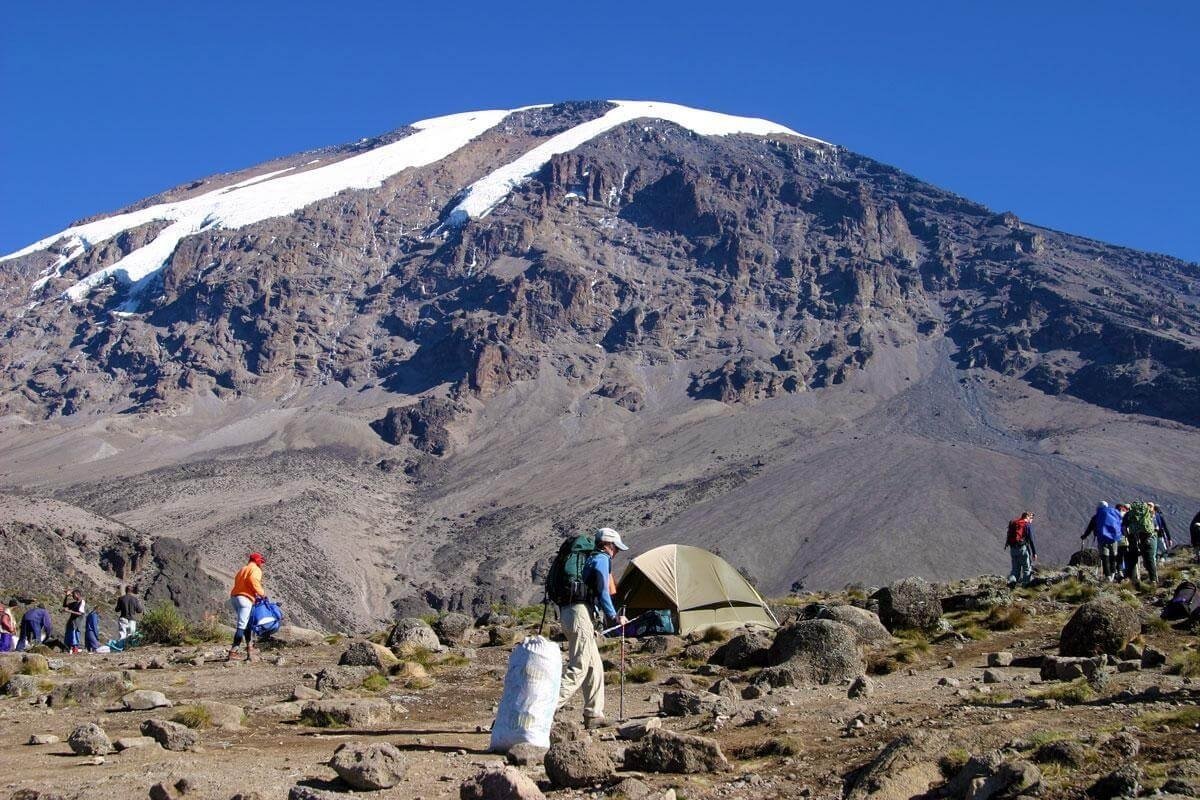
To start planning an 8-day Mount Kilimanjaro hike, first secure a licensed local operator to arrange mandatory permits, guides, and porters. Next, choose an acclimatization-friendly route (like the 8-day Lemosho or Northern Circuit), book flights to Kilimanjaro International Airport, and start a 3–6-month cardio training routine
8-days-lemosho-route-kilimanjaro-climb
8 Days Mountain Kilimanjaro hike and climb
An 8 days Mountain Kilimanjaro hike and climb offers one of the most effective and rewarding ways to conquer Africa’s highest peak. By choosing an extended itinerary, such as the renowned Lemosho route or the quieter Northern Circuit, you allow your body the necessary time to acclimatize properly, significantly increasing your chances of reaching the summit. These routes take you through diverse ecological zones, from lush, ancient rainforests and vibrant moorlands to the stark, lunar beauty of the alpine desert and the arctic glacial summit. Throughout your 8 days Mountain Kilimanjaro hike and climb, you will be supported by an expert crew who manage the logistics, allowing you to focus entirely on the physical and mental challenge of the ascent. Whether you are seeking the dramatic views of the Western Breach or the peaceful, off-the-beaten-path trails of the north, this journey promises a life-changing adventure atop the "Roof of Africa."
Day 1: Entering the Rainforest
Your 8 days Mountain Kilimanjaro hike and climb begins with a scenic drive to the Londorossi Gate, where you complete park formalities. From here, a forest trail leads you to the Mti Mkubwa (Big Tree) Camp. This initial hike is relatively short, allowing you to settle into the mountain rhythm. You will trek through dense, unspoiled montane rainforest, where the air is thick with moisture and the sounds of exotic birds and primates. This lush environment is a stark, vibrant contrast to the arid landscapes you will encounter higher up. Upon reaching camp, your crew will have tents ready, and you will enjoy a hearty dinner before your first night under the canopy. This day is all about easing into the trek, adjusting your pace to the "pole pole" (slowly, slowly) rhythm that will become your mantra for the next week.
Day 2: Scaling toward the Moorlands
On the second day of your 8 days Mountain Kilimanjaro hike and climb, you leave the dense forest behind as the trail steepens. As you ascend, the vegetation changes dramatically, shifting into the giant heather and moorland zones. You will cross several streams and navigate the ridges, offering your first panoramic glimpses of the Kilimanjaro massif. The scenery becomes more open, dominated by unique flora like giant heathers and lobelias. You will eventually arrive at Shira Camp 1, which sits on the edge of the expansive Shira Plateau. This campsite offers breathtaking views of the Kibo peak to the east. The crisp mountain air and the vastness of the plateau begin to heighten the sense of adventure, as you are now well into your acclimatization process, moving steadily higher into the mountain’s wild heart.
Day 3: Traversing the Shira Plateau
Day 3 of your 8 days Mountain Kilimanjaro hike and climb takes you across the Shira Plateau, one of the highest plateaus on Earth. The hike is generally gentle, allowing you to enjoy the unique, alien-like landscape of volcanic rock and scrub. As you head east toward the base of the Kibo glaciers, you will pass through the "Garden of the Senecios," a fascinating area filled with giant groundsel plants that look like something from another planet. This day is vital for acclimatization, as you cover a significant distance at high altitude before reaching camp. Whether you are staying at Moir Hut or Shira 2, the evening provides a perfect opportunity to rest and soak in the expansive, horizon-stretching vistas. The solitude of the high-altitude moorland adds a meditative quality to the trek, preparing your mind for the steeper challenges ahead.
Day 4: Reaching for the Lava Tower
As you progress into the fourth day of your 8 days Mountain Kilimanjaro hike and climb, you enter the high alpine desert zone. The environment becomes increasingly stark, with loose volcanic scree and rocky outcrops. The main highlight is the trek toward the Lava Tower, a massive, 300-foot volcanic plug. Many climbers use this as an opportunity to test their lungs by scrambling to the base or summit of the "Shark’s Tooth" formation. You will reach an altitude of over 4,600 meters, which is a significant milestone for your body’s adaptation. After enjoying lunch in this rugged, wind-swept environment, you will descend back down to Barranco Camp. This "climb high, sleep low" strategy is the secret to your future success, helping your body prepare for the thin air you will face on summit night.
Day 5: Conquering the Barranco Wall
Day 5 of your 8 days Mountain Kilimanjaro hike and climb features the famous Barranco Wall. This is not a technical climb, but it is physically engaging, requiring you to use all four limbs as you scramble up the steep face. Reaching the top of the wall is a massive psychological victory and provides stunning views back over the valley you just ascended. From here, the trail undulates toward the Karanga Camp. The landscape here is characterized by deep, rocky valleys and striking views of the Southern Glaciers. You will arrive at camp by mid-afternoon, giving you ample time to rest and hydrate. This shorter day is intentionally paced to ensure you have enough energy reserves for the final push, while the continued stay at altitude further solidifies your body's acclimatization to the thin, oxygen-poor environment.
Day 6: The Final Preparation
On the sixth day of your 8 days Mountain Kilimanjaro hike and climb, you make your way from Karanga Camp to Barafu (or a similar high-altitude base camp). The trek is relatively short, leading you over rocky, desolate terrain where very little life survives. As you reach camp, you will see the jagged Mawenzi Peak to your east and the looming mass of Kibo to your north. The afternoon is dedicated to final preparations: organizing your summit gear, ensuring your headlamp batteries are fresh, and eating a nutritious, early dinner. You will spend the remaining hours resting and attempting to sleep despite the excitement and the altitude. This is a day of quiet anticipation, where patience and physical preservation are your primary goals before the midnight departure for the summit push.
Day 7: The Roof of Africa
The summit day of your 8 days Mountain Kilimanjaro hike and climb begins around midnight. You will trek through the cold, dark night, guided by your headlamp, navigating the steep, switchbacking scree slopes. This is the most challenging part of the entire expedition, demanding immense mental fortitude. As the first rays of dawn break over the horizon, you will reach Stella Point on the crater rim. The final hour of trekking brings you to Uhuru Peak, the true summit of Kilimanjaro and the highest point in Africa (5,895 meters). After a brief, triumphant celebration and photographs, you begin the long, careful descent to Mweka Camp. The relief of descending back into thicker air is immense. You will reach your final camp exhausted but elated, celebrating the successful completion of your climb with your dedicated team.
Day 8: The Final Descent
The final day of your 8 days Mountain Kilimanjaro hike and climb is a celebratory descent through the lush rainforest you passed on your first day. By now, the air is thick with oxygen, and your body will feel noticeably stronger with every hundred meters of altitude lost. You will reach the Mweka Gate, where you will sign out of the park and receive your hard-earned summit certificates. This is a time for joyful goodbyes and expressing gratitude to your porters, guides, and cooks, whose support made the feat possible. A short drive brings you back to your hotel, where a long-awaited hot shower and a comfortable bed await. Reflecting on the journey, you realize that the challenge was not just physical; it was an incredible transformation that will remain with you long after you leave the mountain.
1. Which route is best for an 8-day trek?
For an 8-day expedition on Mount Kilimanjaro, the Lemosho Route and the Northern Circuit stand out as the premier choices. The primary objective for any climber is to reach the summit while maintaining health, and these two routes facilitate that through a superior approach to altitude. Unlike shorter, steeper routes, both Lemosho and the Northern Circuit allow for a more gradual ascent profile.
The Lemosho Route is widely praised for its high scenery-to-crowd ratio. It approaches from the west, beginning in lush rainforests, and eventually merges with the Machame Route. The 8-day variation provides an essential extra day of acclimatization, which statistically increases summit success rates. By spending more time in the "walk-high, sleep-low" zones, your body has the necessary physiological buffer to produce more red blood cells and adapt to the thinning air.
The Northern Circuit, often considered the most comprehensive route, traverses the quieter northern slopes of the mountain. Because it circles the massif rather than cutting directly across, it offers the longest duration on the mountain. This slow, deliberate approach makes it the gold standard for success. If your primary goal is maximizing your probability of standing on Uhuru Peak, the Northern Circuit’s extended timeline is unbeatable. Both routes capitalize on the "slowly, slowly" (pole pole) mantra, ensuring you aren't just surviving the climb, but actually enjoying the transition through the mountain’s diverse ecosystems. By choosing these 8-day itineraries, you prioritize your safety and long-term acclimatization over speed, which is the most professional way to approach one of the world's most challenging non-technical climbs.
2. What is the overall cost of an 8-day Kilimanjaro climb?
Budgeting for an 8-day Kilimanjaro climb is a significant investment, typically ranging from $2,000 to $4,500 per person. This broad range reflects the wide variance in service quality, safety protocols, and operational ethics. When you pay for a trek, you aren't just paying for a guide; you are funding a complex logistical operation that sustains you at nearly 6,000 meters.
The cost is primarily driven by mandatory national park fees, which are substantial. Kilimanjaro National Park (KINAPA) charges daily entrance fees, camping or hut fees, and rescue fees. These fixed costs apply to both the client and every member of the support staff—including your guides, porters, and cooks—which is why longer, 8-day itineraries cost more than 6-day versions.
Beyond park fees, the budget covers professional, certified mountain guides who possess wilderness first responder training. A reputable operator will ensure a high staff-to-climber ratio, providing enough porters to carry not only your gear but also fresh food, high-quality tents, and emergency oxygen equipment. Ethical operators also pay their staff fair, living wages and ensure they have adequate gear; if a quote seems suspiciously low (e.g., under $1,800 for 8 days), it is often a red flag that the company is cutting costs on staff welfare or safety equipment.
Hidden costs often include tips, which are standard in the industry, and your transit to and from the mountain gates. It is essential to choose an agency that provides a transparent breakdown. A higher price point often correlates with better meal quality, reliable tent maintenance, and, most importantly, better medical support. Always ensure your budget covers the essentials that protect your well-being on the mountain, as this is one trip where "bargain hunting" can directly impact your health and summit success.
3. How fit do I need to be?
You do not need to be an elite marathon runner or an Olympic athlete to successfully summit Mount Kilimanjaro, but you do need to be "mountain fit." This means possessing the cardiovascular endurance to endure repetitive, low-intensity physical exertion over many consecutive hours. The mountain tests your stamina and leg strength more than your raw speed or explosive power.
The most effective way to prepare is to simulate the demands of the trail. Aim to build a routine where you can comfortably hike for 4–6 hours on hilly or uneven terrain. Start this training at least three months before your departure. If you live in a flat area, utilize a stair climber at the gym or wear a weighted pack on inclines. Carrying a daypack—even if it's only 5–7 kilograms—during your training hikes is crucial to conditioning your shoulders and back for the weight you will carry on the mountain.
Beyond cardio, focus on functional strength. Incorporate lunges, step-ups, and squats into your weekly workout to build the quad and glute strength needed for the thousands of steps involved in the climb. Stretching and core stability are equally important; a strong core helps stabilize your body while hiking with trekking poles on loose scree.
Remember, the training is as much about mental endurance as it is about physical capacity. It is about becoming accustomed to the feeling of being "on your feet" for the duration of a standard workday. If you can maintain a consistent, steady pace for several hours without needing to sit down, you have the baseline fitness required. Using resources like the Alpine Ascents Training Plan can provide a structured roadmap to ensure you arrive at the trailhead confident and physically prepared for the unique challenge of the Kilimanjaro ascent.
4. What are the best months to climb?
Selecting the right time for your Kilimanjaro expedition is critical to your experience and success. The mountain’s geography, situated just south of the equator, creates two distinct dry seasons and two rainy seasons. The best windows for a climb are January to March and June to October.
The January–March window is often favored because the weather is generally warmer and the trails are slightly less crowded than in the peak summer months. It is an excellent time for those who prefer clear, sunny days. However, be aware that these months can still experience occasional afternoon showers.
The June–October period is the most popular time for international climbers. These months are technically the "dry season" for Tanzania. July, August, and September, in particular, offer the most stable weather, with low humidity and clear skies. While these are the coldest months on the mountain, they also provide the best visibility for photography and stunning views of the surrounding savannah.
Conversely, you should generally avoid the "long rains" in April and May, as well as the "short rains" in November. During the rainy season, trails can turn into muddy, slippery rivers, and the mountain is often shrouded in thick clouds, which obscures the spectacular views. Furthermore, summit night—already the most difficult part of the climb—becomes exponentially harder in freezing rain or heavy sleet.
If you are choosing your dates, prioritize the dry season to minimize environmental stress. While it is possible to climb year-round, aligning your trek with these established dry periods significantly improves your comfort level and allows you to focus on the climb rather than struggling with wet, heavy gear. Always check seasonal trends, as climate variability can occasionally shift these windows slightly.
5. Do I need altitude training?
"Altitude training" in the sense of living in a hyperbaric chamber or moving to high mountains months in advance is generally unnecessary for the average Kilimanjaro climber. However, acclimatization strategy—the way you manage your ascent on the mountain—is the single most important factor in your success. You cannot force your body to adapt to low oxygen levels; you must give it time.
The most effective way to beat altitude sickness (Acute Mountain Sickness, or AMS) is by choosing an itinerary that respects the physiological realities of hypoxia. The rule is simple: climb high, sleep low. By opting for an 8-day trek, you build in critical "rest" and acclimatization days that a 5-day route omits. These days allow your body to naturally produce more hemoglobin and adjust to lower oxygen pressures.
Specifically, staying at high-altitude camps, such as the Kosovo Camp (located near the Barafu Base Camp), is a superior strategy. Sleeping at higher elevations toward the end of your trip forces your body to adapt further, making the final summit push significantly easier. During these extra days, your guides may lead you on "acclimatization hikes"—short walks to higher altitudes followed by a return to camp to sleep. These are not just exercises; they are vital opportunities for your body to practice processing limited oxygen.
Hydration is your second best tool. Drink at least 3–4 liters of water daily, as dehydration exacerbates the symptoms of altitude sickness. If you are prone to altitude issues or have concerns, consult a medical professional about Diamox (Acetazolamide), which can help speed up the acclimatization process. Ultimately, the best training is your patience. Stick to the pole pole (slowly) rhythm, listen to your guide's instructions, and honor the mountain's pace.
6. Do I need to buy all my hiking gear?
You absolutely do not need to purchase every piece of high-altitude gear before your trip. In fact, buying specialized items like a sub-zero sleeping bag, high-quality trekking poles, or heavy-duty rain gear can be a massive, unnecessary expense if you aren't an avid mountaineer. Most climbers find that the most cost-effective and practical solution is to rent high-quality gear from reputable local outfitters in Moshi or Arusha.
Rental shops in these gateway towns are accustomed to the specific requirements of Kilimanjaro. They stock items that are temperature-rated for the mountain’s harsh arctic conditions, which might be overkill for your local hiking back home. You can easily rent items such as 4-season sleeping bags, waterproof duffel bags, gaiters, and trekking poles for a fraction of their retail cost.
However, there is a clear distinction between what you should rent and what you must own. Items that touch your skin or require a precise fit—such as hiking boots, socks, base layers, and headlamps—should always be your own. You should "break in" your boots at home for several weeks or months before the trip; wearing brand-new, unrefined boots on the mountain is the fastest way to develop blisters that could end your trek prematurely.
Before you leave, request a gear list from your tour operator. They will clarify which items they provide, which are available for rent, and which you are expected to bring. Bringing your own familiar, tested clothing ensures you know how to layer efficiently during the transition from the rainforest to the summit. Use your budget to invest in quality items you will use again, and save by renting the specialized, heavy, or bulky technical gear that is only necessary for the Kilimanjaro summit.
7. What is the most important gear to buy before the trip?
When preparing for Kilimanjaro, your gear strategy should prioritize comfort, moisture management, and durability. The absolute most important investment you will make is a high-quality, properly fitted pair of hiking boots. These must be broken in well in advance of your flight. Your boots are your foundation; if your feet are uncomfortable or prone to blisters, your mental fortitude will wane, and your summit chances will drop.
Alongside footwear, focus on Merino wool base layers. Kilimanjaro is a trip of extreme contrasts—you will start in hot, humid forests and finish in freezing, oxygen-deprived conditions at the summit. Merino wool is the gold standard for this; it is naturally antimicrobial (meaning it won't smell after four days of wear), moisture-wicking, and incredibly warm even when damp. Having a dedicated set of "summit night" base layers that stay dry throughout the week is essential for the final push.
A reliable, ergonomic daypack is another non-negotiable. While your porters carry the bulk of your belongings in a duffel, you will be carrying your personal daypack every single day for 6–8 hours. Ensure it has a good hip belt to transfer the weight off your shoulders, a built-in rain cover, and easy access to your water reservoir. A comfortable pack keeps you hydrated and allows you to keep extra layers or your camera gear accessible without having to stop and open your main bag.
Finally, do not underestimate the value of a quality headlamp with extra batteries. Summit night usually begins around midnight. You will be walking in the dark for 6 to 8 hours in sub-zero temperatures. A powerful, reliable light source is not just a tool; it is a safety essential that keeps you connected to your guide and the trail.
8. What is the weather like on the mountain?
Climbing Kilimanjaro is often described as walking from the equator to the North Pole in a matter of days. As you ascend, you will pass through five distinct climate zones, each with its own weather patterns and ecosystem.
- Cultivated Zone (800m–1,800m): At the base, you are in a warm, fertile area where local farming thrives. It is humid and pleasant.
- Rainforest Zone (1,800m–2,800m): This is often wet, misty, and lush. Expect rain and high humidity. Your gear needs to be moisture-wicking, and you must have waterproof covers for your bags.
- Heather/Moorland Zone (2,800m–4,000m): The air begins to thin, and the temperature drops. You’ll see giant lobelias and heather plants. The weather here is unpredictable—you might experience intense sunshine during the day and sub-zero temperatures as soon as the sun dips below the horizon.
- Alpine Desert Zone (4,000m–5,000m): This is a harsh, arid environment with wide diurnal temperature swings. During the day, the sun is incredibly strong due to the high altitude, while at night, the temperature plummets well below freezing.
- Arctic Zone (5,000m–5,895m): This is the summit. It is a zone of ice, rock, and snow. It is cold, windy, and oxygen-depleted.
Weather on the mountain can change in minutes. A clear morning can turn into a blizzard by noon. Because of this, the secret to staying comfortable is the layering system. You must be able to peel off layers when you are working hard in the sun and quickly add insulation during breaks or at camp. Always assume the weather will be worse than the forecast; being prepared for the "worst" makes the reality much more manageable.
9. Will my gear be safe while I'm hiking?
One of the most unique and supportive aspects of a Kilimanjaro climb is the presence of your dedicated crew of porters. Their role is central to your safety and the success of the expedition. While you are trekking, your main duffel bag—containing your sleeping bag, extra clothes, and personal items—is carried by a porter from one camp to the next.
There is a strict 15 kg weight limit for the duffel bag given to the porters. This is not just a logistical constraint; it is an ethical and safety standard designed to protect the porters from carrying excessive loads, which helps ensure they can move efficiently and safely up the mountain.
Regarding the safety of your belongings: theft is exceptionally rare on Kilimanjaro. The trekking community is tight-knit, and the crews take immense pride in their work. Your gear is generally very secure. However, you should always keep your high-value personal items—such as your passport, extra cash, camera gear, and essential medications—inside your personal daypack, which stays with you at all times.
The relationship with your porters is one of mutual respect. They work harder than anyone else on the mountain, often hiking faster than clients to set up tents, prepare washing water, and ensure the kitchen is ready before you arrive at camp. By following the weight limits and maintaining a respectful attitude, you contribute to a positive working environment. Your gear will be safe, and you will find that the support of the crew is one of the most rewarding parts of the entire journey.
10. How is food handled on the trek?
Food on the mountain is carefully managed to maximize your energy and acclimatization. Since your digestive system slows down at high altitudes, the meal plan is designed to be high in carbohydrates, moderate in protein, and easy to digest. You will be accompanied by a dedicated cook whose primary job is to ensure you have three hot, nutritious meals every single day.
Breakfast is typically substantial, featuring oatmeal, toast, eggs, fruits, and tea or coffee to get your morning started. Lunch is often served as a "picnic" meal on the trail, consisting of sandwiches, nuts, fruit, and snacks, though on some routes, you may return to camp for a hot lunch. Dinner is the main event; expect hearty soups, stews, pasta, rice, and fresh vegetables. These meals are intentionally packed with carbs to fuel your muscles for the next day's climb.
Your agency will prioritize hydration and calorie intake above all else. You will be served plenty of herbal teas and warm drinks, which are vital for both hydration and comfort in the cold evenings. If you have specific dietary restrictions (such as vegan, vegetarian, or gluten-free), ensure you communicate this to your tour operator well in advance. They are well-accustomed to these requests and can adjust the menu accordingly.
It is also common for climbers to lose their appetite at higher altitudes. This is normal. Even if you don't feel hungry, it is imperative that you eat small, frequent portions to maintain your blood sugar levels. Your cook will do their best to make the food palatable and enticing. Remember, the food is the fuel that powers your ascent; treat your meals as a non-negotiable part of your performance on the mountain.
11. Where do we go to the bathroom and shower?
Personal hygiene on Kilimanjaro is a reality that every climber must adapt to. You should set your expectations early: there are no showers on the mountain. You will be living in a remote, high-altitude environment where water is a precious resource used primarily for drinking and cooking. Most climbers rely on wet wipes for daily cleaning. A pack of high-quality, biodegradable wet wipes will become your best friend; keeping yourself clean, even in a primitive way, does wonders for your morale.
Regarding the bathroom, facilities vary by route and campsite. On popular routes like the Machame or Lemosho, you will typically find basic communal outhouses or "long-drop" toilets at the campsites. These are basic, functional, and often shared with other trekking groups. Some premium operators offer the option of a private "toilet tent," which is a portable unit carried by the crew. This is a highly recommended upgrade for comfort and cleanliness.
If you are hiking between camps and need to use the facilities, you will need to find a private spot away from the trail, following the "Leave No Trace" principle. Ensure you carry a small trowel to bury waste if necessary, though in most designated camping areas, you are expected to use the provided facilities.
Bring a small bottle of hand sanitizer and use it religiously before every meal. Maintaining hygiene is the most effective way to prevent the stomach bugs that can occasionally afflict climbers. The lack of a shower is a small price to pay for the adventure, and there is nothing quite like the feeling of that first hot shower back at your hotel in Moshi or Arusha after you descend from the summit.
12. What vaccinations or health precautions do I need?
Health preparation for Tanzania should begin at least two to three months before your trip. Visit a travel clinic to ensure your routine vaccinations are up to date, including Tetanus, Hepatitis A, and Typhoid. These are standard recommendations for travel to East Africa to prevent common illnesses that can be contracted through food or water.
A Yellow Fever vaccine certificate is mandatory if you are traveling to Tanzania from a country with a risk of yellow fever transmission, or if you have a long layover (usually more than 12 hours) in an endemic country. Even if your itinerary doesn't technically require it, carrying your "Yellow Card" is wise, as immigration requirements can change.
Beyond vaccinations, consider your personal health. You should bring a basic medical kit that includes blister care (moleskin or Compeed), pain relief (Ibuprofen or Paracetamol), stomach medication (Imodium or rehydration salts), and any personal prescriptions.
Lastly, discuss the possibility of altitude medication with your doctor. Many climbers take Acetazolamide (Diamox) to assist with acclimatization. While it is not a cure for altitude sickness, it can help your body adjust to the lower oxygen environment more effectively. Always test it before your trip to ensure you don't have an adverse reaction.
Finally, ensure your travel insurance specifically covers mountain climbing up to 6,000 meters. Many standard travel insurance policies exclude "high altitude trekking" or "mountaineering." Having the right coverage provides peace of mind, knowing that in the rare event of an injury or severe altitude illness, you have the financial support for a medical evacuation.
13. Do I need a visa for Tanzania?
Yes, most international travelers, including citizens of the US, UK, Canada, and many European nations, are required to obtain a visa to enter Tanzania. The process is straightforward, but it should be handled in advance to avoid long queues or complications upon arrival.
The most efficient method is to apply for an e-Visa online through the official Tanzania Immigration Department website. The e-Visa system allows you to submit your application, upload your passport copy, and pay the fee from the comfort of your home. Once approved, you will receive a notification, which you should print and carry with you as proof of entry permission.
Be cautious of unofficial third-party websites that look like the government portal but charge extra "service fees." Always ensure you are on the .go.tz domain. The visa fee typically ranges from $50 to $100 depending on your nationality and the type of visa.
Make sure your passport is valid for at least six months beyond your planned date of departure from Tanzania and that you have at least two blank pages available. Failure to meet these criteria can lead to entry denial at the airport.
If you are a resident of a country that is exempt from visa requirements, verify this with your nearest Tanzanian embassy before your flight. However, for the vast majority of tourists planning a Kilimanjaro safari or trek, the e-Visa is the gold standard. Applying at least 3–4 weeks before your departure date is recommended to account for any processing delays.
14. What does a typical hiking day look like?
Life on Kilimanjaro follows a simple, rhythmic, and highly structured routine. Days usually begin before the sun is fully up. A typical morning starts with a gentle wake-up call from your guide or porter, followed by a hot cup of coffee or tea served right in your tent. After packing your duffel bag for the porters, you will enjoy a nutritious breakfast.
The hiking portion of your day usually lasts between 4 to 6 hours. This is not a race; it is a slow, methodical walk. You will hike at the pole pole pace, which might feel painfully slow at the start, but this is the key to preserving your energy for the summit. You will stop for a mid-day lunch break on the trail or at a scenic viewpoint.
You will typically arrive at your next camp by early to mid-afternoon. This timing is intentional; it allows your body time to rest, hydrate, and acclimatize to the higher altitude before the sun sets. Once at camp, you have time to relax, stretch, read a book, or play cards with your fellow climbers. Your afternoon is also the time to do small tasks like organizing your gear for the next day, checking your feet for any "hot spots" (early signs of blisters), and drinking plenty of water.
Dinner is served early, often by 6:00 or 7:00 PM. After dinner, you will discuss the next day's route, weather, and safety protocols with your guide. You will likely find that you are tired and ready for bed by 8:00 or 9:00 PM. This routine is essential for recovery. The lack of distraction and the focus on the simple goals of walking, eating, and resting creates a meditative environment that many climbers find to be the most rewarding part of the experience.
15. What are the common mistakes for beginners?
Even with the best planning, beginners often fall into a few traps that jeopardize their summit attempt. The most frequent and detrimental mistake is hiking too fast. There is a temptation to walk at your "normal" pace or to keep up with faster hikers. This is a critical error. Hiking too fast prevents your body from acclimatizing, leading directly to altitude sickness. The rule "slowly, slowly" (pole pole) is not a suggestion; it is the most important rule on the mountain.
Another common mistake is inadequate hydration. Many climbers do not drink enough water because they don't feel thirsty or because they don't want to stop to use the restroom. However, dehydration is a primary catalyst for altitude illness. You must force yourself to drink 3–4 liters of water every day, even when it’s cold and you don't feel like it.
Booking
Choosing an itinerary that is too short is also a major pitfall. While 5 or 6-day routes are cheaper, they provide almost no time for acclimatization. The higher you go, the faster you need to adapt, and shorter routes force your body to handle too much, too soon.
Finally, ignoring foot care is a mistake that ruins many treks. If you feel a rub or an ache, stop immediately and apply moleskin or tape. Do not wait until it becomes a full-blown blister. For further insights and to avoid these common pitfalls, check out resources like the Follow Alice Kili FAQs. Being aware of these mistakes before you start allows you to stay proactive, vigilant, and patient, which are the traits that ultimately lead you to the summit of Uhuru Peak.
Booking 8 Days Kilimanjaro climb with us Roads of Adventure safaris
Booking an 8-day Kilimanjaro climb via the scenic Lemosho route with Roads of Adventure Safaris offers one of the highest summit success rates on the mountain.
