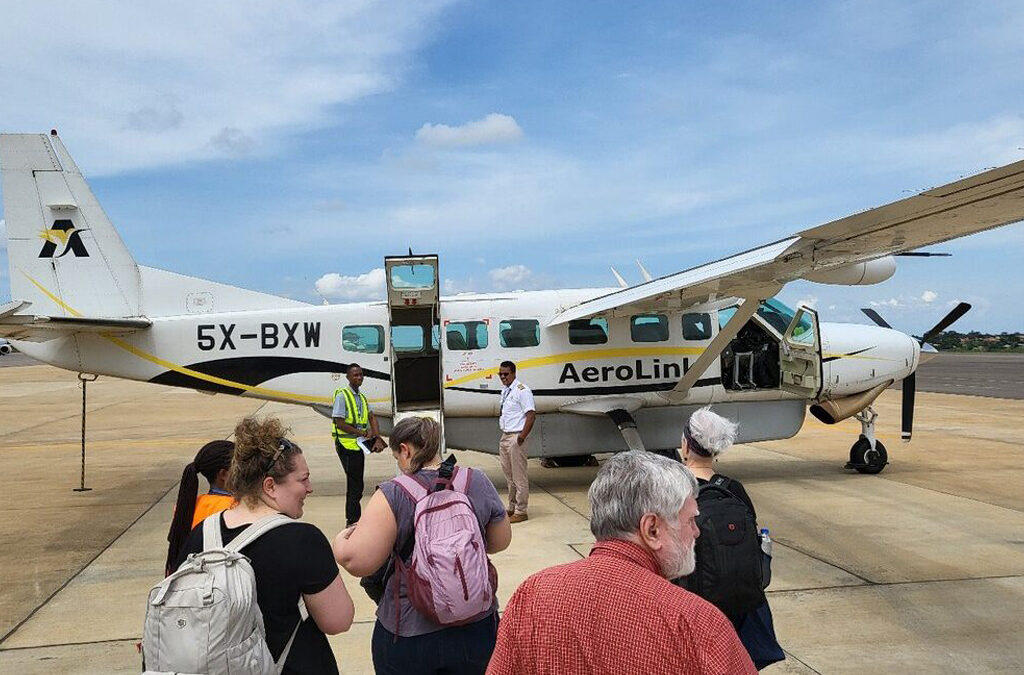
Planning a flying safari to Bwindi Impenetrable National Park saves you from the 8–10-hour road trip from Entebbe. To do this, secure a gorilla permit, align your accommodation with the nearest airstrip, and book a domestic flight via airlines like Aerolink or Bar Aviation
4-days-luxury-gorilla-trekking-safari-in-bwindi-fly-in-all-inclusive-tour
1. Secure Your Gorilla Permit First
The absolute bedrock of planning a gorilla trekking safari is securing your official tracking permit before making any other travel arrangements. Because the Uganda Wildlife Authority (UWA) strictly limits habituated gorilla family visits to a single group of eight people per day for exactly one hour, availability is incredibly finite. Demand globally outstrips supply, meaning permits frequently sell out three to six months in advance—and up to a year ahead for travel during the peak dry seasons of June to August and December to February.
As of recent updates, the cost of a single gorilla trekking permit for a foreign non-resident stands at $800. This fee grants you access to the park, the security of armed park rangers, and the expertise of professional trackers who lead you through the dense foliage to locate the primates. For those looking for an even deeper connection, the Gorilla Habituation Experience—available exclusively in the southern sector—costs $1,500 and allows you to spend four hours with a family still undergoing habituation.
It is highly recommended to secure these permits through a registered local tour operator or directly via the UWA. Trying to book flights or luxury lodges before having a confirmed permit date is a massive gamble; if permits are sold out for your specific dates, you will be forced to reschedule your entire itinerary, often incurring steep flight cancellation or change fees. Additionally, your permit is stamped for a highly specific sector of the forest. Because Bwindi is massive and divided by rugged mountain terrain, the sector printed on your permit dictates exactly where you must sleep and, crucially, which domestic bush airstrip you need to fly into.
2. Choose Your Destination Sector & Airstrip
Bwindi Impenetrable National Park is divided into four distinct, widely separated tracking sectors: Buhoma and Ruhija in the north, and Rushaga and Nkuringo in the south. Because there is no direct road cutting through the center of this ancient, dense rainforest, driving from the northern sectors to the southern sectors can take anywhere from three to five hours along rough, winding dirt roads. Therefore, matching your domestic flight to the correct geographical airstrip is vital to avoid wasting an entire day of your safari on exhausting road transfers.
If your gorilla permit is designated for Northern Bwindi—meaning you will be trekking in Buhoma (the park’s headquarters and oldest tracking site) or Ruhija (known for its high altitude and pristine birdwatching)—you must book your domestic flight to Kihihi Airstrip. Kihihi sits at a lower altitude outside the park lines, offering a relatively smooth and straightforward drive into the northern gates.
Conversely, if your permit dictates that you are tracking in Southern Bwindi—the steep, dramatic ridges of Rushaga or Nkuringo—your target destination is Kisoro Airstrip. The flight path to Kisoro is exceptionally scenic, flying over the terraced hills of southwestern Uganda and offering views of the Virunga Volcanoes. However, because Kisoro is surrounded by high mountain peaks, flights here are highly weather-dependent and require excellent visibility to land safely. Always double-check your permit sector before confirming your airstrip destination, as landing on the wrong side of the forest turns a seamless fly-in safari into a logistical headache.
3. Book Your Domestic Flights
Once your gorilla permits are locked in and you know your designated landing strip, the next step is booking your domestic flights out of the central transport hubs near Kampala. Flying drastically changes the dynamic of a Ugandan safari; while driving from Entebbe to Bwindi takes a grueling eight to ten hours across bumpy, unpredictable roads, a domestic flight slashes that travel time down to just one to two hours, allowing you to arrive fresh and ready to trek.
Two primary domestic aviation companies operate reliable, scheduled daily flights to the bush: Aerolink Uganda and Bar Aviation. Aerolink primarily flies out of Entebbe International Airport (EBB), making it incredibly convenient for international travelers who want to connect directly onto a safari flight. Bar Aviation operates out of both Entebbe and Kajjansi Airfield, a smaller airstrip located between Kampala and Entebbe. Both airlines utilize highly dependable caravanned turboprop aircraft, such as the Cessna Grand Caravan, which are perfectly engineered for short-takeoff-and-landing maneuvers on remote, unpaved dirt airstrips.
Timings for these flights are strictly structured around the region's weather patterns and safari schedules. Flights typically depart Entebbe in the early morning, around 7:00 AM or 7:30 AM, when the mountain air is cool, stable, and relatively free of fog. A morning departure ensures you land at Kihihi or Kisoro by mid-morning, giving you ample time to drive to your lodge, check-in, eat lunch, and enjoy an afternoon nature walk. Afternoon scheduled flights do exist but are scarcer and more prone to weather delays due to afternoon rain showers or cloud buildup over the highlands.
4. Arrange Ground Transfers & Lodging
A common misconception among first-time safari travelers is that landing at a wilderness airstrip puts you at the doorstep of your lodge. In reality, both Kihihi and Kisoro airstrips are located well outside the actual boundaries of the national park. When your small aircraft touches down on the dirt runway, you will still need a robust 4x4 safari vehicle to navigate the steep, rocky, and often muddy terrain that climbs into the cloud forest. It is imperative to coordinate these ground transfers well in advance.
The most seamless way to handle this is by booking an all-inclusive package through a registered tour operator who will arrange for a private guide and a custom 4x4 Land Cruiser to be waiting for you when the plane lands. Alternatively, luxury lodges can arrange their own internal vehicles to collect you. The drive from Kihihi to Buhoma takes roughly one hour, while the drive from Kisoro to the rugged ridges of Nkuringo or Rushaga can take anywhere from 1 to 1.5 hours of intense, bumpy mountain driving.
Your choice of lodging should directly mirror your tracking sector to avoid an exhausting 4:00 AM wake-up call on the day of your trek. The park boasts phenomenal accommodation options tailored to different budgets. In the northern Buhoma sector, Sanctuary Gorilla Forest Camp offers unparalleled luxury, featuring permanent canvas tents built right inside the park boundary where gorillas occasionally wander through the lawn. In the southern Nkuringo sector, Clouds Mountain Gorilla Lodge sits perched at a breathtaking 2,100 meters above sea level, offering sweeping views of the Virunga massifs and private stone cottages complete with personal butlers and roaring fireplaces to ward off the chilly mountain nights.
5. Pack for Strict Weight Limits
Flying on a domestic bush flight requires a completely different mindset when it comes to packing. Because the aircraft utilized by Aerolink and Bar Aviation are small, weight-sensitive turboprops, they strictly enforce a maximum luggage limit of 15 to 20 kg (33 to 44 lbs) per passenger, which explicitly includes your hand luggage. The pilots must calculate the exact weight and balance of the aircraft before takeoff to ensure safety over the mountainous southwestern terrain, meaning they will not hesitate to leave excess bags behind at the terminal.
Furthermore, traditional hard-shelled suitcases with rigid frames and wheels are strictly banned on these flights. The cargo holds of safari planes are small, irregularly shaped pods beneath the fuselage or behind the cabin. Luggage must be packed into soft-sided duffel bags that can be physically squeezed, stacked, and manipulated to fit into these tight spaces.
To maximize this restrictive allowance, prioritize high-functioning, lightweight layering gear. You will need sturdy, worn-in hiking boots (which you should wear on the plane to save bag weight), thick long-sleeved shirts, and long trousers to protect your skin from stinging nettles and wild briars. Lightweight waterproof rain jackets are non-negotiable, as Bwindi can experience torrential downpours at any moment. Avoid packing heavy cottons or excessive pairs of shoes; instead, lean into quick-dry synthetic fabrics. Most luxury lodges in Bwindi offer daily laundry services (often included in the room rate or available for a small fee), meaning you only need to pack enough clothing for two to three days, allowing you to easily stay well under the airline's strict weight limits.
Which Airstrip Should I Fly Into?
When planning a flying safari to Bwindi Impenetrable National Park, you cannot simply book a ticket to "Bwindi" and call it a day. The park is geographically divided into distinct sectors, separated by dense, mountainous terrain. Therefore, your choice of arrival airstrip depends entirely on the specific sector where your gorilla trekking permit is registered. Failing to align your flight with your permit sector can result in an unexpected, grueling road journey across the mountains.
If your permit is designated for the Buhoma (north) or Ruhija (east) sectors, your target destination is Kihihi Airstrip. Buhoma is the park’s historical headquarters and features a well-developed tourism infrastructure, while Ruhija sits at a higher elevation. Landing at Kihihi positions you perfectly for a smooth ground transfer to either location.
Conversely, if you are trekking in the southern sectors of Rushaga or Nkuringo, you must fly into Kisoro Airstrip. The southern region is famous for its dramatic ridge views and steep terrain, offering a distinctly rugged trekking experience.
Crucial Takeaway: Think of Bwindi as a park with two entirely separate front doors. Kihihi is your northern key, and Kisoro is your southern key.
Always cross-reference your documentation before confirming your aviation itinerary. If you are handling bookings independently, a simple oversight here can turn a luxury fly-in safari into a logistical headache. Tour operators universally emphasize this step because Ugandan mountain roads do not allow for quick, spontaneous cross-park shortcuts. Make sure your permit, lodge accommodation, and airstrip choice all point to the exact same geographic sector.
2. Which Airlines Operate Flights to Bwindi?
Navigating the domestic airspace of Uganda is remarkably straightforward, thanks to a handful of reliable carriers specializing in bush flying. Scheduled and charter domestic flights to the Bwindi region are primarily operated by three reputable aviation companies: AeroLink Uganda, Bar Aviation Uganda, and Kampala Executive Aviation (KEA). These airlines run daily operations linking the urban hub of Entebbe to the remote wilderness of southwestern Uganda.
Flights typically depart from Entebbe International Airport (EBB) in the morning and early afternoon. Morning departures are highly favored by safari organizers. Mountain weather is notoriously unpredictable, and the clear skies of the early morning offer the smoothest flying conditions over the Rwandan border highlands and the Western Rift Valley.
- AeroLink Uganda: Perhaps the most prominent operator on this route, utilizing a fleet of reliable Cessna Grand Caravans. They offer daily scheduled flights that seamlessly connect with international arrivals.
- Bar Aviation: Another excellent, highly professional option providing regular scheduled routes and flexible private charters tailored to custom itineraries.
- Kampala Executive Aviation: Primarily focused on specialized private charters, making them ideal for luxury travelers or larger groups seeking bespoke timetables.
Choosing a scheduled flight means sharing the aircraft with fellow trekkers, while a private charter grants you total control over your departure times. Regardless of the airline you select, flying over Uganda provides a spectacular aerial view of the changing landscape—shifting from the sprawling waters of Lake Victoria to the terraced green hills of Kigezi, colloquially known as the "Switzerland of Africa."
How Long is the Flight and Subsequent Transfer?
The primary allure of a flying safari to Bwindi is the sheer amount of time you save. Driving from Entebbe or Kampala to Bwindi is a grueling 8 to 10-hour road marathon that drains your energy before the trek even begins. By contrast, a domestic flight slashes that transit time down to a fraction of the day, allowing you to arrive fresh and ready for the jungle.
The flight itself takes between 1 and 2 hours, depending entirely on the routing and potential intermediate stops to drop off passengers at other national parks. Once your light aircraft touches down on the tarmac or murram runways of the bush airstrips, the aviation leg of your journey concludes, and your ground transfer begins. It is important to remember that these airstrips are not located directly inside the national park itself.
Once you land at Kihihi Airstrip, you should expect an approximate 1 to 1.5-hour drive in a 4x4 safari vehicle to reach the lodges in the Buhoma sector. If you land at Kisoro Airstrip, you will face an approximate 1-hour drive over winding, unpaved mountain roads to reach the Rushaga or Nkuringo sectors.
While these final ground transfers still feature the bumpy terrain affectionately known as the "African massage," they are incredibly scenic, winding through local trading centers, tea plantations, and terraced hillsides.
How Far in Advance Should I Book My Flights and Permits?
Gorilla trekking is not a spontaneous, last-minute vacation option. Because of the strict conservation protocols safeguarding the endangered mountain gorillas, access to Bwindi is tightly regulated. The Uganda Wildlife Authority (UWA) enforces a strict cap of 152 gorilla permits issued per day across the entire park. This restriction ensures that human contact with the gorilla families is kept to a minimum to protect their health and natural behaviors.
Because of this limited supply and massive global demand, you must book both your domestic flights and your gorilla permits at least 3 to 6 months in advance. If you plan to travel during the peak dry seasons (June to September and December to February), extending that booking window to 9 to 12 months is highly recommended.
Pro Tip: Securing a permit through an authorized, trusted tour operator is the most efficient route, as they have direct lines to UWA's booking systems and can synchronize your permits with flight availability.
Attempting to book flights without securing your permit first is a recipe for disappointment. Airlines fill up quickly because they utilize light aircraft with limited seating capacities (often between 11 and 14 seats per plane). If you delay your booking, you run the risk of securing a permit for a specific date but finding no available flights to get you there, or vice versa. Early planning guarantees peace of mind and secures your spot in the forest.
What is the Luggage Weight Limit on Domestic Flights?
Packing for a luxury safari requires a shift in mindset, particularly when light aircraft are involved. Domestic airlines operating bush routes in Uganda enforce a strict baggage allowance of 15 kg (33 lbs) per person. This limit is non-negotiable and includes your hand luggage. The restriction is a matter of strict aviation safety, as light aircraft must carefully balance weight and fuel calculations for mountain takeoffs and landings.
Furthermore, your luggage must be packed in soft-sided duffel bags rather than rigid, hard-shell suitcases. Light aircraft cargo holds are compact and awkwardly shaped; soft bags can be compressed and manipulated to fit securely into the hull, whereas rigid suitcases simply will not fit.
- Embrace the Duffel: Choose durable, water-resistant nylon or canvas duffel bags without frames.
- Leverage Lodge Services: Most luxury lodges in Bwindi offer daily laundry services, often complimentary or for a small fee, meaning you only need enough clothing for a couple of days.
- Manage Excess Baggage: If you are on a longer continental journey and carrying extra items, you can arrange to leave your excess luggage behind at your Entebbe hotel or store it securely at the domestic airline's headquarters at Entebbe Airport.
By prioritizing lightweight, functional layers, you can easily stay within the weight limit while ensuring you have all the essential gear for the humid, unpredictable rainforest environment.
Do I Need to Confirm My Trekking Sector Before Booking the Flight?
The short answer is an absolute, emphatic yes. Booking a lodge or a domestic flight before you have absolute confirmation of your exact trekking sector is the single biggest logistical mistake a traveler can make when planning a Bwindi safari.
Because Bwindi Impenetrable National Park is divided into four distinct operational sectors (Buhoma, Ruhija, Rushaga, and Nkuringo), your gorilla permit dictates your entire geographical itinerary. Each permit is valid only for the specific sector printed on it. If you mistakenly fly into Kisoro Airstrip thinking you can easily pop over to your luxury lodge in Buhoma, you will be met with a rude awakening.
[Mistaken Arrival: Kisoro Airstrip]
│
▼ (3 to 4 Hours over rough, mountain terrain)
[Your Intended Lodge / Permit: Buhoma Sector]
Such a mistake forces you into an exhausting 3 to 4-hour cross-sector road transfer over rough, unpaved terrain. This completely defeats the purpose of booking a commercial flight to save time and avoid long drives.
To ensure a seamless vacation, follow a strict order of operations:
- Secure your gorilla permit and note the assigned sector.
- Book a lodge located within or immediately adjacent to that specific sector.
- Book the domestic flight to the corresponding airstrip (Kihihi for north/east, Kisoro for south).
What Happens if I Miss My Connecting Flight?
Travel delays are an unfortunate reality of international tourism. If your incoming international flight to Entebbe International Airport is delayed, missing your domestic connection to Bwindi is a valid concern. Fortunately, domestic airlines in Uganda are accustomed to the fluid nature of safari travel and maintain clear protocols for handled disruptions.
If you miss your scheduled domestic flight, the airline will typically attempt to move you to the next available flight that day, provided there is seat availability. However, you should expect to pay rebooking fees. If you miss the final scheduled flight of the afternoon, your options become more logistically complex and expensive. You may need to pay for a private charter flight to get you to the park before your trek day, or pivot to an intensive, overnight road transfer.
To mitigate this risk, safari experts strongly recommend scheduling an overnight buffer stay in Entebbe upon your international arrival. Landing in Uganda, spending a relaxing evening at a boutique hotel on the shores of Lake Victoria, and taking a morning flight to Bwindi, the following day is the safest approach. This buffer protects your expensive gorilla permit from international flight delays, lost baggage issues, and immigration bottlenecks, ensuring you start your safari stress-free.
What is the Best Time of Year to Take a Flying Safari?
While Bwindi Impenetrable National Park is open for gorilla trekking year-round, weather patterns play a massive role in both flight comfort and trail accessibility. The best time of year to embark on a flying safari is during the two distinct dry seasons: January to February and June to early September.
According to planning insights from experienced operators like Great Adventures Safaris, the dry season significantly improves the entire trekking experience. In the rainforest, "dry" is a relative term—rain can fall at any moment—but these months experience significantly lower rainfall. This keeps the steep forest trails from turning into slippery mud paths, making the arduous hike to locate the gorilla families far more manageable.
From an aviation perspective, the dry seasons offer clearer skies and smoother flights. Mountain flying in light aircraft during the rainy seasons (March to May and October to November) can occasionally involve turbulence or weather-related delays if heavy mist covers the runways at Kisoro or Kihihi.
That said, the rainy "green" season does have its perks, such as lush photography conditions and less crowded trails. However, for the optimal balance of reliable flight schedules and easier hiking conditions, aiming for the dry summer and winter months is your best bet.
What Specific Gear Do I Need for a Flying Safari in Bwindi?
Packing for Bwindi requires a balance between the strict 15 kg airline weight limit and the uncompromising demands of an equatorial rainforest. The dense vegetation, steep terrain, and unpredictable weather require specialized gear to keep you safe, comfortable, and protected throughout your trek.
According to packing guidelines from Eco Adventure Safaris and Roads of Adventure Safaris, your equipment list should prioritize utility and protection over fashion. The forest is full of stinging nettles, sharp vines, and insects, making skin coverage essential.
- Footwear: Broken-in, waterproof hiking boots with excellent ankle support and deep tread are non-negotiable for navigating slippery clay slopes.
- Clothing: Lightweight, long-sleeved shirts and durable long trousers are necessary. You will want to tuck your trousers into your long socks to prevent safari ants from crawling up your legs.
- Protection: Thick gardening gloves are a fantastic addition, allowing you to grab onto branches and thorny vines for balance without injuring your hands.
- Outerwear & Repellent: A high-quality, breathable rain jacket is essential year-round, alongside a high-DEET insect repellent and a wide-brimmed hat.
By focusing on lightweight, high-performance synthetic materials that dry quickly, you can easily fit all your essential gear into a soft-sided duffel bag without exceeding airline weight limits.
Can I Combine a Flying Safari to Bwindi with Other Parks?
One of the greatest advantages of opting for a flying safari is the ease with which you can build a comprehensive, multi-park Ugandan itinerary. You do not have to fly back to Entebbe to see other regions. Domestic bush carriers have established interconnected route maps that link Bwindi directly to Uganda’s premier savannah destinations.
Booking flying safari in Bwindi with us Roads of Adventure safaris
Book a fly-in safari to Bwindi with Roads of Adventure Safaris by contacting them to customize your itinerary and secure your gorilla permits. Flights depart from Entebbe to Kihihi or Kisoro airstrips, cutting out an 8 to 10-hour drive in favor of a 1-hour flight.
