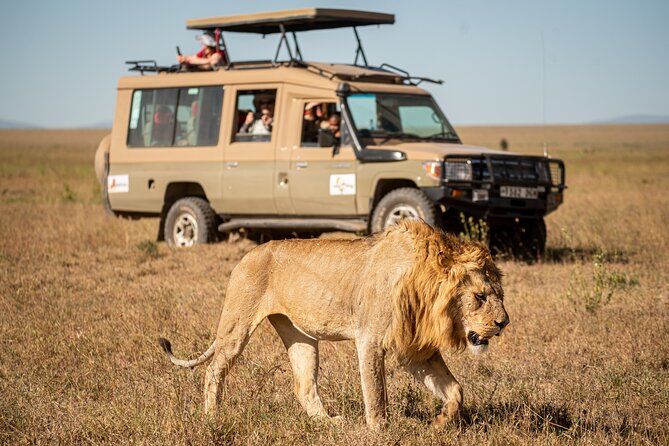
Planning a last-minute safari in the Masai Mara requires flexibility. Your best approach is to connect directly with a Nairobi-based tour operator (via WhatsApp or phone call), choose between a 6-hour overland drive or a 45-minute fly-in package, and book flexible, off-peak or conservancy accommodations to skip the crowds.
2-days-masai-mara-safari-africa-big-cats-safaris
3-days-luxury-masai-mara-kenya-honeymoon-safari-vacation
4-days-masai-mara-and-lake-nakuru-kenya-safari-tour-package
1. Contact a Local Operator like Roads of Adventure safaris Immediately
When booking a last-minute trip, time is your most critical constraint. Navigating park regulations, vehicle logistics, and accommodation availability from abroad can be incredibly difficult. Reaching out directly to a highly-rated, local Kenyan safari operator is the single most effective move you can make. Local operators have direct, real-time access to lodge managers, transport networks, and park authorities.
On-the-ground agents can bypass standard booking delays. While an international travel agency might take days to reply across time zones, a local team can coordinate an entire Masai Mara safari in Kenya within hours. They know exactly which camps have sudden cancellations and can instantly secure reliable, experienced safari guides.
Furthermore, local operators handle the seamless integration of mandatory logistics, such as vehicle entrance fees and compliance with local park rules. Kenya’s booking systems for conservation areas require prompt payment processing; a local partner ensures your electronic or cash-equivalent park tokens are issued without error. Instead of spending your precious travel hours troubleshooting administrative roadblocks at the park gates, a local operator allows you to focus fully on the wildlife experience from the moment you land or drive in.
2. Choose Your Transport Method
Selecting your transport method shapes the entire rhythm and budget of your Masai Mara safari in Kenya. You have two distinct options depending on whether you prioritize time or cost.
Fly-In Safari
Taking a commercial bush flight from Nairobi’s Wilson Airport (WIL) directly to one of the Mara’s regional airstrips (like Keekorok, Musiara, or Serena) is the fastest approach. The flight takes approximately 45 to 50 minutes, instantly turning a exhausting travel day into an effortless journey. Upon landing, a 4×4 open-sided safari vehicle from your chosen camp will meet you at the airstrip to begin your first game drive immediately.
Important Fly-In Rule: Luggage on these light aircraft is strictly capped at 15kg (33 lbs) per person, and you must use soft-sided duffel bags. Hard-shell suitcases cannot physically fit into the small cargo pods of the planes.
Overland Safari
An overland safari utilizing a private 4×4 Land Cruiser or a specialized safari minivan is a classic, cost-effective route. The drive from Nairobi across the floor of the Great Rift Valley takes roughly 6 to 7 hours. While the final stretch of road leading into the reserve can be bumpy and rough, the journey offers scenic landscapes and cultural glimpses of rural Kenyan towns along the way. Your dedicated driver-guide remains with you throughout your entire stay, providing full flexibility for your daily game-viewing schedules.
3. Be Flexible with Accommodation
Securing lodging on short notice requires an open mind and a reliance on your operator’s immediate availability lists. Iconic properties inside the main reserve frequently fill up six to twelve months in advance, but excellent alternatives exist across different styles and sectors.
Accommodation Type
Best For
What to Expect
Luxury Tented Camps
Immersive comfort
Canvas walls on elevated wooden decks, en-suite bathrooms, fine dining, and unfenced positions along wildlife corridors.
Private Conservancies
Exclusive viewing
Areas like Mara North or Naboisho bordering the main reserve. They enforce strict limits on vehicle numbers, allow off-road driving for rare sightings, and offer night game drives.
Budget Campsites / Lodges
Cost-conscious travelers
Simple permanent tents or basic rooms located just outside the main reserve gates (such as Sekenani or Talek), providing excellent park access at a fraction of the cost.
Embracing private conservancies is often a blessing in disguise for a Masai Mara safari in Kenya. If you stay in a conservancy, your daily fees directly fund local Maasai communities who lease their land for conservation, beautifully blending sustainable tourism with an extraordinarily intimate, uncrowded wildlife experience.
4. Important Considerations for the Season
Timing affects both the financial investment and the visual environment of your safari. The Masai Mara offers spectacular resident wildlife year-round, including thriving populations of lions, leopards, cheetahs, and elephants, but seasonal shifts change the operational landscape.
High Season (July to December)
This window centers around the world-famous Great Migration, when millions of wildebeest and zebras cross the Mara River from the Serengeti. Because demand peaks dramatically, park entry fees for non-resident adults sit at $200 USD per day.
The 12-Hour Ticket Rule: Park tickets are valid strictly from 6:00 AM to 6:00 PM on a single calendar day. On your departure day, you must exit by 10:00 AM, or you will be charged an additional full day's peak fee of $200 USD.
Low / Green Season (January to June)
Traveling during the quieter months offers significant structural advantages. Non-resident adult park entry fees drop to $100 USD per day, immediately cutting your conservation costs in half. Accommodation rates fall sharply, and safari vehicle density drops, meaning you can watch a predator sighting with only one or two other cars nearby, rather than sharing it with a dozen vehicles. The landscapes are brilliantly green, the air is crisp and clear for photography, and the abundance of young animals makes it an incredibly rewarding time for a Masai Mara safari in Kenya.
5. Packing & Gear
A spontaneous departure means you must pack efficiently, focusing entirely on high-utility items that maximize your comfort during long hours out on the savannah.
Apparel & Layers
- Neutral Palette: Pack lightweight, breathable clothing in khaki, beige, olive, or brown. Avoid bright whites (which attract dust), dark blue or black (which attract biting tsetse flies), and camouflage patterns (which are reserved for local military personnel).
- Warm Layers: Early morning game drives start before sunrise when the plains are surprisingly cold and windy. Bring a high-quality fleece, a windbreaker, or a light down jacket, along with a scarf or beanie. You can shed these layers as the African sun warms the plains by midday.
Essential Equipment
- Optics & Cameras: A pair of 8×42 binoculars is indispensable for scanning distant ridges. For photography, bring a camera equipped with a telephoto lens (ideally 300mm or longer), extra batteries (charging in the bush can sometimes be limited), and multiple high-capacity memory cards.
- Sun & Element Protection: Pack a wide-brimmed safari hat with a chin strap to brave the wind in open vehicles, high-SPF sunscreen, polarized sunglasses, and a reliable insect repellent containing DEET.
- Documentation: Keep your physical passport accessible. Smaller regional airports like Wilson Airport enforce physical security checks where digital screenshots or phone copies of your documents will be rejected. Keep cash in small denominations of US Dollars (printed post-2013) or Kenyan Shillings for tipping your guides and camp staff.
1. How does a last-minute booking affect park entry fee regulations?
When planning a last-minute Masai Mara safari in Kenya, navigating the park entry fee system requires immediate financial preparation. The Narok County Government utilizes a strict, seasonal pricing structure that impacts your spontaneous budget. For foreign non-residents, adult fees are capped at $100 USD per day from January to June, but they jump to $200 USD per day from July to December during the high season.
Because you are booking at the eleventh hour, you cannot afford payment processing delays at the gate. The park systems have transitioned heavily toward cashless mechanisms, particularly inside the Mara Triangle which is entirely cashless. A last-minute traveler must ensure their payment is processed instantly via authorized online platforms like the KAPS system, or completely rely on a local tour operator who can issue electronic QR-coded entry tokens within minutes.
Furthermore, you must account for the rigid "12-hour rule." Unlike other parks in Kenya managed by the Kenya Wildlife Service (KWS) that traditionally operate on a rolling 24-hour clock, entry tickets for the main Masai Mara reserve expire strictly at 10:00 AM on your day of departure, regardless of what time you entered the previous day. If you plan a final morning game drive past 10:00 AM without a freshly paid ticket, park rangers will penalize you or charge you an additional full day's fee ($100 or $200 USD depending on the month). When pulling together a sudden itinerary, your daily budget calculations must align with calendar dates rather than hotel nights to avoid expensive surprises at the checkpoint.
2. Is a fly-in or an overland drive better for a last-minute itinerary?
Time is the ultimate currency when organizing a sudden Masai Mara safari in Kenya. If your travel window is narrow—say, a three-day weekend—a fly-in safari is indisputably the superior choice. Booking a bush flight from Nairobi’s Wilson Airport (WIL) lands you at a Mara airstrip in roughly 45 minutes. This eliminates a exhausting day of travel and allows you to enjoy an afternoon game drive on your very first day.
However, booking flights last minute brings two distinct challenges: seat availability on regional carriers like AirKenya or Safarilink can be thin, and you must strictly comply with the 15kg (33 lbs) soft-sided luggage limit. The aircraft cargo holds cannot physically accommodate hard-case suitcases, forcing you to pack with zero margin for error.
Conversely, if flight availability is gone, an overland drive via a private 4×4 Land Cruiser or a safari minivan is your fallback. The journey from Nairobi takes 6 to 7 hours, crossing scenic viewpoints along the Great Rift Valley before hitting the notoriously rough, unpaved roads near the reserve gates. The structural benefit of an overland booking is that your dedicated vehicle and driver stay with you for the entire duration, granting you total control over your daily schedule. For a last-minute trip, an overland drive is far easier to arrange at the absolute last second because local operators maintain large vehicle fleets in Nairobi, whereas airplane seats are finite and non-negotiable.
3. How do you find available accommodation when the reserve is fully booked?
The greatest hurdle to a short-notice Masai Mara safari in Kenya is lodging, especially between July and October when top-tier camps sell out a year in advance. If the central properties inside the reserve are full, your primary strategy must pivot toward the private conservancies bordering the main reserve, such as Mara North, Olare Motorogi, or Naboisho. These community-owned conservation areas feature high-end tented camps that often hold late cancellations that international agencies overlook.
Another highly effective last-minute alternative is targeting mid-range or budget eco-lodges situated just outside the primary boundary gates, specifically near the Talek, Sekenani, or Oloolaimutia access points. These properties sit only minutes from the park line, offering identical daytime access to the wildlife-rich plains at a fraction of the price.
When time is running out, searching individual hotel websites is highly inefficient. Instead, you should request an aggregated live availability list from a local operator. Local destination management companies have direct WhatsApp channels with lodge managers on the ground and are immediately notified when a group cancels a block of rooms. This insider network allows spontaneous travelers to snap up premium luxury tents that would otherwise show up as completely unavailable on major global booking search engines.
4. What are the advantages of choosing a private conservancy for a sudden trip?
Opting for a private conservancy instead of the public reserve is an exceptional strategy for a last-minute Masai Mara safari in Kenya. Conservancies operate on leased Maasai community land surrounding the national reserve. Because they enforce a strict cap on the number of guest beds and safari vehicles allowed inside their boundaries, they are rarely plagued by the overcrowding seen at major river-crossing points in the public areas.
From an experiential standpoint, conservancies offer flexible safari activities that are legally prohibited inside the main national reserve. This includes guided walking safaris, bush dinners under the stars, and thrilling night game drives utilizing spotlight filters to spot elusive nocturnal predators like leopards and genets.
For the last-minute traveler, booking a camp inside a conservancy completely changes the dynamic of your trip. Even if you are forced to book a secondary or lesser-known tented camp due to limited availability, the guiding quality remains world-class. Furthermore, vehicles registered within a specific conservancy are granted exclusive off-road driving privileges. If a pride of lions or a cheetah coalition is spotted deep in the whistling thorn bush, your guide can drive directly to the sighting rather than being confined to the established dirt tracks. This structural advantage ensures a deeply intimate wildlife experience, effectively turning a rushed, last-minute booking into a highly customized luxury excursion.
5. Can a traveler safely execute a self-drive safari on short notice?
While executing a self-drive Masai Mara safari in Kenya on short notice is entirely possible, it requires a high degree of resourcefulness and physical preparation. The primary challenge lies in securing a properly equipped vehicle. You absolutely must hire a rugged, high-clearance 4WD vehicle—preferably a specialized safari Land Cruiser with a pop-up roof or a heavy-duty camper setup. Standard sedans or urban crossovers will sustain severe undercarriage damage on the rocky, corrugated roads leading into the reserve, and park rangers may outright deny them entry at the gate for safety reasons.
Logistically, a self-drive trip requires you to manage all variable park fees independently. You must pay separate daily vehicle entry fees (typically around KES 1,000 to KES 1,500 for foreign-registered safari vehicles) alongside your personal entry permits. If you plan to camp at public campsites, you must budget approximately $30 to $40 USD per adult per night.
Safety Warning: Public campsites inside the main reserve are completely unfenced. Elephants, hippos, and hyenas frequently wander through these zones at night. Spontaneous self-drivers must carry all their own recovery gear, including high-lift jacks, spare tires, tow straps, and a reliable GPS mapping application like Tracks4Africa, as cellular signals drop off completely once you descend into the valley floor.
6. What essential medical and visa preparations are required at the last second?
An abrupt Masai Mara safari in Kenya demands rapid compliance with international travel health and entry mandates. First and foremost, you must secure your Electronic Travel Authorization (eTA) via the official Kenyan government portal before boarding your flight. While the eTA system is efficient, processing times can take anywhere from 24 to 72 hours. Attempting a last-minute trip means you must submit this application the absolute second your flights are locked in, ensuring all passport scans and hotel confirmations are uploaded with total clarity to avoid manual rejection.
From a health perspective, malaria is endemic to the low-lying basin of the Mara ecosystem. A last-minute traveler must visit a travel clinic immediately to secure a prescription for malaria prophylactics (such as Atovaquone/Proguanil or Doxycycline). Since some medications require you to begin the regimen days before entering a malaria zone, immediate procurement is vital.
Additionally, if you are transiting through or arriving from a country endemic to Yellow Fever (such as neighboring Ethiopia or Uganda), you are legally required to present an official Yellow Fever international certificate of vaccination at border control. While Kenya does not universally require it for direct arrivals from Europe or North America, airlines and border officials strictly police this card if your sudden flight route loops through an endemic zone, making a physical medical check indispensable.
7. How do seasonal wildlife patterns dictate last-minute destination choices?
Your choice of geographic positioning within the ecosystem should change depending on the time of year you book your Masai Mara safari in Kenya. If you are organizing a spontaneous trip between July and October, the Great Migration herds are concentrated around the southern and central sectors of the reserve near the Mara and Talek Rivers. To witness the dramatic, high-stakes river crossings, your last-minute accommodation search must target camps near Gates like Musiara or Sekenani, minimizing the transit time required to reach the river banks each morning.
If you are booking a last-minute trip during the "Green Season" from January to June, the migratory herds have returned to the Serengeti, but the Mara’s rich resident wildlife remains entirely intact. During these months, the northern conservancies and the western Mara Triangle become exceptionally rewarding. The plains are lush, and the local predator populations—lions, leopards, and spotted hyenas—remain highly territorial, hunting the resident topis, gazelles, and zebras.
Because the vegetation grows thick and tall during the April-May long rains, animal tracking requires a bit more skill. Booking a lodge that provides seasoned, professional local guides during the off-season is far more important than it is during the dry season when the wildlife congregates predictably around dwindling waterholes.
8. What camera gear and electronics should be sourced immediately before departure?
Photographing a wildlife spectacle requires specific technical gear that cannot be easily purchased once you leave Nairobi. For a successful last-minute Masai Mara safari in Kenya, you must source a camera body paired with a telephoto zoom lens reaching at least 300mm, though a 100-400mm lens is the gold standard for framing distant predators without disrupting their natural hunting behavior. If you do not own this equipment, utilizing a last-minute camera rental service in your home city or arranging a rental kit through a specialized safari provider in Nairobi is a fantastic shortcut.
Power management in the bush is a major consideration for spontaneous planners. Many authentic tented camps rely entirely on localized solar arrays or generators that are switched off late at night. You must pack at least two spare camera batteries and a high-capacity power bank (minimum 20,000mAh) to keep your devices charged during marathon 10-hour game drives.
Furthermore, dust is a constant threat on the dry savannah plains; the fine volcanic soil easily penetrates camera housings during off-road tracking. Pack a dedicated lens cleaning kit, a dust-proof dry bag to seal your equipment during transit, and multiple high-speed memory cards. Wildlife action unfolds with extreme speed, and shooting in RAW format at high frame rates will deplete your storage capacity far faster than a standard holiday trip.
9. How do you structure a compact 3-day last-minute safari itinerary?
When time is limited, a highly structured itinerary is the only way to ensure your Masai Mara safari in Kenya delivers maximum value without turning into a stressful logistical sprint. A compact 3-day program must utilize a fly-in model to protect your limited daylight hours from being wasted on the highway.
Nairobi (WIL) ---> [ 45-Min Flight ] ---> Mara Airstrip ---> Lodge Check-in ---> Afternoon Safari
The 3-Day Strategic Blueprint
- Day 1: Arrival & First Impressions. Catch an early morning bush flight from Wilson Airport, landing in the Mara by 10:00 AM. Your camp's 4×4 vehicle meets you directly at the airstrip, conducting a mini-game drive en route to the lodge. After lunch and a brief rest, embark on an afternoon game drive from 3:30 PM until sunset, tracking resident big cats as they begin their evening patrol.
- Day 2: The Full-Day Epic. Commit to a comprehensive, full-day safari. Depart at 6:30 AM with a packed picnic breakfast and lunch. This long window allows your guide to navigate deep into the reserve toward the Mara River or isolated boundary zones to locate rare cheetah coalitions or a leopard kill, completely free from the pressure of returning to camp for lunch.
- Day 3: Dawn Patrol & Departure. Head out on a crisp, 6:00 AM dawn game drive to witness nocturnal predators concluding their night hunts. Return to the lodge for a hearty brunch before departing for the airstrip by 10:00 AM to catch your return flight to Nairobi, perfectly optimizing the park's 12-hour ticket validity window.
10. What tipping customs and currency requirements apply to sudden bookings?
Managing your finances for an unexpected Masai Mara safari in Kenya requires a clear understanding of cash logistics in the bush. While luxury lodges accept international credit cards for souvenir shop purchases or premium spa services, the day-to-day safari economy runs almost entirely on physical cash. You must carry crisp, unblemished US Dollar bills printed after 2013, or local Kenyan Shillings (KES). Banks and local operators across East Africa routinely reject older US currency due to historical counterfeiting concerns, and torn or heavily creased notes will be flatly declined by camp cashiers.
Tipping is a foundational element of the safari industry, directly supporting the local hospitality ecosystem. For a last-minute trip, you should calculate your tipping reserves before heading into the field, as ATMs are completely nonexistent inside the reserve boundaries.
As a general guideline, you should budget $15 to $20 USD per day for your dedicated safari guide, which can be presented in a sealed envelope at the end of your stay. For the general lodge staff—including the chefs, housekeepers, and security wardens who maintain the camp—a tip of $10 to $15 USD per day is customary, typically deposited into the communal "Staff Tip Box" located in the main lounge area. Having the correct cash denominations ready ensures seamless interactions and honors the intense labor that goes into running a remote wilderness camp.
11. How do you handle luggage restrictions on bush flights on short notice?
If you have booked a fly-in Masai Mara safari in Kenya at the very last moment, managing the aviation baggage rules is non-negotiable. Regional airlines operating out of Wilson Airport strictly enforce a total weight limit of 15kg (33 lbs) per passenger. This weight allocation must include both your checked baggage and your personal hand luggage. The restriction exists for critical aircraft performance and safety reasons, as small turboprop planes operating out of unpaved, high-altitude bush airstrips cannot safely lift off if they are overloaded.
To comply with this on short notice, you must pack exclusively in a medium, soft-sided duffel bag with no rigid wheels or internal framing. Hard-shell suitcases cannot be compressed to fit into the narrow, custom-shaped cargo pods underneath the aircraft's fuselage.
If you are on a larger multi-destination tour and possess heavy international luggage that exceeds these strict boundaries, you should coordinate with your local operator to utilize luggage storage facilities at your hotel in Nairobi or inside the secure storage lockers at Wilson Airport. Prioritizing ultra-lightweight, quick-dry synthetic clothing allows you to wash items at your safari camp overnight, ensuring you stay well within the weight limits without sacrificing comfort or field readiness.
12. What are the key differences between the Narok and Mara Triangle sectors?
When planning a last-minute Masai Mara safari in Kenya, you must understand that the greater reserve is administratively divided into two distinct sectors managed by separate entities. The eastern and central sectors are governed by the Narok County Government. This side contains famous entry gates like Sekenani and Talek, houses the largest concentration of lodges, and features iconic river crossing points. Because it holds more accommodation options, last-minute room availability is statistically higher on the Narok side, though it faces significantly higher vehicle congestion during peak migration months.
Conversely, the western third of the reserve is managed by the Mara Conservancy and is known as the Mara Triangle. It is naturally bordered by the Mara River and the towering Oloololo Escarpment. The Mara Triangle is widely recognized for its highly efficient anti-poaching operations, beautifully maintained road networks, and strictly enforced park rules regarding off-road driving and speeding.
While the entry fee rates are financially identical ($100 or $200 USD depending on the season), tickets are not automatically interchangeable between the two jurisdictions if you cross the river bridges. For a sudden booking, you must confirm exactly which side of the river your lodge sits on, ensuring your entry permits are issued for the correct administrative entity to avoid gate delays.
13. How do you coordinate a last-minute hot air balloon safari?
A hot air balloon flight over the savannah plains at dawn is one of the most sought-after experiences during a Masai Mara safari in Kenya. Booking this activity at the last second can be highly competitive, especially when the migration herds are below. To secure a slot on short notice, you should bypass international travel booking platforms entirely and have your local safari operator call the primary balloon flight coordinators (such as Governors’ Balloon Safaris or Balloon Safaris Ltd) directly.
Wake up (05:00 AM) ---> Launch Site ---> 1-Hour Dawn Flight ---> Bush Champagne Breakfast
From a budgetary standpoint, a balloon safari is a premium addition, typically costing between $450 and $550 USD per person. Spontaneous travelers must be aware of an additional logistical factor: the mandatory park landing fee. Narok County regulations dictate that a separate $50 USD balloon landing fee is levied for every passenger who touches down inside the reserve.
When reviewing a sudden quote from an operator, you must explicitly ask if this $50 USD landing fee and the subsequent bush champagne breakfast are fully inclusive. If it is omitted from your quick booking text, you will be forced to settle this balance via card or cash at the launch site before the ground crew allows you into the wicker basket.
14. What packing adjustments are needed for early morning vs. afternoon drives?
An unexpected Masai Mara safari in Kenya demands a highly versatile, layer-based wardrobe due to dramatic temperature swings across the equator. Spontaneous travelers often assume that East Africa is uniformly hot, leading them to pack only shorts and t-shirts. This is a critical mistake. Early morning game drives commence at 6:00 AM, when the temperature on the open plains can sit at a chilly 12°C (53°F). Because safari vehicles are open-sided to provide unobstructed wildlife viewing, the wind chill factor makes it feel substantially colder.
Your morning packing strategy must include a windproof outer shell, a thick fleece jacket, long trousers, and a scarf. As the sun rises and beats down on the open savannah, the temperature rises rapidly, often exceeding 28°C (82°F) by noon.
Your midday layers should consist of breathable, neutral-colored linen or moisture-wicking shirts. For afternoon game drives starting at 3:30 PM, the reverse dynamic applies; you will depart in intense heat but return to camp after dark in total blackness as the temperature plummets. Packing a compact, lightweight dry backpack allows you to store your discarded morning layers or quickly access your evening jacket without cluttering the limited floor space of your shared safari vehicle.
15. Why is communication with a local operator superior to global booking sites?
When pulling together a last-minute Masai Mara safari in Kenya, relying on massive global booking websites or automated online travel agencies introduces severe operational risks. These massive algorithms lack real-time visibility into the dynamic, on-the-ground realities of the Maasai Mara ecosystem. A global platform might show a camp as fully booked based on an outdated database, or conversely, it might permit you to book a room that was actually sold out hours prior via a direct local wire transfer.
Direct communication with a local operator gives you an advocate who understands the complex human and natural elements of the region. Local operators know if a seasonal river crossing is flooded, rendering certain western gates impassable. They know which specific guides possess the deep tracking experience required to find elusive black rhinos in the dense bush, and they hold the financial relationships necessary to negotiate last-minute room rates.
If a domestic flight is delayed due to weather at Wilson Airport, a local agent can instantly rearrange your ground transport or adjust your lodge check-in times via a single phone call. This level of responsiveness is something a global customer service helpline simply cannot replicate, turning your sudden safari into a safe, seamlessly executed bucket-list adventure.
Booking last minute Masai mara safari in Kenya with us Roads of Adventure safaris
Booking a last-minute Masai Mara safari with Roads of Adventure Safaris means acting quickly to secure permits and logistics. Because Mara entry fees are set at $200 per adult per day, a typical package costs between $150 and $300 per person per day. The process requires checking live availability and paying a quick deposit
