A 9-day Uganda safari in 2026 typically costs between $2,700 and $5,000+ per person, depending on comfort level and group size. Budget tours often start around $3,600–$3,800 per person, while mid-range, private, and luxury options generally range from $4,000 to over $10,000 per person, heavily influenced by gorilla permit costs.
9-days-uganda-primate-safari-and-wildlife-expedition
9-days-africa-big-five-safari-in-uganda-safari-parks-and-gorilla-trekking
9-days-best-of-uganda-safari-gorilla-trekking-chimpanzee-tracking-tour-package
9-days-luxury-gorilla-and-uganda-safari-tour-package
Estimated 2026 Costs (Per Person for 9 Days)
Budget ($2,700 – $3,800): Basic lodge/resort, shared transport, standard activities.
Mid-Range ($3,800 – $6,000): Comfortable lodge/tented camp, private 4x4, full-time guide.
Luxury ($6,000 – $10,000+): High-end, exclusive, sometimes including bush flights
Key Cost Factors for 2026
Gorilla Permit Fees: In 2026, a gorilla trekking permit in Bwindi or Mgahinga remains $800 for foreign non-residents.
Group Size: Booking with 4–6 people reduces the cost per person as it splits the cost of the vehicle and driver-guide.
Inclusions: Most packages include accommodation, permits, 4x4 transport, and meals, but often exclude international flights
9 Days Uganda safari tour holiday
Embark on a transformative nine-day odyssey through Uganda, a land famously dubbed the "Pearl of Africa" for its breathtaking diversity and staggering natural beauty. This comprehensive circuit is designed to immerse you in the continent's most profound wildlife encounters, from the thunderous roar of Murchison Falls to the misty, ancient depths of the Bwindi Impenetrable Forest. You will traverse golden savannas teeming with the Big Five, cruise along the hippo-rich Kazinga Channel, and stand face-to-face with our closest biological relatives during life-changing chimpanzee and mountain gorilla treks. Beyond the wildlife, the journey reveals a tapestry of emerald tea plantations, volcanic crater lakes, and the warm hospitality of the Ugandan people. This tour is a masterclass in African biodiversity, offering a perfect balance of adrenaline-fueled adventure and serene reflection amidst some of the most remote and pristine landscapes on Earth. It is an invitation to witness nature in its most raw and powerful form.
Day 1: Arrival in Entebbe
Your Ugandan adventure begins upon arrival at Entebbe International Airport, situated on the scenic shores of Lake Victoria. After a warm welcome by your private safari guide, you will be transferred to your hotel for a briefing and relaxation. Depending on your arrival time, you may choose to visit the Entebbe Botanical Gardens, home to various primate species and exotic birds, or take a sunset boat cruise on the lake to witness local fishermen at work. This first day is dedicated to acclimatization and preparation for the rugged journey ahead. Enjoy a quiet dinner as the tropical breeze carries the scent of the lake, setting a peaceful tone for your expedition. Overnight in Entebbe ensures you are well-rested and ready to depart for the northern wilderness at daybreak.
Day 2: Ziwa Rhino Tracking & Murchison Falls
After an early breakfast, you drive north toward Murchison Falls National Park, Uganda’s largest protected area. The first highlight is a stop at the Ziwa Rhino Sanctuary, the only place in Uganda where you can track southern white rhinos on foot. Guided by expert rangers, you will walk through the bush to observe these prehistoric giants at close range—a vital step in completing your Big Five checklist. After lunch in Masindi, you continue into the park to visit the "Top of the Falls." Here, the mighty Nile is squeezed through a narrow 7-meter gorge, plunging 43 meters with a thunderous roar. The sheer power of the water and the permanent rainbows created by the mist offer a spectacular introduction to the park's raw energy before you settle into your riverside lodge.
Day 3: Game Drive & Nile Boat Cruise
The morning begins with a sunrise game drive across the northern banks of the Nile. This area is a haven for the rare Rothschild’s giraffe, as well as elephants, lions, buffaloes, and various antelopes. Your guide will track the predators as they return from their nightly hunts. In the afternoon, you board a boat for a classic cruise to the base of Murchison Falls. This three-hour journey offers unparalleled sightings of massive Nile crocodiles, pods of hippos, and elephants drinking at the water's edge. Birdwatchers will be delighted by the abundance of kingfishers and the elusive shoebill stork. The sight of the waterfall from below, where the river explodes into a white froth, is a sensory masterpiece. You return to the lodge as the African sun sets, painting the Nile in hues of deep orange and gold.
Day 4: Transfer to Kibale Forest
Leaving the savanna behind, you embark on a scenic full-day drive southwest toward Kibale National Park, the "Primate Capital of the World." The route takes you through the verdant countryside of the Albertine Rift, characterized by rolling hills, traditional homesteads, and sprawling tea plantations. As you approach the Fort Portal area, the majestic Rwenzori Mountains (the "Mountains of the Moon") emerge on the horizon. This drive provides a fascinating look at Ugandan rural life and the changing geography from dry plains to lush tropical rainforests. Upon arrival in the Kibale region, you will check into your lodge, often located near a crater lake or within the forest canopy. The evening is spent relaxing, with the distant calls of forest primates providing a hauntingly beautiful soundtrack to your stay.
Day 5: Chimpanzee Tracking & Bigodi Wetland
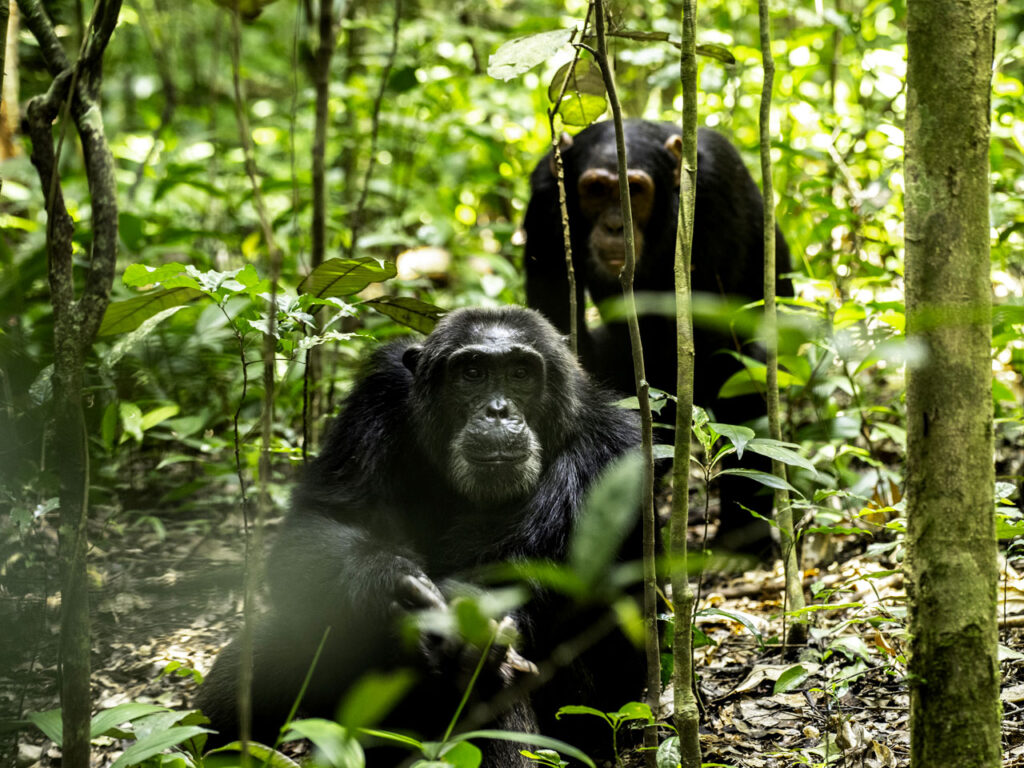
Today is dedicated to our closest cousins. After a briefing at the Kanyanchu visitor center, you enter the dense rainforest of Kibale to track a habituated family of Chimpanzees. The forest is home to 13 primate species, and you may spot red-tailed monkeys and grey-cheeked mangabeys along the way. Spending an hour with the chimps as they play, groom, and vocalize in the canopy is an exhilarating experience. In the afternoon, you visit the Bigodi Wetland Sanctuary, a community-led conservation project. A guided walk through the swamp boardwalks reveals an array of colorful birds, such as the Great Blue Turaco, and various monkey species. This cultural and nature walk supports local families and provides deep insight into the delicate balance between the forest and the surrounding human communities.
Day 6: Queen Elizabeth National Park
You depart Kibale for Queen Elizabeth National Park, a journey that takes you across the equator. You will arrive in time for a sunset boat safari on the Kazinga Channel, a 32-kilometer natural waterway connecting Lake Edward and Lake George. This cruise is arguably the best wildlife viewing in the park; the banks are densely populated with hippos, buffaloes, and elephants, while the birdlife is world-class. You will see African fish eagles, pelicans, and kingfishers in staggering numbers. Following the cruise, you take a short game drive through the Kasenyi plains, looking for lions and the Ugandan kob. The park’s landscape, dotted with ancient volcanic craters and framed by the Rwenzori Mountains, offers some of the most dramatic scenery in East Africa, making for a truly memorable evening in the wild.
Day 7: Ishasha’s Tree-Climbing Lions
Heading south toward the Bwindi region, you pass through the Ishasha Sector of Queen Elizabeth National Park. This remote area is world-renowned for its tree-climbing lions, a rare behavioral phenomenon found in only two places in Africa. You will spend the morning scanning the boughs of giant fig trees, where these majestic cats often lounge during the heat of the day. The sector is also home to topis, buffaloes, and large herds of elephants. After an adventurous game drive and a picnic lunch in the bush, you continue your journey into the highlands. The terrain becomes increasingly rugged and mountainous as you enter the Bwindi Impenetrable National Park region. The air cools and the vegetation thickens, signaling your arrival at the doorstep of the mountain gorillas.
Day 8: Gorilla Trekking in Bwindi
This is the pinnacle of your Ugandan safari. After an early briefing from park rangers, you are assigned to a gorilla family and enter the Bwindi Impenetrable Forest. The trek can be physically demanding, involving hiking through steep, densely forested slopes, but the reward is beyond measure. When you finally encounter the Mountain Gorillas, all fatigue vanishes. You will spend one precious hour observing these gentle giants as they feed, play, and interact—just meters away from you. Witnessing the sheer size of a Silverback and the playful antics of the infants is a soul-stirring experience that defies description. After the trek, you may choose to visit the local Batwa (pygmy) community to learn about their ancient forest culture, before returning to your lodge for a celebratory final dinner in the mountains.
Day 9: Return to Entebbe
On your final day, you begin the scenic drive back toward Entebbe. The journey takes you through the "Switzerland of Africa," characterized by terraced hills and winding roads. You will make a stop at the Uganda Equator for a photo opportunity and to browse the local craft markets for last-minute souvenirs. After a final lunch in Mbarara, you continue the drive, reaching Entebbe in the late afternoon. You will have access to a day room to freshen up before your transfer to the airport for your outbound flight. As you depart, you carry with you the echoes of the rainforest, the gaze of the mountain gorillas, and the vibrant spirit of the Pearl of Africa—a journey that has undoubtedly left an indelible mark on your soul.
Planning a 9-day safari through the "Pearl of Africa" in 2026 involves navigating a variety of costs, from essential permits to diverse accommodation tiers. Below is a detailed breakdown based on current 2026 pricing and travel standards.
1. How much does a 9-day safari cost in 2026?
For a comprehensive 9-day itinerary covering the "Big Three"—Bwindi Impenetrable (Gorillas), Queen Elizabeth (Lions/Wildlife), and Murchison Falls (Waterfalls/Big Game)—the total cost generally falls between $2,800 and $6,500 per person. This range assumes a party of at least two travelers sharing a room and vehicle. The price fluctuates primarily based on your choice of lodging and whether you choose to drive the entire circuit or take domestic "bush flights" between parks to save time.
It is important to note that this figure includes the fixed cost of primate permits, which are non-negotiable. While the base price covers almost all on-the-ground needs, you should still budget separately for international airfare to Entebbe, your Uganda tourist visa ($50), and personal gratuities. Generally, a mid-range road safari—the most popular option—averages around $4,000 per person, providing a high-quality balance of professional guiding, private 4x4 transport, and comfortable, scenic lodges.
2. What is the average daily cost of a Uganda safari?
The daily rate for a Uganda safari in 2026 varies significantly by the level of service and exclusivity you desire. Budget safaris typically average $250 to $350 per day. These tours often use 4x4 safari vans rather than Land Cruisers and utilize community-run rest camps or basic guesthouses. Mid-range safaris are the "sweet spot" for most travelers, costing between $450 and $700 per day. This tier includes private 4x4 Land Cruisers and stays at well-regarded permanent tented camps or lodges with full amenities.
For those seeking Luxury experiences, daily costs start at $1,000 and can exceed $2,500. This premium price covers stays at world-class eco-lodges, gourmet dining, and often includes domestic flight transfers to eliminate long drive times. When calculating these daily averages, remember that the high cost of the gorilla permit ($800) is often "amortized" into the total package price, which can make the daily rate seem higher than a standard wildlife safari in other countries.
3. How much is a gorilla trekking permit in 2026?
As of 2026, the Uganda Wildlife Authority (UWA) has set the price for a single gorilla trekking permit at $800 for foreign non-residents. For foreign residents (those living in East Africa with a valid work permit), the cost is $700, while East African Community (EAC) citizens pay UGX 300,000. This permit grants you access to either Bwindi Impenetrable National Park or Mgahinga Gorilla National Park for a single trek, which includes a one-hour encounter with a habituated gorilla family once they are located.
If you are looking for a more in-depth experience, the Gorilla Habituation Experience in the Rushaga sector of Bwindi is priced at $1,500. This allows you to spend four hours with the gorillas alongside researchers and rangers. Because permit supply is strictly limited to ensure conservation and minimize stress on the primates, it is essential to book these months in advance, as they serve as the "anchor" for your entire 9-day itinerary.
4. What is included in the 9-day safari price?
A standard 9-day safari quote is designed to be "hassle-free," meaning almost everything once you land is covered. This typically includes:
- Permits: Gorilla ($800) and Chimpanzee ($250) trekking permits.
- Transport: A dedicated 4x4 Safari Land Cruiser with a pop-up roof, including all fuel and a professional driver-guide.
- Accommodation: 8 nights of lodging (ranging from basic to luxury depending on your tier).
- Meals: Full-board (breakfast, lunch, and dinner).
- Park Fees: Entrance fees for Murchison Falls, Queen Elizabeth, and Kibale Forest.
- Activities: Boat cruises on the Nile and Kazinga Channel, game drives, and guided nature walks.
- Water: Bottled drinking water provided in the vehicle throughout the journey.
Items usually excluded are alcoholic drinks, laundry, tipping, and the $50 entry visa.
5. How much for a budget 9-day safari?
A 9-day budget safari in 2026 usually costs between $2,200 and $3,000 per person. The key to keeping costs in this range is "group joining" or traveling with a larger party to split the vehicle and fuel expenses. Accommodations at this level are clean and safe but simple, such as community-run "bandas" (traditional huts), lazy camping (pre-set tents with beds), or budget guesthouses located just outside the park boundaries.
While the transport might be an older 4x4 safari van rather than a luxury Land Cruiser, the wildlife experience remains largely the same. You will still have a professional guide and visit the same iconic parks. Budget travelers should be prepared for slightly longer days and fewer "frills," but this tier offers an authentic, ground-level connection to the landscape and local communities that is often missed at higher price points.
6. How much for a mid-range 9-day safari?
The mid-range 9-day safari is the most frequent choice for international visitors, typically priced between $3,800 and $5,500 per person. At this level, you transition into a private 4x4 Safari Land Cruiser, which offers better suspension and higher clearance for the rugged Ugandan roads. Your accommodations will be "Comfort Plus" lodges or permanent tented camps that feature en-suite bathrooms, hot running water, and often stunning views of the forest or savannah.
These lodges, such as Pakuba Safari Lodge in Murchison or Turaco Treetops in Kibale, provide a higher level of service and better meal quality. The mid-range price also usually includes more flexibility in your daily schedule, allowing your guide to tailor game drives to your specific interests. It is the ideal balance for travelers who want to experience the wilderness without sacrificing the comforts of a good bed and a hot shower at the end of the day.
7. How much for a luxury 9-day safari?
For an ultra-premium 9-day luxury safari, expect to pay between $7,000 and $12,000+ per person. This tier is defined by exclusivity and time-saving logistics. Instead of long drives between parks, you will often use domestic bush flights (AeroLink or Bar Aviation) to hop from Entebbe to the various park airstrips. Accommodations include world-renowned eco-lodges like Sanctuary Gorilla Forest Camp or Chobe Safari Lodge, which offer five-star amenities, private decks, and gourmet "bush to table" dining.
Luxury safaris often include "signature" experiences that aren't in standard packages, such as hot air balloon safaris over Murchison Falls, private boat cruises on the Kazinga Channel, or even the 4-hour Gorilla Habituation Experience. The guiding at this level is often top-tier, featuring specialists in photography or birding. This is the choice for travelers where comfort, speed, and privacy are the highest priorities.
8. When should I book my 2026 Uganda safari?
In 2026, the demand for primate tourism continues to grow, making early booking more critical than ever. It is highly recommended to book your safari 12 to 18 months in advance. The primary reason for this is the Gorilla Permit. Only a limited number of permits are issued per day for each habituated group; during the peak dry seasons (June–August and December–February), these can sell out more than a year out.
Furthermore, the most popular mid-range and luxury lodges have a limited number of rooms (often only 8–12 units). Booking early ensures you get to stay inside or directly adjacent to the park, rather than having to stay at a "buffer" lodge that requires a 2-hour drive to reach the trekking start point each morning. Early booking also allows you to lock in 2026 rates, protecting you from potential mid-year price adjustments by the wildlife authority or transport providers.
9. Why are Uganda safari prices high?
Several structural factors make Uganda a more expensive destination compared to some other African regions. The most significant is the $800 Gorilla Permit, which is a fixed, non-commissionable cost that goes directly toward protecting the endangered mountain gorillas and supporting local communities. Additionally, Uganda's "Northern Circuit" involves vast distances over challenging terrain; the fuel, maintenance, and expert labor required to operate a 4x4 vehicle for 9 days on these roads are substantial.
The industry also prioritizes low-impact, high-value tourism. To protect fragile ecosystems like Bwindi, the government limits the number of visitors and keeps lodge densities low, which naturally drives up the cost of accommodation. Finally, unlike "mass market" safaris in some other countries, most Uganda safaris are private tours, meaning you are paying for the exclusive use of a vehicle and a guide for over a week, rather than sharing costs with a large group of strangers.
10. What is the cheapest time to visit Uganda?
If you are looking to maximize your budget, the best time to visit is during the off-peak or "low" seasons, which fall during the rains in April, May, and November. During these months, many luxury and mid-range lodges offer significant "low season" discounts of 20% to 30% to fill their rooms. Some tour operators may also offer "group joining" specials during these periods to lure travelers.
While the rains can make forest trails slippery and some secondary roads muddy, the landscape is incredibly lush and green, and the parks are much less crowded. Additionally, as of 2026, the Uganda Wildlife Authority sometimes offers discounted primate permits during these specific months (e.g., $600–$700 for gorillas or $200 for chimps) to encourage year-round tourism. If you don't mind a bit of rain and are looking for a more solitary experience with the primates, the "Green Season" offers exceptional value.
11. How much does a chimpanzee permit cost in 2026?
The cost of chimpanzee trekking depends heavily on where you choose to go. The flagship destination is Kibale Forest National Park, where the permit for 2026 is $250 per person. This includes a guided trek to find one of the many habituated communities and one hour of observation. Kibale is preferred because it has the highest success rate (over 90%) and the most diverse primate population in East Africa.
For a more budget-friendly option, you can trek in Kyambura Gorge (Queen Elizabeth NP) for $100 or Budongo Forest (near Murchison Falls) for approximately $130. While these spots are cheaper, the "sighting success" can be lower due to the smaller territories or denser vegetation. For those who want more time, a Chimpanzee Habituation Experience (CHEX) in Kibale is available for $300, allowing you to follow the chimps from their morning nests until they de-nest in the evening.
12. Is private transportation included in my safari quote?
For the vast majority of mid-range and luxury safari packages, the answer is yes. You will have a dedicated 4x4 Land Cruiser and a professional driver-guide for the entire 9-day duration. This private setup is the gold standard of Ugandan travel because it allows you to stop for photos whenever you like, adjust your game drive times, and move at your own pace without waiting for others.
In contrast, budget or "group-joining" safaris often use shared transportation. In these cases, you will be in a 4x4 safari van with up to 6 or 7 other travelers. While this significantly reduces the cost, it does mean you follow a fixed schedule. When reviewing your quote, always verify the specific vehicle type. In 2026, many operators are also introducing "stretched" Land Cruisers which offer more legroom and are becoming a favorite for private family groups.
13. Do I need to pay extra for meals?
On a standard 9-day safari, your package is almost always "Full Board," meaning breakfast, lunch, and dinner are included.
- Breakfast: Usually served at the lodge before your morning activity.
- Lunch: If you are on a long drive or a full-day game drive, the lodge will provide a "packed lunch" box. If you are near the lodge, you'll return for a hot sit-down meal.
- Dinner: A multi-course meal served at your lodge in the evening.
The main "extra" costs regarding food are drinks. While bottled water is provided in the vehicle, alcoholic beverages, sodas, and specialty coffees at the lodges are typically billed separately. On a budget safari, it is particularly important to confirm the meal plan, as some very low-cost "bed and breakfast" guesthouses may require you to pay for your own lunches and dinners at local restaurants.
14. What are the best 9-day safari destinations?
A well-balanced 9-day itinerary follows a "Western Circuit" that hits the most biodiverse regions of the country:
- Days 1-2: Murchison Falls NP. Start in the north to see the world's most powerful waterfall and the "Big Four" (Rhinos are seen at Ziwa nearby).
- Days 3-4: Kibale Forest. Move south for chimpanzee trekking and a walk through the Bigodi Wetland Sanctuary.
- Days 5-6: Queen Elizabeth NP. Enjoy boat cruises on the Kazinga Channel and search for tree-climbing lions in the Ishasha sector.
- Days 7-8: Bwindi Impenetrable NP. The grand finale: mountain gorilla trekking in the dense rainforest.
- Day 9: Lake Mburo or Entebbe. A final stop to see zebras and impalas (only found in Mburo) before heading back for your flight.
This route minimizes "backtracking" and ensures you see a variety of landscapes, from savannah and riverine forests to high-altitude rainforests.
15. Can I get a discount for a 9-day safari?
The most effective way to secure a discount on a 9-day safari is to travel in a group. Because the largest fixed cost (after permits) is the vehicle and guide, the "per person" price drops drastically as you add more people to the car. For example, a solo traveler might pay $6,000 for a mid-range trip, but if four people travel together, that price could drop to $3,800 per person.
Other ways to save include:
- Off-Season Discounts: As mentioned, traveling in April, May, or November can save you hundreds on lodging.
- Self-Drive (Not recommended for first-timers): Renting a 4x4 and driving yourself is cheaper, but navigating Uganda’s roads and finding wildlife without a professional guide is significantly more difficult.
- Group Joining Tours: Some operators have fixed departure dates where you join a pre-set group.
- Staying in "Buffer" Lodges: Choosing a lodge just 15–20 minutes outside the national park gates instead of inside the park can often save $50–$100 per night.
Booking 9 Days Uganda safari with us Roads of Adventure safaris
Booking a 9-day Uganda safari with Roads of Adventure Safaris offers a curated, 4x4-transported experience focusing on primates (gorillas and chimpanzees) and savanna wildlife, typically covering Kibale, Queen Elizabeth, and Bwindi National Parks. Tailored to both mid-range and luxury preferences, the, it includes gorilla permits, expert guides, and park fees, with a 30% deposit required to secure the trip, preferably months in advance.
