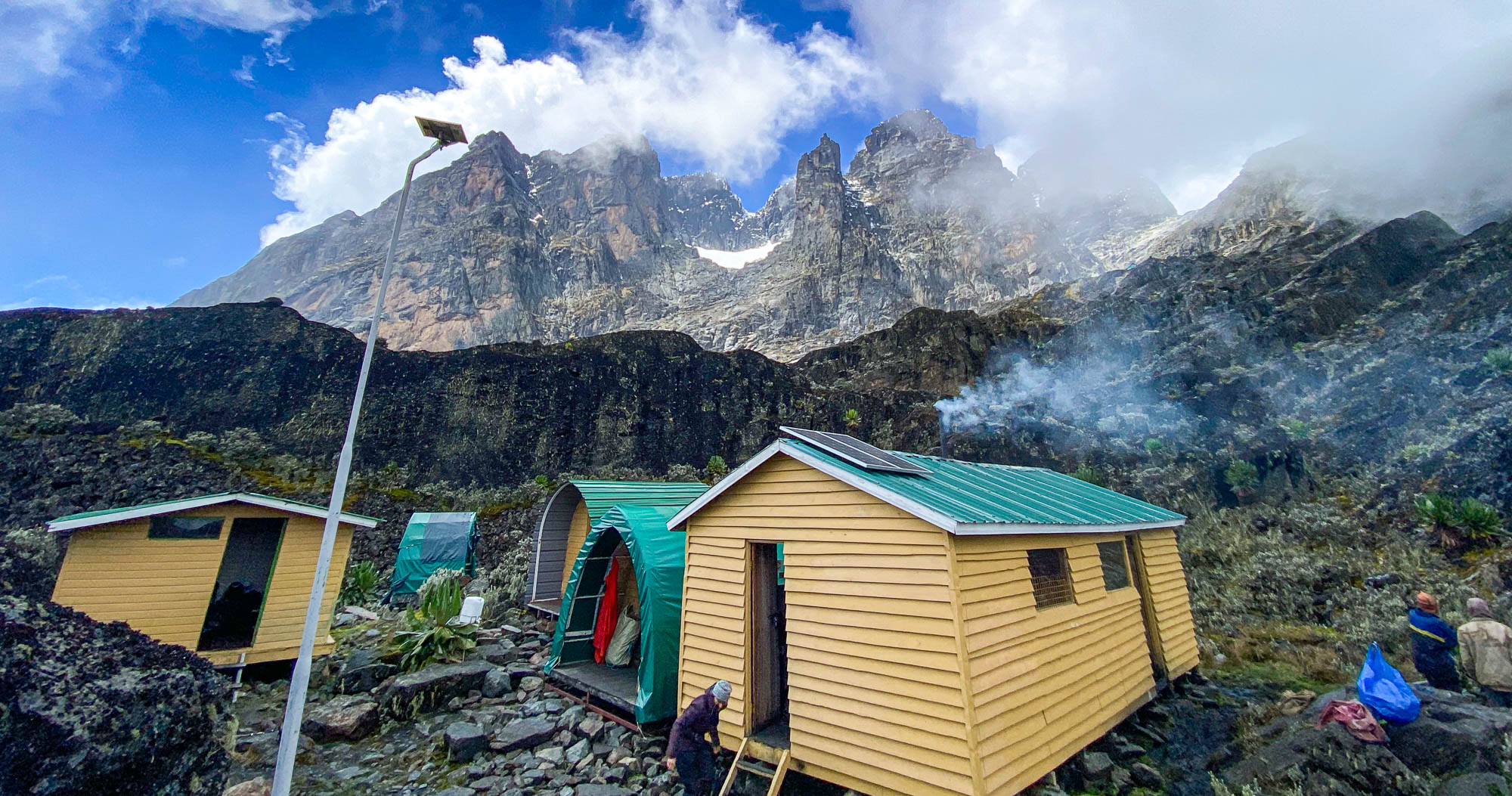
Climbing the Rwenzori Mountains to reach the summit of Margherita Peak typically takes between 7 to 9 days. This allows for a gradual, safe ascent through the mountain's varying ecological zones and reduces the risk of altitude sickness.
15-days-rwenzori-hiking-safari-and-mountain-gorilla-trekking-vacation
11-days-best-rwenzori-mountain-hike-to-margherita-peak
7-days-mountain-rwenzori-mountain-climbing-active-adventure-to-margherita-peak
5-days-rwenzori-hike-to-either-mountain-sepeke-baker-or-luig-di-savoia
2-days-rwenzori-trek-to-nyabitaba-camp
Shorter or longer treks depend on your chosen route and objectives
The Central Circuit (Classic Route)
The Central Circuit is the historic, traditional vein of the Rwenzori Mountains. Managed primarily by the local Bakonjo community through the Rwenzori Mountaineering Services (RMS), this route kicks off at the Nyakalengija trailhead (1,615 meters). It is widely celebrated because it approaches the peaks in a natural, counter-clockwise loop, providing a brilliantly paced introduction to the mountain's surreal, changing ecosystems.
Over the course of 7 to 9 days, trekkers move from dense mountain forests into the hauntingly beautiful bamboo zones, eventually emerging into the alpine valleys. The trail takes you directly through the iconic Bujuku Valley, framed by the towering walls of Mount Baker and Mount Speke. Staying in rustic, community-run wooden cabins, you will experience the classic Rwenzori terrain: traversing the infamous, muddy Bigo Bog via boardwalks and navigating giant groundsels that look like they belong on another planet.
For those aiming for Margherita Peak (5,109 meters), the circuit funnels you up to Elena Hut, the final staging ground before the glacier. The ascent from this side requires navigating the Elena Glacier using crampons and ropes, making it a true mountaineering feat. Because it climbs steadily through distinct valleys, the Central Circuit offers an excellent, natural acclimatization profile. It remains the quintessential choice for hikers who want a mix of rich cultural heritage, classic mountaineering history, and a raw, untamed look at the heart of the "Mountains of the Moon."
The Kilembe Trail (Southern Circuit)
If you are looking for a more modern, structured, and comfortable approach to the roof of Uganda, the Kilembe Trail is the premier choice. Pioneered and managed by Rwenzori Trekking Services (RTS), this trail starts from the Kilembe valley near Kasese town. It is widely considered the most comfortable route on the mountain, largely due to the exceptional infrastructure built along the way, including robust, fully-serviced mountain huts equipped with comfortable bunk beds and dedicated dining areas.
Spanning 7 to 8 days for a summit attempt, the Kilembe Trail approaches the main peaks from the south. What sets this trail apart is its superior acclimatization design. The path winds along pristine ridge lines, offering sweeping, panoramic views of the surrounding valleys rather than keeping you enclosed in deep gorges. It climbs gradually, allowing your body to adapt beautifully to the thinning air. You will pass through stunning spots like Samalira Camp and the breathtaking Mutinda Lookout before pushing deeper into the alpine zone toward Camp John Matte and eventually the Irene Lakes Hut.
When it comes to the summit push, the Kilembe route offers a slightly different perspective on the glaciers, meeting up with the standard technical approach to Margherita Peak. It is highly recommended for climbers who want to maximize their chances of success via a gentler incline and better sleep quality. The combination of professional guiding structures, excellent camp facilities, and stunning ridge-line photography makes the Kilembe Trail a favorite for modern adventurers.
Short / Non-Summit Treks
Not every journey into the Rwenzoris requires an ice axe, crampons, or the grueling physical toll of a high-altitude summit push. The short, non-summit treks—typically lasting 3 to 4 days—are designed specifically for hikers who want to witness the otherworldly beauty of the Rwenzori ecosystem without the risks and extreme physical demands of going to the top. These shorter itineraries can be customized out of either the Nyakalengija (Central Circuit) or Kilembe trailheads.
Within just a few days, you are fully immersed in the Afro-alpine magic. A typical 3-day trek on the Kilembe side, for instance, takes you up to the Mutinda Lookout at 3,975 meters. Here, you can stand above the clouds, surrounded by giant lobelias and heather trees draped in old-man's-beard moss, gazing at the distant, glistening glaciers. If you choose the Central Circuit side, a short trek can take you up through the Nyabitaba Hut and into the lower boardwalks of the Bigo Bog, offering a taste of the wilderness that makes these mountains famous.
These shorter excursions are perfect for wildlife enthusiasts, photographers, and travelers with limited time. You get to experience the rapid transition of ecological zones—from tropical rainforests filled with unique birdlife and three-horned chameleons to the eerie, beautiful alpine lakes—all while avoiding the steep, technical glacier crossings and the severe cold of the highest camps.
The Bukurungu Trail
For the fierce traditionalist and the seasoned mountaineer looking to escape the beaten path entirely, the Bukurungu Trail is the ultimate wilderness experience. This is a remote, wild, and rugged route that takes roughly 7 to 8 days. Unlike the Central Circuit or Kilembe, Bukurungu is a true wilderness trail, meaning it lacks the established, permanent wooden huts found elsewhere. Instead, trekkers must rely on wilderness camping in tents, making it a pure, self-sufficient expedition.
The trail begins at the Mwamba gate and takes a northerly approach to the main peaks. It is famously steep, muddy, and physically unforgiving. The trail demands excellent physical conditioning and previous experience with wilderness backpacking. However, the rewards for this effort are unmatched. The Bukurungu Trail bypasses the heavily trafficked routes to showcase some of the most pristine alpine lakes in the entire range, including Lake Mughuli, Lake Bukurungu, and Lake Irene.
Because very few hikers step foot on this trail, the landscape feels entirely untouched, offering an eerie, silent solitude that is rare to find on major African peaks today. It eventually converges with the main routes near the upper peaks for the final technical assault on Margherita Peak. If you are an experienced climber who thrives on isolation, rugged terrain, and the raw romance of camping in the wild under the shadows of equatorial glaciers, the Bukurungu Trail will deliver the adventure of a lifetime.
Considerations when choosing Rwenzori Mountain climb
Choosing a Rwenzori climb requires balancing your physical fitness, desired routes, timing, and equipment. Key factors include selecting between the technical summit of Margherita Peak (5,109m) and shorter valley treks, managing high-altitude risks, and budgeting for park fees and guides.
Here is a detailed breakdown of the routes, duration, and physical preparation required for tackling the Rwenzori Mountains, with each section structured to roughly 300 words.
1. Routes & Duration
Central Circuit
The Central Circuit remains the definitive, historic pathway into the Rwenzoris. Taking between 7 to 9 days to complete the full loop, this trail is celebrated for its masterful pacing and unrivaled ecological diversity. Starting at the Nyakalengija trailhead, it guides trekkers through a stunningly rapid succession of distinct worlds. You begin in lush montane rainforests echoing with birdlife, ascend through dense, eerie bamboo zones, and finally emerge into the Afro-alpine valleys filled with otherworldly giant lobelias. The loop format ensures you rarely see the same view twice, taking you through the iconic Bujuku Valley and past the towering walls of Mount Baker and Mount Speke before looping back via the Kitandara Lakes. Its time-tested layout provides a natural, steady climb that balances scenic variety with vital acclimatization, making it the most popular choice for a classic summit bid.
Kilembe Route
Approaching the massif from the south, the Kilembe Route is a highly scenic, deeply rewarding, yet physically demanding trail. Spanning 7 to 8 days for a summit attempt, it is renowned for its dramatic ridge-line walking, offering sweeping panoramic vistas that look out over deep valleys rather than keeping you enclosed within them. However, it requires exceptional physical stamina. The terrain features sustained, steep inclines and requires navigating rugged, exposed ridges. What makes the Kilembe Route highly attractive—despite the extra physical toll—is its superior modern infrastructure, boasting well-maintained, fully-serviced wooden huts with comfortable bunk beds. The trail demands strong legs and mental fortitude to conquer its challenging gradients, but it rewards climbers with some of the most breathtaking, unobstructed views of the glacial peaks found anywhere on the mountain.
Short Treks
For travelers who want to experience the magic of the "Mountains of the Moon" without the extreme physical toll or technical demands of a summit push, short treks ranging from 2 to 6 days are an exceptional alternative. These itineraries focus heavily on the lower and middle ecological zones of the park. A premier highlight is the trek to the Mutinda Lookout, which sits at an impressive 3,975 meters. On these shorter routes, hikers can Marvel at thundering waterfalls slicing through the rainforest, walk beneath canopy tunnels in the bamboo zones, and stand above the cloud line to gaze at distant glaciers. These treks offer a concentrated dose of the Rwenzori’s unique flora—like the giant heathers draped in moss—and distinct wildlife, such as the rare three-horned chameleon, all within a manageable timeframe and without the need for specialized mountaineering gear.
2. Physical Fitness & Altitude
Acclimatization
Ascending the Rwenzori Mountains is a serious high-altitude undertaking, with the ultimate goal of Margherita Peak sitting at a towering 5,109 meters. Because the trails cross well beyond the 4,000-meter threshold, Acute Mountain Sickness (AMS) is a very real and dangerous risk for every climber, regardless of fitness. At these elevations, the atmospheric pressure drops, and there is significantly less oxygen available with every breath. To mitigate this, choosing a longer itinerary of at least 7 to 8 days for a summit attempt is absolutely vital. A gradual ascent allows the human body to trigger essential physiological adaptations, such as increasing red blood cell production. Rushing the climb drastically elevates the risk of severe altitude illnesses like High Altitude Pulmonary Edema (HAPE) or Cerebral Edema (HACE). Successful trekking in the Rwenzoris relies entirely on the golden rule of mountaineering: "Pole pole" (slowly, slowly), ensuring your body adapts safely to the thinning air.
Preparation
Conquering the Rwenzoris demands a rigorous, proactive approach to physical preparation months before setting foot in Uganda. The mountain is notoriously unforgiving, characterized by deep mud, steep bogs, and vertical ladders. Prospective climbers must commit to a dedicated training regimen heavy on cardiovascular exercise—such as running, cycling, or rowing—to maximize lung capacity and heart efficiency. Equally important is strength training, specifically focusing on the core, calves, and quadriceps to endure consecutive days of steep climbing while carrying a pack. Beyond physical training, medical preparation is highly recommended. Trekkers should consult a travel medicine professional or doctor about altitude medications like Acetazolamide (commonly known as Diamox), which helps speed up natural acclimatization. Combining top-tier physical conditioning with proper medical advice is the best strategy to ensure you enjoy the trek rather than just surviving it.
Best time for Mountain Rwenzori climb
The best time to climb Mount Rwenzori is during the dry seasons from June to August and December to February. These months offer drier trails and the clearest skies for attempting Margherita Peak. Conversely, you should avoid the heavy rains of March–May and November
What to pack for Mountain Rwenzori climb
Packing for the Rwenzori Mountains requires specialized gear for extreme, wet conditions and varying temperatures. Key items include rubber Wellington-style gumboots with neoprene socks, a heavy-duty waterproof and windproof jacket, a down jacket rated to -10°C, layered thermal base layers (non-cotton), a sturdy daypack, and a sleeping bag
Where to stay on Mountain Rwenzori climb
For your Rwenzori climb, you will stay in trailside wooden huts and tented camps during the trek, and a lodge at the base. The exact stops depend on your route, with the Central/Mihunga and Kilembe trails being the most popular.
Base & Gateway Lodges (Pre/Post-Climb)
Before and after your trek, you’ll need a comfortable place to recover, organize your gear, and take a hot shower.
Kilembe Trail Base: Trekkers Hostel
Situated in Kyanjuki village, Trekkers Hostel serves as the definitive launchpad for the Kilembe Route. Managed by Rwenzori Trekking Services, this lively hub caters perfectly to all budgets, offering clean campsites, budget-friendly dormitories, and comfortable private rooms. Nestled right by a rushing river, it provides a relaxed, social atmosphere where mountaineers from across the globe gather to swap stories. It is the ultimate spot to conduct final gear checks, meet your guiding team, and enjoy a hearty meal before stepping onto the southern trails the following morning.
Central Circuit Base: Ruboni Community Camp
For those taking the classic route, Ruboni Community Camp offers an authentic, community-owned eco-lodge experience right at the Nyakalengija gates. This pioneering property features cozy, self-contained bandas and spacious campsites, all boasting sweeping views of the portal peaks. By staying here, your money directly funds local Bakonjo conservation and education initiatives. It is a wonderfully immersive base camp where you can fall asleep to the sounds of the Mubuku River, soak in the vibrant local culture, and enjoy fresh, traditional Ugandan meals before your big climb.
Mihunga Area: Mihunga Safari Lodge
If you are looking for an upgrade in comfort before tackling the grueling mountain terrain, Mihunga Safari Lodge is an excellent choice. Located near the Central Circuit trailhead, this lodge features beautiful, self-contained wooden cottages raised on stilts to maximize forest views. The property balances rustic charm with modern amenities, offering plush bedding, private en-suite bathrooms, and an excellent dining hall serving continental cuisine. It provides the peaceful, restful environment needed to mentally prepare for the high-altitude trek ahead or to deeply unwind immediately after stepping off the trail.
Luxury: Equator Snow Lodge & Hotel Margherita
For top-tier comfort, the Equator Snow Lodge offers an upscale experience built directly out of local river stone and wood. Located right at the park boundary, its luxury cabins feature spacious decks and open fireplaces to ward off the evening chill. Alternatively, if you prefer urban amenities, Hotel Margherita in Kasese town sits just 30 minutes away. It provides traditional hotel luxury, featuring manicured gardens, hot running water, expansive golf course views, and a fully stocked bar—making either option a perfect reward for conquering Margherita Peak.
Mountain Camps & Huts (During the Trek)
Along the mountain trails, Uganda Wildlife Authority (UWA) huts and private Rwenzori Mountaineering Services or Rwenzori Trekking Services camps provide basic shelter. They are typically wooden or tin cabins equipped with bunk beds and communal areas; you will need to bring a high-quality (4-season or -20°C) sleeping bag
Sine Camp & Kalalama Camp
Positioned in the lower reaches of the mountain, Sine Camp (2,596m) and Kalalama Camp (3,134m) offer your first immersion into the Rwenzori wilderness. Sine is nestled beautifully within the lush montane forest zone, sitting next to the beautiful Enock's Falls, where climbers sleep surrounded by the calls of primates and birds. Higher up, Kalalama sits perched in the giant bamboo and heather zone. Both camps feature sturdy wooden cabins equipped with bunk beds and mattresses, providing a sheltered, cozy refuge from the damp jungle air as you begin your steady ascent.
Mutinda Camp
Perched dramatically at 3,588 meters, Mutinda Camp is a vital milestone for scenery and acclimatization. Tucked under a massive cliff face that shields it from the elements, it overlooks a spectacular valley filled with giant lobelias. Most trekkers use this camp to undertake a popular acclimatization hike up to the Mutinda Lookout (3,975m). Standing at the lookout provides a crucial "climb high, sleep low" stimulus for your body while rewarding you with breathtaking, panoramic views of the distant peaks, making this camp a favorite stopover on the route.
Bugata Camp & Hunwicks Camp
As you push into the higher Afro-alpine zones, Bugata Camp (4,100m) and Hunwicks Camp (3,974m) welcome you to the rugged high country. Bugata is situated on a ridge offering spectacular views of the deep blue alpine lakes below, such as Lake Kopello. Hunwicks Camp sits in the stunning Kitandara Valley, framed perfectly by the sheer rock walls of Mount Baker. Both camps feature robust, insulated shelters built to withstand the freezing temperatures and biting winds of the upper mountain, serving as excellent staging grounds for the high-altitude challenges ahead.
Margherita Camp
Serving as the ultimate high-altitude launchpad at 4,485 meters, Margherita Camp is the final staging ground before the grueling summit push. Perched precariously amidst raw rock and ice, it sits just below the upper glaciers. The air here is thin, and temperatures regularly plummet well below freezing, making a heavy-duty, 4-season sleeping bag mandatory. Trekkers experience a tense, exciting atmosphere here, resting briefly in the basic metal-clad huts before waking up at midnight to don crampons, harness up, and conquer the final technical ascent to Margherita Peak.
Booking Mountain Rwenzori climb with us Roads of Adventure safaris
Booking your climb with Roads of Adventure Safaris requires choosing your preferred route and timeframe. Packages typically range from 3 to 10 days, depending on whether you are aiming to summit Margherita Peak or do a shorter trek. Prices usually range from $1,200 to $1,500 per person
