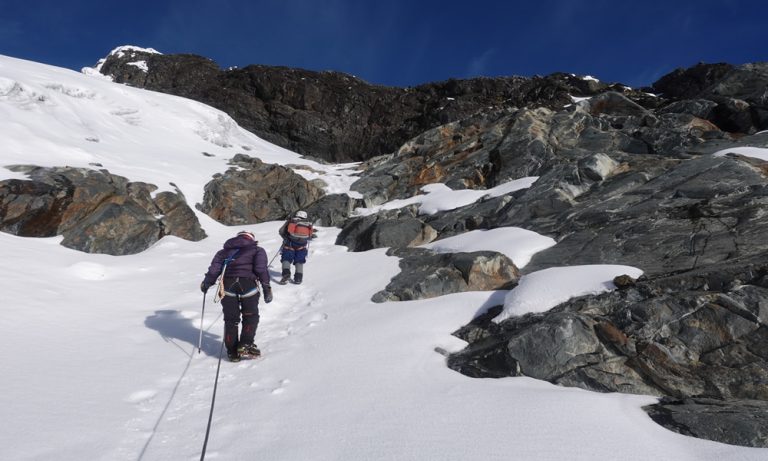
Climbing the Rwenzori Mountains is widely considered one of the toughest and most physically demanding treks in Africa. It is technically harder than Mt. Kilimanjaro. The immense challenge comes not just from the high altitude, but from the brutal terrain, relentless moisture, and steep, unbridged bogs
15-days-rwenzori-hiking-safari-and-mountain-gorilla-trekking-vacation
11-days-best-rwenzori-mountain-hike-to-margherita-peak
7-days-mountain-rwenzori-mountain-climbing-active-adventure-to-margherita-peak
5-days-rwenzori-hike-to-either-mountain-sepeke-baker-or-luig-di-savoia
2-days-rwenzori-trek-to-nyabitaba-camp
Expect the following conditions on the mountain
The Terrain
Navigating the lower trails of the Rwenzori Mountains, particularly along routes like the Kilembe Trail, is less of a standard hike and more of an obstacle course against nature. Approximately 60% to 70% of the lower elevation is dominated by deep, liquid mud and thick, boggy moss. This isn't ordinary dirt; it is a heavy, suction-like mire that clings to your footwear and drains your physical energy with every single step you take. The landscape requires constant mental focus and physical resilience, as a lapse in concentration can easily result in sinking up to your knees in cold sludge.
Beyond the pervasive bogs, the trail demands agility and careful footplacement. You will constantly find yourself navigating a tangled network of slick, exposed tree roots that cross the path like tripwires. These roots become incredibly treacherous when wet, offering virtually no traction. As the elevation gains, the trail transitions into incredibly steep, muddy sections where maintaining your balance becomes a full-body workout.
To help trekkers overcome the most vertical and impassable mud walls or rocky drops, basic wooden ladders have been constructed by local guides. While these ladders provide vital assistance, they are often rustic, slick with moisture, and require a calm head and a steady grip to ascend safely. Trekking through this terrain means embracing the reality that you will be damp, challenged, and working twice as hard just to move forward. It turns the initial days of the expedition into a true test of stamina, long before you even catch a glimpse of the high-altitude glaciers above.
The Weather
The Rwenzori Mountains are famously nicknamed the "Mountains of the Moon," but they could just as easily be called the mountains of endless water. The range is renowned for its intense, frequent, and highly unpredictable rainfall, which can transform a manageable path into a rushing stream within minutes. Because of its unique equatorial position and high peaks, moisture from the Congo basin is trapped here, creating a microclimate characterized by near-constant mist, drizzle, and heavy downpours.
This relentless moisture creates a hyper-humid yet freezing environment. As you ascend, the ambient temperature drops significantly, and when combined with being wet, the risk of mild hypothermia becomes a very real threat. Standard hiking boots, no matter how well-advertised as waterproof, will eventually succumb to the sheer volume of water and deep mud on these trails. This is why the local standard gear includes knee-high rubber gumboots (wellies) for the lower sections, providing a literal shield against the deep bogs.
Top-tier waterproof gear is non-negotiable for an expedition here. You need high-quality GORE-TEX (or equivalent) outer layers, including both a heavy-duty rain jacket and waterproof trousers, to keep the external moisture out while managing sweat from the strenuous climbs. Heavy-duty gaiters are also essential to seal the gap between your trousers and boots, preventing mud, water, and debris from spilling inside. Staying dry is not a matter of comfort in the Rwenzoris; it is a matter of safety. Proper gear ensures you remain warm enough to sustain the physical exertion required day after day.
The Summit
Reaching Margherita Peak, the highest point of Mount Stanley at 5,109 meters, elevates the expedition from a grueling trek into a serious technical mountaineering endeavor. This is not a peak you can simply walk up; it demands respect, preparation, and specific alpine skills. As you leave the muddy lower trails and rocky passes behind, you enter a stark, alien world of permanent ice, snow, and sheer rock faces that requires a complete shift in mindset and equipment.
The final push to the ultimate prize involves navigating glacier ice with slopes angling up to 60%. To safely traverse these steep, icy inclines, you must be proficient in using technical crampons fastened to stiff, insulated mountaineering boots. You will also wield an ice axe, not just for balance, but for crucial self-arrest maneuvers should a slip occur. The glacier is dynamic and changing, requiring teams to rope up together to mitigate the hidden dangers of deep crevasses buried beneath the snow.
Furthermore, the route features vertical rock and ice steps where fixed ropes are installed. To ascend these sections safely, you will need to know how to use mechanical ascenders (like jumaars) to pull yourself up the lines, as well as how to manage safety lanyards and carabiners while wearing thick gloves in freezing conditions. The combination of extreme altitude, freezing winds, thinning air, and vertical exposure makes the summit day an intense, adrenaline-pumping challenge. It requires absolute focus, physical strength, and a solid foundation in mountaineering techniques to stand safely on the roof of Uganda.
Duration
An expedition into the heart of the Rwenzori Mountains is never a weekend trip; it is a multi-day commitment that requires careful pacing and patience. The absolute minimum recommended duration for a successful summit attempt on Margherita Peak is 7 to 8 days. Trying to rush the itinerary or skip vital intermediate camps is a recipe for failure, as the rapid gain in altitude poses severe physical risks.
The primary reason for this extended duration is proper acclimatization. As you climb from the trailhead toward the 5,109-meter summit, the atmospheric pressure drops, and the amount of oxygen molecules per breath decreases significantly. The human body is incredibly adaptable, but it requires time to trigger the physiological changes necessary to cope with this thinning air. A 7-to-8-day itinerary builds in gradual upward movement, ensuring that you "climb high and sleep low" whenever possible, which allows your body to adjust naturally.
Rushing the climb dramatically increases the likelihood of Acute Mountain Sickness (AMS), which brings debilitating symptoms like severe headaches, nausea, dizziness, and extreme fatigue. In worst-case scenarios, ignoring duration and pacing can lead to life-threatening conditions like High Altitude Pulmonary Edema (HAPE) or Cerebral Edema (HACE), requiring emergency evacuation from a highly remote area. Beyond safety, the multi-day format gives your muscles time to recover from the grueling mud of the lower trails, ensuring you actually have the physical reserves needed to tackle the highly technical and exhausting summit day. Pacing is your greatest asset on this mountain.
Which trail is better: the Central Circuit or the Kilembe Trail?
Choosing the better trail depends entirely on what you want out of your expedition, as both offer vastly different experiences, management structures, and views. The Central Circuit is the classic, community-owned route managed by Rwenzori Mountaineering Services. It follows a circular loop starting from the eastern side at Nyakalengija. It is famous for its historic value, gradual altitude acclimatization, and extensive wooden boardwalks across the deep Bigo Bogs. This makes the marshy terrain easier to handle.
The Kilembe Trail, or Southern Circuit, is managed privately by Rwenzori Trekking Services and begins near Kasese. It is generally considered tougher, steeper, and more physically demanding, particularly through the slick bamboo forests. However, it rewards hikers with newer hut infrastructure, fewer crowds, and stunning views of remote lakes like Mughuli and Bukurungu. Alpinists who prefer to tackle multiple peaks alongside Mount Stanley often choose Kilembe because it offers better access to Mount Luigi di Savoia and Mount Emin. If you prefer a slightly gentler, traditional loop with established boardwalks, choose the Central Circuit. If you want a more exclusive, rugged wilderness challenge with newer camps, the Kilembe Trail is your best bet.
How many days does it take to successfully climb to Margherita Peak?
To successfully stand on Margherita Peak at 5,109 meters, a standard and recommended trek takes 7 to 8 days. On the Central Circuit, the classic itinerary spans 7 days. This timeline allows hikers a progressive altitude gain, spending nights at well-spaced camps like Nyabitaba, John Matte, and Bujuku before making the final push from Elena Hut. On the Kilembe Trail, the standard summit itinerary is 8 days. The extra day is critical on this southern approach because the slopes are steeper, requiring more intentional acclimatization to avoid altitude-related issues before hitting the glaciers.
While 5-day express itineraries exist on the Central Circuit, they are exceptionally strenuous and compress the elevation gain rapidly. These shorter options are strictly reserved for elite, highly experienced mountaineers who have recently acclimatized to high altitudes. For the average trekker, rushing the climb drastically reduces the success rate due to acute mountain sickness. Taking 7 or 8 days gives your body the necessary time to adapt to the thin air, optimizes your physical energy, and provides a buffer for unpredictable alpine weather, ensuring a safe and successful round-trip to the summit.
Are there shorter 3- to 5-day trekking options for beginners?
Yes, there are excellent shorter options designed specifically for beginners, non-climbers, or those with limited time who still want to experience the "Mountains of the Moon" without attempting the technical summit. The most popular short trek is the 3-day Mahoma Loop on the Central Circuit. This trail loops around the lower foothills and pristine glacial waters of Lake Mahoma, reaching a maximum altitude of around 3,000 meters. It offers a fantastic introduction to three distinct ecological zones—the lush montane forest, dense bamboo groves, and the lower heather zone—without requiring ropes, harnesses, or crampons.
For those tracking the southern side, the Kilembe Trail offers a beautiful 3- to 4-day hike up to Samalira Camp or Mutinda Lookout at 3,975 meters. This option provides breathtaking panoramic views of the main peaks and valleys below. These shorter excursions focus on forest ecology, spotting endemic wildlife like the three-horned chameleon or Rwenzori turaco, and enjoying the unique Afro-alpine flora like giant lobelias. They require moderate physical fitness but eliminate the dangerous glacial crossings, extreme cold, and severe altitude risks associated with the high peaks, making them perfect for beginners.
How much distance do you walk per day on average?
On average, you will walk between 6 to 12 kilometers per day on the main trekking trails. While these distances might sound relatively short on paper compared to standard flatland hiking, the horizontal distance is a misleading metric in the Rwenzoris. The rugged terrain, steep vertical elevation shifts, and deep mud mean that a 7-kilometer stretch can easily take 5 to 7 hours of intense, continuous physical effort. You are rarely walking in a straight, even line; instead, you are constantly stepping over massive tree roots, navigating bogs, and climbing ladders.
A typical day starts early in the morning after breakfast, averaging about 5 to 8 hours of movement including rest breaks and lunch stops. The pace is intentionally slow and rhythmic—often described by local guides as "pole pole" (slowly, slowly)—to prevent exhaustion and assist with altitude adaptation. The shortest distance days usually occur right before the summit push to allow for rest, while the longest distance days happen during the final descent, where you may drop through multiple camps and cover up to 15 kilometers in a single day as you exit the park.
Is climbing the Rwenzori harder than climbing Mount Kilimanjaro?
Yes, climbing the Rwenzori Mountains is significantly harder and more physically demanding than climbing Mount Kilimanjaro. While Kilimanjaro is a higher peak (5,895 meters), it is fundamentally a high-altitude walk up a massive, non-technical volcanic dome. The trails on Kilimanjaro are well-defined, wide, and largely dry scree slopes. In contrast, the Rwenzori is a highly technical, rugged alpine mountain range defined by its extreme terrain, relentless mud, steep vertical ridges, and complex weather systems.
The Rwenzori requires navigating deep bogs, scrambling over wet boulders, climbing fixed vertical metal ladders, and using ropes, harnesses, ice axes, and crampons to cross active, steep glaciers near the summit. The psychological toll of walking through deep mud for days, combined with wet, freezing conditions, makes the Rwenzoris an endurance test. While Kilimanjaro challenges you primarily with altitude, the Rwenzori challenges you with altitude, technical mountaineering, and unforgiving terrain. It is widely considered by international mountain guides to be the toughest major trek on the African continent.
What kind of physical training should I do before the trek?
To prepare your body for the relentless demands of the Rwenzori, your training should focus heavily on cardiovascular endurance, lower-body strength, and core stability. You should begin a dedicated training regimen at least three to six months before your scheduled departure date. Aerobic conditioning is your foundation; engage in activities like long-distance running, cycling, swimming, or using a stairmaster three to four times a week to build up your lung capacity and heart health for the thin high-altitude air.
The most effective training is hiking on steep, uneven trails with a weighted backpack weighing 8 to 12 kilograms. This replicates the exact muscle groups you will use on the mountain and toughens your feet. Complement this cardio with strength training targeting your quadriceps, hamstrings, calves, and core. Exercises like weighted squats, lunges, step-ups, and planks will prepare your joints for the thousands of vertical steps and slippery descents. Do not overlook flexibility and balance training; yoga or dedicated stretching will help you agilely navigate the awkward footing required when stepping across the deep bogs and wet tree roots.
How steep are the actual hiking trails and are there switchbacks?
The hiking trails in the Rwenzori are notoriously steep and lack the engineered, gradual switchbacks found on many western commercial mountain trails. Instead, the routes generally follow natural ridges, river valleys, and steep gullies, heading directly up the mountain slopes. You will frequently encounter vertical mud walls, exposed rock scrambles, and sections where you must pull yourself up using tree roots and bamboo stalks. In the steepest bottlenecks, structural metal ladders have been installed by park authorities to safely bypass sheer cliff faces.
Because switchbacks are rare, the ascent puts a continuous strain on your calves and lungs, while the descent requires immense knee stability and concentration to avoid slipping. The grade varies by zone, but lower forested sections and the approach to the high passes are particularly unyielding. On the Kilembe Trail, the steepness is even more pronounced through the bamboo zone. You must adjust your mindset away from standard walking; trekking here feels more like a full-body obstacle course where every step requires deliberate placement on rocks, roots, or boardwalks to manage the sheer angle of the mountain.
Do I need technical climbing gear like crampons and ice axes?
Yes, if your objective is to stand on Margherita Peak, technical climbing gear is absolutely mandatory. The final approach to the summit requires crossing the Margherita Glacier, which features steep, hard-packed ice and permanent crevasses. To safely navigate this alpine environment, you must wear rigid mountaineering boots equipped with steel crampons, use an ice axe for balance and self-arrest, and be securely tied into a rope team via a climbing harness.
You do not need to be a professional alpine mountaineer to do this trek, as your local guides will provide safety briefings, manage the fixed ropes, and assist you with the gear. However, you must have the physical coordination to walk with crampons on ice. If you do not own this specialized gear, you do not need to purchase it; both Rwenzori Mountaineering Services and Rwenzori Trekking Services provide technical gear rentals, including harnesses, ropes, helmets, ice axes, and crampons, at their respective base camps. If you choose a shorter lower-altitude trek, no technical climbing gear is required.
What type of footwear is best for the famous Rwenzori mud and bogs?
The undisputed, gold-standard footwear for navigating the lower and middle zones of the Rwenzori is a pair of high-quality, knee-high rubber boots (commonly known as wellingtons or gumboots). The mud and bogs in the heather and moorland zones can easily swallow a person up to their thighs. Standard waterproof hiking boots will quickly overflow with wet mud, leaving you with cold, soaked feet for days. Rubber boots allow you to step directly into the mud and water without a second thought, saving vital energy.
However, you cannot wear rubber boots all the way to the top. For the rocky upper ridges and technical glacial crossings above 4,500 meters, you must switch to sturdy, waterproof, ankle-supportive mountaineering boots that are compatible with crampons. The ideal strategy is to bring both: wear comfortable rubber boots with thick wool socks for the long, muddy trekking days through the valleys, and carry your heavy alpine boots in your pack (or have your porter carry them) until you reach the rocky high camps like Elena Hut, where the mud gives way to bare rock and solid ice.
How high does the climb go, and will I suffer from altitude sickness?
The climb reaches its highest point at Margherita Peak, which stands at an elevation of 5,109 meters (16,762 feet) above sea level. At this extreme altitude, the atmospheric pressure drops, meaning there is roughly 50% less oxygen available per breath than at sea level. Because of this drastic change, almost every trekker will experience some mild symptoms of altitude adaptation, such as a light headache, slight dizziness, mild shortness of breath during exertion, or disrupted sleeping patterns.
Whether these mild symptoms escalate into severe Acute Mountain Sickness (AMS) depends heavily on your ascent rate and hydration. Rushing up the mountain is the primary cause of severe altitude sickness. To minimize your risks, it is critical to climb slowly ("pole pole"), drink four to five liters of water daily, eat carbohydrate-rich meals, and consider taking preventive medication like Diamox after consulting your doctor. Your guides are trained to monitor your oxygen saturation levels daily. If severe symptoms like a persistent, debilitating headache, vomiting, or loss of physical coordination develop, the only cure is immediate descent to a lower elevation.
What is the weather like, and does it rain all year round?
The weather in the Rwenzori Mountains is notoriously wet, humid, and highly unpredictable, earning them the historical title of the "Cloud Mountains." Because the range sits directly along the equator, it experiences high moisture levels, meaning it can rain during any day of the year, regardless of the season. The higher you climb, the colder it gets; lower montane forests are warm and humid, while alpine camps regularly drop below freezing at night, with the summit area featuring permanent ice, snow, and biting winds.
Despite the persistent dampness, there are two distinct dry seasons that offer the best conditions for trekking. The primary dry window runs from June to August, followed by a second dry season from December to February. During these months, rainfall is less frequent, the bogs are slightly less deep, and you stand a much better chance of getting clear, sunny mornings with spectacular views of the peaks. The heaviest rains fall during the wet seasons from March to May and September to November, when trails turn into cascading streams and visibility drops significantly.
Where do we sleep each night on the mountain?
Where you sleep depends entirely on the route you choose, but you will not need to sleep on the damp ground in a standard camping tent, as both main trails feature permanent mountain huts. On the Central Circuit, accommodation consists of wooden, dormitory-style huts managed by the community. These huts are basic but provide a dry, solid roof over your head. They are equipped with simple wooden bunk beds and foam mattresses. You only need to bring a high-quality, four-season sleeping bag to stay warm.
On the Kilembe Trail, the infrastructure is newer and slightly more comfortable. The camps feature a mix of wooden cabins and heavy-duty A-frame shelters with comfortable bunk beds. The top huts on this route, such as Hunwick’s and Kiharo camps, are equipped with eco-friendly wood-burning stoves inside the main living spaces to create a warm atmosphere, alongside solar-powered lighting and power inverters that allow trekkers to recharge their camera and phone batteries. Regardless of the route, all sleeping arrangements are shared, communal spaces designed to keep hikers dry, safe, and sheltered from the harsh alpine storms.
Booking Mountain Rwenzori hike with us Roads of Adventure safaris
To book your Mountain Rwenzori expedition with us Roads of Adventure Safaris, the most direct method is to visit their Roads of Adventure Safaris Contact page. We offer various packages, ranging from shorter 1-day treks to extensive 15-day Rwenzori & Gorilla combos.
Our main office is located on the Kampala-Entebbe Road in Lubowa-Seguku, Uganda. To finalize your travel dates, pricing, and permits, you can directly reach our team via WhatsApp at +256 701041637 or by emailing info@roadsofadventuresafaris.com.
For multi-day or highly technical expeditions (such as a combined mountain gorilla trek), it is highly recommended to finalize your booking 3 to 6 months in advance.
