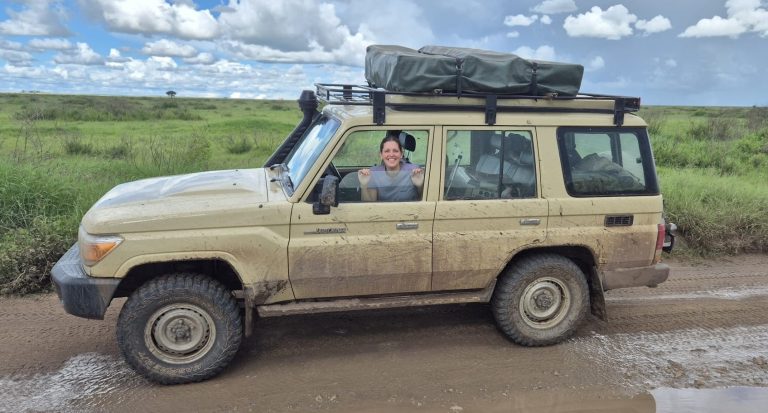
Renting a 4x4 vehicle is essential for navigating Uganda’s rough up-country roads and national park terrain. Daily rates typically range from $65 to $150 for standard SUVs like the Toyota RAV4, and $150 to $250+ for custom safari Land Cruisers with pop-up roofs and camping gear. Navigating a self-drive or guided road trip through the "Pearl of Africa" requires careful planning regarding the mechanics, legal paperwork, and costs associated with local terrain.
Below is a detailed breakdown of everything you need to know about renting a vehicle, managing your budget, and staying safe on Ugandan roads.
14-days-uganda-and-rwanda-safari-tour-itinerary
14-days-luxury-uganda-primate-safari-holiday
14-days-uganda-primate-safari-and-jinja-white-water-rafting
14-days-classic-uganda-birding-safari-expedition
14-days-best-africa-big-five-safari-in-uganda-and-best-gorilla-trekking-adventure
20-days-uganda-birding-safari-wildlife-gorilla-and-chimpanzee-tracking
20-days-uganda-birding-safari-to-uganda-national-park
20-days-uganda-safari-holiday-tour-package-itinerary
19-days-best-photography-uganda-birding-safari-and-wildlife-adventure
19-days-incredible-uganda-safari-tour-big-five-chimpanzees-and-mountain-gorillas
18-days-best-of-uganda-safari-holiday-vacation-to-all-best-parks
17-days-uganda-honeymoon-safari-holiday-tour
17-days-uganda-birding-safari-itinerary
17-days-best-safari-in-uganda-ending-in-kigali-rwanda
16-days-ultimate-uganda-safari-to-rwanda-safari-tour-package-combo
16-days-best-of-uganda-birding-safari-holiday-extravaganza
7-day-ultimate-uganda-primate-safari-chimpanzees-and-game-drives
6-days-best-gorilla-trekking-and-safari-uganda-parks
Which cars are best for a Uganda safari?
A customized 4x4 Toyota Land Cruiser, available in extended or hardtop editions, stands as the premium choice for traversing rough safari tracks. These heavy-duty machines feature reinforced suspension systems and high ground clearance designed to handle rocky paths and deep ruts. For solo travelers, couples, or those managing a tighter budget, a 4x4 Toyota RAV4 or a mid-sized Land Cruiser Prado offers an excellent balance of fuel efficiency and capability. The RAV4 is highly agile and cost-effective for transitioning between paved highways and park tracks, while the Prado brings extra torque and interior space, ensuring you can navigate muddy, uneven pathways comfortably without overstretching your travel budget.
Should I get a pop-up roof?
Opting for a vehicle with a pop-up roof is highly recommended for anyone planning extensive game drives. In national parks like Murchison Falls or Queen Elizabeth, animals frequently move through tall savannah grasses where standard window views are easily obstructed. A pop-up roof grants you an elevated, 360-degree vantage point, allowing you to stand comfortably and track wildlife safely. This feature is particularly valuable for photography, as it eliminates window glare and provides a stable platform for heavy telephoto lenses, helping you capture clear shots of a hunting lioness or a distant leopard without the vehicle frame cutting into your frame.
Is air conditioning (AC) standard?
While modern 4x4 vehicles and standard SUVs feature fully functional air conditioning systems, it is not guaranteed across all safari fleets. Older, heavily customized Land Cruisers or modified safari vans occasionally have their AC units disconnected or rendered less effective due to the intense dust and demanding engine strains of rough-road driving. Because daytime temperatures in lower-altitude areas like Kidepo Valley can easily climb, you should always confirm the operational status of the AC directly with your rental provider before signing the contract. Explicitly requesting a verified, functional AC unit during the booking phase ensures you avoid long, stifling drives across open country.
Can I rent a car with rooftop tents?
Yes, rooftop camping setups are incredibly popular and widely available through Ugandan rental agencies. Providers frequently supply fully integrated overland kits that feature heavy-duty rooftop tents mounted directly onto the vehicle's roof racks, which can be unzipped and set up in less than five minutes. These comprehensive packages generally bundle in essential outdoor gear, including foam mattresses, sleeping bags, fold-out camping chairs, a folding table, a gas cylinder, and a full set of cooking utensils. Choosing a rooftop tent keeps you elevated safely off the ground away from nocturnal wildlife while offering an affordable, flexible way to camp across public UWA campsites.
How many passengers can a safari vehicle hold?
Seating capacities depend entirely on the specific vehicle model you choose for your journey. A compact Toyota RAV4 comfortably accommodates up to 4 passengers, making it perfect for couples or small families traveling with minimal luggage. A standard Toyota Land Cruiser Prado features seating for up to 5 people, offering more shoulder room and trunk space for longer itineraries. For larger groups or photography tours, customized extended Land Cruisers or safari vans are engineered with modified, elongated chassis that securely hold between 7 and 9 passengers, ensuring every single traveler gets a dedicated window seat for unobstructed views during game drives.
How much does it cost per day?
Rental rates are tiered based on the size of the vehicle, its custom features, and the time of year you travel. Budget-conscious travelers can secure a compact 4x4 like a Toyota RAV4 starting around $65 per day, which covers basic transport needs perfectly. Mid-range options like the rugged Toyota Prado typically average around $90 per day, providing a tougher build for rougher tracks. If you want a specialized safari machine, custom Land Cruisers equipped with pop-up roofs and overland attributes range from $150 to $250+ per day, reflecting the higher maintenance costs and premium features built into these heavy-duty expedition vehicles.
Are there unlimited mileage packages?
Most reputable car rental agencies in Uganda include unlimited mileage as a standard feature for multi-day rentals. This policy is highly beneficial because driving distances between major highlights—such as traveling from Kampala to Bwindi Impenetrable National Park—frequently span hundreds of kilometers across changing terrains. Unlimited mileage protects you from unexpected, compounding fees at the end of your trip. However, you must always double-check the fine print of your specific rental agreement before departing, as a few niche providers may impose daily mileage caps or restrict travel to specific geographic zones within the country.
What forms of payment are accepted?
Cash remains highly favored across Uganda, and rental agencies readily accept physical U.S. Dollars (USD) or Ugandan Shillings (UGX) upon your arrival. If you plan to pay in USD, ensure your banknotes are crisp, clean, and printed after 2013, as local banks frequently reject older or damaged currency. Many companies also accept major credit cards (Visa and Mastercard) or direct international bank transfers for advance bookings. Keep in mind that processing credit cards through local point-of-sale terminals typically incurs a bank-enforced surcharge ranging from 3% to 5%, which will be added directly to your final billing total.
Are there extra fees for additional drivers?
To promote safety and prevent driver fatigue on long up-country journeys, many Ugandan car rental firms allow you to register one additional driver on your rental contract completely free of charge. This allows travel companions to take turns behind the wheel without penalty. If your group requires more than two registered drivers to share the workload, companies typically apply a minor administrative fee, which generally hovers between $5 and $10 per day per extra driver. Ensuring every person driving is formally registered on the paperwork is legally necessary to maintain the validity of your insurance coverage.
Do I need to pay a security deposit?
Yes, security deposits are a standard industry requirement designed to cover minor damages, traffic fines, or fuel shortages incurred during the rental period. These deposits typically range from $200 to $500, depending entirely on the vehicle class and the scope of your insurance package. Depending on the agency's policy, this amount can be authorized as a temporary hold on your credit card or held as a refundable cash deposit upon vehicle handover. The full amount is promptly refunded or released the moment you return the vehicle in the same condition it was received.
Do I need an International Driving Permit (IDP)?
Securing an International Driving Permit (IDP) before you arrive is highly recommended, as it serves as a universally recognized translation of your credentials during routine traffic stops. However, Ugandan traffic law accommodates international visitors well: if your official home country driver's license is printed clearly in English—which applies to licenses issued by the UK, USA, Canada, and Australia—you are legally permitted to drive on Ugandan roads for up to 3 months using only your domestic license. If your license is in any language other than English, possessing a valid IDP alongside your original license is mandatory.
What is the minimum age to rent a car?
The vast majority of car rental agencies in Uganda enforce a strict policy requiring all designated drivers to be between the ages of 23 and 75. These boundaries are primarily dictated by local insurance companies, which view the unpredictable nature of up-country driving and the presence of wildlife as a higher operational risk. Drivers falling within this age bracket must also demonstrate that they have held a valid, clean driver's license for at least 2 years. If a driver falls slightly outside this age range, some agencies may still offer a rental but will require a higher daily insurance premium.
What documents are required?
When finalizing your vehicle handover, you must present a specific set of original documents to ensure the rental is legally compliant. First, you need a passport that is valid for at least six months beyond your planned departure date. Second, you must present your physical, unexpired national driver's license. Lastly, if your national license is not issued in English, you must present your valid International Driving Permit. The rental agency will take clear photocopies of these documents to attach to your rental contract and insurance forms, which you must keep in the vehicle at all times.
How far in advance should I book?
It is wisest to reserve your vehicle between 2 and 6 months before your actual travel date. This window is particularly crucial if your trip coincides with Uganda's peak dry seasons, which run from June to September and December to February. During these highly popular months, high-quality 4x4 vehicles, specialized safari Land Cruisers, and rooftop camping setups face immense demand and can sell out completely. Booking well ahead of time guarantees you secure your preferred vehicle model, locks in competitive early rates, and leaves ample time to coordinate your national park permits.
Is comprehensive insurance included?
Standard comprehensive insurance is typically included in the base daily rate of your rental car, providing essential protection against major incidents like collision damage, third-party liabilities, and vehicle theft. However, coverage limits vary significantly between agencies. Standard rental insurance policies in Uganda frequently exclude "glass and tire" damage, meaning you remain personally liable if a flying stone cracks the windshield or a sharp rock punctures a tire on rough roads. It is critical to read the terms carefully and consider purchasing an optional tire and glass protection add-on for complete peace of mind.
Driving in Uganda
Which side of the road do Ugandans drive on?
In Uganda, traffic flows on the left side of the road, a practice inherited from British colonial tradition. If you are accustomed to driving on the right side of the road, this transition requires extra focus, particularly when negotiating roundabouts in major urban centers like Kampala or making right-hand turns across oncoming traffic lanes. The vehicle's steering wheel will be positioned on the right side, meaning your physical orientation to the center line will feel reversed. Taking a slow, careful practice drive around a quiet area with your rental agent is an excellent way to adapt before hitting busier highways.
What are the speed limits?
Speed limits across Uganda are strictly regulated and monitored by traffic police using mobile radar guns. The maximum legal speed on open highways is 80 km/h, which accounts for the frequent presence of pedestrians, cyclists, and unexpected hazards along major routes. When passing through built-up urban areas, towns, or trading centers, the limit drops immediately to 50 km/h to protect local communities. Inside all national parks, the speed limit is tightly capped at 40 km/h; this low speed reduces dust generation and ensures you have ample time to brake safely if wildlife wanders onto the track.
How are the road conditions?
The primary tarmac highways linking Kampala to major regional towns—such as the routes to Fort Portal, Mbarara, and Mbale—are generally well-paved and smooth. However, the secondary roads branching off toward national park entrances are heavily unpaved, dusty, and prone to extreme corrugation. During the rainy seasons, these dirt roads can quickly deteriorate into deep mud pools that require active 4x4 engagement and careful wheel placement. Potholes are common across both paved and unpaved routes, meaning drivers must remain constantly vigilant, maintain a safe following distance, and scan the road surface ahead continuously.
Is driving at night safe?
Driving outside major cities after dark—typically past 7:00 PM—is highly discouraged and actively advised against by almost all car rental agencies. Rural highways across Uganda lack streetlights, making it incredibly difficult to spot broken-down trucks, deep potholes, pedestrians walking along the shoulder, or stray livestock resting on the warm asphalt. Furthermore, long-distance buses and heavy freight trucks frequently travel at high speeds at night with blinding high beams. It is best to plan your itinerary carefully so that you reach your destination lodge or campsite well before the sun sets.
What is the best way to navigate?
A multi-layered navigation strategy is the most effective approach for exploring Uganda without getting lost. Downloading offline map data via reliable apps like Maps.me or Google Maps before you depart is essential, as cellular networks can be weak or entirely nonexistent in remote valleys. These GPS-enabled apps work seamlessly offline to track your progress. Supplementing your digital tools with a physical, up-to-date road map of Uganda provides an invaluable backup, helping you visualize the broader regional topography and verify intersection layouts if your phone battery dies or your device malfunctions.
Fuel & Mechanics
How much is fuel in Uganda?
Fuel prices face routine market fluctuations influenced by global oil trends and import logistics through neighboring countries. Retail pump prices average roughly $1.65 to $1.75 per liter for both diesel and regular petrol. When planning your budget for a long-distance road trip, keep in mind that larger safari vehicles and loaded 4x4 Prados consume significantly more fuel when traversing muddy park tracks or climbing steep, mountainous dirt roads in the southwestern highlands. Factoring in these higher consumption rates helps ensure your financial estimates remain realistic.
Are fuel stations easily accessible?
Major highways, urban hubs, and larger towns feature a dense network of modern, well-stocked fuel stations operated by reliable brands. However, as you travel deeper into rural areas or approach remote conservation zones like Kidepo Valley National Park in the far northeast, fuel stations become incredibly scarce and may occasionally run out of stock. A reliable rule of thumb for self-drive travelers is to never let your fuel tank drop below half capacity; always top off your tank at the last major town before entering any national park boundary.
Can I pay for fuel with a credit card?
While modern fuel stations located within Kampala or Entebbe readily accept major credit cards, the vast majority of filling stations located in up-country towns and rural areas operate strictly on a cash-only basis. Electronic payment infrastructure is unreliable in remote zones due to frequent network drops. To avoid getting stranded at a rural pump, make it a habit to carry an ample reserve of physical Ugandan Shillings specifically designated for fuel purchases, ensuring you can pay the pump attendants quickly without needing an ATM.
Who is responsible if the car breaks down?
Reputable car rental agencies take full responsibility for major mechanical failures and provide comprehensive roadside assistance as part of your contract. If you experience a breakdown, your first step is to call the agency's emergency hotline. For minor issues, they will coordinate with a local mechanic in the nearest town to fix the problem swiftly. In the rare event of a catastrophic engine or transmission failure that cannot be repaired locally within a reasonable timeframe, the agency will dispatch a replacement vehicle from their central hub to ensure your trip can continue.
Are tires and mechanical tools provided?
Yes, every properly prepared safari rental car comes equipped with a mandatory emergency roadside toolkit. This bundle includes a heavy-duty functional jack, a wheel spanner tailored to the lug nuts, and at least one—and frequently two, in the case of specialized safari Land Cruisers—fully inflated, high-quality spare tire. Before driving away from the rental office on day one, take a moment to physically inspect these tools alongside the agent, ensuring the spare tires have deep tread and that the jack functions correctly under load.
Safety & Parks
Do I need a permit for the national parks?
Yes, access to all protected conservation areas requires the payment of formal park entry fees managed by the Uganda Wildlife Authority (UWA). As of 2026, standard daily park entry fees for foreign non-residents are fixed at $45 for Murchison Falls National Park and $40 for destinations like Queen Elizabeth or Lake Mburo National Park. Furthermore, your vehicle will incur its own separate entry fee, which ranges from $50 to $150 per 24-hour cycle depending on its registration plates. If your itinerary includes iconic activities like gorilla trekking in Bwindi ($800) or chimpanzee tracking in Kibale ($250), booking these permits months in advance through a licensed tour operator or directly with UWA is mandatory due to strict daily visitor quotas.
Is self-driving a safari safe?
Self-driving through Uganda's wilderness is entirely safe, provided you strictly adhere to established park regulations and practice responsible wildlife etiquette. You must remain on designated game tracks at all times; driving off-road to get closer to predators is illegal and carries heavy fines. Keep your windows rolled up to a safe level when near large elephant herds or curious primate troops, and never step out of your vehicle outside of designated picnic areas. Respecting the 40 km/h park speed limit gives you ample time to react if an animal unexpectedly steps out from the thick brush.
Are there park guides I can hire?
Yes, hiring a professional guide is highly accessible and strongly recommended to enhance your safari experience. Upon arriving at any major UWA park gate, you can request an armed UWA ranger guide to step into your vehicle for the duration of your game drive. These rangers possess intimate, up-to-date knowledge of daily animal movements, territory boundaries, and bird species, significantly increasing your chances of spotting elusive predators like lions or leopards. Furthermore, having an armed expert on board provides an exceptional layer of personal safety and educational insight as you explore the park.
Can I take the rental car across borders (e.g., to Rwanda or Kenya)?
Yes, cross-border travel is entirely possible with most 4x4 rentals, but it requires thorough advance coordination with your rental provider. You cannot simply drive across an international border without specific legal documentation. You must inform the agency during the booking phase so they can prepare an official letter of authorization allowing the vehicle to leave Uganda. Additionally, you will need to purchase a COMESA Yellow Card at the border to serve as regional third-party insurance, and pay localized cross-border vehicle fees, which cover customs clearance and road tolls for the destination country.
How are Entebbe Airport (EBB) pickups handled?
Car rental agencies make the arrival process seamless by offering personalized vehicle handovers directly at Entebbe International Airport (EBB) or at your hotel in Entebbe or Kampala. A company representative will meet you in the arrivals area holding a sign with your name on it. From there, you will conduct a thorough physical walk-around inspection of the vehicle, document any pre-existing scratches, check the emergency toolkit, and sign the final lease paperwork right on-site. This efficient system ensures you can load your luggage and begin your Ugandan road trip adventure without any unnecessary transit delays.
Renting a car with us Roads of Adventure safaris
To find the perfect 4x4 for your East African road trip, standard rental rates generally scale from $50 to $200 per day. A compact, budget-friendly option like a Toyota RAV4 is perfect for solo travelers or couples looking for an agile self-drive experience on a budget. However, if you are planning to tackle deeper, more rugged park tracks, upgrading to a heavy-duty Land Cruiser Prado—fully equipped with a pop-up roof and an experienced local driver-guide—gives you the best vantage point for tracking wildlife safely.
