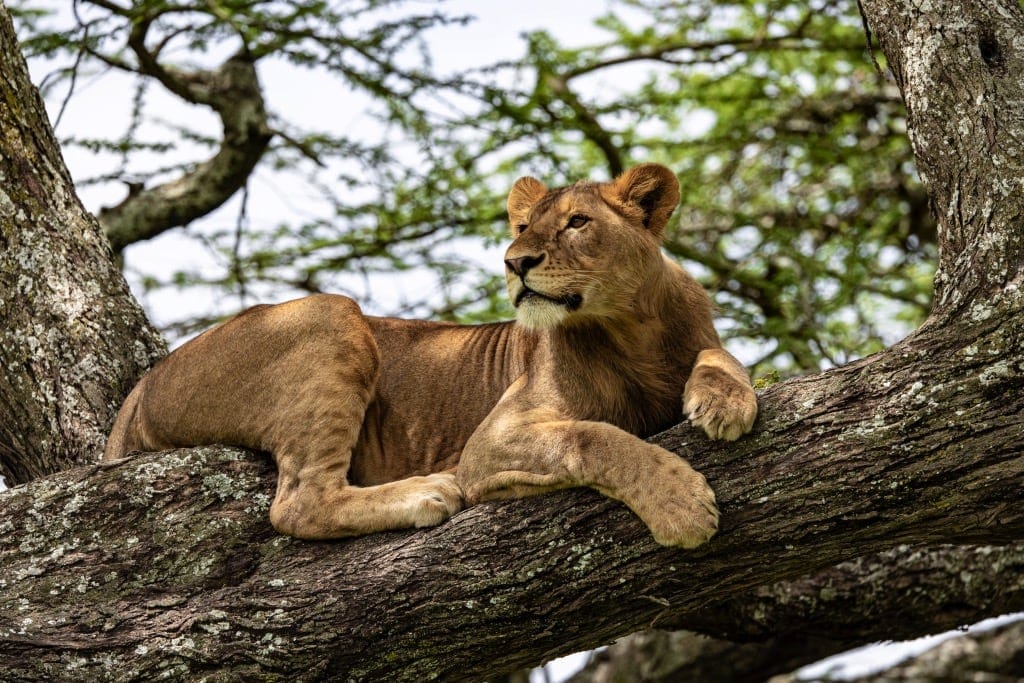
Lake Manyara National Park is a premier Tanzanian safari destination famous for its tree-climbing lions, massive soda lake, large baboon troops, and flamingo flocks, often visited in 1–2 days. Located near Arusha, it offers dense groundwater forests, diverse birdlife (400+ species), and unique activities like night game drives and treetop walkways
10-days-tanzania-wildlife-safari-and-optional-visit-to-masai-tribe-or-hadzabe
8-days-perfect-materuni-waterfall-and-coffee-cultural-tour-in-tanzania
7-days-best-of-tanzania-safari-grumetimara-river-crossing-and-masai-warrior-homestay
10-days-perfect-tanzania-safari-itinerary
10-days-luxury-kenya-tanzania-safari-holiday-high-end-tour-package
10-days-tanzania-wildlife-safari-and-optional-visit-to-masai-tribe-or-hadzabe
10-days-luxury-gorilla-trekking-masai-mara-serengeti-and-ngorongoro-crater
14-days-best-tanzania-honeymoon-safari-and-zanzibar-for-couples
3-days-fly-in-and-out-tanzania-wildlife-safari-itinerary-to-nyerere-from-zanzibar
3-days-serengeti-safari-fly-in-ngorongoro-big-five-safari-from-zanzibar-island
10-days-best-tanzania-safari-tour-and-zanzibar-beach-holiday-itinerary
8-days-best-tanzania-wildlife-safari-to-zanzibar-beach-holiday-combined
What makes Lake Manyara National Park a unique destination for tourists on a Tanzania safari tour?
Lake Manyara National Park is a jewel of the East African Rift Valley, offering a concentrated burst of biodiversity that is rare even by Tanzanian standards. Its uniqueness lies in its starkly contrasting ecosystems packed into a relatively small area. As you enter the park, you are immediately enveloped by a lush, tropical-style groundwater forest, fed by underground springs from the Rift Valley escarpment. This is a dramatic departure from the typical open savannahs of the Serengeti, providing a home for massive troops of baboons and forest-dwelling elephants.
The park is perhaps most famous for its tree-climbing lions, a behavioral phenomenon that is scientifically debated but a thrill for photographers. Beyond the predators, the landscape is dominated by the shimmering Lake Manyara, a shallow alkaline lake that covers two-thirds of the park's surface. The lake creates a vibrant pink fringe of flamingos against the backdrop of the steep, 600-meter-high brown Rift Valley walls. This verticality, combined with the "jungle" atmosphere of the forest and the open acacia woodlands, creates a "world-in-miniature" feel that makes it an essential, high-impact stop on any northern Tanzanian circuit.
When is the absolute best time of year to visit Lake Manyara for optimal wildlife viewing opportunities?
While Lake Manyara is a beautiful destination year-round, the dry season (June to October) is widely considered the best time for wildlife viewing. During these months, the vegetation thins out and the smaller water sources in the forest dry up, forcing animals to congregate along the predictable permanent water sources near the lake shore. This makes the park's famous elephants, giraffes, and buffaloes significantly easier to spot. The weather is also temperate and clear, which is ideal for photography.
The short dry season (January to February) is another excellent window. This period often coincides with the "calving season" for many herbivores, offering visitors the chance to see newborn zebras and wildebeests. However, it is important to note that Lake Manyara is one of the few parks where the wet season (November to May) has a specialized appeal. During the rains, the park becomes an emerald paradise, and the lake levels rise, bringing in thousands of migratory birds. If your primary goal is the "Big Five" and ease of spotting, stick to the dry months; if you want lush scenery and world-class birding, the wet season is equally rewarding.
Are the famous tree-climbing lions always visible, and where can they be found within the park?
The tree-climbing lions of Lake Manyara are one of the park’s most sought-after sights, yet they remain one of its most elusive mysteries. While sightings are never guaranteed, these lions are most frequently found in the acacia woodlands in the central and southern parts of the park. They typically climb into the branches of ancient umbrella-thorn acacia trees during the heat of the day to escape the irritation of biting flies and to catch a cool breeze that doesn't reach the ground.
Observers often find them lounging precariously on thick branches, looking surprisingly comfortable at heights of five to seven meters. While tree-climbing behavior has been noted in other parks like Ishasha in Uganda, Manyara remains the most iconic location for this trait. Because the forest is dense, the best way to find them is to follow the "bush telegraph"—listening to the radio calls of professional guides and keeping a keen eye on the horizontal branches of large acacias. Patience is key; a "sleeping" lion can look exactly like a large branch until it shifts its tail or lifts its head.
What is the best way to travel from Arusha to Lake Manyara for a day-trip safari?
Lake Manyara is one of the most accessible parks in Tanzania, making it a perfect day-trip option for those based in Arusha. The most common and cost-effective method is by road. The drive takes approximately 1.5 to 2 hours (about 126 kilometers) on a smooth, well-paved road that takes you through the scenic Maasai Steppe. This route allows you to pass through the vibrant town of Mto wa Mbu, providing a glimpse into local life before you enter the park gates.
For those with a higher budget or limited time, a domestic flight is a spectacular alternative. Several small airlines operate 30-minute bush flights from Arusha Airport to the Lake Manyara Airstrip, which is located on the escarpment overlooking the park. Flying offers an incredible aerial perspective of the Rift Valley and the lake's pink flamingo fringes. Most travelers choose to drive, however, as having a private 4x4 safari vehicle with a pop-up roof is essential for navigating the park’s interior trails and maximizing wildlife sightings once you arrive.
How long is the Lake Manyara tree-top walkway and what kind of experience does it offer?
The Manyara Treetop Walkway is one of the longest and most unique skywalks in Africa, stretching approximately 1,312 feet (400 meters) through the lush groundwater forest. Suspended at a height of roughly 18 meters (60 feet) above the forest floor, the walkway consists of a series of stable suspension bridges and observation platforms wrapped around the massive trunks of ancient trees.
This experience offers a literal bird’s-eye view of an ecosystem that is usually invisible to ground-level safari-goers. As you walk through the canopy, you are at eye-level with blue monkeys, silvery-cheeked hornbills, and a variety of colorful butterflies. It is a quiet, meditative experience that allows you to hear the "language" of the forest—the rustle of the leaves, the calls of primates, and the distant trumpeting of elephants—without the sound of a vehicle engine. It is a must-do for families and photography enthusiasts who want to capture the vertical complexity of Manyara’s "jungle."
What types of bird species can visitors expect to see in Lake Manyara during their safari trip?
Lake Manyara is an absolute paradise for ornithologists, boasting over 400 recorded bird species. The centerpiece of the avian experience is the Lesser and Greater Flamingos. Depending on the lake's water levels and salinity, these birds can gather in the hundreds of thousands, creating a shimmering pink haze along the shoreline. They are often joined by large colonies of Great White Pelicans, which can be seen in synchronized fishing groups in the shallow waters.
As you move from the lake into the groundwater forest, the species shift dramatically. Look for the Silvery-cheeked Hornbill with its massive casque, and the vibrant Narina Trogon. The park’s many rivers and swamps are home to kingfishers, various storks (including the Yellow-billed Stork), and herons. For raptor enthusiasts, the cliffs of the Rift Valley provide nesting sites for the Augur Buzzard and the Verreaux's Eagle. Whether you are a "lister" or a casual observer, the sheer density of birds—especially during the migratory months of November to April—is nothing short of spectacular.
Is it possible to do a canoe safari on Lake Manyara, and when is this activity available?
Yes, canoeing is a fantastic and tranquil way to experience Lake Manyara, offering a perspective that is impossible from a 4x4 vehicle. Guided canoe safaris typically take place near the Endala or Msasa areas of the lake, depending on the current water levels. These excursions allow you to paddle quietly through the shallows, getting remarkably close to pods of hippos (at a safe distance monitored by your guide) and a variety of water birds like cormorants and darters.
This activity is highly seasonal and depends entirely on the lake's depth. It is most commonly available during the wet season (November to May) or shortly thereafter, when the lake has expanded enough to allow for safe navigation. Canoeing offers a profound sense of "wildness"; there is something deeply primitive about gliding through the water while elephants drink on the nearby shore and flamingos take flight overhead. It is a low-impact, eco-friendly way to connect with the lake's unique ecosystem.
What are the different types of vegetation zones that travelers will pass through within the park?
Despite its compact size, Lake Manyara is a masterclass in ecological transition. As you enter the park, you first pass through the groundwater forest. This is a dense, high-canopy jungle fed by subterranean springs, characterized by giant trichilia and ficus trees. It feels remarkably tropical and stays green throughout the year, providing a cool sanctuary for primates and forest elephants.
As you emerge from the forest, you enter the acacia woodlands. This is the classic "safari" landscape, dominated by umbrella-thorn acacias and the yellow-fever trees where the tree-climbing lions are most likely to be found. Beyond the woodlands lie the open grassland savannas and floodplains that edge the lake, home to grazing zebras, wildebeests, and buffaloes. Finally, the park transitions into swamps and marshlands near the Hippo Pool, and the alkaline soda lake itself. This rapid succession of zones means that in a single hour of driving, a traveler can experience four or five distinct environments, each with its own specialized wildlife.
Are night game drives permitted within Lake Manyara National Park, and what animals can be spotted?
Lake Manyara is one of the few national parks in Tanzania where guided night game drives are officially permitted and encouraged. Starting after sunset, these drives use specialized vehicles equipped with high-powered spotlights to reveal the world of Africa’s nocturnal creatures. The experience is eerie and exciting, as the familiar daytime forest transforms into a place of glowing eyes and mysterious rustles.
During a night drive, you have a much higher chance of spotting the elusive leopard, which is a master of camouflage during the day but an active hunter at night. Other common sightings include civet cats, genets, and porcupines. You might also see the bizarre aardvark or the white-tailed mongoose. For many, the highlight is seeing the "big" animals—like hippos and elephants—in a completely different light as they move out of the water or deep forest to graze under the cover of darkness. It is an essential add-on for those staying inside or near the park who want to see the "other half" of the animal kingdom.
What is the significance of the Mto wa Mbu village located near the park entrance?
Mto wa Mbu (which means "Mosquito River" in Swahili) is one of the most culturally diverse villages in all of Africa. Situated at the very gateway to Lake Manyara National Park, it is a melting pot where members of over 120 different Tanzanian tribes live side-by-side. This diversity is a result of the area's fertile soil and sophisticated irrigation systems, which have drawn people from across the country for decades.
For tourists, the village offers a vibrant break from the "wilderness" portion of their safari. You can take a cultural tour that includes visiting local banana and rice plantations, seeing the intricate work of the Makonde woodcarvers, or sampling traditional "banana beer." Many safari-goers enjoy cycling tours through the village or visiting the local market, which is a riot of color and scent. Mto wa Mbu serves as a vital reminder that Tanzanian safaris are as much about the incredible people and their heritage as they are about the animals.
Do the flamingos remain in the park all year round, or are they seasonal visitors?
While you can almost always find some flamingos at Lake Manyara, they are largely seasonal and nomadic visitors. Their presence is dictated by the lake's water chemistry and depth. Flamingos, particularly the Lesser Flamingo, feed on specialized blue-green algae that only thrives in shallow, highly alkaline "soda" water. If the rains are too heavy and the lake becomes too deep or "fresh," the algae levels drop, and the flamingos migrate to other Rift Valley lakes like Natron or Bogoria.
The best time to see the massive "pink clouds" of flamingos is usually during the transition from the wet to the dry season (January to March or June to August). During these times, the water levels are usually just right to support the maximum amount of algae. However, because the flamingos are so nomadic, their numbers can fluctuate from 1,000 to 1,000,000 in a matter of weeks. The Greater Flamingo, which is taller and feeds on small crustaceans in deeper mud, is a more consistent resident, ensuring that the lake rarely loses its iconic pink hue entirely.
Can you tell me about the elephant population in Lake Manyara National Park during a safari?
Lake Manyara has historically been famous for its exceptionally high density of elephants. Despite challenges with poaching in the late 20th century, the population has rebounded significantly and remains one of the park’s primary attractions. These elephants are unique in their behavior because of the park’s varied terrain; you can often see them emerging like ghosts from the thick groundwater forest or wading into the shallow edges of the lake to feed on aquatic grasses.
The elephants here are often seen in large family groups, led by wise matriarchs. Because the park is relatively compact, the encounters often feel much more intimate than in larger parks like the Serengeti. It is not uncommon for a massive bull elephant to walk within meters of your vehicle in the narrow forest tracks. The abundance of water and lush vegetation means these elephants are generally well-nourished and active, making Manyara one of the most reliable places in Tanzania to observe complex elephant social structures and play behavior in a stunning, verdant setting.
Is it recommended to visit Lake Manyara during the wet season from November to May?
While many safari-goers avoid the wet season, visiting Lake Manyara during this time (specifically from November to May) is highly recommended for a specific type of traveler. This is when the park becomes the "Green Jewel." The dust of the dry season vanishes, replaced by vibrant, emerald vegetation and clear, rain-washed air that is perfect for landscape photography.
For birdwatchers, the wet season is the undisputed peak, as thousands of migratory birds from Europe and Asia arrive, and the flamingos congregate in their greatest numbers. It is also the time when many animals give birth, providing heartwarming sightings of juvenile wildlife. While the forest can be a bit denser, making it slightly harder to spot predators, the sheer beauty of the scenery—with waterfalls cascading down the Rift Valley escarpment—more than makes up for it. Just ensure you are in a 4x4 vehicle, as some of the lower-lying tracks can become muddy and adventurous.
What are the typical amenities and accommodation options available around Lake Manyara for tourists?
Lake Manyara offers a wide spectrum of accommodation, ranging from "rough-and-ready" to world-class luxury. For those seeking the ultimate experience, there are luxury lodges perched on the edge of the Rift Valley escarpment. These properties, like the &Beyond Lake Manyara Tree Lodge (located inside the park) or various lodges in the Karatu area, offer infinity pools and panoramic views that stretch across the entire lake.
For the mid-range traveler, there are numerous permanent tented camps and boutique hotels in the Mto wa Mbu area that offer comfort, swimming pools, and excellent dining. For budget-conscious travelers and adventurers, there are public campsites near the park gate and in the nearby village. Most accommodations are designed to blend into the environment, using sustainable materials and offering "sundowner" decks where you can watch the sunset over the lake. Regardless of your budget, the hospitality in the Manyara region is legendary, often featuring farm-to-table meals sourced from the fertile Mto wa Mbu plantations.
Are there any dangerous areas in the park, such as the hot springs or the Hippo Pool?
Like any wild environment, Lake Manyara requires a high level of respect for nature. The Hippo Pool, located in the northern part of the park where the Simba River enters the lake, is a top attraction but also a place of caution. Hippos are among Africa’s most dangerous animals; while they look sedentary in the water, they are incredibly territorial. Visitors must remain in their vehicles at all times, as a hippo can move with surprising speed if it feels threatened.
The Maji Moto (Hot Springs) in the southern part of the park are another point of interest. These are natural geothermal springs where the water can reach temperatures near boiling (95°C). While it is a fascinating geological feature where you can see the water bubbling out of the ground, you must stay on the designated paths and avoid touching the water. Beyond these specific spots, the primary "danger" is simply the proximity of wild animals in the forest. As long as you follow your guide’s instructions and stay inside your vehicle, the park is a safe and exhilarating environment.
How much time does one need to properly explore Lake Manyara on a safari trip?
Because of its compact size (only 330 square kilometers), Lake Manyara is the perfect "introductory" or "interlude" park. A full day (6 to 8 hours) is sufficient to explore almost all the park's major vegetation zones, visit the Hippo Pool, walk the treetop walkway, and enjoy a picnic lunch overlooking the lake. This allows for a relaxed pace with plenty of time for photography and birdwatching.
However, many travelers include Manyara as a half-day stop (3 to 4 hours) on their way from Arusha to the Ngorongoro Crater or the Serengeti. Even in a half-day, you can see the groundwater forest and the lake-front floodplains, which usually provides sightings of elephants, baboons, and flamingos. If you are a serious birder or a fan of night drives, you might consider staying for two days, but for most safari-goers, a single well-planned day provides a complete and highly satisfying experience of this unique Rift Valley sanctuary.
Booking Tanzania safari with us Roads of Adventure safaris
Booking a Tanzania safari with Roads of Adventure Safaris involves personalized, 24/7 support to plan trips, including Serengeti and Ngorongoro tours, with options from budget to luxury. Contact them via email (info@roadsofadventuresafaris.com), WhatsApp, or phone (+256 701041637/0773796644) for customized, expertly guided itineraries.
