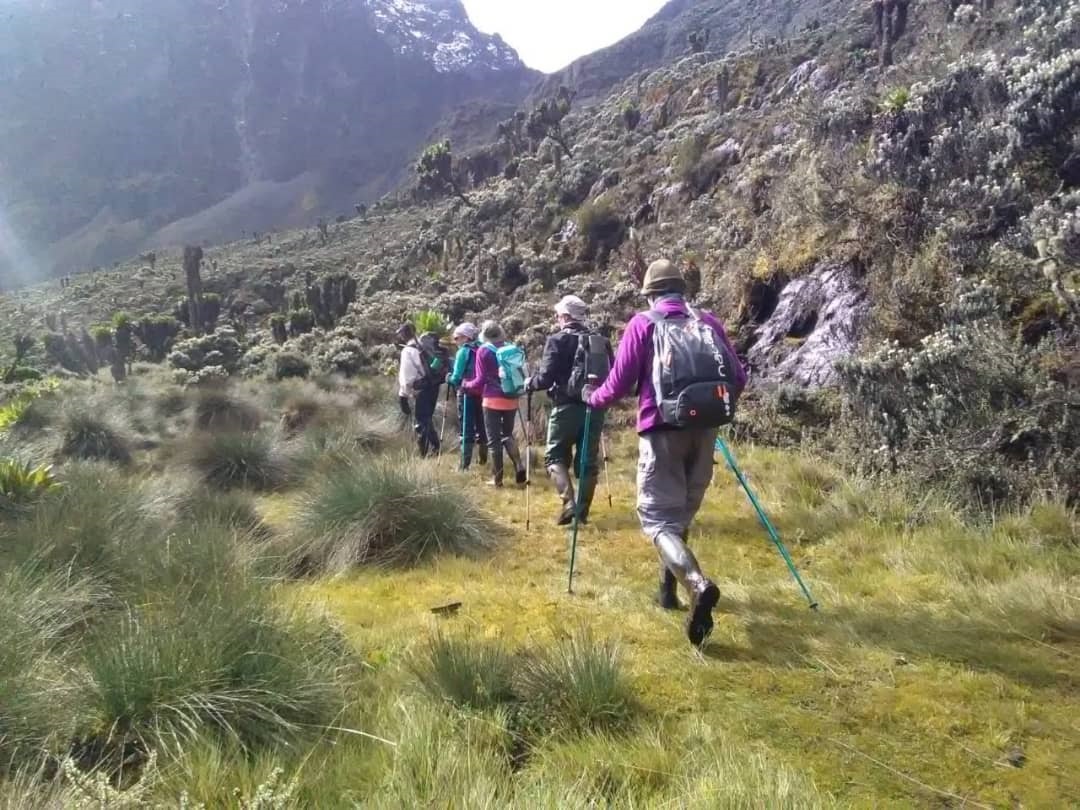
Climbing the Rwenzori Mountains—Africa's legendary "Mountains of the Moon"—is a world-class, non-technical to technical alpine adventure. Ranging from 5 to 12 days, treks pass through five distinct vegetation zones, culminating in the snow-capped Margherita Peak (5,109m) on Mount Stanley. It is a demanding, high-altitude expedition
Most popular Rwenzori climb tour packages
15-days-rwenzori-hiking-safari-and-mountain-gorilla-trekking-vacation
11-days-best-rwenzori-mountain-hike-to-margherita-peak
8-days-rwenzori-hike-via-central-circuit
7-days-mountain-rwenzori-mountain-climbing-active-adventure-to-margherita-peak
7-days-rwenzori-trek-to-mountain-gessi-or-amin
6-days-rwenzori-trek-with-mountain-stanley-margherita-albert-or-alexander
5-days-rwenzori-hike-to-either-mountain-sepeke-baker-or-luig-di-savoia
5-days-mountain-rwenzori-trek-to-bujuku-camp-3977-m-high
3-days-mtn-rwenzori-trek-to-john-mate-camp-3505-m-ascent
2-days-rwenzori-trek-to-nyabitaba-camp
1) The Ultimate Peak
For many travelers, the reason to join a Rwenzori hike and climb is to reach the highest point in the range, known as Margherita Peak. Margherita Peak sits on Mount Stanley at 5,109 meters. People often think of the summit as only a single goal, but the real work starts long before that day. Your plan must include steady walking, rest, and altitude adjustment. The Rwenzori Mountains are not just high land. They have changing weather, cold nights, and long sections that test your patience and foot strength. Even for fit hikers, the altitude can bring headache, poor sleep, and low energy. That is why the trekking pace and rest schedule matter as much as strength.
A Rwenzori hike and climb to Margherita also needs the right climbing approach. While many routes are trekking based, the final summit push can require technical tools depending on conditions. This is where you need clear guidance from your operator and certified guide. Proper gear planning should start early in the trip. Ask your team what is required for your exact dates. Some travelers may rent equipment near the trailhead, but you still must confirm availability and sizing before you travel.
Use your summit goal to stay focused, but do not skip the basics. Sleep well, drink water, eat planned meals, and follow your guide’s advice on pacing. In the Rwenzori hike and climb, the summit comes from careful preparation. It is not only about reaching height. It is about reaching it safely.
2) Main Trekking Trails
When you plan a Rwenzori hike and climb, choosing the correct route can decide the whole experience. The Rwenzori Mountains have a few well-known trekking paths and each one has a different schedule and style. The most popular option is the Central Circuit, which usually starts at Mihunga gate. This route commonly takes about 7 days and it is a strong choice for travelers who want a balanced journey through several landscape zones. You get a classic circuit feel and you also get time for acclimatization.
Another route is the Kilembe Trail, which is often described as longer and more scenic. It typically takes around 8 days. Many travelers like this option because the scenery can feel more varied from day to day. If you enjoy a steady routine with more walking hours, this route can suit you well.
Then there is the Bukurungu Trail, which offers a deeper wilderness feel. This trail is often chosen by travelers who prefer fewer crowds and a more remote atmosphere. The terrain and route rhythm can feel different, so it is important to ask your operator for a clear daily plan before you book.
No matter which trails you pick, you still need to think about altitude. A Rwenzori hike and climb works best when the itinerary supports gradual height gain. A shorter route can be harder for some people. A longer route can help you settle into the altitude and reduce stress.
Talk with your operator about your hiking level, your goals, and the dates you plan to travel. Then match the trail to your time and comfort. The right route helps your Rwenzori hike and climb feel organized and safe.
3) Flora and Fauna
The Rwenzori hike and climb stands out because of the changing life zones you pass through. As you move higher, the climate shifts and the plants and animals change too. Many travelers say the mountain feels like several different ecosystems in one trip. At lower elevations you often find forests with dense growth. These zones can be cool and damp and the trail can look alive with plants that thrive in shade and mist.
As you continue, you reach bamboo zones. This is a clear visual change where tall bamboo stands create a different walking environment. The sound of wind through the bamboo can feel different from the forest lower down. You may also notice how the temperature drops as you gain elevation.
Higher still, you move into what many guides describe as Alpine and Heath zones. This is where the mountain looks more open and the landscape becomes surreal. Giant plants can appear, including giant lobelias and giant groundsels. Some of these can grow to impressive heights and they look unlike anything in lowland areas. The scale of these plants can make you realize how strong the mountain climate is.
Wildlife sightings depend on weather and time of day. Your best chance is usually in quieter moments on the trail or during early morning walks. Even when you do not see animals, the plants alone can keep your attention on the journey.
For a Rwenzori hike and climb, take time to observe your surroundings but keep safety first. Rain and slippery sections can appear quickly. Your focus should stay on stable footing. Still, the changing ecology makes the walk meaningful. It helps you feel that the mountain is more than a summit target. It is a living landscape with clear stages.
4) Best Time to Go
Timing matters for a Rwenzori hike and climb. Weather can change fast in the Rwenzoris. Even during the best seasons, you can still meet rain, clouds, and cold wind. Still, some periods are more reliable for dry conditions and warmer temperatures. Many operators recommend windows such as December to mid-March and mid-June to the end of October. During these times, the trails often feel less wet and the sky can be more friendly on average.
That said, you should plan with flexibility. The mountain can cloud up and drop in temperature without much warning. Your gear plan should assume that you may walk in rain at any time. Waterproof layers, warm gloves, and a proper headlamp are not optional. If you rely on sunny weather and the forecast shifts, you can end up uncomfortable and slowed down.
When you pick your dates, also consider daylight. Longer daylight helps with camp arrival and safety. It also helps your guide manage the pace on technical or uneven ground. If you are aiming for the summit portion during a Rwenzori hike and climb, your operator may select the final day based on expected conditions and route safety.
The best approach is to ask for a weather-based plan close to your departure date. A good operator will share what they monitor and how they adapt. In the Rwenzoris, weather is a key factor, not a detail.
Choose a season that supports drier paths, then plan for rain anyway. That mindset helps your Rwenzori hike and climb stay enjoyable and safe.
5) Physical Fitness Requirements
A Rwenzori hike and climb can be demanding even for travelers who feel generally fit. Altitude sickness is a real risk and it can affect people differently. You do not need to be an expert mountaineer for standard treks. However, cardiovascular fitness and stamina are important because you will walk for long hours on uneven ground. You may also handle steep climbs and slow steps in cold air.
Fitness for this trip should include regular cardio and leg endurance. Hiking on hills and stairs can help. Strength training for core and legs can also support safer movement on rocky sections. Another useful practice is walking with a backpack similar to what you will carry on the route. Even if porters help with most luggage, you still manage personal day items.
Altitude changes your effort level. A common mistake is starting too fast because you feel energized at the start. A better plan is to walk at a controlled pace, even if you feel okay. Your guide sets the rhythm for a reason. The route needs time for your body to adapt.
Also plan for recovery. The best Rwenzori hike and climb results usually come from consistent eating and drinking. Skipping meals can reduce energy and make altitude effects worse. You should also follow hydration guidance from your guide.
If you have any health concerns, talk to your doctor before departure. It is better to ask early. With the right training and a calm trekking pace, the trip becomes manageable.
Fitness helps you enjoy the journey. But altitude safety and smart pacing are what protect the trip.
6) Technical Gear Needed
For many travelers, the technical part of the Rwenzori hike and climb becomes the key planning question. For the summit day, you may need gear that supports climbing on cold and potentially icy conditions. The exact requirements can vary by route and season. Still, for a summit attempt such as Margherita Peak, guides often recommend technical equipment like crampons, ice axes, harnesses, and ropes. These items support safe movement on steeper ground and help when traction is needed.
Do not assume you can buy everything at the last moment. Some equipment can be rented near the trailhead, but availability depends on local providers and your gear sizing. Always confirm in advance. Your operator should tell you what can be provided and what you must bring. If you plan to rent, ask about the condition of the equipment and the fit. Poor fit can cause discomfort and reduce safety.
It also helps to practice basics before the climb. If you have never used a harness, request a short tutorial from your guide team. Learn how you will wear it and how movements are done. Your guide will provide safety rules during the trek.
Even if you are only climbing a short technical segment, the temperature can be severe. Warm gloves and proper layers are as important as the technical tools. A good Rwenzori hike and climb gear plan combines warmth, traction, and correct fit.
If you want a smooth summit day, keep your preparation practical. Confirm gear early, pack layers properly, and follow your guide on the mountain. Technical gear supports your safety and helps you climb with confidence.
7) The Mud Factor
Mud is part of the reality for a Rwenzori hike and climb. The lower sections and wet areas near streams and bogs can be muddy. Even in drier seasons, you may still find slippery patches. When the ground is wet, footsteps can slide and make the trail slower. That affects energy and can also stress knees and ankles.
For this reason, you should plan your footwear carefully. Sturdy hiking boots with reliable traction help you move through muddy sections with better control. Waterproof boots can be useful because wet ground can soak shoes quickly. Along with boots, your socks matter too. It is smart to carry clean spare socks and keep them dry when possible. Cold feet can make the whole day feel harder.
The guide will manage pace based on trial conditions. If the mud is heavy, moving slower can prevent slips. A common mistake is trying to maintain a fast rhythm on wet ground. On the Rwenzoris, that can lead to balance issues.
For a comfortable trip, pack items that support practical walking. Trekking poles can help with stability. You also need a plan for water management and hydration so you do not get tired early. Your day schedule depends on safe movement not speed.
If you take mud as normal, your trip becomes easier to handle. With the right boots, socks, and pacing, the muddy sections can be managed safely.
In the Rwenzori hike and climb, mud is not a surprise. It is a trail feature and you prepare for it.
8) Guided Hikes Are Mandatory
A Rwenzori hike and climb should be planned with qualified support. In practice, you cannot trek independently in many parts of the region. The route needs park rules and certified guides who understand safety, route direction, and equipment needs. Your operator should arrange a licensed local guide and the required permissions.
This requirement matters because the Rwenzori Mountains are remote and weather can shift quickly. A certified guide knows how to interpret clouds, manage camp timing, and respond to trail hazards. They also understand when to adjust the plan. Without this support, travelers can make errors in pacing or gear use. Those mistakes can become serious at higher altitudes.
A good operator will also help with porter organization and camping logistics. You will need meals and safe camp setup. Guides handle route marking and daily navigation. They also provide briefing on what to do if conditions worsen. That includes procedures for visibility and safe movement on steep ground.
Before you book, confirm who will guide your trek. Ask if the guides are park approved. Ask how they handle summit day safety and what their training covers. Also check what the operator includes in the package.
With proper guidance, your Rwenzori hike and climb becomes more than a walk. It becomes a controlled expedition with clear support. You still do the trekking work but the risk management is handled by professionals. That is why guided treks are mandatory.
9) Accommodation During the Climb
During a Rwenzori hike and climb, accommodation often works through mountain huts along the route. This is different from simple tent camping that many people imagine at first. On established routes, you may use basic mountain hut facilities operated by the park. These huts provide shelter so you can rest during the trek.
You may find hut options such as Nyabitaba, John Matte, Bujuku, and Elena. Exact hut use can vary by route and plan. Your operator will confirm which nights include hut stay and what the daily schedule looks like. Some huts may have limited comfort and you should expect basic conditions. Warm clothing remains important even inside huts because temperatures can drop at night.
Hut accommodation also helps with consistency. You can focus on rest rather than spending time on full camp setup each night. Still, you must follow hygiene rules and keep your space organized. Guides may assign simple duties, such as managing group items or preparing water plans.
The Rwenzori hike and climb also includes meal support at scheduled times. Breakfast is followed by a morning start. Lunch is planned during the walking day. Dinner is served when you reach the next hut or camp location. This structure supports energy management and keeps the trek organized.
Pack for cold nights. A proper sleeping bag for low temperatures is important. Even if you have hut shelter, you can still feel cold because the mountain air remains sharp.
When your accommodation is well planned, the trek feels steadier. It supports recovery and helps you stay ready for the next day’s walking.
10) Packing Essentials
Packing for a Rwenzori hike and climb needs layers and smart organization. Temperatures can change strongly from the lower zones to the higher areas. You may start the day feeling cool or warm and then later feel cold as you climb. Cold nights are common. That is why you must plan with clothing layers instead of one thick jacket.
A good base layer system usually includes thermal wear and a warm mid layer. For the outer layer, you need reliable rain gear. Waterproof protection is important because the Rwenzoris often receive rain and mist. You also need thermal gloves because hands get cold during breaks and early morning starts.
Your headlamp is essential because you may walk or prepare in low light. It also helps for hut or camp routines at night. Carry a way to manage water safely. A reliable water filtration system supports drinking during the trek. Do not rely only on untreated water sources. Follow your guide’s rules on water handling.
Your sleeping plan should include a thermal sleeping bag suitable for cold temperatures. This matters even with hut shelter because the temperature inside and outside can both be low. Pack socks and keep dry socks available. Foot comfort is a big factor for long days.
Finally, organize your bag so you can reach essentials fast. Keep rain gear and warm layers easy to grab. Keep your personal items together and protect electronics from wet conditions.
If you pack with purpose, the Rwenzori hike and climb becomes easier to manage. You stay warm, hydrated, and ready for each day on the mountain.
Booking Rwenzori hike and climb with us Roads of Adventure safaris
Booking a Rwenzori Mountains trek with Roads of Adventure Safaris can be arranged through their Kampala office, typically located along the Kampala-Entebbe Road, or via their official website Roads of Adventure Safaris.
