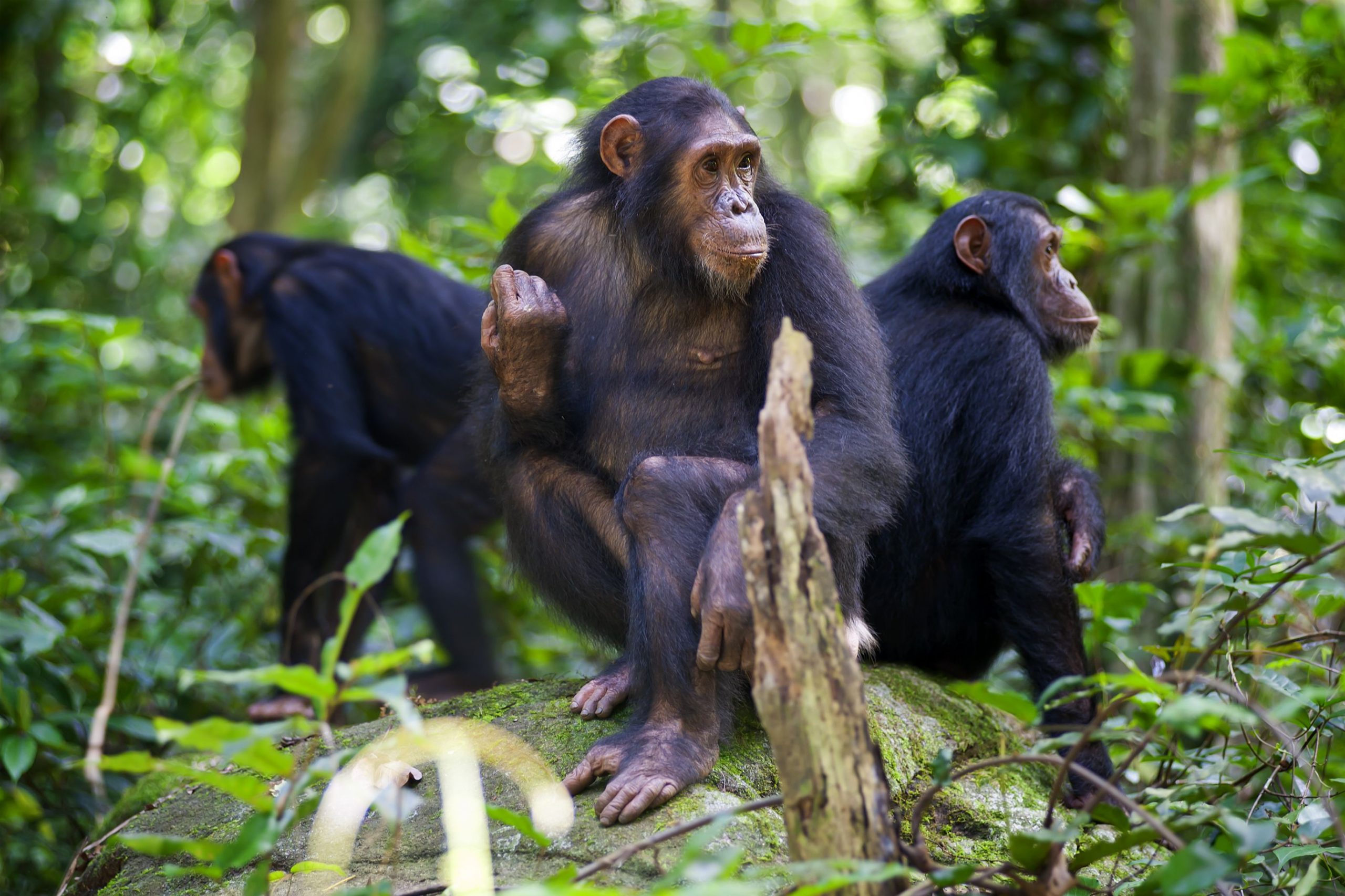
Stepping into Budongo Forest feels like entering another world—one where towering mahogany trees, some over 80 years old, canopy the sky. Here, the humid air vibrates with the piercing, territorial hoots of our closest living relatives. Budongo is home to over 600 wild chimpanzees, making it one of East Africa’s largest primate strongholds.
When you embark on a 2 to 4-hour tracking expedition, your heart pounds as you follow snapped branches and knuckle prints through the dense undergrowth. Sharing 98.8% of our DNA, watching these apes interact is profoundly humbling. You might see a 40-pound juvenile swinging playfully from a vine, or an alpha male asserting dominance with a thumping drum solo on a buttress root. With an impressive 80% sighting success rate, Budongo doesn’t just offer a wildlife tour; it offers an unforgettable family reunion.
4-days-birding-safari-in-murchison-falls-budongo-forest-and-ziwa-rhinos
2-days-chimpanzee-tracking-sleeping-at-budongo-eco-lodge
2-days-best-chimpanzee-tracking-in-kibale-forest-park-tour-package
3-days-trips-to-queen-elizabeth-national-park-for-chimpanzee-tracking-in-kyambura-gorge
3-days-chimpanzee-tracking-to-kibale-forest-national-park
4-days-queen-elizabeth-national-park-and-kyambura-gorge-chimpanzee-tracking
4-days-kibale-forest-chimpanzee-tracking-and-queen-elizabeth-national-park
4-days-chimpanzee-tracking-in-lake-mburo-national-park-and-lake-mburo-safari
4-days-kibale-forest-chimpanzee-tracking-and-queen-elizabeth-national-park
4-days-murchison-falls-and-chimpanzee-tracking-in-budongo-forest
5-days-uganda-big-five-safari-and-chimpanzee-tracking-in-kibale-forest-park
6-days-jinja-white-water-rafting-gorilla-trekking-and-chimpanzee-tracking-adventure
6-days-budget-uganda-safari-and-gorilla-trekking
7-days-perfect-uganda-primate-safari-itinerary
Where is Budongo Forest located and how do I get there?
Budongo Forest Reserve is situated in northwestern Uganda, covering approximately 825 square kilometers along the Albertine Rift. It sits on the edge of Murchison Falls National Park within the Masindi District. Traveling from Uganda's capital, Kampala, requires a 4 to 5-hour drive covering roughly 245 kilometers via the Kampala–Gulu highway before turning off toward Masindi town.
From Masindi, it is about a 30-kilometer drive along the Kinyara Sugar Plantation Road to reach the Kaniyo Pabidi eco-tourism site, the primary base for tracking activities. The journey transitions from paved asphalt to murram (dirt) roads, requiring a 4x4 vehicle, especially during the rainy season. Travelers can also opt for internal flights from Entebbe International Airport to Bugungu Airstrip in Murchison Falls, followed by a 45-minute road transfer.
The forest's location makes it an ideal stopover for visitors combining gorilla trekking in Bwindi with savannah safaris in Murchison Falls. Local drivers often stop at the famous Kabalega Dinners along the Gulu highway for refreshments before entering the reserve. Finding Kaniyo Pabidi is straightforward as it is clearly signposted along the main road entering the Murchison Falls Conservation Area.
What makes chimpanzee tracking in Budongo forest unique compared to Kibale?
While Kibale National Park is famous for high primate density, chimpanzee tracking in Budongo forest offers a wilder, less crowded experience focused on mahogany-dominated ancient woodland. Budongo hosts over 600 chimpanzees, with the habituated Sonso community (around 85 individuals) and the Waibira community (around 100 individuals) being the primary focus of researchers and trackers.
Budongo is famous for its massive Entandrophragma excelsum (red mahogany) trees, some reaching 60 meters in height, providing a dramatic backdrop not found in Kibale's mixed canopy. Additionally, Budongo is home to the Jane Goodall Institute's Budongo Conservation Field Station (BCFS), which has conducted continuous research here since 1990. Tracking here emphasizes deep ecological conservation; groups are strictly limited to six people per trail compared to larger groups elsewhere.
The terrain is relatively flat, making trekking physically easier than the hilly forest floors of Kibale or Kalinzu. Permit prices in Budongo are significantly lower (around $140–$150) compared to Kibale ($250+), presenting exceptional value for budget-conscious safari travelers without compromising on the quality of wildlife viewing or tracker expertise.
What is the best time of year for chimpanzee tracking in Budongo forest?
The optimal time for chimpanzee tracking in Budongo forest is during Uganda's two dry seasons: December to February and June to September. During these months, rainfall is minimal, making forest trails dry, non-slippery, and easy to navigate. Fruit abundance is lower during dry spells, forcing chimpanzee communities to move in smaller, predictable foraging groups rather than dispersing across vast territories.
During the wet seasons—March to May and October to November—heavy downpours turn forest tracks into muddy streams. However, wet seasons offer distinct advantages. Figs (Ficus) and wild fruits ripen abundantly, keeping the chimpanzees close to Kaniyo Pabidi center, which reduces trekking distances. Sighting success rates remain above 80% year-round due to skilled local trackers using vocalizations to locate groups.
Temperature in the forest remains pleasant, averaging 25°C to 28°C. Travelers visiting during the dry months should book tracking permits at least three months in advance due to high demand. Wet season visitors benefit from lower lodge rates and fewer tourists on the trails.
How much does a permit cost for chimpanzee tracking in Budongo forest?
A permit for chimpanzee tracking in Budongo forest costs approximately $140 to $150 per person for foreign non-residents, depending on whether you book through the National Forestry Authority (NFA) or licensed eco-tour operators like Budongo Eco Lodge. This fee includes the expert services of an English-speaking ranger guide and tracker, safety escorts, and forest conservation entry fees.
In comparison to Kibale's $250 permit or Rwanda's Nyungwe forest $150–$250 permit, Budongo offers an affordable high-quality alternative. Foreign residents with valid East African work permits pay around $120, while East African Community (EAC) citizens pay roughly 120,000 Ugandan Shillings (UGX). Permits can be secured directly through the Budongo Eco Lodge management or authorized Ugandan tour agencies.
It is important to note that permit fees directly fund community development and anti-poaching patrols run by the Budongo Conservation Field Station. Children under 15 years are not permitted to track chimpanzees due to safety regulations and susceptibility to human diseases. Booking at least two months early guarantees your preferred morning or afternoon tracking slot.
What are the rules and regulations during chimpanzee tracking in Budongo forest?
Strict guidelines govern chimpanzee tracking in Budongo forest to protect both human visitors and the wild primates. Before entering the forest, rangers conduct a mandatory 15-minute safety briefing at Kaniyo Pabidi. Visitors must maintain a minimum distance of 8 meters (26 feet) from the chimpanzees at all times to prevent disease transmission and avoid provoking the animals.
Flash photography is strictly prohibited, as bright flashes startle the apes and can trigger aggressive display behaviors. Eating, drinking, or smoking within 200 meters of the chimpanzees is banned to prevent food drops that could spread bacteria or cause behavioral changes. If you need to sneeze or cough, you must turn away and cover your nose and mouth.
Visitors suffering from infectious illnesses like colds, flu, or COVID-19 are barred from tracking because chimpanzees share 98.8% of human DNA and easily catch human respiratory diseases. Group sizes are limited to six people per tracking party, and once a community is located, viewing time is strictly capped at one hour to minimize stress on the animals.
What should I pack for chimpanzee tracking in Budongo forest?
Proper preparation makes chimpanzee tracking in Budongo forest comfortable and safe. Wear lightweight, long-sleeved shirts and long trousers (like canvas or hiking pants) in neutral earth tones—khaki, green, or brown. Bright colors like red startle wildlife, while blue attracts biting tsetse flies. Tuck your trousers into thick hiking socks to prevent safari ants (Dorylus) from crawling up your legs.
Sturdy, waterproof hiking boots with high ankle support are essential for navigating damp roots, mud, and uneven forest floors. Bring a lightweight waterproof rain jacket, as rainforest weather changes rapidly. Pack an insect repellent containing DEET to guard against mosquitoes and gnats, along with a wide-brimmed hat and sunscreen.
Carry a small daypack holding at least 2 liters of drinking water, energy snacks (like dried fruit or nuts), and waterproof bags to protect your camera gear. Gardening gloves are useful for grabbing vines and branches when traversing steep patches. A lightweight pair of compact binoculars helps spot chimps feeding high in mahogany tops.
What is the success rate of finding chimps in Budongo forest?
The success rate of finding wild apes during chimpanzee tracking in Budongo forest stands at roughly 80% to 90%. Success rates are particularly high around Kaniyo Pabidi, where the habituated Sonso community has been accustomed to human presence by researchers for over three decades.
Rangers use early-morning scouting techniques: advanced trackers enter the forest at 5:00 AM to locate the chimps where they built their woven leaf nests the previous night. Rangers track fresh dung, discarded fruit rinds like chewed Ficus mucuso pods, and distinct vocal communications. Chimpanzees produce loud calls known as "pant-hoots" and drum loudly on the buttress roots of mahogany trees using their hands and feet; these sounds echo up to 2 kilometers away, guiding trackers directly to their location.
On rare occasions when chimps move deep into high canopy territories, sightings become challenging, but trackers work tirelessly to relocate them. Afternoon tracking sessions have a slightly lower success rate (around 75–80%) because chimps rest high in the canopy during peak heat. Overall, visitors almost always secure rewarding encounters.
What is the difference between standard tracking and the Habituation Experience in Budongo?
Standard chimpanzee tracking in Budongo forest involves a guided walk to locate a fully habituated chimpanzee group (like Sonso), spending precisely one hour observing them once found. The total activity lasts between 2 to 4 hours. It is tailored for standard safari tourists looking for a short, rich wildlife encounter.
The Chimpanzee Habituation Experience (CHEX), on the other hand, allows visitors to spend an entire full day (6:00 AM to 6:00 PM) in the forest following a wild group currently undergoing the habituation process, such as the Waibira group. Participants accompany researchers and trackers as they wake the chimps from their night nests, track their foraging routes, and observe them building new nests at dusk.
CHEX offers deep insight into primate research, social dynamics, and raw animal behavior. CHEX permits cost significantly more (around $230–$250) and require higher physical fitness due to all-day bushwhacking through dense vegetation. CHEX is predominantly available during the low season months (March–May and October–November) when tourist density at Kaniyo Pabidi is lower.
How fit do I need to be for chimpanzee tracking in Budongo forest?
A moderate level of physical fitness is recommended for chimpanzee tracking in Budongo forest. Unlike the steep, mountainous terrain of Bwindi Impenetrable National Park, Budongo features relatively flat topography, making it one of the least physically demanding primate tracking destinations in East Africa.
However, tracks do not stay on maintained footpaths. Trackers frequently lead guests off-trail into dense brush, stepping over slippery tree roots, ducking beneath thorny vines, and crossing muddy forest streams. A standard tracking excursion covers anywhere between 3 to 8 kilometers over a 2 to 4-hour period, depending on where the chimpanzees spent the night.
If you can walk comfortably on uneven terrain for two hours at a steady pace, you are fit enough for Budongo. Elderly travelers or those with light mobility challenges can request shorter routes through Kaniyo Pabidi's main trail network, where trackers target chimps feeding close to the center. Staying hydrated and wearing boots with good tread ensures a comfortable experience for track visitors of all ages.
What tree species dominate the habitat during chimpanzee tracking in Budongo forest?
During chimpanzee tracking in Budongo forest, visitors walk beneath a dense, multi-layered canopy dominated by giant mahogany trees. Budongo is famous for holding East Africa’s largest remaining stands of red mahogany (Entandrophragma excelsum) and brown mahogany (Entandrophragma utile). These trees grow up to 60 meters high and develop massive buttress roots that chimps use as acoustic drums to signal each other across long distances.
Another prominent species is the Ugandan ironwood tree (Cynometra alexandri), locally known as Muhimbi. Ironwood forms dense, dark sub-canopies, producing hard wood and rich leaf litter that shelters forest floor life. Wild fig trees (Ficus sur, Ficus mucuso) are scattered throughout and play a vital role in chimpanzee survival; their fleshy fruits provide a primary food source year-round.
Visitors will also spot Spathodea campanulata (African Tulip Tree) with bright orange flowers, along with wild rattan palms (Calamus deërratus) hanging like thick cables from the canopy. This diverse floral architecture creates an ideal habitat for primates, birds, and rare forest flora.
What other wildlife can I see during chimpanzee tracking in Budongo forest?
While chimpanzee tracking in Budongo forest focuses on apes, the forest holds rich biodiversity. Eight other primate species inhabit the reserve. You frequently spot black-and-white colobus monkeys (Colobus guereza) leaping through high branches, blue monkeys (Cercopithecus mitis), and red-tailed monkeys (Cercopithecus ascanius) with their distinct white nose spots.
Looking lower in the brush, sharp-eyed hikers may spot olive baboons (Papio anubis) foraging near forest edges, and nocturnal potto (Perodicticus potto) or bushbabies (Galagidae) during night walks. Budongo shelters forest mammals including blue duikers (Cephalophus monticola), red duikers, and bush pigs (Potamochoerus larvatus).
Though rare due to dense cover, forest elephants (Loxodonta cyclotis) travel down from Murchison Falls National Park; trackers actively monitor fresh tracks and dung to ensure safe distances. Beautiful butterflies are abundant; over 280 species fluttering along moist trails. Tree hyraxes (Procavia capensis) can be heard calling loudly from hollow trunks, adding to the rich soundscape of the forest.
What bird species might I spot during chimpanzee tracking in Budongo forest?
Budongo Forest is a premier birding hotspot in East Africa, boasting over 360 recorded bird species. While doing chimpanzee tracking in Budongo forest, birders frequently spot rare species within the Kaniyo Pabidi sector. The most sought-after avian highlight is the Puvel’s Illadopsis (Illadopsis puveli), a species found nowhere else in East Africa except Budongo.
The famed "Royal Mile"—a wide forest track located in the southern Busingiro sector—is globally renowned among birdwatchers. Prominent birds spotted during tracks include the Chocolate-backed Kingfisher (Halcyon badia), Blue-breasted Kingfisher, and African Dwarf Kingfisher. High in the mahogany canopy, you will hear the loud calls of the Black-and-white-casqued Hornbill (Bycanistes subcylindricus) and Piping Hornbill.
Other notable sightings include the Ituri Batis, Nahan’s Francolin, Yellow-spotted Barbet, and Chestnut-capped Flycatcher. Rangers leading the chimp tracks double as expert birding guides, carrying binoculars to point out cryptic species flitting through dense foliage along the trail.
What is the role of the Budongo Conservation Field Station (BCFS)?
The Budongo Conservation Field Station (BCFS) plays an essential role in protecting the ecosystem supporting chimpanzee tracking in Budongo forest. Founded in 1990 by renowned primatologist Professor Vernon Reynolds, BCFS began as a long-term research project studying the Sonso chimpanzee community. Over three decades later, it has evolved into a fully integrated conservation and research initiative working alongside the National Forestry Authority.
BCFS conducts daily behavioral, physiological, and ecological studies on chimpanzees while monitoring plant phenology across the forest. Crucially, BCFS runs dedicated anti-poaching field patrols. Teams walk the forest daily to remove wire snares set by bushmeat hunters, which frequently injure or maim young chimpanzees.
BCFS also provides veterinary intervention for snared individuals and collaborates with local communities outside the forest boundaries. They offer alternative livelihood programs—such as goat farming and crop protection education—to reduce human reliance on forest resources. Eco-tourism tracking permits help generate essential revenues that sustain BCFS operations.
What are the local names for chimpanzees and plants in Budongo forest?
Understanding local vocabulary enriches the cultural dimension of chimpanzee tracking in Budongo forest. The forest falls within the traditional territory of the Bunyoro Kingdom, where the local language is Runyoro. In Runyoro, the wild chimpanzee is called Ekijaguzo or Mwanamu, names reflecting deep respect for the ape's human-like intelligence and personality.
Key forest trees carry distinct local Runyoro names. Red mahogany is locally referred to as Munyama, a tree revered for its massive trunk and durable timber. The Ugandan ironwood tree (Cynometra alexandri) is called Muhimbi, famous locally for its dense, fire-resistant wood. Wild fig trees, vital for chimp diets, are called Mukunyu.
When trackers lead guests through the forest, they often point out Ekimara, a local medicinal vine used traditionally by villagers to treat stomach ailments. Rangers also teach visitors Runyoro greetings like "Webale" (Thank you) when interacting with community members at Kaniyo Pabidi, bridging natural wildlife heritage with rich local culture.
How does chimpanzee behavior differ between morning and afternoon tracking sessions?
Chimpanzee behavior varies markedly between time slots during chimpanzee tracking in Budongo forest. Morning sessions begin at 8:00 AM, matching peak chimpanzee activity. Having spent the night in woven leafy tree nests, chimps descend to the forest floor between 6:30 AM and 8:00 AM.
During morning tracks, chimps are active, energetic, and vocal. You are more likely to see them traveling in social groups on all fours along trail paths, grooming each other, displaying dominance, or actively hunting smaller mammals like red-tailed monkeys. Pant-hooting echoing across the forest is frequent as chimps coordinate their morning movements.
Afternoon sessions start around 2:00 PM when ambient temperatures rise. During this window, chimpanzees retreat into high shady canopies or rest on buttress roots to digest their morning feed. They are quieter and move less, making them slightly harder to spot initially. However, once located, afternoon tracks offer fantastic resting, grooming, and nursing observations as the group relaxes in the shade.
What accommodation options are available near Budongo forest?
Accommodations for travelers engaged in chimpanzee tracking in Budongo forest range from on-site eco-lodges to luxury safari resorts in nearby Murchison Falls. The most convenient option is Budongo Eco Lodge, situated directly at the Kaniyo Pabidi tourism site inside the forest reserve. It offers comfortable wooden cabins, clean dormitory rooms, and an on-site restaurant surrounded by mahogany trees, allowing guests to start their morning track directly from their doorstep.
For mid-range and luxury stays, visitors head 30 to 45 minutes north into the Murchison Falls Conservation Area. Key options include Masindi Hotel (Uganda's oldest hotel, built in 1923), Pakuba Safari Lodge, Kabalega Wilderness Lodge, and Murchison River Lodge.
Staying inside Murchison Falls allows guests to easily combine Budongo chimpanzee tracking with game drives along the Nile and boat cruises to the base of Murchison Falls. Booking accommodation well in advance is highly recommended during the peak dry seasons (June–September and December–February).
Can children participate in chimpanzee tracking in Budongo forest?
The minimum legal age for chimpanzee tracking in Budongo forest is strictly set at 15 years old. This age limit is enforced by the National Forestry Authority (NFA) and wildlife park management for health and safety reasons.
Chimpanzees are strong, wild animals; a full-grown male weigh between 40 to 60 kilograms and possesses five times the strength of an adult human. Younger children may panic, shout, or make sudden movements if a male chimpanzee performs a vocal charge or drums loudly on buttress roots, which can trigger aggressive defensive responses from the community.
Furthermore, children are more susceptible to childhood communicable diseases like measles, mumps, and respiratory infections, which pose catastrophic health risks to non-immunized wild primate populations. For families traveling with children under 15, Budongo Eco Lodge and Kaniyo Pabidi offer alternative nature walks, guided bird watching on established footpaths, and educational eco-center visits while parents complete their chimpanzee tracking tour.
How do trackers locate chimpanzees in the thick canopy of Budongo forest?
Trackers employ a combination of forest tracking skills and sensory cues during chimpanzee tracking in Budongo forest. Rather than wandering aimlessly, expert guides start at Kaniyo Pabidi by heading toward the last known nesting site from the previous evening. Chimpanzees build fresh leafy tree nests every single night, leaving clear physical evidence high in the canopy.
Rangers listen closely for "pant-hoots"—loud, complex vocalizations that chimps use to communicate across distant foraging parties. Trackers also listen for the resonant drumming sounds produced when chimps strike the flat, hollow buttress roots of giant mahogany (Entandrophragma) trees with their palms and soles.
On the ground, guides track subtle clues: freshly snapped sapling branches, damp footprints (knuckle-prints) in muddy soil, and discarded fruit remains like chewed fig pulp (Ficus) dropped on leaves. Trackers also use their sense of smell, recognizing the distinct pungent musk left by a recently rested group. This expertise yields consistent, safe encounters.
Is chimpanzee tracking in Budongo forest safe for tourists?
Yes, chimpanzee tracking in Budongo forest is safe when visitors follow instructions provided by National Forestry Authority (NFA) ranger guides. The Sonso chimpanzee community targeted for tourism has undergone a meticulous 15-year habituation process, making them comfortable with human presence at a safe distance.
Every tracking group is accompanied by an armed ranger guide trained in wildlife management and emergency protocols. The firearm is carried strictly as a safety precaution against larger wildlife like stray forest elephants or buffalos, not the chimpanzees. Rangers read chimp body language expert-level; if an alpha male shows sign of agitation—such as bristling hair (piloerection) or dragging branches—the guide calmly instructs the group to step back and lower their eyes.
Visitors are advised to stay together in a tight cluster, avoid sudden gestures, and never run if a chimp moves past. By respecting the mandatory 8-meter boundary and ranger instructions, tracking remains a rewarding, safe adventure.
How does Budongo forest contribute to local community livelihoods?
Chimpanzee tracking in Budongo forest directly generates revenue and livelihood opportunities for surrounding communities in the Masindi District. Portions of tourism permit fees collected by the National Forestry Authority and Budongo Eco Lodge are channeled into local community development projects. These funds support rural infrastructure, including repairing local primary schools and constructing clean water boreholes in villages like Nyabyeya and Budongo.
The forest tourism sector directly employs local residents as ranger guides, trackers, research assistants, lodge staff, chefs, and maintenance workers. Furthermore, the Budongo Conservation Field Station (BCFS) supports sustainable agriculture projects, training local farmers in eco-friendly practices to protect crops like maize from crop-raiding baboons without harming wildlife.
Local handicraft groups, predominantly run by women’s associations, sell hand-woven baskets, wood carvings, and traditional textiles directly to visiting tourists at the Kaniyo Pabidi gift shop. This direct economic incentive transforms former bushmeat poachers into active forest conservation guardians.
What is the diet of chimpanzees in Budongo forest?
During chimpanzee tracking in Budongo forest, visitors often observe complex foraging behaviors. Chimpanzees are omnivorous, but their diet consists mostly of plant material. Over 60% of their daily food consumption comprises ripe fruits, particularly wild figs like Ficus mucuso, Ficus sur, and fruits from the Uvariopsis congensis tree.
When fruit availability drops during dry spells, chimps adapt by eating young leaves, tree bark, floral buds, resin, and nutrient-rich pith from woody vines. They supplement their diet with insects, using tools like sticks to fish termites and ants out of tree hollows or earthen mounds.
Chimpanzees also eat meat. Male chimps form organized hunting parties to capture small mammals, predominantly red-tailed monkeys (Cercopithecus ascanius), blue monkeys, and small duikers. Hunts are strategic, social events; after a successful catch, the dominant male shares meat with hunting partners and high-ranking females. Watching chimps forage highlights their impressive ecological knowledge of the forest.
What clothing color should I avoid during chimpanzee tracking in Budongo forest?
Wearing appropriate colors is important during chimpanzee tracking in Budongo forest. Visitors must avoid bright, vibrant clothing—such as bright red, yellow, neon green, or orange. Bright colors stand out sharply in the shaded forest environment, startling wild chimpanzees and causing them to move deeper into dense brush away from trail routes.
Equally important, avoid wearing dark blue or black clothing. Dark blue and black shades attract tsetse flies (Glossina), biting insects found in parts of the Albertine Rift whose bites are painful. White clothing should also be avoided, as it quickly gets stained by orange forest mud, red soil, and green tree sap.
The ideal attire consists of natural, muted earth tones—khaki, tan, beige, olive green, and dull brown. These colors allow trackers to blend seamlessly into the forest background, making chimpanzees feel calm and undisturbed, which leads to longer, more authentic viewing sessions.
How does Budongo chimpanzee tracking compare to Kyambura Gorge?
While both sites offer wild ape encounters, chimpanzee tracking in Budongo forest offers distinct advantages over Kyambura Gorge in Queen Elizabeth National Park. Kyambura Gorge is a dramatic "underground forest" cut into the open savannah. However, Kyambura holds a tiny, isolated community of roughly 25 chimpanzees, making tracking success variable (around 50–60%).
In contrast, Budongo Forest spans 825 square kilometers and hosts over 600 chimpanzees. Sighting success around Budongo's Kaniyo Pabidi sector remains consistently high at 80% to 90%. Budongo features flat, manageable terrain beneath majestic mahogany trees, whereas Kyambura involves steep, slippery descents and ascents along muddy riverbanks.
Budongo offers stronger research credentials through the Budongo Conservation Field Station, providing deeper educational commentary during tracks. Kyambura offers dramatic canyon scenery, but Budongo provides a reliable, expansive rainforest encounter with higher chimpanzee density and better long-term conservation tracking infrastructure.
What are the seasonal changes in chimpanzee group sizes in Budongo forest?
Chimpanzee group dynamics shift seasonally during chimpanzee tracking in Budongo forest, a social structure primatologists call "fission-fusion." During fruit-abundant wet seasons (March–May and October–November), when wild fig trees (Ficus) produce heavy fruit crops across Kaniyo Pabidi, chimps aggregate into large "fusion" parties. Visitors may see 20 to 30 individuals traveling, feeding, and grooming together in a single vibrant social group.
Conversely, during dry seasons (December–February and June–September), fruit availability becomes scarce and patchy. To minimize food competition, the community undergoes "fission," breaking up into small foraging parties of just 3 to 8 individuals scattered across wider ranges.
While small dry-season groups require trackers to cover slightly longer distances on foot, they often yield quieter, more intimate encounters. Understanding these seasonal social shifts helps visitors appreciate how food availability directly shapes wild ape behavior and group movement through the canopy.
What health precautions are needed before chimpanzee tracking in Budongo forest?
Because chimpanzees share 98.8% of human DNA, they are susceptible to human infectious diseases, including common colds, influenza, tuberculosis, and respiratory viruses. A mild illness in a human visitor can prove fatal to a wild chimpanzee population lacking natural antibodies.
Before starting chimpanzee tracking in Budongo forest, visitors must declare any illness. Rangers reserve the right to prohibit sick individuals from tracking to safeguard the Sonso and Waibira communities. Mandatory sanitation protocols are enforced at Kaniyo Pabidi: guests must wash or sanitize their hands before entering trails, and wearing face masks during chimpanzee viewing is encouraged or enforced based on health updates.
Travelers should ensure routine vaccinations are up to date, including Yellow Fever (required for entry into Uganda), Hepatitis A/B, and Tetanus. Taking malaria prophylaxis (such as Atovaquone-Proguanil or Doxycycline) is strongly recommended, as Budongo is a tropical rainforest environment where mosquitoes are active during dawn and dusk.
What photography gear is recommended for chimpanzee tracking in Budongo forest?
Capturing great images during chimpanzee tracking in Budongo forest requires proper gear and settings due to the dark forest interior. The thick mahogany canopy blocks direct sunlight, resulting in low-light conditions on the forest floor.
Bring a DSLR or mirrorless camera with strong high-ISO performance (capable of shooting cleanly at ISO 1600 to 6400). A fast telephoto zoom lens with an aperture of f/2.8 or f/4 (such as a 70–200mm or 100–400mm) is ideal for capturing chimps high in tree branches without needing flash. Flash photography is strictly banned as it frightens the animals.
A camera body with built-in image stabilization (IBIS) or stabilized lenses helps prevent motion blur at slower shutter speeds. Pack clear protective lens filters and rain covers to guard your equipment against humidity and sudden downpours. A micro-fiber cleaning cloth is essential for wiping fogged lenses. Avoid heavy tripods; lightweight monopods work much better on uneven forest trails.
How does logging history affect Budongo forest and its chimpanzees today?
Budongo Forest has a long history of commercial timber extraction dating back to the 1920s under British colonial administration. Large-scale logging targeted mature red mahogany (Entandrophragma excelsum) and brown mahogany trees, altering portions of the forest structure.
Surprisingly, selective historical logging created a mosaic forest canopy with open gaps where fast-growing pioneer plants and fruit-bearing trees—like wild fig species and Celtis—flourished. This increased the local availability of preferred chimpanzee foods in secondary forest zones. Today, logging inside Budongo Forest Reserve is prohibited and strictly policed by the National Forestry Authority (NFA).
The legacy of logging is still visible in the aging tractor logging roads, such as the famous "Royal Mile" in Busingiro, which now serves as an eco-tourism and birding trail. Modern conservation efforts focus on habitat restoration, ensuring that remaining primary mahogany stands are preserved while secondary growth continues supporting healthy chimpanzee populations.
What should I do if a male chimpanzee performs a charging display?
While rare during chimpanzee tracking in Budongo forest, habituated dominant male chimpanzees occasionally perform charging displays to showcase strength and maintain social rank. A display involves bristling fur (piloerection), loud pant-hooting, slapping ground roots, or dragging fallen branches while running past the group.
If this happens, stay calm and follow your ranger guide's exact instructions. Never run away. Running can trigger a chase response. Stand your ground, stay close to your tracking group, lower your head, and avoid making direct eye contact with the male, as eye contact can be interpreted as a challenge.
Do not scream, wave your hands, or make sudden movements. Crouch slightly to appear smaller and submissive. The display usually lasts less than 30 seconds before the male moves past to settle near his group. Rangers are trained to step forward and calmly use verbal commands to diffuse the situation safely.
Can I combine chimpanzee tracking in Budongo forest with a Murchison Falls safari?
Combining chimpanzee tracking in Budongo forest with a broader safari in Murchison Falls National Park is seamless and popular. Budongo Forest Reserve forms the southern boundary of the vast Murchison Falls Conservation Area, placing Kaniyo Pabidi just an hour's drive from the park's main entry gates.
A typical 3-day itinerary begins with morning chimpanzee tracking at Budongo Forest, followed by an afternoon transfer to the northern bank of the Nile inside Murchison Falls. The second day includes an early morning savannah game drive to spot lions, leopards, Rothschild's giraffes, African elephants, and Jackson's hartebeests, followed by an afternoon boat cruise along the Victoria Nile to the base of Murchison Falls itself.
On day three, travelers hike to the top of the dramatic falls where the Nile forces through a 7-meter gorge before returning to Kampala. This combination provides a complete East African adventure merging primate forest tracking with big game viewing.
How do chimpanzees in Budongo forest use tools?
Observing tool use is a highlight of chimpanzee tracking in Budongo forest. Budongo’s chimpanzees display impressive cultural tool behaviors passed down through generations. Researchers at the Budongo Conservation Field Station have documented chimps crafting tools for foraging and drinking.
A common example is "sponge-making." Chimps strip leaves from specific plants, chew them into an absorbent fibrous wad, and dip the "sponge" into deep tree-hollow water pockets to extract clean drinking water during dry periods. Research revealed that Sonso chimps also utilize moss to create moss-sponges, which hold more water than leaf sponges.
Chimps also use sturdy wooden sticks to probe underground termite nests or honeybee hives hidden in tree trunks. They use sturdy branches as levers to crack open hard forest nuts or dead logs searching for beetle larvae. Seeing a wild chimp select, modify, and utilize a tool showcases their high cognitive abilities.
What is the history of the Kaniyo Pabidi tourism site in Budongo?
Kaniyo Pabidi is the principal ecotourism center for chimpanzee tracking in Budongo forest. Located in the northeastern section of the reserve along the Masindi-Paara road, Kaniyo Pabidi was established in the early 1990s as a joint initiative between the National Forestry Authority (NFA) and international conservation organizations to promote sustainable primate ecotourism.
The site was specifically chosen because it contains a large block of undisturbed mahogany forest holding high concentrations of habituated chimpanzees, black-and-white colobus monkeys, and rare bird life. Over the decades, Kaniyo Pabidi has grown from a basic forestry outpost into a eco-tourism hub featuring Budongo Eco Lodge, modern reception facilities, briefing centers, and well-maintained forest trail networks.
Kaniyo Pabidi serves dual functions: generating essential eco-tourism revenue to fund local forest patrols and acting as a protective buffer zone preventing illegal timber harvesting and charcoal burning along the border of Murchison Falls National Park.
What night walk opportunities exist in Budongo forest?
In addition to daytime chimpanzee tracking in Budongo forest, Kaniyo Pabidi offers guided nocturnal forest walks. Night walks begin around 7:30 PM after sunset, led by armed National Forestry Authority rangers carrying powerful spotlight torches.
Walking through the dark rainforest offers a completely different sensory experience as nocturnal creatures emerge. The primary highlight is spotting small nocturnal primates, including the Potto (Perodicticus potto) and various species of Bushbabies or Galagos (Galagidae), identifiable by their reflective eyes glowing high in tree branches.
Walkers frequently hear the haunting, loud calls of the Western Tree Hyrax (Dendrohyrax dorsalis) echoing through the canopy. You may also spot unique insects, glowing bioluminescent fungi on decomposing wood, roosting forest birds, and chameleon species resting motionless on low foliage. Night walks last roughly 1.5 to 2 hours along flat, easy forest tracks, offering an exciting supplement to day tracking.
How does Budongo's chimpanzee population compare to other East African populations?
Budongo Forest hosts one of the largest single continuous chimpanzee populations in East Africa, estimated at over 600 individual eastern chimpanzees (Pan troglodytes schweinfurthii). Uganda as a whole holds approximately 5,000 chimpanzees across remaining forest patches.
Kibale National Park holds the highest concentration with over 1,500 individuals, making it Uganda’s top primate hub. Budongo ranks second in total population size alongside nearby Bugoma Forest (~600 chimps). Across borders, Rwanda’s Nyungwe National Park shelters around 400 individuals, while Tanzania's Gombe Stream and Mahale Mountains National Parks support much smaller, isolated populations (roughly 90 and 800 individuals respectively).
Budongo's high population density, combined with continuous scientific monitoring since 1990 by the Budongo Conservation Field Station, makes it a vital genetic reservoir and premier international destination for wild ape research and sustainable eco-tourism.
What ecological role do chimpanzees play in Budongo forest?
During chimpanzee tracking in Budongo forest, guides explain how chimpanzees act as crucial "gardeners of the forest." As primary frugivores (fruit-eaters), chimps play an essential ecological role in seed dispersal across the 825-square-kilometer reserve.
Chimpanzees consume large quantities of ripe wild fruits from trees like Ficus, Uvariopsis, and Celtis. As they travel several kilometers daily across their territory, they pass intact seeds through their digestive tracts, depositing them in dung far from the parent tree. Seed deposition in nutrient-rich dung increases germination rates and ensures genetic diversity among forest plant populations.
Without chimpanzees dispersing heavy tree seeds, many dominant hardwood species—including giant red mahogany—would struggle to regenerate naturally across secondary forest clearings. Protecting chimpanzees maintains the structural health, floral diversity, and long-term carbon sequestration capacity of the entire Budongo rainforest ecosystem.
How do I book a permit for chimpanzee tracking in Budongo forest?
Booking a permit for chimpanzee tracking in Budongo forest is straightforward but requires advance planning, especially during peak safari months (June–September and December–February). Permits can be booked through two main channels: directly via a licensed Ugandan safari operator like Roads of Adventure safaris.
